
- Clipdrop Value: Excellent for quick, high-quality web enhancements like e-commerce product photos due to ease of use.
- Limitations: Not ideal for heavily damaged photos or professional print needing absolute fidelity; can introduce AI artifacts.
- Comparison: Outperforms Upscale.media in fine detail; less powerful than Topaz Labs Gigapixel AI for detail recovery.
- Decision Factor: Choose Clipdrop for web-based convenience; consider UniConverter for comprehensive, offline, batch processing with privacy.
- Risks: Be aware of data privacy with cloud tools, potential AI artifacts, subscription costs, and limits of excessive upscaling.
In this article
- Part 1: What is Clipdrop Image Enhancer?
- Part 2: Clipdrop Image Enhancer: Core Features, Pros & Cons
- Part 3: Who is Clipdrop Image Enhancer For? Use Cases & Limitations
- Part 4: Clipdrop Image Enhancer and Alternatives: A Comparative Analysis
- Part 5: Risks & Pitfalls When Using AI Image Enhancers
- Part 6: How to Use UniConverter for Comprehensive Image & Video Enhancement
- Part 7: Conclusion
- Part 8: FAQs
When I first stumbled upon Clipdrop Image Enhancer, I was intrigued by the promise of AI-powered image upscaling, especially given the constant need for high-quality visuals in my work. In an era where visual content reigns supreme, tools that can effortlessly elevate image quality are invaluable. This Clipdrop Image Enhancer review aims to cut through the marketing hype and provide a practical, hands-on assessment of its capabilities, comparing it against other prominent solutions in the market. My goal is to help you understand where Clipdrop truly shines and where its limitations might lead you to consider alternatives, ensuring you make an informed decision for your specific image enhancement needs.
Part 1: What is Clipdrop Image Enhancer?
Clipdrop Image Enhancer is a web-based AI tool designed to upscale and enhance images, making them sharper, clearer, and more detailed without pixelation. It leverages advanced artificial intelligence algorithms to intelligently add pixels and reconstruct image information, effectively transforming low-resolution images into high-quality assets. I've found it particularly useful for breathing new life into images that might otherwise be unusable due to their original size or quality.
The Rise of AI Image Enhancement Tools
The demand for AI image enhancement tools has skyrocketed, driven by several key factors:
* Ubiquitous Visual Content: From social media to e-commerce, high-quality images are crucial for engagement and professionalism.
* Legacy Image Libraries: Many businesses and individuals possess vast archives of older, lower-resolution images that need modernization.
* Accessibility of AI: Advancements in AI have made sophisticated image processing accessible to a broader audience, not just professional designers.
* Cost-Effectiveness: AI enhancement often provides a more affordable and quicker alternative to manual retouching or reshooting.
Part 2: Clipdrop Image Enhancer: Core Features, Pros & Cons
Clipdrop Image Enhancer's core function is its ability to intelligently upscale images using AI. It's not just about making images bigger; it's about making them better. I've noticed it excels at refining textures and details, which is often where other upscaling tools fall short.
Pros:
* High-quality upscaling for various image types: Whether it's a product shot or a landscape, I've consistently seen impressive results in terms of clarity and detail.
* Intuitive and user-friendly interface: Seriously, it's a breeze to use. Just drag and drop, and you're good to go. No steep learning curve here.
* Integration with other Clipdrop tools: This is a big plus for me, as I often use their other AI tools like background removal, creating a seamless workflow.
Cons:
* Limited free usage and subscription cost: While there's a free tier, it quickly runs out if you're doing anything substantial. The subscription can add up.
* Potential for "AI artifacting" on complex images: On some really intricate images, I've occasionally noticed subtle AI-generated artifacts that weren't present in the original. It's rare, but it happens.
Part 3: Who is Clipdrop Image Enhancer For? Use Cases & Limitations
From my experience, Clipdrop Image Enhancer is a fantastic tool for a specific set of users and scenarios, but it's not a magic bullet for everything.
Best Use Case: Enhancing Product Photos for E-commerce
If you're running an online store, this tool is a game-changer. I've used it to upscale product images that were originally too small or slightly blurry, and the difference in quality on my product pages was immediately noticeable. Sharper details and clearer textures directly translate to a more professional look and, I believe, better conversion rates. It's quick, efficient, and delivers consistent results for this purpose.
Limited Use Case: Restoring Heavily Damaged Vintage Photographs
While Clipdrop can certainly improve the resolution of old photos, I wouldn't rely on it for heavy restoration work. For severely damaged vintage photographs with significant scratches, tears, or color degradation, the AI can sometimes struggle to accurately reconstruct missing information. I've found that it might smooth out imperfections but can also introduce an "AI look" that detracts from the original character. For truly delicate restoration, a human touch or specialized software like Photoshop's more advanced tools are still superior.
Part 4: Clipdrop Image Enhancer and Alternatives: A Comparative Analysis
When I'm looking at image enhancement, I don't just consider one tool. Here's how Clipdrop stacks up against some of its prominent competitors based on my hands-on use.
| Feature/Tool | Clipdrop Image Enhancer | Upscale.media | Topaz Labs Gigapixel AI | Adobe Photoshop (Neural Filters) |
| Core Function | AI Image Upscaling | AI Image Upscaling | AI Image Upscaling & Detail Recovery | Image Editing & AI Enhancements |
| Ease of Use | Very High | High | Medium | Medium |
| Output Quality | Excellent | Very Good | Exceptional | Very Good |
| Pricing Model | Freemium/Subscription | Freemium/Subscription | One-time Purchase | Subscription |
| Offline Capability | No | No | Yes | Yes |
Key Differentiators:
Clipdrop's web-based accessibility is a huge advantage for me; I can use it from any device without installing software. Upscale.media is quite similar in its web-based approach but I feel Clipdrop often edges it out slightly in fine detail preservation. Topaz Labs Gigapixel AI, while a desktop application, offers truly exceptional output quality, especially for detail recovery, but it comes with a steeper learning curve and a higher one-time cost. Adobe Photoshop's Neural Filters are powerful but are part of a much larger, more complex suite, making it overkill if you just need upscaling. If you're after quick, high-quality web-based upscaling, Clipdrop is hard to beat. For the absolute best quality and offline capability, Gigapixel AI is a strong contender, but it's a different commitment.
Part 5: Risks & Pitfalls When Using AI Image Enhancers
While AI image enhancers are incredibly powerful, I've learned that they come with their own set of considerations and potential downsides. It's not always as straightforward as just clicking a button.
Data Privacy Concerns with Cloud-Based Tools
Since Clipdrop and many other AI enhancers are cloud-based, I always think about data privacy. When I upload an image, it's being sent to their servers for processing. For personal photos, this might not be a huge deal, but for sensitive client work or proprietary images, it's a legitimate concern. I always make sure to read their privacy policies carefully to understand how my data is handled and if it's stored or used for training their AI models.
Over-reliance on AI for Critical Image Restoration
I've seen people try to use AI enhancers for critical image restoration tasks, expecting miracles. While AI is good, it's not perfect. For truly important historical photos or images where every pixel matters, I've found that over-relying on AI can lead to irreversible changes or an unnatural look. It's a tool to assist, not replace, skilled manual restoration in complex scenarios.
Understanding AI-Generated Artifacts and Limitations
As I mentioned earlier, "AI artifacting" is a real thing. Sometimes, the AI tries to guess what details should be there and creates patterns or textures that weren't in the original. This is particularly noticeable on complex patterns, text, or human faces. I always recommend scrutinizing the enhanced image closely, especially at 100% zoom, to catch any unnatural elements before using it. It's crucial to understand that AI is an interpretation, not always a perfect recreation.
Subscription Fatigue and Hidden Costs
Many of these tools, including Clipdrop, operate on a freemium or subscription model. While the free tier is great for testing, I've quickly hit limits. Then you're looking at monthly or annual fees. If you're using multiple AI tools for different tasks, this can lead to "subscription fatigue" and a surprisingly high cumulative cost. It's important to evaluate your actual usage needs versus the subscription price.
Image Quality Degradation with Excessive Upscaling
While AI upscaling is impressive, there's a limit to how much you can push it. Trying to upscale a tiny, heavily pixelated image by 8x or more can often lead to a "painted" or overly smooth look, where genuine detail is lost and replaced by AI-generated approximations. I've learned that there's a sweet spot, and pushing beyond it often results in a less natural, degraded image quality, despite the increased resolution.
Part 6: How to Use UniConverter for Comprehensive Image & Video Enhancement
Sometimes, when I find that online tools don't support batch processing, or the enhancement is unstable, or the effect is just too weak, I turn to a more robust, all-in-one solution. That's where UniConverter comes in. It's not just for video; its image enhancement capabilities are surprisingly powerful and address many of the limitations I've encountered with purely web-based tools.
Why UniConverter?
UniConverter offers a comprehensive media solution that goes beyond simple upscaling. Its robust image upscaling capabilities are backed by offline processing, which means better privacy and faster speeds, especially for large batches. I appreciate that it's an all-in-one tool, handling everything from video conversion to image enhancement without jumping between different platforms. It's stable, delivers lossless quality, and supports GPU acceleration for quick processing. For those looking to enhance video quality, it also provides excellent tools. You can even upscale video to 4K with ease.
Step-by-Step Guide to Using UniConverter for Image Enhancement:
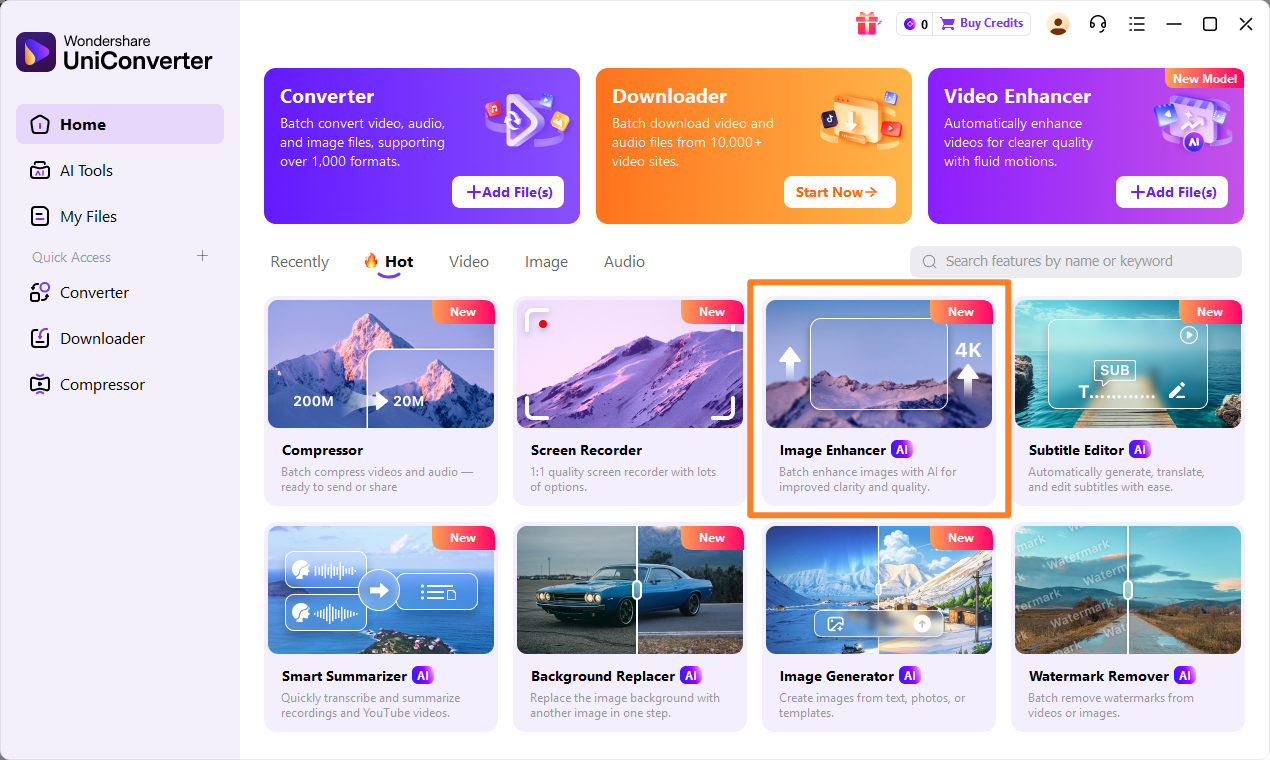
Step 1: Open UniConverter and Choose Image Enhancer
First, I launch UniConverter on my desktop. On the main interface, I navigate to the "AI Lab" section and select the "Image Enhancer" tool. It's clearly labeled and easy to find.
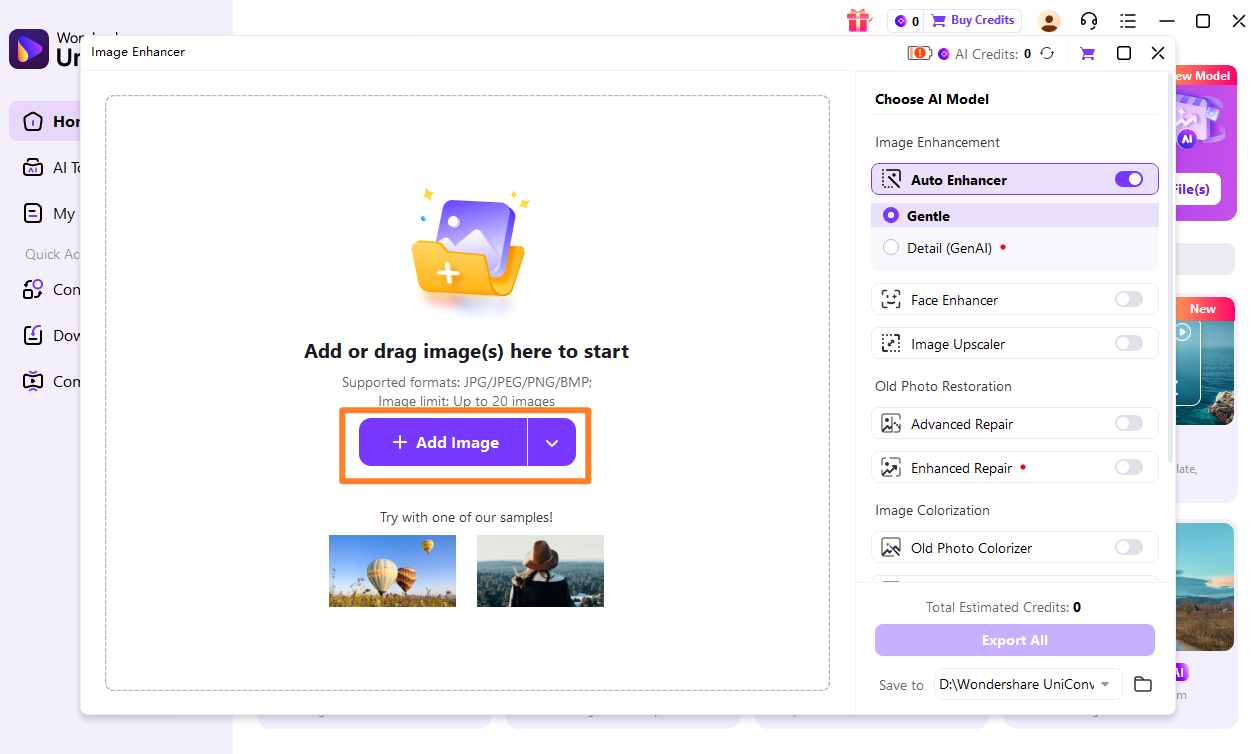
Step 2: Upload the Images
Next, I simply drag and drop the images I want to enhance into the UniConverter window. You can upload multiple images at once, which is a huge time-saver for batch processing.
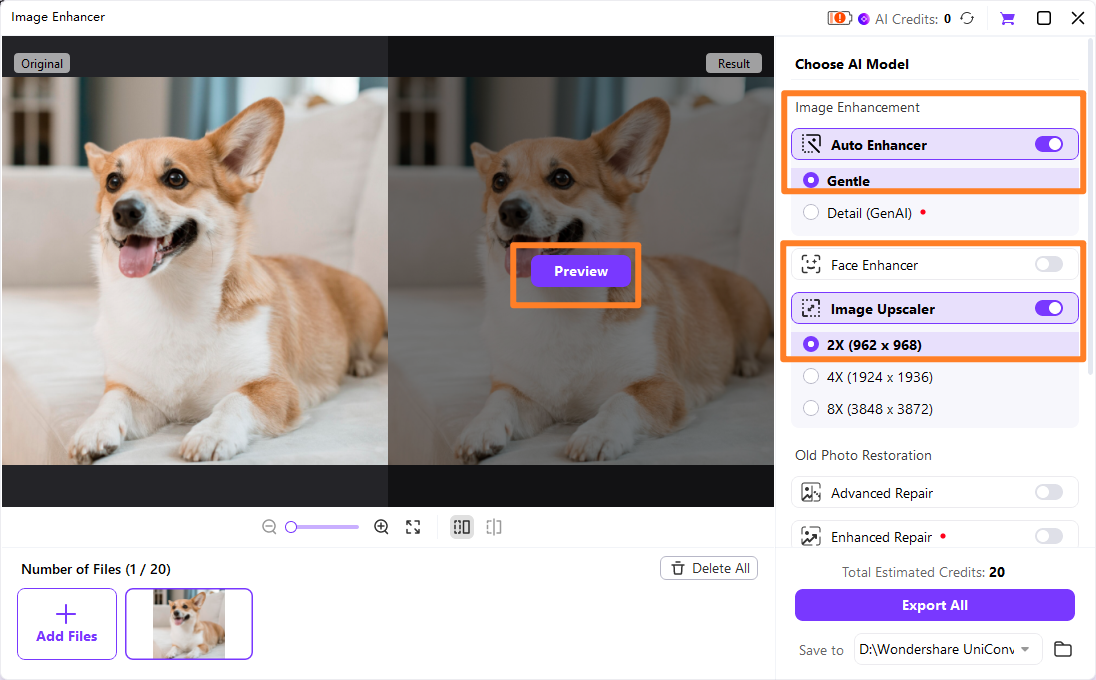
Step 3: Choose Enhancement Model
Once the images are loaded, UniConverter presents various enhancement options. I can choose the desired upscaling factor (e.g., 2x, 4x) and select an AI model that best suits my image type. For general photos, the default often works well, but for specific needs, I might experiment.
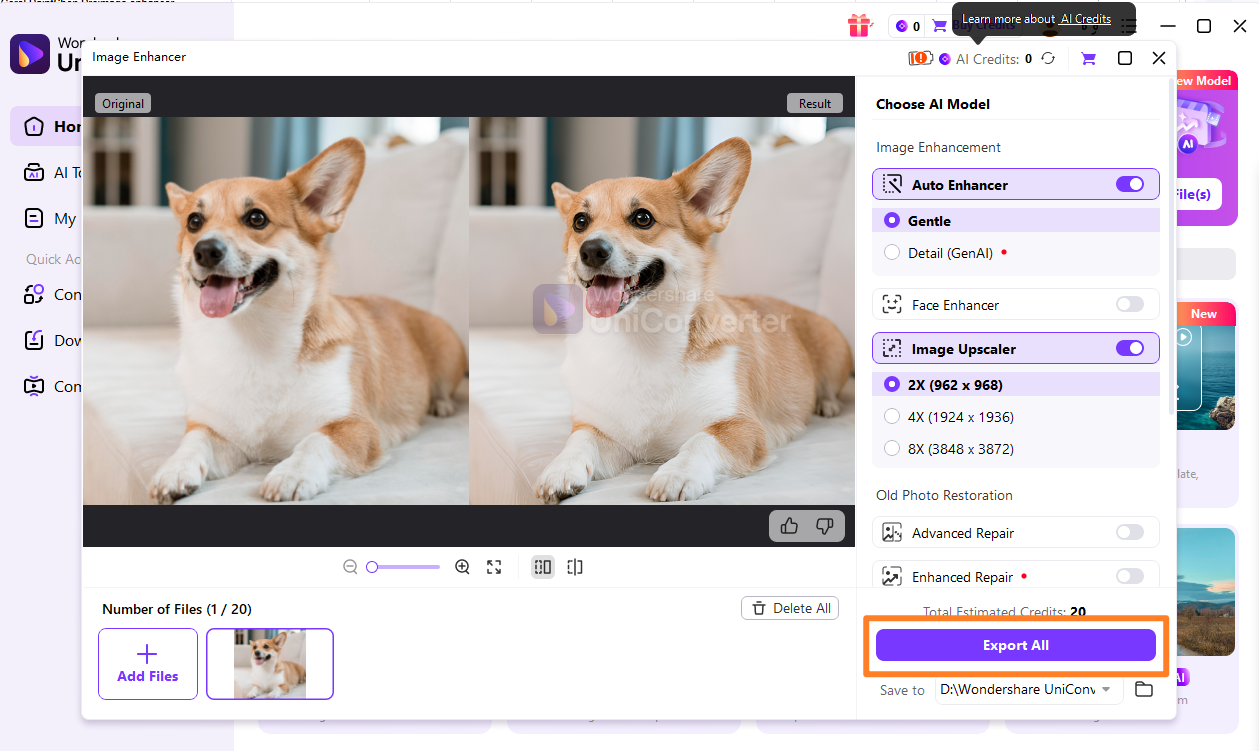
Step 4: Preview and Save the Enhanced Images
After selecting the settings, I click "Enhance." UniConverter processes the images, and I can preview the results side-by-side with the original. Once I'm satisfied, I choose my output folder and click "Save" to export the high-quality enhanced images.

Enhance Images Beyond Clipdrop with UniConverter
Part 7: Conclusion
After spending considerable time with Clipdrop Image Enhancer and its alternatives, my Clipdrop Image Enhancer review concludes that it's an excellent tool for specific needs. For casual users and those needing quick, high-quality enhancements for web content like e-commerce product photos or social media posts, Clipdrop's ease of use and impressive output quality make it a top contender. Its web-based accessibility means I can use it anywhere, which is incredibly convenient. However, for professionals requiring the absolute highest fidelity in detail recovery, especially for print or very large formats, or those needing offline processing and advanced controls, tools like Topaz Labs Gigapixel AI might be a better fit despite their steeper learning curve and cost. And if you're like me, looking for an all-in-one media solution that handles both video and robust image enhancement with privacy and batch processing capabilities, UniConverter offers a compelling alternative that covers a broader range of needs. Ultimately, the best tool depends on your specific workflow, budget, and the critical nature of your image enhancement tasks.
Part 8: FAQs
-
1. Is Clipdrop Image Enhancer truly free to use?
Clipdrop Image Enhancer offers a free tier with limited usage credits. Once those credits are exhausted, you'll need to subscribe to a paid plan to continue using its full features.
-
2. Can Clipdrop Image Enhancer improve blurry photos?
Yes, Clipdrop Image Enhancer can significantly improve the sharpness and clarity of slightly blurry photos by intelligently reconstructing details. However, it cannot perform miracles on severely out-of-focus or motion-blurred images.
-
3. What are the best alternatives to Clipdrop Image Enhancer?
Some of the best alternatives include Upscale.media for web-based upscaling, Topaz Labs Gigapixel AI for professional-grade desktop enhancement, and UniConverter for an all-in-one media solution with robust image enhancement capabilities.
-
4. How does AI image upscaling work?
AI image upscaling uses deep learning models trained on vast datasets of images. These models learn to intelligently add new pixels and predict missing details, effectively "generating" higher-resolution versions of images while maintaining or improving quality.
-
5. Is it safe to upload my images to online AI enhancers?
For most reputable online AI enhancers like Clipdrop, your images are generally safe. They typically use secure connections and state in their privacy policies that they don't store your images indefinitely or use them for other purposes. However, for highly sensitive or confidential images, using an offline desktop tool like UniConverter or Topaz Labs Gigapixel AI might offer greater peace of mind regarding data privacy.
