
- Value: Clipchamp is ideal for quick, basic video improvements, especially for social media and casual users within the Microsoft ecosystem.
- Comparison: While Clipchamp offers simplicity, UniConverter provides more advanced features, offline processing, and broader format support for demanding tasks.
- Decision: Choose Clipchamp for ease of use and basic enhancements; opt for UniConverter or professional tools for advanced control and higher quality.
- Consideration: Cloud-based tools like Clipchamp have data privacy concerns and performance variability based on internet speed.
- Pitfall: Automated enhancement can lead to over-processing and unnatural results without granular control.
- Solution: UniConverter offers robust, stable enhancement with GPU acceleration, extensive format support, and lossless quality for diverse needs.
In this article
- Part 1: What is Clipchamp Video Enhancer?
- Part 2: Clipchamp Video Enhancer: Core Features, Pros, and Cons
- Part 3: Target Users and Use Cases
- Part 4: Clipchamp Video Enhancer and Alternatives Comparison
- Part 5: Risks and Pitfalls to Consider
- Part 6: How to Use UniConverter for Efficient Video Enhancement
- Part 7: Conclusion
- Part 8: FAQs
Clipchamp Video Enhancer: A Comprehensive Review and Comparison
The digital age has ushered in an unprecedented demand for high-quality video content, making video enhancement tools indispensable for creators of all levels. As platforms like TikTok, Instagram, and YouTube prioritize visual fidelity, the need to refine and elevate video quality has become paramount. This article provides a detailed Clipchamp Video Enhancer review, delving into its features, comparing it with key competitors, and offering insights into its ideal use cases and potential pitfalls. We aim to equip you with the necessary information to make an informed decision regarding your video enhancement needs, addressing common pain points such as blurry footage, poor lighting, and inconsistent quality.
Part 1: What is Clipchamp Video Enhancer?
Clipchamp Video Enhancer is an integrated feature within Microsoft's Clipchamp video editing software, designed to automatically improve the visual quality of video clips. Leveraging basic AI algorithms, it aims to correct common video imperfections such as poor lighting, color imbalances, and minor blur, making videos more presentable without requiring extensive manual adjustments. This review will critically assess its capabilities, comparing it against other dedicated video enhancement solutions to determine its true value proposition in a competitive market.
The Rise of AI-Powered Video Enhancement
The increasing accessibility of video creation tools has led to a surge in user-generated content, often captured with varying degrees of quality. This has fueled the demand for AI-powered solutions that can:
* Automate tedious correction tasks: AI can quickly analyze and adjust video parameters that would otherwise require hours of manual editing.
* Democratize professional-grade results: Even amateur videographers can achieve significantly better output with AI assistance.
* Address diverse quality issues: From low light to shaky footage, AI can tackle a broad spectrum of common video problems.
Part 2: Clipchamp Video Enhancer: Core Features, Pros, and Cons
Clipchamp Video Enhancer primarily focuses on simplifying the enhancement process for everyday users. Its core capabilities include automatic color correction, brightness and contrast adjustments, and basic stabilization. It aims to provide a quick fix for common video imperfections, making content more visually appealing for social media and personal projects.
Key Features:
* Automatic color and exposure correction.
* Basic video stabilization.
* Noise reduction for grainy footage.
* Sharpening tools for clearer visuals.
* One-click enhancement presets.
Pros:
* Intuitive Interface for Beginners: The user-friendly design makes it accessible even for those with no prior video editing experience.
* Integrated within Microsoft Ecosystem: Seamlessly works with other Microsoft 365 applications, offering convenience for existing users.
* Cloud-Based Accessibility: Allows users to access and edit projects from any device with an internet connection.
Cons:
* Limited Advanced Customization Options: Lacks the granular control needed for professional-grade enhancements.
* Dependency on Internet Connection for Optimal Performance: Cloud-based nature means slower speeds can hinder workflow.
Part 3: Target Users and Use Cases
Clipchamp Video Enhancer is primarily tailored for casual users, social media enthusiasts, and small businesses looking for quick and easy video improvements without investing in complex software or extensive training. Its simplicity is its greatest asset, making it suitable for non-professionals.
Best Use Case: Quick Social Media Content Refinement
For creators who frequently upload short videos to platforms like Instagram, TikTok, or Facebook, Clipchamp Video Enhancer offers a convenient way to quickly polish their content. It can correct minor lighting issues, improve color vibrancy, and add a touch of professionalism to otherwise raw footage, ensuring a better viewer experience without significant time investment.
Limited Use Case: Professional-Grade Film Restoration
While Clipchamp can make basic improvements, it is not designed for professional-grade film restoration or complex video enhancement tasks. It lacks the sophisticated algorithms and detailed control required to significantly improve severely degraded footage, recover lost details, or perform advanced noise reduction on high-stakes projects. For such demanding scenarios, specialized software is indispensable.
Part 4: Clipchamp Video Enhancer and Alternatives Comparison
| Feature/Tool | Clipchamp Video Enhancer | UniConverter | Topaz Video AI | DaVinci Resolve |
| AI Enhancement | Basic | Advanced | Excellent | Advanced |
| Ease of Use | High | Moderate | Moderate | Low |
| Output Quality | Good | Excellent | Superior | Excellent |
| Price | Free (with limitations) | Subscription | One-time purchase | Free (with paid Studio version) |
| Offline Mode | No | Yes | Yes | Yes |
| Processing Speed | Cloud-dependent | Fast (GPU accelerated) | Very Fast (GPU accelerated) | Fast (GPU accelerated) |
| Codec Support | Common formats | Extensive | Extensive | Extensive |
| Customer Support | Basic online | Responsive | Responsive | Community/Paid |
Key Differentiators:
Clipchamp's primary advantage lies in its seamless integration with Microsoft 365 and its beginner-friendly interface, making it ideal for quick edits within that ecosystem. UniConverter stands out for its balance of ease of use and powerful enhancement features, including offline processing and broad format support, making it a strong all-rounder. Topaz Video AI is the leader in pure AI enhancement quality, particularly for upscaling and de-noising, albeit with a steeper learning curve and higher price point. DaVinci Resolve offers professional-grade tools, including advanced enhancement, but demands significant technical expertise. The choice largely depends on the user's technical proficiency, budget, and the specific enhancement requirements.
Part 5: Risks and Pitfalls to Consider
When utilizing cloud-based video enhancement tools like Clipchamp, users should be aware of several potential risks and limitations that could impact their experience and the quality of their output. These issues range from data security to the actual effectiveness of the enhancement process.
Data Privacy Concerns with Cloud Processing
Uploading sensitive or personal video content to cloud-based services always carries a degree of risk regarding data privacy. Users should thoroughly review Clipchamp's privacy policy to understand how their data is stored, processed, and secured. There's always a potential for unauthorized access or data breaches, which could compromise confidential information.
Potential for Over-Processing and Unnatural Results
Automated enhancement tools, while convenient, can sometimes lead to over-processed videos. This means colors might become oversaturated, details might appear artificially sharpened, or noise reduction could smooth out textures excessively, resulting in an unnatural or "plastic" look. Achieving a balanced and aesthetically pleasing enhancement often requires a human touch and more granular control than basic tools offer.
Performance Variability Based on Internet Speed
As a cloud-based application, Clipchamp's performance is heavily dependent on the user's internet connection speed and stability. Slow or intermittent internet can lead to frustratingly long upload and processing times, making the enhancement workflow inefficient. This can be a significant drawback for users with unreliable internet access or those dealing with large video files.
Limited Codec Support for Niche Formats
While Clipchamp supports common video formats, users working with less conventional or professional-grade codecs might encounter compatibility issues. This limitation can force users to convert their videos to a supported format before enhancement, adding an extra, time-consuming step to their workflow and potentially degrading the original quality.
Part 6: How to Use UniConverter for Efficient Video Enhancement
When other tools fall short in batch processing, stable enhancement, or delivering noticeable improvements, UniConverter emerges as a robust alternative. It offers a comprehensive suite of video tools, including powerful enhancement capabilities, without the drawbacks of ads, watermarks, or inconsistent results. UniConverter leverages GPU acceleration for fast and stable processing, supports a vast array of formats, and ensures lossless quality, making it an all-in-one solution for all your video enhancement needs. For those looking to upscale video content or even enhance image resolution, this tool provides a seamless experience. If you need to fix pixelated videos or unblur a video, UniConverter is designed to deliver.
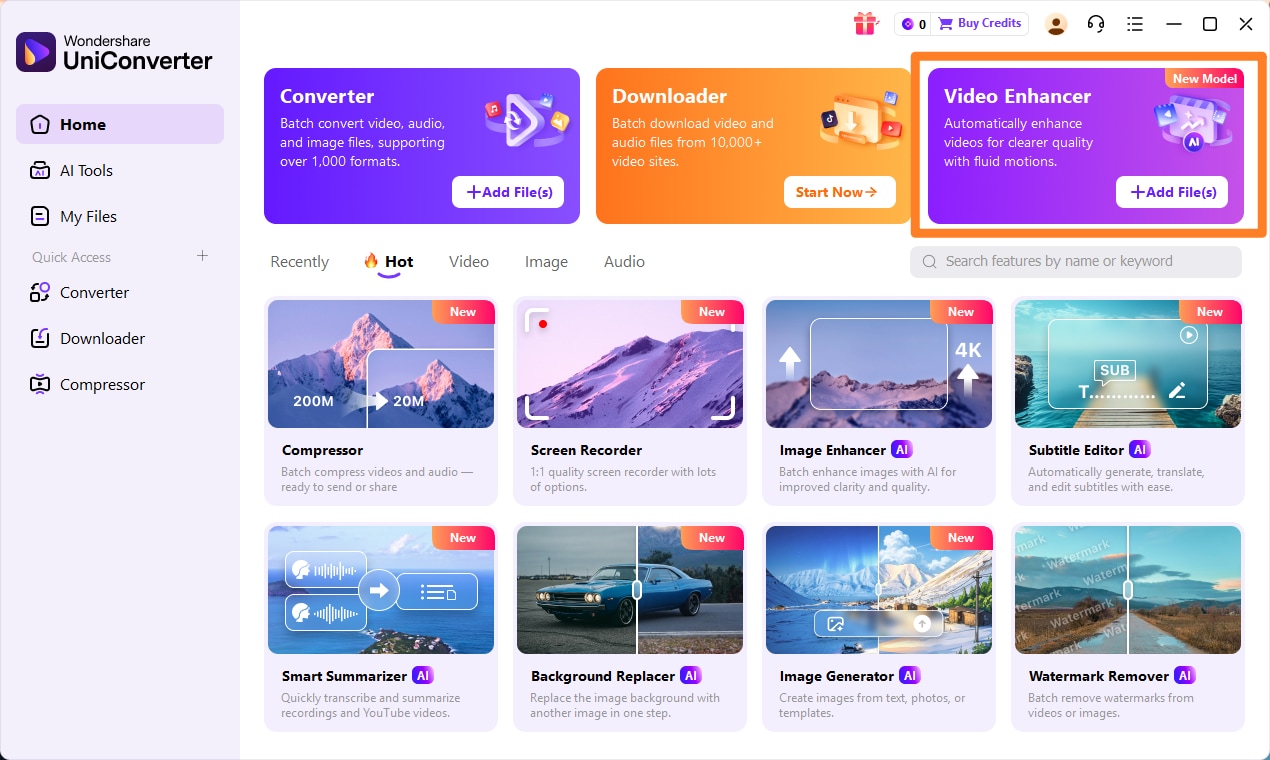
Step 1: Open UniConverter and Choose Video Enhancer
Launch UniConverter on your computer and navigate to the "AI Lab" section. Select the "Video Enhancer" tool to begin the process.
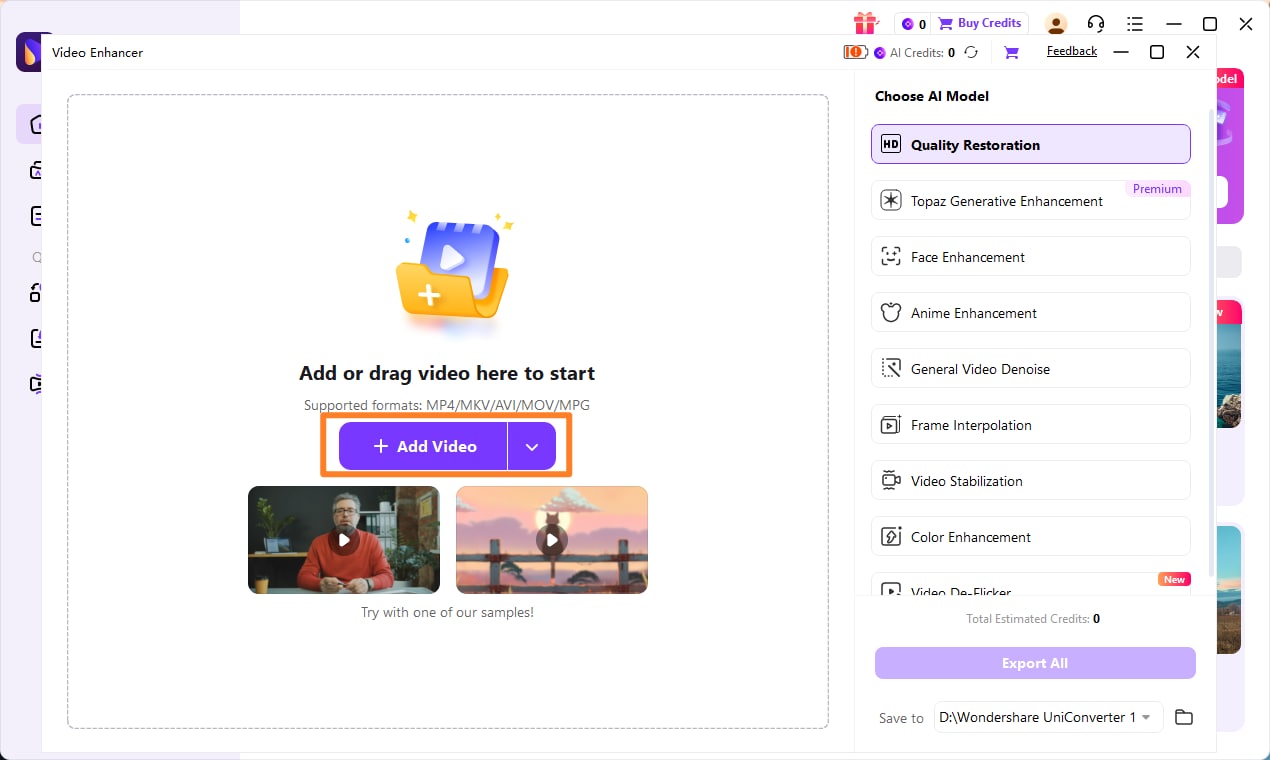
Step 2: Upload the Videos
Click on the "Add Files" button or drag and drop your video files into the UniConverter interface. You can add multiple videos for batch enhancement.
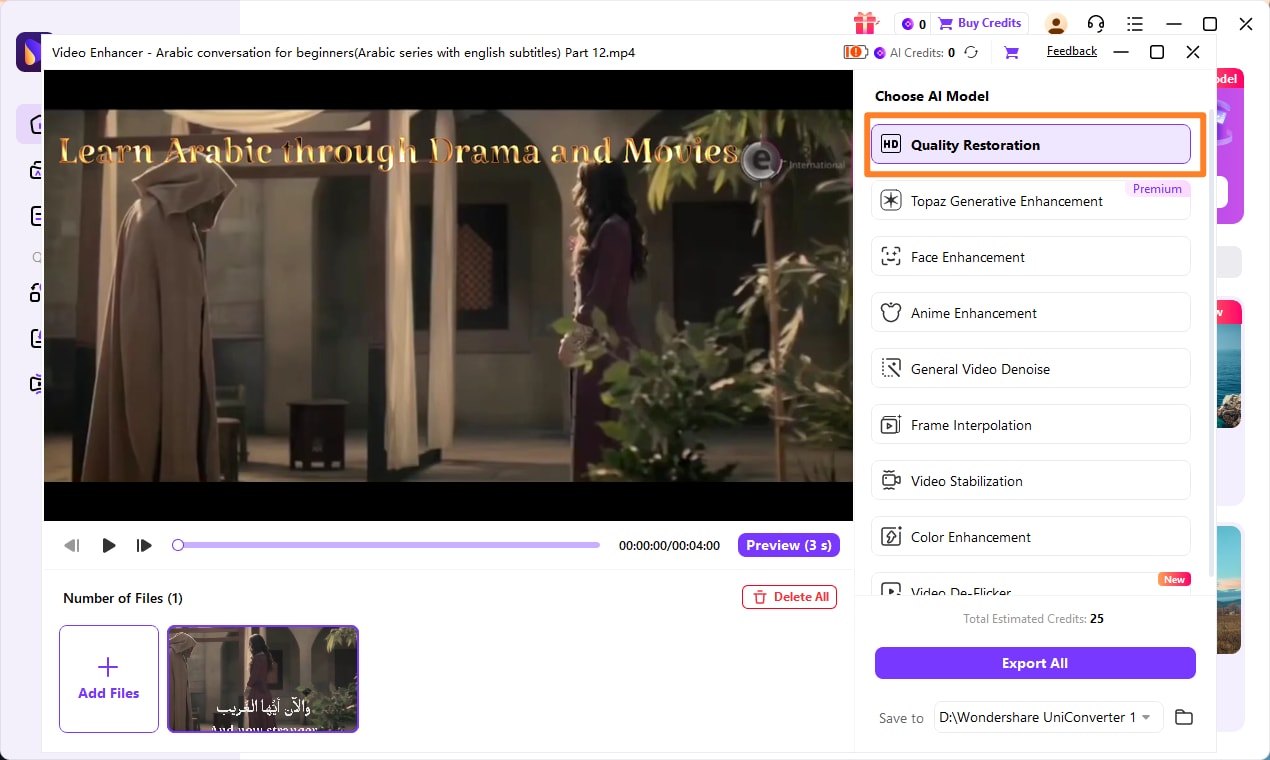
Step 3: Choose Enhancement Model
UniConverter offers various AI enhancement models such as "AI Upscale," "AI Denoise," "AI Sharpen," and "AI Color Correction." Select the model that best suits your video's needs. You can also adjust parameters like resolution, frame rate, and output format.
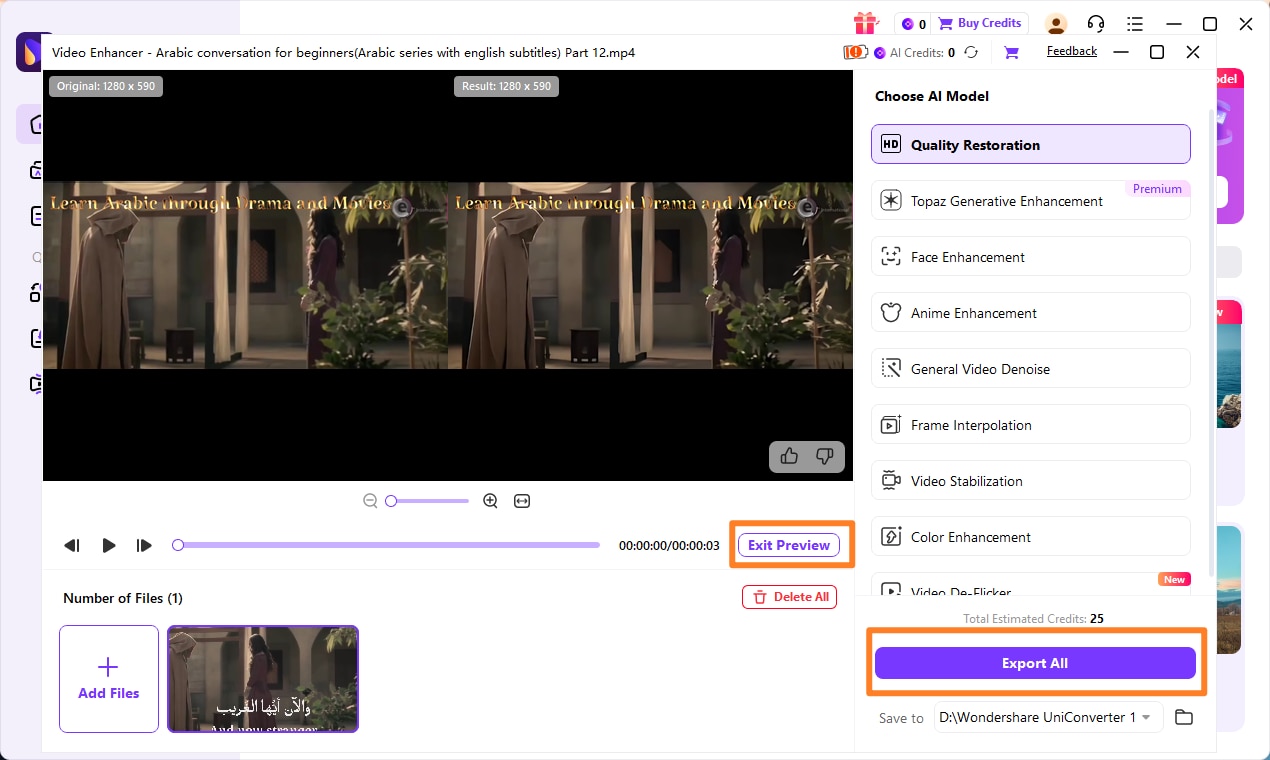
Step 4: Preview and Save the Enhanced Video
After selecting your enhancement options, click "Preview" to see the results. Once satisfied, click the "Export" button to save your enhanced video to your desired location.

Clipchamp Video Enhancer Alternative?
Part 7: Conclusion
In conclusion, the Clipchamp Video Enhancer review reveals it as a user-friendly tool ideal for quick, basic video improvements, especially for social media content creators and casual users within the Microsoft ecosystem. Its simplicity and cloud-based accessibility are significant advantages. However, for more demanding tasks, professional-grade restoration, or users requiring offline capabilities and extensive format support, its limitations become apparent. While Clipchamp serves its niche well, users seeking advanced features, higher output quality, and greater control over the enhancement process should explore alternatives like UniConverter, Topaz Video AI, or DaVinci Resolve. The choice ultimately depends on the user's specific needs, technical proficiency, and budget, balancing ease of use with the depth of enhancement capabilities required.
Part 8: FAQs
-
1. Is Clipchamp Video Enhancer truly free?
Clipchamp offers a free tier with basic features, but advanced enhancement options and higher resolution exports often require a paid subscription.
-
2. Can Clipchamp Video Enhancer improve old, low-resolution footage significantly?
While it can improve some aspects, Clipchamp is generally better suited for minor enhancements on modern footage rather than extensive restoration of very old or severely damaged videos.
-
3. How does Clipchamp handle different video formats?
Clipchamp supports common video formats, but users might encounter limitations with less common or professional-grade codecs.
-
4. Are there any privacy concerns when using cloud-based video enhancers like Clipchamp?
As with any cloud service, users should review Clipchamp's privacy policy regarding data storage and processing, especially for sensitive content.
-
5. What's the main advantage of UniConverter over Clipchamp for video enhancement?
UniConverter often provides more comprehensive enhancement features, offline processing capabilities, and broader format support, making it suitable for more demanding tasks and professional workflows.
