
- Canva's Value: Offers intuitive, integrated video enhancement for quick, basic edits, ideal for social media and beginners.
- Feature Limitations: Lacks advanced controls like noise reduction or detailed color grading, limiting professional use.
- Ideal Users: Best for small businesses and content creators needing fast, simple improvements within Canva's ecosystem.
- Alternatives Comparison: UniConverter provides superior output quality, speed, and advanced features, bridging the gap to professional tools.
- Risks & Pitfalls: Beware of over-processing artifacts, cloud data privacy, subscription limitations, and no offline editing.
- Decision Guide: Choose Canva for simplicity; opt for UniConverter for robust, high-quality, and efficient video enhancement.
In this article
- Part 1: What is Canva Video Enhancer?
- Part 2: Canva Video Enhancer: Core Features, Pros, and Cons
- Part 3: Canva Video Enhancer: Ideal Users and Use Cases
- Part 4: Canva Video Enhancer and Alternatives Comparison
- Part 5: Risks and Pitfalls of Using Canva Video Enhancer
- Part 6: How to Use UniConverter to Efficiently Enhance Videos
- Part 7: Conclusion
- Part 8: FAQs
The digital landscape is increasingly visual, with video content dominating social media feeds and marketing strategies. For many, creating engaging videos is essential, but not everyone has access to professional editing suites or the expertise to use them. This is where tools like Canva's video enhancer come into play, promising to simplify the process of improving video quality. This Canva video enhancer review will delve into its capabilities, comparing it against leading alternatives to help users understand its strengths, limitations, and ideal applications. We'll explore its features, assess its performance in various scenarios, and highlight potential pitfalls, ultimately guiding you toward the best solution for your video enhancement needs.
Part 1: What is Canva Video Enhancer?
Canva, a popular graphic design platform, has expanded its offerings to include video editing and enhancement tools, aiming to democratize video creation for a broader audience. The Canva Video Enhancer is an integrated feature designed to improve the visual quality of videos directly within the Canva ecosystem. It targets users who need quick, accessible solutions for common video issues without requiring deep technical knowledge or expensive software. This review will critically assess its effectiveness and positioning in a rapidly evolving market.
The Rise of AI-Powered Video Editing Tools
The demand for easy-to-use video enhancement is driven by several factors:
* Ubiquitous Video Content: From social media to business presentations, video is everywhere, increasing the need for accessible editing tools.
* User-Friendly Interfaces: Traditional video editing software often has steep learning curves, pushing users towards simpler, intuitive platforms.
* AI Integration: Artificial intelligence is revolutionizing video editing, offering automated solutions for tasks like color correction, stabilization, and upscaling, making professional-grade enhancements more attainable for non-experts.
* Cost-Effectiveness: Many users, especially small businesses and content creators, seek powerful tools that are either free or available at a low subscription cost.
Part 2: Canva Video Enhancer: Core Features, Pros, and Cons
Canva's Video Enhancer offers a suite of basic tools designed to improve video aesthetics. Its core capabilities include adjusting brightness, contrast, saturation, and applying filters. It also provides options for cropping, trimming, and basic stabilization. The platform's strength lies in its integration with Canva's extensive library of templates, graphics, and audio, allowing users to create visually cohesive content.
* Brightness/Contrast Adjustment: Fine-tune the exposure and tonal range of your video.
* Saturation Control: Enhance or desaturate colors for a desired mood.
* Video Filters: Apply preset visual styles to quickly change the video's look.
* Basic Stabilization: Reduce camera shake for smoother footage.
* Smart Crop/Trim: Easily adjust video dimensions and length.
- Pros:
- Intuitive Interface for Quick Edits: The drag-and-drop interface makes video enhancement straightforward, even for complete novices.
- Integrated with Canva's Design Ecosystem: Seamlessly combine enhanced videos with other Canva-created graphics and elements.
- Accessible for Beginners and Non-Professionals: No prior video editing experience is required to achieve decent results.
- Cons:
- Limited Advanced Enhancement Options: Lacks granular control over parameters like noise reduction, sharpening, or advanced color grading.
- Output Quality Can Be Inconsistent for Complex Needs: May struggle with severely underexposed footage, extreme camera shake, or low-resolution source material.
Part 3: Canva Video Enhancer: Ideal Users and Use Cases
Canva's Video Enhancer is primarily designed for individuals and small businesses who need to quickly improve their video content without investing in complex software or professional editors. Its simplicity and integration with a broader design platform make it highly appealing to non-specialists.
* Best Use Case: Social Media Content Creation for Small Businesses and Influencers (e.g., quickly improving short promotional videos for Instagram Stories or TikTok). For a small business owner needing to brighten a product demo video or an influencer wanting to add a consistent filter to their daily vlogs, Canva offers a fast and efficient solution. The ability to enhance and then immediately integrate the video into a social media template saves significant time and effort.
* Limited Use Case: Professional Filmmaking or High-End Commercials Requiring Granular Control and Superior Output Quality. For projects demanding precise color correction, advanced noise reduction, or sophisticated visual effects, Canva's tools are insufficient. A professional videographer working on a feature film or a marketing agency producing a high-budget commercial would find Canva's enhancement capabilities too basic and restrictive.
Part 4: Canva Video Enhancer and Alternatives Comparison
When evaluating video enhancement tools, it's crucial to compare Canva against other popular options to understand its market position and suitability for different users.
| Feature/Tool | Canva Video Enhancer | CapCut | DaVinci Resolve | UniConverter |
| Processing Speed | Moderate | Fast | Very Fast (GPU) | Very Fast (GPU) |
| Output Quality | Basic to Good | Good | Excellent | Excellent |
| Ease of Use | Very High | High | Moderate | High |
| Customer Support | Email/Community | In-App/Community | Forum/Paid Support | 24/7 Email/Live Chat |
| Security | Standard Cloud | Standard Cloud | Local/Cloud | Local/Cloud |
| Cost | Freemium | Freemium | Free/Paid | Paid (Trial available) |
Canva excels in ease of use and integration within its design ecosystem, making it ideal for quick, basic enhancements for social media. CapCut offers a slightly more robust set of mobile-first editing tools, appealing to a similar casual user base but with more dedicated video features. DaVinci Resolve, while free, is a professional-grade suite, offering unparalleled depth in color grading and editing but with a steep learning curve. UniConverter stands out as a versatile desktop solution, providing excellent output quality and speed, especially for batch processing and more advanced enhancement tasks, bridging the gap between basic and professional tools with its user-friendly interface and comprehensive features.
Part 5: Risks and Pitfalls of Using Canva Video Enhancer
While Canva's Video Enhancer offers convenience, users should be aware of potential risks and limitations, particularly when relying on it for critical projects or sensitive content.
Potential for Over-Processing and Artifacts
Automated enhancement tools, especially those designed for simplicity, can sometimes lead to over-processing. Aggressive adjustments to brightness, contrast, or saturation might introduce visual artifacts, banding, or an unnatural look to the video. This is particularly true for low-quality source footage, where the enhancer might try to "fix" issues that are beyond its capabilities, resulting in a degraded rather than improved image. Users should always preview their enhanced videos carefully to ensure the desired outcome.
Data Privacy Concerns with Cloud-Based Editing
As a cloud-based platform, using Canva means uploading your video files to their servers. For individuals or businesses handling sensitive or confidential video content, this raises data privacy concerns. While Canva has security measures in place, the risk of data breaches or unauthorized access, however small, always exists with cloud storage. Users should review Canva's privacy policy and consider the nature of their content before uploading.
Subscription Tier Limitations for High-Quality Output
While Canva offers a free tier, many of the more effective or advanced enhancement features, as well as higher-resolution output options, are often locked behind a Pro subscription. This means that users seeking truly high-quality enhanced videos might find themselves needing to upgrade, which can be an unexpected cost. The free version might only offer basic improvements, limiting its utility for more demanding projects.
Lack of Offline Editing Capabilities
Canva's video enhancer requires an active internet connection to function. This can be a significant drawback for users who need to work on videos in locations with unreliable or no internet access. Professional editors often prefer desktop software for its stability and speed, especially when dealing with large video files, as cloud-based processing can be slower and dependent on network bandwidth.
Part 6: How to Use UniConverter to Efficiently Enhance Videos
When other tools fall short in batch processing, stable enhancement, or delivering noticeable improvements, UniConverter emerges as a robust alternative. It bypasses common issues like inconsistent quality, intrusive ads, and limited format support, offering a comprehensive solution for video enhancement. UniConverter is designed as an all-in-one toolkit, providing a stable, lossless, and GPU-accelerated enhancement experience for a wide array of formats, making it an ultimate solution for both personal and professional projects.
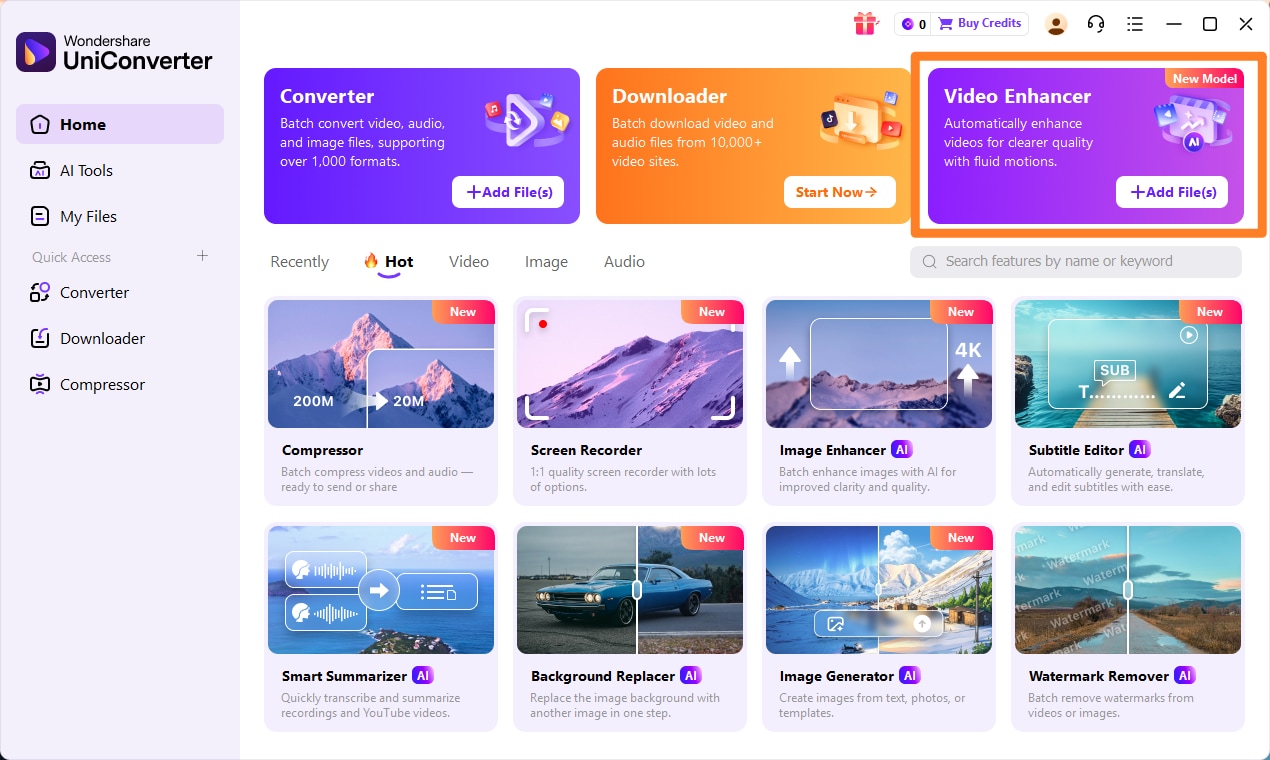
Step 1: Open UniConverter and Choose Video Enhancer
Launch UniConverter on your computer. Navigate to the "AI Lab" section and select the "Video Enhancer" tool.
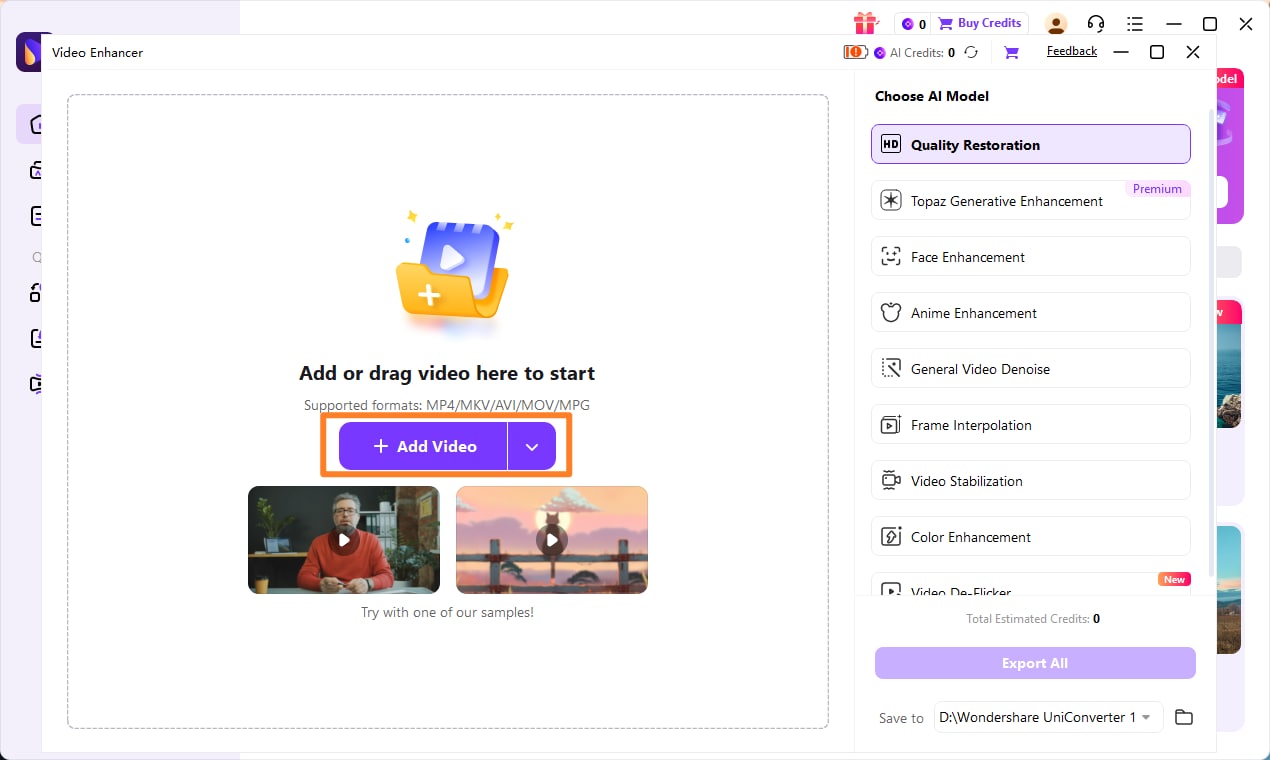
Step 2: Upload the Videos
Click on "Add Files" or drag and drop your video files into the UniConverter interface. You can add multiple videos for batch processing.
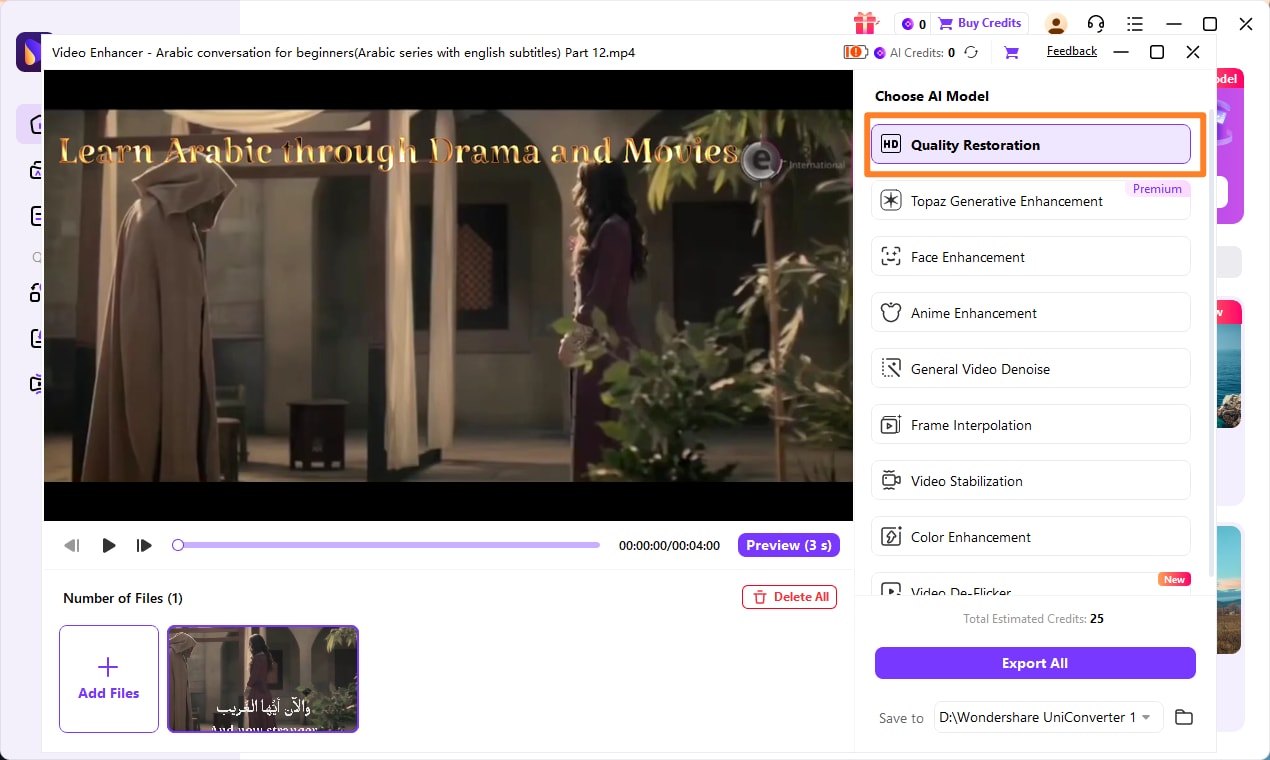
Step 3: Choose Enhancement Model
Select the desired enhancement model (e.g., AI Upscale, AI Denoise, AI Color Correction) and adjust specific parameters as needed.
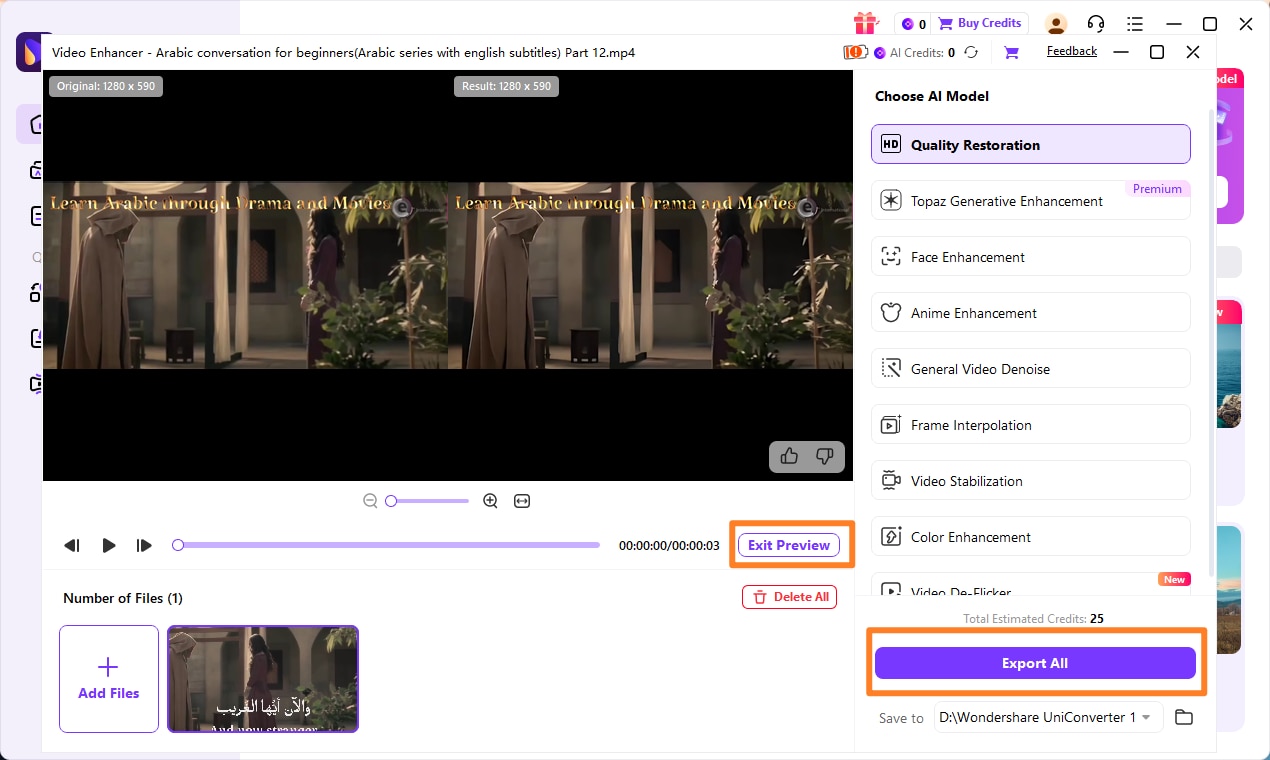
Step 4: Preview and Save the Enhanced Video
Preview the enhanced video to ensure satisfaction. Once ready, choose your output format and destination, then click "Export" to save your high-quality video.

Seeking a Powerful Canva Video Enhancer Alternative?
Part 7: Conclusion
This Canva video enhancer review highlights its role as an accessible tool for basic video improvements, particularly for social media content creators and small businesses. Its intuitive interface and integration within the broader Canva ecosystem make it an excellent choice for users seeking quick, no-fuss enhancements without prior editing experience. However, for those requiring advanced control, professional-grade output, or dealing with complex video issues, Canva's limitations become apparent. Tools like UniConverter offer a more comprehensive and robust solution, bridging the gap between basic and professional needs with superior enhancement capabilities, batch processing, and offline functionality. Ultimately, the best tool depends on the user's specific requirements, technical proficiency, and the desired quality of the final video.
Part 8: FAQs
-
1. Is Canva Video Enhancer truly free?
Canva offers a free tier with basic video enhancement features, but advanced options often require a Pro subscription.
-
2. Can Canva Video Enhancer improve low-light footage significantly?
It can offer some improvement, but dedicated video enhancement software will yield better results for severely underexposed footage.
-
3. What file formats does Canva Video Enhancer support?
Canva supports common video formats like MP4, MOV, and AVI for upload and export.
-
4. Is there a limit to video length for enhancement in Canva?
While there isn't a strict length limit, very long videos may experience slower processing times and potential performance issues.
-
5. How does Canva Video Enhancer compare to professional video editing software?
Canva is designed for ease of use and quick edits, whereas professional software offers far more granular control, advanced features, and higher output quality.
