
- Bazaart Overview: Bazaart Image Enhancer offers AI-powered mobile photo enhancement for quick, on-the-go edits.
- Core Features: It provides AI detail recovery, color correction, noise reduction, and sharpening with one-tap ease.
- Pros & Cons: Enjoy intuitive interface and AI power; face limited customization and subscription costs.
- Ideal Users: Perfect for social media creators needing fast, convenient mobile enhancements for quick shares.
- Use Case Limits: Not suitable for professional print or high-resolution work due to potential over-processing.
- Competitor Comparison: Bazaart is mobile-first; UniConverter offers desktop power, batch processing, and control.
- Risks: Beware of data privacy, potential over-processing, subscription fatigue, and performance on older devices.
- UniConverter Alternative: UniConverter provides robust, lossless, and fast image enhancement with batch processing.
- Final Verdict: Bazaart is great for casual mobile use, but professionals need more powerful, controlled alternatives.
In this article
- Part 1: What is Bazaart Image Enhancer?
- Part 2: Bazaart Image Enhancer: Core Features, Pros, and Cons
- Part 3: Bazaart Image Enhancer: Ideal Users and Use Cases
- Part 4: Bazaart Image Enhancer vs. Competitors
- Part 5: Risks and Pitfalls to Consider
- Part 6: How to Use UniConverter to Efficiently Enhance Images
- Part 7: Final Verdict and Recommendations
- Part 8: FAQs
When I first heard about Bazaart Image Enhancer, I was intrigued. As someone constantly looking for ways to quickly improve my mobile photos, the promise of AI-powered enhancement directly within an editing app sounded like a dream. This Bazaart image enhancer review will dive deep into my personal experience, comparing it to other tools I've used and highlighting its strengths and weaknesses. I'll share my insights on who this tool is best for, what pitfalls to watch out for, and even suggest a powerful alternative for those needing more robust features. My goal is to help you decide if Bazaart Image Enhancer fits your workflow, based on my hands-on testing.
Part 1: What is Bazaart Image Enhancer?
Bazaart Image Enhancer is an integrated feature within the popular Bazaart photo and video editing app, designed to automatically improve the quality of your images using artificial intelligence. It's positioned as a quick-fix solution for common photo imperfections, aiming to make your pictures look sharper, clearer, and more vibrant with minimal effort. I initially thought it would be just another filter, but it actually attempts to intelligently reconstruct details and adjust colors. This review will tackle the core question: Can a mobile-first AI enhancer truly deliver professional-grade results, or is it just a convenient gimmick for casual users?
The Rise of AI Image Enhancement Tools
The digital age has brought with it an explosion of visual content, and with that, a growing need for tools that can quickly and effectively improve image quality.
* The ubiquity of smartphone photography: Everyone's a photographer now, but not every shot is perfect.
The demand for instant gratification: We want our photos to look amazing, and we want it now*.
* The power of AI: Artificial intelligence has made incredible strides in image processing, offering solutions that were once impossible or required extensive manual work.
* Social media's visual-first culture: High-quality visuals are crucial for standing out online.
Part 2: Bazaart Image Enhancer: Core Features, Pros, and Cons
From my time using it, the Bazaart Image Enhancer really focuses on simplicity and speed. Its core ability lies in its AI algorithms that analyze and "enhance" images, typically by sharpening details, adjusting contrast, and boosting colors. I found it particularly useful for those quick edits when I didn't have time to dive into more complex software.
* AI-Powered Detail Recovery: It attempts to bring out lost details in blurry or low-resolution images.
* Automatic Color Correction: The tool adjusts hues, saturation, and brightness for a more balanced look.
* Noise Reduction: It works to smooth out graininess, especially in photos taken in low light.
* Sharpening: Edges and textures are made more defined without (usually) over-sharpening.
* One-Tap Enhancement: The primary mode is a simple button press for instant results.
Pros:
* Intuitive Interface for Quick Edits: Honestly, it's incredibly easy to use. I just tap a button, and it does its thing. Perfect for on-the-go adjustments.
* AI-Powered Enhancement for Detail Recovery: For many of my casual photos, especially those taken in less-than-ideal lighting, it genuinely made a noticeable difference in clarity.
* Seamless Integration with Bazaart's Editing Suite: If you're already using Bazaart for other edits, this feature is right there, making the workflow incredibly smooth.
Cons:
* Limited Customization Options for Advanced Users: This was a bit of a letdown for me. If I wanted fine-tuned control over the enhancement, I was out of luck. It's mostly an "all or nothing" deal.
* Subscription Model for Full Functionality: While there's a free trial, getting the most out of it, especially for higher resolution exports, requires a subscription. I initially thought I could get by with the free version, but the limitations quickly pushed me towards considering the paid tier.
Part 3: Bazaart Image Enhancer: Ideal Users and Use Cases
Based on my experience, Bazaart Image Enhancer shines in specific scenarios and for particular types of users. It's not a one-size-fits-all solution, and understanding its sweet spot is key to avoiding disappointment.
Best Use Case: Social Media Content Creation on the Go
This is where Bazaart Image Enhancer truly excels. If you're like me, constantly snapping photos for Instagram stories, TikTok, or quick Facebook posts, and you need to make them pop fast, this tool is your friend. I've used it countless times to quickly brighten a dull selfie, sharpen a blurry product shot for a quick ad, or enhance a travel photo before sharing. The mobile-first design means I can do it all from my phone, without needing to transfer files to a computer. It's all about speed and convenience for immediate sharing.
Limited Use Case: Professional Print Photography Enhancement
Here's where I'd advise caution. While Bazaart can make a photo look better on a small screen, I wouldn't rely on it for professional print work or high-resolution projects. I once tried to enhance a photo for a small print, and while it looked okay on my phone, the printed version revealed some artifacts and over-processed areas that weren't acceptable. The AI enhancement, while good for quick fixes, can sometimes introduce an artificial look, especially when zoomed in or printed large. If you're a professional photographer or need pixel-perfect results for client work, you'll find its capabilities too restrictive and potentially damaging to image integrity.
Part 4: Bazaart Image Enhancer vs. Competitors
When I look at Bazaart Image Enhancer, I always compare it to other tools I've used. It's important to understand where it stands in the broader landscape.
| Feature/Tool | Bazaart Image Enhancer | UniConverter | Topaz Photo AI | Adobe Lightroom Mobile |
| Ease of Use | High | High | Medium | Medium |
| AI Enhancement Quality | Good | Excellent | Excellent | Good |
| Customization | Low | High | High | Medium |
| Price Model | Subscription | One-time/Subscription | One-time | Subscription |
| Platform | Mobile | Desktop/Mobile | Desktop | Mobile/Desktop |
| Processing Speed | Fast | Very Fast | Fast | Medium |
| Batch Processing | No | Yes | Yes | Limited |
Key Differentiators: Mobile-First vs. Desktop Power
For me, the biggest differentiator is the platform. Bazaart is undeniably mobile-first. It's designed for quick, on-the-go edits, and it does that well. However, when I need serious enhancement, especially for multiple images or larger files, I turn to desktop solutions like Topaz Photo AI or UniConverter. Topaz Photo AI, for instance, offers incredibly sophisticated noise reduction and sharpening that Bazaart simply can't match, but it comes with a steeper learning curve and a higher price tag. UniConverter, on the other hand, offers a fantastic balance, providing powerful AI enhancement with batch processing capabilities that Bazaart lacks, and it's available on both desktop and mobile, giving me more flexibility. Lightroom Mobile offers more manual control than Bazaart, but its AI enhancement isn't as dedicated or as powerful as specialized tools. If you're just looking for a quick mobile boost, Bazaart is convenient. But if you need more control, better quality, or batch processing, you'll need to look elsewhere.
Part 5: Risks and Pitfalls to Consider
While Bazaart Image Enhancer offers convenience, I've learned that it's crucial to be aware of its potential downsides. Nothing is perfect, and understanding these risks can save you a lot of frustration.
Data Privacy Concerns
This is a big one for me. When I upload my photos to any cloud-based service, I always wonder where my data is going and how it's being used. While Bazaart has a privacy policy, the nature of AI enhancement often means your images are processed on their servers. I've always been cautious about uploading sensitive or personal photos, especially since the terms of service can be vague about data retention and usage for AI model training. It's a trade-off between convenience and privacy that I constantly weigh.
Potential for Over-Processing and Unnatural Results
I've definitely seen this happen. Sometimes, in its attempt to "enhance" an image, Bazaart's AI can go a bit overboard. Colors can become oversaturated, details can look artificially sharpened, and skin tones can appear plastic-like. What looks good on a small phone screen might look completely unnatural when viewed on a larger display or printed. I've had to re-edit photos because the AI enhancement made them look too "fake," losing the original mood or authenticity. It's a fine line between enhancement and distortion.
Subscription Fatigue and Hidden Costs
Like many apps these days, Bazaart operates on a subscription model for its full features. While the initial free trial is enticing, I quickly hit a wall with limitations on exports or access to certain tools. This leads to what I call "subscription fatigue." It's another monthly or annual fee to keep track of, and if you're only using the enhancer occasionally, the cost might not justify the benefit. I always recommend checking the pricing tiers carefully to see if it aligns with your actual usage frequency and needs.
Compatibility Issues with Older Devices
I've noticed that on older phones or tablets, Bazaart, especially the AI enhancement feature, can be a bit sluggish. The app might crash, or the processing time can be significantly longer. This isn't unique to Bazaart, as AI processing is computationally intensive, but it's something to consider if your device isn't the latest model. It can definitely impact the "quick edit" experience if you're constantly waiting for the app to catch up.
Part 6: How to Use UniConverter to Efficiently Enhance Images
Sometimes, Bazaart's limitations, such as its lack of batch processing, potential for over-processing, or inconsistent enhancement quality, can be a real headache. When I need a more reliable and powerful solution, especially for multiple images or when I want more control, I turn to UniConverter. It's a fantastic all-in-one tool that offers robust image enhancement without the ads or privacy concerns often found in mobile apps. UniConverter provides stable, lossless enhancement with GPU acceleration, making it incredibly fast, and it supports a wide range of formats. It's my go-to for a truly comprehensive solution for enhancing images.
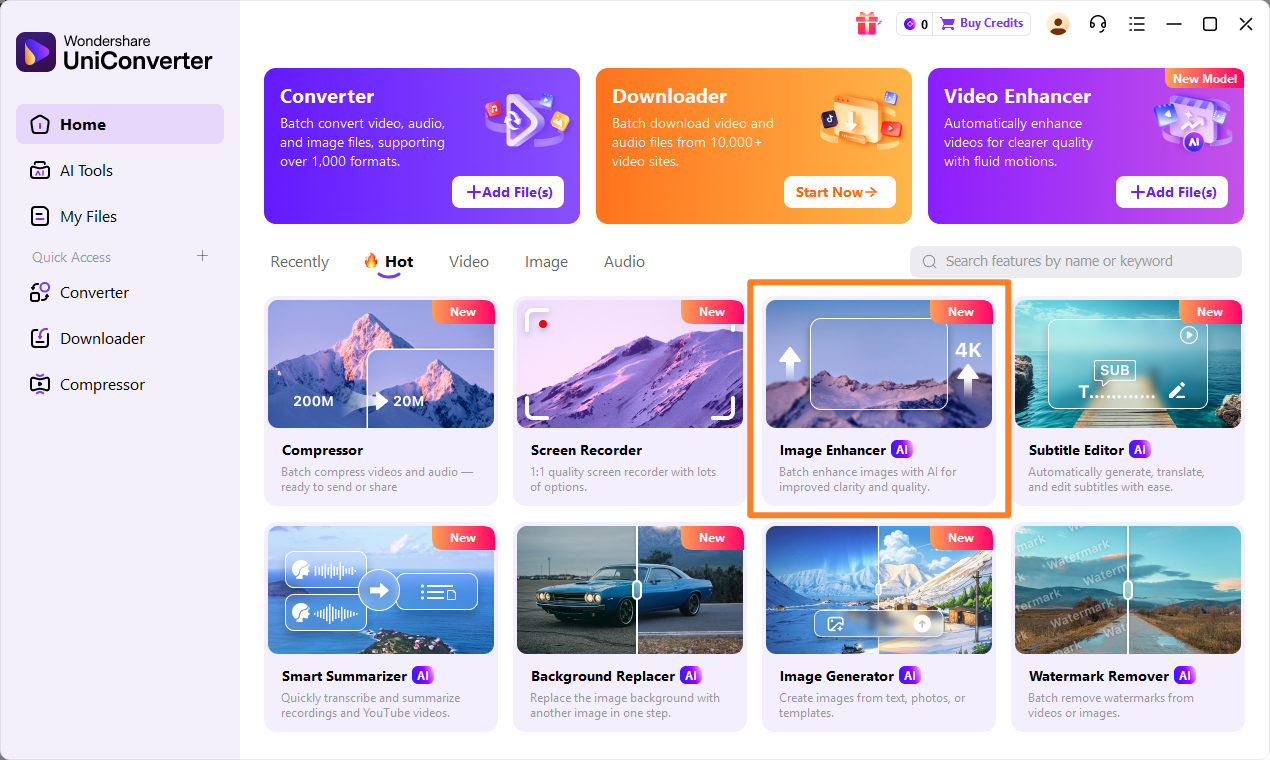
Step 1: Open UniConverter and Choose Image Enhancer
First, I launch UniConverter on my desktop. On the main interface, I navigate to the "Toolbox" section and select the "Image Enhancer" feature. It's usually pretty easy to spot.
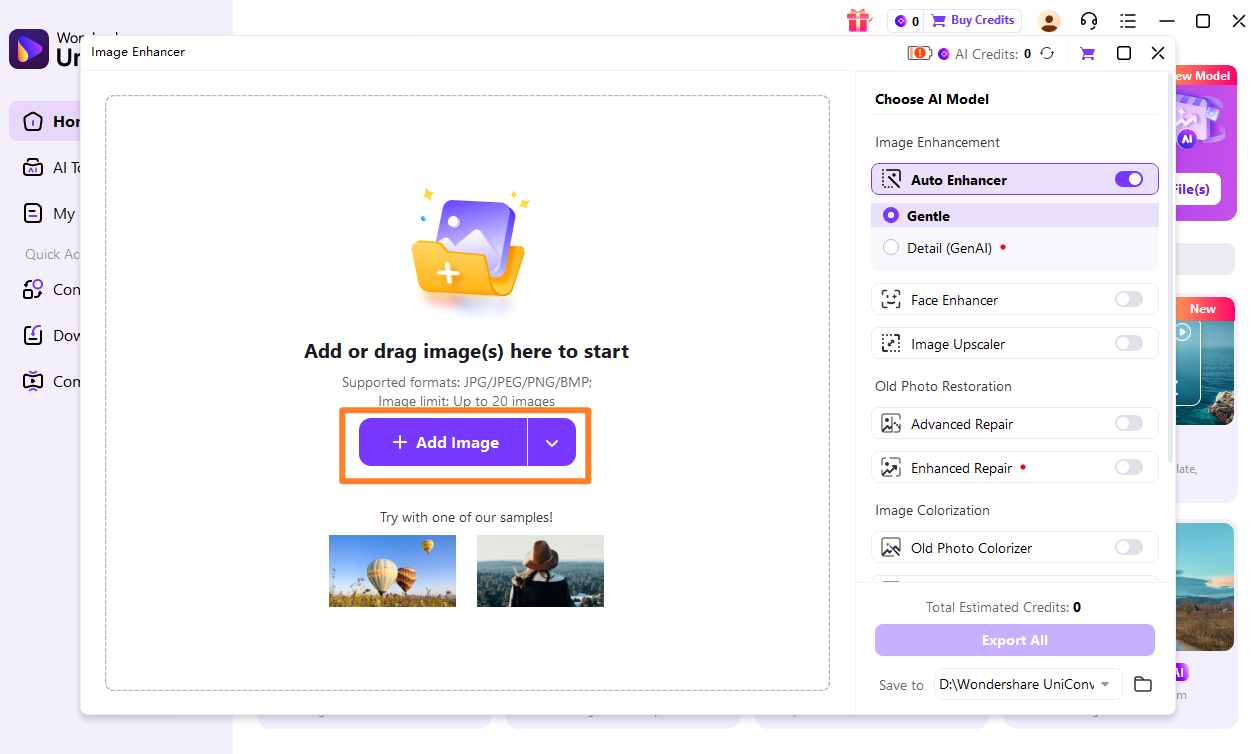
Step 2: Upload the Images
Next, I simply drag and drop the images I want to enhance into the UniConverter window. I love that I can upload multiple images at once, which is a huge time-saver compared to mobile apps.
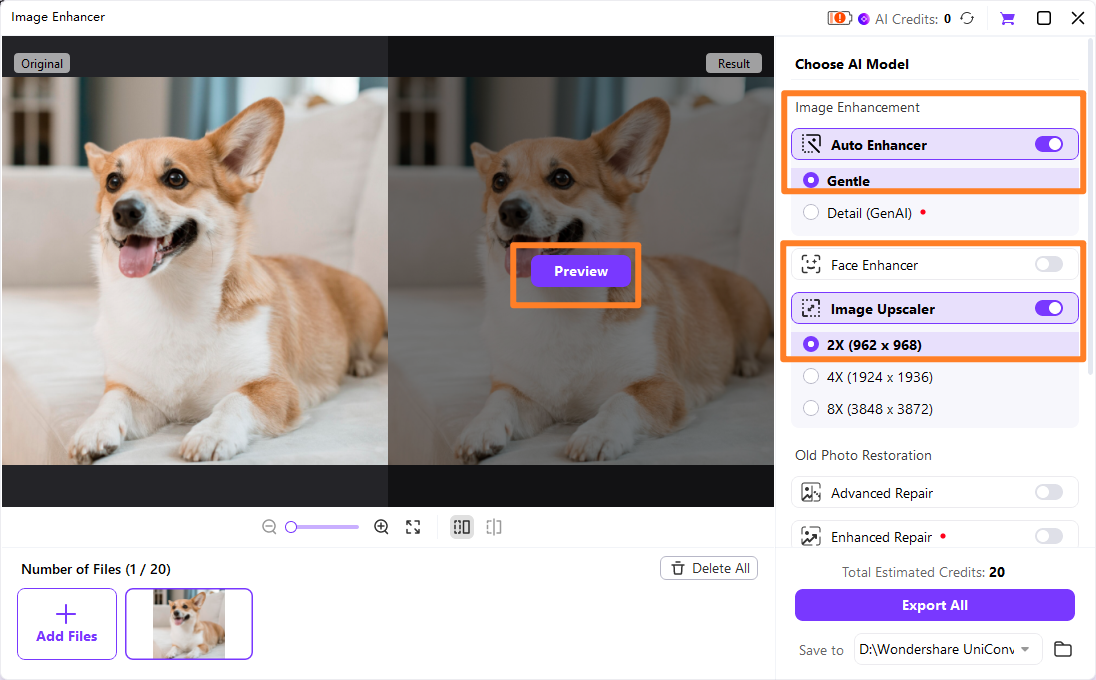
Step 3: Choose Enhancement Model
Once my images are loaded, UniConverter offers different AI enhancement models. I can choose the one that best suits my needs, whether it's for general enhancement, noise reduction, or sharpening. I can also adjust parameters to get the exact look I want.
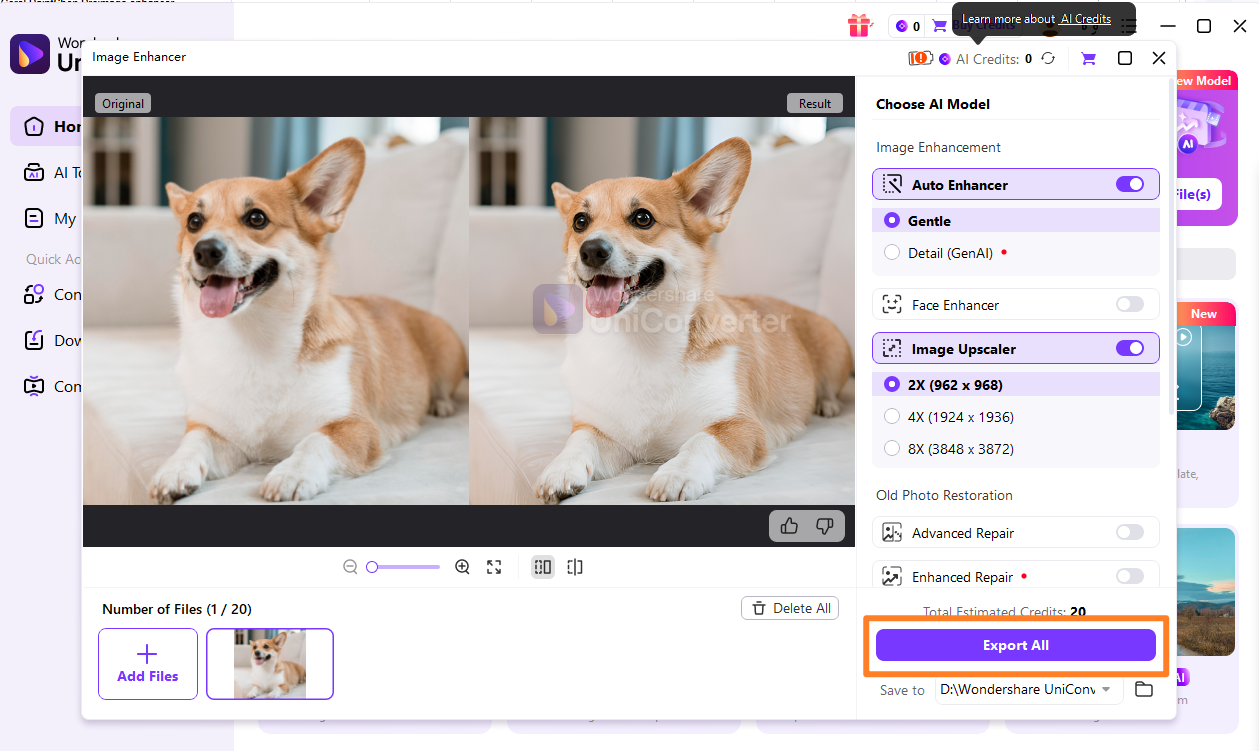
Step 4: Preview and Save the Enhanced Images
Before saving, I always use the preview feature to compare the enhanced image with the original. This allows me to make any final tweaks. Once I'm happy, I hit the "Export" button, and UniConverter saves my high-quality, enhanced images to my chosen destination.

Bazaart Image Enhancer Alternative?
Part 7: Final Verdict and Recommendations
After spending considerable time with Bazaart Image Enhancer, my Bazaart image enhancer review concludes that it's a tool with a clear niche. It's incredibly convenient for quick, on-the-go mobile edits, especially for social media. The AI enhancement can genuinely improve casual photos, making them more presentable with minimal effort. However, its limitations in customization, the subscription model, and the potential for over-processing mean it's not a universal solution. For serious photographers or those needing precise control and high-quality output for print or professional use, dedicated desktop software or more robust mobile alternatives are necessary. It's a good tool for what it is, but understanding its boundaries is crucial to avoid disappointment.
Part 8: FAQs
-
1. Is Bazaart Image Enhancer free to use?
While Bazaart offers a free version and a trial, the full functionality of the Image Enhancer, including high-resolution exports and unlimited usage, typically requires a paid subscription. You'll likely encounter limitations without it.
-
2. How does Bazaart's AI enhancement compare to other tools?
Bazaart's AI enhancement is good for quick, automatic improvements on mobile. It's very user-friendly. However, it generally doesn't offer the same level of detail recovery, noise reduction, or fine-tuned control as professional desktop tools like Topaz Photo AI or even more comprehensive mobile editors like Adobe Lightroom.
-
3. Can Bazaart Image Enhancer improve old, blurry photos?
It can certainly attempt to improve old or slightly blurry photos by sharpening details and reducing noise. For severely damaged or extremely blurry images, its capabilities might be limited, and you might see artificial-looking results. It's best for minor to moderate imperfections.
-
4. What are the best alternatives to Bazaart Image Enhancer?
For mobile users needing more control, Adobe Lightroom Mobile is a strong alternative. For desktop users seeking powerful AI enhancement and batch processing, UniConverter and Topaz Photo AI are excellent choices, offering superior quality and customization.
-
5. Is my data safe when using Bazaart Image Enhancer?
Bazaart, like most cloud-based apps, has a privacy policy outlining how they handle your data. However, whenever you upload personal images to a third-party server for processing, there's always an inherent level of risk. It's wise to review their privacy policy and avoid uploading highly sensitive images if you have concerns.
