
- Avid Media Composer: Industry-standard for film/broadcast, powerful media management, collaborative features, but steep learning curve and high cost.
- Enhancement Limitations: Avid's built-in tools are basic; relies on third-party plugins for advanced video enhancement.
- Ideal Use: Best for large-scale, collaborative feature film and broadcast productions requiring robust media handling.
- Alternatives Comparison: DaVinci Resolve excels in color grading and AI enhancement; UniConverter offers user-friendly, efficient enhancement.
- Enhancement Risks: Over-processing leads to unnatural results, plugin compatibility issues, and performance impact on older hardware.
- UniConverter Solution: Provides stable, lossless, GPU-accelerated video enhancement with batch processing, overcoming Avid's limitations.
In this article
- Part 1: What is Avid Media Composer?
- Part 2: Avid Media Composer: Core Features, Pros, and Cons
- Part 3: Avid Media Composer: Ideal Users and Scenarios
- Part 4: Avid Media Composer and Alternatives Comparison
- Part 5: Risks and Pitfalls When Enhancing Video in Avid Media Composer
- Part 6: How to Use UniConverter for Efficient Video Enhancement
- Part 7: Conclusion
- Part 8: FAQs
Avid Media Composer Video Enhancer Review: Elevating Your Edits
Avid Media Composer has long been a cornerstone in professional video editing, renowned for its robust capabilities in handling complex projects. However, the ever-evolving demands of high-quality video production, particularly in the realm of visual enhancement, raise questions about its standalone prowess. This Avid Media Composer video enhancer review will delve into its built-in enhancement tools, compare them against leading competitors, and explore alternative solutions for achieving pristine video quality. We aim to provide a comprehensive analysis to help users, from seasoned professionals to aspiring creators, make informed decisions about their video enhancement workflows.
Part 1: What is Avid Media Composer?
Avid Media Composer is a professional non-linear editing system (NLE) widely used in the film, television, and broadcast industries. It is celebrated for its powerful media management, collaborative features, and stability in handling large-scale projects. While primarily known for its editing capabilities, it also incorporates a suite of tools for color correction, effects, and basic video enhancement. This review seeks to evaluate how effectively Avid Media Composer addresses the growing need for advanced video enhancement, especially in an era where visual fidelity is paramount.
The Landscape of Professional Video Editing Software
The professional video editing landscape is highly competitive, with several powerful NLEs vying for market share. Each software offers a unique set of features and caters to different user needs. Key challenges and user pain points in this domain include:
* Achieving broadcast-quality visuals: The demand for pristine, high-resolution video is constant.
* Efficient workflows for complex projects: Managing vast amounts of media and collaborating effectively are crucial.
* Balancing powerful features with ease of use: Professionals need advanced tools without overly steep learning curves.
* Cost-effectiveness and accessibility: Finding a solution that fits budget and technical skill levels.
Part 2: Avid Media Composer: Core Features, Pros, and Cons
Avid Media Composer offers a comprehensive set of features designed for professional video production. Its core strengths lie in its ability to handle complex timelines, manage vast media libraries, and facilitate collaborative workflows. For video enhancement, it provides built-in color correction, basic noise reduction, and a framework for integrating third-party plugins.
Pros:
* Industry-Standard Professional Editing Suite: Widely adopted in film and television, ensuring compatibility and extensive resources.
* Robust Media Management and Collaboration Tools: Excellent for large teams and complex projects, with powerful bin locking and project sharing.
* Advanced Color Correction and Grading Capabilities: Offers precise control over color, contrast, and luminance, essential for professional enhancement.
Cons:
* Steep Learning Curve for New Users: Its interface and workflow can be intimidating for those unfamiliar with professional NLEs.
* High Subscription Cost: The financial investment can be substantial, especially for independent creators or small businesses.
Part 3: Avid Media Composer: Ideal Users and Scenarios
Avid Media Composer is tailored for specific user demographics and production environments where its strengths truly shine. Understanding these scenarios helps in determining if it's the right fit for your video enhancement needs.
Best-Fit Scenario: High-End Feature Film and Broadcast Production
Avid Media Composer excels in environments requiring meticulous media management, robust collaboration, and the ability to handle extremely large and complex projects. For feature films, television series, and broadcast news, where multiple editors, assistants, and sound designers work concurrently on a single project, Avid's project sharing and bin locking features are indispensable. Its stability and precision in editing, combined with its advanced color tools, make it a powerhouse for achieving cinematic and broadcast-quality visuals. Video enhancement in this context often involves detailed color grading, noise reduction, and visual effects integration, all of which Avid can facilitate, often with the help of specialized third-party plugins.
Limited Scenario: Quick Social Media Edits or Casual Home Videos
For users needing to quickly edit and enhance short-form content for social media, or for individuals working on casual home videos, Avid Media Composer is often overkill. Its steep learning curve, high cost, and extensive feature set are not necessary for simpler tasks. Simpler, more intuitive, and often more affordable software solutions are better suited for these scenarios, where speed and ease of use take precedence over deep technical control and collaborative complexity.
Part 4: Avid Media Composer and Alternatives Comparison
| Feature/Aspect | Avid Media Composer | Adobe Premiere Pro | DaVinci Resolve | Final Cut Pro |
| Video Enhancement | Built-in tools, third-party plugins | Built-in tools, extensive plugins | Advanced color grading, AI tools | Built-in tools, motion graphics |
| Collaboration | Excellent | Good | Good | Limited |
| Learning Curve | High | Moderate | Moderate | Low |
| Cost | High Subscription | Subscription | Free/Paid Studio | One-time purchase |
| Target Audience | Broadcast, Film | General Pro | Colorists, Editors | Apple Users |
Key Differentiators and Why They Matter
Avid Media Composer stands out for its unparalleled collaboration features and robust media management, making it the industry standard for large-scale productions. Adobe Premiere Pro offers a more integrated ecosystem with other Adobe Creative Cloud apps, appealing to a broader range of creative professionals. DaVinci Resolve, particularly its Studio version, is renowned for its superior color grading and increasingly powerful AI-driven enhancement tools, often preferred by colorists. Final Cut Pro, exclusive to Apple users, provides a streamlined and intuitive editing experience with strong motion graphics integration. For pure video enhancement, DaVinci Resolve often leads with its dedicated color science and AI capabilities, while Avid relies more heavily on its foundational color tools and third-party plugin ecosystem.
Part 5: Risks and Pitfalls When Enhancing Video in Avid Media Composer
While Avid Media Composer provides powerful tools for video enhancement, users must be aware of potential risks and pitfalls that can compromise the final output or workflow efficiency.
Potential for Over-Processing and Unnatural Results
One of the most common mistakes is over-applying enhancement effects. Excessive sharpening can introduce artifacts, while aggressive noise reduction can lead to a "plastic" or "waxy" look, stripping away natural film grain or texture. Over-saturation or extreme color grading can also make footage appear artificial and detract from its original aesthetic.
Compatibility Issues with Third-Party Enhancement Plugins
Avid's reliance on third-party plugins for advanced enhancement introduces potential compatibility issues. Plugins may not always be up-to-date with the latest Avid version, leading to crashes, unexpected behavior, or rendering errors. This can disrupt workflows and require extensive troubleshooting.
Performance Impact on Older Hardware
Applying complex video enhancement effects, especially in high resolutions (4K, 8K), is computationally intensive. Older or underpowered hardware may struggle to process these effects in real-time, leading to slow playback, prolonged rendering times, and overall workflow bottlenecks. This can significantly impact productivity.
Data Security and Privacy Concerns with Cloud-Based Workflows
While Avid offers cloud-based collaboration features, using third-party cloud storage or enhancement services can introduce data security and privacy risks. Sensitive project files or unreleased content could be vulnerable to breaches if not properly secured, potentially leading to leaks or intellectual property theft.
Licensing and Copyright Implications of Enhanced Content
When using AI-powered enhancement tools or certain third-party plugins, it's crucial to understand their licensing terms. Some tools might claim ownership or usage rights over the enhanced content, or their output might inadvertently incorporate copyrighted elements from their training data. Users must ensure they have the necessary rights to use and distribute the enhanced video.
Part 6: How to Use UniConverter for Efficient Video Enhancement
When other tools fall short in batch processing, stability, or enhancement effectiveness, UniConverter emerges as a robust alternative. It offers a comprehensive, user-friendly solution for enhancing video quality without the complexities or limitations often found in professional NLEs. UniConverter provides a stable, lossless, and GPU-accelerated enhancement experience, supporting a wide range of formats and offering batch processing capabilities, making it an all-in-one ultimate solution. For instance, its capabilities extend to advanced features like background replacer for videos, allowing users to easily change video backgrounds with precision. This tool also excels at removing backgrounds without losing quality, ensuring your enhanced videos maintain their integrity.
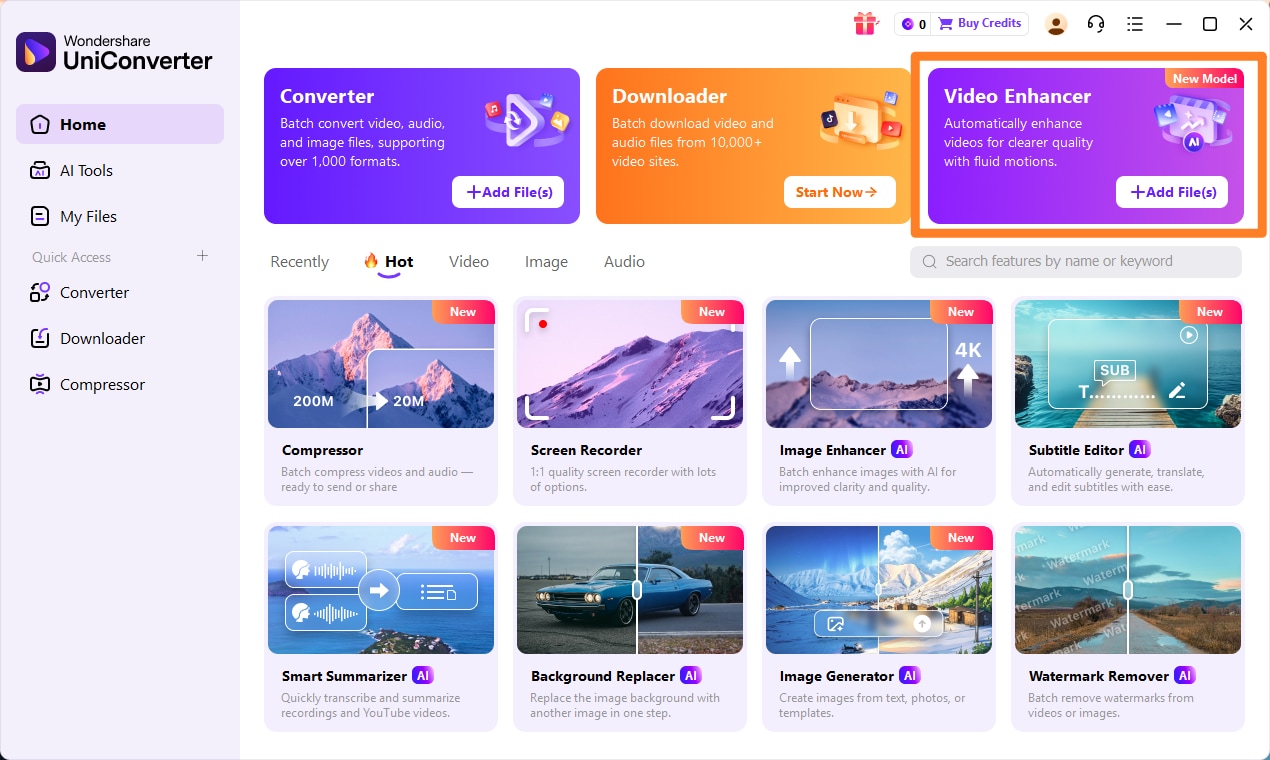
Step 1: Open UniConverter and Choose Video Enhancer
Launch UniConverter on your computer. From the main interface, navigate to the "Toolbox" section and select the "Video Enhancer" feature.
Step 2: Upload the Videos
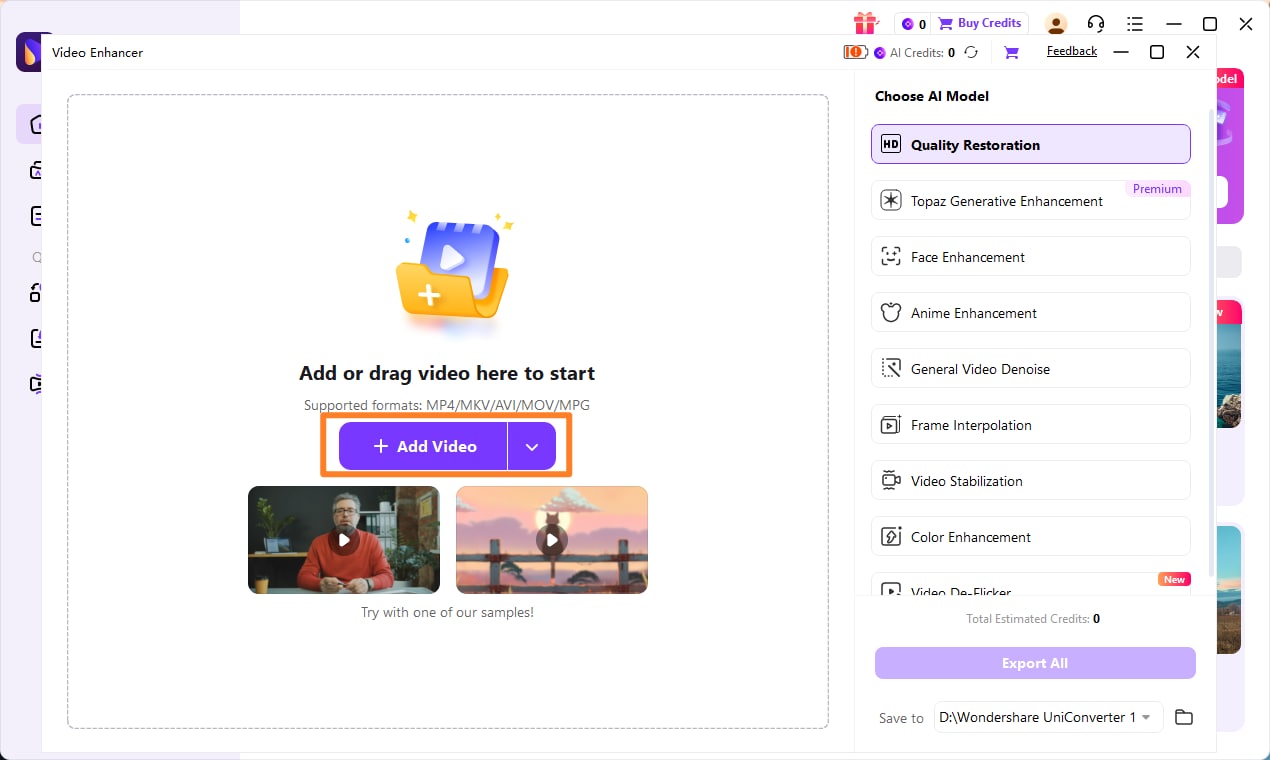
Click on the "Add Files" button or drag and drop your video files into the UniConverter interface. You can add multiple videos for batch processing.
Step 3: Choose Enhancement Model
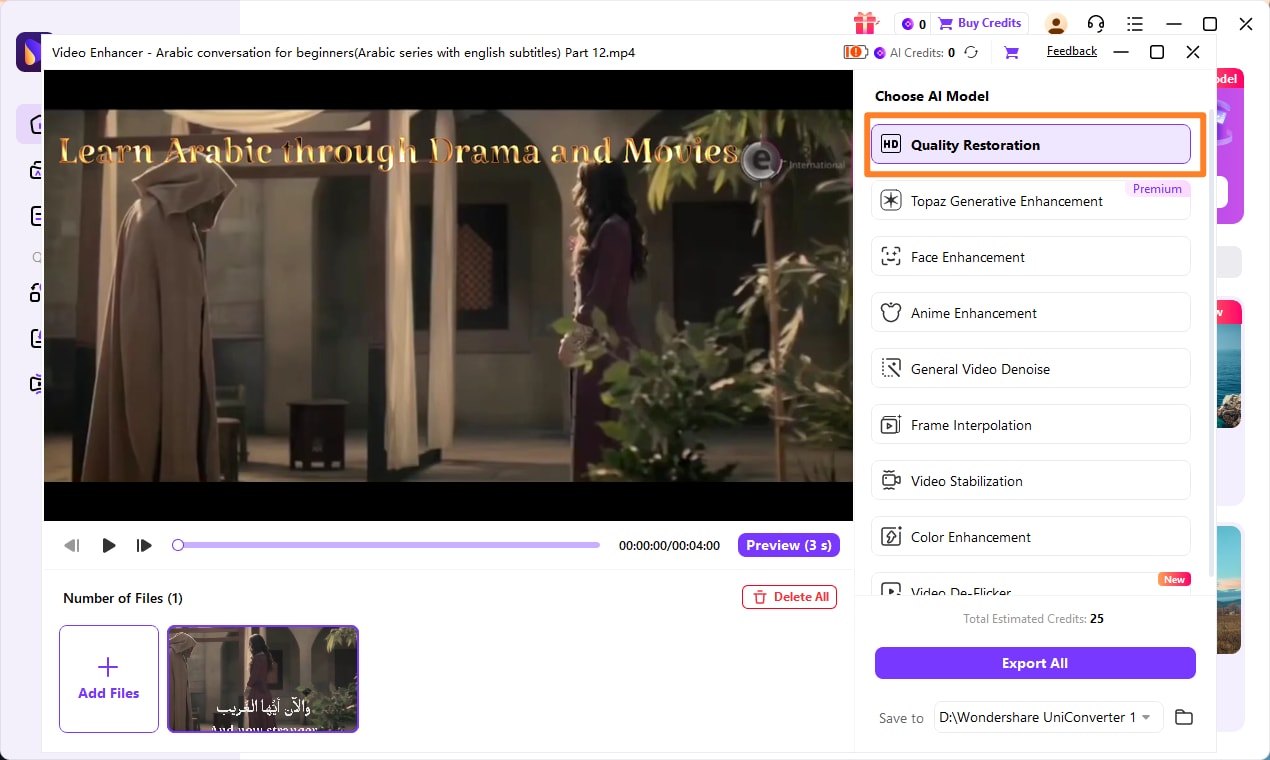
UniConverter offers various enhancement models, such as AI Upscaling, Noise Reduction, and Brightness/Contrast adjustment. Select the desired enhancement features and adjust parameters as needed. You can preview the changes in real-time.
Step 4: Preview and Save the Enhanced Video
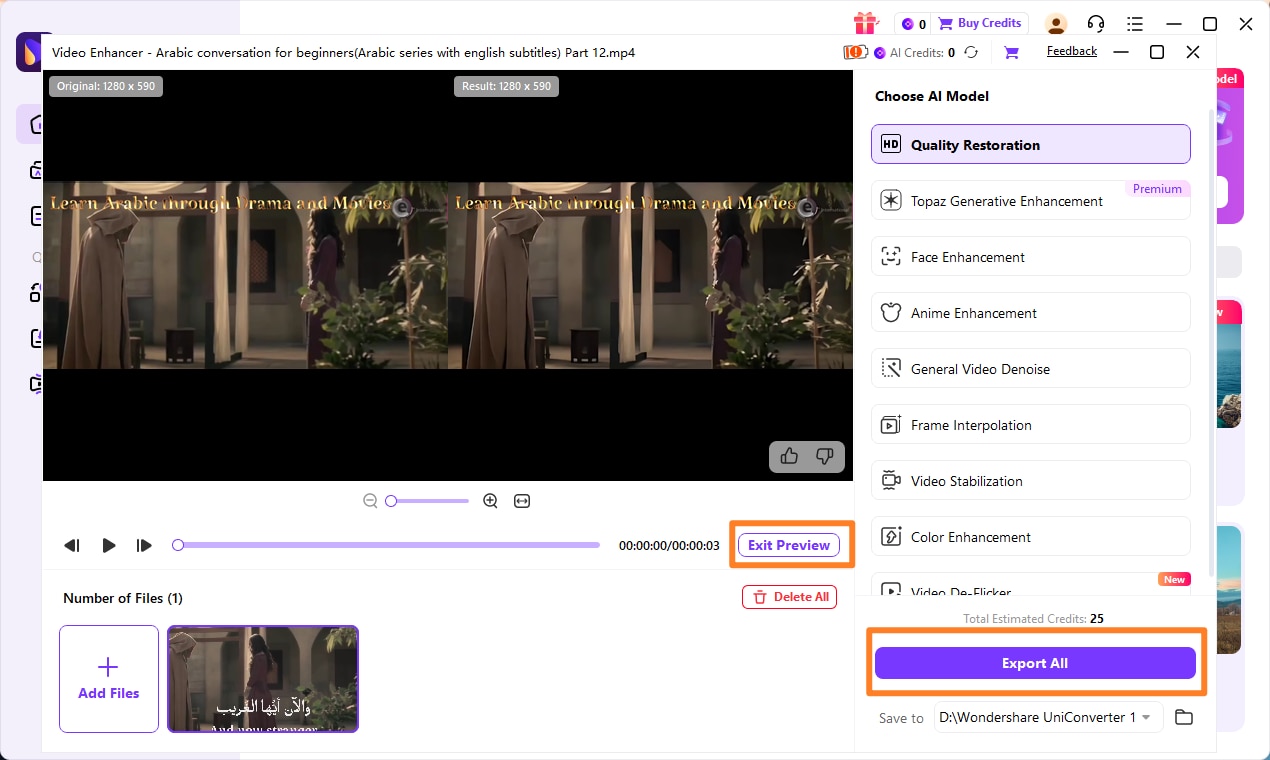
Once satisfied with the enhancement, choose your desired output format and destination folder. Click "Enhance" to start the process. UniConverter will then process and save your high-quality, enhanced video.

Enhance Videos Beyond Avid Media Composer
Part 7: Conclusion
This Avid Media Composer video enhancer review highlights Avid's strengths as an industry-standard NLE, particularly for large-scale, collaborative projects. While it provides robust color correction and a framework for third-party enhancement plugins, its steep learning curve and high cost may not suit all users. For professional editors deeply embedded in broadcast and film workflows, Avid offers unparalleled control and integration. However, independent creators and those seeking more versatile, affordable, or AI-driven enhancement solutions might find alternatives like DaVinci Resolve or dedicated enhancement software like UniConverter more appealing. Ultimately, the best choice depends on specific project requirements, budget, and technical expertise, balancing powerful features with ease of use and cost-effectiveness.
Part 8: FAQs
-
1. Can Avid Media Composer enhance video quality automatically?
While Avid offers various tools for color correction and noise reduction, fully automatic "enhancement" often requires manual adjustments or third-party plugins.
-
2. What are the best third-party video enhancer plugins for Avid Media Composer?
Popular choices include Neat Video for noise reduction, Boris FX Continuum for various effects, and Red Giant Universe for creative looks.
-
3. Is it possible to upscale low-resolution video in Avid Media Composer?
Avid can handle upscaling, but the quality of the result heavily depends on the original footage and the algorithms used. Dedicated upscaling software or AI tools might yield better results.
-
4. How does video enhancement in Avid affect file size and export times?
Applying enhancement effects can significantly increase rendering times and potentially lead to larger file sizes, especially with complex effects or high-resolution output.
-
5. What are the common mistakes to avoid when enhancing video in Avid Media Composer?
Over-sharpening, excessive noise reduction leading to a "plastic" look, and inconsistent color grading across clips are common pitfalls.
