
- AVCLabs AI Review: In-depth analysis of AVCLabs Video Enhancer AI's capabilities, comparing it to competitors.
- AI Video Enhancement: AI breathes new life into old footage, bridging quality gaps efficiently and affordably.
- Core Features: AVCLabs offers AI upscaling (up to 8K), de-noising, sharpening, color enhancement, and motion compensation.
- Pros & Cons: Advanced AI and user-friendly interface vs. high hardware demands and subscription costs.
- Target Users: Ideal for professionals restoring archival footage; less suitable for quick social media edits.
- Comparison: AVCLabs and Topaz excel in AI quality; UniConverter offers balanced ease-of-use and broad utility.
- Potential Risks: Be aware of privacy, misleading claims, quality impact, hidden costs, and hardware compatibility.
- UniConverter Alternative: Offers stable, efficient batch enhancement with broad format support and GPU acceleration.
- Decision: Choose based on needs: AVCLabs for professional restoration, UniConverter for versatile, user-friendly enhancement.
In this article
- Part 1: What is AVCLabs Video Enhancer AI?
- Part 2: AVCLabs Video Enhancer AI: Core Features, Pros, and Cons
- Part 3: Target Users and Use Cases
- Part 4: AVCLabs Video Enhancer AI and Alternatives Comparison
- Part 5: Potential Risks and Pitfalls
- Part 6: How to Use UniConverter for Efficient Video Enhancement
- Part 7: Conclusion
- Part 8: FAQs
AVCLabs Video Enhancer AI Review: A Deep Dive into AI-Powered Video Upscaling
In the rapidly evolving landscape of digital media, the demand for high-quality video content has never been greater. As creators and consumers alike strive for visual perfection, tools that can elevate video resolution and clarity are becoming indispensable. This AVCLabs Video Enhancer AI review delves into a prominent player in this arena, offering an in-depth analysis of its capabilities, comparing it against key competitors, and guiding potential users through its strengths and weaknesses. We will explore its core features, ideal use cases, potential pitfalls, and ultimately help you determine if this AI-powered solution aligns with your video enhancement needs.
Part 1: What is AVCLabs Video Enhancer AI?
AVCLabs Video Enhancer AI is a cutting-edge software designed to upscale and improve video quality using advanced artificial intelligence algorithms. It leverages deep learning to analyze video frames, intelligently fill in missing pixels, remove noise, and sharpen details, transforming low-resolution footage into stunning high-definition or even 4K/8K visuals. This review aims to provide a comprehensive understanding of its performance, user experience, and value proposition in a competitive market.
The Rise of AI in Video Enhancement
The integration of AI into video enhancement tools addresses several critical user pain points:
* Legacy Footage Revival: AI offers a powerful solution for breathing new life into old, low-resolution videos, making them suitable for modern displays and platforms.
* Quality Discrepancy: It helps bridge the gap between varying video qualities, allowing for more cohesive and professional productions.
* Time and Cost Efficiency: AI automates complex enhancement processes that would otherwise require extensive manual effort or expensive hardware.
* Accessibility: It makes professional-grade video enhancement more accessible to a wider range of users, from hobbyists to seasoned professionals.
Part 2: AVCLabs Video Enhancer AI: Core Features, Pros, and Cons
AVCLabs Video Enhancer AI stands out with its robust set of features aimed at delivering superior video quality. Its core capabilities include AI upscaling, which intelligently increases resolution without pixelation, and AI de-noising, which effectively removes unwanted grain and artifacts. The software also boasts AI sharpening for crisper details, AI color enhancement for vibrant visuals, and AI motion compensation to ensure smooth playback.
* AI Upscaling: Intelligently increases video resolution up to 8K.
* AI De-noising: Effectively removes various types of video noise and grain.
* AI Sharpening: Enhances edge definition and overall detail.
* AI Color Enhancement: Improves color accuracy and vibrancy.
* AI Motion Compensation: Ensures smooth and natural motion during upscaling.
- Pros:
- Advanced AI algorithms for superior upscaling and detail recovery.
- User-friendly interface for both beginners and professionals.
- Batch processing capability for efficient workflow.
- Cons:
- Resource-intensive, requiring powerful hardware for optimal performance.
- Subscription-based model might be a barrier for some users.
Part 3: Target Users and Use Cases
AVCLabs Video Enhancer AI is primarily designed for users who prioritize high-quality video output and are willing to invest in a powerful tool. Its advanced AI capabilities make it particularly appealing to professionals and enthusiasts dealing with critical video enhancement tasks.
- Best Use Case: Restoring and Upscaling Archival Footage for Professional Use
- Scenario: A documentary filmmaker needs to enhance old, low-resolution historical footage to integrate seamlessly into a modern 4K production. AVCLabs Video Enhancer AI can meticulously upscale the footage, reduce artifacts, and improve clarity, ensuring the archival material looks professional alongside contemporary high-resolution content. The AI's ability to intelligently reconstruct details makes it invaluable for preserving and presenting historical media in a modern context.
- Limited Use Case: Quick, On-the-Go Enhancements for Social Media
- Scenario: A social media influencer needs to quickly improve the quality of a short, casual video shot on a smartphone before posting, without access to a high-end PC. In this scenario, AVCLabs Video Enhancer AI's resource-intensive nature and the time required for processing might make it less ideal. Simpler, faster mobile editing apps or less demanding desktop software would be more suitable for immediate, casual social media content.
Part 4: AVCLabs Video Enhancer AI and Alternatives Comparison
When evaluating video enhancement software, it's crucial to compare AVCLabs Video Enhancer AI against its competitors to understand its market position and unique advantages.
| Feature/Product | AVCLabs Video Enhancer AI | Topaz Video AI | DaVinci Resolve Studio | UniConverter |
| AI Upscaling Quality | Excellent | Excellent | Very Good | Good |
| Ease of Use | High | Medium | Low | High |
| Price Model | Subscription | One-time Purchase | One-time Purchase | Subscription/One-time |
| Hardware Requirements | High | High | High | Medium |
| Supported Formats | Broad | Broad | Broad | Broad |
Key Differentiators: AI Model Sophistication and Performance
AVCLabs Video Enhancer AI and Topaz Video AI both excel in AI upscaling quality, often delivering results that are difficult to distinguish from native high-resolution footage. However, AVCLabs tends to have a slightly more user-friendly interface for dedicated upscaling tasks. DaVinci Resolve Studio, while powerful, has a steep learning curve and its enhancement features are part of a broader professional editing suite, not a standalone upscaling tool. UniConverter offers a more balanced approach, providing decent enhancement capabilities with a focus on ease of use and broader video utility, making it suitable for users who need more than just upscaling.
Part 5: Potential Risks and Pitfalls
While AVCLabs Video Enhancer AI offers impressive capabilities, users should be aware of potential risks and pitfalls that can impact their experience and the final output.
Data Privacy Concerns with Cloud-Based AI Processing
Although AVCLabs Video Enhancer AI is primarily a desktop application, some AI models or future iterations might involve cloud processing. Users should always scrutinize privacy policies to understand how their video data is handled, stored, and protected, especially for sensitive or proprietary content.
Misleading Marketing Claims vs. Real-World Results
Marketing materials often showcase ideal scenarios. In reality, the effectiveness of AI enhancement can vary significantly depending on the original video quality, compression, and content. Heavily degraded footage may not achieve the pristine results depicted in promotional videos, leading to potential disappointment if expectations are set too high.
Impact on Original Video Quality During Enhancement
The enhancement process, while generally beneficial, can sometimes introduce unintended artifacts or alter the original artistic intent. Over-sharpening can lead to a "plastic" look, and aggressive noise reduction might smooth out fine textures. Users must carefully balance enhancement settings to preserve the natural look of their footage.
Hidden Costs and Subscription Traps
The subscription model, while offering continuous updates, can become a long-term financial burden. Users should be mindful of auto-renewal policies and ensure the software's consistent utility justifies the recurring cost, especially if their enhancement needs are sporadic.
Compatibility Issues with Diverse Hardware Setups
As a resource-intensive application, AVCLabs Video Enhancer AI demands powerful hardware, particularly a strong GPU. Users with older or less powerful systems may experience slow processing times, crashes, or an inability to utilize the software effectively, leading to frustration and wasted investment.
Part 6: How to Use UniConverter for Efficient Video Enhancement
When other tools fall short in batch processing, stable enhancement, or delivering noticeable improvements, UniConverter emerges as a reliable alternative. It bypasses common issues like inconsistent quality and weak enhancement effects, offering a comprehensive and stable solution. UniConverter provides a robust, ad-free experience with extensive format support, GPU acceleration for faster processing, and lossless batch enhancement, positioning it as an all-in-one ultimate solution for various video processing needs.
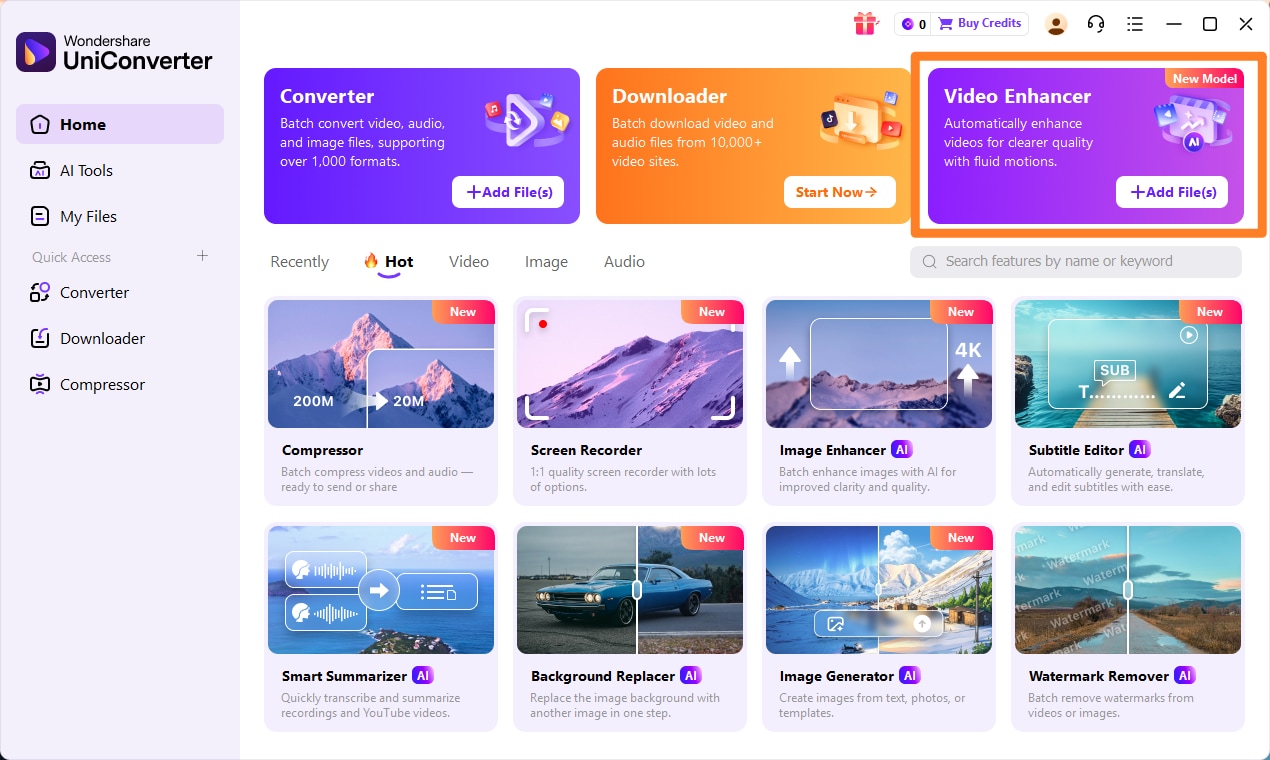
Step 1: Open UniConverter and Choose Video Enhancer
Launch UniConverter on your computer. From the main interface, navigate to the "AI Lab" section and select the "Video Enhancer" tool.
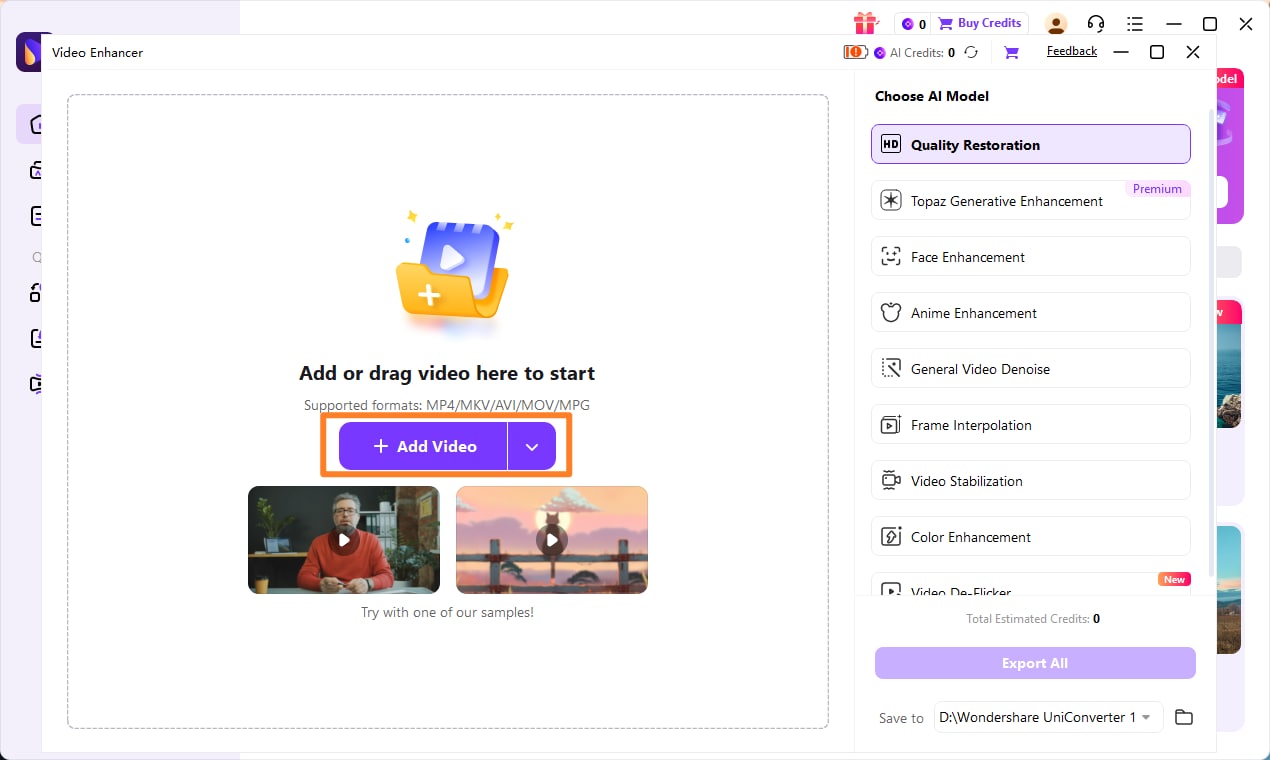
Step 2: Upload the Videos
Click on the "Add Files" button or drag and drop your video files into the UniConverter interface. You can add multiple videos for batch processing.
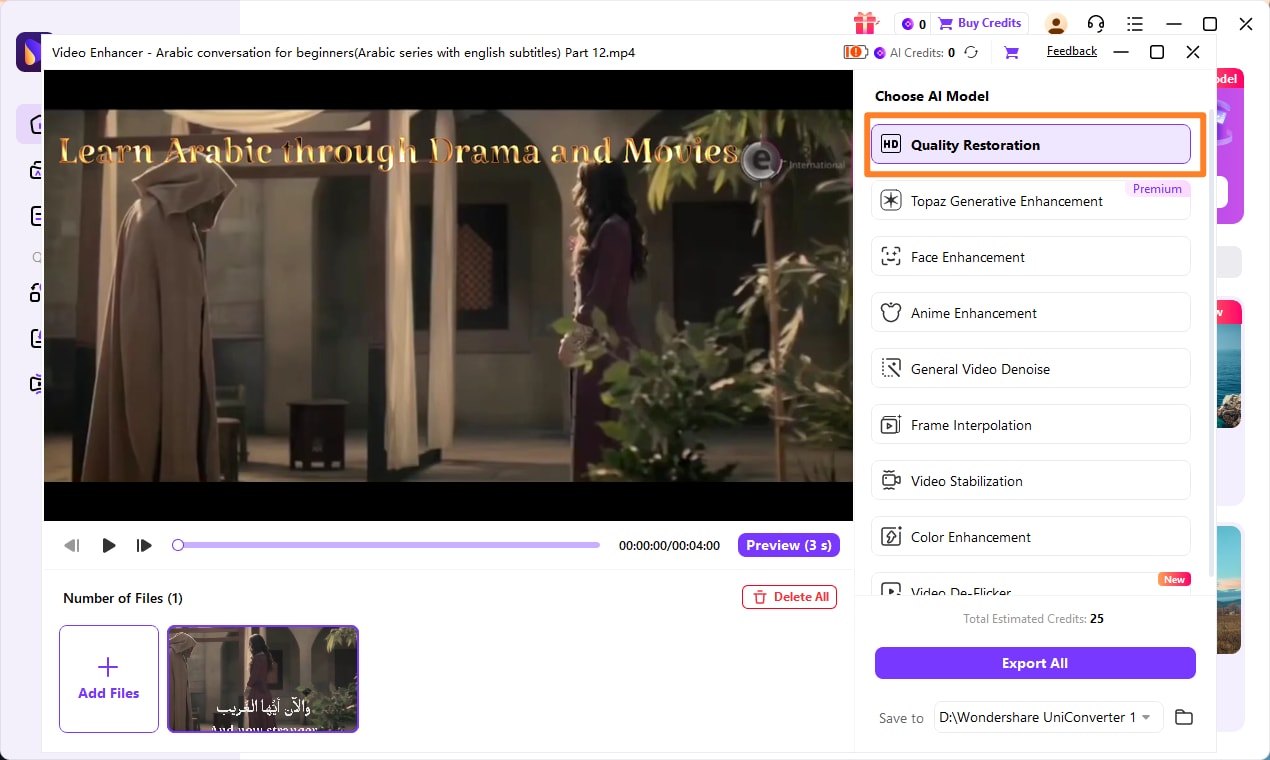
Step 3: Choose Enhancement Model
Select the desired AI enhancement model based on your needs, such as "AI Upscale," "AI Denoise," or "AI Color Correction." Adjust other settings like output resolution or format as required. For advanced editing, consider exploring features like the background replacer to further refine your visuals. You can also learn more about removing backgrounds without losing quality.
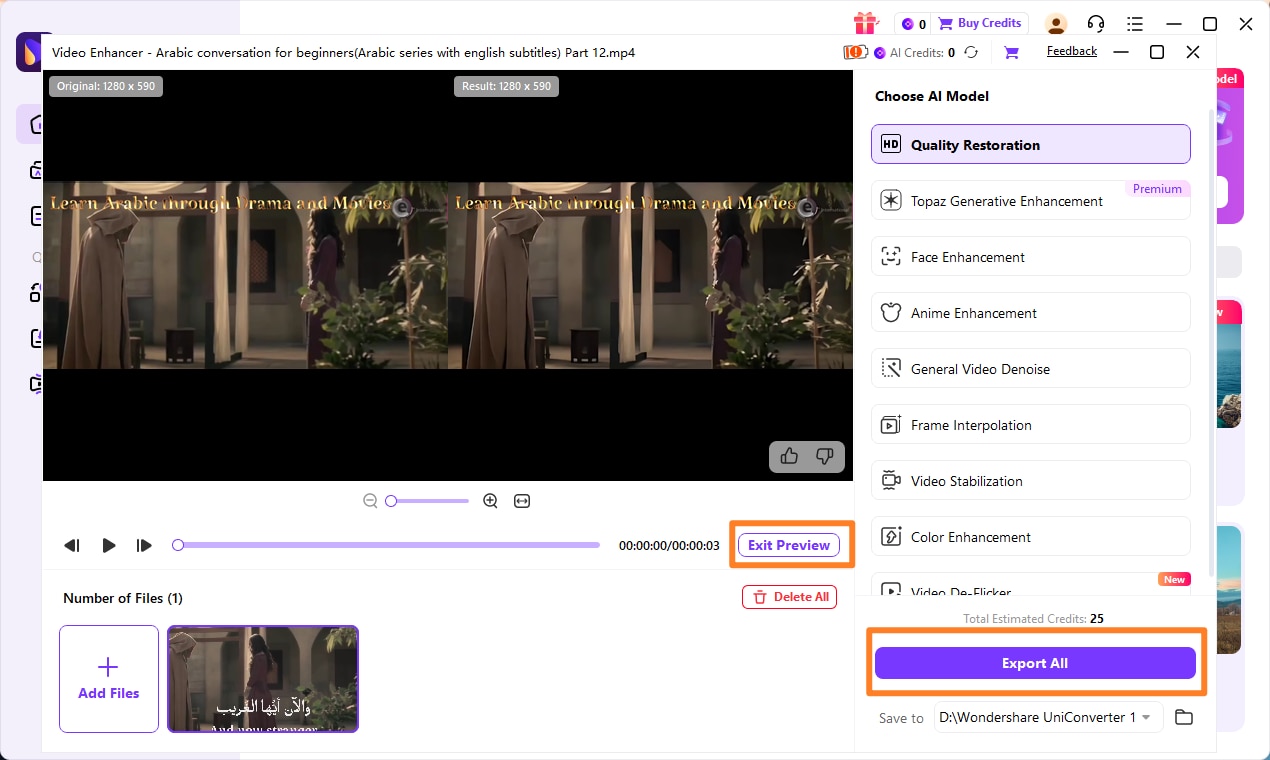
Step 4: Preview and Save the Enhanced Video
Preview the enhanced video to ensure satisfaction. Once ready, click the "Export" button to save your high-quality, enhanced video to your chosen destination. For those interested in more creative edits, UniConverter also offers tools like a video background changer to transform your footage.

Seeking an AVCLabs Video Enhancer AI Alternative?
Part 7: Conclusion
This AVCLabs Video Enhancer AI review highlights its position as a powerful tool for professional-grade video upscaling and enhancement, particularly for restoring archival footage. Its advanced AI algorithms deliver impressive results, making it a strong contender for users prioritizing quality. However, its high hardware demands and subscription model may not suit everyone. For professional videographers and archivists, the investment is likely justified by the superior output. Casual users and content creators might find it overkill, with simpler or more affordable alternatives offering better value for less demanding tasks. Budget-conscious individuals should carefully weigh the recurring costs against their actual usage frequency. Ultimately, the best choice depends on individual needs, technical capabilities, and budget, with UniConverter presenting a versatile and user-friendly alternative for broader video processing requirements.
Part 8: FAQs
-
1. Is AVCLabs Video Enhancer AI worth the investment for casual users?
For casual users, the investment might be high given its resource demands and subscription model. Alternatives might offer better value for basic enhancement needs.
-
2. How does AVCLabs Video Enhancer AI handle different video resolutions?
It excels at upscaling lower resolutions (e.g., SD to HD/4K) but also offers refinement for already high-resolution footage.
-
3. What are the minimum system requirements for AVCLabs Video Enhancer AI?
A powerful GPU (NVIDIA, AMD, or Intel) with ample VRAM and a robust CPU are highly recommended for smooth operation.
-
4. Can AVCLabs Video Enhancer AI improve heavily compressed videos?
While it can mitigate some compression artifacts, heavily compressed videos may still show limitations in quality improvement.
-
5. Does AVCLabs Video Enhancer AI offer a free trial?
Yes, a free trial is typically available, often with limitations on output length or features, allowing users to test its capabilities.
