
- AVCLabs AI Review: Deep dive into AVCLabs Video Enhancer AI for informed decisions.
- AI Upscaling Power: Transforms low-res videos into HD, enhancing details and reducing noise.
- Core Features: Offers resolution upscaling, noise reduction, and color correction with diverse AI models.
- Pros & Cons: Exceptional for vintage footage, intuitive UI; but resource-intensive, limited customization.
- Best Use Case: Ideal for revitalizing archival footage and home videos, not for real-time streaming.
- Comparative Analysis: Excels in AI model versatility and user experience against competitors like Topaz and DaVinci.
- Potential Pitfalls: Be aware of privacy, AI artifacts, subscription costs, and high hardware demands.
- UniConverter Alternative: Offers efficient, all-in-one video enhancement with GPU acceleration and broad format support.
- UniConverter Steps: Easy 4-step process: choose enhancer, upload, select model, preview and save.
- Decision Time: Choose based on needs: AVCLabs for specific restoration, UniConverter for versatile, efficient enhancement.
In this article
- Part 1: What is AVCLabs Video Enhancer AI?
- Part 2: AVCLabs Video Enhancer AI: Core Features, Pros & Cons
- Part 3: Who Benefits Most? Ideal Scenarios & Limitations
- Part 4: AVCLabs Video Enhancer AI vs. Competitors: A Comparative Analysis
- Part 5: Potential Pitfalls and Considerations
- Part 6: How to Use UniConverter for Efficient Video Enhancement
- Part 7: Conclusion
- Part 8: FAQs
AVCLabs Video Enhancer: A Deep Dive into AI-Powered Video Upscaling
The demand for high-quality video content has never been greater, yet a vast archive of valuable footage remains trapped in lower resolutions. This is where AI-powered video enhancement tools like AVCLabs Video Enhancer review step in, promising to breathe new life into old videos. This review will delve into its capabilities, comparing it against leading competitors to help users make informed decisions. We will explore its core features, ideal use cases, potential pitfalls, and offer a comprehensive comparison to guide both professional archivists and casual users in their quest for superior video quality.
Part 1: What is AVCLabs Video Enhancer AI?
AVCLabs Video Enhancer AI is a dedicated software solution designed to upscale and improve the quality of video footage using advanced artificial intelligence algorithms. Its primary function is to transform low-resolution videos into higher-definition formats, enhancing details, removing noise, and stabilizing shaky footage. This review aims to dissect its performance, user experience, and overall value proposition in the rapidly evolving landscape of AI video enhancement. The core problem it addresses is the ubiquitous presence of legacy video content that no longer meets modern viewing standards, posing a challenge for content creators and archivists alike.
The Rise of AI Video Enhancement in Content Creation
* Bridging the Resolution Gap: AI upscaling allows older content to be seamlessly integrated into modern high-definition and 4K workflows.
* Preserving Visual Heritage: It offers a powerful tool for restoring and enhancing historical footage, making it accessible to new audiences.
* Democratizing Quality: Even amateur videographers can achieve professional-looking results from their less-than-perfect source material.
* Meeting Audience Expectations: Viewers increasingly demand crisp, clear visuals, and AI enhancement helps meet these elevated standards.
Part 2: AVCLabs Video Enhancer AI: Core Features, Pros & Cons
AVCLabs Video Enhancer AI offers a robust set of features centered around AI-driven video enhancement. Its core capabilities include resolution upscaling, noise reduction, deinterlacing, and color correction, all powered by various AI models. The software provides several pre-trained AI models optimized for different types of footage, such as general videos, anime, and facial enhancement. Users can select the most appropriate model to achieve optimal results for their specific video content. The interface is designed for ease of use, allowing both novices and experienced editors to navigate its functionalities efficiently.
Pros:
* Exceptional Upscaling for Vintage Footage and Low-Resolution Content: Delivers impressive results in transforming old, blurry videos into sharp, detailed high-definition content.
* Intuitive User Interface for Beginners and Professionals Alike: The clean and straightforward design makes it easy to learn and operate, even for those new to video enhancement.
* Wide Range of AI Models for Diverse Enhancement Needs: Offers specialized AI models for different video types, ensuring tailored and effective improvements.
Cons:
* Resource-Intensive Processing Requires Powerful Hardware: The advanced AI algorithms demand significant computational power, often requiring a dedicated GPU for efficient processing.
* Limited Customization Options for Advanced Users: While user-friendly, it might lack the granular control and advanced settings that professional video editors often seek.
Part 3: Who Benefits Most? Ideal Scenarios & Limitations
AVCLabs Video Enhancer AI is particularly well-suited for individuals and organizations dealing with a large volume of older, low-resolution video content that needs a significant quality boost. Its AI-driven approach makes it an excellent tool for those who may not possess advanced video editing skills but still require professional-grade enhancement. The software's ability to intelligently fill in missing details and reduce artifacts makes it invaluable for specific use cases.
Best Use Case: Revitalizing Archival Footage and Home Videos
This software shines brightest when tasked with restoring and upscaling old home videos, historical archives, or vintage film footage. Its AI models can effectively de-noise, sharpen, and upscale content from VHS tapes, old camcorders, or early digital cameras, making them suitable for modern displays. For content creators looking to integrate classic clips into new projects, or families wanting to preserve precious memories in higher quality, AVCLabs Video Enhancer AI offers a compelling solution.
Where It Falls Short: Real-time Streaming and Live Production
Due to its resource-intensive nature and the time required for processing, AVCLabs Video Enhancer AI is not designed for real-time applications such as live streaming, broadcasting, or immediate post-production workflows where speed is paramount. The enhancement process, especially for longer or higher-resolution videos, can take a considerable amount of time, making it unsuitable for scenarios demanding instant results.
Part 4: AVCLabs Video Enhancer AI vs. Competitors: A Comparative Analysis
When evaluating video enhancement software, it's crucial to compare AVCLabs Video Enhancer AI against its peers to understand its position in the market. This comparison focuses on key performance indicators that matter most to users.
| Feature/Product | AVCLabs Video Enhancer AI | Topaz Video AI | DaVinci Resolve Studio | UniConverter |
| AI Upscaling Quality | Excellent | Excellent | Very Good | Good |
| Ease of Use | High | Medium | Low | High |
| Processing Speed | Moderate | Fast | Moderate | Fast |
| Price Point | Mid-Range | High | High | Low |
| Supported Formats | Broad | Broad | Broad | Broad |
| Customer Support | Good | Excellent | Good | Excellent |
| Security | Standard | Standard | High | High |
Key Differentiators: AI Model Versatility and User Experience
AVCLabs Video Enhancer AI distinguishes itself with its diverse array of specialized AI models, allowing users to select the best algorithm for specific content types (e.g., anime, facial enhancement). This versatility often leads to more targeted and superior results for niche enhancement tasks. While Topaz Video AI offers comparable quality and faster processing, its higher price point and steeper learning curve can be a barrier. DaVinci Resolve Studio, while powerful, is a full-fledged professional editing suite with a complex interface, making its enhancement features less accessible for casual users. UniConverter, on the other hand, excels in its all-in-one approach and ease of use, offering a good balance of features at a more accessible price.
Part 5: Potential Pitfalls and Considerations
Using AI-powered video enhancement tools like AVCLabs Video Enhancer AI comes with its own set of considerations and potential pitfalls that users should be aware of before committing to the software. These factors can significantly impact the user experience and the final output quality.
Data Privacy and Security Concerns
For cloud-based AI enhancement services, users must consider the privacy implications of uploading their potentially sensitive video content to external servers. While AVCLabs is primarily a desktop application, users should still be mindful of any data collection policies or telemetry features that might be enabled by default. Always review the privacy policy to understand how your data is handled.
The Impact of AI Artifacts on Enhanced Footage
Despite advancements, AI upscaling is not perfect. It can sometimes introduce "AI artifacts" – unnatural textures, distortions, or a "plastic" look – especially in areas with complex patterns or fine details. These artifacts can detract from the natural appearance of the video and may require additional post-processing to mitigate. The quality of the original source material heavily influences the likelihood and severity of these artifacts.
Subscription Model Value vs. One-Time Purchase
Many premium AI software solutions operate on a subscription model, which can be a continuous expense. Users need to evaluate whether the ongoing cost justifies their usage frequency and the value derived from the software. A one-time purchase, if available, might be more cost-effective for infrequent users, but often comes with limitations on future updates or access to new AI models.
Hardware Requirements for Optimal Performance
AI video enhancement is computationally intensive. Running AVCLabs Video Enhancer AI optimally requires a powerful computer, ideally with a dedicated graphics card (GPU) from NVIDIA, AMD, or Intel, and a substantial amount of RAM. Without adequate hardware, processing times can be excessively long, and the software might struggle to perform, leading to frustration and inefficient workflows. Users with older or less powerful systems may find the experience suboptimal.
Part 6: How to Use UniConverter for Efficient Video Enhancement
When other tools fall short in batch processing, stability, or enhancement effectiveness, UniConverter emerges as a robust and versatile alternative. It offers a comprehensive suite of video tools, including powerful enhancement capabilities, without the common drawbacks of ads, instability, or weak results. UniConverter leverages GPU acceleration for faster processing, supports a vast array of formats, and ensures lossless quality enhancement, making it an ideal all-in-one solution for all your video needs.
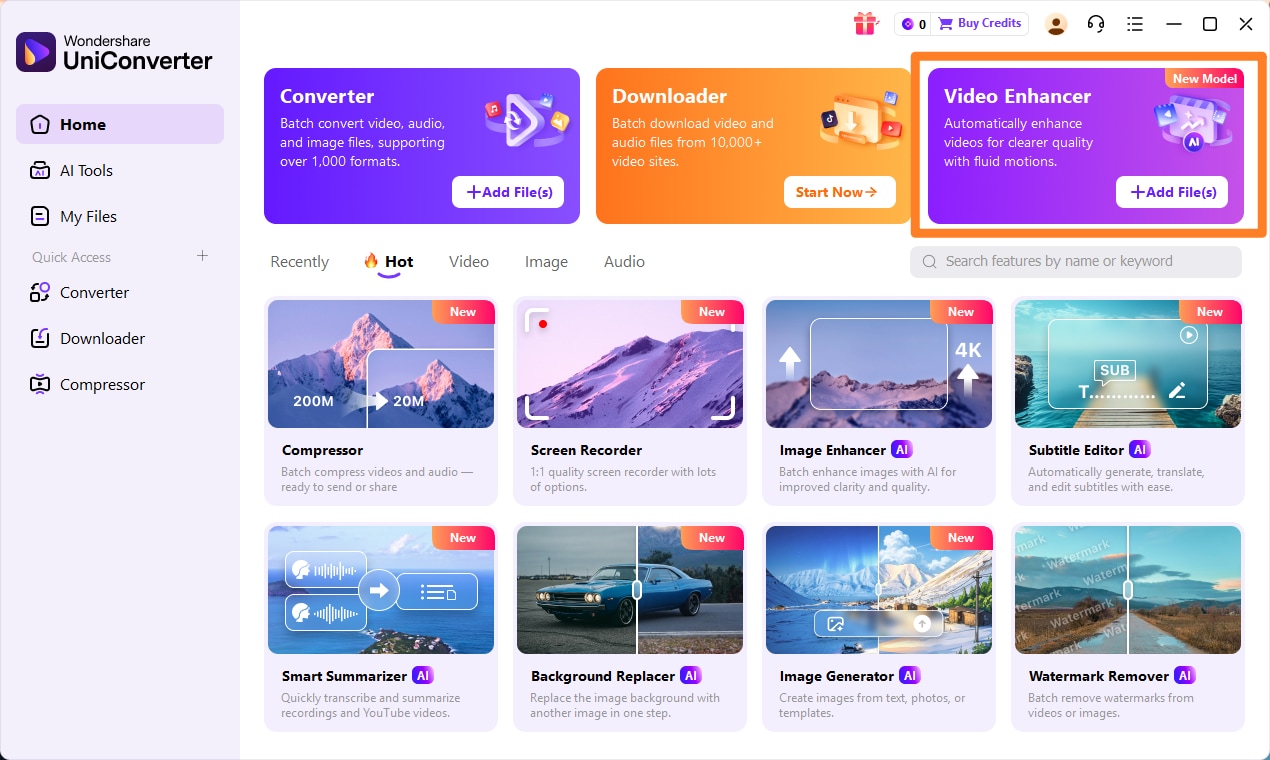
Step 1: Open UniConverter and Choose Video Enhancer
Launch UniConverter on your computer. From the main interface, navigate to the "Toolbox" section and select the "Video Enhancer" feature. This dedicated tool is designed to improve your video quality efficiently.
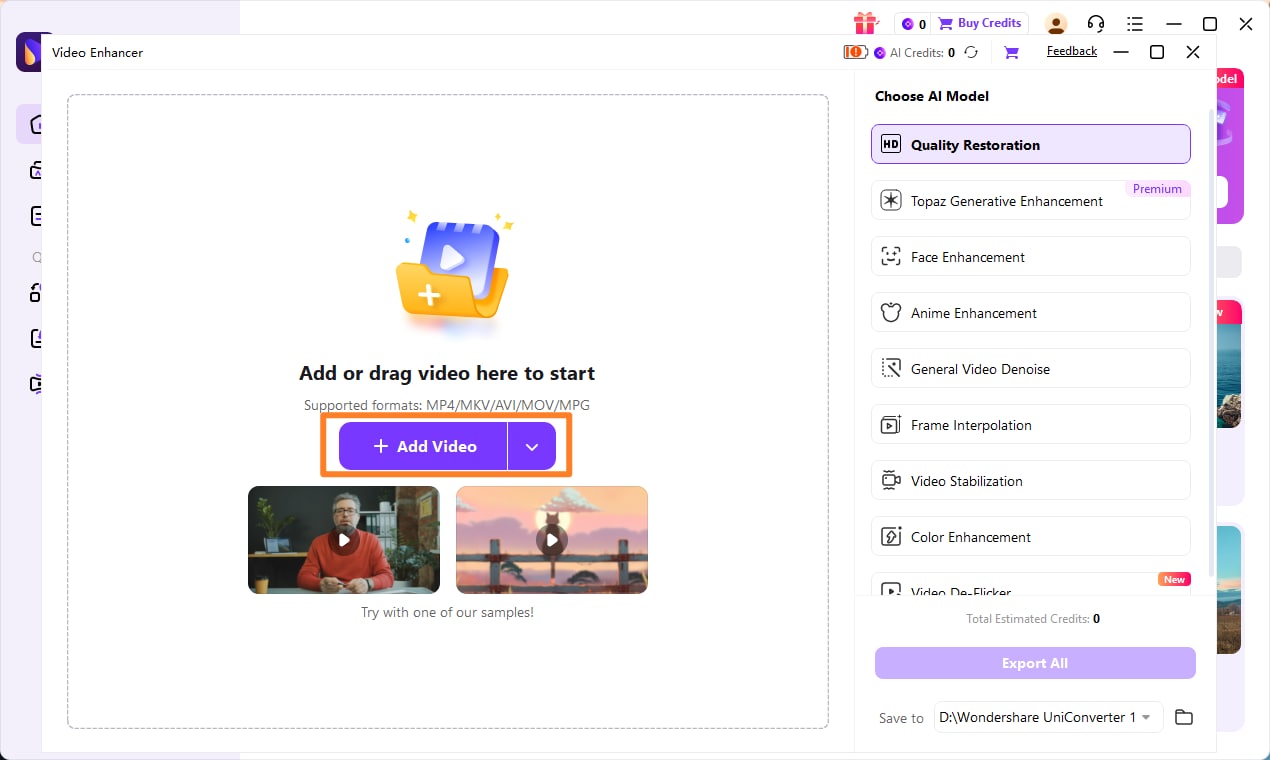
Step 2: Upload the Videos
Click the "Add Files" button or drag and drop your video files directly into the UniConverter interface. You can add multiple videos for batch processing, saving you significant time.
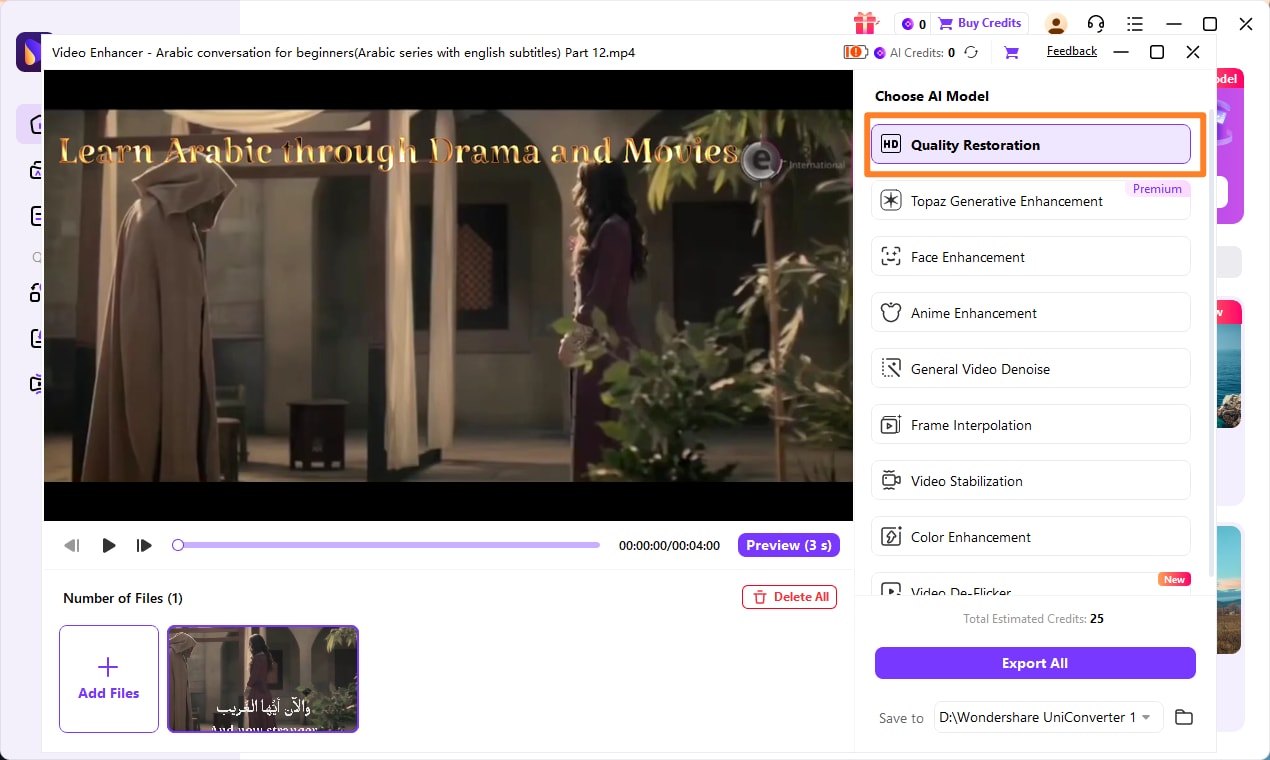
Step 3: Choose Enhancement Model
Once your video is loaded, UniConverter will present various enhancement options. Select the desired AI model or enhancement features such as "Upscale Resolution," "Optimize Video Brightness and Contrast," "Remove Video Noise," or "Stabilize Video." Adjust the output resolution and other settings as needed.
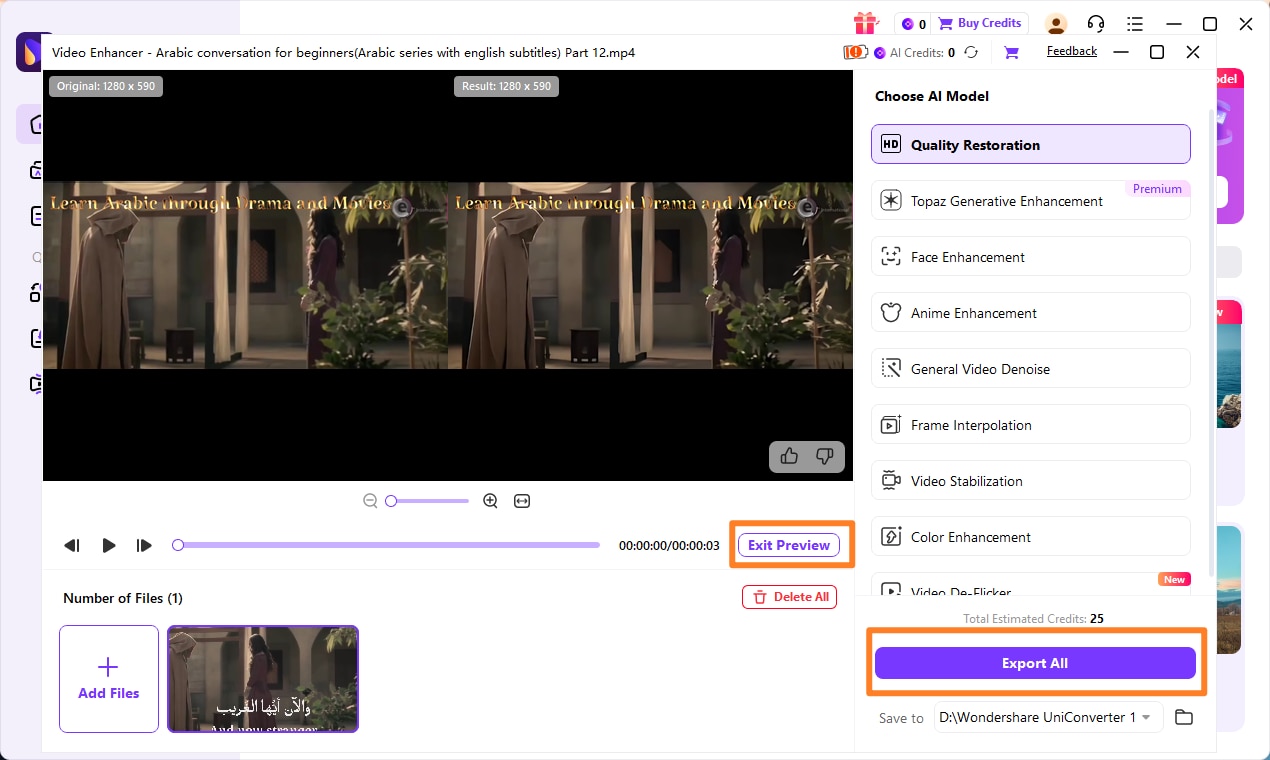
Step 4: Preview and Save the Enhanced Video
Before finalizing, use the preview function to compare the original and enhanced video. Once satisfied, choose your desired output format and destination folder, then click "Enhance" or "Start All" to begin the processing and save your improved video.

Seeking an AVCLabs Video Enhancer Alternative?
Part 7: Conclusion
The AVCLabs Video Enhancer review reveals a powerful and user-friendly tool for breathing new life into old and low-resolution video content. Its strength lies in its diverse AI models and intuitive interface, making high-quality upscaling accessible to a broad audience. While it excels in revitalizing archival footage and home videos, its resource-intensive nature limits its applicability for real-time or high-volume professional productions without robust hardware. For professional archivists and content creators focused on restoring specific, valuable footage, AVCLabs offers excellent quality, albeit with a moderate processing speed and mid-range price. Casual users and home video enthusiasts will appreciate its ease of use and the significant improvement it brings to their personal video collections. However, those seeking a more comprehensive, faster, and all-in-one solution, especially for batch processing and diverse video tasks, might find UniConverter a more balanced and efficient alternative, offering a blend of quality, speed, and affordability without compromising on features. Ultimately, the best choice depends on individual needs, budget, and the specific demands of the video enhancement project.
Part 8: FAQs
-
1. What types of videos can AVCLabs Video Enhancer AI improve?
AVCLabs Video Enhancer AI is designed to improve a wide range of video types, including old home videos, low-resolution digital footage, and even anime, by upscaling resolution, reducing noise, and enhancing details.
-
2. Is AVCLabs Video Enhancer AI suitable for beginners?
Yes, AVCLabs Video Enhancer AI features an intuitive interface that makes it accessible for beginners, while still offering powerful AI capabilities for more experienced users.
-
3. How does AVCLabs Video Enhancer AI compare to other AI video upscalers?
AVCLabs Video Enhancer AI stands out with its diverse range of AI models tailored for specific enhancement tasks and its user-friendly design, often delivering superior results for complex upscaling challenges.
-
4. What are the system requirements for AVCLabs Video Enhancer AI?
For optimal performance, AVCLabs Video Enhancer AI requires a powerful computer with a dedicated GPU (NVIDIA, AMD, or Intel) and sufficient RAM, especially for processing high-resolution videos.
-
5. Can AVCLabs Video Enhancer AI remove watermarks or unwanted objects from videos?
While AVCLabs Video Enhancer AI primarily focuses on resolution upscaling and quality enhancement, it does not specifically offer features for removing watermarks or unwanted objects. Its main strength lies in improving overall video clarity and detail.
