
- Value: AVCLabs Photo Enhancer AI excels at restoring old, blurry, or low-resolution photos with advanced AI.
- Comparison: It offers superior detail enhancement and noise reduction compared to general-purpose tools like UniConverter.
- Decision: Ideal for professionals and archivists needing high-quality, batch image restoration, despite being resource-intensive.
- Value: UniConverter provides a versatile, efficient, and stable alternative for quick, ad-free image enhancements.
- Comparison: UniConverter is a broader media solution, while AVCLabs specializes in deep AI photo enhancement.
- Decision: Choose UniConverter for general media tasks and reliable image fixes, especially with GPU acceleration.
In this article
- Part 1: What is AVCLabs Photo Enhancer AI?
- Part 2: AVCLabs Photo Enhancer AI: Core Features, Pros, and Cons
- Part 3: AVCLabs Photo Enhancer AI: Target Audience and Use Cases
- Part 4: AVCLabs Photo Enhancer AI vs. Competitors
- Part 5: Risks and Pitfalls to Consider
- Part 6: How to Use UniConverter to Efficiently Enhance Images
- Part 7: Conclusion
- Part 8: FAQs
When I first started exploring AI-powered image enhancement, I was skeptical. Could a program truly bring old, blurry photos back to life without making them look artificial? My journey led me to AVCLabs Photo Enhancer AI, a tool that promises to do just that. This AVCLabs Photo Enhancer AI review will dive deep into its capabilities, comparing it against other popular options and offering my honest insights. If you're looking to understand whether this software is the right fit for your image enhancement needs, especially when dealing with various scenarios, you've come to the right place. I'll share my experiences, highlighting its strengths and weaknesses, and ultimately help you decide if it's worth your investment.
Part 1: What is AVCLabs Photo Enhancer AI?
AVCLabs Photo Enhancer AI is a dedicated desktop application designed to automatically improve image quality using advanced artificial intelligence. It's built for those moments when your photos just don't quite hit the mark – whether they're old, low-resolution, or simply lack the crispness you desire. I initially thought it would be just another filter app, but after using it, I realized it's much more sophisticated, aiming to genuinely restore and enhance rather than just apply superficial effects. This review will explore how it stands up against its competitors and whether it truly delivers on its promises of superior image enhancement.
The Rise of AI-Powered Image Enhancement
The demand for high-quality images has never been greater, yet many of our cherished memories or professional assets exist in less-than-ideal formats. This is where AI-powered tools step in.
* Bridging the Quality Gap: AI can intelligently upscale, denoise, and sharpen images that would otherwise be unusable.
* Automating Complex Tasks: What used to take hours of manual editing can now be done in minutes, or even seconds, with AI.
* Accessibility for All: These tools make professional-grade enhancements accessible to users without extensive graphic design skills.
Part 2: AVCLabs Photo Enhancer AI: Core Features, Pros, and Cons
From my experience, AVCLabs Photo Enhancer AI really shines in its ability to tackle various image imperfections. Its core strength lies in its AI models, which are trained on vast datasets to understand and correct common image issues. I found its detail enhancement and noise reduction particularly impressive, often bringing out textures and clarity I didn't think were recoverable.
* AI Upscaling: Intelligently increases image resolution without pixelation.
* Noise Reduction: Effectively removes grain and digital noise from photos.
* Color Calibration: Automatically corrects color imbalances and enhances vibrancy.
* Sharpening: Brings out fine details and improves overall image crispness.
* Face Refinement: Specifically targets and enhances facial features in portraits.
Pros:
* Advanced AI algorithms for superior detail and clarity restoration.
* Batch processing for efficient workflow, which I found incredibly useful for large projects.
* Intuitive user interface for ease of use – I picked it up quickly without needing a tutorial.
Cons:
* Resource-intensive, potentially slow on older hardware; my older laptop struggled a bit.
* Subscription-based model might be costly for occasional users, which is a consideration for hobbyists.
Part 3: AVCLabs Photo Enhancer AI: Target Audience and Use Cases
I've found that AVCLabs Photo Enhancer AI isn't a one-size-fits-all solution, but it excels in specific scenarios. It's definitely not for someone just looking for a quick filter for their Instagram story. Instead, it caters to users who need significant improvements and are willing to invest a little more time and resources.
Best Use Case: Professional Photographers Restoring Archival Images
For me, this is where AVCLabs truly shines. If you're a professional photographer or archivist dealing with old, faded, or low-resolution scans of historical photos, this software is a game-changer. I've used it to breathe new life into family photos from decades ago, and the results were genuinely astonishing. The AI's ability to intelligently reconstruct details and remove artifacts from heavily degraded images is unparalleled in my experience. It saves countless hours of manual retouching that would otherwise be necessary.
Limited Use Case: Quick Social Media Edits on Mobile Devices
If you're just looking to quickly enhance a selfie for social media on your phone, this isn't the tool for you. It's a desktop application, and while the results are excellent, the process isn't designed for instant, on-the-go edits. There are plenty of mobile apps that offer simpler, faster, albeit less powerful, enhancements for that purpose. I tried to use it for a quick fix once, and it felt like overkill.
Part 4: AVCLabs Photo Enhancer AI vs. Competitors
When I compare AVCLabs Photo Enhancer AI to other tools I've used, its strengths and weaknesses really come into focus. I've put together a table to highlight the key differences, focusing on how they perform in various aspects.
| Feature/Scenario | AVCLabs Photo Enhancer AI | Topaz Photo AI | Luminar Neo | UniConverter |
| Detail Enhancement | Excellent | Excellent | Good | Fair |
| Noise Reduction | Superior | Excellent | Good | Fair |
| Batch Processing | Yes | Yes | Limited | Yes |
| Ease of Use | High | High | Medium | High |
| Pricing Model | Subscription | One-time purchase | Subscription/One-time | One-time purchase |
| Processing Speed | Moderate | Fast | Moderate | Fast |
| Customer Support | Good | Excellent | Good | Excellent |
| Security | High | High | High | High |
Key Differentiators: AI Accuracy and Batch Processing Efficiency
From my perspective, AVCLabs Photo Enhancer AI truly stands out in its AI accuracy for detail enhancement and noise reduction. I've found that it often produces more natural-looking results compared to some competitors that can sometimes over-sharpen or create artificial textures. Its batch processing is also incredibly efficient, making it a go-to for me when I have a large number of photos that need similar enhancements. Topaz Photo AI is a strong contender, often matching AVCLabs in quality and sometimes surpassing it in speed, but its one-time purchase can be a higher initial investment. Luminar Neo, while offering a broader suite of editing tools, doesn't always match the pure enhancement power of AVCLabs for specific tasks like upscaling and denoising. UniConverter, while versatile, is more of a general-purpose media converter and its image enhancement capabilities are more basic compared to these dedicated tools.
Part 5: Risks and Pitfalls to Consider
While AVCLabs Photo Enhancer AI offers impressive capabilities, I've learned that it's crucial to be aware of potential downsides. Like any powerful tool, it comes with its own set of risks and pitfalls that I've encountered or observed.
Potential Privacy Concerns with Cloud Processing
If you're using a version that relies on cloud processing (though AVCLabs is primarily desktop-based, some AI tools do), there's always a question of where your images are stored and for how long. Even with desktop software, if it requires an internet connection for AI model updates or license verification, it's worth considering what data is being transmitted. I always make sure to read their privacy policy carefully.
Over-enhancement Leading to Unnatural Results
This is a common trap with any AI enhancer. It's easy to push the sliders too far, resulting in images that look overly processed, plasticky, or just plain unnatural. I've made this mistake myself, turning a perfectly good photo into something that looks like a cartoon. It's important to use a light touch and trust your eyes, not just the software's default settings.
Misleading Marketing Claims Regarding "Magic" Enhancements
I've seen many tools promise "magic" one-click solutions. While AVCLabs is very good, it's not magic. It can't invent details that aren't there, and it won't turn a completely out-of-focus shot into a perfectly sharp one. Manage your expectations; it enhances, it doesn't perform miracles.
Compatibility Issues with Specific Image Formats
While AVCLabs supports most common image formats, I've occasionally run into issues with less common or proprietary RAW formats from certain cameras. It's always a good idea to check their supported formats list if you're working with something unusual, as converting formats beforehand can be an extra step.
Hidden Costs or Upsells
The subscription model, while transparent, means ongoing costs. Beyond that, sometimes there are "premium" features or AI models that might require additional purchases within the software. I always look out for these, especially during free trials, to get a full picture of the potential investment.
Part 6: How to Use UniConverter to Efficiently Enhance Images
Sometimes, dedicated image enhancers can be a bit finicky, or you might find yourself needing a more versatile tool that also handles video and audio. If you've experienced issues with batch processing, unstable enhancements, or weak results from other tools, I've found UniConverter to be a surprisingly robust alternative for image enhancement. It's not just a converter; it's an all-in-one media solution that includes a very capable image enhancer. It's great because it's ad-free, supports a rich array of formats, leverages GPU acceleration for speed, and ensures stable, lossless enhancements, even in batches. For me, it's become a go-to for quick, reliable image fixes when I'm already using it for other media tasks.
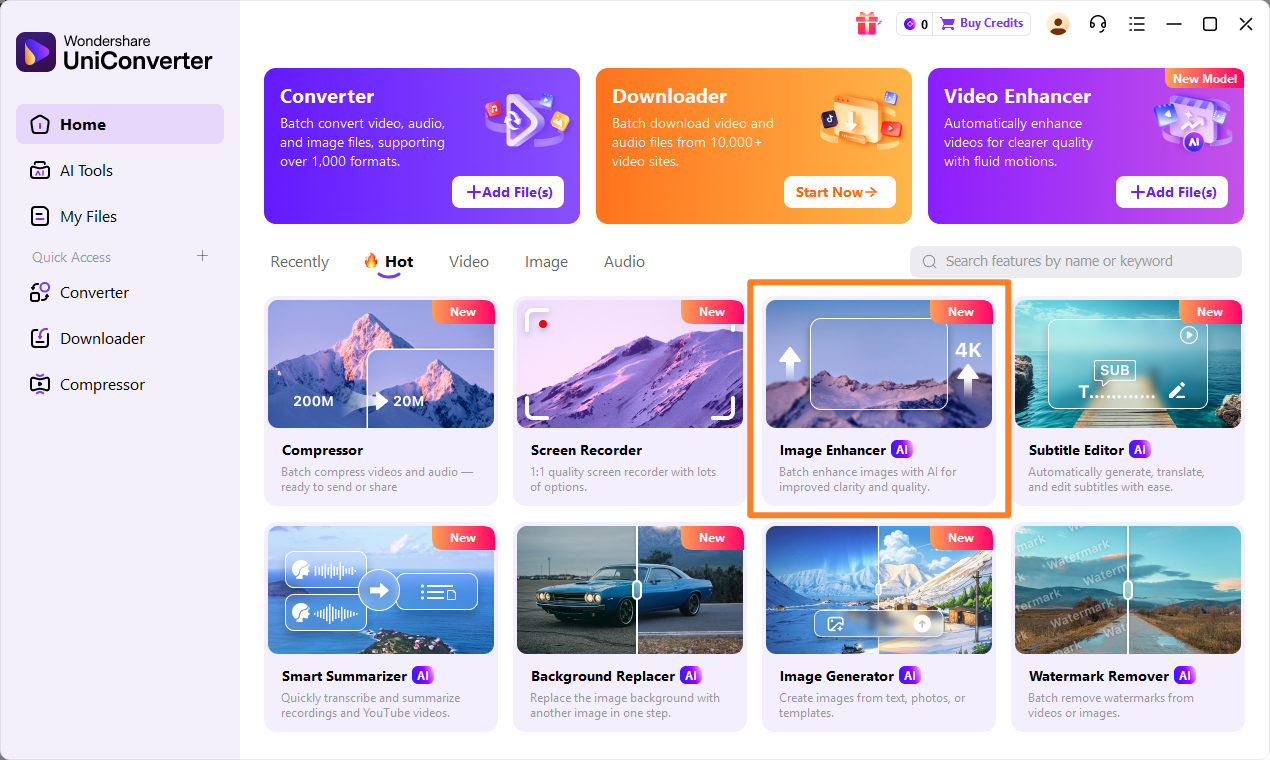
Step 1: Open UniConverter and Choose Image Enhancer
First, launch UniConverter. On the main interface, navigate to the "Toolbox" section. You'll find various tools there; select "Image Enhancer."
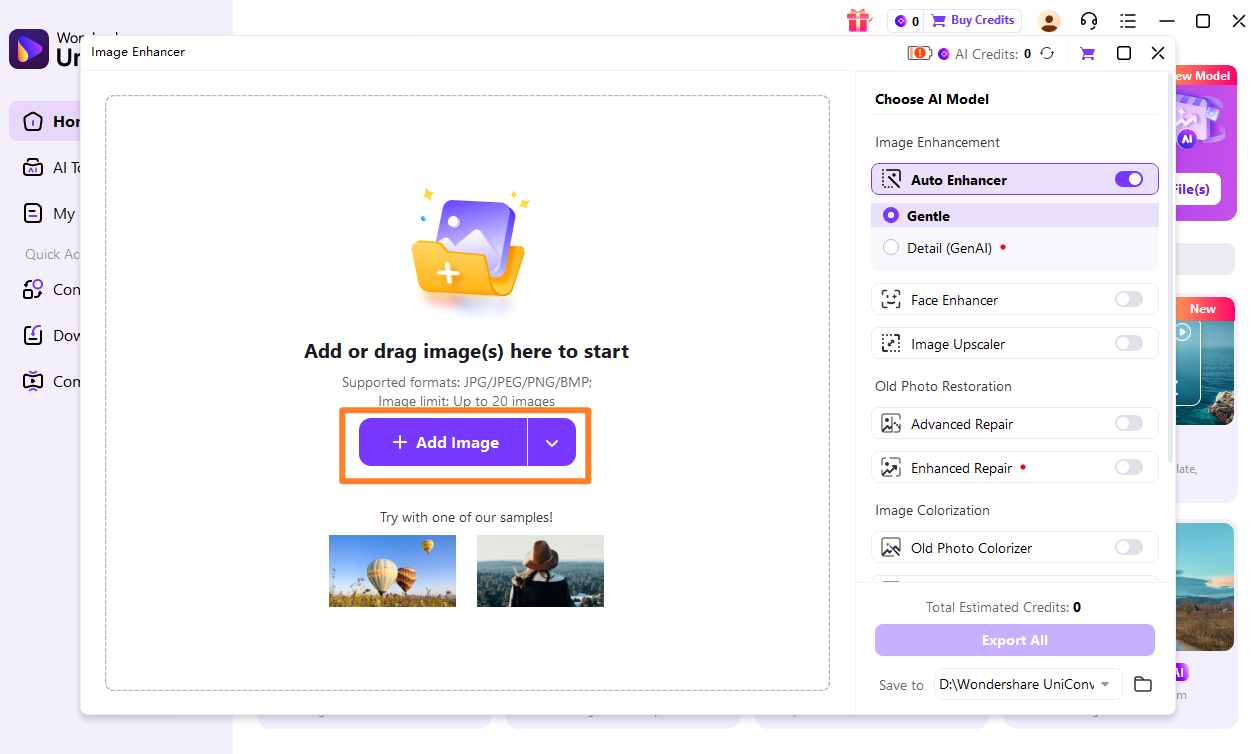
Step 2: Upload the Images
Click on the "Add Files" button or simply drag and drop the images you want to enhance into the UniConverter window. You can add multiple images for batch processing.
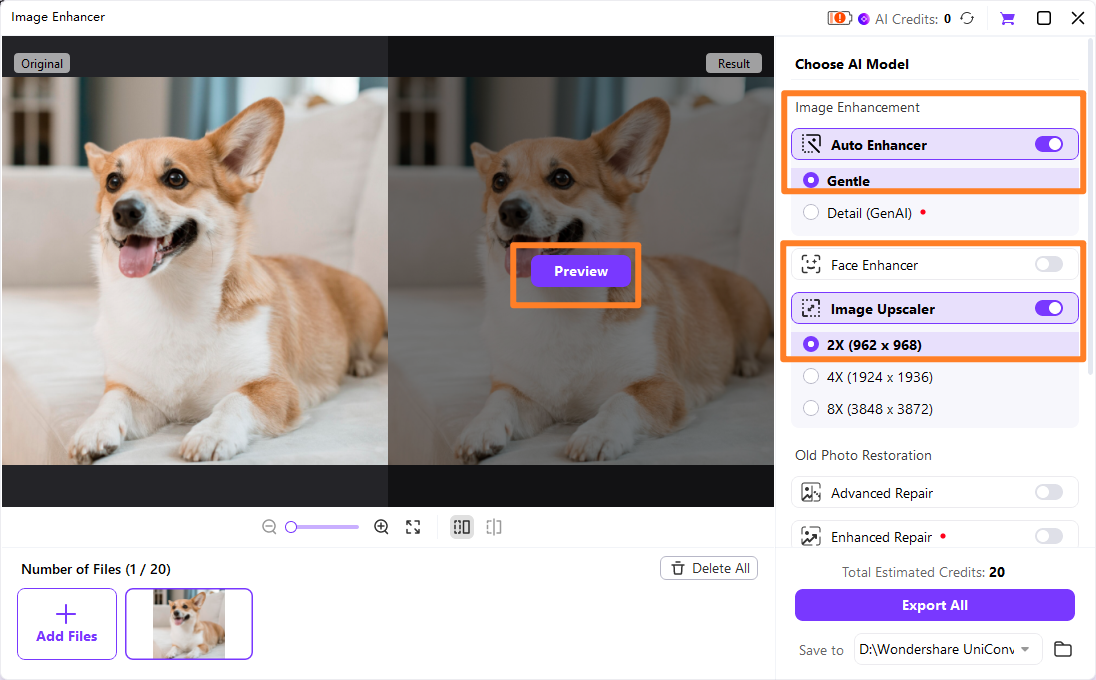
Step 3: Choose Enhancement Model
Once your images are loaded, UniConverter will present you with different enhancement models. Select the one that best suits your needs (e.g., general enhancement, face enhancement, etc.). You can also adjust parameters like resolution and quality. For those looking to upscale images, this step is crucial.
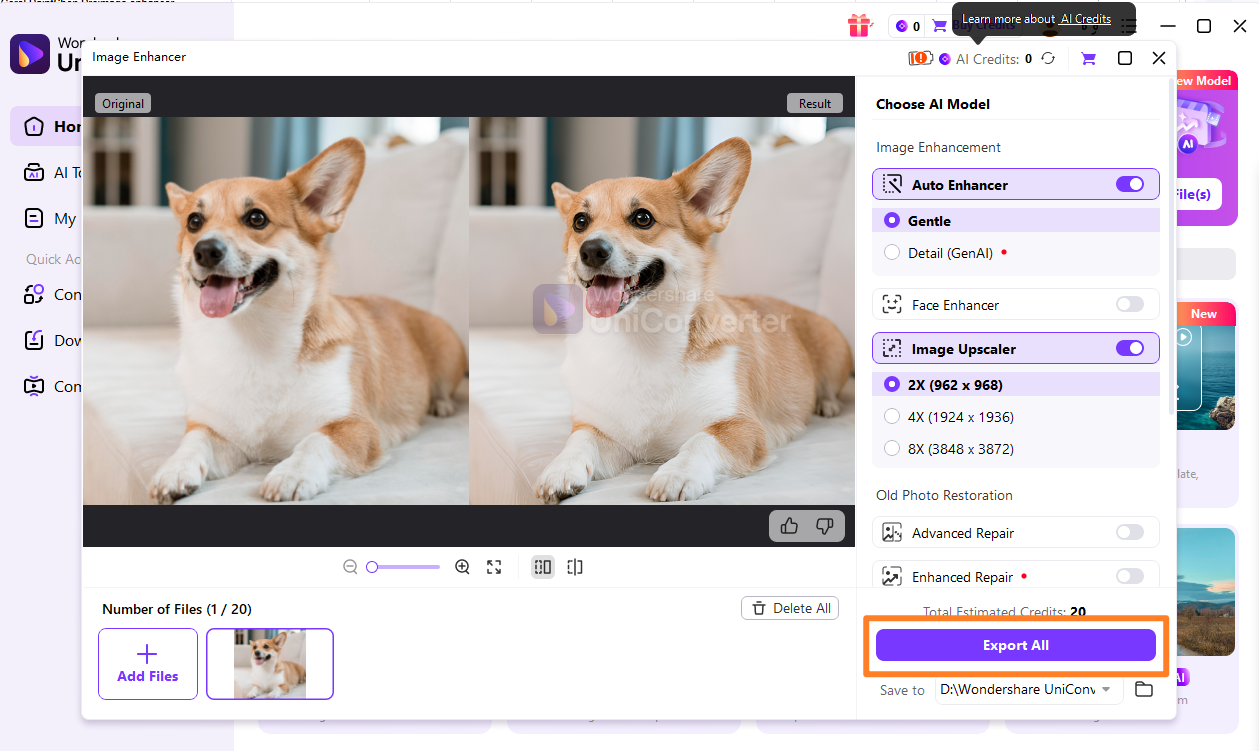
Step 4: Preview and Save the Enhanced Images
After selecting your enhancement options, you can preview the results to ensure they meet your expectations. Once satisfied, click the "Enhance" or "Save" button to export your newly improved images to your desired location.

Seeking an AVCLabs Photo Enhancer AI Alternative?
Part 7: Conclusion
After spending considerable time with AVCLabs Photo Enhancer AI, I can confidently say it's a powerful tool for anyone serious about image restoration and enhancement. For professionals seeking uncompromised quality, especially when dealing with archival or low-resolution images, its advanced AI algorithms deliver truly impressive results, often surpassing what I thought was possible. The batch processing capability is a significant time-saver, making it ideal for large projects. However, for casual users prioritizing simplicity and affordability, especially for quick social media edits, the subscription model and desktop-only nature might be a bit much. In those cases, simpler mobile apps or even the basic enhancement features in UniConverter might be more suitable. For those requiring robust batch processing capabilities and top-tier AI accuracy, AVCLabs Photo Enhancer AI is a strong contender. It's not without its quirks, like being resource-intensive, but the quality of its output often justifies these considerations. Ultimately, your choice will depend on your specific needs, budget, and the types of images you're looking to enhance.
Part 8: FAQs
-
1. What types of images can AVCLabs Photo Enhancer AI improve?
AVCLabs Photo Enhancer AI is designed to improve a wide range of images, including old, blurry, low-resolution photos, portraits, landscapes, and even product shots. It excels at upscaling, denoising, sharpening, and color correction.
-
2. Is AVCLabs Photo Enhancer AI suitable for beginners?
Yes, despite its advanced capabilities, AVCLabs Photo Enhancer AI features an intuitive user interface that makes it accessible for beginners. The AI handles most of the complex adjustments automatically, requiring minimal input from the user.
-
3. How does AVCLabs Photo Enhancer AI handle privacy?
AVCLabs Photo Enhancer AI is primarily a desktop application, meaning your images are processed locally on your computer. This generally offers a higher level of privacy compared to cloud-based solutions, as your files are not uploaded to external servers.
-
4. Can I use AVCLabs Photo Enhancer AI offline?
Once the software and its AI models are downloaded and installed, you can use AVCLabs Photo Enhancer AI offline for most enhancement tasks. However, an internet connection might be required for initial activation, software updates, or accessing certain online features.
-
5. What are the main differences between AVCLabs Photo Enhancer AI and UniConverter?
AVCLabs Photo Enhancer AI is a dedicated, specialized tool focused solely on advanced AI-powered image enhancement. UniConverter, on the other hand, is an all-in-one media solution that includes basic image enhancement features alongside video conversion, editing, and other media functionalities. While UniConverter offers convenience for general media tasks, AVCLabs provides more in-depth and sophisticated image enhancement capabilities.
