
- Anime4K Explained: Learn what Anime4K is and how it enhances anime visuals in real-time.
- Core Features & Limitations: Understand Anime4K's strengths (real-time, open-source) and weaknesses (artifacting, limited algorithms).
- Ideal User & Use Cases: Discover who benefits most from Anime4K, especially for live streaming and older content.
- Competitor Comparison: See how Anime4K stacks up against Topaz Video AI, DaVinci Resolve, and UniConverter.
- Risks & Pitfalls: Be aware of potential issues like artifacts, compatibility, and the learning curve.
- UniConverter as Alternative: Explore UniConverter for efficient, AI-powered video enhancement with batch processing.
- Make Informed Decisions: Choose the best video enhancer based on your specific needs and budget.
In this article
- Part 1: What is Anime4K Video Enhancer?
- Part 2: Anime4K Video Enhancer: Core Features, Pros, and Cons
- Part 3: Who is Anime4K Video Enhancer For? Use Cases and Limitations
- Part 4: Anime4K Video Enhancer vs. Competitors: A Head-to-Head Comparison
- Part 5: Risks and Pitfalls to Consider
- Part 6: How to Use UniConverter to Efficiently Enhance Videos
- Part 7: Conclusion
- Part 8: FAQs
Anime4K Video Enhancer: A Comprehensive Review and Comparison
The landscape of digital media consumption has been revolutionized by advancements in artificial intelligence, particularly in video upscaling. For anime enthusiasts, the desire to experience classic or even contemporary series in higher fidelity is constant. This Anime4K Video Enhancer review delves into a popular open-source solution designed to meet this demand. We will explore its core functionalities, compare it against leading competitors like Topaz Video AI and DaVinci Resolve, and identify its ideal use cases. This review aims to provide a clear understanding of Anime4K's strengths and weaknesses, helping users make informed decisions about their video enhancement needs.
Part 1: What is Anime4K Video Enhancer?
Anime4K Video Enhancer is an open-source, high-performance, real-time upscaling algorithm specifically designed for anime. Unlike traditional upscaling methods that often result in blurry or pixelated images, Anime4K leverages advanced shader-based techniques to preserve and enhance the sharp lines and vibrant colors characteristic of anime art styles. Developed by a community of enthusiasts, it aims to provide a lightweight and accessible solution for improving the visual quality of anime content, whether for live streaming or local playback. This review will address the core question: how effectively does Anime4K deliver on its promise of enhancing anime visuals, especially when pitted against more resource-intensive, AI-driven alternatives?
The Rise of AI-Powered Video Upscaling for Anime
* Addressing Low-Resolution Content: Many classic anime series were produced in lower resolutions, making them appear dated on modern high-definition displays.
* Enhancing Streaming Quality: Even newer anime streams can suffer from compression artifacts or lower bitrates, benefiting from real-time enhancement.
* Community-Driven Innovation: The open-source nature fosters rapid development and adaptation to user needs, offering a free and flexible alternative to commercial solutions.
Part 2: Anime4K Video Enhancer: Core Features, Pros, and Cons
Anime4K Video Enhancer primarily utilizes a set of carefully crafted shaders to detect and enhance edges within anime frames. This edge-detection approach is optimized for the distinct line art found in anime, aiming to sharpen details without introducing excessive artifacts. Its core strength lies in its ability to perform these enhancements in real-time, making it suitable for live viewing scenarios. The open-source nature allows for extensive customization, with users able to tweak various parameters and even develop their own shaders to achieve desired visual effects.
Pros:
* Real-time, lightweight upscaling for live viewing: Ideal for enhancing streams or local playback without significant latency.
* Open-source and community-driven development: Ensures continuous improvement and a high degree of transparency and user control.
* Highly customizable with various algorithms and settings: Users can fine-tune parameters to suit specific anime styles or personal preferences.
Cons:
* Limited to specific upscaling algorithms (primarily based on edge detection): May not perform as well on photorealistic content or complex textures.
* Can introduce artifacts on complex or low-quality source material: Over-sharpening or misinterpreting noise as edges can lead to undesirable visual glitches.
Part 3: Who is Anime4K Video Enhancer For? Use Cases and Limitations
Anime4K Video Enhancer is primarily designed for anime enthusiasts who want to improve their viewing experience without investing in expensive software or powerful hardware. Its real-time processing capability makes it particularly attractive for those who consume anime via streaming services or watch downloaded episodes on the fly. It caters to users who appreciate the flexibility and transparency of open-source solutions and are willing to engage with some technical configuration for optimal results.
Best Use Case: Enhancing Live Anime Streams and Older Content
Anime4K excels at making older, lower-resolution anime look sharper and more vibrant on modern displays. It's also highly effective for real-time enhancement of live streams, where offline processing is not an option. For instance, watching a classic 480p anime series on a 4K monitor can be significantly improved by Anime4K, reducing blurriness and enhancing line clarity.
Limited Use Case: Professional Restoration or High-Fidelity Upscaling
While good for casual viewing, Anime4K is not a substitute for professional video restoration tools or advanced AI upscalers like Topaz Video AI. It may struggle with heavily compressed or extremely low-quality source material, where its edge-detection algorithms might misinterpret noise as detail, leading to artifacts. For projects requiring pristine, artifact-free upscaling for archival or commercial purposes, more sophisticated, offline rendering solutions are necessary.
Part 4: Anime4K Video Enhancer vs. Competitors: A Head-to-Head Comparison
When evaluating Anime4K Video Enhancer against its competitors, it's crucial to consider the trade-offs between real-time performance, output quality, and cost. While Anime4K offers a free, lightweight solution, tools like Topaz Video AI and DaVinci Resolve's Neural Engine provide more robust, AI-driven upscaling at a higher cost and with offline processing requirements.
| Feature/Product | Anime4K Video Enhancer | Topaz Video AI | DaVinci Resolve (Neural Engine) | UniConverter |
| Upscaling Method | Edge-detection, shader-based | AI/ML, deep learning | AI/ML, deep learning | AI/ML, deep learning |
| Real-time Processing | Yes (for live viewing) | No (offline rendering) | No (offline rendering) | No (offline rendering) |
| Customization | High (shader parameters) | Moderate (presets, sliders) | Moderate (settings) | Moderate (presets, sliders) |
| Output Quality | Good (for its method) | Excellent | Excellent | Very Good |
| Ease of Use | Moderate (requires setup) | High | Moderate (part of larger suite) | High |
| Price | Free | Paid | Free (limited), Paid (Studio) | Paid (Subscription/Lifetime) |
Anime4K stands out for its real-time capability and zero cost, making it ideal for immediate viewing enhancements. Topaz Video AI and DaVinci Resolve, on the other hand, offer superior output quality through advanced AI models, albeit at a significant cost and requiring offline rendering. UniConverter presents a balanced option, providing AI-powered enhancement with good output quality and ease of use, suitable for a broader range of users who need a reliable, all-in-one solution.
Part 5: Risks and Pitfalls to Consider
While Anime4K Video Enhancer offers compelling advantages, users should be aware of potential risks and limitations, particularly when dealing with varying source qualities and technical configurations. These pitfalls can impact the overall viewing experience and the perceived effectiveness of the enhancement.
Potential for Artifacts on Low-Quality Sources
Anime4K's edge-detection algorithms, while effective for clean anime lines, can struggle with highly compressed or noisy source material. In such cases, the enhancer might misinterpret compression artifacts or grain as legitimate edges, leading to over-sharpening, jagged lines, or even new, undesirable visual distortions. This can make a low-quality video look worse rather than better, especially if the source material is already heavily degraded.
Compatibility Issues with Certain Players or Hardware
As a shader-based solution, Anime4K relies on specific video player plugins (e.g., MPV, VLC) and GPU capabilities. Users might encounter compatibility issues with certain older hardware, integrated graphics cards, or less common video players. Setting up and configuring the shaders correctly can also be a technical hurdle for less experienced users, potentially leading to frustration or suboptimal performance.
Learning Curve for Optimal Configuration
Achieving the best results with Anime4K often requires tweaking various parameters and understanding the nuances of different shader algorithms. The sheer number of settings can be overwhelming, and finding the "sweet spot" for a particular anime or viewing setup can involve a significant amount of trial and error. Without a clear understanding of these settings, users might not fully leverage the enhancer's potential or inadvertently introduce visual problems.
Lack of Dedicated Customer Support
Being an open-source project, Anime4K does not offer dedicated customer support. Users must rely on community forums, GitHub issues, and online documentation for troubleshooting and assistance. While the community is generally helpful, this can be a drawback for users who prefer direct technical support or a more guided experience, especially when encountering complex issues.
Part 6: How to Use UniConverter to Efficiently Enhance Videos
When other tools fall short in batch processing, stable enhancement, or delivering noticeable improvements, UniConverter emerges as a robust alternative. It bypasses common issues like ads, limited format support, and unstable enhancements often found in free or less comprehensive tools. UniConverter offers a seamless, ad-free experience with extensive format compatibility, GPU acceleration for faster processing, stable and lossless enhancement, and powerful batch processing capabilities, positioning it as an all-in-one ultimate solution for video enhancement.
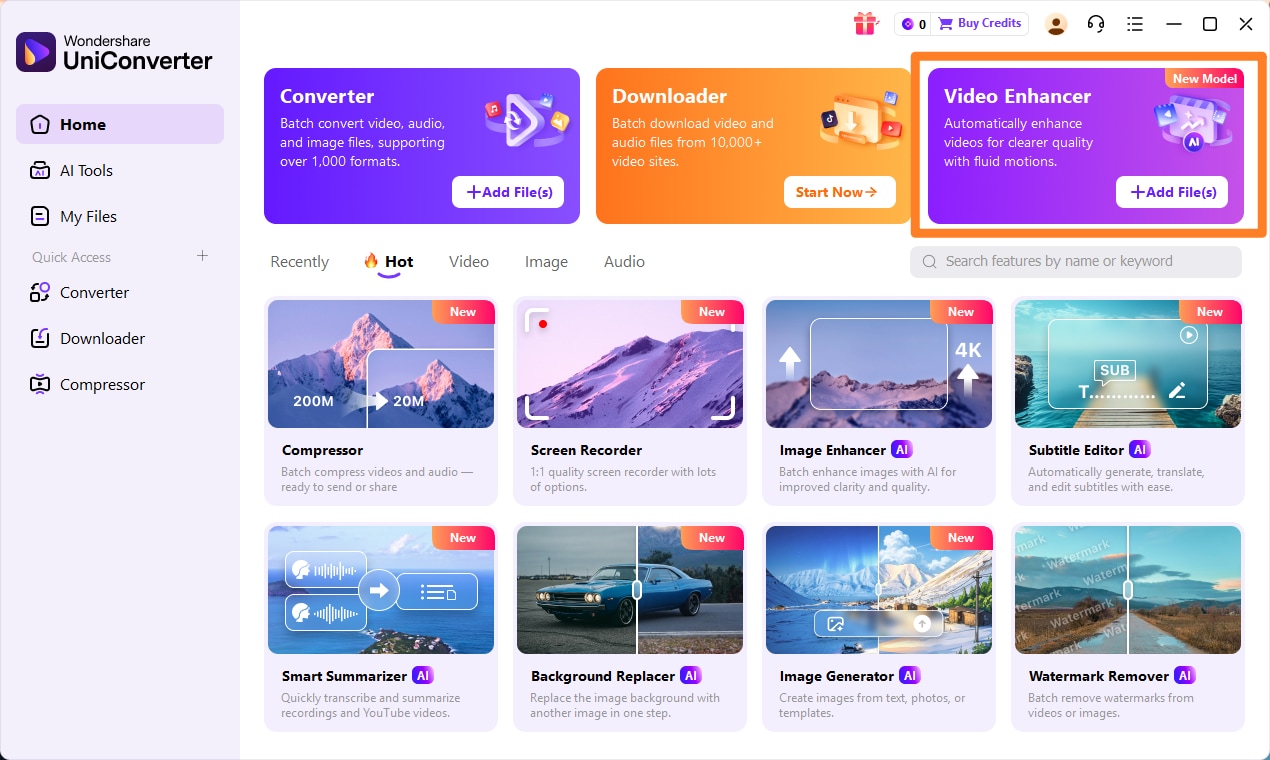
Step 1: Open UniConverter and Choose Video Enhancer
Launch UniConverter on your computer. From the main interface, navigate to the "AI Lab" section and select the "Video Enhancer" tool.
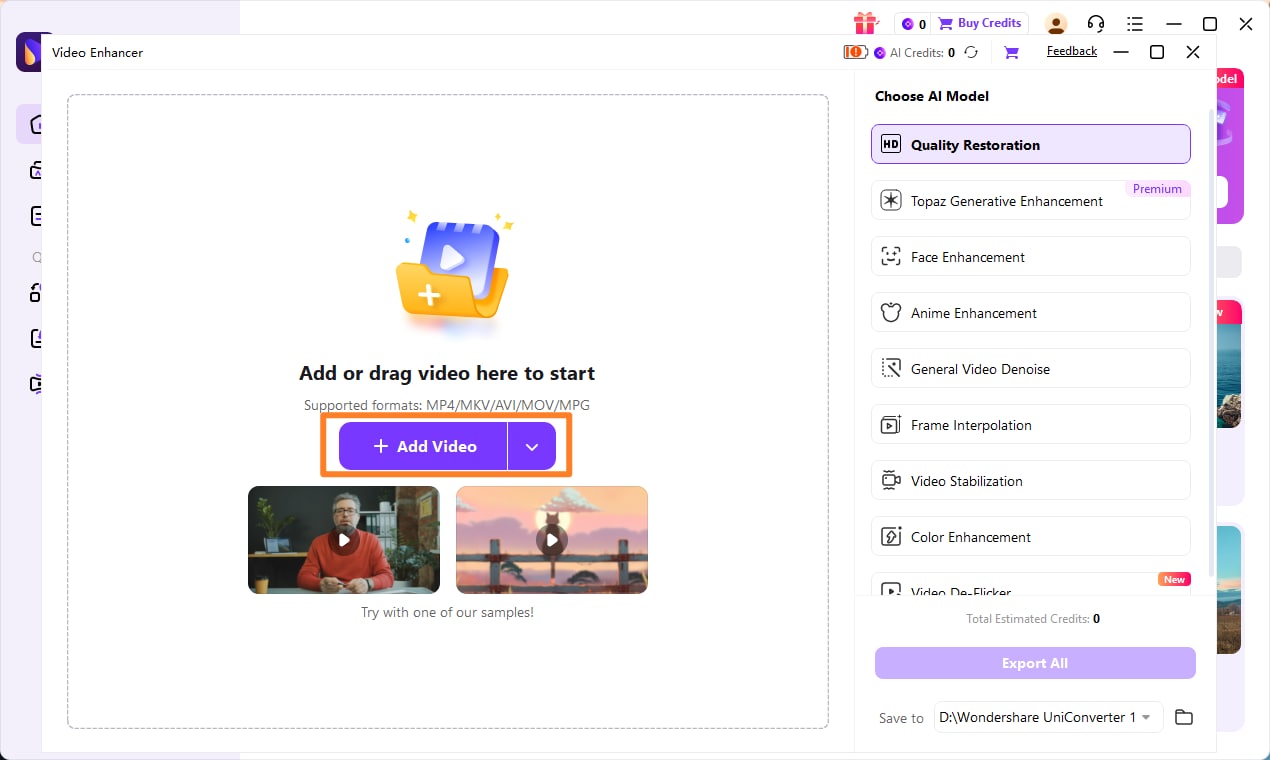
Step 2: Upload the Videos
Click on the "Add Files" button or drag and drop your anime videos into the UniConverter interface. You can add multiple videos for batch processing.
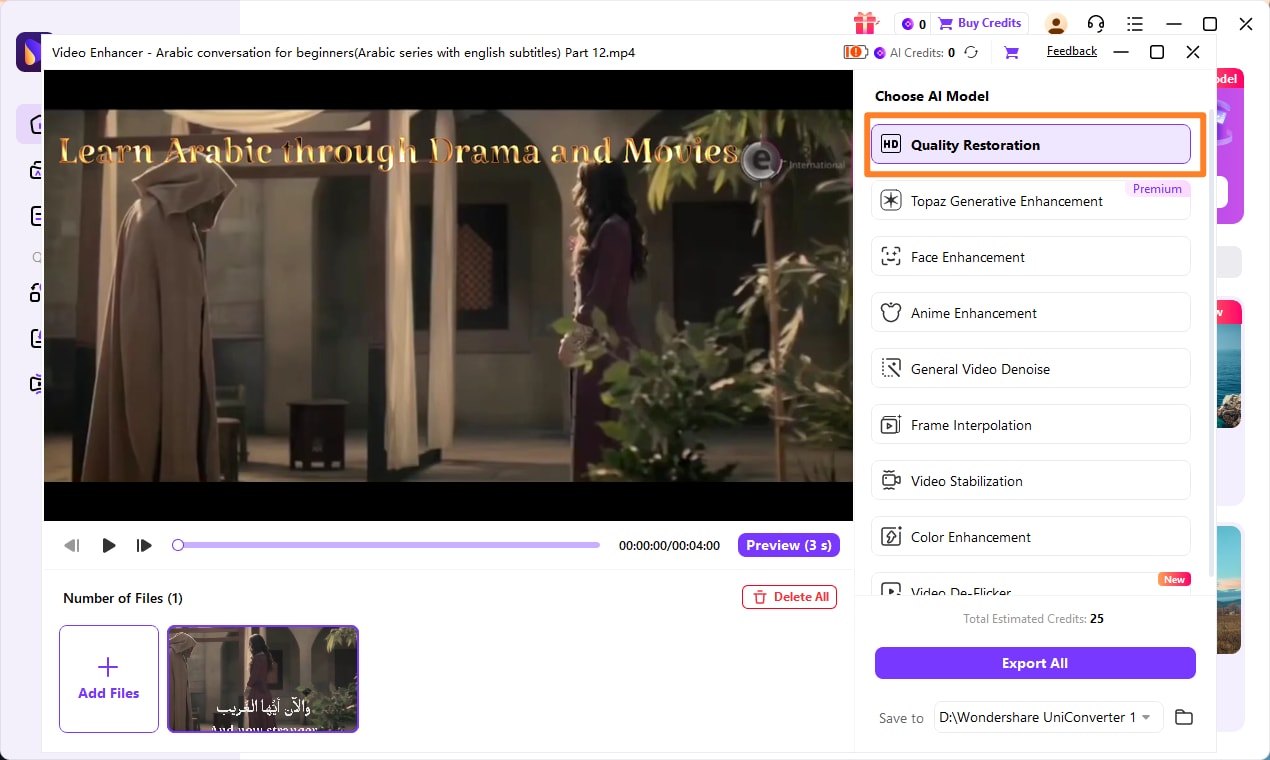
Step 3: Choose Enhancement Model
Select the desired AI enhancement model. UniConverter offers various options like "AI Upscale," "AI Denoise," "AI Color Correction," and "AI Stabilization." You can also explore advanced features such as background replacer to further refine your videos. Choose the one that best suits your video enhancement needs.
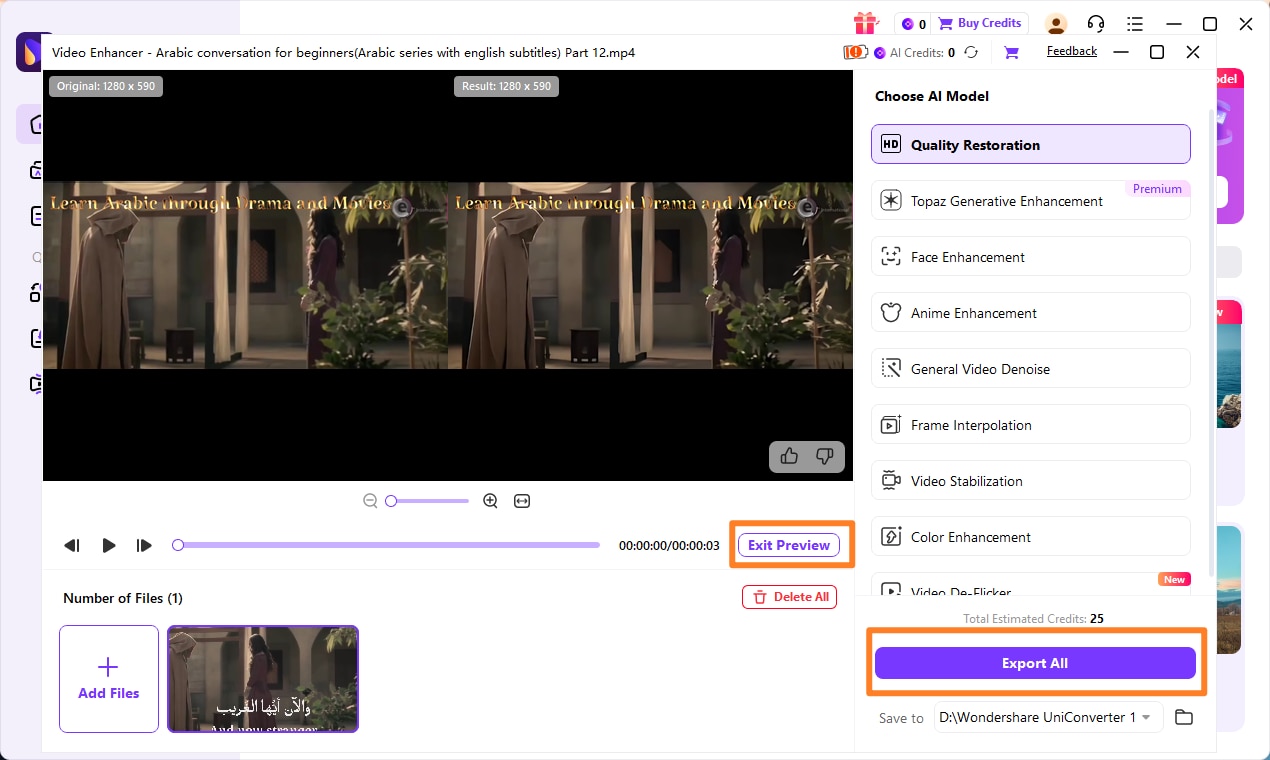
Step 4: Preview and Save the Enhanced Video
After selecting the model, you can preview the enhanced video to ensure it meets your expectations. Once satisfied, choose your output format and destination, then click "Export" to save your high-quality, enhanced video. For those looking to remove background without losing quality, UniConverter provides excellent tools. Additionally, you can achieve high-definition background remover results with ease.

Enhance Anime with AI: A Better Alternative
Part 7: Conclusion
The Anime4K Video Enhancer review reveals it as an excellent, free, and lightweight solution for anime enthusiasts seeking real-time visual improvements. Its strength lies in its open-source nature, customization options, and ability to enhance live streams and older content effectively. However, its reliance on edge-detection algorithms means it can introduce artifacts on low-quality sources and isn't suited for professional-grade restoration. For casual viewers and live stream enthusiasts, Anime4K offers significant value. Users seeking advanced AI upscaling with superior output quality for critical projects might find Topaz Video AI or DaVinci Resolve more appropriate, despite their cost and offline processing. For those desiring a balanced, user-friendly, and comprehensive solution with reliable AI enhancement and batch processing capabilities, UniConverter stands out as a strong alternative, bridging the gap between free, basic tools and expensive, professional software.
Part 8: FAQs
-
1. What is Anime4K Video Enhancer?
Anime4K is an open-source, shader-based video upscaling algorithm specifically designed to enhance the visual quality of anime in real-time, primarily by sharpening lines and improving details.
-
2. How does Anime4K differ from other AI upscaling tools?
Anime4K uses edge-detection shaders for real-time enhancement, making it lightweight and free. In contrast, tools like Topaz Video AI and DaVinci Resolve use more complex, deep learning AI models for superior, but offline and often paid, upscaling.
-
3. Can Anime4K improve the quality of any video?
While designed for anime, Anime4K's edge-detection can technically be applied to other videos. However, its effectiveness is optimized for anime's distinct art style, and it may not yield desirable results on photorealistic content or very low-quality sources.
-
4. Is Anime4K free to use?
Yes, Anime4K is completely free and open-source, developed and maintained by a community of contributors.
-
5. What are the system requirements for Anime4K?
Anime4K requires a video player that supports shader plugins (like MPV or VLC) and a GPU capable of handling real-time shader processing. While not extremely demanding, a dedicated GPU will provide better performance and results.
