
- AirBrush Focus: Primarily for quick, AI-powered portrait/selfie enhancements, ideal for social media.
- Pros & Cons: Intuitive interface and powerful retouching, but subscription-based with potential for over-processed results.
- Target Audience: Best for casual users and social media content creators, not professional photography.
- Comparison Insights: AirBrush excels in ease of use for portraits; UniConverter offers robust batch processing and higher quality.
- Risks: Data privacy, intrusive ads, unnatural edits, and subscription fatigue are key considerations.
- UniConverter Value: Offers stable, lossless, batch-friendly enhancement, a strong alternative for diverse media needs.
In this article
- Part 1: What is AirBrush Image Enhancer?
- Part 2: AirBrush Image Enhancer: Core Features, Pros, and Cons
- Part 3: AirBrush Image Enhancer: Target Audience and Use Cases
- Part 4: AirBrush Image Enhancer and Alternatives Comparison
- Part 5: Risks and Pitfalls to Consider
- Part 6: How to Use UniConverter for Efficient Image Enhancement
- Part 7: Conclusion
- Part 8: FAQs
When I first started dabbling in digital photography, I quickly realized that a great shot often needs a little help to truly shine. That's where image enhancers come in. Today, I want to share my insights on the AirBrush Image Enhancer review, a tool that's become quite popular for quick photo fixes. This review will delve into its features, compare it with alternatives, and help you decide if it's the right fit for your editing needs, especially in the context of the booming AI-powered photo editing market.
Part 1: What is AirBrush Image Enhancer?
AirBrush Image Enhancer is a mobile-first photo editing application primarily focused on beautifying and enhancing portraits and selfies. It leverages AI to offer a suite of tools designed to make your photos look their best with minimal effort. I initially thought it was just another filter app, but after using it, I found it offers surprisingly powerful retouching capabilities. This review aims to address whether AirBrush truly stands out in a crowded market and if its AI-driven approach delivers consistent, high-quality results for everyday users.
The Rise of AI-Powered Photo Editing
The landscape of photo editing has dramatically shifted with the advent of AI. For me, this means:
* Effortless Enhancements: AI can automatically detect and correct imperfections, saving me a lot of time.
* Accessibility for All: Even without professional editing skills, I can achieve impressive results.
* Creative Freedom: AI tools often suggest creative edits I might not have thought of myself.
* Speed and Efficiency: What used to take minutes or hours can now be done in seconds.
Part 2: AirBrush Image Enhancer: Core Features, Pros, and Cons
AirBrush Image Enhancer, from my experience, is built around making photo editing accessible and effective, especially for portraits. Its core capabilities revolve around quick fixes and aesthetic improvements. I've found its main strength lies in its ability to smooth skin, whiten teeth, and brighten eyes with just a few taps. It also offers a decent range of filters and effects to change the mood of my photos.
Pros:
* Intuitive Interface for Quick Edits: I love how easy it is to navigate. I can get a decent edit done in under a minute.
* Powerful Retouching Tools for Portraits: For selfies, the skin smoothing, blemish remover, and reshape tools are incredibly effective.
* Diverse Filter and Effect Library: There's a wide variety of filters, from subtle enhancements to dramatic artistic effects, which I find useful for different moods.
Cons:
* Subscription Model for Advanced Features: To unlock the really good stuff, I had to subscribe, which can be a turn-off for casual users.
* Potential for Over-Processed Results: It's easy to go overboard with the sliders, leading to an unnatural, "plastic" look if I'm not careful.
Part 3: AirBrush Image Enhancer: Target Audience and Use Cases
From my perspective, AirBrush Image Enhancer is clearly designed for a specific demographic, and it excels in those areas. If you're someone who primarily takes photos with your phone and wants them to look great for social media, this app is definitely for you. I find myself reaching for it most often when I need to quickly polish a selfie or a casual group photo before sharing.
Best Use Case: Social Media Content Creation
For me, AirBrush is a go-to for making my social media posts pop. Whether it's a quick selfie for Instagram, a profile picture for a dating app, or a casual shot with friends, the app's beautifying tools and filters make it incredibly easy to get a share-worthy photo. I can quickly remove a blemish, brighten my smile, or add a trendy filter without spending much time. It's all about making an immediate impact.
Limited Use Case: Professional Photography Workflow
While AirBrush is fantastic for quick, casual edits, I wouldn't recommend it for professional photography. The level of control isn't granular enough for high-resolution prints or detailed client work. For instance, if I'm working on a professional photoshoot, I need precise color grading, non-destructive editing, and the ability to work with RAW files, none of which AirBrush offers. It's a great tool for personal use, but it doesn't fit into a professional workflow where precision and high fidelity are paramount.
Part 4: AirBrush Image Enhancer and Alternatives Comparison
When I look at the market for image enhancers, AirBrush definitely holds its own, especially for its niche. But it's important to see how it stacks up against other popular tools. I've found that different apps cater to different needs, and what works best for me might not be ideal for someone else.
| Feature/Scenario | AirBrush | UniConverter | Adobe Lightroom Mobile | Snapseed |
| Portrait Retouching | Excellent | Good | Excellent | Good |
| Batch Processing | Limited | Excellent | Good | Limited |
| Ease of Use | High | High | Medium | Medium |
| Price | Subscription | One-time/Subscription | Subscription | Free |
| Output Quality | Good | Excellent | Excellent | Good |
| AI Enhancement | Yes | Yes | Yes | Limited |
| RAW Support | No | Yes | Yes | Yes |
| Customer Support | Email/Live Chat | Forum/Email | Forum | |
| Security | Standard | High | High | Standard |
Key Differentiators:
From my experience, AirBrush truly excels in user-friendly portrait enhancements for casual users. If you're just looking to make your selfies look great, it's hard to beat its simplicity. UniConverter, on the other hand, offers more robust features for advanced photo manipulation and batch processing, which is a huge plus if I'm dealing with many photos. Snapseed is a fantastic free option that offers a good balance of features, while Adobe Lightroom Mobile is the go-to for serious photographers who need professional-grade tools and cloud integration.
Part 5: Risks and Pitfalls to Consider
While AirBrush and similar apps offer incredible convenience, I've learned that it's crucial to be aware of the potential downsides. It's not always sunshine and rainbows, especially when dealing with free or freemium models.
Data Privacy Concerns
This is a big one for me. When I upload my photos to any app, especially one that uses cloud processing, I always wonder where my data is going. While AirBrush states it respects user privacy, the terms of service can be vague. I've heard stories about data breaches, and it makes me cautious about uploading highly personal or sensitive images. It's a trade-off between convenience and privacy.
In-App Advertisements and Upsells
The free version of many apps, including AirBrush, often bombards me with ads. It can be quite disruptive to my editing flow. Beyond ads, there's the constant push to upgrade to a premium subscription. While I understand developers need to monetize their products, the aggressive upsells can sometimes feel intrusive and diminish the user experience.
Potential for Unnatural-Looking Edits
I've definitely been guilty of over-editing. It's so easy to crank up the smoothing or whitening sliders, and before I know it, my photo looks completely artificial. The "plastic doll" effect is a real pitfall, and it can make my photos look less authentic and more like a caricature. It takes a bit of self-control and practice to achieve a natural-looking enhancement.
Image Quality Degradation with Excessive Processing
Another issue I've encountered is that excessive processing, especially with multiple layers of filters and adjustments, can sometimes lead to a noticeable drop in image quality. Details can get blurred, colors can become muddy, and the overall sharpness can decrease. This is particularly true if I'm starting with a lower-resolution image. It's a fine line between enhancing and degrading.
Subscription Fatigue
In today's app economy, it feels like everything is moving to a subscription model. While AirBrush offers a lot of value for its premium features, adding another monthly or annual subscription to my list can be a burden. I often find myself weighing whether the benefits truly justify the recurring cost, especially when there are so many other subscription services vying for my money. It's a form of "subscription fatigue" that I, and many others, experience.
Part 6: How to Use UniConverter for Efficient Image Enhancement
Sometimes, I find that dedicated image enhancers, while good for quick fixes, fall short when I need more comprehensive or batch processing capabilities, or when the enhancement quality isn't consistent. When I face issues like unstable enhancements, very weak effects, or the inability to process multiple images at once, I turn to UniConverter. It's a versatile tool that helps me avoid many of the pitfalls I've discussed, offering a stable, lossless, and batch-friendly enhancement experience without the annoyance of ads. It's become my go-to for an all-in-one media solution.
Step 1: Open UniConverter and Choose Image Enhancer
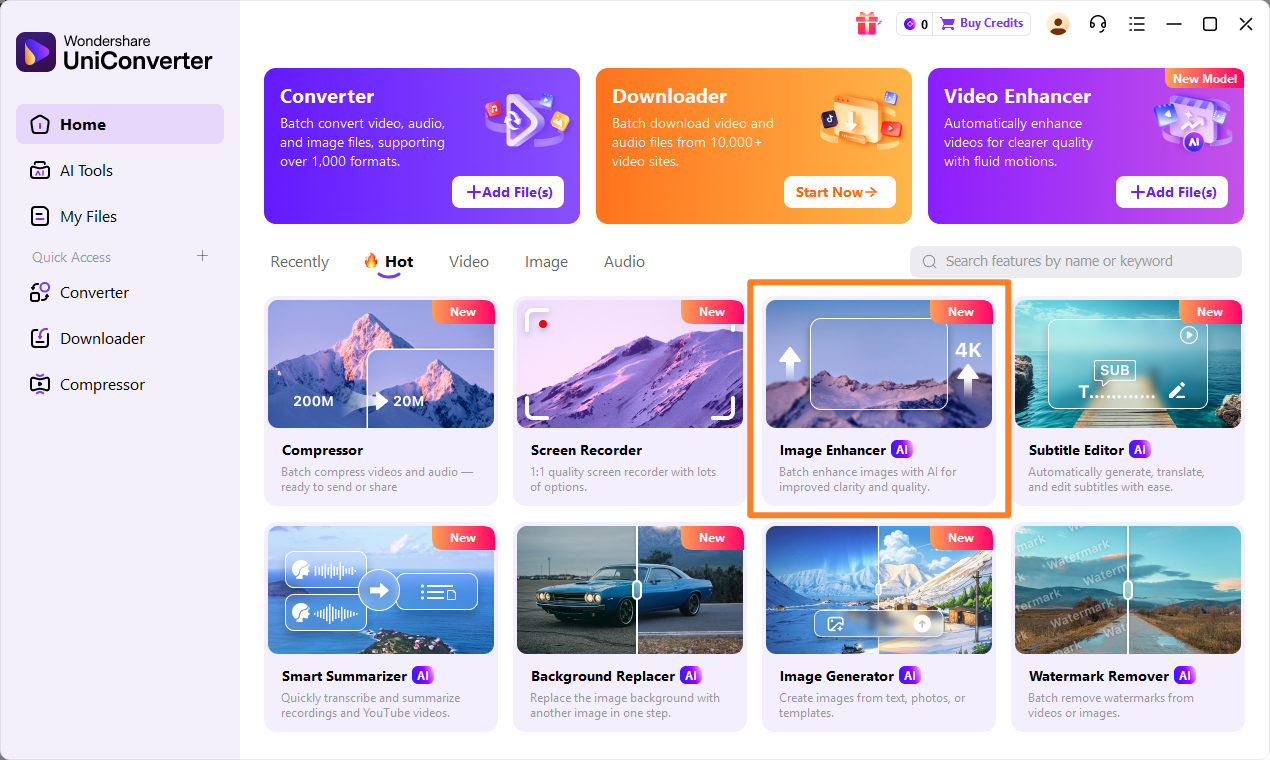
First, I launch UniConverter on my desktop. On the main interface, I navigate to the "Toolbox" section and then select the "Image Enhancer" option. This is where the magic begins for improving my photos.
Step 2: Upload the Images
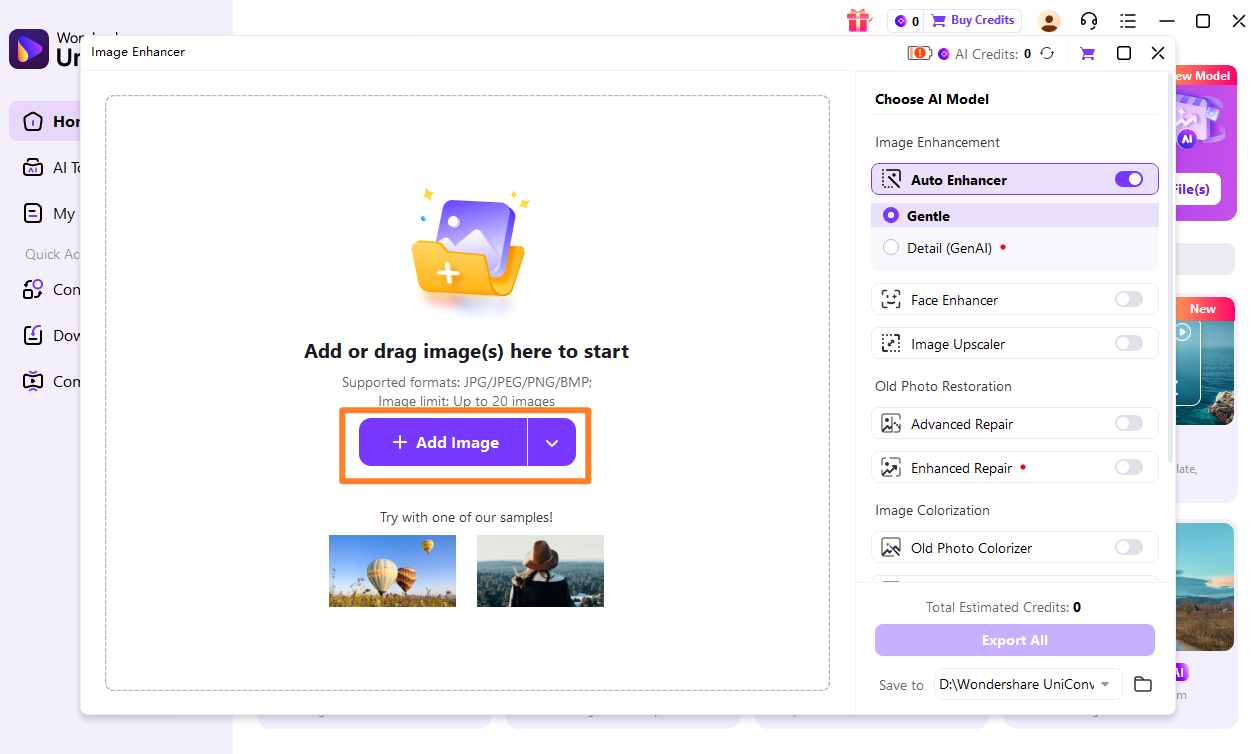
Next, I click on the "Add Files" button or simply drag and drop the images I want to enhance into the UniConverter window. I appreciate that I can upload multiple images at once, which saves me a lot of time compared to single-image editors. For those looking to upscale images to 4K, this feature is particularly useful.
Step 3: Choose Enhancement Model
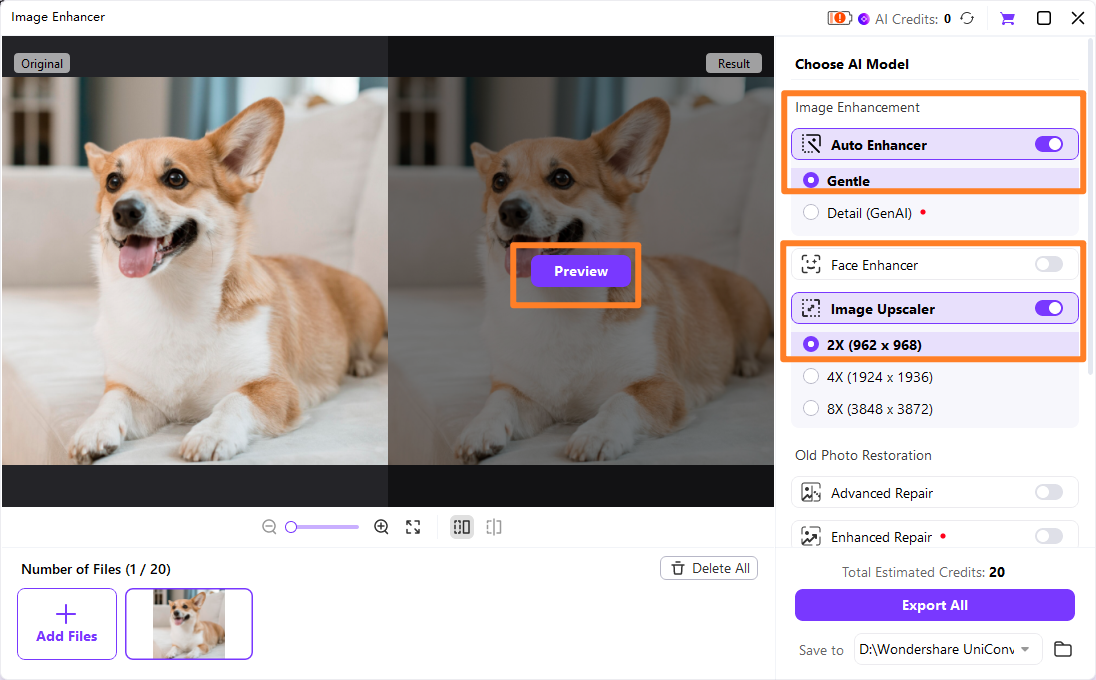
Once my images are loaded, UniConverter offers various AI enhancement models. I select the one that best suits my needs, whether it's for general enhancement, portrait beautification, or noise reduction. I can also adjust specific parameters like resolution and quality. This is also where you can find options to enhance video quality if needed.
Step 4: Preview and Save the Enhanced Images
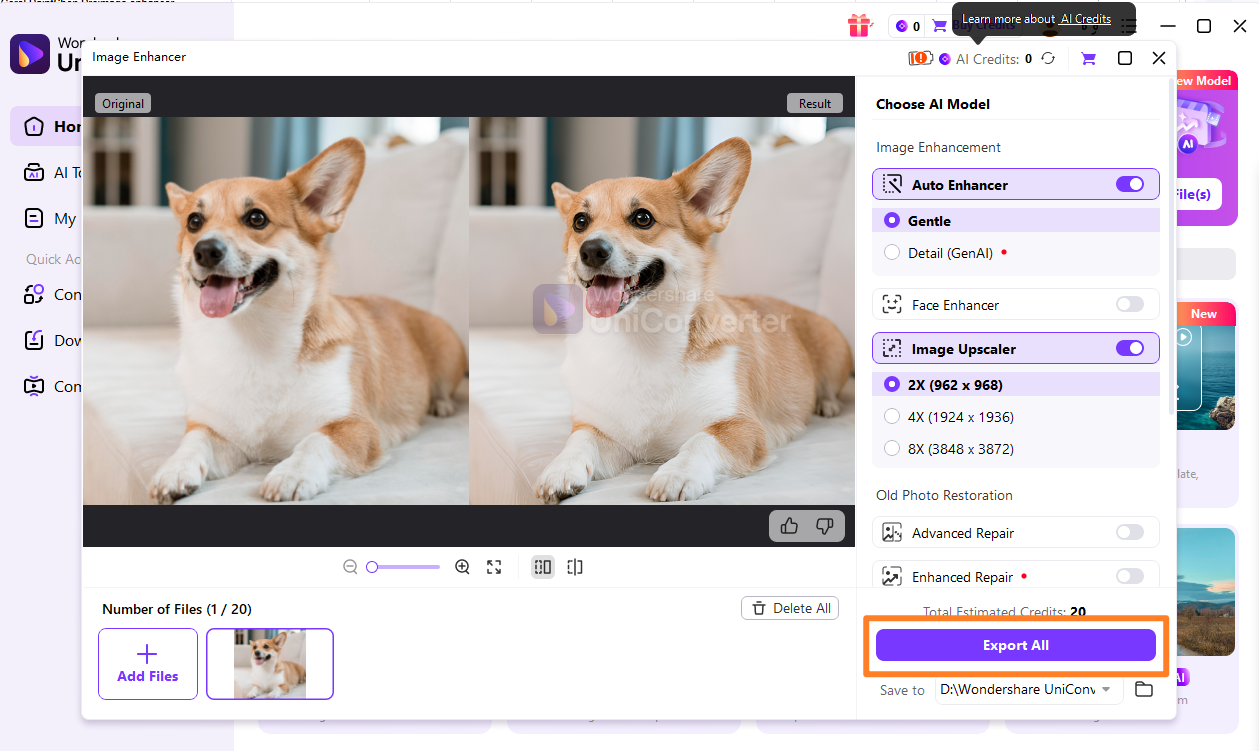
Before saving, I always use the preview feature to see the enhanced result side-by-side with the original. This allows me to make any final adjustments. Once satisfied, I click the "Enhance" button, and UniConverter processes and saves my improved images to my desired location. This process ensures a seamless image enhancement workflow.

Seeking a Powerful AirBrush Image Enhancer Alternative?
Part 7: Conclusion
After spending considerable time with the AirBrush Image Enhancer review, I can confidently say it's a solid choice for specific users. For casual users and social media enthusiasts who prioritize quick, effective portrait enhancements and an easy-to-use interface, AirBrush is a fantastic tool. It allows me to quickly polish my selfies and everyday photos, making them ready for sharing without much fuss. However, for budget-conscious editors who might be wary of subscription models, or those who need more advanced features, exploring free alternatives like Snapseed or considering a one-time purchase for a more comprehensive tool might be a better fit. For professional photographers and graphic designers, AirBrush simply doesn't offer the granular control, RAW support, or batch processing capabilities required for their workflows. In those cases, I would definitely recommend professional-grade software like Adobe Lightroom or a versatile solution like UniConverter for its broader utility and robust enhancement features. Ultimately, the best tool depends on individual needs and how often I plan to use it.
Part 8: FAQs
-
1. Is AirBrush Image Enhancer free to use?
AirBrush offers a free version with limited features and a premium subscription for full access to all tools and effects.
-
2. Can AirBrush enhance multiple photos at once?
While AirBrush is primarily designed for single-image editing, some basic batch operations might be available in premium versions, but it's not its strong suit.
-
3. Does AirBrush compress image quality after editing?
Excessive editing or specific export settings can potentially reduce image quality. It's crucial to monitor export options and avoid over-processing.
-
4. What are the main differences between AirBrush and Photoshop Express?
AirBrush focuses more on quick, AI-powered beauty and portrait enhancements, while Photoshop Express offers a broader range of general photo editing tools and is more aligned with the Adobe ecosystem.
-
5. Is UniConverter a good alternative for AirBrush?
UniConverter is an excellent alternative, especially if you need a versatile tool for various media conversions and image enhancements beyond just portrait retouching, offering robust batch processing and higher output quality.
