
- AI Studios Overview: AI Studios Video Enhancer uses AI to improve video quality, upscaling, reducing noise, and correcting colors.
- Core Strengths: Excels in automated upscaling, noise reduction, and color correction, making old footage look new.
- Limitations: Lacks advanced customization for professionals and demands significant computing power for processing.
- Ideal Use Cases: Best for revitalizing archival footage and enhancing user-generated content for social media.
- Competitor Comparison: AI Studios offers ease of use; UniConverter provides balance; Topaz Video AI offers extensive control; DaVinci Resolve is a full editing suite.
- Risks to Consider: Be aware of data privacy with cloud processing, potential for 'over-enhancement,' and subscription costs.
- UniConverter Alternative: UniConverter offers efficient, GPU-accelerated video enhancement with a user-friendly interface and batch processing.
- Decision Factors: Choose based on your needs: ease of use, control, budget, and hardware capabilities.
In this article
- Part 1: What is AI Studios Video Enhancer?
- Part 2: AI Studios Video Enhancer: Core Features, Pros, and Cons
- Part 3: AI Studios Video Enhancer: Ideal Users and Use Cases
- Part 4: AI Studios Video Enhancer vs. Competitors
- Part 5: Risks and Pitfalls to Consider
- Part 6: How to Use UniConverter for Efficient Video Enhancement
- Part 7: Final Verdict and Recommendations
- Part 8: FAQs
AI Studios Video Enhancer: A Deep Dive into Performance and Alternatives
The digital landscape is awash with video content, from professional productions to casual social media clips. However, not all footage is created equal. Low-resolution, noisy, or poorly colored videos can significantly detract from the viewing experience. This is where AI-powered video enhancement tools, such as AI Studios Video Enhancer review, step in, promising to breathe new life into existing footage. This review will delve into the capabilities of AI Studios Video Enhancer, compare it against its competitors, and provide a comprehensive guide to help users make informed decisions about their video enhancement needs.
Part 1: What is AI Studios Video Enhancer?
AI Studios Video Enhancer is an artificial intelligence-driven software designed to automatically improve the quality of video footage. Leveraging advanced AI algorithms, it aims to upscale resolutions, reduce noise, correct colors, and stabilize shaky footage, making it a powerful tool for content creators, archivists, and anyone looking to elevate their video content. The core problem it addresses is the ubiquitous presence of suboptimal video quality in an increasingly visual world.
The Rise of AI-Powered Video Enhancement Tools
* Growing demand for high-quality content: Viewers expect crisp, clear visuals across all platforms.
* Legacy content preservation: Older videos often suffer from low resolution and artifacts, needing modern enhancement.
* Accessibility for non-professionals: AI tools democratize enhancement, making it available without extensive technical skills.
* Limitations of traditional editing: Manual enhancement is time-consuming and often less effective than AI for certain tasks.
Part 2: AI Studios Video Enhancer: Core Features, Pros, and Cons
AI Studios Video Enhancer offers a suite of functionalities aimed at transforming video quality. Its primary capabilities include intelligent upscaling, noise reduction, and color correction, all powered by AI.
Core Features:
* Intelligent Upscaling: Automatically increases video resolution to 4K or even 8K.
* Advanced Noise Reduction: Cleans up grain and artifacts from low-light or old footage.
* Precise Color Correction: Adjusts hues, saturation, and contrast for a more vibrant and natural look.
* Image Stabilization: Smooths out shaky camera movements.
* Detail Restoration: Recovers lost details and sharpens blurry edges.
Pros:
* Automated Upscaling for Legacy Content: Effortlessly transforms old, low-resolution videos into high-definition masterpieces.
* Noise Reduction for Low-Light Footage: Significantly improves clarity and reduces grain in challenging lighting conditions.
* Color Correction for Professional Grading: Offers robust tools to achieve visually appealing and consistent color profiles.
Cons:
* Limited Customization for Advanced Users: Lacks granular control over specific parameters, which can be frustrating for professionals.
* Resource-Intensive Processing Requirements: Demands significant CPU and GPU power, leading to longer processing times on less powerful machines.
Part 3: AI Studios Video Enhancer: Ideal Users and Use Cases
AI Studios Video Enhancer caters to a broad spectrum of users, from casual content creators to professionals dealing with large archives. Its automated nature makes it particularly appealing to those without extensive video editing expertise.
Scenario 1: Revitalizing Archival Footage for Documentaries
Documentary filmmakers often work with historical footage that is decades old, characterized by low resolution, significant noise, and color degradation. AI Studios Video Enhancer can automatically upscale this footage to modern standards, reduce visual artifacts, and restore natural colors, making it suitable for contemporary high-definition screens without requiring tedious manual frame-by-frame adjustments. This allows filmmakers to preserve historical context while delivering a visually engaging experience.
Scenario 2: Enhancing User-Generated Content for Social Media (with limitations)
Social media influencers and casual content creators frequently upload videos shot on smartphones, which can suffer from poor lighting, shaky camera work, and lower resolutions. AI Studios Video Enhancer can quickly improve the visual quality of such content, making it more appealing to viewers. However, for highly compressed or extremely low-quality source material, the AI may struggle to produce truly professional results, potentially leading to an "over-enhanced" or artificial look.
Part 4: AI Studios Video Enhancer vs. Competitors
To provide a comprehensive understanding, let's compare AI Studios Video Enhancer against some of its notable competitors: UniConverter, Topaz Video AI, and DaVinci Resolve.
| Feature/Scenario | AI Studios Video Enhancer | UniConverter | Topaz Video AI | DaVinci Resolve |
| Upscaling Quality (4K) | Excellent | Very Good | Excellent | Good |
| Noise Reduction (Low Light) | Excellent | Good | Excellent | Moderate |
| Batch Processing | Yes | Yes | Yes | Yes |
| Ease of Use | High | High | Medium | Low |
| Pricing Model | Subscription | Subscription/One-time Purchase | One-time Purchase | Free/Studio License |
| Advanced Controls | Limited | Moderate | Extensive | Extensive |
| Processing Speed | Moderate | Fast (GPU Accelerated) | Fast (GPU Accelerated) | Varies (Hardware Dependent) |
| Customer Support | Standard | Excellent | Good | Community-driven |
| Security | Cloud-based (potential concerns) | Local processing | Local processing | Local processing |
AI Studios Video Enhancer excels in automated, high-quality upscaling and noise reduction, making it a strong contender for users prioritizing ease of use. UniConverter offers a balanced approach with good quality, excellent ease of use, and robust batch processing, often at a more flexible pricing model. Topaz Video AI stands out for its extensive advanced controls and superior output quality, especially for professional-grade enhancement, though it comes with a steeper learning curve. DaVinci Resolve, while offering powerful enhancement tools, is primarily a full-fledged video editing suite, requiring significant expertise for optimal use.
Part 5: Risks and Pitfalls to Consider
When utilizing AI video enhancement tools, especially cloud-based solutions or those with free tiers, users should be aware of several potential risks and drawbacks.
Data Privacy and Cloud Processing Concerns
Many AI video enhancers, including some versions of AI Studios, rely on cloud processing. This means uploading your video files to remote servers. For sensitive or proprietary content, this raises significant data privacy concerns. Users should scrutinize the service's privacy policy to understand how their data is handled, stored, and secured.
Potential for "Over-Enhancement" and Unnatural Results
While AI is powerful, it's not infallible. Aggressive enhancement settings or poor source material can lead to "over-enhancement," where the video appears artificial, plasticky, or introduces new artifacts that weren't present in the original footage. This can detract from the natural look and feel of the video.
Subscription Model Lock-in and Cost-Effectiveness
Many AI video enhancement tools operate on a subscription model. While this provides continuous updates, it can lead to long-term costs that may outweigh the benefits for infrequent users. Users should evaluate their usage frequency against the subscription fees to determine cost-effectiveness and avoid being locked into unnecessary recurring payments.
Compatibility Issues with Niche Video Formats
While most AI enhancers support common video formats, niche or proprietary codecs might not be fully compatible. This can lead to conversion errors, loss of quality, or outright failure to process the video, requiring users to convert their footage beforehand, adding an extra step to the workflow.
Part 6: How to Use UniConverter for Efficient Video Enhancement
When other tools fall short in batch processing, stability, or delivering consistent enhancement quality, UniConverter emerges as a reliable alternative. It provides a robust, ad-free, and user-friendly platform for enhancing videos, leveraging GPU acceleration for speed and ensuring lossless quality. UniConverter is an all-in-one solution for video conversion, editing, and enhancement, making it a versatile tool for any content creator.
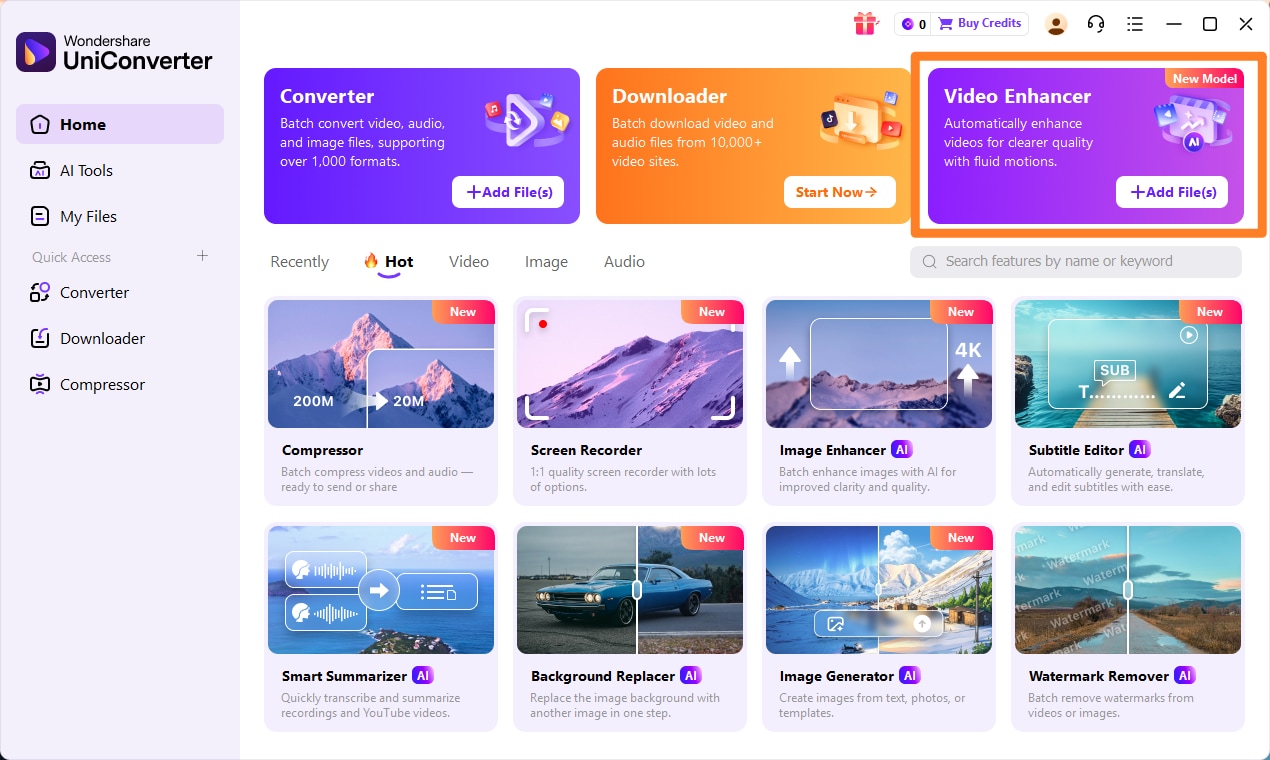
Step 1: Open UniConverter and Choose Video Enhancer
Launch UniConverter on your computer. Navigate to the "Toolbox" section and select the Video Enhancer feature.
Step 2: Upload the Videos
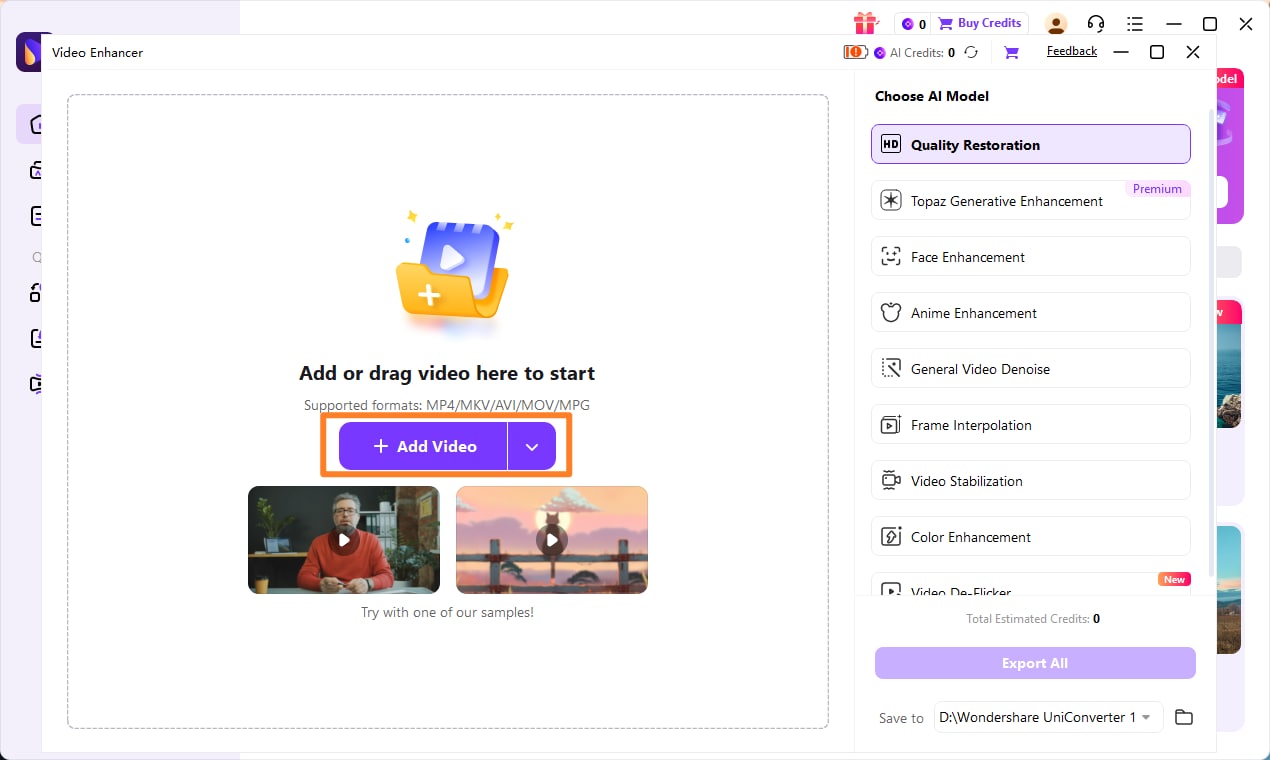
Click the "Add Files" button or drag and drop your video files directly into the UniConverter interface. You can add multiple videos for batch processing.
Step 3: Choose Enhancement Model
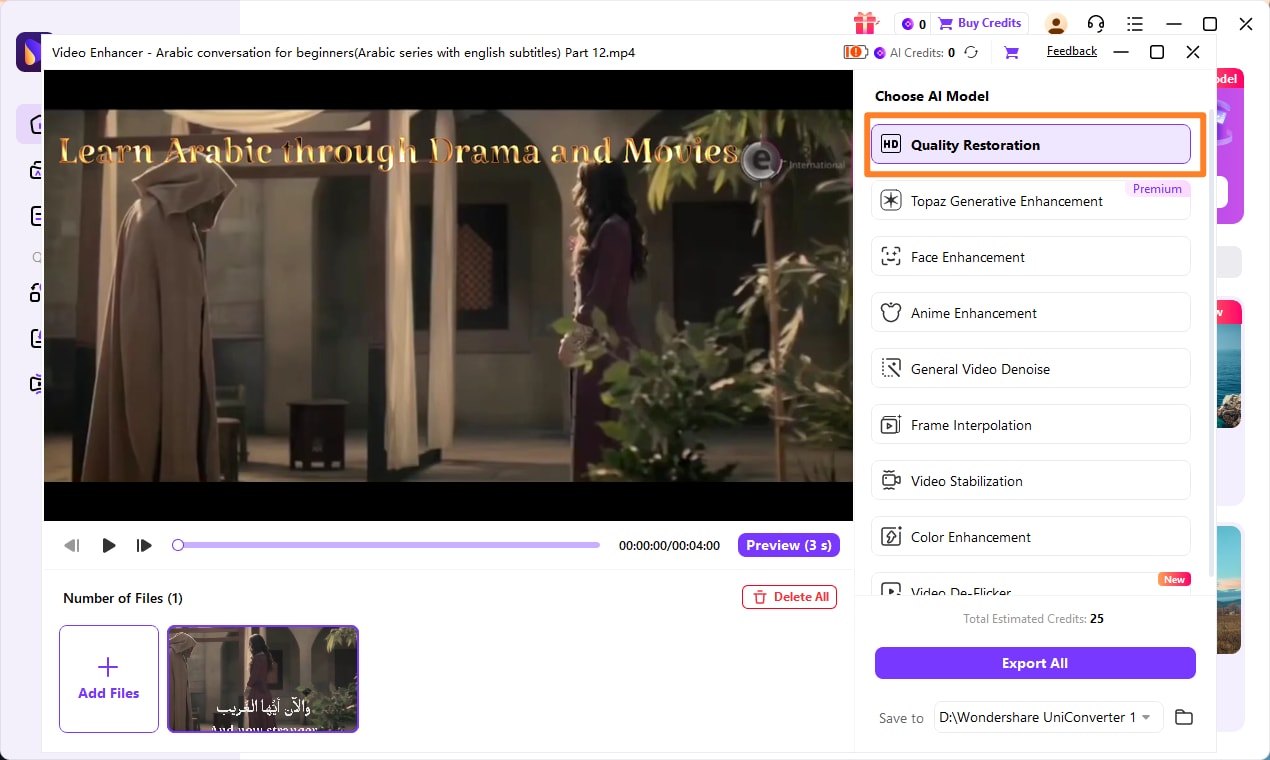
Once your video is loaded, select from the available enhancement options such as "AI Upscaling," "Noise Reduction," "Brightness/Contrast Adjustment," and "De-shake." Adjust the parameters as needed. For example, you can upscale video to 4K or stabilize shaky footage.
Step 4: Preview and Save the Enhanced Video
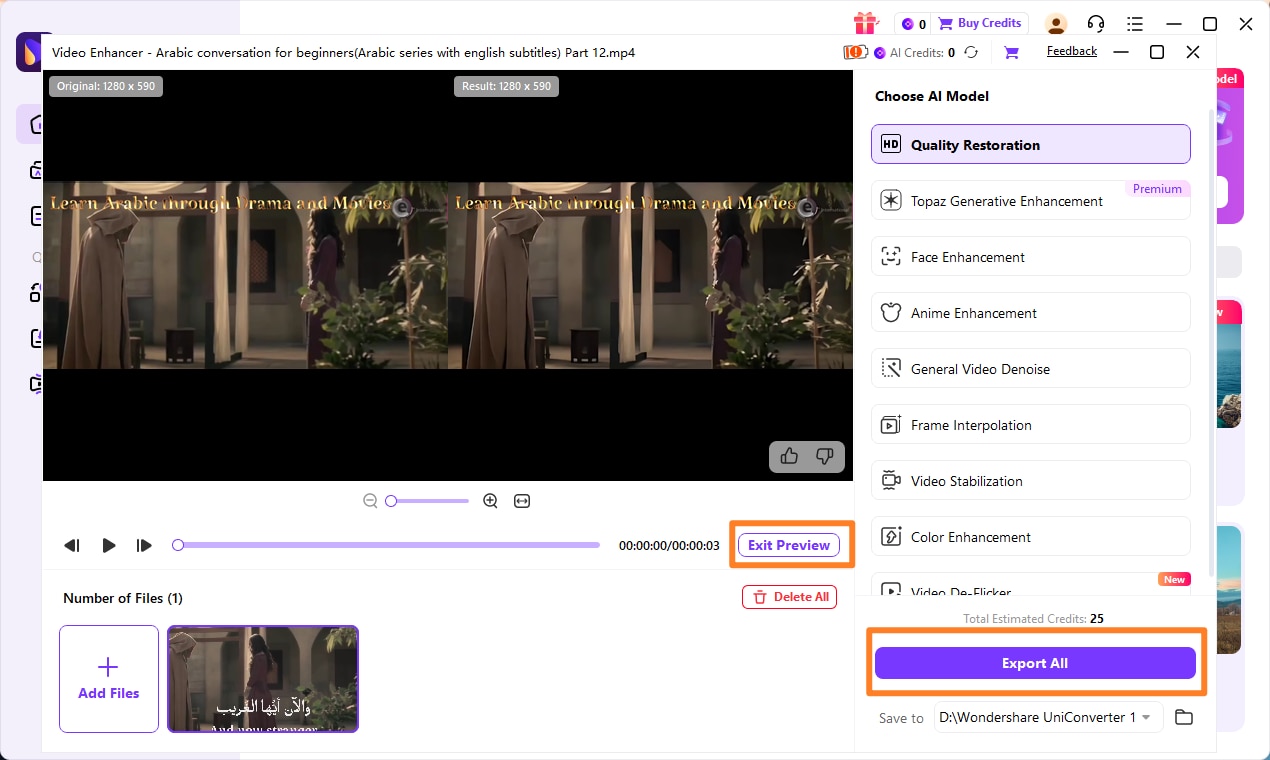
Preview the enhanced video to ensure satisfaction. Choose your desired output format and destination folder, then click "Export" to save your high-quality video.

Seeking an AI Studios Video Enhancer Alternative?
Part 7: Final Verdict and Recommendations
The AI Studios Video Enhancer review reveals a powerful tool for automated video quality improvement, particularly for upscaling and noise reduction. Its ease of use makes it attractive for general users and those dealing with archival footage. However, its limitations in advanced customization and potential resource intensity mean it's not a one-size-fits-all solution. For content creators on a budget, exploring free trials or more affordable subscription models is advisable. Professionals needing automated solutions will find AI Studios beneficial for initial passes, but may still require more granular control for final touches. Users prioritizing ease of use will appreciate its streamlined workflow. However, for those seeking advanced control and customization, tools like Topaz Video AI or even UniConverter offer more comprehensive options. Ultimately, the best choice depends on individual needs, technical proficiency, and budget.
Part 8: FAQs
-
1. Is AI Studios Video Enhancer suitable for professional film production?
While powerful for certain tasks, its limitations in advanced controls might make it less ideal for high-end professional film production where granular control is paramount.
-
2. Can AI Studios Video Enhancer improve the quality of heavily compressed videos?
It can help, but there are limits. Heavily compressed videos often lack the original data needed for significant quality recovery, even with AI.
-
3. What are the hardware requirements for running AI Studios Video Enhancer effectively?
It typically requires a powerful GPU and a decent amount of RAM for efficient processing, especially for 4K video enhancement.
-
4. Does AI Studios Video Enhancer offer a free trial?
Most AI video enhancement tools, including AI Studios, offer a free trial or a limited free version to test its capabilities.
-
5. How does AI Studios Video Enhancer handle different video codecs and formats?
It generally supports a wide range of popular codecs and formats, but it's always best to check the official specifications for specific compatibility.
