
- AI Image Enlarger: Intelligently upscales images, adding detail and sharpness beyond traditional methods.
- Core Features: Offers high-quality upscaling, automated enhancement, and batch processing for efficiency.
- Who Needs It: Essential for professionals (designers, photographers) needing high-res output; overkill for casual social media posts.
- Comparative Analysis: AI Image Enlarger excels in detail, UniConverter in speed/all-in-one, Gigapixel AI in pure quality, Upscale.media for basic needs.
- Risks & Pitfalls: Beware of data privacy, over-processing, hidden costs, and inconsistent performance.
- UniConverter Value: A stable, ad-free solution for efficient, high-quality image enhancement with GPU acceleration and batch processing.
In this article
- Part 1: What is an AI Image Enlarger?
- Part 2: AI Image Enlarger: Core Features, Pros & Cons
- Part 3: Who Needs an AI Image Enlarger? Use Cases & Limitations
- Part 4: AI Image Enlarger vs. Alternatives: A Comparative Analysis
- Part 5: Risks & Pitfalls When Using AI Image Enhancers
- Part 6: How to Use UniConverter to Efficiently Enhance Images
- Part 7: Final Verdict & Recommendations
- Part 8: FAQs About AI Image Enlarger & Image Enhancer
When I first started dabbling in digital photography and graphic design, I quickly realized that not all images are created equal. Sometimes, you capture a moment perfectly, but the resolution just isn't there, or the details are a bit soft. This is where AI Image Enlarger and image enhancer review tools come into play. They promise to magically transform your low-res, dull photos into crisp, vibrant masterpieces. This review aims to cut through the marketing hype and provide a practical, scenario-based comparison of these tools, helping you understand their true capabilities and limitations. I'll share my personal experiences, highlighting what works, what doesn't, and which tools truly deliver on their promises, so you can make an informed decision for your own projects.
Part 1: What is an AI Image Enlarger?
An AI Image Enlarger, at its core, is a software or online service that uses artificial intelligence algorithms to increase the resolution of an image without significant loss of quality. Unlike traditional upscaling methods that simply stretch pixels, leading to blurriness and pixelation, AI enlargers intelligently "guess" what missing pixels should look like based on patterns learned from vast datasets of images. This allows them to add detail and sharpness that wasn't originally present, making a small image suitable for larger prints or displays. For me, it was a game-changer when I needed to use an old photo for a new, larger print project.
The Growing Need for Image Enhancement
The demand for high-quality images has never been greater, driven by several factors:
* High-Resolution Displays: With 4K and even 8K screens becoming common, low-resolution images look noticeably poor.
* Social Media & Digital Marketing: Visuals are king, and sharp, engaging images are crucial for attracting attention.
* Professional & Creative Workflows: Photographers, designers, and marketers constantly need to adapt images for various platforms and print sizes.
* Archiving & Restoration: Bringing old, low-res photos back to life for personal or historical purposes.
Part 2: AI Image Enlarger: Core Features, Pros & Cons
From my experience, a good AI Image Enlarger offers a suite of features designed to not just enlarge but also improve image quality. The core capability, of course, is intelligent upscaling. Beyond that, I've found that the best tools often include noise reduction, sharpening, color correction, and even some basic object recognition to refine specific areas. For instance, I once used one to clean up an old scanned photo, and it did wonders for the faded colors and grainy texture.
Pros:
* High-Quality Upscaling with Detail Preservation: This is the main reason I use these tools. They can genuinely add detail that wasn't there before, making small images usable for larger formats.
* Automated Enhancement for Various Image Types: Whether it's a portrait, a landscape, or a product shot, these tools often have algorithms optimized for different content, which saves me a lot of manual tweaking.
* Batch Processing Capabilities for Efficiency: When I have a whole folder of images to enhance, batch processing is a lifesaver. I just set it and let it run, freeing me up for other tasks.
Cons:
* Potential for "Artificial" Look in Extreme Cases: If you push the enlargement too far, especially with very low-quality originals, the AI can sometimes create details that look a bit too smooth or "painted," losing the natural texture.
* Resource-Intensive for Very Large Images: Processing huge images, especially with high enlargement factors, can really tax my computer's CPU and GPU, making the process slow.
Part 3: Who Needs an AI Image Enlarger? Use Cases & Limitations
I've found that the utility of an AI Image Enlarger really depends on your specific needs. If you're like me, constantly working with visuals, it becomes an indispensable part of your toolkit.
Best Use Case: Professional Photographers & Graphic Designers
For professionals, these tools are a godsend. I've used them to prepare client images for large-format printing, where every pixel counts. When a client provides a low-resolution logo, an AI enlarger can often save the day by making it print-ready without having to redraw it from scratch. It's also fantastic for restoring old photos or archival material, bringing them up to modern display standards. For me, the ability to salvage an otherwise unusable image for a professional project is invaluable.
Limited Use Case: Quick Social Media Posts (where minor imperfections are acceptable)
If you're just looking to quickly post a photo to Instagram or Facebook, and minor imperfections aren't a big deal, then an AI image enlarger might be overkill. The time and potential cost involved might not be worth it for a temporary, small-scale display. For these situations, I often find that a quick crop and a basic filter are more than sufficient. You probably don't need to invest in a powerful AI tool if your primary goal is just sharing a snapshot with friends.
Part 4: AI Image Enlarger vs. Alternatives: A Comparative Analysis
When it comes to image enhancement, I've tried a few different tools, and they all have their strengths. Here's how I see them stacking up against each other.
| Feature/Tool | AI Image Enlarger | UniConverter | Topaz Gigapixel AI | Upscale.media |
| Upscaling Quality | Excellent | Very Good | Excellent | Good |
| Ease of Use | High | High | Medium | High |
| Price | Moderate | Moderate | High | Free/Subscription |
| Batch Processing | Yes | Yes | Yes | No (Free) / Yes (Paid) |
| AI Enhancement | Advanced | Advanced | Advanced | Basic |
| Processing Speed | Fast | Very Fast | Moderate | Fast |
| Customer Support | Good | Excellent | Good | Basic |
| Security | Standard | High | Standard | Varies |
Key Differentiators:
For me, AI Image Enlarger truly shines in its superior detail reconstruction. It often produces results that feel more natural than some competitors. UniConverter, on the other hand, is my go-to for speed and an all-in-one solution, especially when I'm dealing with videos too. Topaz Gigapixel AI is a powerhouse for pure quality, but it can be a bit resource-intensive and has a steeper learning curve. Upscale.media is great for quick, basic needs, especially if you're on a tight budget, but I wouldn't rely on it for professional-grade work.
Part 5: Risks & Pitfalls When Using AI Image Enhancers
While AI image enhancers are incredibly useful, I've learned that they come with their own set of potential risks and pitfalls that you need to be aware of. It's not always a magic bullet, and sometimes the cure can be worse than the disease.
Data Privacy Concerns with Cloud-Based Tools
This is a big one for me, especially when I'm working with sensitive client images. Many online AI enhancers require you to upload your photos to their servers. While most promise to delete your data after processing, there's always a lingering concern about where your images are stored, who has access to them, and for how long. I always advise caution and to read their privacy policies carefully before uploading anything confidential.
Over-Processing Leading to Unnatural Results
I've definitely fallen into this trap. It's tempting to push the enhancement sliders to the max, thinking "more is better." However, excessive sharpening or noise reduction can make an image look artificial, plasticky, or even introduce strange artifacts. It's like over-editing a photo in Photoshop – sometimes less is more. I've learned to aim for subtle improvements rather than drastic transformations.
Subscription Models and Hidden Costs
Many of these tools operate on a subscription model, which can add up, especially if you only need to use them occasionally. Some offer a limited number of free enhancements, but then hit you with a paywall for higher resolutions or batch processing. I've encountered situations where a "free" tool suddenly became quite expensive once I needed more advanced features, so always check the pricing structure upfront.
Inconsistent Performance Across Different Image Types
I've noticed that an AI enhancer that works wonders on a portrait might struggle with a complex landscape or a highly detailed architectural shot. The algorithms are often trained on specific types of images, and their performance can vary wildly depending on the content, lighting, and original quality of your photo. Don't expect a single tool to be perfect for every single image you throw at it.
Part 6: How to Use UniConverter to Efficiently Enhance Images
Sometimes, other tools just don't cut it – they might not support batch processing, the enhancement is unstable, or the effect is just too weak. That's when I turn to UniConverter. It's a reliable alternative that avoids many of the common pitfalls, offering a stable, ad-free experience with robust enhancement capabilities. For me, it's an all-in-one solution that handles a wide range of media tasks, including image enhancement, with GPU acceleration for speed and lossless quality. Its AI image enhancer capabilities are particularly impressive.
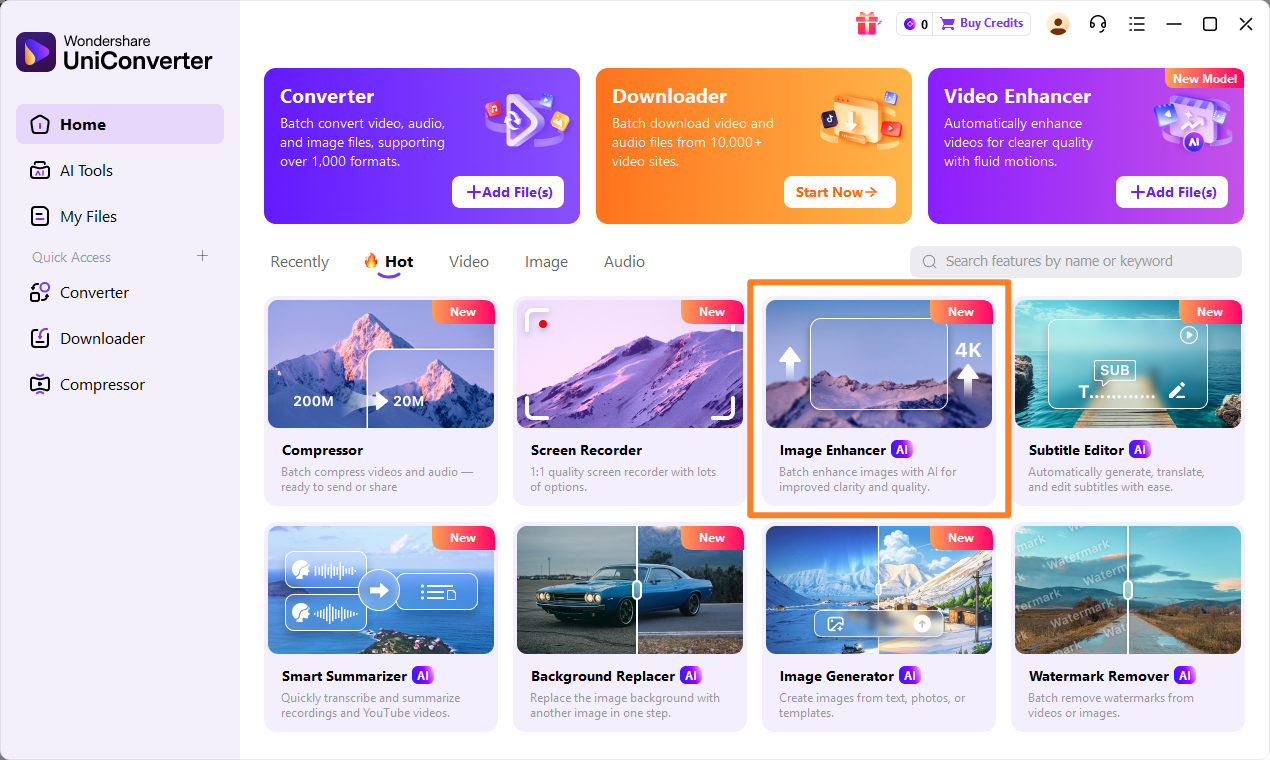
Step 1: Open UniConverter and Choose Image Enhancer
First things first, launch UniConverter. On the main interface, navigate to the "Toolbox" section. You'll find a variety of tools there, and you should select "Image Enhancer" to begin your image enhancement journey.
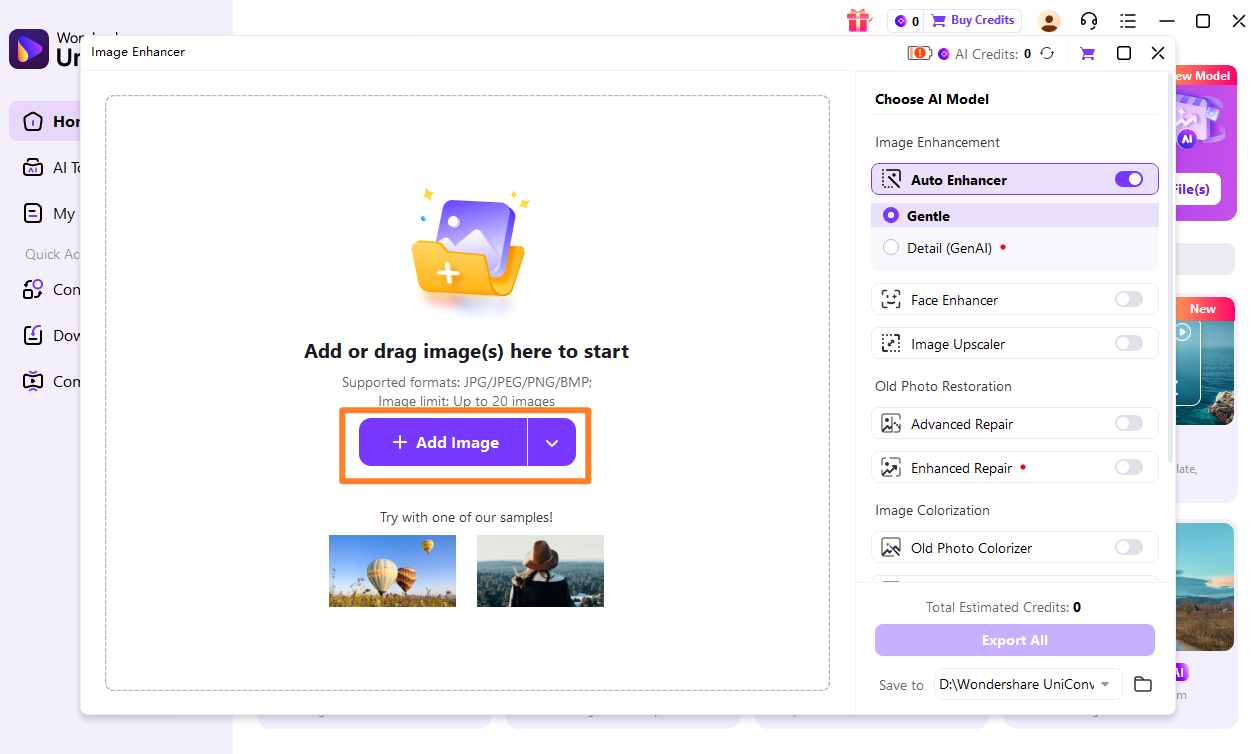
Step 2: Upload the Images
Once the Image Enhancer module is open, you'll see an option to add your images. You can either drag and drop your photos directly into the interface or click the "Add Files" button to browse and select them from your computer. UniConverter supports various image formats, making it very versatile for enhancing images.
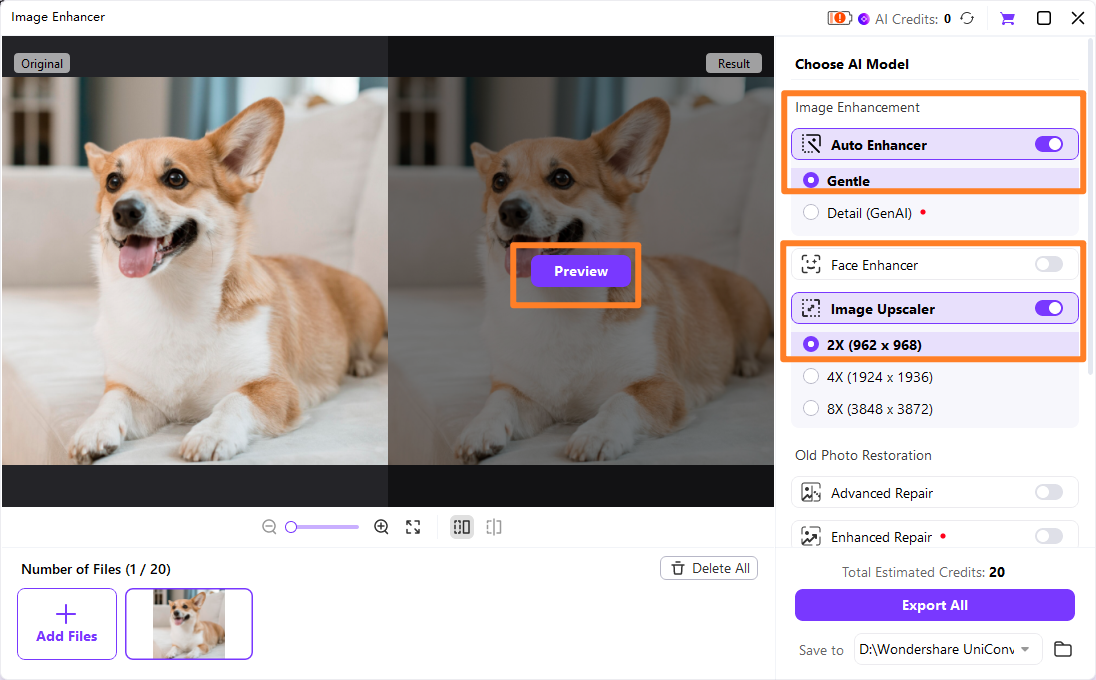
Step 3: Choose Enhancement Model
After uploading, UniConverter will present you with different AI enhancement models. These are usually optimized for various scenarios like general enhancement, portrait refinement, or even cartoon image upscaling. Select the model that best suits your image content and desired outcome. You can also adjust the upscaling factor here.
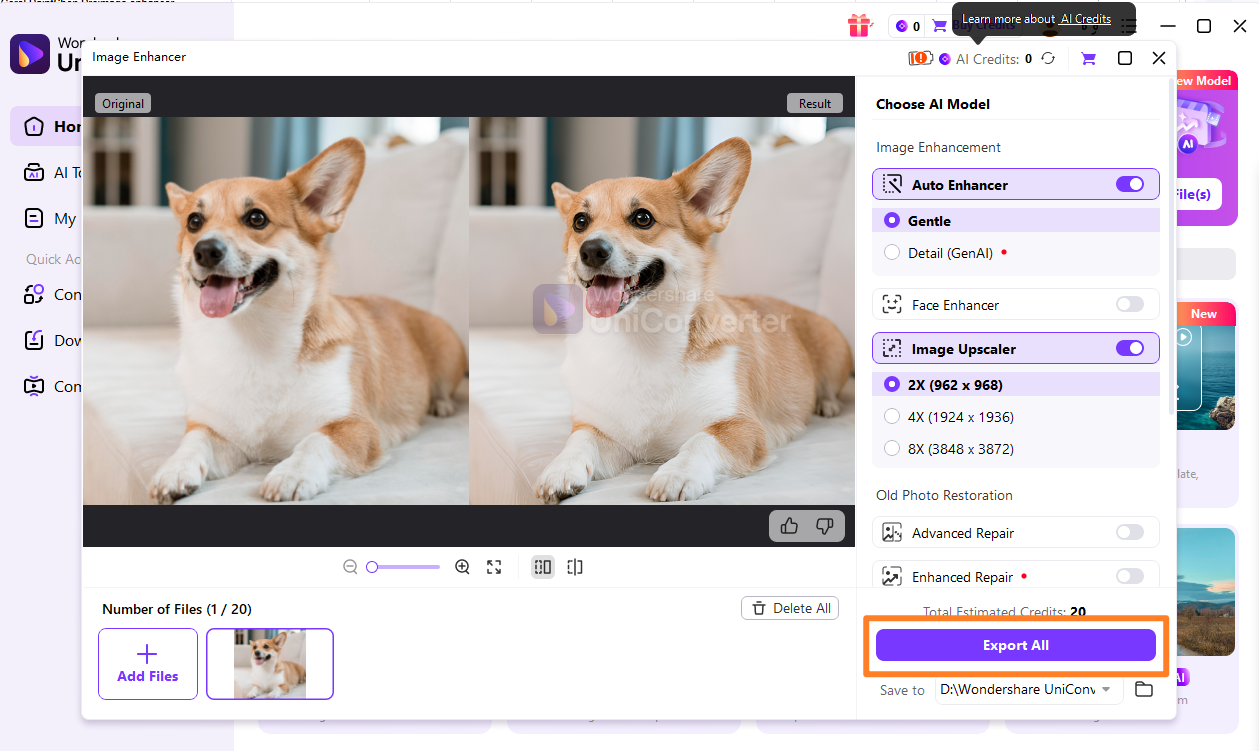
Step 4: Preview and Save the Enhanced Images
Before finalizing, UniConverter allows you to preview the enhanced image alongside the original. This is crucial for comparing the results and ensuring you're happy with the changes. Once satisfied, click the "Export" or "Save" button, choose your desired output format and destination, and UniConverter will process and save your high-quality enhanced images.

Enhance Images with AI: A Smarter Alternative
Part 7: Final Verdict & Recommendations
After spending considerable time with various AI Image Enlarger and image enhancer review tools, my conclusion is that there's no one-size-fits-all solution, but there are clear winners for different needs. For professionals who absolutely cannot compromise on quality and need the most natural-looking enlargements, investing in a dedicated, high-end AI tool like Topaz Gigapixel AI is probably the best bet, despite its cost. For casual users who prioritize ease of use and quick results for social media or personal projects, a free online tool like Upscale.media might suffice for basic needs, but be mindful of its limitations and potential privacy concerns. If you're on a budget but still require good quality and batch processing, some of the moderately priced standalone AI Image Enlarger software offer a great balance. However, if you're like me and need a comprehensive, stable, and ad-free solution that handles not just images but also other media tasks efficiently, UniConverter stands out as an excellent all-rounder, especially for batch processing requirements and ensuring consistent, high-quality results without the risks of over-processing or data privacy issues. Ultimately, consider your specific workflow, budget, and the level of quality you demand before making your choice.
Part 8: FAQs About AI Image Enlarger & Image Enhancer
-
1. How does an AI Image Enlarger work?
AI Image Enlargers use deep learning algorithms, often trained on millions of images, to analyze patterns and textures. When you upload a low-resolution image, the AI doesn't just stretch pixels; it intelligently "fills in" the missing information, predicting what those new pixels should look like to create a higher-resolution image with added detail and sharpness.
-
2. Can AI Image Enhancers fix blurry photos?
While AI image enhancers can significantly improve the sharpness and detail of a photo, they have limitations when it comes to severely blurry images. They can reduce minor blur and enhance clarity, but if a photo is fundamentally out of focus or motion-blurred, the AI can only do so much to reconstruct information that simply isn't there.
-
3. Are free AI Image Enhancers any good?
Free AI Image Enhancers can be a good starting point for basic needs or for occasional use. They often offer decent results for smaller enlargements or less critical images. However, they typically come with limitations such as lower maximum resolution, slower processing, watermarks, ads, or fewer advanced features compared to their paid counterparts.
-
4. What's the difference between upscaling and enhancing?
Upscaling refers specifically to increasing the resolution (dimensions) of an image. Enhancing, on the other hand, is a broader term that includes various improvements like sharpening, noise reduction, color correction, and contrast adjustments, in addition to or independent of upscaling. AI tools often combine both processes to deliver a comprehensively improved image.
-
5. Is my data safe when using online AI Image Enhancers?
Data safety is a significant concern with online AI Image Enhancers. While many services claim to delete your images after processing, it's crucial to read their privacy policies carefully. For sensitive or confidential images, desktop-based software or tools with strong privacy guarantees are generally safer options, as your data doesn't leave your local machine.
