
- Premiere Pro Value: Offers unparalleled control and integration for professional video enhancement.
- Learning Curve: Premiere Pro has a steep learning curve; UniConverter offers easier, AI-driven solutions.
- Cost Comparison: Premiere Pro is subscription-based; UniConverter and Topaz Video AI are one-time purchases.
- AI Enhancement: UniConverter and Topaz Video AI excel in AI-powered upscaling and noise reduction.
- Ideal Users: Premiere Pro suits professionals; UniConverter is better for quick, efficient enhancements.
- Performance: Premiere Pro demands high-end hardware; UniConverter is more resource-friendly.
- Risks: Premiere Pro's subscription, resource intensity, and potential for over-processing are key considerations.
- Decision Factor: Choose based on skill, budget, specific enhancement needs, and hardware capabilities.
In this article
- Part 1: What is Adobe Premiere Pro?
- Part 2: Adobe Premiere Pro: Core Features, Pros, and Cons
- Part 3: Adobe Premiere Pro: Ideal Users and Use Cases
- Part 4: Adobe Premiere Pro vs. Alternatives Comparison
- Part 5: Risks and Pitfalls to Consider
- Part 6: How to Use UniConverter for Efficient Video Enhancement
- Part 7: Final Verdict and Recommendations
- Part 8: FAQs
Adobe Premiere Pro Video Enhancer Review: A Deep Dive into Performance and Alternatives
Adobe Premiere Pro, a cornerstone in the professional video editing landscape, has long been synonymous with high-quality video production. Its robust feature set extends to sophisticated video enhancement capabilities, allowing editors to refine footage, correct imperfections, and elevate visual storytelling. This Adobe Premiere Pro video enhancer review will delve into its strengths and weaknesses, compare it against key competitors, and provide a comprehensive guide to help users determine if it's the right tool for their specific video enhancement needs. We will explore its core functionalities, ideal use cases, potential pitfalls, and offer alternative solutions for various user profiles.
Part 1: What is Adobe Premiere Pro?
Adobe Premiere Pro is a leading non-linear video editing software application, developed by Adobe Inc. It is widely used by professionals in film, television, and web content creation for its comprehensive suite of tools for editing, color correction, audio mixing, and, crucially, video enhancement. Its integration within the Adobe Creative Cloud ecosystem allows for seamless workflows with other applications like After Effects and Photoshop, making it a powerful hub for post-production. This review aims to address the core question: how effective are Premiere Pro's built-in video enhancement features, and how do they stack up against dedicated enhancement tools and other editing suites?
The Evolving Landscape of Video Editing Software
The demand for high-quality video content has surged, leading to:
* Increased need for sophisticated enhancement tools: Users are constantly seeking ways to improve footage quality, from noise reduction to upscaling.
* Proliferation of AI-powered solutions: Artificial intelligence is revolutionizing how videos are enhanced, offering automated and intelligent improvements.
* Diverse user base with varying skill levels: From professional filmmakers to casual content creators, everyone needs accessible and effective enhancement options.
* Hardware advancements driving software capabilities: More powerful hardware enables more complex and real-time video processing.
Part 2: Adobe Premiere Pro: Core Features, Pros, and Cons
Adobe Premiere Pro offers a wide array of core features for video enhancement, deeply integrated within its editing timeline. These capabilities range from basic color correction and grading to more advanced noise reduction, stabilization, and sharpening tools. Its strength lies in providing granular control over every aspect of video manipulation, allowing for highly customized and precise enhancements.
Core Features for Video Enhancement:
* Lumetri Color Panel: Comprehensive tools for color correction, grading, and LUT application.
* Warp Stabilizer: Advanced stabilization for shaky footage, often used in action shots.
* Noise Reduction: Filters to reduce visual noise and grain, especially in low-light recordings.
* Sharpening Filters: Tools to enhance detail and clarity in soft or out-of-focus footage.
* Upscaling and Resizing: Capabilities to adjust resolution and scale footage for different outputs.
Pros:
* Industry-Standard Integration and Ecosystem: Seamless workflow with After Effects, Photoshop, and other Adobe Creative Cloud apps.
* Advanced Customization and Control over Enhancement Parameters: Offers unparalleled precision for professional-grade adjustments.
* Robust Performance for Professional Workflows: Optimized for handling large files and complex projects, especially with powerful hardware.
Cons:
* Steep Learning Curve for Beginners: The vast array of features can be overwhelming for new users.
* Resource-Intensive Hardware Requirements: Demands powerful CPUs, GPUs, and ample RAM for smooth operation, particularly with 4K+ footage.
Part 3: Adobe Premiere Pro: Ideal Users and Use Cases
Adobe Premiere Pro's sophisticated video enhancement capabilities are best suited for users who require precise control, extensive customization, and integration within a professional post-production pipeline. Its complexity and resource demands make it less ideal for quick, casual edits.
Best Use Case: Professional Filmmaking and High-End Commercial Production
Premiere Pro excels in environments where visual fidelity and artistic control are paramount. Professional filmmakers, documentary producers, and commercial studios leverage its advanced enhancement tools for:
* Color Grading: Achieving specific cinematic looks and ensuring color consistency across entire projects.
* Footage Restoration: Reducing noise, removing artifacts, and stabilizing shaky footage from various sources.
* Visual Effects Integration: Seamlessly enhancing footage before or after applying complex visual effects in After Effects.
* Broadcast Quality Output: Ensuring videos meet stringent broadcast standards for resolution, color, and clarity.
Limited Use Case: Quick Social Media Edits and Casual Content Creation
For users who need to quickly enhance short videos for social media or personal use, Premiere Pro can be overkill. Its extensive features and learning curve are not conducive to rapid, straightforward enhancements. Simpler, more automated tools are often preferred for:
* Batch Processing: Enhancing multiple short clips quickly without individual parameter adjustments.
* One-Click Solutions: Applying basic enhancements like brightness, contrast, and saturation with minimal effort.
* Mobile Editing: Enhancing videos directly on mobile devices for immediate sharing.
Part 4: Adobe Premiere Pro vs. Alternatives Comparison
When evaluating video enhancement tools, it's crucial to compare Adobe Premiere Pro against its competitors, considering various factors that impact user experience and output quality.
| Feature/Criteria | Adobe Premiere Pro | UniConverter | DaVinci Resolve | Topaz Video AI |
| Ease of Use | Moderate to Difficult (Steep learning curve) | Easy (Intuitive interface) | Moderate to Difficult (Comprehensive features) | Easy (AI-driven automation) |
| Enhancement Quality | Excellent (Manual control, professional results) | Very Good (AI-powered, effective presets) | Excellent (Industry-standard color grading) | Outstanding (AI upscaling, de-interlacing) |
| Price Model | Subscription ($20.99/month for single app) | One-time purchase ($49.99/year or $79.99 lifetime) | Free (Studio version $295) | One-time purchase ($299) |
| AI Features | Limited (Some AI-assisted tools) | Extensive (AI upscaling, noise reduction) | Moderate (Magic Mask, some AI effects) | Core focus (Upscaling, stabilization, frame interp.) |
| Export Options | Comprehensive (Broadcast, web, custom) | Wide range (All popular formats, device presets) | Comprehensive (Broadcast, web, custom) | Specific (Optimized for AI-enhanced output) |
Key Differentiators and Why They Matter
Adobe Premiere Pro stands out for its unparalleled manual control and integration within a professional ecosystem. Its strength lies in allowing editors to meticulously craft every detail of their video. However, for users prioritizing ease of use and AI-driven automation, UniConverter and Topaz Video AI offer compelling alternatives. UniConverter provides a user-friendly interface with effective AI enhancement presets, ideal for quick and high-quality results without a steep learning curve. DaVinci Resolve, with its robust free version, competes closely with Premiere Pro in terms of professional-grade color grading and editing, making it a strong contender for budget-conscious professionals. Topaz Video AI is a specialized tool, excelling in AI-powered upscaling and de-noising, making it indispensable for restoring and enhancing old or low-resolution footage. The choice ultimately depends on the user's skill level, specific enhancement needs, and budget.
Part 5: Risks and Pitfalls to Consider
While Adobe Premiere Pro offers powerful video enhancement capabilities, users should be aware of several potential risks and pitfalls, especially when integrating it into their workflow. These can impact cost, performance, and the final quality of the enhanced video.
Subscription Model and Long-Term Costs
Premiere Pro operates on a subscription model, which can lead to significant long-term costs. Unlike one-time purchase software, users must continuously pay to access the software, which might not be cost-effective for occasional users or those with limited budgets. This ongoing expense can add up, especially when considering the full Creative Cloud suite.
Performance Bottlenecks with Large Files
Enhancing high-resolution videos (e.g., 4K, 8K) or projects with many effects in Premiere Pro can be extremely resource-intensive. This often leads to performance bottlenecks, slow rendering times, and frequent crashes, particularly on older or underpowered hardware. Users may need to invest heavily in high-end CPUs, GPUs, and ample RAM to achieve smooth performance.
Steep Learning Curve for Specific Enhancement Techniques
While Premiere Pro offers extensive tools, mastering specific advanced enhancement techniques, such as complex noise reduction or precise color grading, requires significant time and effort. Beginners or those without a dedicated background in video editing may find it challenging to achieve desired results without extensive tutorials or professional training.
Potential for Over-Processing and Unnatural Results
The sheer power and control offered by Premiere Pro can be a double-edged sword. Without a keen eye and understanding of video aesthetics, it's easy to over-process footage, leading to unnatural-looking results. Excessive sharpening can introduce artifacts, aggressive noise reduction can smooth out details, and heavy color grading can make footage look artificial or "over-edited."
Part 6: How to Use UniConverter for Efficient Video Enhancement
When other tools fall short in batch processing, stable enhancement, or delivering noticeable improvements, UniConverter emerges as a reliable alternative. It offers a streamlined, user-friendly experience for enhancing videos, avoiding the common pitfalls of complex software and ensuring consistent, high-quality results without ads, watermarks, or complex settings. UniConverter is an all-in-one solution that supports a vast array of formats, leverages GPU acceleration for speed, and ensures lossless quality with its powerful AI features for batch enhancement.
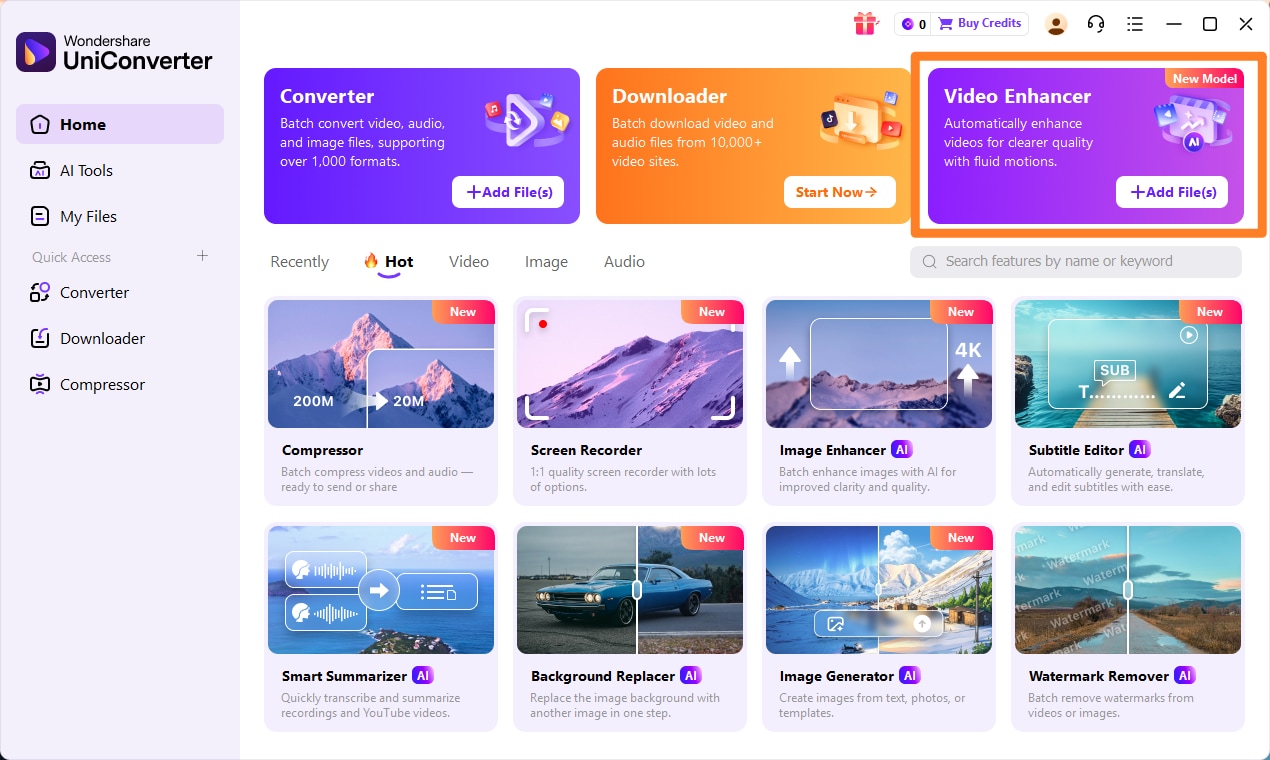
Step 1: Open UniConverter and Choose Video Enhancer
Launch UniConverter on your computer. From the main interface, navigate to the "AI Lab" section and select the "Video Enhancer" tool.
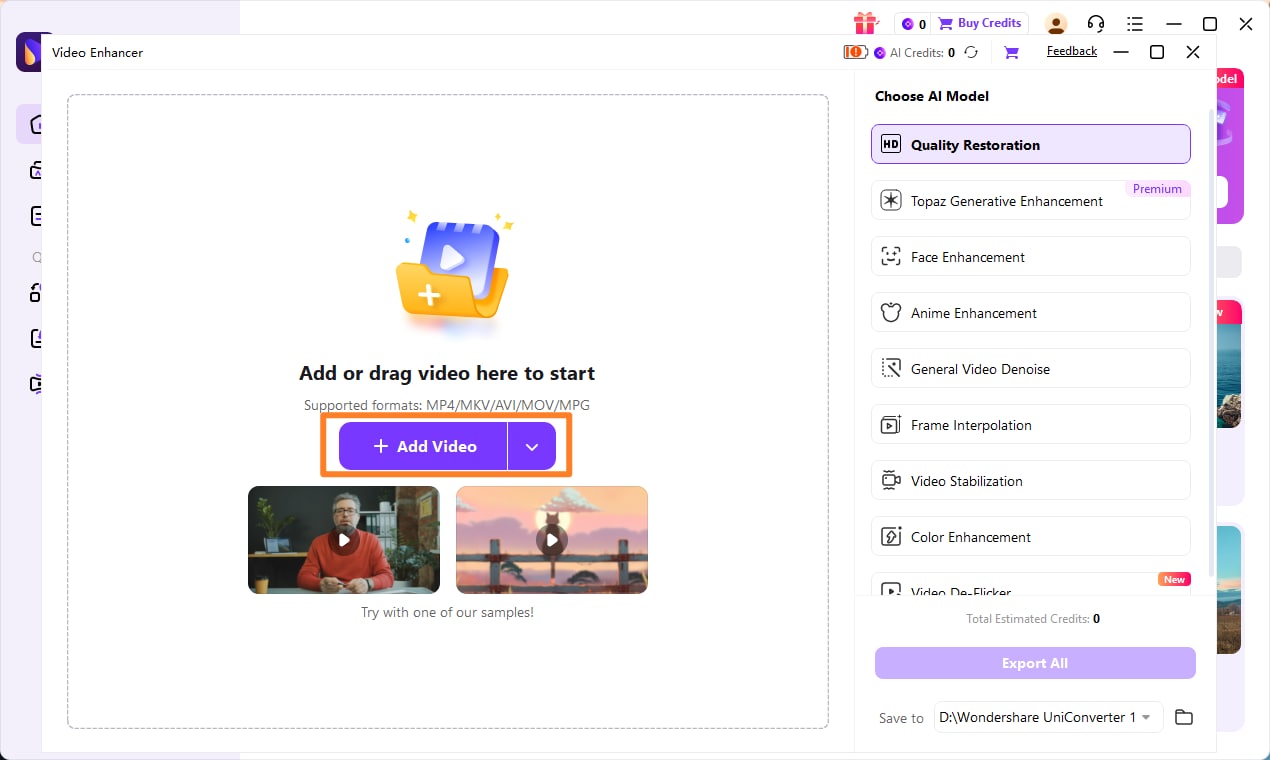
Step 2: Upload the Videos
Click on the "Add Files" button or drag and drop your video files into the designated area. You can add multiple videos for batch processing.
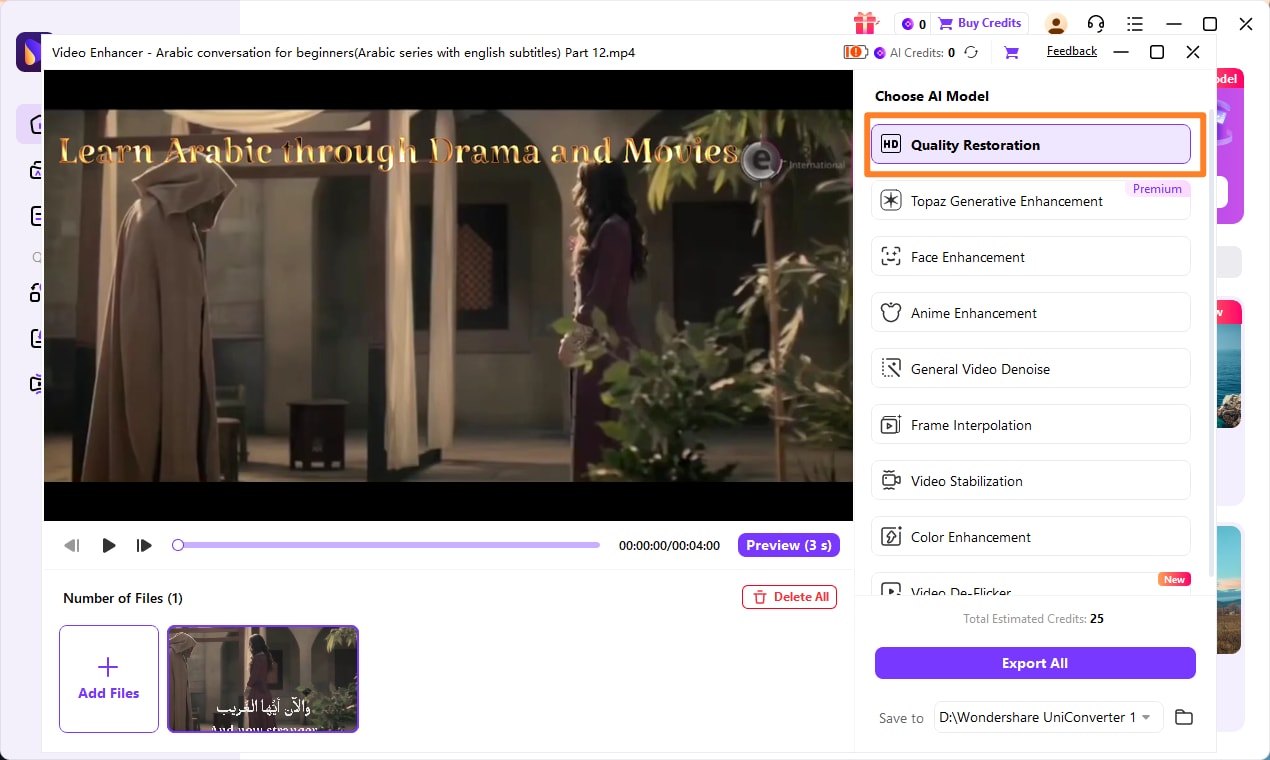
Step 3: Choose Enhancement Model
Select the desired enhancement model based on your needs. UniConverter offers various AI models for upscaling, noise reduction, de-interlacing, and more. You can also adjust parameters like resolution and output format. For instance, if you're looking to remove background without losing quality from your videos, UniConverter provides advanced features to achieve this seamlessly. Additionally, for those interested in high-definition background remover capabilities, the software ensures crisp and clear results. You can also explore options to change video background or utilize the online background remover for quick edits.
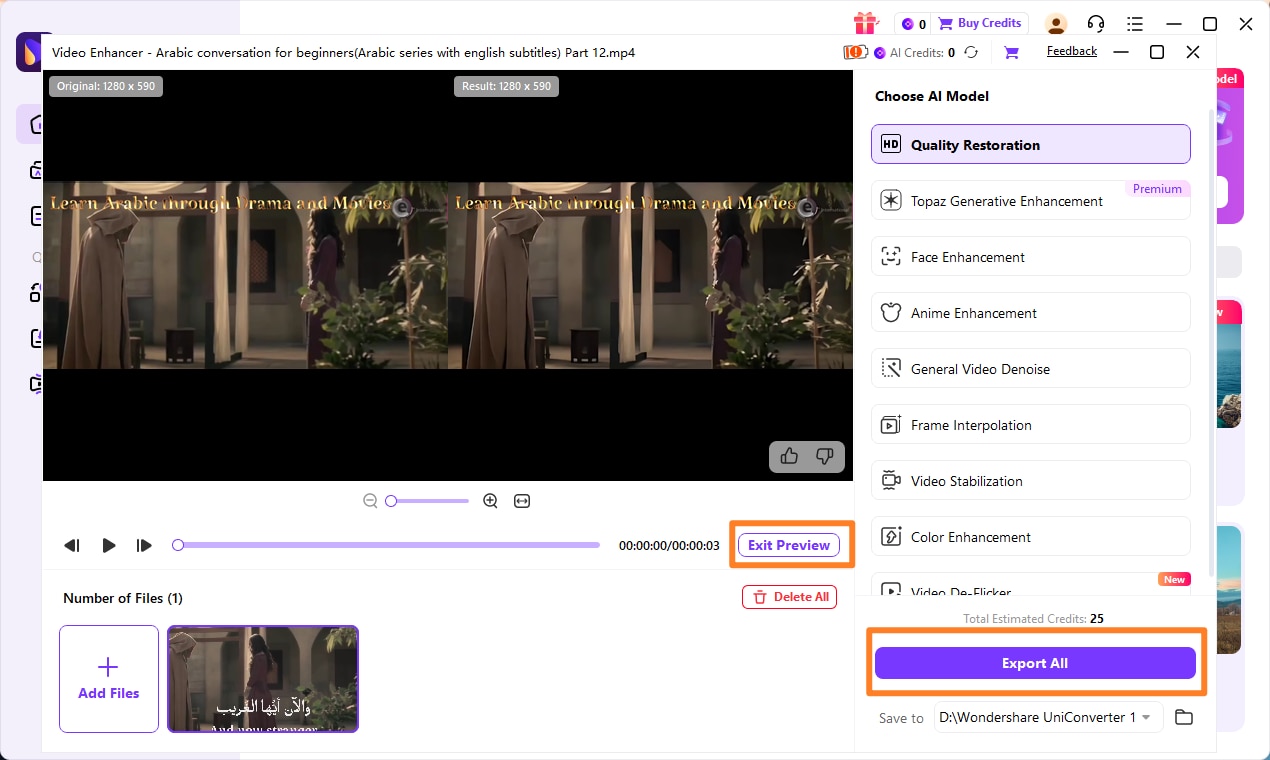
Step 4: Preview and Save the Enhanced Video
Once you've selected your enhancement options, click "Preview" to see a short segment of the enhanced video. If satisfied, click "Export" to save your high-quality, enhanced video to your chosen destination.

Seeking a Premiere Pro Video Enhancer Alternative?
Part 7: Final Verdict and Recommendations
The Adobe Premiere Pro video enhancer review reveals it as an undeniably powerful tool, a cornerstone for professional video editing and enhancement. Its extensive feature set, granular control, and seamless integration within the Adobe Creative Cloud make it indispensable for those operating at the highest levels of content creation. However, its significant cost, steep learning curve, and demanding hardware requirements position it as a specialized solution.
For Professional Editors and Studios
Premiere Pro remains the top choice. Its advanced capabilities for color grading, noise reduction, stabilization, and integration with other professional tools are unmatched for high-end film, television, and commercial projects where precision and artistic control are paramount.
For Independent Creators and YouTubers
While Premiere Pro can be used, it might be overkill. For those focused on consistent content creation without a full post-production team, a balance between powerful features and ease of use is crucial. Tools like DaVinci Resolve (free version) offer robust capabilities, while UniConverter provides efficient, AI-powered enhancements for quick, high-quality results.
For Beginners and Casual Users
Premiere Pro is generally not recommended. The complexity and subscription cost are prohibitive for simple enhancement tasks or occasional video editing. Simpler, more intuitive alternatives like UniConverter, with its AI-driven one-click enhancements, or even basic mobile editing apps, would be far more suitable and cost-effective for achieving satisfactory results without a steep learning curve.
Part 8: FAQs
-
1. Is Adobe Premiere Pro the best video enhancer on the market?
Adobe Premiere Pro is one of the most powerful and comprehensive video enhancers, especially for professional use, offering extensive manual control and integration. However, "best" depends on specific needs; for AI-driven automation or ease of use, other tools might be more suitable.
-
2. What are the main alternatives to Adobe Premiere Pro for video enhancement?
Key alternatives include DaVinci Resolve (for professional editing and color grading, with a robust free version), UniConverter (for AI-powered, easy-to-use enhancement and conversion), and Topaz Video AI (specialized in AI upscaling and quality restoration).
-
3. How much does Adobe Premiere Pro cost for video enhancement features?
Adobe Premiere Pro is available via a subscription model, costing approximately $20.99 per month for a single app plan. Access to its video enhancement features is included within this subscription.
-
4. Can I enhance old, low-quality videos with Adobe Premiere Pro?
Yes, Premiere Pro offers tools like noise reduction, sharpening, and color correction that can significantly improve old, low-quality videos. However, for advanced AI-powered upscaling and de-interlacing of very poor footage, specialized tools like Topaz Video AI might yield superior results.
-
5. What are the key factors to consider when choosing a video enhancer?
Consider ease of use, enhancement quality, price model (subscription vs. one-time purchase), available AI features, export options, and your hardware capabilities. Your specific use case (professional, casual, or specialized restoration) will heavily influence the best choice.
