
- Adobe Premiere Pro: Powerful for pros, but complex and resource-intensive for beginners.
- Core Features: Offers advanced color, noise reduction, stabilization, and AI for professional output.
- Target Audience: Best for high-stakes professional post-production; overkill for quick social media edits.
- Comparison: Premiere Pro excels in integration; UniConverter offers ease of use and efficiency.
- Risks: Watch for over-enhancement, subscription costs, and high hardware demands.
- UniConverter: A user-friendly alternative for efficient, stable video and image enhancement.
- Decision: Choose Premiere Pro for deep control, UniConverter for speed and simplicity.
In this article
- Part 1: What is Adobe Premiere Pro Video Enhancer?
- Part 2: Adobe Premiere Pro Video Enhancer: Core Features, Pros & Cons
- Part 3: Target Audience & Use Cases for Adobe Premiere Pro Video Enhancer
- Part 4: Adobe Premiere Pro Video Enhancer and Alternatives Comparison
- Part 5: Risks and Pitfalls to Consider
- Part 6: How to Use UniConverter to Efficiently Enhance Videos and Images
- Part 7: Final Verdict & Recommendations
- Part 8: FAQs
Adobe Premiere Pro Video Enhancer: A Comprehensive Scenario-Based Review
The digital content creation landscape is continuously evolving, with video becoming an increasingly dominant medium. As creators strive for higher quality and more engaging content, the demand for sophisticated video enhancement tools has surged. Adobe Premiere Pro, a cornerstone in professional video editing, has introduced its Adobe Premiere Pro Video Enhancer capabilities to address this need. This review will delve into its core features, analyze its strengths and weaknesses, compare it against key competitors, and provide a scenario-based assessment to help users understand where it truly shines and where alternatives might be more suitable. We aim to offer an objective and detailed analysis to guide your decision-making process for video enhancement solutions.
Part 1: What is Adobe Premiere Pro Video Enhancer?
Adobe Premiere Pro Video Enhancer refers to the suite of tools and features within Adobe Premiere Pro designed to improve the visual and audio quality of video footage. This includes color correction, noise reduction, stabilization, sharpening, and various AI-powered enhancements that can automatically adjust parameters for optimal output. It's an integrated part of the broader Premiere Pro ecosystem, leveraging Adobe's extensive experience in creative software. This review aims to dissect its effectiveness in real-world scenarios, comparing its capabilities against other dedicated video enhancement solutions.
The Evolving Landscape of Video Enhancement Tools
The market for video enhancement tools is dynamic, driven by several key factors:
* Increasing Demand for High-Quality Content: Viewers expect polished, professional-looking videos across all platforms.
* Accessibility of Advanced Technology: AI and machine learning are making sophisticated enhancements more accessible.
* Diverse Creator Needs: From professional filmmakers to social media influencers, different users have varying requirements for speed, control, and quality.
* Integration with Existing Workflows: Seamless integration with editing suites is crucial for efficiency.
Part 2: Adobe Premiere Pro Video Enhancer: Core Features, Pros & Cons
Adobe Premiere Pro's video enhancement capabilities are deeply integrated into its editing workflow, offering a powerful array of tools.
Core Features:
* Advanced Color Grading: Lumetri Color panel for precise color correction and grading.
* Noise Reduction: Dedicated effects for reducing visual and audio noise.
* Stabilization: Warp Stabilizer for smoothing shaky footage.
* Sharpening & Clarity: Effects to improve image detail and definition.
* AI-Powered Enhancements: Features like Auto Reframe and Scene Edit Detection leverage AI for efficiency.
Pros
* Advanced Integration within Adobe Ecosystem: Seamless workflow with After Effects, Photoshop, and Audition.
* Granular Control over Enhancement Parameters: Offers extensive customization for professional-grade adjustments.
* Professional-Grade Output for Diverse Projects: Capable of delivering broadcast-quality enhancements for film, TV, and high-end corporate videos.
Cons
* Steep Learning Curve for Beginners: The vast array of options can be overwhelming for new users.
* Resource-Intensive Performance Requirements: Demands powerful hardware, especially for 4K and higher resolution footage.
Part 3: Target Audience & Use Cases for Adobe Premiere Pro Video Enhancer
Adobe Premiere Pro Video Enhancer is primarily designed for professionals and experienced editors who require a high degree of control and integration within a comprehensive post-production workflow.
Best Use Case: Professional Post-Production for High-Stakes Projects
For filmmakers, broadcast professionals, and agencies working on high-budget commercials, documentaries, or feature films, Premiere Pro's enhancement tools are indispensable. They offer the precision needed to achieve specific aesthetic goals, correct imperfections, and ensure a polished final product. The ability to fine-tune every aspect of an enhancement, from color science to noise reduction algorithms, makes it ideal for projects where quality cannot be compromised. Its integration with other Adobe applications further streamlines complex post-production tasks.
Limited Use Case: Quick Edits for Social Media Content Creators
While capable, Premiere Pro's enhancement features can be overkill for social media creators who need quick, straightforward edits. The time investment in learning the software and the computational demands for even simple enhancements might outweigh the benefits for rapid content creation. Simpler, more automated tools are often preferred for their speed and ease of use in this context, where minor quality improvements are often sufficient.
Part 4: Adobe Premiere Pro Video Enhancer and Alternatives Comparison
When evaluating video enhancement tools, it's crucial to compare Adobe Premiere Pro Video Enhancer against its competitors across various dimensions.
| Feature/Scenario | Adobe Premiere Pro Video Enhancer | UniConverter | DaVinci Resolve | Topaz Video AI |
| Ease of Use (Beginner) | Low | High | Medium | Medium |
| Advanced Customization | High | Medium | High | High |
| Integration with Ecosystem | Excellent | Fair | Good | Fair |
| Output Quality (Pro) | Excellent | Good | Excellent | Excellent |
| Resource Demands | High | Low | High | Very High |
| Pricing Model | Subscription | One-time | Free/Studio | One-time |
| Processing Speed | Moderate (CPU/GPU) | Fast (GPU Accelerated) | Moderate (CPU/GPU) | Slow (Heavy AI) |
| Batch Processing | Good | Excellent | Good | Excellent |
| AI Upscaling | Limited/Plugins | Good | Limited/Plugins | Excellent |
Adobe Premiere Pro excels in its comprehensive suite and integration, making it a powerhouse for professional workflows. UniConverter stands out for its user-friendliness and efficient batch processing, ideal for quick, high-volume enhancements without a steep learning curve. DaVinci Resolve offers a free, powerful alternative with excellent color grading, while Topaz Video AI is a specialized tool for AI-driven upscaling and frame interpolation, though it demands significant resources. For users prioritizing ease of use and efficient processing, UniConverter presents a compelling alternative.
Part 5: Risks and Pitfalls to Consider
While powerful, relying solely on Adobe Premiere Pro Video Enhancer or other enhancement tools comes with potential risks and pitfalls that users should be aware of.
Data Privacy Concerns with Cloud-Based Features
Adobe Premiere Pro integrates with cloud services for features like Adobe Sensei AI and cloud storage. While convenient, this raises concerns about data privacy and security, especially for sensitive projects. Users should be mindful of what data is uploaded and how it's protected.
Potential for Over-Enhancement and Unnatural Results
The temptation to over-enhance footage can lead to unnatural, artificial-looking results. Excessive sharpening can introduce artifacts, aggressive noise reduction can smooth out important details, and over-saturation can make colors unrealistic. Achieving a natural, balanced look requires a discerning eye and restraint.
Subscription Fatigue and Cost-Effectiveness
Adobe Premiere Pro operates on a subscription model, which can lead to "subscription fatigue" and become a significant ongoing cost, especially for freelancers or small businesses. For users who only need occasional enhancement, a one-time purchase software might be more cost-effective in the long run.
Hardware Compatibility and Performance Bottlenecks
As a resource-intensive application, Premiere Pro demands powerful hardware. Older or less capable systems can experience slow performance, frequent crashes, and extended rendering times, creating significant workflow bottlenecks and frustration.
Limited Offline Functionality for Certain Features
Some of Premiere Pro's more advanced or AI-driven features might require an active internet connection to function optimally, limiting full functionality in offline environments. This can be a concern for editors working in remote locations or with unreliable internet access.
Part 6: How to Use UniConverter to Efficiently Enhance Videos and Images
When other tools fall short with batch processing, unstable enhancements, or weak results, UniConverter offers a robust and user-friendly alternative. It's an all-in-one solution that provides stable, lossless enhancement with GPU acceleration, and supports a wide range of formats, all without ads. For those looking to enhance video quality or improve image resolution, this tool streamlines the process.
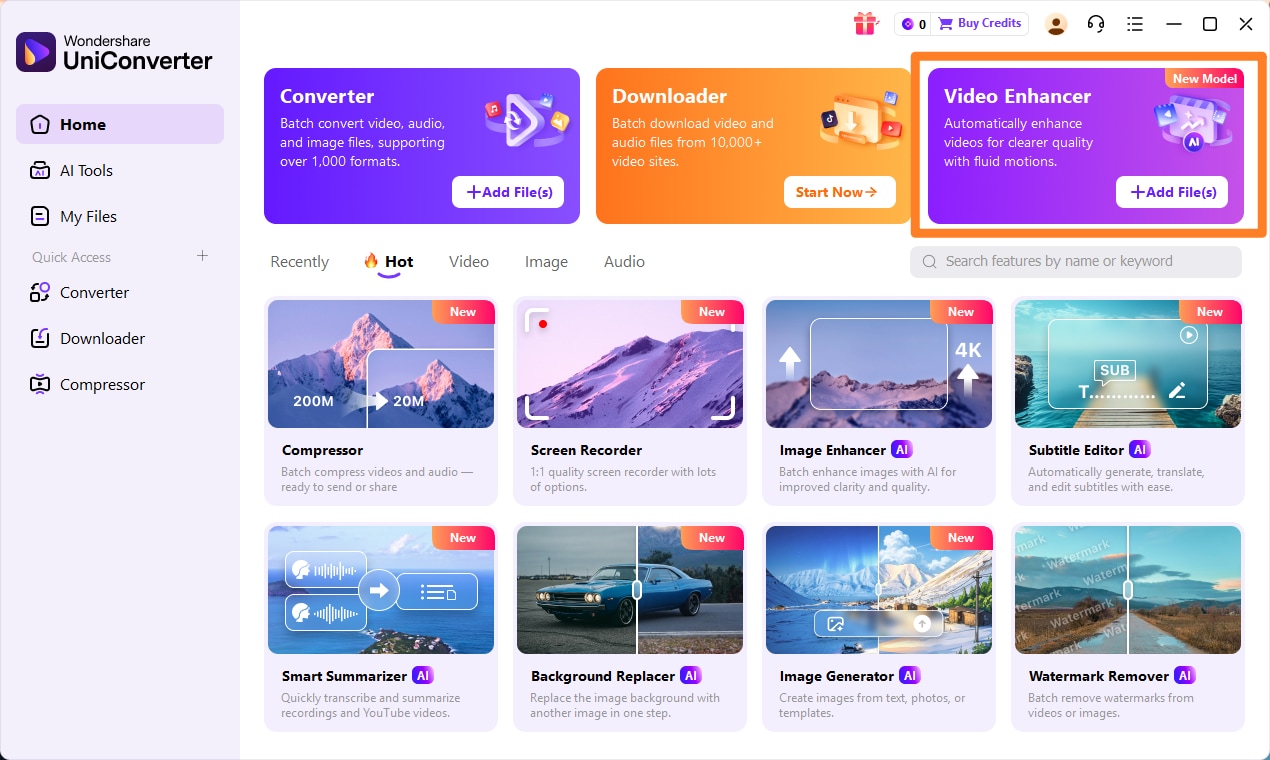
Step 1: Open UniConverter and Choose Video Enhancer
Launch UniConverter on your computer. From the main interface, navigate to the "Toolbox" section and select the "Video Enhancer" feature. This allows you to upscale video and apply various improvements.
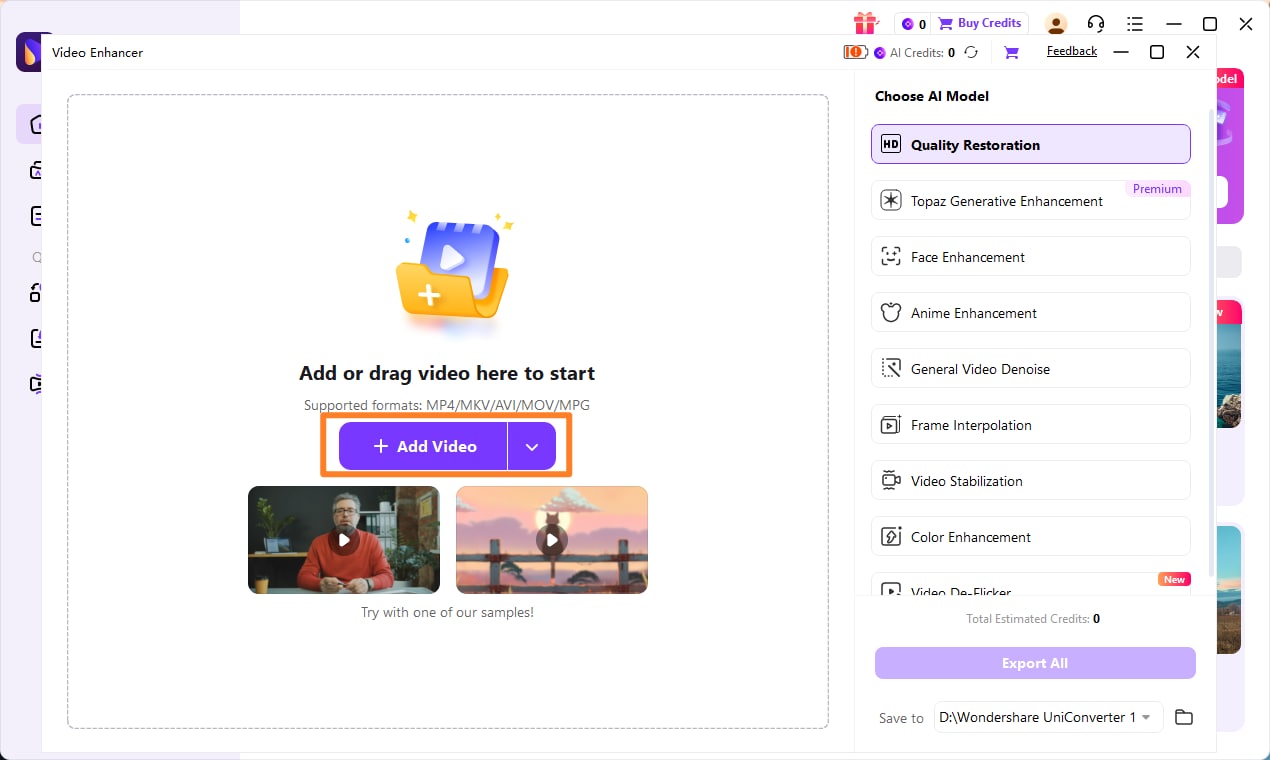
Step 2: Upload the Videos
Click on the "Add Files" button or drag and drop your video files into the UniConverter interface. You can add multiple videos for batch processing. Whether you need to fix pixelated videos or simply refine footage, this step is straightforward.
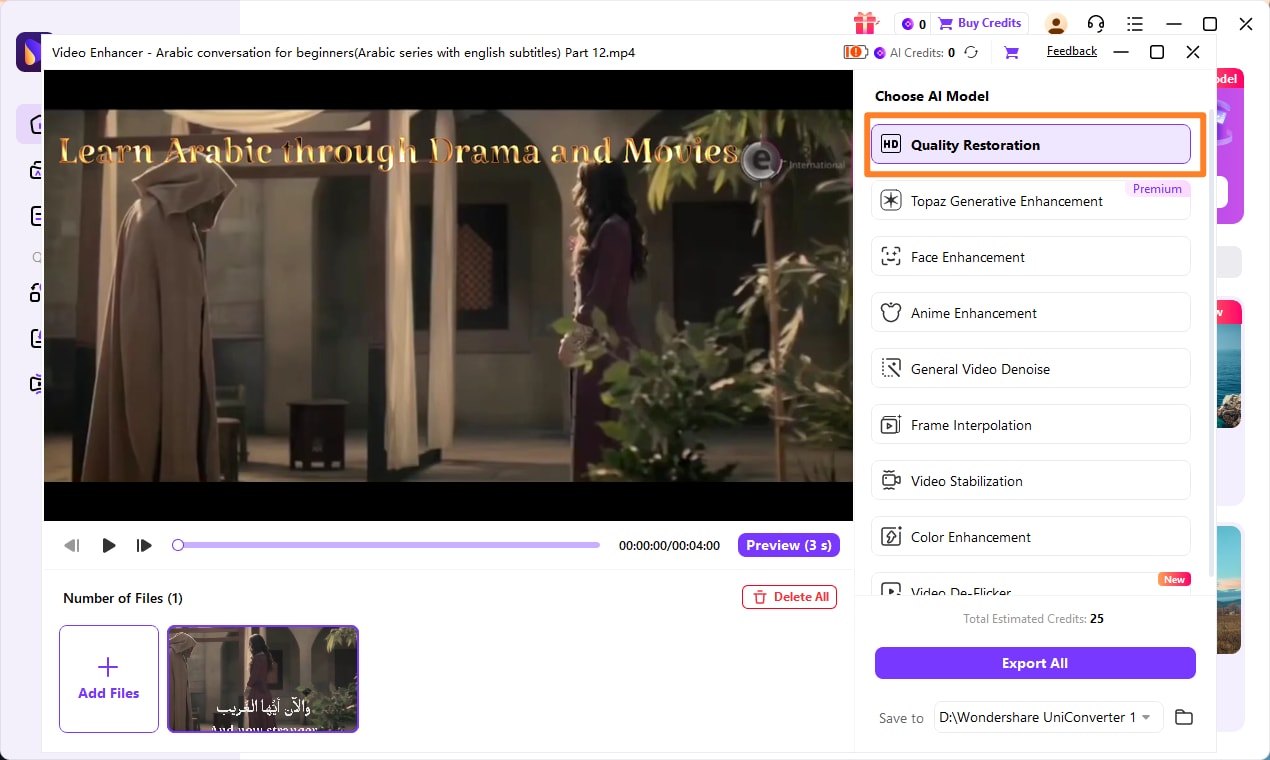
Step 3: Choose Enhancement Model
UniConverter offers various enhancement models. Select the desired enhancement option, such as "Upscale," "Denoise," "Stabilize," or "Optimize Video Brightness and Contrast." You can also customize specific parameters. For instance, you can stabilize shaky videos with ease.
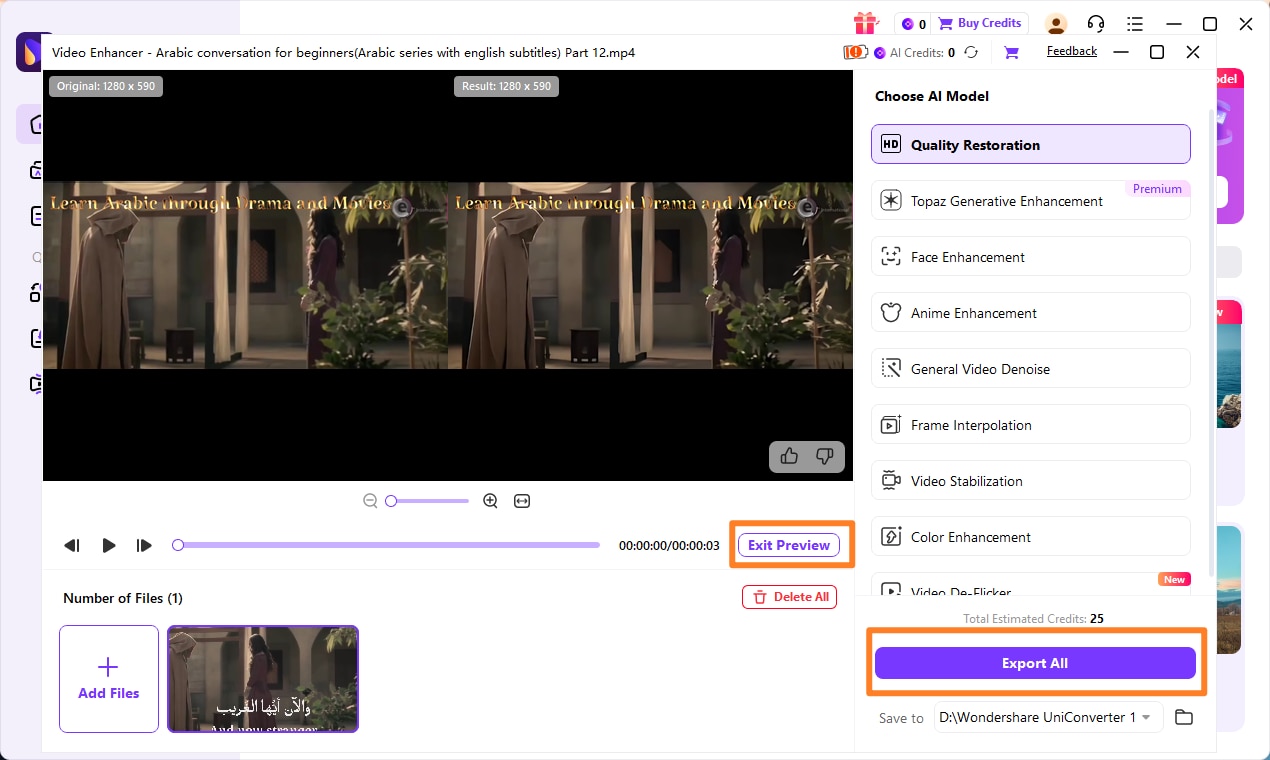
Step 4: Preview and Save the Enhanced Video
After selecting your enhancement settings, click "Preview" to see the changes. Once satisfied, choose your output format and destination folder, then click "Enhance" to save your improved video.

Seeking an Adobe Premiere Pro Video Enhancer Alternative?
Part 7: Final Verdict & Recommendations
The Adobe Premiere Pro Video Enhancer stands as a formidable tool within the professional video editing landscape, offering unparalleled control and deep integration into the Adobe ecosystem. For professional editors, especially those involved in high-stakes projects requiring meticulous detail and specific aesthetic outcomes, its advanced capabilities are unmatched. However, its steep learning curve and significant hardware demands make it less suitable for casual users or social media creators seeking quick, simple enhancements. For this segment, simpler, more accessible alternatives, including free or one-time purchase options, often provide a better balance of ease of use and cost-effectiveness. UniConverter, in particular, emerges as a strong contender for those prioritizing speed, efficiency, and a balanced solution for various enhancement needs without the complexity or recurring costs associated with professional suites. Ultimately, the best choice depends on the user's specific requirements, technical proficiency, budget, and the nature of their video projects.
Part 8: FAQs
-
1. Is Adobe Premiere Pro Video Enhancer suitable for beginners?
No, Adobe Premiere Pro has a steep learning curve due to its extensive features and professional-grade tools. Beginners might find it overwhelming and time-consuming to master for basic video enhancement tasks.
-
2. What are the main differences between Adobe Premiere Pro Video Enhancer and other AI enhancers?
Adobe Premiere Pro's enhancer is part of a comprehensive editing suite, offering granular control and integration with other Adobe products. Dedicated AI enhancers often focus on specific tasks like upscaling or denoising with more automated, AI-driven processes, sometimes at the expense of manual control.
-
3. Can I use Adobe Premiere Pro Video Enhancer for free?
Adobe Premiere Pro is a subscription-based software and does not offer a free version for its full features. A free trial is usually available for a limited period, typically 7 days.
-
4. Does Adobe Premiere Pro Video Enhancer require a powerful computer?
Yes, Adobe Premiere Pro is resource-intensive and requires a powerful computer with a robust processor, ample RAM, and a dedicated graphics card for smooth performance, especially when working with high-resolution footage or complex enhancements.
-
5. How does UniConverter compare to Adobe Premiere Pro for basic video enhancement tasks?
UniConverter is significantly more user-friendly and efficient for basic video enhancement tasks. It offers straightforward presets and faster processing, making it ideal for users who need quick, quality enhancements without the complexity and resource demands of a professional editing suite like Adobe Premiere Pro.
