
- Photoshop Overview: Adobe Photoshop is the industry standard for professional image enhancement, offering unparalleled precision and control.
- Core Features: It boasts layer-based editing, advanced selection tools, comprehensive color correction, and generative AI features.
- Pros & Cons: Photoshop offers professional-grade tools and ecosystem integration but has a steep learning curve and subscription cost.
- Target Users: Ideal for professional photographers, graphic designers, and digital artists requiring meticulous control and artistic manipulation.
- Limitations: Not optimized for quick, automated batch processing for casual users; can be cumbersome for high-volume, simple enhancements.
- Alternatives Comparison: While Photoshop excels in precision, AI tools like Topaz Labs Gigapixel AI and Luminar Neo lead in automation and batch processing.
- Risks & Pitfalls: Consider subscription fatigue, high hardware demands, risk of over-editing, and data privacy concerns with cloud features.
- UniConverter Solution: UniConverter offers an efficient, ad-free alternative for stable, lossless batch image enhancement with extensive format support and GPU acceleration.
In this article
- Part 1: What is Adobe Photoshop Image Enhancer?
- Part 2: Adobe Photoshop Image Enhancer: Core Features, Pros & Cons
- Part 3: Target Users and Use Cases
- Part 4: Adobe Photoshop Image Enhancer and Alternatives Comparison
- Part 5: Risks and Pitfalls to Consider
- Part 6: How to Use UniConverter to Efficiently Enhance Images
- Part 7: Conclusion
- Part 8: FAQs
Adobe Photoshop Image Enhancer Review: A Comprehensive Scenario-Based Review
The digital age has transformed how we capture and consume visual content, making image enhancement an indispensable tool for professionals and enthusiasts alike. Adobe Photoshop, a name synonymous with digital image manipulation, has long been at the forefront, offering sophisticated tools for precise control over every pixel. This Adobe Photoshop Image Enhancer review delves into its capabilities, comparing it against a backdrop of emerging AI-powered alternatives. We will explore its core features, ideal use cases, and potential pitfalls, ultimately guiding users through an informed decision-making process in a rapidly evolving landscape of digital image editing.
Part 1: What is Adobe Photoshop Image Enhancer?
Adobe Photoshop Image Enhancer refers to the suite of powerful tools and features within Adobe Photoshop designed to improve the quality, aesthetics, and overall impact of digital images. It encompasses a vast array of functionalities, from basic adjustments like brightness and contrast to advanced techniques such as retouching, color grading, and generative fill. This review aims to dissect Photoshop's image enhancement capabilities, evaluating its strengths and weaknesses in the context of modern digital workflows and the rise of AI-driven solutions.
The Evolving Landscape of Digital Image Editing
The field of digital image editing is undergoing a rapid transformation, driven by technological advancements and changing user expectations.
* Rise of AI-powered tools: Artificial intelligence is increasingly being integrated into image editing software, offering automated and intelligent enhancement capabilities.
* Demand for efficiency: Users, both professional and casual, are seeking faster and more intuitive ways to achieve high-quality results.
* Accessibility and ease of use: There's a growing need for tools that are powerful yet accessible to a wider audience, reducing the steep learning curve traditionally associated with professional software.
* Integration with creative ecosystems: Seamless workflows across different applications and platforms are becoming crucial for productivity.
Part 2: Adobe Photoshop Image Enhancer: Core Features, Pros & Cons
Adobe Photoshop Image Enhancer offers an unparalleled array of tools for manipulating and refining images. Its core capabilities span from fundamental adjustments to highly specialized techniques. Key features include:
* Layer-based editing: Non-destructive editing through layers, masks, and smart objects.
* Advanced selection tools: Precision selection with tools like the Pen tool, Magic Wand, and Object Selection tool.
* Comprehensive color correction: Tools for hue, saturation, lightness, curves, levels, and color balance.
* Retouching and restoration: Spot Healing Brush, Clone Stamp, Content-Aware Fill for flawless image repair.
* Generative AI features: AI-powered tools for content generation and intelligent object removal.
Pros:
* Industry-standard professional-grade tools for precise control.
* Seamless integration with the Adobe Creative Cloud ecosystem.
* Extensive community support and learning resources.
Cons:
* Steep learning curve for beginners.
* Subscription-based pricing can be costly for casual users.
Part 3: Target Users and Use Cases
Adobe Photoshop Image Enhancer caters to a broad spectrum of users, though its strengths truly shine in specific scenarios. Understanding its ideal applications and limitations is crucial for making an informed choice.
Best Use Case: Professional Photo Retouching and Artistic Enhancement
For professional photographers, graphic designers, and digital artists, Photoshop is an indispensable tool. Its granular control over every aspect of an image allows for meticulous retouching, complex compositing, and highly artistic manipulations. Whether it's perfecting a portrait, creating a surreal landscape, or designing intricate digital art, Photoshop provides the precision and flexibility required to achieve professional-grade results that meet exacting standards. This includes advanced color grading, detailed skin retouching, and intricate object removal or addition.
Limited Use Case: Quick, Automated Batch Processing for Casual Users
While Photoshop offers some automation features, it is not optimized for quick, automated batch processing of a large number of images, especially for casual users seeking instant enhancements. For tasks like applying a uniform filter to hundreds of vacation photos or automatically upscaling a folder of low-resolution images, Photoshop's workflow can be cumbersome and time-consuming. Its strength lies in individual, detailed edits rather than high-volume, hands-off processing, making it less ideal for users who prioritize speed and simplicity over fine-tuned control for everyday photo improvements.
Part 4: Adobe Photoshop Image Enhancer and Alternatives Comparison
| Feature/Scenario | Adobe Photoshop Image Enhancer | Topaz Labs Gigapixel AI | Luminar Neo | Fotor |
| Precision Control | Excellent | Good | Very Good | Fair |
| AI Automation | Good | Excellent | Excellent | Good |
| Batch Processing | Fair | Excellent | Good | Very Good |
| Learning Curve | High | Moderate | Low | Very Low |
| Pricing Model | Subscription | One-time purchase | Subscription/One-time | Freemium/Subscription |
| Integration | Adobe Ecosystem | Standalone/Plugin | Standalone/Plugin | Web-based/App |
Adobe Photoshop excels in precision control, offering unparalleled depth for manual adjustments and artistic expression. However, for AI automation and batch processing, Topaz Labs Gigapixel AI and Luminar Neo often outperform Photoshop, leveraging advanced AI models for tasks like upscaling and intelligent enhancements. Fotor, with its web-based interface, provides a very low learning curve and good batch processing for basic edits. Users prioritizing fine-tuned, pixel-level control will favor Photoshop, while those seeking efficient, AI-driven automation for specific tasks might find Topaz Labs Gigapixel AI or Luminar Neo more suitable. For quick, accessible edits, Fotor is a strong contender.
Part 5: Risks and Pitfalls to Consider
When considering image enhancement tools, especially those with advanced capabilities or subscription models, it's crucial to be aware of potential risks and pitfalls. These can impact cost-effectiveness, workflow efficiency, and even the integrity of your work.
Subscription Fatigue and Cost-Effectiveness
Adobe Photoshop's subscription-based model, while offering continuous updates and cloud integration, can lead to "subscription fatigue" and become a significant long-term expense. For casual users or those with infrequent needs, the recurring cost might outweigh the benefits, especially when compared to one-time purchase alternatives or freemium models. Users should carefully evaluate their usage frequency against the cumulative cost.
Performance Demands on Hardware
Photoshop is a resource-intensive application. Running it smoothly, especially when dealing with high-resolution images, multiple layers, or complex filters, requires robust hardware (fast CPU, ample RAM, and a dedicated GPU). Users with older or less powerful machines may experience slow performance, crashes, and a frustrating workflow, hindering productivity and creative flow.
Over-editing and Loss of Authenticity
The extensive power of Photoshop can be a double-edged sword. It's easy to fall into the trap of over-editing, leading to images that look artificial, plastic, or heavily processed. Excessive retouching can strip an image of its natural beauty and authenticity, alienating viewers who appreciate a more genuine aesthetic. Maintaining a balance between enhancement and realism requires skill and a discerning eye.
Data Privacy Concerns with Cloud Features
As Photoshop increasingly integrates with Adobe Creative Cloud for file storage, synchronization, and AI features, data privacy becomes a concern. Users uploading sensitive or proprietary images to the cloud should be aware of Adobe's data handling policies and potential risks associated with cloud storage, including unauthorized access or data breaches. Understanding the terms of service is crucial for protecting your intellectual property.
Part 6: How to Use UniConverter to Efficiently Enhance Images
When other tools fall short in batch processing, stable enhancements, or delivering noticeable improvements, UniConverter emerges as a robust alternative. It bypasses common issues like intrusive ads, inconsistent quality, and weak enhancement effects, offering a streamlined, ad-free experience with extensive format support, GPU acceleration, and stable, lossless batch enhancement. UniConverter positions itself as an all-in-one ultimate solution for your image enhancement needs.
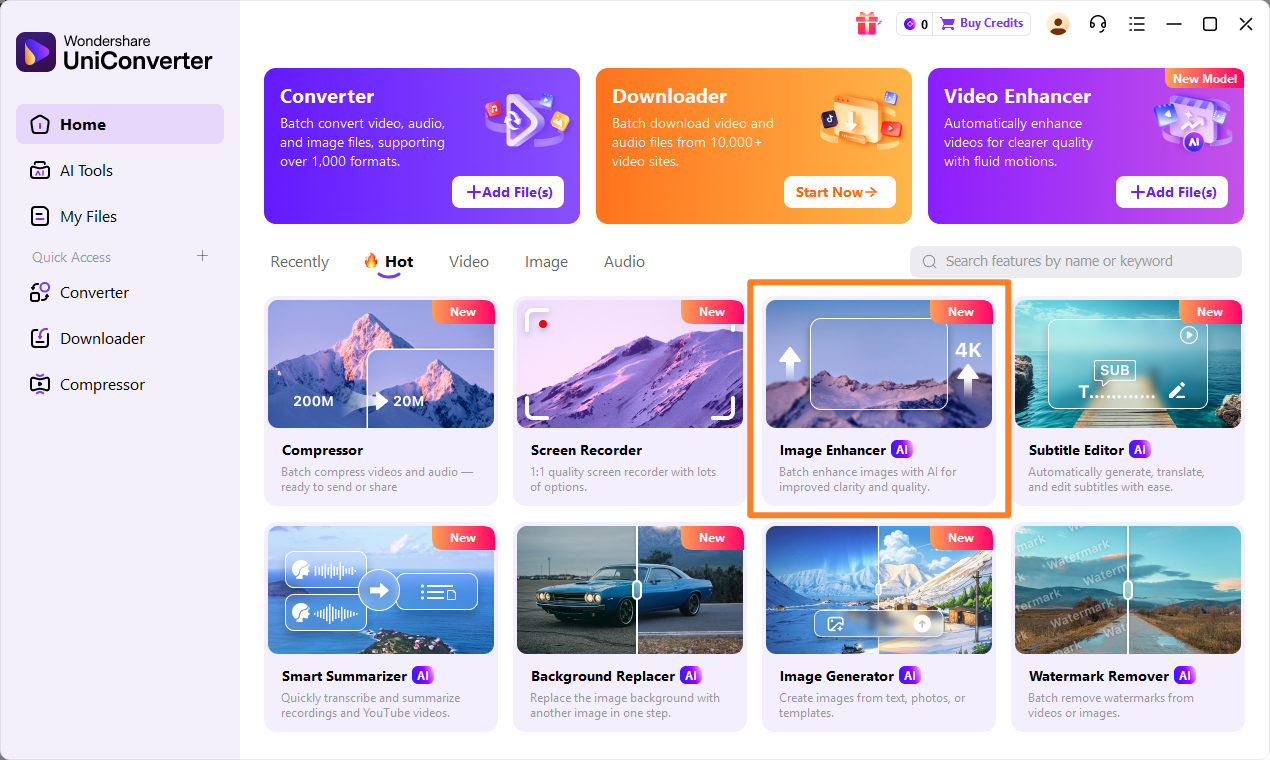
Step 1: Open UniConverter and Choose Image Enhancer
Launch UniConverter on your computer. From the main interface, navigate to the "Toolbox" section and select the "Image Enhancer" feature.
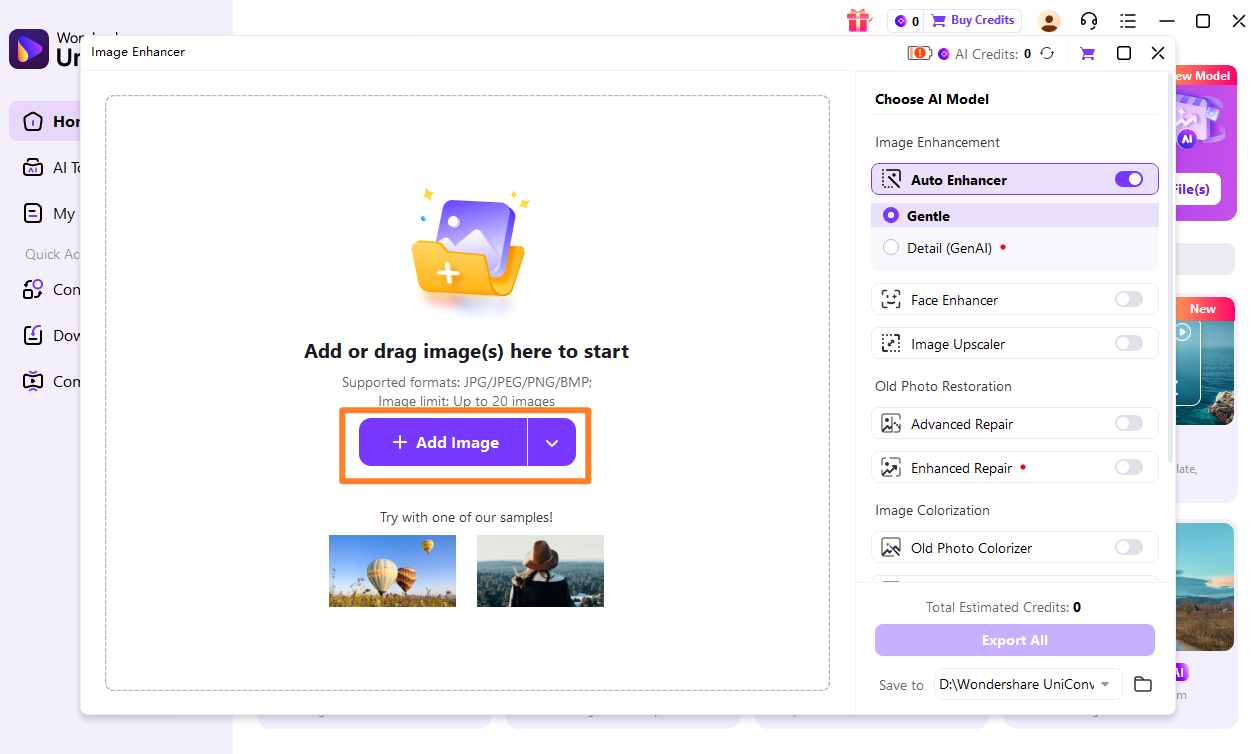
Step 2: Upload the Images
Click on the "Add Files" button or drag and drop the images you wish to enhance into the UniConverter window. You can add multiple images for batch processing.
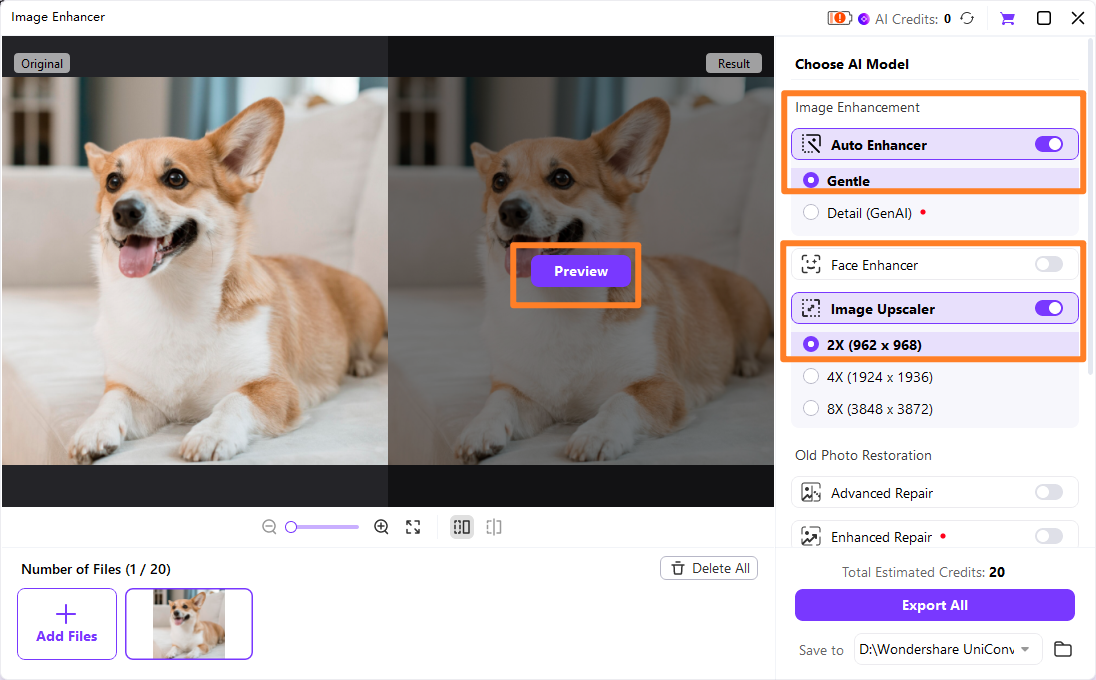
Step 3: Choose Enhancement Model
Once your images are loaded, select the desired enhancement model. UniConverter offers various AI models tailored for different enhancement needs, such as general enhancement, upscaling, or noise reduction. Adjust any additional settings like output resolution if applicable.
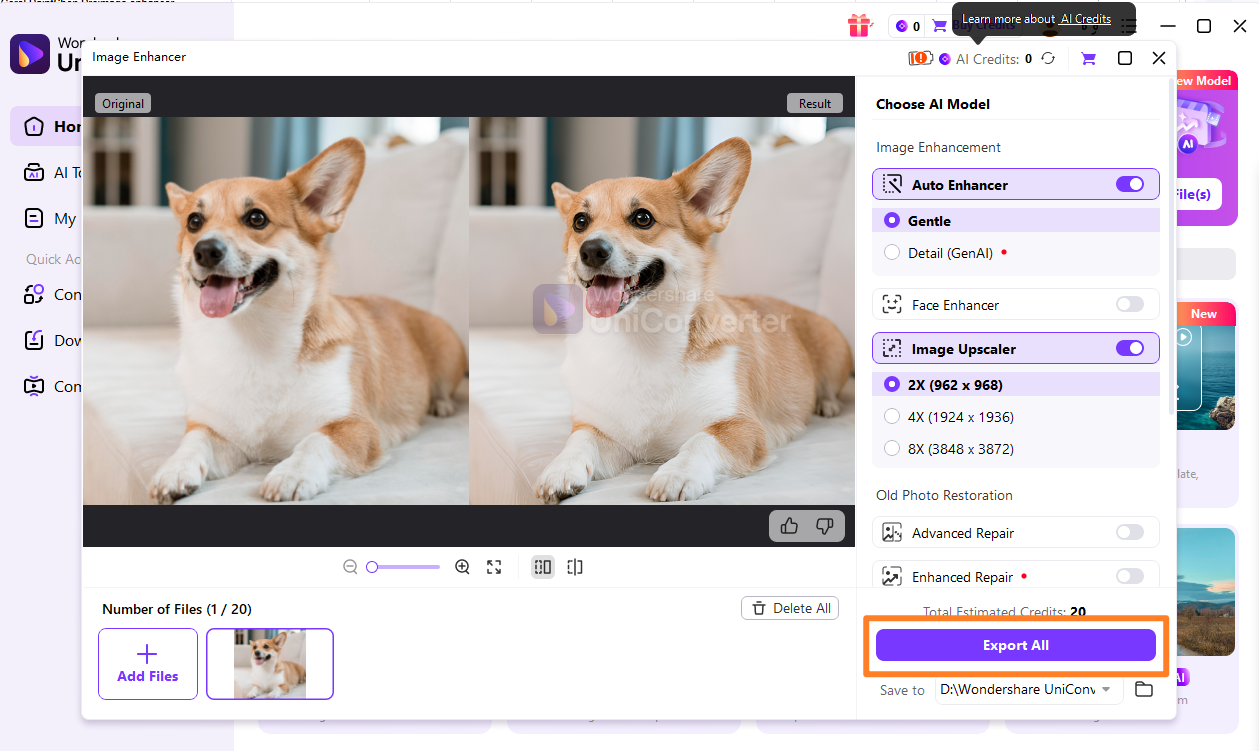
Step 4: Preview and Save the Enhanced Images
After selecting your enhancement options, UniConverter will process the images. You can preview the enhanced results to ensure they meet your expectations. Once satisfied, click the "Start All" button to save your enhanced images to your desired output folder.

Need a Simpler Adobe Photoshop Alternative?
Part 7: Conclusion
This Adobe Photoshop Image Enhancer review highlights its enduring position as the industry standard for professional image manipulation, offering unparalleled precision and a vast array of tools. It is the definitive choice for professional photographers, graphic designers, and digital artists who require meticulous control and deep integration within the Adobe Creative Cloud ecosystem. However, its steep learning curve and subscription cost can be prohibitive for casual users or those with simpler, high-volume enhancement needs. For tasks demanding quick, AI-driven automation or efficient batch processing, alternatives like Topaz Labs Gigapixel AI, Luminar Neo, or even user-friendly platforms like Fotor present compelling options. Ultimately, the best tool depends on the user's specific requirements, skill level, and budget, balancing the need for granular control against the desire for speed and automation.
Part 8: FAQs
-
1. Is Adobe Photoshop Image Enhancer suitable for beginners?
No, Adobe Photoshop has a steep learning curve due to its extensive features and complex interface, making it challenging for beginners to master quickly.
-
2. Can I use Adobe Photoshop Image Enhancer for free?
Adobe Photoshop is a subscription-based software. While a free trial is available, continuous use requires a paid Creative Cloud subscription.
-
3. How does Adobe Photoshop compare to AI-powered image enhancers?
Photoshop offers more granular, manual control, while AI-powered enhancers (like Topaz Labs Gigapixel AI or Luminar Neo) excel in automated, intelligent enhancements such as upscaling and noise reduction, often with less user input.
-
4. What are the hardware requirements for running Adobe Photoshop smoothly?
For optimal performance, Photoshop requires a powerful multi-core processor, at least 16GB of RAM (32GB recommended), and a dedicated GPU with sufficient VRAM.
-
5. Does Adobe Photoshop offer batch processing for image enhancement?
Yes, Photoshop offers some batch processing capabilities through actions and scripts, but it's generally less intuitive and efficient for large-scale, automated enhancements compared to specialized batch processing tools.
