
- Adobe Express Review: Explore Adobe Express Video Enhancer's features, pros, and cons for informed decision-making.
- Target Users: Ideal for social media creators and small businesses needing quick, easy video enhancements.
- Feature Comparison: See how Adobe Express stacks against CapCut, DaVinci Resolve, and UniConverter.
- Risks & Pitfalls: Understand data privacy, subscription pressure, and quality limitations of cloud-based tools.
- UniConverter Alternative: Discover UniConverter for robust, efficient, and high-quality video enhancement solutions.
In this article
- Part 1: What is Adobe Express Video Enhancer?
- Part 2: Adobe Express Video Enhancer: Core Features, Pros, and Cons
- Part 3: Target Users and Use Cases
- Part 4: Adobe Express Video Enhancer and Alternatives Comparison
- Part 5: Risks and Pitfalls to Consider
- Part 6: How to Use UniConverter to Efficiently Enhance Videos
- Part 7: Conclusion
- Part 8: FAQs
The digital content landscape is increasingly dominated by video, making tools that simplify video enhancement highly sought after. Adobe Express, known for its user-friendly design tools, has introduced a video enhancer feature aimed at democratizing video editing. This Adobe Express video enhancer review will delve into its capabilities, market positioning, and how it stacks up against competitors. We will provide a scenario-based analysis to help users understand its strengths and limitations, ultimately guiding them toward an informed decision for their video enhancement needs.
Part 1: What is Adobe Express Video Enhancer?
Adobe Express Video Enhancer is a cloud-based tool designed to quickly improve the visual quality of video clips. It's part of the broader Adobe Express suite, which focuses on providing accessible design and editing tools for a wide audience, from social media enthusiasts to small business owners. The core promise of this feature is to transform ordinary footage into more polished, engaging content with minimal effort, leveraging Adobe's long-standing expertise in creative software. This review aims to dissect its performance, ease of use, and overall value proposition in a competitive market.
Market Background and User Pain Points:
* Growing demand for high-quality video content: Social media platforms and digital marketing increasingly rely on visually appealing videos, creating pressure for users to produce polished content quickly.
* Complexity of traditional video editing software: Professional-grade tools often have steep learning curves, deterring casual users or those with limited time.
* Need for quick, on-the-go editing solutions: Mobile-first content creation requires tools that are accessible and efficient across various devices.
* Desire for automated enhancement features: Users often lack the technical knowledge or time to manually adjust video settings for optimal quality.
Part 2: Adobe Express Video Enhancer: Core Features, Pros, and Cons
The Adobe Express Video Enhancer offers a streamlined approach to improving video quality, focusing on simplicity and speed. Its core capabilities revolve around automated adjustments to brightness, contrast, color, and sharpness, aiming to make videos look more professional with minimal user input. It also includes basic trimming and resizing functionalities.
Core Features:
* Automated Color Correction: Adjusts hues and saturation for a more vibrant look.
* Brightness and Contrast Optimization: Enhances visibility and dynamic range.
* Sharpening Tools: Improves clarity and detail in footage.
* Noise Reduction (Limited): Attempts to clean up grainy video.
* Basic Trimming and Cropping: Allows for fundamental video manipulation.
Pros:
* Intuitive Interface for Quick Edits: The drag-and-drop interface and clear options make it incredibly easy for beginners to navigate and enhance videos in minutes.
* Integration with Adobe Ecosystem for Seamless Workflow: For existing Adobe users, the integration with other Express tools and Creative Cloud assets provides a cohesive and efficient workflow.
* AI-Powered Enhancements for Automated Improvements: The underlying AI algorithms intelligently analyze video content to suggest and apply optimal enhancements, reducing manual effort.
Cons:
* Limited Advanced Customization Options: Users seeking granular control over specific video parameters or advanced effects will find the options restrictive.
* Potential for Watermarks or Subscription Requirements for Full Features: While a free tier exists, unlocking all features and removing watermarks often necessitates a paid subscription.
Part 3: Target Users and Use Cases
Adobe Express Video Enhancer is primarily designed for individuals and small businesses who need to create engaging video content quickly and efficiently without extensive video editing expertise. Its simplicity makes it ideal for those who prioritize speed and ease of use over deep customization.
Best Use Case: Quick Social Media Content Creation
For social media managers, content creators, and small business owners who frequently post short video clips on platforms like Instagram, TikTok, or Facebook, Adobe Express Video Enhancer is an excellent tool. It allows them to rapidly enhance smartphone footage, add a professional touch, and maintain a consistent brand aesthetic without investing hours in complex software. For instance, a small boutique owner can quickly enhance a product demo video shot on their phone before posting it online, ensuring good lighting and color.
Limited Use Case: Professional Video Production Requiring Granular Control
The tool is not suitable for professional videographers, filmmakers, or advanced editors working on high-stakes projects that demand precise color grading, complex visual effects, multi-track editing, or detailed audio manipulation. For example, a documentary filmmaker needing to color match footage from multiple cameras or apply specific cinematic looks would find Adobe Express Video Enhancer's capabilities severely lacking. Its automated nature and limited controls prevent the nuanced adjustments required for professional-grade output.
Part 4: Adobe Express Video Enhancer and Alternatives Comparison
This section compares Adobe Express Video Enhancer with other popular video enhancement and editing tools, highlighting their strengths in different areas.
| Feature/Scenario | Adobe Express Video Enhancer | CapCut | DaVinci Resolve | UniConverter |
| Processing Speed | Fast (Cloud-based) | Very Fast (Mobile-optimized) | Moderate (GPU dependent) | Very Fast (GPU accelerated) |
| Output Quality | Good (Automated) | Good (Mobile-optimized) | Excellent (Professional-grade) | Excellent (Lossless) |
| Ease of Use | Excellent | Very Good | Moderate (Steep learning curve) | Excellent |
| Cost | Freemium | Freemium | Free (Paid Studio Version) | Paid (One-time purchase) |
| Integration with Other Tools | Adobe Ecosystem | Standalone | Standalone | Standalone |
| Customer Support | Via Adobe Help | Community, FAQs | Forums, Paid Support | Email, Live Chat |
| Security | Adobe Cloud Security | Standard App Security | Local Storage | Local Storage |
Key Differentiators:
Adobe Express excels in user-friendliness for basic enhancements and integration within the Adobe suite, making it perfect for quick, integrated workflows. CapCut offers a good balance of ease of use and more features for mobile-first creators, especially popular for short-form video. DaVinci Resolve provides professional-grade tools with unparalleled control but has a steeper learning curve, ideal for serious editors. UniConverter stands out for its fast processing, high output quality, and comprehensive feature set, including robust video enhancement, making it a strong all-in-one solution for desktop users.
Part 5: Risks and Pitfalls to Consider
While Adobe Express Video Enhancer offers convenience, users should be aware of several potential risks and pitfalls, especially when relying on cloud-based freemium services.
Data Privacy and Cloud Storage Concerns
As a cloud-based service, uploading videos to Adobe Express means your data is stored on their servers. Users should review Adobe's privacy policy carefully to understand how their video content is handled, stored, and potentially used. For sensitive or confidential footage, this could be a significant concern.
Potential for Upselling and Subscription Pressure
While a free tier exists, it often comes with limitations such as watermarks, restricted features, or lower output quality. Users may find themselves constantly nudged towards a paid Adobe Express subscription to unlock full capabilities, which can be an unexpected recurring cost.
Output Quality Limitations for High-Resolution Projects
For projects requiring 4K or higher resolution output, or those demanding precise color fidelity and detail preservation, the automated enhancements of Adobe Express might fall short. The compression algorithms and default settings could lead to a noticeable loss of quality or introduce artifacts, especially when dealing with already challenging footage.
Dependency on Internet Connectivity
Being a cloud-based tool, a stable and fast internet connection is essential for uploading, processing, and downloading videos. This dependency can be a significant drawback in areas with poor connectivity or for users who need to work offline.
Limited Offline Functionality
Unlike desktop software, Adobe Express Video Enhancer offers minimal to no offline functionality. This means any video enhancement tasks must be performed while connected to the internet, limiting flexibility and productivity for users on the go or in environments without reliable internet access.
Part 6: How to Use UniConverter to Efficiently Enhance Videos
When other tools fall short in terms of batch processing, enhancement stability, or overall effect strength, UniConverter emerges as a robust alternative. It bypasses common issues like intrusive ads, limited format support, and inconsistent enhancement quality found in many online or freemium tools. UniConverter offers a comprehensive solution with GPU acceleration for speed, lossless quality, and extensive format compatibility, making it an ideal all-in-one desktop video toolkit for reliable and high-quality video enhancement.
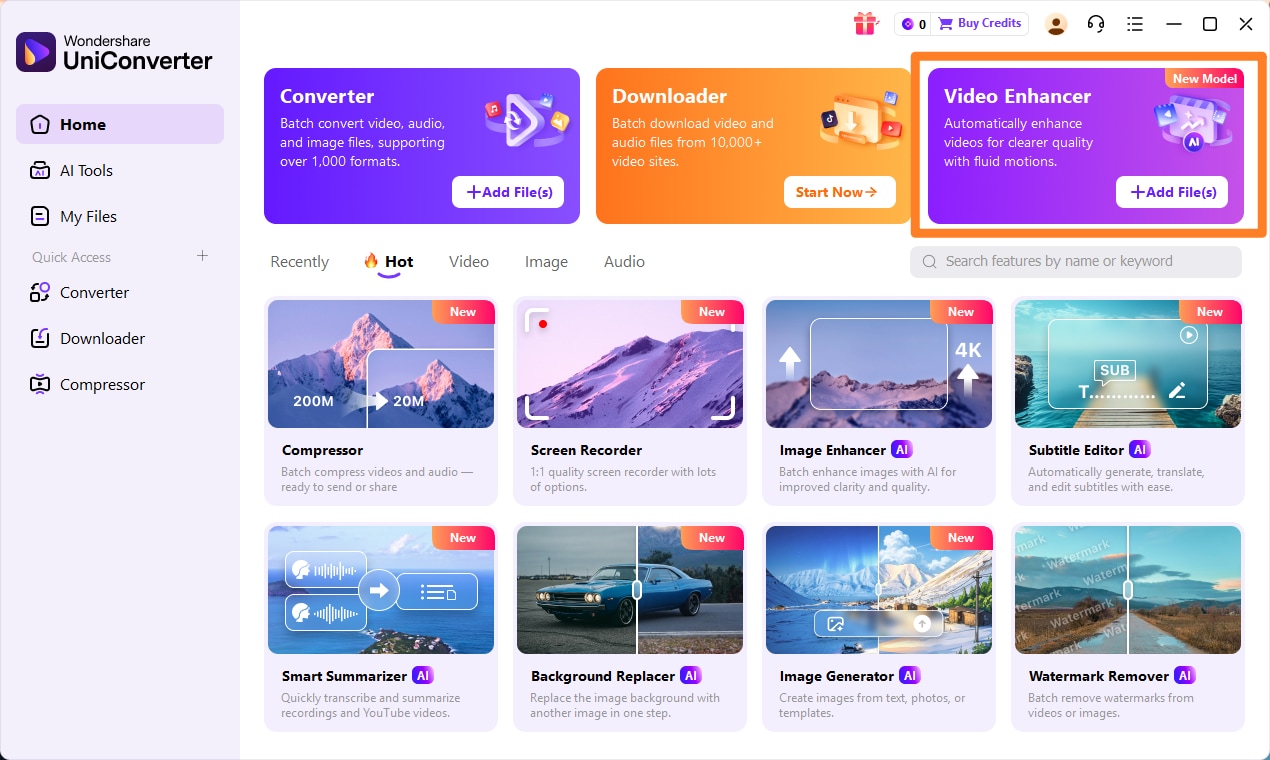
Step 1: Open UniConverter and Choose Video Enhancer
Launch UniConverter on your computer. From the main interface, navigate to the "Toolbox" section and select the "Video Enhancer" feature.
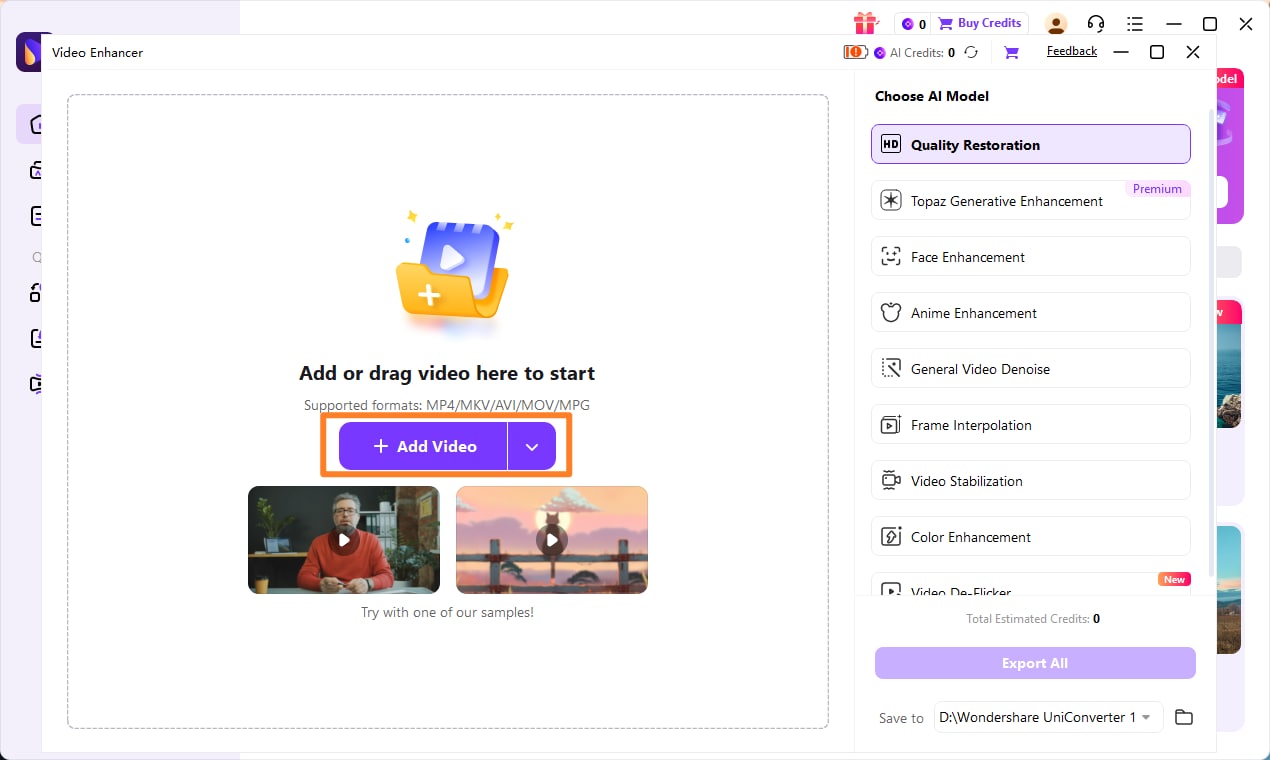
Step 2: Upload the Videos
Click the "Add Files" button or drag and drop your video files into the UniConverter interface. You can add multiple videos for batch processing.
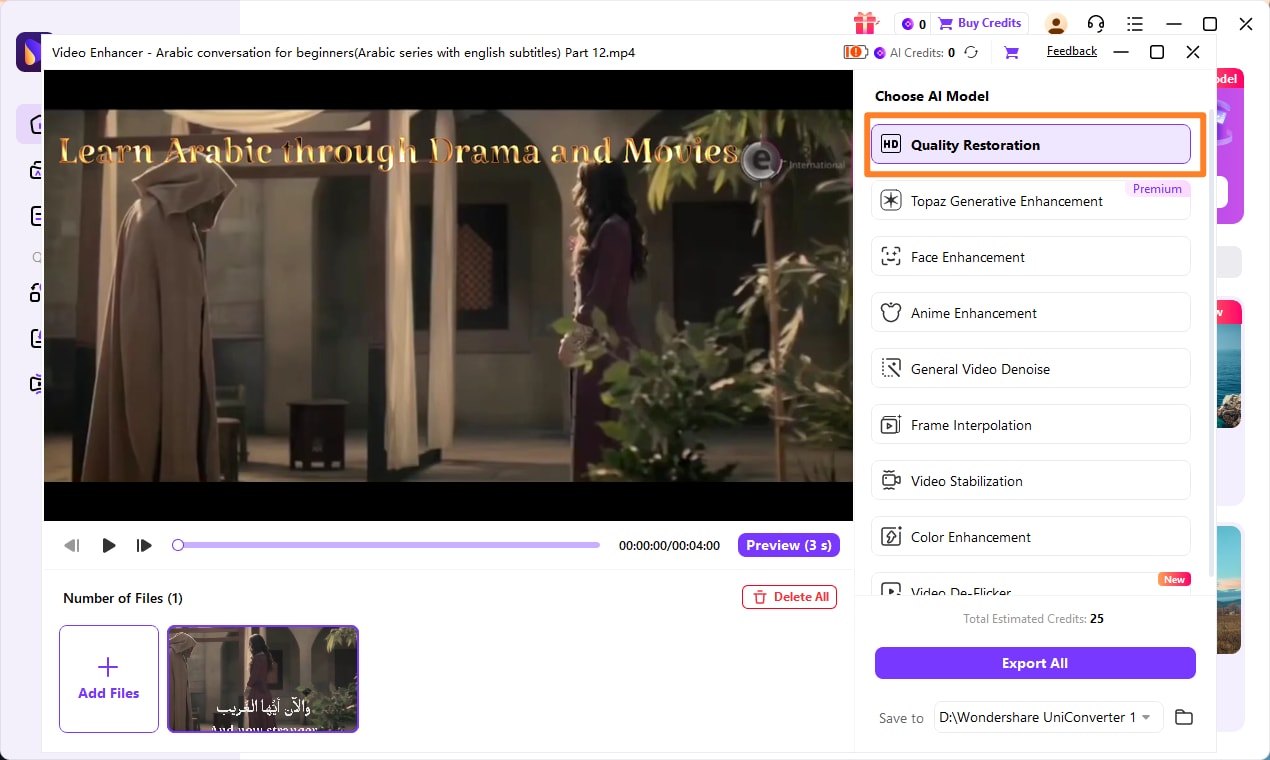
Step 3: Choose Enhancement Model
UniConverter offers various enhancement options. Select the desired enhancement model, such as "Upscale Resolution," "Optimize Brightness and Contrast," or "Remove Video Noise," based on your video's needs.
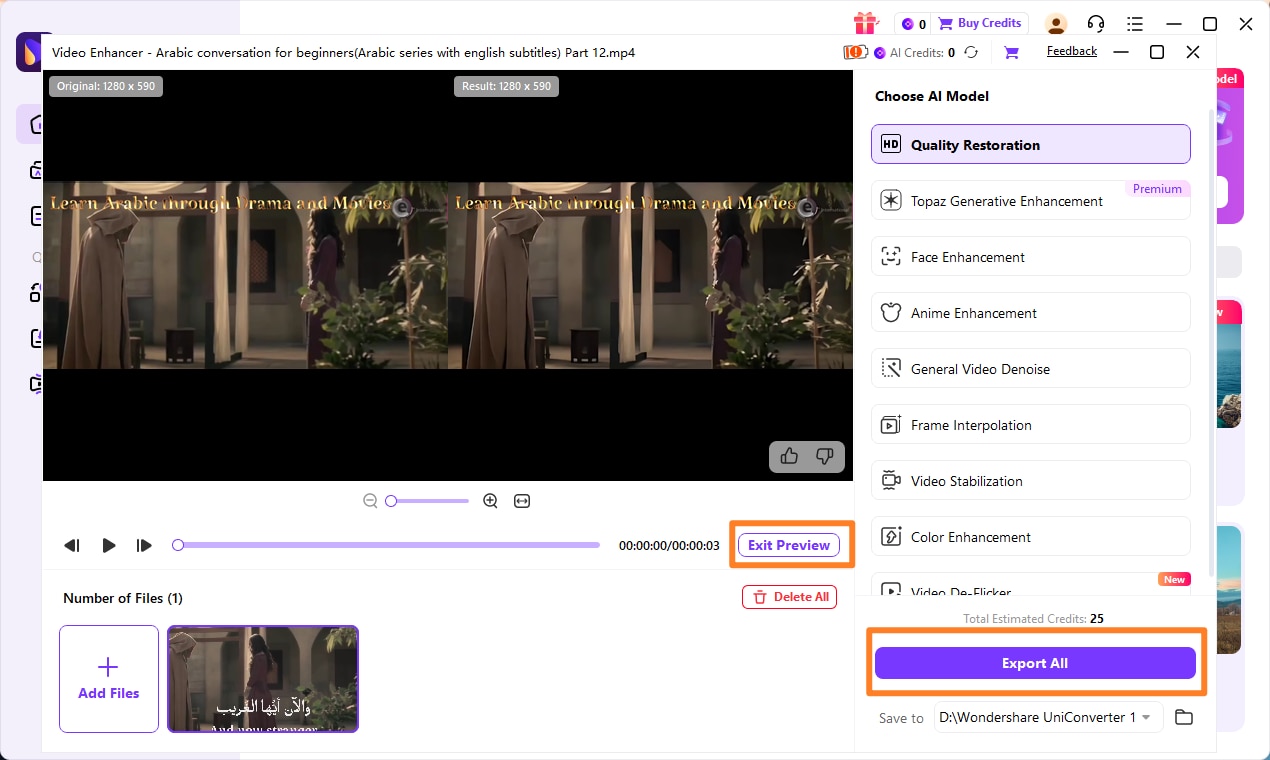
Step 4: Preview and Save the Enhanced Video
After selecting your enhancement options, you can preview the changes to ensure satisfaction. Once satisfied, choose your output format and destination folder, then click "Enhance" to save your improved video.

Seeking an Adobe Express Video Enhancer Alternative?
Part 7: Conclusion
This Adobe Express video enhancer review highlights its strengths as an accessible, user-friendly tool for quick video improvements, particularly beneficial for social media content creators and small businesses. Its seamless integration within the Adobe ecosystem and AI-powered enhancements make it a convenient option for those prioritizing speed over granular control. However, its limitations in advanced customization, potential for subscription pressure, and dependency on internet connectivity mean it falls short for professional-grade projects or users requiring offline capabilities. For casual users and social media creators, Adobe Express is a strong contender for rapid, basic enhancements. Small businesses and marketers will find it useful for consistent branding and quick content deployment. However, professional videographers and editors will need more robust software like DaVinci Resolve or a comprehensive tool like UniConverter for their intricate demands, which offer greater control, offline functionality, and superior output quality without the cloud-based limitations.
Part 8: FAQs
-
1. Is Adobe Express Video Enhancer truly free?
Adobe Express offers a free tier with limited features and potential watermarks. Full access to all enhancement options and watermark removal typically requires a paid Adobe Express subscription.
-
2. What types of video enhancements can Adobe Express perform?
It primarily performs automated enhancements like adjusting brightness, contrast, color, and sharpness. It also includes basic trimming and resizing functionalities.
-
3. How does Adobe Express compare to professional video editing software?
Adobe Express is designed for simplicity and quick edits, lacking the advanced features, granular control, and multi-track editing capabilities found in professional software like Adobe Premiere Pro or DaVinci Resolve.
-
4. Can I remove watermarks from my enhanced videos?
Watermarks are often present in videos processed with the free version of Adobe Express. To remove them, you typically need to upgrade to a premium Adobe Express subscription.
-
5. Is Adobe Express Video Enhancer suitable for long videos?
While it can process longer videos, its primary strength lies in enhancing short clips for social media. Processing very long or high-resolution videos might be slow and consume significant cloud resources, potentially leading to performance issues or requiring a higher-tier subscription.
