
- Value: ACDSee Photo Studio offers deep, granular image control and robust digital asset management for professionals.
- Comparison: It excels in local DAM and perpetual licensing, contrasting with Lightroom's cloud focus and subscription model.
- Decision: Ideal for professional photographers needing extensive control and efficient, local library management.
- Alternative: UniConverter provides a user-friendly, efficient solution for quick enhancements and batch processing, avoiding ACDSee's complexity.
- Consideration: ACDSee has a steep learning curve and is resource-intensive; not suitable for casual users or older hardware.
In this article
- Part 1: What is ACDSee Photo Studio Image Enhancer?
- Part 2: ACDSee Photo Studio Image Enhancer: Core Features, Pros, and Cons
- Part 3: Target Audience and Usage Scenarios for ACDSee Photo Studio Image Enhancer
- Part 4: ACDSee Photo Studio Image Enhancer vs. Alternatives
- Part 5: Risks and Pitfalls to Consider
- Part 6: How to Use UniConverter to Efficiently Enhance Images
- Part 7: Conclusion
- Part 8: FAQs
When it comes to managing and enhancing digital photos, the tools we choose can make or break our workflow. This ACDSee Photo Studio Image Enhancer review delves into a powerful contender in the image editing space, exploring its capabilities and comparing it against key alternatives. I'll share my personal experience with its features, from advanced non-destructive editing to comprehensive digital asset management, and highlight who it's best suited for. If you're navigating the complex world of image enhancement software, this review aims to provide clarity and help you make an informed decision based on real-world usage and practical scenarios.
Part 1: What is ACDSee Photo Studio Image Enhancer?
ACDSee Photo Studio Image Enhancer is a robust and long-standing player in the digital imaging software arena. It’s not just an image enhancer; it’s a full-fledged photo management and editing suite designed to handle everything from RAW file processing to sophisticated layer-based editing. For years, I’ve seen it positioned as a strong alternative to more mainstream options, offering a perpetual license model that appeals to many. My initial impression was that it aimed to be a one-stop-shop for photographers, and after using it extensively, I can confirm that’s largely true. This review will dissect its core functionalities, weigh its pros and cons, and ultimately help you decide if it’s the right fit for your specific needs.
Understanding the Market Landscape of Image Enhancement Software
The market for image enhancement software is incredibly diverse, ranging from simple mobile apps to professional-grade desktop applications.
* User Expectations: Users today expect powerful editing capabilities, efficient organization, and often, AI-driven enhancements.
* Feature Creep: Many tools try to do everything, leading to complex interfaces and performance issues.
* Subscription Fatigue: The prevalence of subscription models has also made perpetual license options, like ACDSee's, particularly attractive to those looking to avoid recurring costs.
Part 2: ACDSee Photo Studio Image Enhancer: Core Features, Pros, and Cons
ACDSee Photo Studio Image Enhancer is packed with features, and honestly, it took me a while to get my head around all of them. The core capabilities revolve around its powerful RAW processing engine, extensive non-destructive editing tools, and a surprisingly deep digital asset management system. I found its color grading options to be incredibly granular, allowing for precise adjustments that many other programs simply don't offer. The ability to work with layers and masks is also top-notch, giving me the flexibility I need for complex composites. Plus, its batch processing capabilities are a lifesaver when dealing with large shoots.
Pros:
* Advanced Non-Destructive Editing Capabilities for Professional Workflows: This is where ACDSee truly shines for me. I can make extensive changes without ever altering the original file, which is crucial for professional work.
* Comprehensive Digital Asset Management (DAM) Integration: Its DAM system is incredibly powerful. I can organize, tag, and search through thousands of photos with ease, making my workflow much more efficient.
* Robust Batch Processing for Efficiency: When I have hundreds of similar photos to process, the batch editing features save me an immense amount of time.
Cons:
* Steep Learning Curve for New Users: I'll admit, when I first started, the sheer number of options and menus was overwhelming. It definitely takes time to master.
* Resource-Intensive, Potentially Slow on Older Hardware: My older machine struggled a bit with it. You really need a decent setup to get the most out of its performance.
Part 3: Target Audience and Usage Scenarios for ACDSee Photo Studio Image Enhancer
Based on my experience, ACDSee Photo Studio Image Enhancer isn't for everyone, but for the right user, it's an absolute powerhouse. It's clearly designed with a specific type of user in mind, and understanding that helps set expectations. If you're just looking to crop a photo or apply a quick filter, this might be overkill. However, if your needs are more demanding, it truly shines.
Best-Case Scenario: Professional Photographers Managing Large Photo Libraries
For professional photographers like myself, who deal with thousands of images from various shoots, ACDSee is a godsend. The robust DAM features allow me to categorize, keyword, and find specific images from years ago in a snap. The non-destructive editing means I can revisit and tweak past projects without fear of losing original data. I use it extensively for event photography and portrait sessions where consistent quality and efficient post-processing are paramount. It handles RAW files from all my cameras beautifully, and the granular control over every aspect of an image is exactly what I need for client work.
Limitation Scenario: Casual Users Needing Quick, Simple Edits
If you're a casual user who just wants to brighten a selfie or remove red-eye, ACDSee Photo Studio Image Enhancer is probably too much. The interface can be daunting, and the learning curve is steep. I've seen friends try it and quickly get frustrated because they just want a simple "enhance" button. For quick, everyday edits, there are much simpler and often free tools available that will serve you better without the overhead of a professional suite. You'd be paying for a lot of features you'd never use.
Part 4: ACDSee Photo Studio Image Enhancer vs. Alternatives
When I compare ACDSee Photo Studio Image Enhancer to its competitors, I always look at where it truly stands out and where others might have an edge. It's not a one-size-fits-all solution, and understanding the nuances is key.
| Feature/Product | ACDSee Photo Studio Image Enhancer | Adobe Lightroom | Capture One | UniConverter |
| Image Enhancement Tools | Extensive & Granular | Comprehensive & AI-driven | High-end color science | Moderate, user-friendly |
| DAM Capabilities | Excellent | Cloud-centric, good | Good, session-based | None |
| Performance | High-end hardware recommended | Moderate, cloud integration | Fast, optimized | Fast, GPU accelerated |
| Pricing Model | Subscription/Perpetual | Subscription | Subscription/Perpetual | Perpetual |
| User Interface | Complex | Modern & Intuitive | Professional, customizable | Simple |
Key Differentiators: ACDSee's Strengths in Professional DAM and Granular Control
For me, ACDSee's biggest strength lies in its digital asset management and the sheer depth of its editing tools. While Lightroom offers excellent cloud integration and a vast ecosystem, I find ACDSee's local DAM to be more robust for managing massive, locally stored libraries without relying on constant internet access. Capture One is fantastic for tethered shooting and its color science is top-tier, but ACDSee often provides more granular control over specific adjustments, especially in its pixel-editing capabilities. UniConverter, on the other hand, is a different beast entirely, focusing on quick, efficient conversions and basic enhancements, which is great for its niche but doesn't compete with the professional editing power of ACDSee. If you need deep, precise control over every pixel and a powerful local organization system, ACDSee often wins out.
Part 5: Risks and Pitfalls to Consider
While I've found ACDSee Photo Studio Image Enhancer to be a powerful tool, it's important to be aware of potential downsides and risks, especially when considering any software for your workflow. No tool is perfect, and understanding its limitations or potential issues can save you headaches down the line.
Potential Privacy Concerns with Cloud Integration
While ACDSee primarily focuses on local storage, some of its features might involve cloud integration for sharing or backup. It's crucial to review their privacy policy regarding any data uploaded to their servers. I always make sure to understand what information is being shared and how it's protected, especially when dealing with client photos. For me, keeping things local is a priority, and I appreciate that ACDSee allows for that control.
Aggressive Upselling or In-App Advertisements
Thankfully, ACDSee isn't typically plagued by aggressive in-app advertisements once you've purchased it. However, like many software companies, they do engage in upselling for new versions or additional plugins. It's not intrusive, but it's something to be aware of. I've found their upgrade offers to be reasonable, but it's always good to check if the new features are truly beneficial for your workflow before committing.
Output Quality Limitations for Specific Image Types
While ACDSee handles most common image formats and RAW files exceptionally well, I've occasionally noticed that for highly specialized or niche image types (like certain scientific imaging formats), its output might not be as optimized as dedicated software. This is a minor point for most photographers, but if you work with very specific, unusual image data, it's worth testing during the trial period. For standard photography, its output quality is consistently excellent.
Compatibility Issues with Newer Operating Systems
Like any complex software, ACDSee can sometimes lag slightly in full optimization for brand-new operating system releases. I've experienced minor glitches or performance dips right after a major OS update. While they are usually quick to release patches, it's a good practice to check their compatibility notes before updating your OS, especially if you rely on the software for critical work. Waiting a few weeks after an OS launch for the first patch is often a wise move.
Lack of Dedicated Customer Support for Free Tiers
ACDSee offers a trial, but if you're using an older, unsupported version or relying on community forums for help, dedicated customer support can be limited. For paid versions, support is generally responsive, but it's not always instant. I've found their knowledge base to be quite extensive, which often helps me troubleshoot issues on my own, but for complex problems, direct support can sometimes take a bit of time.
Part 6: How to Use UniConverter to Efficiently Enhance Images
Sometimes, ACDSee's power can be overkill, or you might encounter situations where you need a quick, reliable solution for image enhancement, especially if other tools are struggling with batch processing, stability, or simply don't offer the desired quality. This is where UniConverter steps in as a fantastic alternative, offering a user-friendly and efficient solution for various image and video conversion needs, including image enhancement. It's a great option if you want to avoid ads, ensure broad format support, leverage GPU acceleration, and achieve stable, lossless batch enhancements. It's truly an all-in-one ultimate solution for many of my quick enhancement tasks.
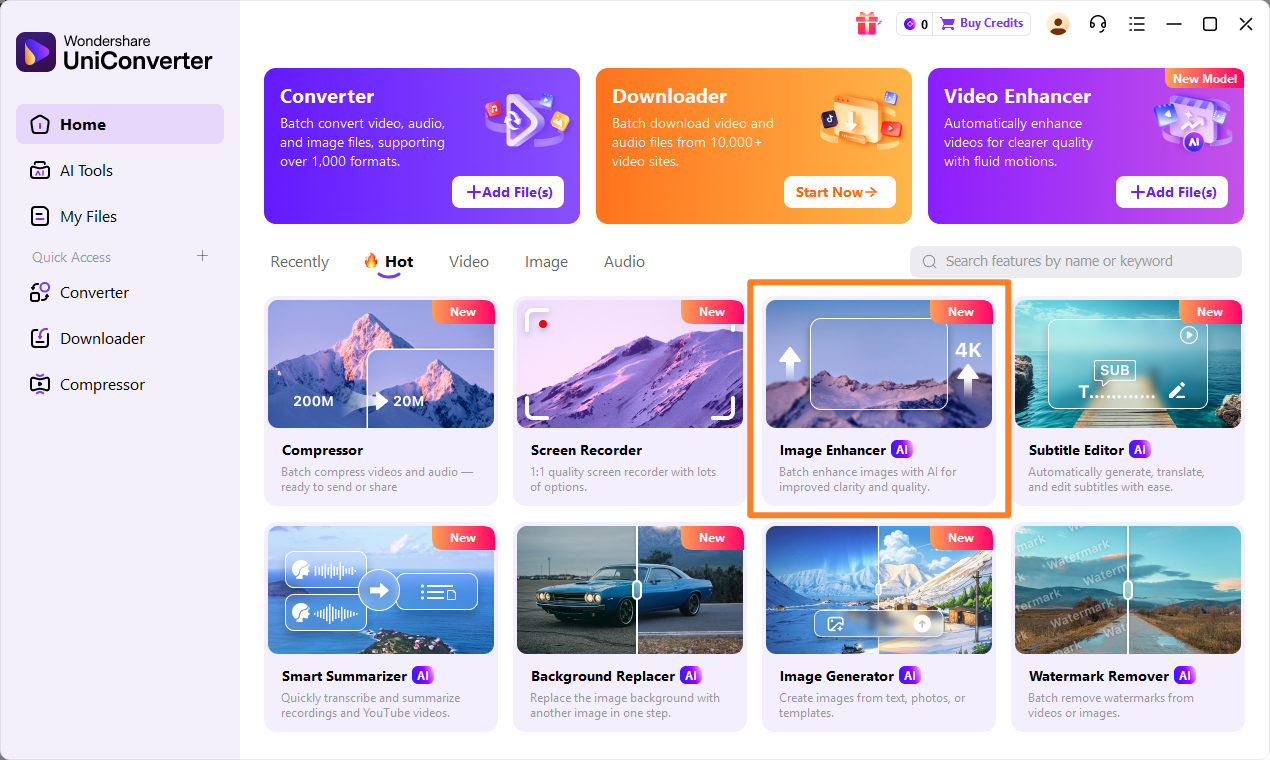
Step 1: Open UniConverter and Choose Image Enhancer
Launch UniConverter on your computer. On the main interface, navigate to the "AI Lab" section and select the "Image Enhancer" tool.
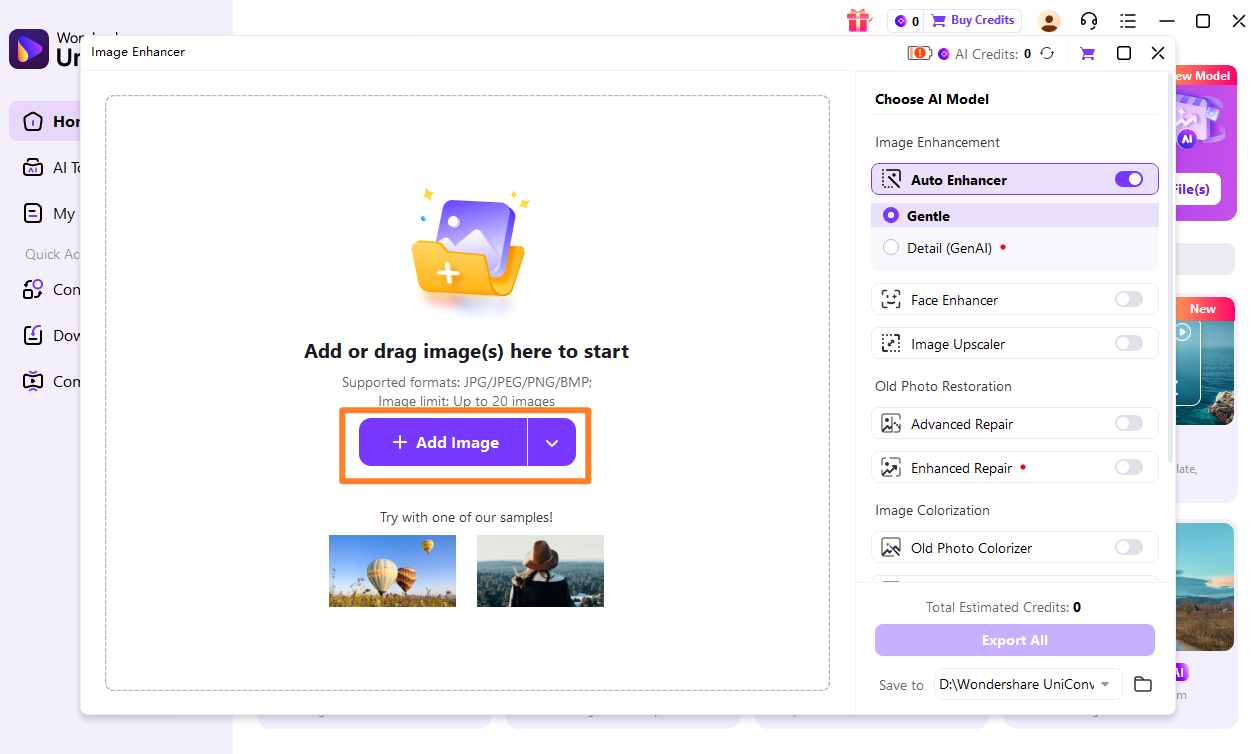
Step 2: Upload the Images
Click the "Add Files" button or simply drag and drop the images you wish to enhance into the UniConverter window. You can add multiple images for batch processing.
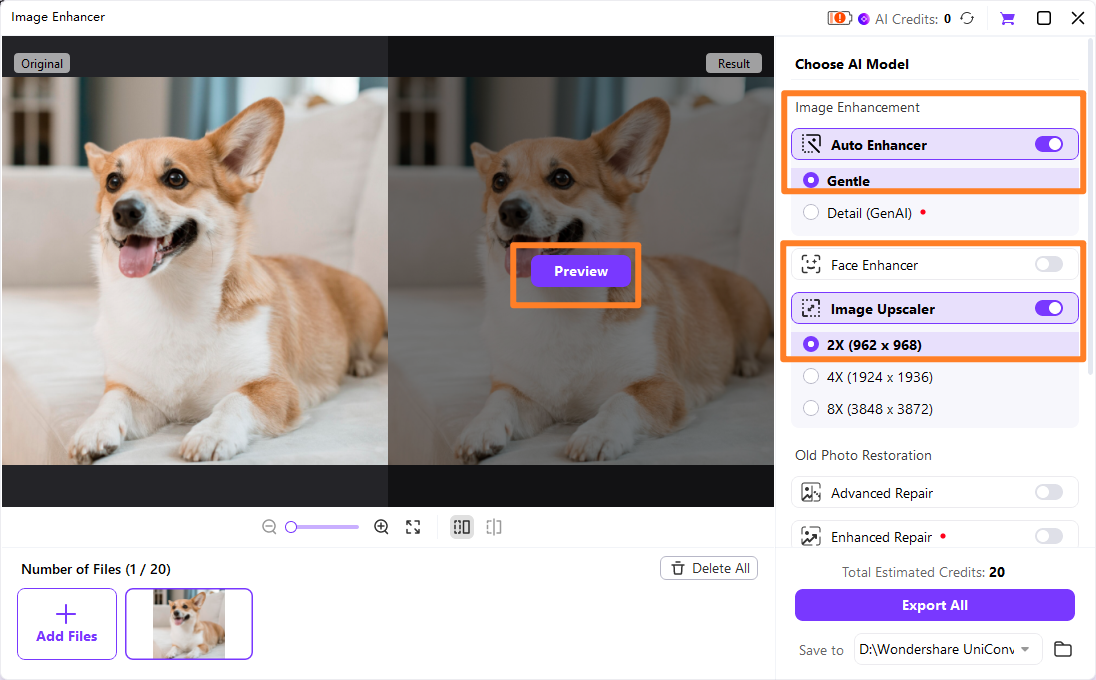
Step 3: Choose Enhancement Model
UniConverter offers various enhancement models. Select the one that best suits your image type and desired outcome. You can often preview the effect before applying it.
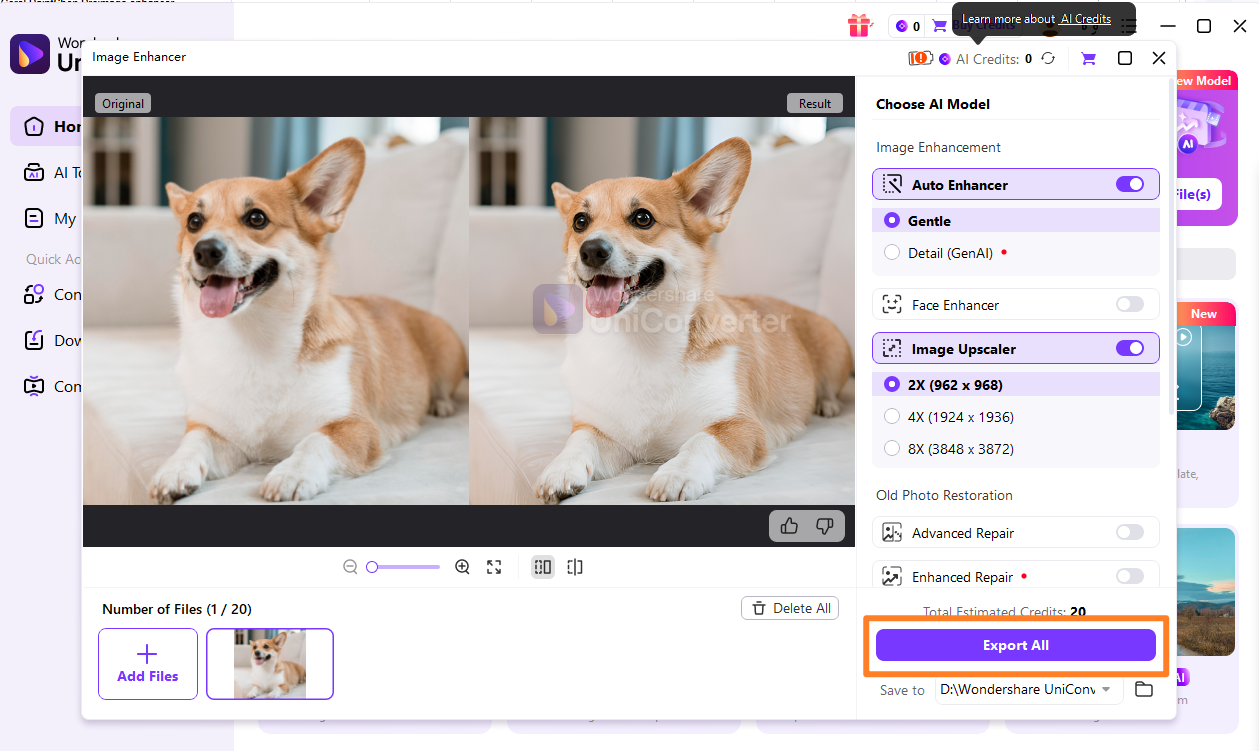
Step 4: Preview and Save the Enhanced Images
Once you've selected your enhancement options, UniConverter will process the images. You can preview the enhanced results and then click "Export" to save them to your desired location.

ACDSee Photo Studio Alternative for Enhanced Images?
Part 7: Conclusion
After spending considerable time with ACDSee Photo Studio Image Enhancer review, I can confidently say it's a formidable tool, especially for those deeply invested in professional photography and extensive digital asset management. Its granular control over image adjustments and robust organizational features make it a powerhouse for managing large photo libraries and executing complex edits. However, its steep learning curve and resource demands mean it's not a casual tool. For professional photographers and advanced users who prioritize deep control and efficient workflow management, ACDSee is an excellent choice, offering a compelling alternative to subscription-based models. For casual users or beginners seeking quick, simple edits, it might be overwhelming; simpler, more intuitive tools would be a better fit. And for those needing a fast, reliable, and versatile solution for basic enhancements and conversions, UniConverter stands out as an efficient and user-friendly alternative, particularly for batch processing and avoiding the complexities of a full-fledged editing suite. Ultimately, the best tool depends entirely on your specific needs, skill level, and workflow priorities.
Part 8: FAQs
-
1. Is ACDSee Photo Studio Image Enhancer suitable for beginners?
While powerful, its extensive features can be overwhelming for beginners. There's a learning curve involved.
-
2. Does ACDSee Photo Studio Image Enhancer offer a free trial?
Yes, ACDSee typically offers a free trial period for users to test its features before purchasing.
-
3. Can ACDSee Photo Studio Image Enhancer handle RAW files?
Absolutely. It provides robust support for various RAW formats from different camera manufacturers.
-
4. How does ACDSee Photo Studio Image Enhancer compare to Adobe Lightroom?
Both are powerful tools. ACDSee often excels in digital asset management and perpetual license options, while Lightroom is known for its cloud integration and extensive ecosystem.
-
5. Are there any subscription plans for ACDSee Photo Studio Image Enhancer?
Yes, ACDSee offers both perpetual licenses and subscription plans, providing flexibility for users.
