
- Value: Free photo editors offer accessible, no-cost image enhancement for casual users and beginners.
- Comparison: They excel at quick fixes but lack advanced features of professional software like Photoshop or GIMP.
- Decision: Choose free for basic social media and personal projects; consider paid or robust free alternatives for complex tasks.
- Limitations: Be aware of potential data privacy risks, intrusive ads, and image quality degradation with many free tools.
- Solution: UniConverter provides comprehensive media solutions, offering advanced features like batch background removal for higher quality and efficiency.
In this article
- Part 1: What is Edit Photos For Free?
- Part 2: Core Features, Pros & Cons of Free Photo Editing Tools
- Part 3: Ideal Use Cases and Limitations
- Part 4: Edit Photos For Free vs. Competitors: A Comparative Analysis
- Part 5: Risks and Pitfalls of Using Free Photo Editors
- Part 6: How to Use UniConverter for Comprehensive Media Solutions
- Part 7: Conclusion
- Part 8: FAQs
Edit Photos For Free: Your Ultimate Guide to Free Online Photo Editing
When I first started dabbling in photography, I quickly realized that a good photo often needs a little polish. But as a beginner, shelling out for expensive software like Photoshop felt like overkill. That's when I discovered the world of free online photo editors. It was a game-changer, offering a quick and accessible way to enhance my images without any financial commitment. In this Edit Photos For Free review, I'll share my experiences, dive into the pros and cons of these tools, compare them with some popular alternatives, and ultimately help you decide if they're the right fit for your needs.
Part 1: What is Edit Photos For Free?
"Edit Photos For Free" isn't a single product; it's a broad category encompassing a plethora of online tools and even some desktop software that allow you to modify your images without spending a dime. From simple cropping and resizing to more complex color corrections and filter applications, these tools aim to democratize photo editing. My journey into this space began out of necessity – I needed to quickly touch up photos for social media and personal blogs without a steep learning curve or a subscription fee. This review aims to address the core question: Can these free options truly meet our diverse photo editing needs, or are they just a gateway to paid alternatives?
The Rise of Free Online Photo Editors
* Accessibility for All: These tools have made basic photo editing accessible to anyone with an internet connection, regardless of their budget or technical skill.
* Instant Gratification: No downloads, no installations – just upload your image and start editing within seconds.
* Meeting Everyday Demands: For quick fixes, social media posts, or personal projects, they often provide more than enough functionality.
Part 2: Core Features, Pros & Cons of Free Photo Editing Tools
From my experience, most free online photo editors offer a common set of features. You can expect basic adjustments like brightness, contrast, saturation, and exposure. Cropping, resizing, rotating, and adding text are almost always included. Some even throw in a decent selection of filters and effects. For instance, I often use them to quickly slap on a vintage filter or fix a slightly underexposed shot before posting.
Pros:
* Accessibility and Convenience: Edit Anywhere, Anytime – I've edited photos on my laptop, tablet, and even my phone, all from a web browser. It's incredibly liberating.
* Cost-Effectiveness: Zero Investment Required – This is the biggest draw for me. No subscriptions, no one-time purchases, just free editing.
* Basic Functionality for Everyday Needs: For most of my casual editing, these tools do the trick perfectly. I don't need layers or complex masking for a quick Instagram post.
Cons:
* Limited Advanced Features and Professional Tools: When I needed to do some serious retouching or intricate graphic design, I quickly hit a wall. These tools simply don't offer the depth of professional software.
* Potential for Data Privacy Concerns and Ads: This is a big one. Some free tools are riddled with ads, and I've always been a bit wary about uploading sensitive photos to unknown online platforms.
Part 3: Ideal Use Cases and Limitations
Based on my usage, free photo editors shine in specific scenarios, but they also have clear boundaries. If you're like me and just need to make your vacation photos look a bit better before sharing them with friends, or if you're creating simple graphics for a personal blog, they're fantastic.
Best Use Case: Quick Edits for Social Media and Personal Projects
I find these tools invaluable for preparing images for social media. A quick crop, a splash of color correction, and maybe a fun filter, and my photos are ready to go. They're also great for personal projects like creating invitations or simple collages where professional-grade precision isn't paramount. For example, I once used a free editor to design a birthday card for a friend, and it turned out great.
Limited Use Case: Professional-Grade Retouching and Complex Graphic Design
However, if you're a professional photographer or a graphic designer, these tools simply won't cut it. I once tried to use a free editor for a client project that required precise color grading and intricate masking, and it was a frustrating experience. The lack of layers, advanced selection tools, and non-destructive editing capabilities makes them unsuitable for complex, high-stakes work.
Part 4: Edit Photos For Free vs. Competitors: A Comparative Analysis
When it comes to free photo editing, there's a spectrum of options, each with its own strengths. Here's how a general "Edit Photos For Free" experience stacks up against some prominent alternatives I've personally used:
| Feature/Tool | Edit Photos For Free (General) | Pixlr E | Photopea | GIMP |
| Interface Simplicity | High | Medium | Low | Low |
| Feature Set | Basic to Intermediate | Intermediate to Advanced | Advanced | Advanced |
| Learning Curve | Low | Medium | High | High |
| Offline Capability | No | No | Yes (PWA) | Yes |
| Ad Presence | Varies | Moderate | Low | None |
| Processing Speed | Varies | Fast | Fast | Very Fast |
| Output Quality | Good | Excellent | Excellent | Excellent |
| Customer Support | Limited | Forum/Email | Forum/Email | Community |
| Security | Varies | Good | Good | Excellent |
Key Differentiators: Simplicity vs. Power
For me, the biggest differentiator lies in the balance between simplicity and power. General "Edit Photos For Free" options are fantastic for their ease of use and low learning curve. If you just want to quickly brighten an image or add a filter, they're perfect. Pixlr E offers a step up, providing more advanced features while still being relatively accessible. I often turn to Pixlr E when I need a bit more control than a basic editor but don't want to dive into something as complex as Photoshop. Photopea, on the other hand, is incredibly powerful, almost mirroring Photoshop's capabilities, but its interface can be daunting for beginners. GIMP, a desktop application, offers professional-grade tools without the cost, but it demands a significant time investment to master. If you prioritize quick, simple edits, stick to the general free online tools. If you need more robust features and are willing to invest some time learning, Pixlr E or Photopea are excellent choices. For truly professional, offline work, GIMP is a strong contender.
Part 5: Risks and Pitfalls of Using Free Photo Editors
While the allure of "free" is strong, I've learned that it often comes with a few caveats. It's important to be aware of these potential downsides before you upload your precious memories.
Data Privacy and Security Concerns
This is my biggest concern. When I upload photos to a free online editor, I often wonder where that data goes. Are they storing my images? Are they analyzing them? While many reputable free services have privacy policies, it's a good practice to be cautious, especially with sensitive or personal photos. I tend to avoid uploading anything I wouldn't want potentially exposed.
Intrusive Advertisements and Pop-ups
Many free services rely on advertising to sustain themselves. This can range from subtle banner ads to aggressive pop-ups that disrupt the editing process. I've encountered editors where ads covered half the screen, making it incredibly frustrating to work. It's a trade-off for the "free" aspect, but sometimes it feels like too much.
Image Quality Degradation and Compression Artifacts
I've noticed that some free online editors, especially those that prioritize speed, can aggressively compress images upon export. This can lead to a noticeable loss of quality, especially if you plan to print the photos or use them in high-resolution contexts. What looked sharp on screen might come out blurry or pixelated.
Limited Customer Support and Community Resources
If you run into a bug or have a question, good luck finding prompt customer support for a free tool. Most rely on community forums or basic FAQs. This means you're often on your own to troubleshoot issues, which can be a time-sink if you're not tech-savvy.
Feature Creep and Hidden Costs
Sometimes, a "free" editor will lure you in with basic features, only to reveal that the really useful tools are locked behind a paywall or a "pro" subscription. I've started editing a photo only to find out the specific filter or adjustment I needed was a premium feature, which can be quite annoying.
Part 6: How to Use UniConverter for Comprehensive Media Solutions
While free online editors are great for quick fixes, I've found that for more comprehensive media needs, especially when dealing with batch processing, quality preservation, or advanced features, a dedicated tool like UniConverter offers a more robust and reliable solution. It's particularly useful when other tools struggle with batch background removal, pixelated exports, or rough edge detection. UniConverter provides a seamless, ad-free experience with extensive format support, GPU acceleration, and stable, lossless processing, making it an all-in-one media powerhouse.
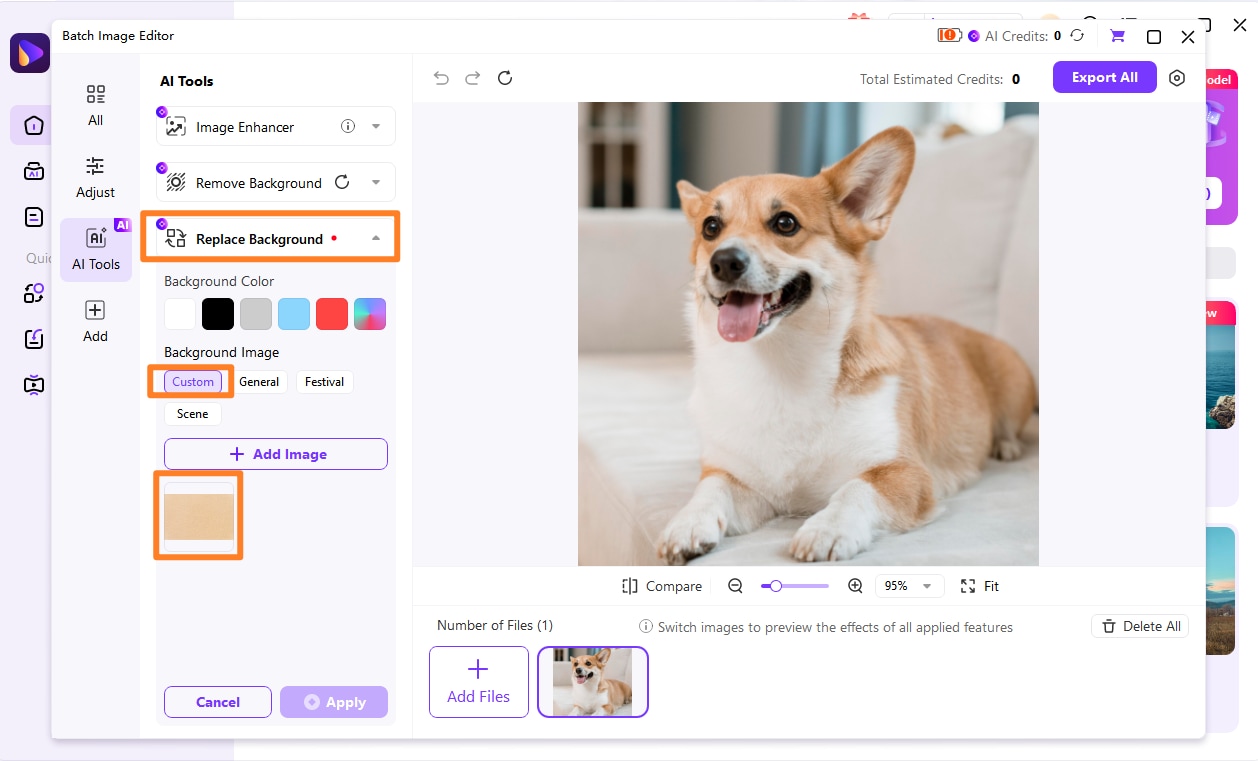
Step 1: Open UniConverter and Choose Background Replacer
Launch UniConverter on your computer and navigate to the "Toolbox" section. From there, select the Background Replacer feature. This powerful tool allows you to remove backgrounds without losing quality from your images with ease.
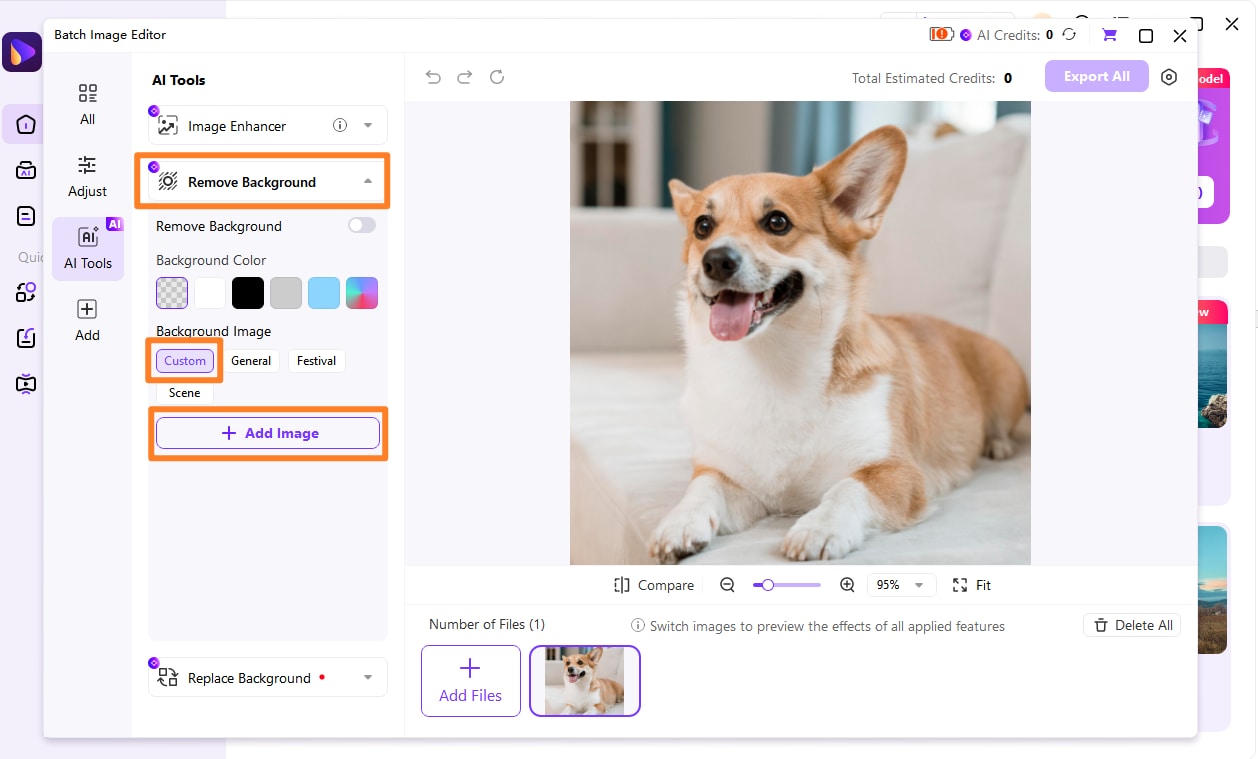
Step 2: Upload the Images
Click on the "Add Files" button or simply drag and drop the images you want to edit into the designated area. You can add multiple images for batch processing, making it efficient to change video backgrounds or image backgrounds.
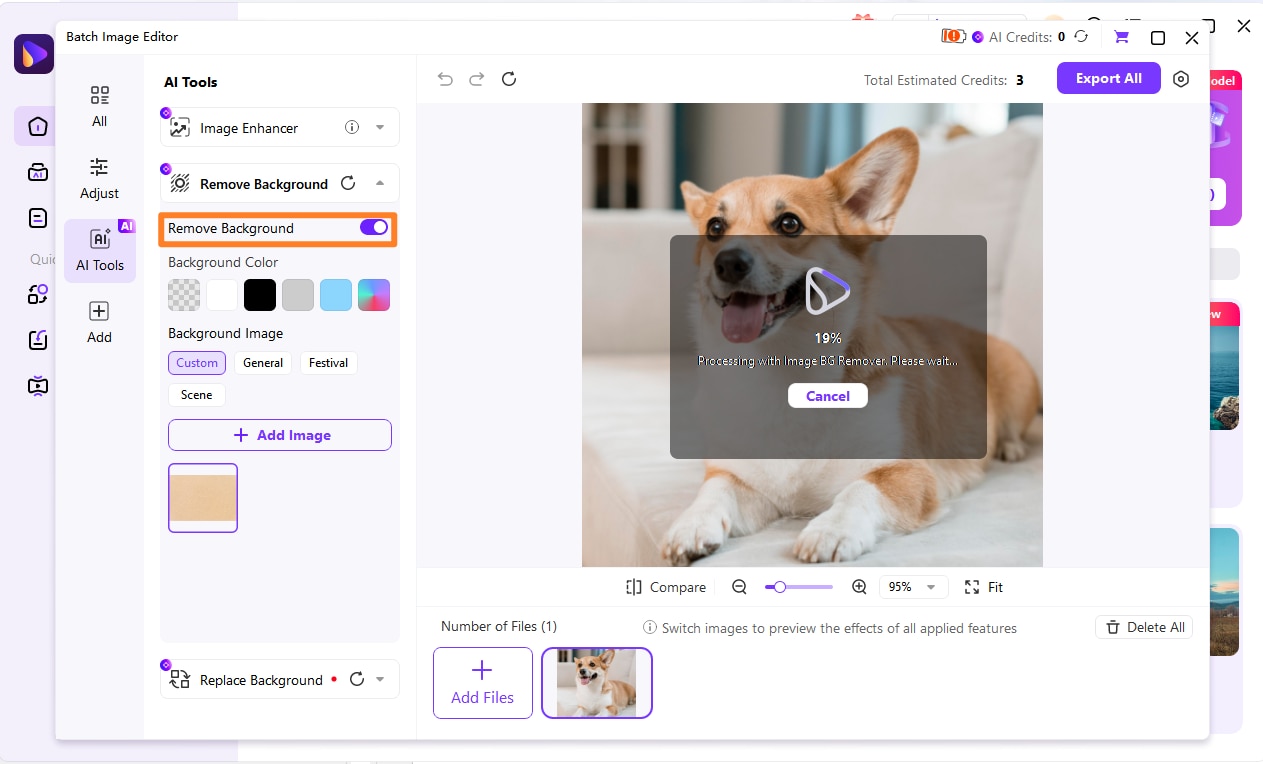
Step 3: Click to Preview Images
Once your images are uploaded, UniConverter will automatically process them. Click on each image to preview the background removal and make any necessary adjustments. This feature is excellent for achieving a high-definition background remover effect.
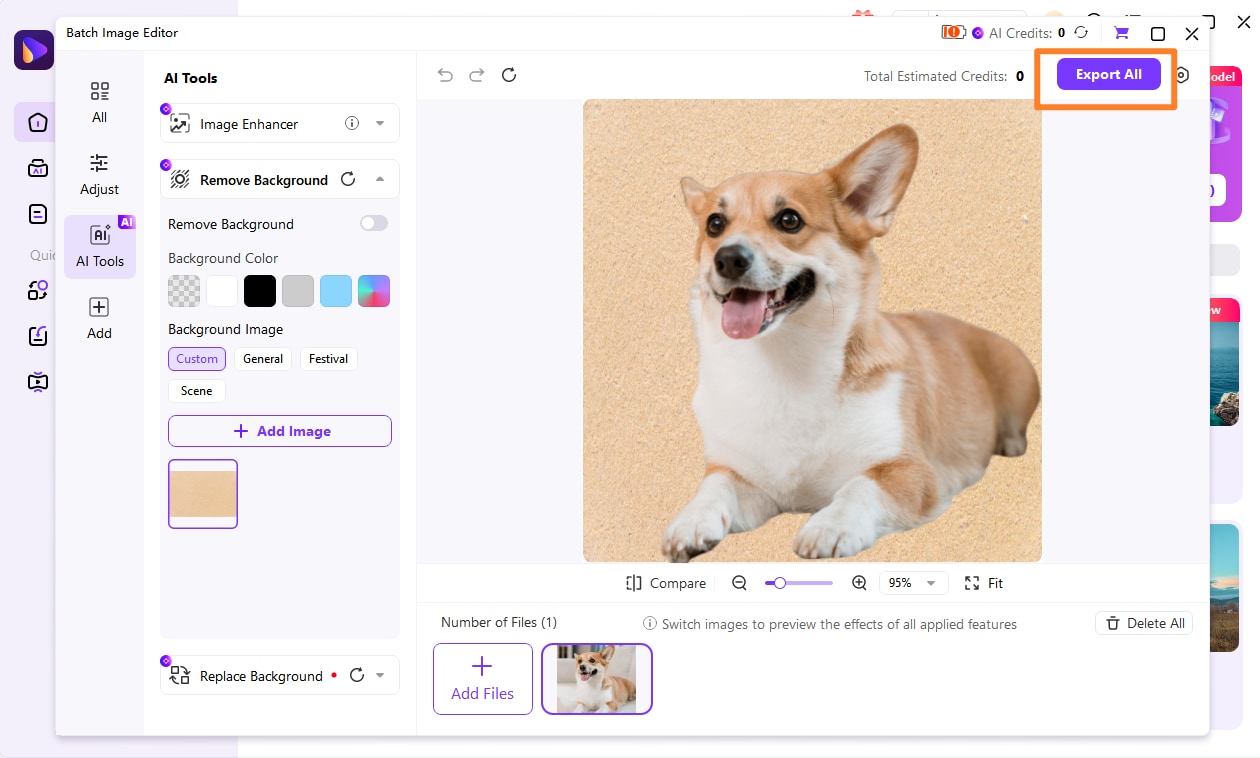
Step 4: Preview and Export Images
After you're satisfied with the results, choose your desired output folder and click "Export" to save your enhanced images. UniConverter ensures high-quality output without compression artifacts, whether you're working with standard images or even SVG background remover tasks.

Need More Than Basic Photo Editing?
Part 7: Conclusion
In conclusion, the world of Edit Photos For Free review offers a fantastic entry point for anyone looking to enhance their images without financial commitment. For casual users and beginners, the simplicity and accessibility of these tools are invaluable for quick edits, social media posts, and personal projects. However, as your needs grow, you'll quickly encounter their limitations in terms of advanced features, potential privacy concerns, and intrusive ads. For intermediate users who require more control and a richer feature set, exploring slightly more robust free options like Pixlr E or Photopea is a logical next step. Ultimately, for professionals or those who demand the highest quality, comprehensive features, and robust security, investing in paid software or a powerful desktop solution like GIMP or even considering an all-in-one tool like UniConverter for specific tasks will be necessary. The best choice truly depends on your specific needs, skill level, and the importance you place on image quality and data privacy.
Part 8: FAQs
-
1. Are free online photo editors truly safe to use?
It varies greatly. While many reputable services exist, some free editors might have less stringent privacy policies or be ad-supported, potentially collecting user data. Always check their privacy policy and avoid uploading highly sensitive images to unknown platforms.
-
2. Can I edit RAW files with free online tools?
Most basic free online editors do not support RAW files. You'll typically need more advanced free options like Photopea or desktop software like GIMP, or paid professional tools, to effectively edit RAW images.
-
3. Do free photo editors compress my images, reducing quality?
Yes, many free online editors, especially those focused on speed and bandwidth, will compress your images upon export. This can lead to a noticeable reduction in quality, particularly if you're working with high-resolution images or plan to print them.
-
4. What's the best free photo editor for social media?
For social media, tools that offer quick cropping, basic color adjustments, and a good selection of filters are ideal. Pixlr X, Canva (for design templates), and even the built-in editors on social media platforms themselves are excellent choices for this purpose.
-
5. How do free photo editors make money if they are free?
Free photo editors typically monetize through advertising, offering premium "pro" versions with advanced features, or by collecting and anonymizing user data for market research. Some might also be part of a larger ecosystem of paid products.
