
- XRECODE Value: Powerful audio converter for professionals and audiophiles with extensive format support and batch processing.
- XRECODE Limitations: Complex interface and steep learning curve make it less suitable for casual users.
- UniConverter Advantage: Offers a balanced solution with modern interface, GPU acceleration, and broad media capabilities.
- Decision Factor: Choose XRECODE for advanced audio archiving; UniConverter for efficient, user-friendly all-in-one conversion.
In this article
XRECODE review: In the dynamic world of audio processing, XRECODE has carved out a niche as a powerful, albeit complex, audio converter. This XRECODE review delves into its capabilities, comparing it against leading alternatives to help users navigate the often-overwhelming landscape of audio tools. We'll explore its strengths in handling diverse formats and batch operations, while also scrutinizing its user interface and learning curve. This comprehensive analysis aims to equip both audiophiles and casual users with the insights needed to make informed decisions about their audio conversion needs, ensuring optimal workflow and sound quality.
Part 1: What is XRECODE?
XRECODE is a robust audio converter and CD ripper designed for Windows operating systems, renowned for its extensive format support and powerful batch processing capabilities. Originating as a solution for users needing to convert between a multitude of audio formats, it has evolved into a go-to tool for those with demanding audio archiving and migration requirements. This review aims to dissect XRECODE's core functionalities, evaluate its performance against industry competitors, and identify its ideal user base, ultimately guiding potential users toward the most suitable audio conversion solution for their specific needs.
Market Background and User Pain Points
* Fragmented Audio Ecosystem: Users often encounter audio files in various formats, requiring a versatile converter to ensure playback compatibility across devices and platforms.
* Time-Consuming Manual Conversions: Converting large libraries of audio files one by one is inefficient and tedious, highlighting the need for robust batch processing.
* Loss of Quality in Conversion: Many converters compromise audio fidelity, leading to a demand for tools that maintain original sound quality during format changes.
* Complexity of Advanced Settings: While basic conversions are common, audiophiles and professionals require granular control over output settings, which many simple tools lack.
Part 2: XRECODE: Core Features, Pros, and Cons
XRECODE stands out with its comprehensive audio processing capabilities, making it a powerful tool for various conversion tasks. Its core strength lies in its ability to handle an impressive array of audio formats, ensuring users can convert almost any audio file they encounter. The software also excels in batch processing, allowing for efficient conversion of multiple files simultaneously, a critical feature for managing large audio libraries. Furthermore, XRECODE offers advanced customization options, enabling users to fine-tune output settings such as bitrate, sample rate, and channels, catering to the precise demands of audiophiles and professionals.
Pros:
* Extensive Audio Format Support for Diverse Needs: XRECODE supports a vast range of audio codecs and containers, from common MP3 and WAV to less common formats like FLAC, OGG, APE, and many more, ensuring broad compatibility.
* Batch Processing Efficiency for Large Libraries: Users can convert hundreds or even thousands of files in one go, significantly saving time and effort when dealing with extensive audio collections.
* Advanced Customization for Audiophiles: Provides granular control over conversion parameters, including sample rate, bitrate, channels, and metadata editing, allowing for precise output tailoring.
Cons:
* Steep Learning Curve for Novice Users: The abundance of options and a somewhat cluttered interface can be overwhelming for those new to audio conversion software.
* Outdated User Interface Design: The visual design of XRECODE feels dated compared to modern applications, potentially impacting user experience and aesthetic appeal.
Part 3: XRECODE: Ideal Users and Use Cases
XRECODE is primarily designed for users who require robust and highly customizable audio conversion capabilities, often dealing with large volumes of diverse audio files. Its strength lies in its ability to handle complex tasks that simpler converters cannot, making it a niche but invaluable tool for specific demographics.
Best Use Case: Professional Audio Archiving and Format Migration
For audio professionals, archivists, and serious audiophiles, XRECODE is an indispensable tool. Its extensive format support means it can handle legacy audio formats, ensuring that valuable recordings can be preserved and migrated to modern, more accessible formats without loss of quality. For instance, a music archivist might use XRECODE to convert a vast collection of obscure audio files (e.g., APE, WV) into FLAC for long-term storage and then to MP3 for portable playback, all while maintaining metadata and precise control over output parameters. The batch processing feature is crucial here, allowing for efficient handling of thousands of files.
Limited Use Case: Quick, Casual Conversions for Everyday Users
Conversely, XRECODE is less suited for everyday users who simply need to convert a single MP3 to WAV or vice versa. For someone looking to quickly change a song's format for a specific device, the software's complex interface and myriad options can be overkill and intimidating. A casual user might find themselves lost in the advanced settings, making a simple task unnecessarily complicated. For these users, a more streamlined, intuitive, and often free online converter or a simpler desktop application would be a far more efficient and less frustrating choice.
Part 4: XRECODE and Alternatives: A Comparative Analysis
When evaluating audio conversion tools, XRECODE stands as a powerful contender, especially for advanced users. However, its strengths and weaknesses become clearer when compared to alternatives like UniConverter, Audacity, and HandBrake, each catering to different user needs and technical proficiencies.
| Feature/Scenario | XRECODE | UniConverter | Audacity | HandBrake |
| Batch Conversion | Excellent | Excellent | Fair | N/A (Video Focus) |
| Format Support | Extensive | Extensive | Moderate | Limited (Video/Audio) |
| Ease of Use | Moderate | High | Moderate | Moderate |
| Advanced Settings | High | High | Moderate | High |
| Price | Paid | Paid | Free | Free |
| Processing Speed | Fast | Very Fast (GPU) | Moderate | Fast |
| Output Quality | Excellent | Excellent | Good | Excellent |
| Customer Support | 24/7 Live Chat | Community | Community | |
| Security | Local | Local/Cloud | Local | Local |
Key Differentiators: Power vs. Simplicity
XRECODE excels in raw power and format versatility, making it ideal for users who need precise control over every aspect of their audio conversions, especially for obscure formats or large archives. Its batch processing is highly efficient. UniConverter, while also powerful, offers a more polished and intuitive user experience, coupled with GPU acceleration for faster processing, making it a strong all-rounder for both audio and video. Audacity, being free and open-source, is fantastic for basic audio editing and conversion but lacks the extensive batch processing and format breadth of XRECODE or UniConverter. HandBrake, primarily a video transcoder, can convert audio tracks within video files but isn't a dedicated audio converter in the same vein as the others. For sheer format coverage and advanced audio-specific controls, XRECODE often wins, but for a balanced approach of power, speed, and user-friendliness, UniConverter often takes the lead.
Part 5: Risks and Pitfalls to Consider
While XRECODE offers powerful audio conversion capabilities, users should be aware of several potential risks and pitfalls, especially when considering its long-term use and integration into a workflow. These concerns range from usability challenges to broader issues concerning software maintenance and compatibility.
Potential for Overwhelm with Complex Options
XRECODE's strength in offering extensive customization can quickly become a drawback for less experienced users. The interface, while functional, presents a multitude of settings, codecs, and parameters that can be daunting. Novice users might struggle to navigate these options, potentially leading to incorrect settings, suboptimal output quality, or even failed conversions. This complexity can significantly increase the learning curve and reduce efficiency for those who only require basic conversion tasks.
Licensing and Update Frequency Concerns
As a paid desktop application, the long-term viability and support of XRECODE are crucial. Users need to consider the frequency of software updates, especially in response to new audio formats, operating system changes, or security vulnerabilities. Infrequent updates could lead to compatibility issues or a lack of support for emerging technologies. Furthermore, the licensing model and potential costs for future upgrades should be factored into the decision-making process, as ongoing expenses can accumulate.
Compatibility Issues with Newer Operating Systems
Desktop applications, particularly those with a long history, can sometimes face compatibility challenges with newer operating system versions. While XRECODE generally maintains good compatibility, there's always a risk that future Windows updates could introduce unforeseen issues, leading to instability or complete non-functionality. Users relying heavily on XRECODE for critical tasks should monitor its compatibility with the latest OS releases to avoid workflow disruptions.
Lack of Integrated Cloud Features
In an increasingly cloud-centric world, XRECODE's purely local operation might be seen as a limitation. It lacks integrated cloud storage options or direct integration with cloud-based audio services. This means users cannot directly convert files stored in the cloud without first downloading them, nor can they upload converted files directly. This absence of cloud features can add extra steps to workflows for users who frequently manage their audio files across different devices and cloud platforms.
Part 6: How to Use UniConverter for Efficient Audio/Video Conversion
When other tools fall short with batch processing, conversion stability, or maintaining file quality, UniConverter emerges as a robust solution. It bypasses common issues like intrusive ads, limited format support, and quality degradation often found in free or less capable converters. UniConverter leverages GPU acceleration for blazing-fast conversions without compromising on output quality, supports an extensive range of formats, and handles batch conversions with ease, making it an ultimate all-in-one solution for all your media conversion needs.
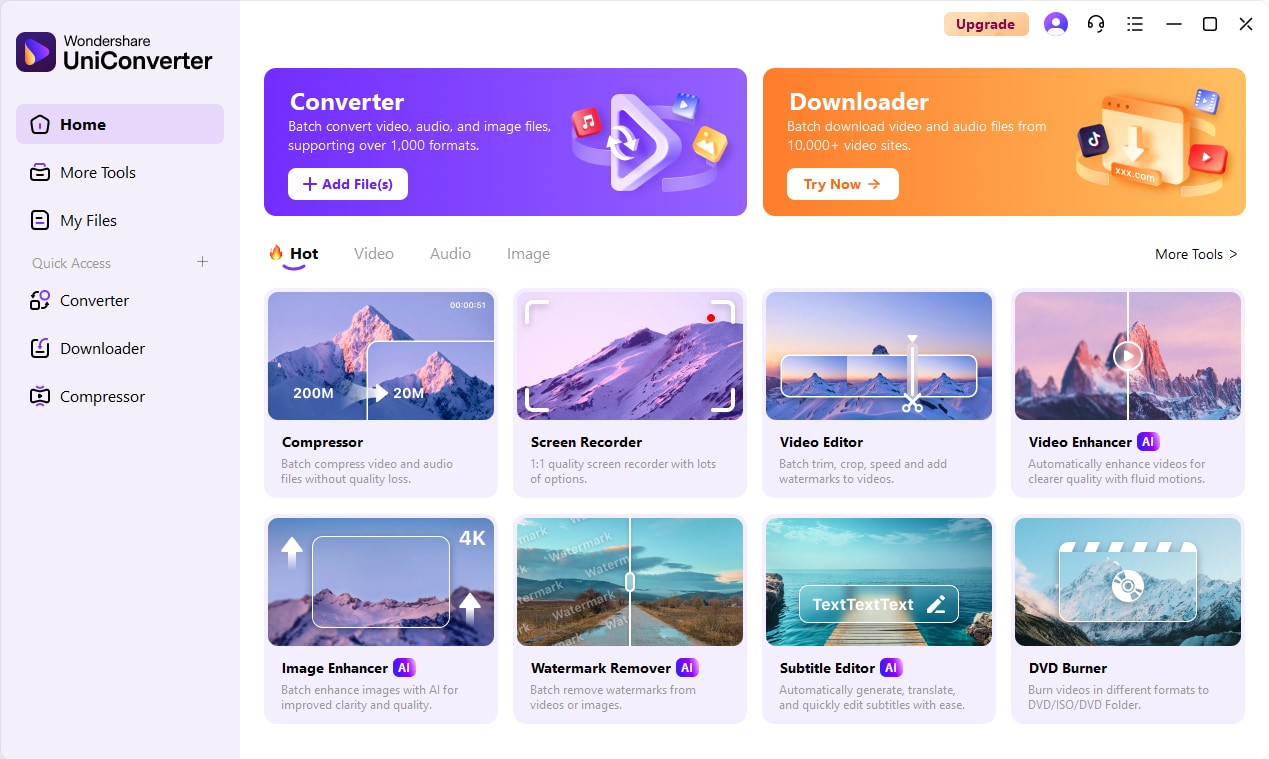
Step 1: Open UniConverter and Choose Converter
Launch UniConverter on your computer. From the main interface, select the "Converter" tab, which is typically the default view or easily accessible from the left-hand menu.
Step 2: Upload the Video, Audios or Images
Drag and drop your desired audio, video, or image files directly into the UniConverter window. Alternatively, click the "Add Files" button to browse and select files from your local storage.

Step 3: Choose Required Formats or Parameters
After importing, click the "Output Format" dropdown menu. Navigate to the "Audio" tab, select your desired output format (e.g., MP3, WAV, FLAC), and choose your preferred quality preset or customize parameters like bitrate and sample rate. For instance, you can easily convert M4A to MP3 or convert OGG to MP3 with precise control over the output. If you need to convert video to 360 VR, this step also allows for such specialized format selections.

Step 4: Save the Converted File
Once all settings are configured, select your desired output folder at the bottom of the window. Finally, click the "Convert" or "Start All" button to begin the conversion process.


High Efficient Tool to Batch Convert Media
Part 7: Conclusion
This XRECODE review has thoroughly examined its capabilities, positioning it as a powerful, feature-rich audio converter best suited for power users and professionals dealing with extensive audio archives and diverse format requirements. Its unparalleled format support and robust batch processing are significant advantages for complex tasks. However, its dated interface and steep learning curve make it less ideal for casual users seeking quick, simple conversions. While XRECODE excels in providing granular control, alternatives like UniConverter offer a more balanced approach with a modern interface, faster processing, and broader media capabilities, catering to a wider audience without sacrificing quality. Ultimately, the choice hinges on user proficiency and specific workflow demands: XRECODE for the dedicated audiophile or archivist, and UniConverter for those desiring efficiency and ease across various media conversion tasks.
Part 8: FAQs
-
1. Is XRECODE free to use?
XRECODE is a paid software. It typically offers a trial version with limited functionality or time, after which a license purchase is required for continued use and access to all features. -
2. What audio formats does XRECODE support?
XRECODE boasts extensive format support, including popular ones like MP3, WAV, FLAC, OGG, WMA, AAC, and more niche formats such as APE, WV, TTA, and various lossy and lossless codecs. -
3. How does XRECODE compare to online converters?
XRECODE offers superior control, batch processing, and privacy compared to most online converters. Online tools are often limited by file size, speed, and may compromise privacy, while XRECODE provides a robust, offline solution with advanced settings. -
4. Can XRECODE convert video to audio?
Yes, XRECODE can extract audio tracks from video files and convert them into various audio formats. This feature is useful for obtaining soundtracks or dialogue from video content. -
5. Is XRECODE suitable for beginners?
Due to its comprehensive features and somewhat complex interface, XRECODE has a steeper learning curve and is generally not recommended for absolute beginners. Simpler, more intuitive tools are better for casual, straightforward conversions.
