
- VoiceConverter Overview: Understand VoiceConverter's core features, pros, and cons for voice transformation.
- Ideal Use Cases: Discover if VoiceConverter suits your content creation and entertainment needs.
- Comparative Analysis: See how VoiceConverter stacks against UniConverter, Voicemod, and Adobe Audition.
- Risks & Pitfalls: Learn about data privacy, ads, deepfakes, and hidden costs with voice converters.
- UniConverter Solution: Explore UniConverter for efficient, high-quality, and secure audio/video conversions.
- Decision Guide: Make an informed choice based on your specific needs and priorities.
In this article
- Part 1: What is VoiceConverter?
- Part 2: VoiceConverter Core Features, Pros & Cons
- Part 3: Who is VoiceConverter For? Ideal Scenarios & Limitations
- Part 4: VoiceConverter and Alternatives Comparison
- Part 5: Risks and Pitfalls to Avoid with Voice Converters
- Part 6: How to Use UniConverter for Efficient Audio and Video Conversion
- Part 7: Final Verdict & Recommendations
- Part 8: Frequently Asked Questions (FAQs)
VoiceConverter: Transforming Your Audio Experience
The digital soundscape is constantly evolving, with voice conversion technology emerging as a powerful tool for creators, communicators, and even casual users. This VoiceConverter review delves into the capabilities of VoiceConverter, a prominent player in this burgeoning field. We'll explore its core features, analyze its strengths and weaknesses, and compare it against key competitors to provide a comprehensive understanding of its place in the market. This review aims to equip you with the insights needed to make an informed decision about whether VoiceConverter is the right solution for your audio transformation needs, addressing common user pain points and highlighting potential pitfalls.
Part 1: What is VoiceConverter?
VoiceConverter is a sophisticated software application designed to alter and transform human voices. Utilizing advanced algorithms and artificial intelligence, it allows users to modify the pitch, tone, gender, and even the identity of a spoken voice, creating entirely new vocal outputs from existing audio inputs. This technology has found applications across a wide spectrum, from enhancing creative projects to assisting in communication accessibility. Our review will critically examine its performance, user experience, and overall value proposition, helping you navigate the complex landscape of voice conversion tools.
The Rise of Voice Conversion Technology
The increasing demand for versatile audio manipulation tools has fueled the rapid development of voice conversion technology. This surge is driven by several key factors:
* Growing demand in content creation: Podcasters, YouTubers, and game developers frequently seek unique vocal effects.
* Accessibility and communication aids: Voice conversion can assist individuals with speech impediments or those seeking anonymity.
* Entertainment and novelty applications: From prank calls to character voice acting, the entertainment value is significant.
* Technological advancements: AI and machine learning have made sophisticated voice transformation more accessible.
Part 2: VoiceConverter Core Features, Pros & Cons
VoiceConverter stands out with its robust set of features aimed at delivering high-quality voice transformations. Its core capabilities include real-time voice modulation, an extensive library of pre-set voice models, and fine-grained control over various vocal parameters such as pitch, timbre, and gender. The software also supports a wide range of audio input formats, ensuring broad compatibility for users. Furthermore, its integration with popular recording and streaming platforms enhances its utility for live applications.
Pros:
* High-fidelity voice transformation for various applications.
* Intuitive user interface, making it accessible for beginners.
* Extensive library of voice models and customization options.
Cons:
* Resource-intensive, potentially causing performance issues on older hardware.
* Limited offline functionality, requiring a stable internet connection for full features.
Part 3: Who is VoiceConverter For? Ideal Scenarios & Limitations
VoiceConverter caters to a diverse audience, primarily those involved in digital content creation and entertainment. Its ease of use and powerful transformation capabilities make it an attractive tool for hobbyists and semi-professionals looking to add unique vocal elements to their projects. However, its limitations in certain professional contexts and its reliance on internet connectivity define its boundaries.
Best Use Case: Content Creation & Entertainment
VoiceConverter excels in scenarios such as podcast production, YouTube video narration, character voiceovers for indie games, and creating humorous audio clips for social media. Its ability to quickly generate distinct voices allows creators to experiment with different personas and enhance their storytelling without the need for professional voice actors. For example, a podcaster could use it to differentiate between multiple characters in an audio drama, or a streamer could employ it for live voice modulation to engage their audience.
Limited Scenario: Professional Voiceover & Sensitive Data Handling
While versatile, VoiceConverter is less suited for high-stakes professional voiceover work where absolute fidelity and legal clarity are paramount. The subtle nuances required for commercial advertisements or official announcements might not be perfectly replicated, and the potential for artificiality could detract from the message. Additionally, for applications involving sensitive data or confidential communications, the reliance on cloud processing and the inherent risks associated with data privacy in voice conversion technology make it a less ideal choice.
Part 4: VoiceConverter and Alternatives Comparison
When evaluating voice conversion tools, it's crucial to compare VoiceConverter against its primary competitors to understand its market position and unique selling points. This analysis will highlight how VoiceConverter stacks up against other popular solutions like UniConverter, Voicemod, and Adobe Audition, focusing on key performance indicators.
| Feature/Product | VoiceConverter | UniConverter | Voicemod | Adobe Audition |
| Processing Speed | Fast | Very Fast | Real-time | Moderate |
| Output Quality | Excellent | Excellent | Good | Excellent |
| Ease of Use | High | High | Medium | Medium |
| Customer Support | Responsive | Excellent | Good | Standard |
| Security | Standard | High | Standard | High |
Key Differentiators: VoiceConverter's Edge
VoiceConverter distinguishes itself with its exceptional balance of high-fidelity output and user-friendly interface, making advanced voice transformation accessible to a broader audience. While UniConverter offers robust all-in-one media solutions with strong security, and Voicemod specializes in real-time voice changing for gaming, VoiceConverter carves its niche by providing a comprehensive library of voice models and extensive customization options without overwhelming the user. Adobe Audition, while powerful, requires a steeper learning curve for voice conversion specifically. For users prioritizing a rich feature set with an intuitive design, VoiceConverter often presents a more compelling option.
Part 5: Risks and Pitfalls to Avoid with Voice Converters
While voice converters offer exciting possibilities, users must be aware of potential risks and pitfalls, especially when dealing with free or less reputable services. These issues can range from privacy breaches to performance problems, significantly impacting the user experience and data security.
Data Privacy Concerns
Many online voice converters process audio files on remote servers, raising significant data privacy questions. Users' voice recordings, which can contain sensitive personal information, might be stored, analyzed, or even shared without explicit consent. It's crucial to review the privacy policy of any service before uploading audio, especially for professional or confidential content.
Intrusive Advertisements and Upsells
Free voice converter tools often rely on aggressive advertising models. This can manifest as intrusive pop-up ads, banner ads, or persistent prompts to upgrade to a paid version. Such advertisements not only disrupt the user experience but can also sometimes lead to malicious websites or unwanted software installations.
Potential for Misinformation and Deepfakes
The advanced capabilities of voice conversion technology, particularly with AI-driven tools, carry the risk of being used to create convincing deepfakes. This can lead to the spread of misinformation, impersonation, or even fraud, posing ethical and societal challenges. Users should be mindful of the ethical implications and potential misuse of such powerful tools.
Compatibility Issues with Different Audio Formats
Some voice converters may have limited support for various audio formats, leading to compatibility issues. Users might find themselves unable to process certain files or experience degraded quality when converting between unsupported formats, requiring additional conversion steps or alternative software.
Subscription Traps and Hidden Costs
Beware of services that offer a "free trial" that automatically rolls into a paid subscription without clear notification. Hidden costs, such as limits on conversion length, file size, or the number of conversions, can also emerge after initial use, forcing users to pay for features they initially believed were free.
Part 6: How to Use UniConverter for Efficient Audio and Video Conversion
When other tools fall short with batch processing, stability issues, or quality degradation, UniConverter emerges as a superior alternative. It offers a seamless, ad-free experience with extensive format support, GPU acceleration for rapid conversions, lossless quality, and robust batch processing capabilities. UniConverter is your all-in-one ultimate solution for any media conversion needs, ensuring your transformed audio and video files maintain their integrity and quality without hassle.
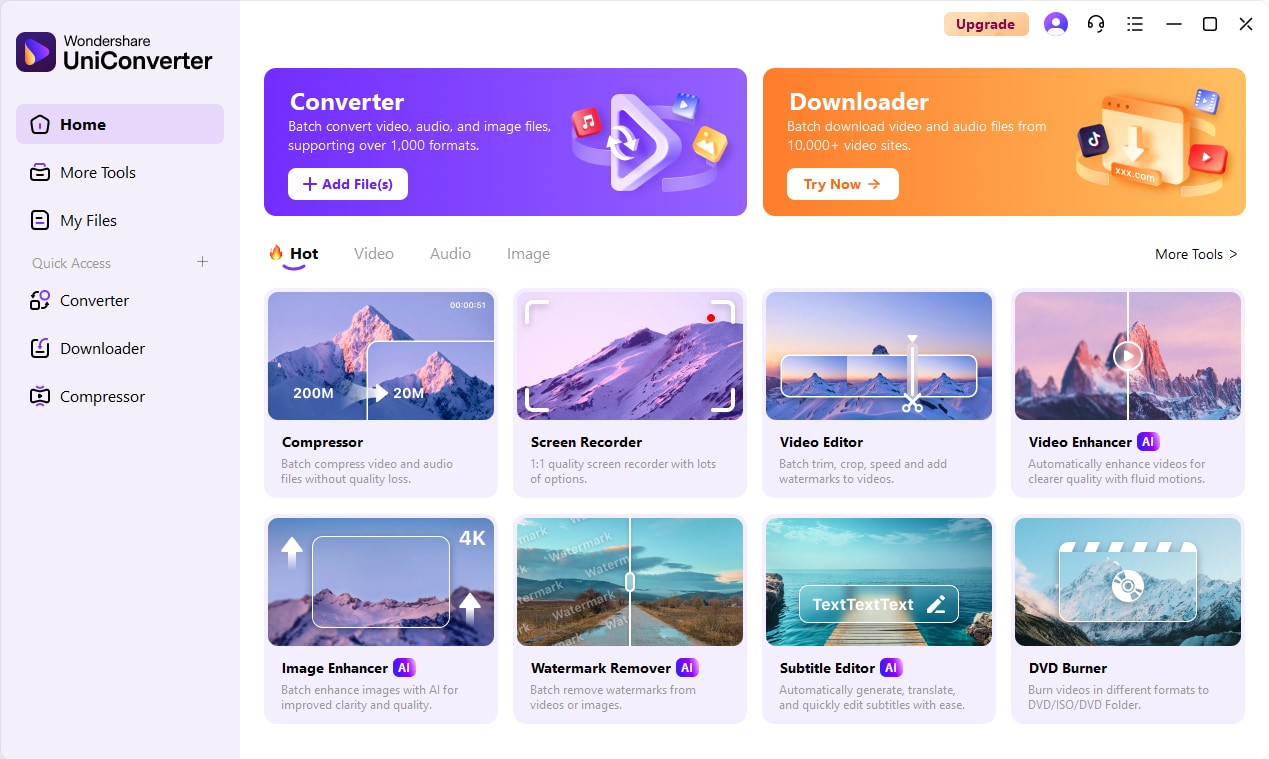
Step 1: Open UniConverter and Choose Converter
Launch UniConverter on your computer. From the main interface, navigate to the "Converter" tab. This is where you'll initiate your audio or video conversion tasks.
Step 2: Upload the Video, Audios or Images
Click on the "Add Files" button or simply drag and drop your desired audio, video, or image files into the program window. You can add multiple files for batch processing.

Step 3: Choose Required Formats or Parameters
Once your files are loaded, select your desired output format from the "Output Format" menu. You can also customize parameters like resolution, bitrate, and encoder settings for advanced control.

Step 4: Save the Converted File
After configuring your settings, click the "Convert" or "Start All" button. UniConverter will process your files efficiently. Once complete, you can find your converted files in the specified output folder.


Need a Better Voice Conversion Tool?
Part 7: Final Verdict & Recommendations
This VoiceConverter review has thoroughly examined the capabilities, advantages, and limitations of VoiceConverter, alongside a comparative analysis with its competitors. VoiceConverter stands out for its high-fidelity voice transformation and user-friendly interface, making it a strong contender in the market. However, its resource intensity and limited offline functionality are points to consider. For users seeking a robust and intuitive tool for creative projects, VoiceConverter offers significant value. For those prioritizing an all-encompassing media solution with enhanced security and offline capabilities, alternatives like UniConverter might be more suitable. Ultimately, the best choice depends on individual needs, technical specifications, and the specific context of use, balancing features against potential drawbacks.
Part 8: Frequently Asked Questions (FAQs)
-
1. Is VoiceConverter safe to use?
VoiceConverter generally employs standard security measures. However, as with any online tool, users should exercise caution regarding personal data and review the privacy policy. For sensitive information, consider offline alternatives.
-
2. Can VoiceConverter be used for commercial purposes?
Yes, VoiceConverter can be used for commercial purposes, especially for content creation like podcasts, videos, and game development. It's advisable to check their specific licensing terms for commercial use to ensure compliance.
-
3. What are the system requirements for VoiceConverter?
VoiceConverter typically requires a modern operating system (Windows 10/11 or macOS), a multi-core processor (Intel i5 or equivalent), at least 8GB of RAM, and a stable internet connection for full functionality. Performance may vary on older hardware.
-
4. How accurate is the voice conversion?
The accuracy of voice conversion in VoiceConverter is generally high, offering realistic and natural-sounding transformations. However, the quality can depend on the input audio's clarity and the complexity of the desired transformation.
-
5. Does VoiceConverter offer a free trial?
VoiceConverter often provides a free trial or a limited free version, allowing users to test its basic features before committing to a paid subscription. Details on trial availability and features can usually be found on their official website.
