
- TunePat Overview: Specialized software for downloading and converting streaming videos, bypassing DRM for offline viewing.
- Core Features: High-quality downloads (up to 1080p), batch processing, and common formats like MP4/MKV.
- Ideal Users: Perfect for offline entertainment enthusiasts and travelers needing reliable content access.
- Limitations: Not suitable for professional video editing due to limited formats and advanced features.
- TunePat vs. UniConverter: TunePat excels at streaming downloads; UniConverter offers broader versatility, speed, and features.
- Risks: DRM updates can cause issues; consider data privacy and potential quality loss during conversion.
- UniConverter Advantage: Offers comprehensive, fast, and stable conversion with extensive format support.
- Decision: Choose based on needs: TunePat for streaming downloads, UniConverter for all-in-one media tasks.
In this article
- Part 1: What is TunePat Video Converter?
- Part 2: TunePat Video Converter: Core Features, Pros, and Cons
- Part 3: TunePat Video Converter: Ideal Users and Usage Scenarios
- Part 4: TunePat Video Converter and Alternatives Comparison
- Part 5: Risks and Pitfalls to Consider
- Part 6: How to Use UniConverter for Efficient Video and Audio Conversion
- Part 7: Conclusion
For enthusiasts seeking to liberate their favorite shows and movies from the confines of streaming platforms, TunePat Video Converter review emerges as a prominent solution. This comprehensive review delves into its capabilities, scrutinizing its performance against a backdrop of evolving digital content consumption. As streaming services proliferate and content libraries expand, the demand for reliable tools to download and convert videos for offline viewing has never been higher. This article aims to provide a detailed, scenario-based comparison, helping users navigate the complex landscape of video downloaders and make informed decisions about whether TunePat Video Converter, or its alternatives, best suits their individual needs. We will explore its core features, identify its ideal users, and highlight potential pitfalls, offering a holistic perspective on its value proposition.
Part 1: What is TunePat Video Converter?
TunePat Video Converter is a specialized software designed to download and convert videos from various popular streaming services, enabling users to enjoy their favorite content offline. It primarily focuses on bypassing DRM protections to facilitate high-quality video downloads, making it a go-to tool for users who wish to archive content or watch it without an internet connection. This review will address its effectiveness, ease of use, and overall value in the competitive market of video conversion tools.
Market Landscape of Video Downloaders and Converters
The digital content landscape is characterized by:
* Proliferation of Streaming Services: An ever-increasing number of platforms, each with exclusive content.
* Growing Demand for Offline Viewing: Users desire flexibility to watch content anytime, anywhere, without reliance on internet connectivity.
* Complex DRM Protections: Streaming services employ sophisticated Digital Rights Management to prevent unauthorized downloads, posing challenges for third-party tools.
* Need for Format Versatility: Users often require videos in specific formats for playback on different devices or for editing purposes.
Part 2: TunePat Video Converter: Core Features, Pros, and Cons
TunePat Video Converter offers a focused set of functionalities aimed at simplifying the process of obtaining videos from streaming platforms. Its core capabilities revolve around high-definition video downloading and conversion, ensuring a seamless offline viewing experience. The software prioritizes ease of use while attempting to maintain video quality.
Core Features:
* High-quality video downloads (up to 1080p) from major streaming services.
* Support for multiple audio tracks and subtitles.
* Batch download functionality for efficient processing of multiple videos.
* Built-in search engine for easy content discovery within supported platforms.
* Option to save videos in common formats like MP4 and MKV.
Pros:
* High-quality downloads from various streaming services for offline viewing.
* User-friendly interface for straightforward navigation and operation.
* Batch download capability for efficiency.
Cons:
* Limited output formats compared to some competitors.
* Occasional issues with DRM-protected content updates.
Part 3: TunePat Video Converter: Ideal Users and Usage Scenarios
TunePat Video Converter is tailored for specific user demographics and usage patterns, excelling in scenarios where its core strengths are most valued. Understanding these contexts helps in determining if the software is the right fit for your needs.
Best Use Case: Offline Entertainment Enthusiasts
This software is ideal for individuals who frequently travel, commute, or have unreliable internet access and wish to enjoy their subscribed streaming content without interruption. It caters to users who want to build a personal library of their favorite shows and movies for long-term offline access, ensuring entertainment is always available. For example, a user planning a long flight can download an entire season of a show from Netflix or Hulu in advance, guaranteeing hours of entertainment without relying on in-flight Wi-Fi.
Limited Use Case: Professional Video Editing Workflows
While TunePat Video Converter excels at downloading content for personal consumption, it is not designed for professional video editing. Its limited output formats and lack of advanced editing features make it unsuitable for users who need to integrate downloaded content into complex video projects, perform detailed post-production, or require highly specialized file formats for professional software. A video editor needing to extract specific clips for a documentary would find TunePat's capabilities too restrictive.
Part 4: TunePat Video Converter and Alternatives Comparison
When evaluating video conversion tools, it's crucial to compare TunePat Video Converter against its market rivals to understand its standing and identify the best fit for various user needs.
| Feature/Product | TunePat Video Converter | UniConverter | Any Video Converter | HandBrake |
| Supported Streaming Services | Extensive (Netflix, Hulu, Prime Video, etc.) | Moderate (YouTube, Vimeo, etc.) | Limited (YouTube, Facebook) | None (Local files only) |
| Output Quality | High (Up to 1080p) | High (Up to 8K) | High (Up to 4K) | High (Dependent on source) |
| Conversion Speed | Fast | Very Fast (GPU acceleration) | Moderate | Moderate |
| Price | Mid-range (Subscription/Lifetime) | Mid-range (Subscription/Lifetime) | Free (Basic), Paid (Pro) | Free |
| DRM Handling | Good (Specific services) | Limited | Limited | None |
| Ease of Use | User-friendly | Very User-friendly | Moderate | Advanced |
| Customer Support | Responsive | Excellent | Good | Community-based |
Key Differentiators:
TunePat's strong focus on streaming service downloads, particularly for DRM-protected content, sets it apart for users primarily interested in offline viewing from platforms like Netflix and Amazon Prime Video. UniConverter stands out as a versatile all-in-one solution, offering broader format support, faster conversion speeds due to GPU acceleration, and robust editing features, making it suitable for a wider range of tasks beyond just downloading. Any Video Converter provides a budget-friendly option with basic downloading and conversion capabilities, appealing to users with simpler needs who might not require extensive streaming service support. HandBrake, being free and open-source, is excellent for advanced users who need precise control over encoding parameters for local files but lacks streaming download capabilities.
Part 5: Risks and Pitfalls to Consider
When utilizing software like TunePat Video Converter, especially those interacting with DRM-protected content, users must be aware of several potential risks and pitfalls. These concerns can impact user experience, data security, and even legal standing.
Potential for DRM-Related Issues
Streaming services frequently update their Digital Rights Management (DRM) protocols. This can lead to situations where TunePat Video Converter, or similar tools, temporarily lose the ability to download content from certain platforms until the software is updated. Users might experience failed downloads, error messages, or a sudden inability to access previously supported services, leading to frustration and interrupted workflows.
Data Privacy Concerns
Installing third-party software always carries an inherent risk to data privacy. Users should scrutinize the software's privacy policy to understand what data is collected, how it's used, and if it's shared with third parties. While TunePat aims to be a reputable tool, any software that accesses your streaming accounts could potentially expose login credentials or viewing habits if not properly secured.
Impact on Original Video Quality
Although TunePat Video Converter claims high-quality downloads, the conversion process itself can sometimes introduce minor artifacts or slight compression, especially if the original source is already highly compressed or if specific settings are not optimized. Users might notice a subtle degradation in video or audio quality compared to streaming directly from the source, which can be a concern for audiophiles or videophiles.
Unwanted Software Bundling
Some installers, particularly for less reputable software, might bundle additional, unwanted programs (adware, bloatware) during the installation process. While TunePat is generally considered clean, users should always pay close attention during installation, opting for custom installation if available, to deselect any extraneous software that could clutter their system or compromise performance.
Customer Support Responsiveness
The effectiveness of customer support is crucial, especially when encountering technical issues like DRM failures or software bugs. A lack of timely and effective support can leave users stranded with non-functional software. Before purchasing, it's advisable to check reviews regarding the responsiveness and helpfulness of TunePat's customer service to gauge their reliability in resolving user problems.
Part 6: How to Use UniConverter for Efficient Video and Audio Conversion
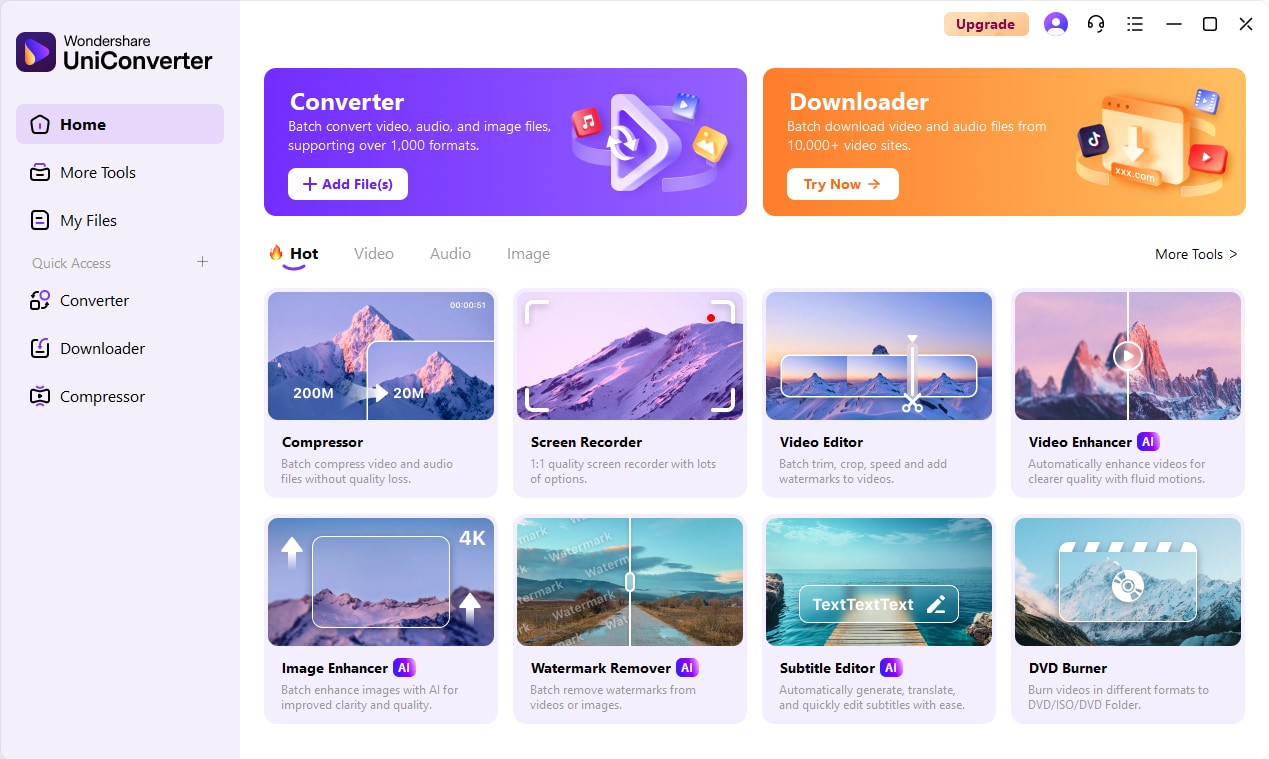
When other tools fall short with batch processing, stability issues, or quality loss during conversion, UniConverter emerges as a robust alternative. It offers a comprehensive, ad-free solution with extensive format support, GPU acceleration for speed, and lossless conversion, making it an ultimate all-in-one media toolkit.
Step 1: Open UniConverter and Choose Converter
Launch UniConverter on your computer. From the main interface, select the "Converter" tab to access the video and audio conversion functions.
Step 2: Upload the Video, Audios or Images
Drag and drop your desired video or audio files directly into the UniConverter window. Alternatively, click the "Add Files" button to browse and select files from your local storage.

Step 3: Choose Required Formats or Parameters
At the bottom of the interface, select your desired output format (e.g., MP4, MOV, MP3) and resolution. You can also customize advanced parameters like bitrate, frame rate, and encoder settings to convert your media.

Step 4: Save the Converted File
Click the "Convert" or "Start All" button to begin the conversion process. Once completed, you can find your converted files in the designated output folder, ready for use.


High Efficient Tool to Batch Convert Media
Part 7: Conclusion
In conclusion, the TunePat Video Converter review reveals a specialized tool highly effective for a specific niche: users dedicated to downloading and archiving content from major streaming services for offline viewing. Its strength lies in its ability to bypass DRM and deliver high-quality video, making it an excellent choice for offline entertainment enthusiasts and those seeking to build a personal media library. However, its limitations in output formats and potential DRM-related issues mean it might not be the ultimate solution for everyone. For users requiring broad format support, advanced editing capabilities, or a more comprehensive media toolkit, alternatives like UniConverter offer a more versatile and robust experience. Budget-conscious consumers might find free options or more basic converters sufficient, while professional video editors will need more sophisticated software. Ultimately, the best choice depends on individual needs, priorities, and the specific usage scenarios a user intends to address.
Part 8: FAQs
-
1. Is TunePat Video Converter legal to use?
The legality of using TunePat Video Converter to download DRM-protected content varies by region and is often a gray area. While personal use for archiving might be tolerated, distributing or sharing downloaded content is generally illegal and violates copyright laws. Users should be aware of their local regulations. -
2. Can TunePat Video Converter download 4K videos?
TunePat Video Converter typically supports downloading videos up to 1080p resolution. While some streaming services offer 4K content, the software's ability to download in 4K might be limited or dependent on specific service compatibility and ongoing updates. -
3. What streaming services does TunePat Video Converter support?
TunePat Video Converter supports a wide range of popular streaming services, including but not limited to Netflix, Amazon Prime Video, Hulu, Disney+, HBO Max, and more. The exact list can vary and is subject to change based on updates and DRM protocol adjustments. -
4. How does TunePat Video Converter handle DRM protection?
TunePat Video Converter employs proprietary technology to bypass the Digital Rights Management (DRM) encryption used by streaming services. This allows it to decrypt and download videos for offline playback. However, due to constant updates from streaming providers, its DRM handling capabilities require regular software updates to remain effective. -
5. Is there a free trial available for TunePat Video Converter?
Yes, TunePat Video Converter usually offers a free trial version. This trial typically allows users to download a limited number of videos or a portion of a video (e.g., the first few minutes) to test its functionality and compatibility before committing to a purchase.
