
- Online converters offer convenience for quick, one-off audio tasks, accessible anywhere without installation.
- However, desktop software like UniConverter excels for batch processing, large files, and advanced features.
- Online tools pose privacy risks and quality concerns; desktop alternatives provide greater security and control.
- Choose online for casual, infrequent conversions; opt for desktop for professional, secure, and high-quality needs.
In this article
- Part 1: What is an Online Audio Converter?
- Part 2: Online Audio Converter: Core Features, Pros, and Cons
- Part 3: Online Audio Converter: Ideal Users and Use Cases
- Part 4: Online Audio Converter vs. Competitors
- Part 5: Risks and Pitfalls of Using Online Audio Converters
- Part 6: How to Use UniConverter for Efficient Audio/Video Conversion
- Part 7: Conclusion
- Part 8: FAQs
Online Audio Converter review: Your Go-To for Quick Audio Transformations?
In today's fast-paced digital world, the need for quick and efficient audio file manipulation is ever-present. From converting a downloaded podcast to a more portable format for your car to extracting an audio track from a video for a presentation, online audio converter review tools have emerged as a popular solution. These web-based utilities promise convenience, accessibility, and often, a cost-free experience. This review delves into the functionality, advantages, and limitations of online audio converters, comparing them with more robust desktop alternatives to help you make an informed decision about the best tool for your specific audio conversion needs.
Part 1: What is an Online Audio Converter?
An online audio converter is a web-based application that allows users to convert audio files from one format to another directly through a web browser. Unlike traditional desktop software, these tools require no installation, making them accessible from any device with an internet connection. They typically support a wide array of audio formats, enabling users to transform files like MP3, WAV, FLAC, AAC, and OGG with relative ease. The primary appeal lies in their immediate availability and user-friendly interfaces, often designed for quick, straightforward conversions without technical jargon.
The Rise of Web-Based Audio Tools
The proliferation of online audio tools can be attributed to several factors:
* Growing demand for instant solutions: Users increasingly seek immediate gratification for digital tasks.
* Device independence: The ability to convert files on the go, regardless of the operating system or device.
* Reduced software clutter: Avoiding the need to install and maintain dedicated applications.
* Accessibility for casual users: Simplifying complex audio tasks for those without technical expertise.
Part 2: Online Audio Converter: Core Features, Pros, and Cons
Online audio converters offer a streamlined approach to audio file manipulation. Their core capabilities typically revolve around format conversion, often including basic editing options like trimming or volume adjustment.
Core Features:
* Format Conversion: Support for a wide range of input and output audio formats (e.g., MP3, WAV, FLAC, AAC, OGG).
* Bitrate and Sample Rate Adjustment: Options to modify audio quality settings.
* Basic Editing: Some tools offer simple trimming or cutting functionalities.
* Cloud Integration: A few advanced online converters allow direct import/export from cloud storage services.
* User-Friendly Interface: Designed for ease of use, often with drag-and-drop functionality.
Pros:
* Accessibility and Convenience: Convert from any device with an internet connection.
* No Software Installation: Saves disk space and avoids compatibility issues.
* Wide Format Support: Handles a broad range of input and output audio formats.
Cons:
* Internet Dependency: Requires a stable internet connection for all operations.
* Security and Privacy Concerns: Uploading sensitive audio files can be risky.
Part 3: Online Audio Converter: Ideal Users and Use Cases
Online audio converters are best suited for individuals who need quick, infrequent audio conversions without the commitment of installing dedicated software. They cater to a specific set of users and scenarios where convenience outweighs advanced features or stringent security requirements.
Best Use Case: Quick, One-Off Conversions for Casual Users
Imagine you've downloaded an audio lecture in an obscure format that your old MP3 player doesn't support. An online audio converter allows you to quickly upload the file, convert it to MP3, and download it, all within a few minutes, without needing to install any software. This is perfect for students, occasional podcast listeners, or anyone needing a rapid format change for personal use.
Limited Use Case: Batch Processing and High-Fidelity Audio Editing
Consider a music producer who needs to convert hundreds of WAV files to FLAC for archival purposes, ensuring no quality loss, and then apply specific metadata to each file. An online converter would be highly inefficient due to file size limits, slow upload/download speeds, lack of batch processing, and absence of advanced metadata editing or quality control features. For such tasks, a robust desktop application is indispensable.
Part 4: Online Audio Converter vs. Competitors
When evaluating audio conversion tools, it's crucial to compare the simplicity of online converters with the power and reliability of desktop software.
| Feature/Product | Online Audio Converter | UniConverter | Audacity | FFmpeg |
| Ease of Use | Very High | High | Medium | Low |
| Privacy | Moderate | High | High | High |
| Batch Conversion | Limited | Yes | Yes | Yes |
| Offline Access | No | Yes | Yes | Yes |
| Advanced Features | Basic | Advanced | Advanced | Expert |
| Processing Speed | Internet Dependent | Fast (GPU Accelerated) | Moderate | Fast (Command Line) |
| Output Quality | Variable | High (Lossless options) | High | High (Lossless options) |
Online Audio Converters excel in ease of use, making them ideal for quick, simple tasks. However, for users prioritizing privacy, batch processing, offline access, or advanced features, desktop applications like UniConverter, Audacity, or FFmpeg offer superior capabilities. UniConverter stands out for its balance of user-friendliness and powerful features, including GPU acceleration for faster processing. Audacity is a strong contender for free, open-source audio editing and conversion, while FFmpeg is the go-to for command-line power users who need ultimate control and flexibility.
Part 5: Risks and Pitfalls of Using Online Audio Converters
While convenient, relying solely on online audio converters comes with several inherent risks and limitations that users should be aware of.
Data Privacy and Security Concerns
Uploading sensitive or proprietary audio files to an unknown online service can pose significant privacy risks. There's no guarantee how your data will be stored, processed, or if it might be accessed by third parties. Malicious sites could even embed malware in downloaded files.
Intrusive Advertisements and Pop-ups
Many free online converters rely on advertising revenue, leading to an onslaught of intrusive ads, pop-ups, and redirects that can severely degrade the user experience and potentially lead to accidental clicks on malicious content.
File Size Limitations
Most free online audio converters impose strict limits on file size or duration. This makes them impractical for converting large audio files, high-quality tracks, or lengthy recordings, often requiring users to upgrade to a paid version or seek alternative solutions.
Potential for Quality Degradation
The conversion process on some online platforms might not be optimized, leading to a noticeable drop in audio quality, especially if the service uses aggressive compression algorithms to save bandwidth or processing power. Users may not have fine-grained control over output settings.
Lack of Offline Functionality
The absolute reliance on an internet connection means that if you're in an area with poor or no connectivity, or if the service's servers are down, you simply cannot convert your audio files. This lack of offline capability can be a major drawback for professionals or frequent users.
Part 6: How to Use UniConverter for Efficient Audio/Video Conversion
When online tools fall short due to batch processing limitations, instability, or quality loss, UniConverter emerges as a robust and reliable desktop solution. It bypasses the common pitfalls of online converters, offering a comprehensive suite of features for seamless audio and video conversion. UniConverter provides a clean, ad-free experience, supports a vast array of formats, leverages GPU acceleration for lightning-fast conversions, ensures lossless quality, and handles batch processing with ease. It's an all-in-one ultimate solution for all your media conversion needs.
Step 1: Open UniConverter and Choose Converter
Launch UniConverter on your computer. From the main interface, navigate to the "Converter" tab.
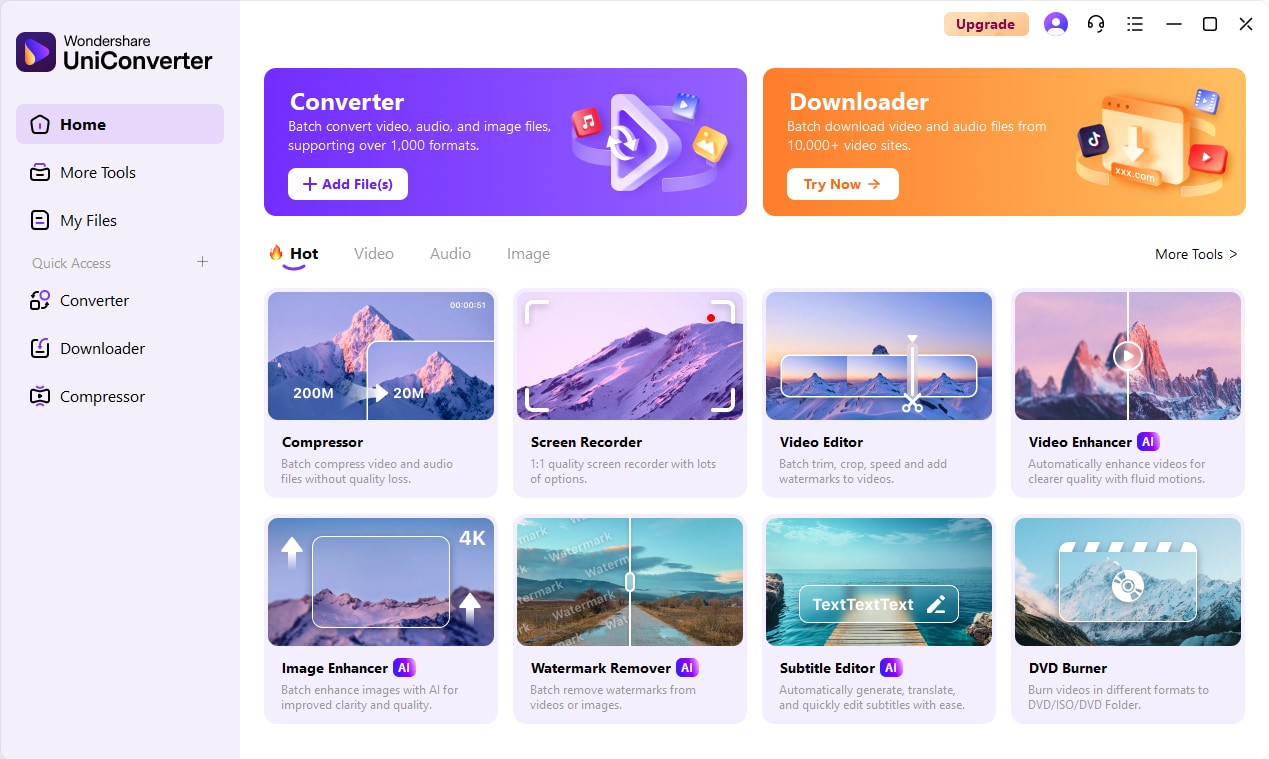
Step 2: Upload the Video, Audios or Images
Drag and drop your audio files directly into the UniConverter window. You can also click "Add Files" to browse and select your audio.

Step 3: Choose Required Formats or Parameters
At the bottom of the window, click on "Output Format" and select your desired audio format (e.g., MP3, WAV, FLAC) and quality settings. UniConverter can convert MP3 and many other audio formats.

Step 4: Save the Converted File
Click the "Convert" or "Start All" button to begin the conversion process. Once completed, you can find your converted files in the specified output folder. For example, you can easily convert MOV to MP4 with this tool.


Seeking a Better Online Audio Converter Alternative?
Part 7: Conclusion
The landscape of audio conversion tools offers a spectrum of options, from the immediate convenience of online audio converter review platforms to the robust capabilities of desktop software. For casual users needing a quick, one-off conversion of a single file, an online audio converter can be an adequate solution, leveraging its accessibility and no-installation benefit. However, for professionals, regular users, or anyone prioritizing data privacy, batch processing, high-fidelity output, and advanced features, desktop applications like UniConverter are unequivocally superior. These dedicated tools offer greater control, faster processing, enhanced security, and the ability to work offline, mitigating the risks associated with internet dependency and potential data breaches. Ultimately, the best choice hinges on understanding your specific needs, balancing the allure of convenience with the demands of reliability, quality, and security.
Part 8: FAQs
-
1. Are online audio converters safe to use?
It depends on the specific converter. Some are reputable and prioritize user data, while others may pose privacy risks or expose users to intrusive ads and potential malware. Always use well-known and trusted services.
-
2. Can I convert multiple audio files at once with an online converter?
Most free online converters have significant limitations on batch processing, often only allowing one file at a time or imposing strict file count/size limits. For efficient batch conversions, desktop software is usually required.
-
3. Do online audio converters reduce audio quality?
Some may, especially if you choose lower quality settings, if the conversion process is not optimized, or if the service uses aggressive compression. Desktop software generally offers more control over output settings to preserve quality.
-
4. What's the main advantage of using an online audio converter over desktop software?
The primary advantage is convenience and accessibility. There's no software to install, and you can convert files from any device with an internet connection.
-
5. When should I consider using desktop audio conversion software instead of an online tool?
You should consider desktop software for large files, frequent batch conversions, if you have privacy concerns about uploading sensitive audio, or if you require advanced editing features, higher conversion speeds, or guaranteed lossless quality.
