
- MediaCoder Review: Deep dive into MediaCoder's features, strengths, weaknesses, and comparisons with alternatives.
- Target Audience: MediaCoder suits advanced users and archivists needing granular control over obscure formats.
- Key Strengths: Unparalleled codec/format support, advanced customization, and efficient batch processing for complex tasks.
- Major Weaknesses: Steep learning curve, outdated UI, potential instability, and risk of bundled software.
- Comparison Insights: MediaCoder offers unmatched control, while HandBrake balances features, and UniConverter prioritizes user-friendliness.
- UniConverter Advantage: Offers a user-friendly, stable, and efficient solution for diverse video and audio conversion needs.
- Decision Guide: Choose MediaCoder for niche, legacy conversions; UniConverter for ease, speed, and modern features.
In this article
- Part 1: What is MediaCoder
- Part 2: MediaCoder: Core Features, Strengths, and Weaknesses
- Part 3: Target Users and Usage Scenarios
- Part 4: MediaCoder and Alternatives Comparison
- Part 5: Potential Pitfalls and Considerations When Using MediaCoder
- Part 6: How to Use UniConverter for Efficient Video and Audio Conversion
- Part 7: Conclusion
- Part 8: FAQs
In this MediaCoder review, we delve deep into one of the most powerful yet often overlooked video transcoding tools available. This comprehensive analysis will explore MediaCoder's intricate features, assess its strengths and weaknesses, and compare it against leading competitors like HandBrake, FFmpeg, and UniConverter. Our goal is to provide a clear, scenario-based evaluation to help both advanced users and everyday consumers make informed decisions about their video conversion needs, navigating the complexities of format support, quality trade-offs, and user experience.
Part 1: What is MediaCoder
MediaCoder is a free universal batch media transcoder that integrates various excellent audio/video codecs and tools into an all-in-one solution. Launched in 2005, it has long been a go-to for users requiring highly customizable and flexible media conversion. Unlike many contemporary tools that prioritize simplicity, MediaCoder offers granular control over almost every aspect of the transcoding process, from codec selection and bitrates to frame rates and audio channels. This review aims to dissect its capabilities, identify its ideal user base, and benchmark its performance against both open-source powerhouses and user-friendly commercial alternatives. We will address the core question of whether MediaCoder, despite its age, still holds a significant place in the evolving landscape of video conversion.
The Evolving Landscape of Video Conversion Tools
* Proliferation of Devices and Formats: The sheer variety of devices (smartphones, tablets, smart TVs) and their preferred media formats necessitates robust conversion tools.
* Demand for High-Quality and Efficiency: Users increasingly seek conversions that maintain high visual and audio fidelity while optimizing file size and processing speed.
* Balancing Power with Usability: The market sees a constant tension between highly technical, feature-rich tools and intuitive, easy-to-use applications.
Part 2: MediaCoder: Core Features, Strengths, and Weaknesses
MediaCoder stands out for its comprehensive approach to media transcoding, offering a vast array of options that cater to highly specific requirements. Its core strength lies in its ability to handle almost any media format, making it a powerful tool for complex conversion tasks.
Core Capabilities:
* Extensive Codec Support: Supports a wide range of audio and video codecs, including H.264, H.265, VP8, VP9, MP3, AAC, FLAC, and more.
* Format Versatility: Capable of converting between numerous container formats like MP4, MKV, AVI, MOV, FLV, WebM, and even legacy formats.
* Advanced Parameter Control: Offers detailed settings for video and audio parameters, including bitrate, resolution, frame rate, aspect ratio, and audio channels.
* Hardware Acceleration: Supports various hardware acceleration technologies (e.g., Intel Quick Sync, NVIDIA CUDA) to speed up encoding.
* Batch Processing: Efficiently handles multiple files or entire folders for conversion in a single queue.
Pros:
* Extensive Codec and Format Support for Niche Requirements: Unparalleled compatibility with obscure and legacy media types.
* Advanced Customization Options for Professional Users: Provides deep control over encoding parameters, suitable for experts.
* Batch Processing Capabilities for Efficiency: Streamlines workflows for large volumes of media files.
Cons:
* Steep Learning Curve for Beginners: The overwhelming number of options can be intimidating and confusing.
* Outdated User Interface and Occasional Stability Issues: The UI feels archaic, and the software can sometimes be prone to crashes.
Part 3: Target Users and Usage Scenarios
MediaCoder, with its intricate controls and broad format support, is not designed for the casual user looking for a quick drag-and-drop solution. Instead, it targets a specific demographic that values power and flexibility over simplicity.
Best Use Case: Archiving and Converting Legacy Media Formats
MediaCoder excels when dealing with older, less common, or even damaged media files. For archivists, media enthusiasts, or professionals working with historical footage, MediaCoder's extensive codec library and fine-grained control allow for the successful conversion of formats that other software might fail to recognize or process correctly. For instance, converting old AVI files with obscure codecs to modern, universally playable MP4s, or extracting audio from rare video formats, are tasks where MediaCoder truly shines. Its ability to tweak every parameter ensures optimal quality and compatibility for preserving digital heritage.
Limited Use Case: Quick, User-Friendly Conversions for Everyday Users
For someone who simply wants to convert a video from MP4 to MOV for a specific device, or resize a video for email, MediaCoder presents an unnecessarily complex barrier. The interface is not intuitive, and navigating its myriad settings to achieve a basic conversion can be frustrating and time-consuming. Users seeking a straightforward, "set-and-forget" conversion experience will find MediaCoder cumbersome and overwhelming, often leading to suboptimal results due to incorrect settings selection.
Part 4: MediaCoder and Alternatives Comparison
Understanding where MediaCoder stands in the competitive landscape requires a direct comparison with other prominent tools.
| Feature/Product | MediaCoder | HandBrake | FFmpeg | UniConverter |
| Ease of Use | Low | Medium | Very Low | High |
| Format Support | Excellent | Good | Excellent | Excellent |
| Advanced Settings | Excellent | Good | Excellent | Good |
| Batch Processing | Yes | Yes | Yes | Yes |
| UI/UX | Poor | Good | N/A (CLI) | Excellent |
| Price | Free (Donation) | Free | Free | Paid |
| Processing Speed | Good (with HW accel) | Very Good (with HW accel) | Excellent (CLI optimized) | Excellent (GPU accel) |
| Output Quality | Excellent (user-dependent) | Very Good | Excellent (user-dependent) | Excellent |
| Customer Support | Community | Community | Community | Dedicated |
| Security | User vigilance | Good | Good | Excellent |
Key Differentiators: When to Choose MediaCoder Over Others
MediaCoder differentiates itself primarily through its unparalleled depth of customization and support for a vast array of niche and legacy codecs. While FFmpeg offers similar power, its command-line interface makes it inaccessible to many. HandBrake is a fantastic choice for common video formats and device presets, offering a good balance of features and usability. UniConverter excels in its user-friendliness, modern UI, and comprehensive feature set for everyday users, including additional tools beyond just conversion. Choose MediaCoder when you need to convert an obscure file format, require extremely fine-tuned control over every encoding parameter, or are dealing with challenging legacy media that other tools simply cannot handle. For general-purpose, quick, and high-quality conversions, HandBrake or UniConverter are often superior choices.
Part 5: Potential Pitfalls and Considerations When Using MediaCoder
While MediaCoder offers immense power, its complexity and age introduce several potential pitfalls that users, especially novices, should be aware of. Navigating these challenges is crucial for a successful and secure transcoding experience.
Navigating Complex Settings and Potential for User Error
The sheer volume of options in MediaCoder can be overwhelming. Incorrectly configured settings, such as choosing the wrong codec, bitrate, or profile, can lead to corrupted files, poor output quality, or significantly increased conversion times. Users must possess a solid understanding of video and audio encoding principles to effectively utilize MediaCoder's advanced features, otherwise, they risk wasting time and resources on failed conversions.
Understanding Output Quality vs. File Size Trade-offs
MediaCoder provides extensive control over compression, which directly impacts the balance between output quality and file size. Without proper knowledge, users might inadvertently choose settings that result in excessively large files with minimal quality gain, or overly compressed files with noticeable artifacts. Achieving the optimal balance requires experimentation and an understanding of how different parameters affect the final output.
Dealing with Outdated Documentation and Community Support
Given MediaCoder's long history and less active development compared to some alternatives, its official documentation can be outdated or incomplete. Community support, while present, might not be as vibrant or responsive as for more popular tools. This can make troubleshooting difficult when encountering errors or seeking guidance on complex configurations.
Potential for Adware/Bundled Software During Installation
As a free software, MediaCoder has historically been associated with bundled adware or unwanted software during its installation process, particularly from third-party download sites. Users must exercise extreme caution during installation, carefully reading each prompt and deselecting any optional software to avoid inadvertently installing bloatware or potentially malicious programs. Always download from the official source and be vigilant.
Part 6: How to Use UniConverter for Efficient Video and Audio Conversion
When other tools fall short due to a lack of batch processing, unstable conversions, or significant quality loss, UniConverter emerges as a robust and user-friendly solution. It avoids the complexities and potential pitfalls of tools like MediaCoder, offering a seamless experience with powerful features. UniConverter is an all-in-one video toolbox that provides ad-free, rich format support, GPU acceleration for fast conversions, stable and lossless processing, and efficient batch conversion capabilities, making it an ultimate solution for all your media needs.
Step 1: Open UniConverter and Choose Converter
Launch UniConverter on your computer. From the main interface, select the "Converter" tab to access the video conversion module. This is your starting point for all video and audio transformations.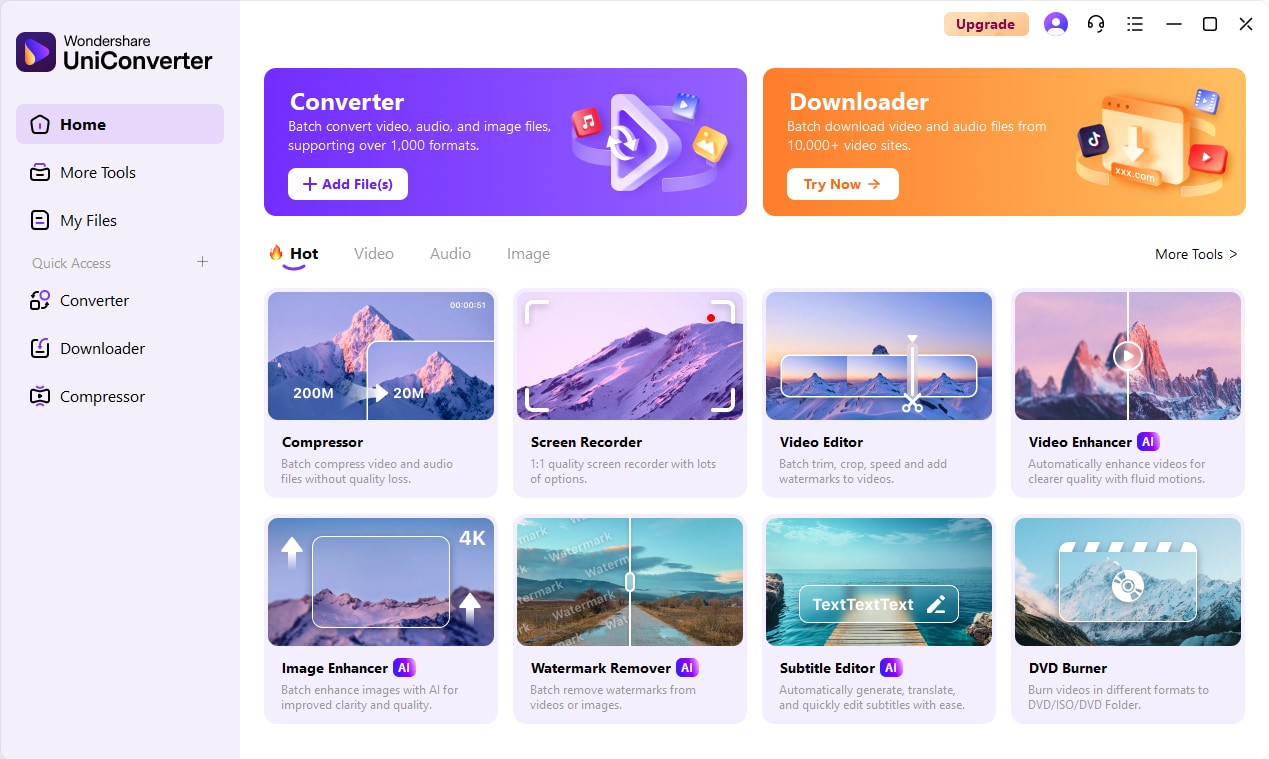
Step 2: Upload the Video, Audios or Images
Click on the "Add Files" button or simply drag and drop your video, audio, or image files into the program window. UniConverter supports a vast array of input formats, ensuring compatibility with almost any media you have.
Step 3: Choose Required Formats or Parameters
At the bottom of the interface, click on the "Output Format" dropdown menu. Select your desired output format (e.g., MP4, MOV, MP3) and choose a preset or customize parameters like resolution, bitrate, and encoder. For instance, you can easily convert MOV to MP4 or convert MP4 to MP3 with just a few clicks.
Step 4: Save the Converted File
Once your settings are finalized, click the "Convert" or "Start All" button. UniConverter will process your files quickly, leveraging GPU acceleration. After conversion, you can find your optimized files in the "Finished" tab.

Unlock Your Media's Full Potential
Part 7: Conclusion
This MediaCoder review has highlighted its unique position as a powerful, highly customizable, yet complex media transcoder. For advanced users, archivists, or those dealing with obscure and legacy media formats, MediaCoder's unparalleled control and extensive codec support make it an invaluable tool. It allows for meticulous adjustments to ensure optimal quality and compatibility, a feature often lacking in more streamlined alternatives. However, its steep learning curve, outdated interface, and potential for instability or bundled software make it less suitable for beginners or everyday users seeking quick, hassle-free conversions. For these users, solutions like HandBrake offer a better balance of features and usability, while UniConverter provides a premium, intuitive experience with comprehensive capabilities and dedicated support, effectively mitigating the risks and complexities associated with MediaCoder. Ultimately, the choice depends on the user's technical proficiency, specific conversion needs, and willingness to navigate a more challenging interface versus prioritizing ease of use and modern features.
Part 8: FAQs
1. Is MediaCoder still actively developed?
While MediaCoder receives occasional updates, its development pace is significantly slower compared to more popular open-source projects or commercial software. Users might find newer codecs or features are not integrated as quickly.
2. What are the best alternatives to MediaCoder for Mac users?
For Mac users, HandBrake is an excellent free alternative for video transcoding. For a more comprehensive and user-friendly experience, UniConverter is a top-tier paid option that offers a wide range of features beyond just conversion.
3. Can MediaCoder convert videos for mobile devices?
Yes, MediaCoder can convert videos for mobile devices by allowing users to manually configure output settings to match device specifications. However, it lacks the convenient device-specific presets found in tools like HandBrake or UniConverter, requiring users to know their device's preferred formats and resolutions.
4. How does MediaCoder handle DRM-protected content?
MediaCoder, like most legitimate video conversion software, does not officially support the conversion of DRM-protected content. Attempting to convert such files will typically result in errors or incomplete conversions due to copyright protection measures.
5. Is MediaCoder safe to download and use?
When downloaded from its official source, MediaCoder itself is generally safe. However, users must be extremely cautious during installation to deselect any bundled third-party software or adware that might be offered, especially if downloading from unofficial mirrors or download sites.
