
- iFFmpeg Value: Powerful macOS-based video converter, leveraging FFmpeg for granular control over media manipulation.
- Ideal Users: Best for professional video editors and content creators needing precise control and extensive format support.
- Comparison: iFFmpeg excels in advanced settings; UniConverter offers superior user-friendliness and speed with GPU acceleration.
- Decision Factor: Choose iFFmpeg for complex, professional macOS workflows; UniConverter for balanced features, ease of use, and speed across platforms.
- Risks: iFFmpeg has a steep learning curve and can be resource-intensive; consider simpler tools for casual use.
- UniConverter Advantage: Provides efficient, user-friendly conversion with GPU acceleration, extensive format support, and lossless quality.
In this article
iFFmpeg Review: A Comprehensive Scenario-Based Comparison
In the dynamic world of digital media, video conversion tools are indispensable for professionals and enthusiasts alike. From optimizing footage for various platforms to ensuring compatibility across devices, the ability to efficiently transcode media files is paramount. This iFFmpeg review delves into one such powerful tool, iFFmpeg, examining its capabilities, strengths, and weaknesses within the broader video conversion landscape. We will explore its core features, identify its ideal users, and conduct a detailed comparison against key competitors, including UniConverter, HandBrake, and FFmpeg command-line. This analysis aims to provide a clear understanding of where iFFmpeg stands, helping users make informed decisions based on their specific needs and technical proficiency.
Part 1: What is iFFmpeg?
iFFmpeg is a robust macOS-based video and audio converter that leverages the power of FFmpeg, the industry-standard multimedia framework. It provides a graphical user interface (GUI) for FFmpeg, making the complex command-line operations accessible to a wider audience. Designed for comprehensive media manipulation, iFFmpeg allows users to convert, merge, extract, and process a vast array of video and audio formats. Its strength lies in offering granular control over conversion parameters, catering to both basic and highly specialized transcoding tasks. This review aims to dissect iFFmpeg's performance, usability, and value proposition in a crowded market, addressing the critical need for reliable and efficient media conversion solutions.
iFFmpeg in the Video Conversion Landscape
The demand for versatile video conversion tools is driven by several factors:
* Proliferation of Devices and Platforms: Content needs to be optimized for smartphones, tablets, smart TVs, and various social media platforms, each with unique format and resolution requirements.
* Professional Workflow Demands: Video editors and content creators require precise control over codecs, bitrates, and other settings to maintain quality and meet delivery specifications.
* Archiving and Compatibility: Users often need to convert older or obscure formats to modern, universally compatible ones for long-term storage and playback.
* Efficiency and Automation: The ability to batch process multiple files and automate complex conversion tasks saves significant time and effort.
Part 2: iFFmpeg: Core Features, Pros, and Cons
iFFmpeg distinguishes itself with a rich feature set built upon the powerful FFmpeg engine, offering extensive control over video and audio conversion processes. Its core capabilities include support for an unparalleled number of codecs and containers, advanced parameter adjustments, and a user-friendly interface that simplifies complex operations.
* Comprehensive Format Support: Converts virtually any video or audio format.
* Advanced Codec and Encoding Settings: Fine-tune parameters like bitrate, frame rate, resolution, and aspect ratio.
* Batch Processing: Convert multiple files simultaneously with individual settings.
* Video Editing Capabilities: Trim, crop, rotate, and add watermarks.
* Subtitle and Audio Track Management: Embed, extract, or burn in subtitles and manage multiple audio tracks.
Pros:
- Extensive Format Support for Diverse Needs: iFFmpeg's ability to handle almost any video or audio format makes it an invaluable tool for professionals dealing with varied source materials.
- Advanced Customization for Professional Workflows: The granular control over encoding parameters allows for precise output tailored to specific project requirements, from broadcast standards to web optimization.
- Intuitive User Interface for Quick Conversions: Despite its complexity under the hood, iFFmpeg presents a clean and logical GUI, making common conversion tasks straightforward.
Cons:
- Steep Learning Curve for Beginners: The sheer number of options and settings can be overwhelming for users new to video conversion concepts.
- Resource-Intensive Operations on Older Hardware: High-quality conversions, especially for 4K or 8K content, can demand significant CPU and GPU resources, potentially slowing down older machines.
Part 3: iFFmpeg: Ideal Users and Use Cases
iFFmpeg is designed for users who require precision and versatility in their video conversion tasks, often operating in professional or semi-professional environments where quality and format compatibility are critical. Its comprehensive feature set caters to those who need more than just basic transcoding.
Best Use Case: Professional Video Editors and Content Creators
For professional video editors, filmmakers, and content creators, iFFmpeg is an indispensable tool. They frequently encounter diverse media formats from various cameras, editing software, and client specifications. iFFmpeg allows them to:
* Transcode footage for editing: Convert raw camera footage (e.g., ProRes, DNxHD) into more editable proxy formats or optimize it for specific NLEs.
* Prepare deliverables for multiple platforms: Create optimized versions for YouTube, Vimeo, broadcast, or archival purposes, ensuring correct codecs, resolutions, and bitrates.
* Extract audio or video streams: Separate audio tracks for sound mixing or isolate video segments for specific projects.
* Batch process large volumes of files: Efficiently convert entire folders of media, saving significant time in post-production workflows.
Limited Use Case: Casual Users Needing Quick, Simple Conversions
For casual users who only occasionally need to convert a video for playback on a mobile device or to share with friends, iFFmpeg might be overkill. These users typically:
* Prioritize simplicity and speed: They prefer a "set and forget" interface with minimal options.
* Don't require advanced customization: Basic format conversion (e.g., MP4 to MOV) is usually sufficient.
* Are sensitive to cost: They might opt for free, simpler tools or online converters.
* May find the interface daunting: The extensive settings can be confusing and unnecessary for their basic needs.
Part 4: iFFmpeg and Alternatives Comparison
| Feature/Scenario | iFFmpeg | UniConverter | HandBrake | FFmpeg Command-line |
| Batch Processing | Excellent | Excellent | Good | Excellent |
| Advanced Settings | Excellent | Good | Good | Excellent |
| User Friendliness | Fair | Excellent | Fair | Poor |
| Output Quality | Excellent | Excellent | Excellent | Excellent |
| Price | Premium | Mid-Range | Free | Free |
| Processing Speed | Fast | Very Fast | Fast | Very Fast |
| Customer Support | Good | Excellent | Community | Community |
| Security | High | High | High | High |
Key Differentiators:
- iFFmpeg excels in granular control and format versatility, ideal for complex projects, especially on macOS. - UniConverter focuses on ease of use and speed with GPU acceleration, offering a balanced solution for a wider audience across platforms. - HandBrake is a powerful free option for specific video transcoding tasks, particularly for DVD/Blu-ray ripping and H.264/H.265 encoding. - FFmpeg command-line offers ultimate control and flexibility for those comfortable with scripting, but lacks a graphical interface.
Part 5: Risks and Pitfalls to Consider
While powerful, using advanced video conversion tools like iFFmpeg, or even simpler alternatives, comes with potential risks and pitfalls that users should be aware of. Understanding these can help in making informed decisions and avoiding common issues.
Potential for Overwhelm with Advanced Options
The extensive array of settings and parameters in iFFmpeg, while a strength for professionals, can be a significant pitfall for less experienced users. Incorrectly configured settings for codecs, bitrates, frame rates, or audio channels can lead to unexpected results, including:
* Poor output quality: Pixelation, artifacts, or audio distortion.
* Excessively large file sizes: Inefficient encoding leading to bloated files.
* Playback issues: Incompatibility with target devices or software.
* Wasted time: Repeated attempts to find the correct settings.
Performance Issues on Underpowered Systems
Video conversion, especially for high-resolution content (4K, 8K) or complex codecs, is a computationally intensive task. Running iFFmpeg on older or underpowered hardware can lead to:
* Slow conversion times: What should take minutes could take hours.
* System instability: The application or even the entire operating system might become unresponsive or crash.
* Overheating: Prolonged high CPU/GPU usage can cause hardware to overheat, potentially shortening its lifespan.
Licensing and Update Policies
Understanding the licensing model and update policies is crucial, especially for paid software like iFFmpeg. Potential issues include:
* One-time purchase vs. subscription: Unexpected recurring costs if not clearly understood.
* Limited free updates: New features or compatibility updates might require purchasing a new version.
* Compatibility with new OS versions: Delays in updates could leave users unable to run the software on the latest macOS.
Output Quality Consistency with Niche Formats
While iFFmpeg boasts extensive format support, converting very niche or proprietary formats might sometimes yield inconsistent results. This could manifest as:
* Loss of metadata: Important information about the video or audio might not be carried over.
* Subtle visual or audio glitches: Minor imperfections that are hard to detect but degrade the overall quality.
* Incomplete conversions: The software might struggle with certain complex streams, leading to truncated files.
Part 6: How to Convert Efficiently with UniConverter
When other tools struggle with batch processing, stability, or preserving file quality, UniConverter stands out as a powerful and user-friendly alternative. It offers a balanced approach, blending robust features with an intuitive interface, making it an excellent choice for a diverse range of users. UniConverter delivers a seamless, ad-free experience, boasting extensive format support, GPU acceleration for quicker conversions, lossless quality, and efficient batch processing, solidifying its position as an all-in-one multimedia solution. For instance, you can easily convert various video formats. If you need to convert images, UniConverter handles that too. It's also a great tool to convert audio files. Overall, it's considered one of the best file type converter options available.
Step 1: Open UniConverter and Choose Converter
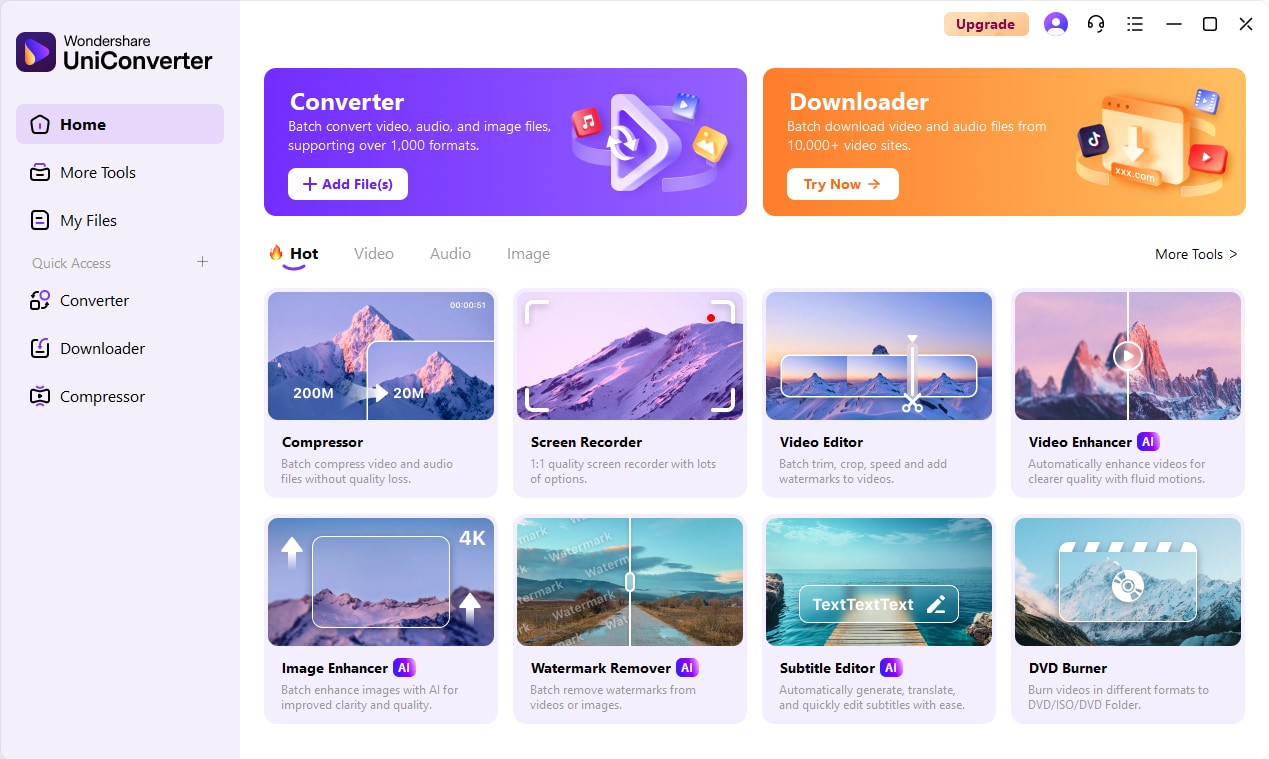
Step 2: Upload the Video, Audios or Images

Step 3: Choose Required Formats or Parameters

Step 4: Save the Converted File


High Efficient Tool to Batch Convert Media
Part 7: Conclusion
This iFFmpeg review has explored the capabilities of iFFmpeg, positioning it as a powerful, feature-rich video conversion tool primarily for macOS users. Its strength lies in extensive format support and granular control, making it a professional choice for complex media workflows. However, its premium price and steep learning curve might deter casual users. For professionals who demand precision and versatility, iFFmpeg remains a top contender, especially when dealing with diverse codecs and specific output requirements. For everyday users or those seeking a more balanced approach with ease of use, faster processing, and broad platform compatibility, alternatives like UniConverter offer a compelling solution. Ultimately, the best choice hinges on individual technical proficiency, specific project demands, and budget considerations. Evaluate your needs carefully, considering the trade-offs between advanced features, user-friendliness, and cost.
Part 8: FAQs
-
1. Is iFFmpeg suitable for beginners?
No, iFFmpeg has a steep learning curve due to its extensive advanced options and settings, which can be overwhelming for beginners. Simpler tools are recommended for casual users. -
2. What are the main advantages of iFFmpeg over free converters?
iFFmpeg offers significantly more control over conversion parameters, supports a wider array of formats and codecs, and provides a more stable and reliable conversion process compared to most free converters, which often lack advanced features and consistent quality. -
3. Can iFFmpeg handle 4K and 8K video conversions?
Yes, iFFmpeg is capable of handling 4K and 8K video conversions. However, these operations are resource-intensive and require powerful hardware for efficient processing and reasonable conversion times. -
4. How does iFFmpeg's batch processing compare to other tools?
iFFmpeg offers excellent batch processing capabilities, allowing users to convert multiple files with individual settings. It is highly efficient, though some competitors like UniConverter might offer faster speeds due to better GPU acceleration. -
5. Is customer support readily available for iFFmpeg users?
iFFmpeg provides decent customer support, typically through email or a support forum. However, it might not be as immediate or comprehensive as the support offered by larger commercial software providers like UniConverter.
