
- Value: Helium Audio Converter excels for casual users needing simple, efficient audio format changes.
- Comparison: UniConverter offers superior speed, advanced features, and stability, ideal for professionals.
- Decision: Choose Helium for basic needs; opt for UniConverter for comprehensive, high-quality media conversion.
- Risks: Be aware of potential adware, privacy concerns, and limited support with free audio conversion tools.
In this article
- Part 1: What is Helium Audio Converter?
- Part 2: Helium Audio Converter: Core Features, Pros, and Cons
- Part 3: Target Users and Usage Scenarios
- Part 4: Helium Audio Converter and Alternatives Comparison
- Part 5: Risks and Pitfalls Analysis
- Part 6: How to Use UniConverter for Efficient Audio and Video Conversion
- Part 7: Conclusion
Helium Audio Converter: Your Go-To for Audio Transformation?
In the vast digital soundscape, the need for efficient and reliable audio conversion tools is paramount. From casual listeners wanting to standardize their music library to content creators preparing audio for various platforms, the demand for versatile converters is constant. This Helium Audio Converter review delves into one such tool, examining its capabilities, limitations, and how it stacks up against its rivals. We'll explore its core features, identify its ideal users, and highlight potential pitfalls, ultimately guiding you toward an informed decision for your audio conversion needs.
Part 1: What is Helium Audio Converter?
Helium Audio Converter emerges as a dedicated software solution designed to facilitate the transformation of audio files from one format to another. Originating from the developers behind the popular Helium Music Manager, it aims to provide a streamlined and user-friendly experience for managing and converting diverse audio collections. This review seeks to address the fundamental question of whether Helium Audio Converter truly delivers on its promise of efficient and high-quality audio conversion, especially in a market saturated with both free and premium alternatives. We will scrutinize its performance, ease of use, and overall value proposition to help users determine if it's the right fit for their specific requirements.
The Audio Conversion Landscape
The digital audio realm presents several challenges that necessitate reliable conversion tools:
* Format Incompatibility: Different devices and software often support varying audio formats, leading to playback issues.
* File Size Management: Lossless formats can be large, requiring conversion to compressed formats for storage or streaming.
* Quality Preservation: Users seek converters that maintain audio fidelity during the conversion process.
* Batch Processing Needs: Efficiently converting multiple files simultaneously is crucial for productivity.
Part 2: Helium Audio Converter: Core Features, Pros, and Cons
Helium Audio Converter positions itself as a straightforward yet powerful tool for managing audio format transitions. Its core capabilities revolve around efficient file processing and broad format compatibility. The software excels in its ability to handle multiple files simultaneously, making it a time-saver for users with extensive audio libraries. It supports a wide array of input and output formats, ensuring flexibility for various devices and platforms. The user interface is designed for simplicity, allowing even novice users to navigate and perform conversions with ease.
Pros
* Batch Conversion Efficiency: Processes multiple files concurrently, significantly reducing conversion time.
* Wide Format Support: Compatible with numerous audio formats, including MP3, WAV, FLAC, OGG, and more.
* Intuitive User Interface: Clean and easy-to-understand design, suitable for users of all technical levels.
Cons
* Limited Advanced Editing Features: Lacks comprehensive audio editing capabilities found in more professional tools.
* Occasional Performance Lags on Large Files: May experience slowdowns when converting exceptionally large or numerous files on less powerful systems.
Part 3: Target Users and Usage Scenarios
Helium Audio Converter is primarily aimed at individuals who require a simple, effective solution for routine audio conversion tasks. Its user-friendly interface and robust batch processing capabilities make it an excellent choice for those who aren't looking for complex audio editing features but rather a reliable way to change file formats.
Best Use Case: Casual Audio Enthusiasts and Small Batch Conversions
This software shines for users who frequently download or collect music in various formats and need to standardize their library for playback on different devices like smartphones, car stereos, or portable media players. It's also ideal for musicians or podcasters who need to convert short audio clips for specific projects without requiring professional-grade editing. For instance, converting a folder of WAV files to MP3 for a road trip playlist is a task Helium Audio Converter handles with ease and efficiency.
Limited Scenario: Professional Audio Engineers and High-Volume Production
For professional audio engineers working on intricate sound design, mastering, or high-volume production, Helium Audio Converter's limitations become apparent. These professionals often require advanced features such as precise bitrate control, sample rate conversion with dithering, multi-channel audio support, and integration with digital audio workstations (DAWs). Furthermore, for studios dealing with hundreds or thousands of large, uncompressed audio files daily, the occasional performance lags on large files could impede workflow significantly. In such demanding environments, tools offering more granular control and guaranteed stability are preferred.
Part 4: Helium Audio Converter and Alternatives Comparison
When evaluating audio converters, it's crucial to consider how Helium Audio Converter stacks up against its competitors in terms of features, performance, and overall value.
| Feature/Product | Helium Audio Converter | UniConverter | Audacity | Freemake Audio Converter |
| Batch Processing | Excellent | Excellent | Fair | Good |
| Format Support | Very Good | Excellent | Good | Very Good |
| UI/UX | Intuitive | Modern | Functional | Intuitive |
| Advanced Editing | Basic | Comprehensive | Comprehensive | Basic |
| Price | Free/Premium | Premium | Free | Free |
| Processing Speed | Good | Excellent (GPU Accelerated) | Moderate | Good |
| Output Quality | High | High (Lossless options) | High | Good |
| Customer Support | Forum/Email | 24/7 Live Chat/Email | Community Forum | |
| Security | Reputable | High | High | Varies (Adware concerns) |
Helium Audio Converter excels in its intuitive interface and solid batch processing for common formats, making it a great choice for everyday users. However, for those needing a more comprehensive solution, UniConverter stands out with its superior format support, advanced editing capabilities, and GPU-accelerated processing, ensuring faster conversions and higher output quality. Audacity, while free and powerful for editing, is less streamlined for pure conversion tasks, especially batch processing. Freemake Audio Converter offers a user-friendly experience but often comes with bundled adware, raising security concerns. For users prioritizing speed, quality, and a full suite of media tools, UniConverter is a strong contender, whereas Helium Audio Converter remains a reliable option for simpler, dedicated audio conversion needs.
Part 5: Risks and Pitfalls Analysis
While Helium Audio Converter offers a convenient solution for audio conversion, users should be aware of potential risks and pitfalls, especially when considering the free versions of such software. These concerns are not unique to Helium Audio Converter but are common across many free or freemium desktop applications.
Data Privacy Concerns
Many free software applications, including some audio converters, might collect anonymized usage data or even more specific information. Users should always review the privacy policy to understand what data is being collected, how it's used, and whether it's shared with third parties. While Helium Audio Converter is generally considered reputable, vigilance is key in the digital age.
Adware/Bundled Software Risk
A significant risk associated with free software is the potential for adware or bundled software. During installation, users might inadvertently agree to install additional programs, toolbars, or browser extensions that can be difficult to remove and may compromise system performance or privacy. Always opt for custom installation if available and carefully deselect any unwanted bundled offers.
Output Quality Consistency
While Helium Audio Converter generally provides good output quality, there can be inconsistencies, particularly when dealing with highly compressed input files or converting to very low bitrates. Users might experience a noticeable drop in audio fidelity, such as artifacts or muddiness, which can be frustrating for those who prioritize sound quality. Testing with a few sample files before large-scale conversions is advisable.
Compatibility Issues with Newer OS Versions
Software, especially free or less frequently updated tools, can sometimes lag in compatibility with the latest operating system versions. Users upgrading their OS might find that Helium Audio Converter experiences glitches, crashes, or simply fails to run. Checking the developer's website for updates or compatibility information before upgrading your OS is a good practice.
Lack of Dedicated Customer Support
Free versions of software typically offer limited or no dedicated customer support. If you encounter a bug, a conversion error, or have a question, you might have to rely on community forums, FAQs, or trial-and-error. For critical tasks, this lack of immediate, expert assistance can be a significant drawback.
Part 6: How to Use UniConverter for Efficient Audio and Video Conversion
When other tools fall short with batch processing, stability issues, or quality loss during conversion, UniConverter stands out as a robust and reliable alternative. It offers a comprehensive solution for all your media conversion needs, ensuring high-quality output without ads, extensive format support, GPU acceleration for speed, and stable, lossless batch conversions. It's truly an all-in-one media powerhouse.
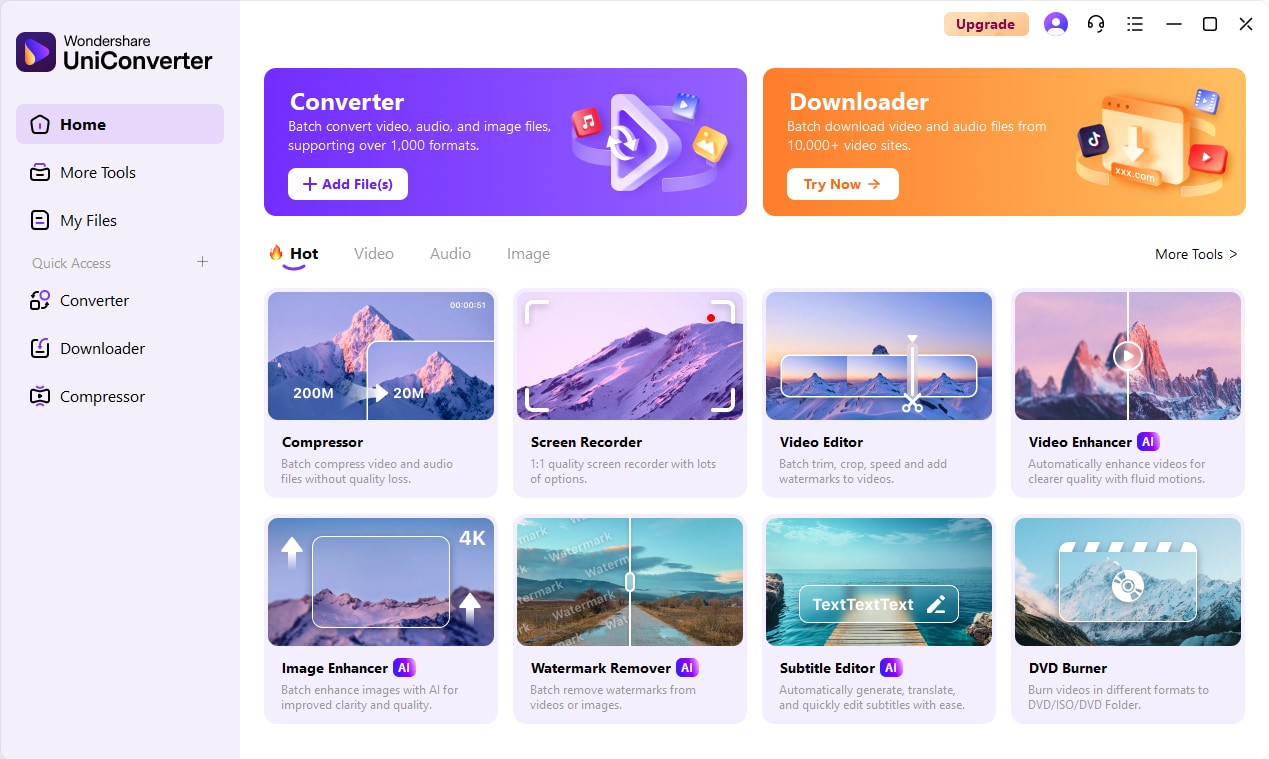
Step 1: Open UniConverter and Choose Converter
Launch UniConverter on your computer. From the main interface, select the "Converter" tab to access the audio and video conversion features.
Step 2: Upload the Video, Audios or Images
Drag and drop your audio files directly into the UniConverter window. You can also click "Add Files" to browse and select multiple audio files from your computer.

Step 3: Choose Required Formats or Parameters
At the bottom of the window, click on the "Output Format" dropdown. Navigate to the "Audio" tab and select your desired output format (e.g., MP3, WAV, FLAC) and quality settings. For instance, you can easily convert M4A to MP3 or convert OGG to MP3.

Step 4: Save the Converted File
Once your settings are configured, click the "Convert" or "Start All" button. UniConverter will process your files efficiently. After conversion, you can find your converted files in the "Finished" tab or the specified output folder. This makes it simple to convert any file type to your desired format.


High Efficient Tool to Batch Convert Media
Part 7: Conclusion
In conclusion, the Helium Audio Converter review reveals a tool that effectively serves its niche as a user-friendly and efficient audio converter, particularly for casual users and those performing small batch conversions. Its intuitive interface and broad format support make it a solid choice for standardizing personal music libraries or preparing audio for basic projects. However, its limitations in advanced editing features and occasional performance lags on very large files mean it falls short for professional audio engineers or high-volume production environments. For beginners and occasional users, Helium Audio Converter offers a free or affordable solution that handles common conversion tasks well. For advanced users and professionals, investing in a more comprehensive tool like UniConverter, which provides superior speed, advanced features, and robust stability, would be a more prudent decision. When considering budget and feature needs, users should weigh the simplicity and cost-effectiveness of Helium Audio Converter against the power and versatility of its premium alternatives to future-proof their audio workflow.
Part 8: FAQs
-
1. Is Helium Audio Converter completely free?
Helium Audio Converter offers a free version with core functionalities and a premium version for advanced features. -
2. Does Helium Audio Converter support video to audio conversion?
While primarily an audio converter, some versions might offer basic video to audio extraction. For robust video conversion, dedicated tools are recommended. -
3. How does Helium Audio Converter handle large audio files?
It can handle large files, but performance may vary, especially on older systems. Batch processing large files might take longer. -
4. Are there any privacy concerns with using Helium Audio Converter?
Users should always review the privacy policy of any software. Some free tools might collect anonymized usage data. -
5. Can I edit audio metadata with Helium Audio Converter?
Basic metadata editing is usually supported, allowing you to modify track information, artist, and album details.
