
- FileConverter: Ideal for quick, basic Windows conversions via right-click, but lacks advanced features.
- Limitations: Struggles with large files, advanced customization, and professional-grade video editing tasks.
- UniConverter: Offers comprehensive features, superior speed (GPU-accelerated), and excellent output quality for diverse needs.
- Alternatives: HandBrake for advanced video (free), FFmpeg for tech-savvy users (command-line), but with steeper learning curves.
- Risks: Be aware of data privacy, unwanted software bundles, quality degradation, and compatibility issues with free tools.
- Decision: Choose FileConverter for simplicity; UniConverter for power, versatility, and reliability; others for specific, advanced use cases.
In this article
- Part 1: What is FileConverter?
- Part 2: FileConverter's Core Performance: Features, Pros, and Cons
- Part 3: FileConverter: Ideal Users and Use Cases
- Part 4: FileConverter and Alternatives: A Side-by-Side Analysis
- Part 5: Risks and Pitfalls to Consider
- Part 6: How to Use UniConverter for Efficient Audio and Video Conversion
- Part 7: Conclusion
- Part 8: FAQs
This FileConverter review delves into the utility and performance of this popular Windows tool, offering a detailed analysis of its features, strengths, and weaknesses. In an era where digital files come in myriad formats, the need for efficient and reliable conversion software is paramount. This review aims to provide users with a clear understanding of where FileConverter stands in the competitive market, helping them make informed decisions based on their specific conversion needs and usage scenarios. We will explore its core functionalities, compare it against leading alternatives, and highlight potential risks, ultimately guiding you to the best solution for your file conversion tasks.
Part 1: What is FileConverter?
FileConverter is a Windows-based utility designed to simplify the process of converting various file types from one format to another. It integrates seamlessly into the Windows Explorer context menu, allowing users to initiate conversions with a simple right-click. This tool primarily targets users who require quick, straightforward conversions without delving into complex settings or professional-grade editing suites. Our review will explore its effectiveness in handling common document, image, and media formats, assessing its speed, output quality, and overall user experience. The core challenge this review addresses is identifying whether FileConverter offers a robust and reliable solution for everyday conversion tasks, especially when compared to more feature-rich or specialized alternatives.
The Landscape of File Conversion Tools
The market for file conversion tools is vast and varied, catering to a wide spectrum of user needs.
* Diverse User Needs: From casual users needing to convert a single image to professionals handling large batches of video files, the demand for conversion tools is high.
* Format Proliferation: The sheer number of file formats constantly evolving necessitates versatile converters that can keep pace.
* Ease of Use vs. Advanced Features: Users often face a trade-off between tools that are simple to use but lack advanced options, and those that offer extensive features but come with a steeper learning curve.
Part 2: FileConverter's Core Performance: Features, Pros, and Cons
FileConverter offers a straightforward approach to file conversion, focusing on accessibility and ease of use for Windows users. Its core capabilities revolve around simplifying the conversion process directly from the desktop environment.
* Context Menu Integration: Right-click functionality for instant conversions.
* Broad Format Support: Handles common document, image, and audio/video formats.
* Batch Processing: Allows multiple files to be converted simultaneously.
* Customizable Output Presets: Basic options for quality and size adjustments.
* Lightweight Installation: Minimal system resource consumption.
Pros:
* Intuitive User Interface for Quick Conversions: The integration into the Windows context menu makes it incredibly easy to use for quick, on-the-fly conversions.
* Broad Support for Common File Formats: It covers a good range of popular formats, making it suitable for most everyday conversion needs.
* Batch Processing for Efficiency: The ability to convert multiple files at once significantly saves time for users with larger conversion tasks.
Cons:
* Limited Advanced Customization Options: Users looking for granular control over conversion parameters (e.g., specific video codecs, bitrate adjustments) will find it lacking.
* Occasional Performance Issues with Large Files: Converting very large video files or high-resolution images can sometimes lead to slower processing times or occasional crashes.
Part 3: FileConverter: Ideal Users and Use Cases
FileConverter is designed with a specific user base and set of scenarios in mind, excelling in some areas while showing limitations in others. Understanding these distinctions is crucial for potential users.
Best Use Case: Everyday Document and Media Conversions for Casual Users
FileConverter shines for individuals who frequently need to perform basic file conversions without requiring complex features or professional-grade output.
* Scenario 1: Converting a PDF to a Word document for editing. A student needs to quickly convert a PDF lecture note into an editable Word file to add their own annotations. FileConverter's right-click functionality makes this a seamless, rapid process.
* Scenario 2: Resizing and converting images for web upload. A small business owner needs to convert several high-resolution product photos to a smaller JPG format for their e-commerce website. The batch processing feature allows them to handle multiple images efficiently.
Limited Use Case: Professional-Grade Video Editing Workflows
While FileConverter handles basic video conversions, it falls short for professionals or enthusiasts engaged in advanced video editing.
* Scenario: Converting 4K footage for a film project. A videographer needs to transcode 4K RAW footage into a specific ProRes format with precise bitrate and color space settings for their editing software. FileConverter lacks the advanced codec support, granular control, and robust performance required for such demanding tasks, potentially leading to quality degradation or unsupported formats.
Part 4: FileConverter and Alternatives: A Side-by-Side Analysis
This section provides a comparative overview of FileConverter against other prominent tools in the market, highlighting their strengths and weaknesses across key dimensions.
| Feature/Scenario | FileConverter | UniConverter | HandBrake | FFmpeg |
| Batch Conversion | Yes | Yes | Yes | Yes |
| Advanced Settings | Basic | Extensive | Extensive | Command-line |
| Cloud Integration | No | Yes | No | No |
| Output Quality | Good | Excellent | Excellent | Excellent |
| Pricing Model | One-time | Subscription | Free (Open Source) | Free (Open Source) |
| Processing Speed | Moderate | Fast (GPU Accel.) | Moderate | Fast (CLI) |
| Ease of Use | High | High | Moderate | Low |
| Customer Support | Limited | Excellent | Community | Community |
Key Differentiators: What Sets Them Apart
FileConverter excels in its simplicity and direct integration into Windows Explorer, making it ideal for quick, basic tasks. UniConverter stands out with its comprehensive feature set, including advanced editing tools, cloud integration, and superior processing speed due to GPU acceleration, catering to users needing more than just conversion. HandBrake is a powerful, free option for video transcoding, offering extensive control over video parameters, though with a steeper learning curve. FFmpeg is the most versatile and powerful, but its command-line interface makes it suitable only for tech-savvy users or developers. UniConverter offers a balanced approach, combining ease of use with professional-grade features and excellent support.
Part 5: Risks and Pitfalls to Consider
When choosing a file conversion tool, especially free or less-known options, it's crucial to be aware of potential risks and pitfalls that can compromise your data, system, or the quality of your output.
Data Privacy and Security Concerns
Many free file converters, particularly online versions, may collect user data or upload files to their servers. This raises significant privacy concerns, especially for sensitive documents. Desktop applications can also pose risks if they are not from reputable sources, potentially containing malware or spyware that could compromise your system. Always verify the source and read privacy policies.
Unwanted Software Bundles and Advertisements
A common tactic for monetizing free software is to bundle it with unwanted programs, toolbars, or browser extensions during installation. These can be difficult to remove, slow down your computer, and even change browser settings without your consent. Excessive in-app advertisements or pop-ups can also severely degrade the user experience and sometimes lead to malicious websites.
Output Quality Degradation
Not all converters are created equal when it comes to maintaining file quality. Some tools, especially those that prioritize speed or small file sizes, may use aggressive compression algorithms that result in noticeable loss of quality in images, videos, or audio. This can manifest as pixelation, artifacts, or muffled sound, making the converted file unsuitable for its intended purpose.
Compatibility Issues with Newer Formats
The digital landscape is constantly evolving, with new file formats and codecs emerging regularly. Older or poorly maintained conversion tools may struggle to support these newer formats, leading to conversion failures or incomplete results. Relying on such tools can leave you unable to process modern files, forcing you to seek alternative solutions.
Lack of Customer Support
For free or less established tools, customer support is often minimal or non-existent. If you encounter issues, bugs, or have questions about the software, you might be left to troubleshoot on your own, relying on community forums or outdated documentation. This can be a significant drawback, especially for users who are not tech-savvy.
Part 6: How to Use UniConverter for Efficient Audio and Video Conversion
When other tools fall short with batch processing, stability, or maintaining file quality, UniConverter emerges as a robust solution. It bypasses common issues like ads, limited format support, and quality loss through its comprehensive features, including GPU acceleration for speed, lossless conversion, and efficient batch processing. UniConverter is positioned as an all-in-one ultimate solution for all your conversion needs.
Step 1: Open UniConverter and Choose Converter
Launch UniConverter on your computer. From the main interface, select the "Converter" tab, which is typically the default view or easily accessible from the left sidebar.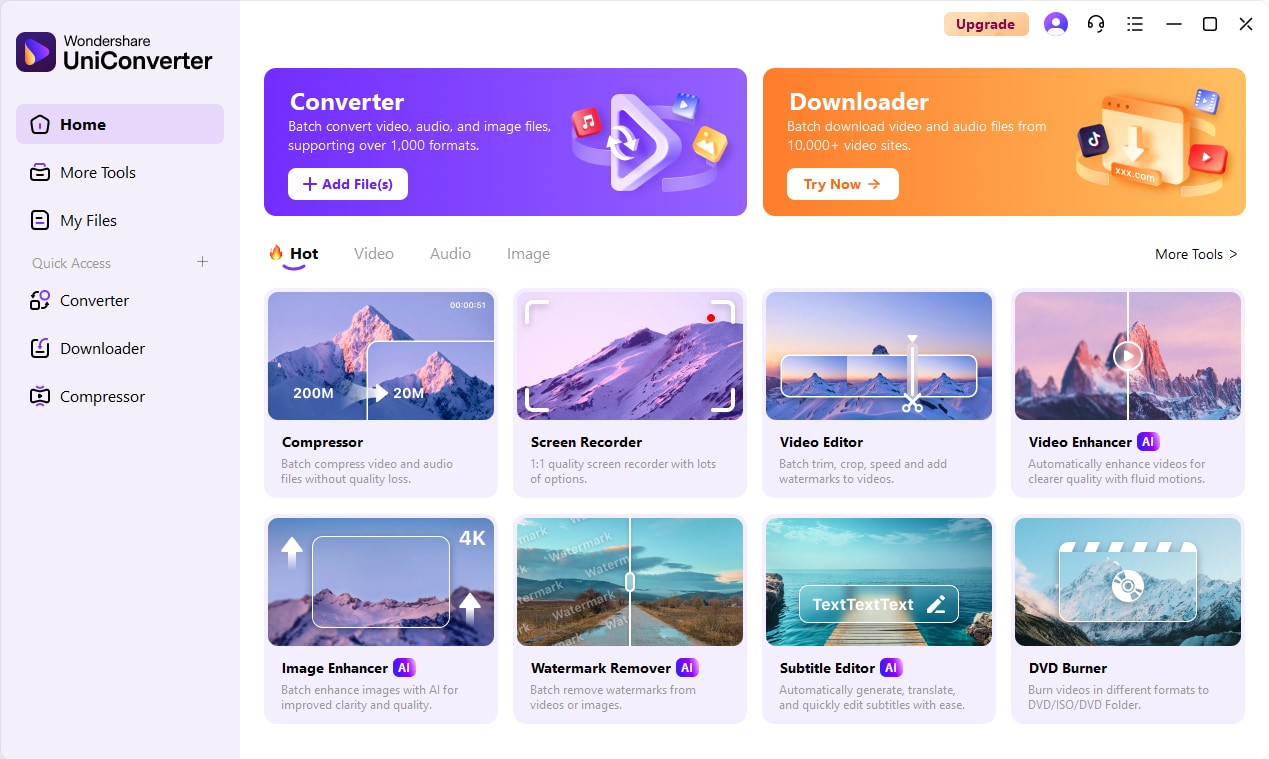
Step 2: Upload the Video, Audios or Images
Drag and drop your desired video, audio, or image files directly into the UniConverter window. Alternatively, click the "Add Files" button to browse and select files from your computer.
Step 3: Choose Required Formats or Parameters
At the bottom of the window, click on the "Output Format" dropdown menu. Select your desired output format (e.g., MP4, MOV, MP3, JPG) and choose your preferred resolution or quality settings. For advanced users, click "Settings" to adjust parameters like bitrate, frame rate, and codec. UniConverter can convert anything to MP4 or handle various image conversions with ease. You can also convert MP3 files to different formats.
Step 4: Save the Converted File
Once all settings are configured, specify the output folder at the bottom of the window. Then, click the "Convert" or "Start All" button to begin the conversion process. UniConverter will quickly process your files, utilizing GPU acceleration for faster results.

Efficiently Convert Video to MP3
Part 7: Conclusion
This FileConverter review has provided an in-depth look at its capabilities, comparing it against several key alternatives in the market. While FileConverter offers a highly accessible and user-friendly experience for basic, everyday conversions, its limitations in advanced features, customization, and performance with large files become apparent when stacked against more robust solutions. For casual users and those needing quick, straightforward conversions of common file types, FileConverter remains a viable and convenient option. However, professionals, content creators, or users with demanding conversion needs—such as high-quality video transcoding, extensive batch processing, or specific codec requirements—would benefit significantly from more comprehensive tools like UniConverter. UniConverter stands out as an all-in-one solution that balances ease of use with powerful features, superior output quality, and excellent customer support, making it a worthwhile investment for those seeking a reliable and versatile converter. Budget-conscious users might consider open-source options like HandBrake or FFmpeg if they are comfortable with a steeper learning curve. Ultimately, the best choice depends on individual needs, technical proficiency, and the specific demands of the conversion tasks at hand.
Part 8: FAQs
1. Is FileConverter safe to use?
FileConverter is generally considered safe for use as it's a desktop application. However, always download it from its official source to avoid bundled malware or unwanted software. Exercise caution with any software that requests excessive permissions.
2. Can FileConverter convert video files to audio?
Yes, FileConverter supports converting video files to audio formats like MP3. You can right-click on a video file, select FileConverter, and then choose an audio output format from the options.
3. Does FileConverter support cloud storage integration?
No, FileConverter does not natively support cloud storage integration. It operates locally on your Windows system, requiring files to be present on your device for conversion. For cloud integration, you would need to use a different tool like UniConverter.
4. What are the main differences between FileConverter and UniConverter?
FileConverter is a lightweight, context-menu integrated tool for basic conversions. UniConverter is a comprehensive multimedia toolkit offering advanced conversion features, video editing, downloading, burning, and cloud integration, with superior performance and broader format support.
5. How do I ensure the best output quality with FileConverter?
To ensure the best output quality with FileConverter, select the highest quality preset available for your chosen output format. For video conversions, avoid aggressive compression settings if available. However, for truly lossless or high-fidelity conversions, a more advanced tool like UniConverter or HandBrake might provide better control and results.
