
- FFmpeg Power: Unparalleled command-line control for advanced multimedia processing and automation.
- Learning Curve: FFmpeg is powerful but has a steep learning curve; GUI alternatives offer easier use.
- Use Cases: Ideal for developers and professionals needing precise, automated workflows; less for casual users.
- Alternatives: HandBrake for easy transcoding, Adobe Media Encoder for pro workflows, DaVinci Resolve for full production.
- Risks: Licensing complexities, potential for corrupted files, performance issues, and security concerns with untrusted inputs.
- UniConverter Value: User-friendly GUI alternative for efficient, stable, and high-quality audio/video conversion and editing.
In this article
- Part 1: What is FFmpeg?
- Part 2: FFmpeg: Core Features, Pros, and Cons
- Part 3: FFmpeg: Ideal Users and Use Cases
- Part 4: FFmpeg and Alternatives: A Comparative Analysis
- Part 5: Risks and Pitfalls When Using FFmpeg
- Part 6: How to Use UniConverter for Efficient Audio and Video Conversion
- Part 7: Final Verdict and Recommendations
- Part 8: FAQs
FFmpeg Review: The Ultimate Video Processing Toolkit
In the vast and complex world of multimedia, processing, converting, and manipulating audio and video files is a constant challenge. From professional studios to individual content creators, the need for robust, flexible, and efficient tools is paramount. This FFmpeg review delves into one of the most powerful and ubiquitous tools in this domain: FFmpeg. This article will explore FFmpeg's core functionalities, its strengths and weaknesses, ideal use cases, and how it stacks up against popular alternatives like HandBrake, Adobe Media Encoder, and DaVinci Resolve. We will also highlight potential risks and offer a user-friendly alternative for those seeking a more streamlined experience.
Part 1: What is FFmpeg?
The Open-Source Standard for Multimedia
FFmpeg is a leading open-source multimedia framework, a comprehensive collection of libraries and programs designed to handle almost any multimedia format. It's the backbone of countless applications, from video players and streaming services to professional editing suites. Born out of the need for a versatile and free solution for multimedia processing, FFmpeg has evolved into an indispensable tool for developers and advanced users. This review aims to provide a detailed analysis of FFmpeg's capabilities, its position in the market, and how it compares to other solutions, helping users make informed decisions based on their specific needs and technical proficiency.
Part 2: FFmpeg: Core Features, Pros, and Cons
FFmpeg's core strength lies in its unparalleled ability to process, convert, stream, and play multimedia files. It supports an astonishing array of codecs and formats, making it a universal translator for digital media. Its command-line interface, while intimidating to newcomers, offers granular control over every aspect of media manipulation, from complex transcoding operations to intricate filtering and effects. This power makes it a favorite among developers and professionals who require precise, automated workflows.
- Core Features:
- Extensive codec and format support (H.264, H.265, VP9, AAC, MP3, etc.)
- High-performance video and audio encoding/decoding
- Advanced filtering and effects capabilities
- Streaming protocols support (RTMP, HLS, DASH)
- Image sequence and GIF creation
- Metadata manipulation
- Pros:
- Unparalleled Versatility and Codec Support: Handles virtually any media format.
- Command-Line Power for Automation and Scripting: Ideal for batch processing and integration into custom workflows.
- Highly Customizable and Extensible: Open-source nature allows for deep customization and community-driven enhancements.
- Cons:
- Steep Learning Curve for Beginners: Requires understanding of command-line syntax and multimedia concepts.
- Lack of a User-Friendly Graphical Interface: Primarily a command-line tool, which can be a barrier for casual users.
Part 3: FFmpeg: Ideal Users and Use Cases
FFmpeg is a tool built for power and precision, catering primarily to users with a strong technical background or those requiring automated, high-volume multimedia processing. Its command-line nature makes it less suitable for casual, one-off tasks where a graphical user interface (GUI) is preferred.
- Best Use Case: Professional Video Production & Development Workflows
- Scenario: A software engineer needs to transcode thousands of video files for a new streaming platform, requiring precise control over codecs, bitrates, and resolutions, all automated via scripts. FFmpeg's scripting capabilities allow for efficient batch processing and integration into continuous integration/continuous deployment (CI/CD) pipelines, ensuring consistent quality and format across a massive media library.
- Limited Use Case: Casual Video Editing for Beginners
- Scenario: A novice user wants to quickly trim a home video and add a simple filter without writing any code or understanding complex command-line parameters. For such a user, FFmpeg would be an overly complex and frustrating experience. A GUI-based video editor or converter would be far more appropriate, offering intuitive drag-and-drop functionality and visual feedback.
Part 4: FFmpeg and Alternatives: A Comparative Analysis
When evaluating multimedia tools, it's crucial to understand how FFmpeg stands against its competitors, each with its own strengths and target audience.
FFmpeg vs. Alternatives: Power, Control, and Usability
| Feature/Product | FFmpeg | HandBrake | Adobe Media Encoder | DaVinci Resolve |
| **Primary Interface** | Command-Line | GUI | GUI | GUI |
| **Codec Support** | Extensive | Good | Excellent | Excellent |
| **Automation** | High (Scripting) | Limited | Moderate (Watch Folders) | Moderate (Macros) |
| **Learning Curve** | Steep | Moderate | Moderate | Steep |
| **Cost** | Free (Open Source) | Free (Open Source) | Subscription | Free/Paid |
| **Processing Speed** | Very Fast (optimized) | Fast | Fast | Fast |
| **Output Quality** | Highly Customizable | High | High | Very High |
| **Customer Support** | Community | Community | Dedicated | Dedicated |
| **Security** | Open Source (community vetted) | Open Source (community vetted) | High | High |
Key Differentiators: Power vs. Usability
FFmpeg excels in scenarios demanding ultimate control and automation. Its command-line interface, while a hurdle for some, is its greatest asset for developers and system administrators. For instance, a developer building a custom video processing pipeline would find FFmpeg indispensable due to its scriptability and vast codec support, allowing for highly optimized and specific outputs.
HandBrake, on the other hand, offers a user-friendly GUI for video transcoding, making it ideal for converting videos for playback on various devices. It's a great choice for users who need good quality conversions without delving into complex command lines.
Adobe Media Encoder, part of the Adobe Creative Cloud suite, is tightly integrated with other Adobe applications like Premiere Pro and After Effects. It shines in professional post-production workflows, offering robust encoding options and watch folder automation for creative professionals. While powerful, its subscription model can be a barrier for independent creators.
DaVinci Resolve, particularly its Studio version, is a comprehensive video editing, color grading, visual effects, and audio post-production suite. While it includes powerful export capabilities, its primary focus is on the entire production workflow rather than just encoding. Its learning curve is steep, similar to FFmpeg, but for different reasons (complex editing features vs. command-line syntax). For high-end cinematic output, Resolve is a strong contender, offering superior output quality and advanced color science.
Part 5: Risks and Pitfalls When Using FFmpeg
While FFmpeg is an incredibly powerful tool, its complexity and command-line nature introduce several potential risks and pitfalls that users, especially beginners, should be aware of.
Understanding Licensing and Patent Implications
FFmpeg incorporates various codecs and libraries, some of which are subject to different licensing agreements (GPL, LGPL) and patent restrictions. Commercial use, especially in proprietary software, may require careful consideration of these licenses to avoid legal issues. Users must understand the implications of using specific codecs and features in their projects.
Potential for Incorrect Parameters Leading to Corrupted Files
The power of FFmpeg comes with a steep learning curve. Incorrectly specified parameters, even a single typo, can lead to corrupted output files, unexpected video artifacts, or even system instability. Debugging these issues can be time-consuming and frustrating, requiring a deep understanding of multimedia formats and FFmpeg's extensive documentation.
Performance Bottlenecks on Underpowered Hardware
While FFmpeg is highly optimized, complex transcoding tasks, especially with high-resolution video (e.g., 4K, 8K) or demanding codecs, can be incredibly resource-intensive. Running FFmpeg on underpowered hardware can lead to extremely long processing times, system slowdowns, and even crashes, making the experience inefficient and frustrating.
Security Concerns with Untrusted Input Files
Processing untrusted or malicious input files with FFmpeg can pose security risks. Malformed media files could potentially exploit vulnerabilities in FFmpeg's parsing libraries, leading to buffer overflows, denial-of-service attacks, or even remote code execution. While FFmpeg developers actively patch vulnerabilities, users should exercise caution when processing files from unknown sources.
Lack of Visual Feedback and Real-time Preview
Unlike GUI-based tools, FFmpeg operates without real-time visual feedback during most operations. This means users often have to wait for the entire process to complete before they can check the output, making iterative adjustments and fine-tuning more cumbersome. For complex filters or effects, this lack of immediate visual confirmation can significantly slow down the workflow.
Part 6: How to Use UniConverter for Efficient Audio and Video Conversion
When tools like FFmpeg prove too complex for everyday needs, or when you encounter issues with batch processing, conversion stability, or quality loss, UniConverter offers a robust and user-friendly alternative. It's designed to provide a seamless experience for video conversion, editing, and compression, boasting a comprehensive suite of features without the steep learning curve. UniConverter ensures stable, lossless conversions with GPU acceleration, supports a vast array of formats, and is completely free from ads and pop-ups, making it an ideal all-in-one solution for your multimedia needs.
Step 1: Open UniConverter and Choose Converter
Launch UniConverter on your computer. From the main interface, select the "Converter" tab to begin your video or audio conversion process.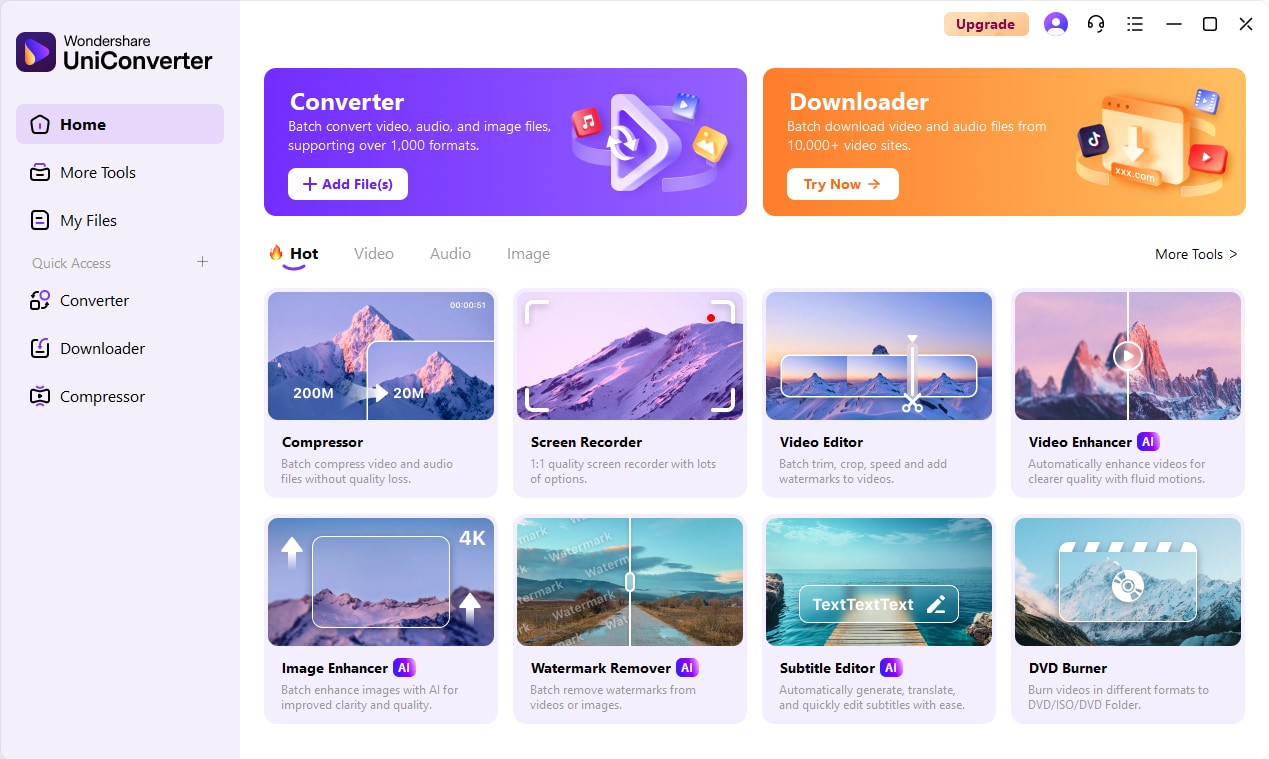
Step 2: Upload the Video, Audios or Images
Click the "Add Files" button or simply drag and drop your desired video, audio, or image files into the program window. You can add multiple files for batch conversion.
Step 3: Choose Required Formats or Parameters
At the bottom of the window, click on the "Output Format" dropdown menu. Select your desired output format (e.g., MP4, MOV, MP3) and resolution. You can also customize advanced settings like codec, bitrate, and frame rate if needed.
Step 4: Save the Converted File
Once your settings are configured, click the "Convert" or "Start All" button. UniConverter will quickly process your files. After completion, you can find your converted files in the "Finished" tab or the specified output folder.

Unlock Your Video's Full Potential
Part 7: Final Verdict and Recommendations
FFmpeg review concludes that it remains an unparalleled tool for developers, system administrators, and advanced users who require ultimate control, flexibility, and automation in multimedia processing. Its command-line interface, while a barrier for some, is its greatest strength for scripting complex workflows and handling vast amounts of data. For these users, FFmpeg is not just a tool, but an essential component of their digital infrastructure, offering capabilities that few other solutions can match. However, for casual users, beginners, or those who prioritize ease of use and a graphical interface, FFmpeg presents a significant hurdle. The steep learning curve, the potential for errors with incorrect parameters, and the lack of visual feedback make it unsuitable for quick edits or simple conversions. In such cases, GUI-based alternatives like HandBrake or comprehensive suites like UniConverter provide a much more accessible and efficient experience. For hybrid workflows, combining FFmpeg's power for backend processing with user-friendly front-end tools for specific tasks can offer the best of both worlds, leveraging FFmpeg's core strengths while mitigating its usability challenges.
Part 8: FAQs
1. Is FFmpeg free to use?
Yes, FFmpeg is open-source and free to use under the GNU Lesser General Public License (LGPL) or GNU General Public License (GPL), depending on the components used.
2. Can FFmpeg be used for video editing?
While FFmpeg can perform basic editing tasks like cutting, merging, rotating, and adding simple filters, it's not a full-fledged video editor with a timeline, visual effects, or advanced compositing capabilities. For comprehensive video editing, dedicated software is recommended.
3. What are the best alternatives to FFmpeg for beginners?
For beginners seeking a user-friendly experience, HandBrake is excellent for video transcoding, VLC Media Player can handle basic conversions, and UniConverter offers a comprehensive suite of video conversion and editing tools with an intuitive graphical interface.
4. Does FFmpeg support 4K video?
Yes, FFmpeg fully supports 4K, 8K, and even higher resolutions. Its performance with high-resolution video depends heavily on your system's hardware, especially the CPU and GPU.
5. How do I learn to use FFmpeg?
There are numerous online tutorials, comprehensive documentation on the official FFmpeg website, and active community forums where you can find examples and get assistance. Starting with simple commands and gradually exploring more complex functionalities is a good approach.
