
- Value: AudioConvert offers broad format compatibility and an intuitive interface for general audio conversion.
- Comparison: UniConverter provides a comprehensive multimedia suite, superior speed, and robust support, surpassing AudioConvert's capabilities.
- Decision: Choose AudioConvert for basic, casual conversions; opt for UniConverter for advanced features, speed, and reliability.
- Pitfalls: Be wary of free converters; they may include adware or compromise output quality and data privacy.
- Efficiency: UniConverter excels in batch processing and GPU acceleration, ensuring fast, high-quality audio and video conversions.
In this article
- Part 1: What is AudioConvert?
- Part 2: AudioConvert: Core Features, Pros, and Cons
- Part 3: Who is AudioConvert For? Use Cases and Limitations
- Part 4: AudioConvert vs. Competitors: A Comparative Analysis
- Part 5: Risks and Pitfalls to Consider
- Part 6: How to Use UniConverter for Efficient Audio/Video Conversion
- Part 7: Conclusion
- Part 8: FAQs
This AudioConvert review delves into a popular audio conversion tool, examining its features, performance, and user experience. In an era where digital audio formats are constantly evolving and device compatibility remains a challenge, a reliable audio converter is indispensable. This review aims to provide a comprehensive analysis of AudioConvert, comparing it against key competitors to help users make an informed decision. We will explore its strengths, weaknesses, ideal use cases, and potential pitfalls, ultimately guiding you toward the best audio conversion solution for your specific needs.
Part 1: What is AudioConvert?
AudioConvert positions itself as a straightforward and efficient solution for managing diverse audio file formats. At its core, it's designed to transform audio files from one format to another, ensuring compatibility across various devices and platforms. The software typically offers a user-friendly interface, making it accessible to both novice and experienced users. This review will dissect AudioConvert's capabilities, assessing its performance in real-world scenarios and evaluating its value proposition in a crowded market. We aim to address the critical question: Does AudioConvert deliver on its promise of seamless and high-quality audio conversion?
The Evolving Landscape of Audio Conversion Tools
The demand for robust audio conversion tools stems from several key factors:
* Proliferation of Devices: Users often have multiple devices (smartphones, tablets, smart speakers) that support different audio codecs and formats, necessitating conversion for universal playback.
* Archiving and Storage: Converting audio to more efficient or universally compatible formats helps in archiving large music libraries and optimizing storage space.
* Content Creation and Sharing: Musicians, podcasters, and content creators frequently need to convert audio for specific platforms or editing software, ensuring optimal quality and compatibility.
* Legacy Formats: Many users still possess audio in older, less common formats that require conversion to modern standards for continued accessibility.
Part 2: AudioConvert: Core Features, Pros, and Cons
AudioConvert is built around its primary function of converting audio files, offering a suite of features designed to streamline this process. Its core capabilities include batch processing, basic audio parameter adjustments (like bitrate and sample rate), and often, the ability to extract audio from video files. The software aims for a balance between functionality and ease of use, making it an attractive option for a broad user base.
Pros
* High-Fidelity Audio Output: AudioConvert consistently delivers converted files with minimal loss in audio quality, preserving the original sound integrity.
* Extensive Format Compatibility: It supports a vast array of input and output formats, including popular ones like MP3, WAV, FLAC, AAC, OGG, and many more niche formats.
* Intuitive User Interface: The software boasts a clean, easy-to-navigate interface, making the conversion process straightforward even for beginners.
Cons
* Limited Advanced Editing Features: While excellent for conversion, AudioConvert lacks advanced audio editing functionalities such as trimming, merging, or noise reduction.
* Occasional Performance Lags on Older Systems: Users with older computer hardware might experience slower conversion times or occasional unresponsiveness, especially with large files or batch processes.
Part 3: Who is AudioConvert For? Use Cases and Limitations
AudioConvert is primarily designed for individuals and small businesses who frequently need to convert audio files without requiring complex editing capabilities. Its simplicity and broad format support make it ideal for everyday audio management tasks.
Best Use Case: Batch Converting Music Library for Multi-Device Playback
Imagine you have a vast music collection in various formats, some of which aren't compatible with your new smartphone or car stereo. AudioConvert shines in this scenario. You can easily drag and drop hundreds of files, select a universal output format like MP3 or AAC, and convert them all in one go. This ensures your entire library is accessible across all your devices, from your home media server to your portable music player, without manual, file-by-file conversion.
Limited Use Case: Professional Audio Production Requiring Granular Control
For professional audio engineers or music producers, AudioConvert's capabilities fall short. These users often require precise control over audio parameters, advanced editing tools like multi-track editing, equalization, compression, and sophisticated noise reduction. AudioConvert's focus on straightforward conversion means it doesn't offer the granular control or specialized features necessary for high-end audio production workflows, where every millisecond and frequency matters.
Part 4: AudioConvert vs. Competitors: A Comparative Analysis
When evaluating audio conversion tools, it's crucial to see how AudioConvert stacks up against its rivals. Here, we compare it with UniConverter, Audacity, and Freemake Audio Converter, focusing on key performance indicators.
Comparison Table Placeholder
| Feature/Tool | AudioConvert | UniConverter | Audacity | Freemake Audio Converter |
| Core Functionality | Audio conversion, basic parameter adjustment | All-in-one multimedia toolkit (video/audio conversion, editing, burning) | Audio editing, recording, conversion | Audio conversion, basic editing |
| Supported Formats | Extensive (MP3, WAV, FLAC, AAC, OGG, etc.) | Very extensive (1000+ formats, including video) | WAV, AIFF, FLAC, MP2, MP3, OGG Vorbis | MP3, AAC, WAV, WMA, OGG, FLAC, M4A |
| Ease of Use | High (Intuitive GUI) | High (User-friendly interface) | Moderate (Steeper learning curve for advanced features) | High (Simple, wizard-like interface) |
| Price | Free trial, premium version (e.g., $29.95/year) | Free trial, premium version (e.g., $49.99/year) | Free (Open-source) | Free (Ad-supported, premium for no ads) |
| Processing Speed | Good, but can lag on older systems | Excellent (GPU acceleration) | Varies by system, generally good | Good |
| Output Quality | High fidelity | High fidelity, lossless options | High fidelity | Good, but can vary with free version |
| Customer Support | Email support, FAQs | 24/7 live chat, email, extensive guides | Community forums, documentation | Email support, FAQs |
| Security | Generally safe, depends on download source | High | High (Open-source transparency) | Can bundle adware in free version |
Key Differentiators
AudioConvert excels in its balance of ease of use and broad format support, making it a solid choice for general conversion tasks. UniConverter stands out as an all-in-one solution, offering superior processing speed through GPU acceleration and a much wider range of multimedia functionalities beyond just audio. Audacity, while free and powerful for editing, has a steeper learning curve for simple conversions. Freemake Audio Converter is appealing for its free tier but often comes with bundled software and ads, and its output quality can be inconsistent without the premium version. For users prioritizing speed and a comprehensive suite of tools, UniConverter is often the stronger contender.
Part 5: Risks and Pitfalls to Consider
While audio conversion tools like AudioConvert offer significant convenience, users should be aware of potential risks and pitfalls, especially when opting for free or less reputable versions. These issues can compromise data, system performance, or the quality of your converted files.
Data Privacy Concerns
Many free or less-known audio converters might collect user data, including file names, conversion habits, or even personal information, which could be sold to third parties. Always review the privacy policy before installing any software, especially if it's cloud-based or requires an internet connection for basic functions.
Adware and Bundled Software
A common pitfall with free audio converters is the inclusion of adware or bundled software during installation. This can lead to unwanted browser toolbars, pop-up ads, changes to your homepage, or even more malicious programs that are difficult to remove and can slow down your computer. Always opt for custom installation and deselect any additional software offered.
Output Quality Degradation
Not all converters are created equal. Some may use inefficient compression algorithms or lower-quality codecs, resulting in noticeable degradation of audio quality, especially when converting between lossy formats or to very low bitrates. This can manifest as muddied sound, artifacts, or a lack of clarity in the converted files.
Customer Support Responsiveness
Should you encounter issues, the quality and responsiveness of customer support can vary wildly. Free tools often rely on community forums, which may not provide timely or effective solutions. Even some paid software can have slow or unhelpful support, leaving users frustrated when facing technical difficulties.
Part 6: How to Use UniConverter for Efficient Audio/Video Conversion
When other tools fall short with batch processing, stability issues, or quality loss, UniConverter emerges as a robust alternative. It’s an all-in-one solution that bypasses common problems like ads, limited format support, and slow conversions, offering GPU acceleration for speed, lossless quality, and efficient batch processing.
Step 1: Open UniConverter and Choose Converter
Launch UniConverter on your computer. From the main interface, select the "Converter" module. This is where you'll manage all your audio and video conversions.
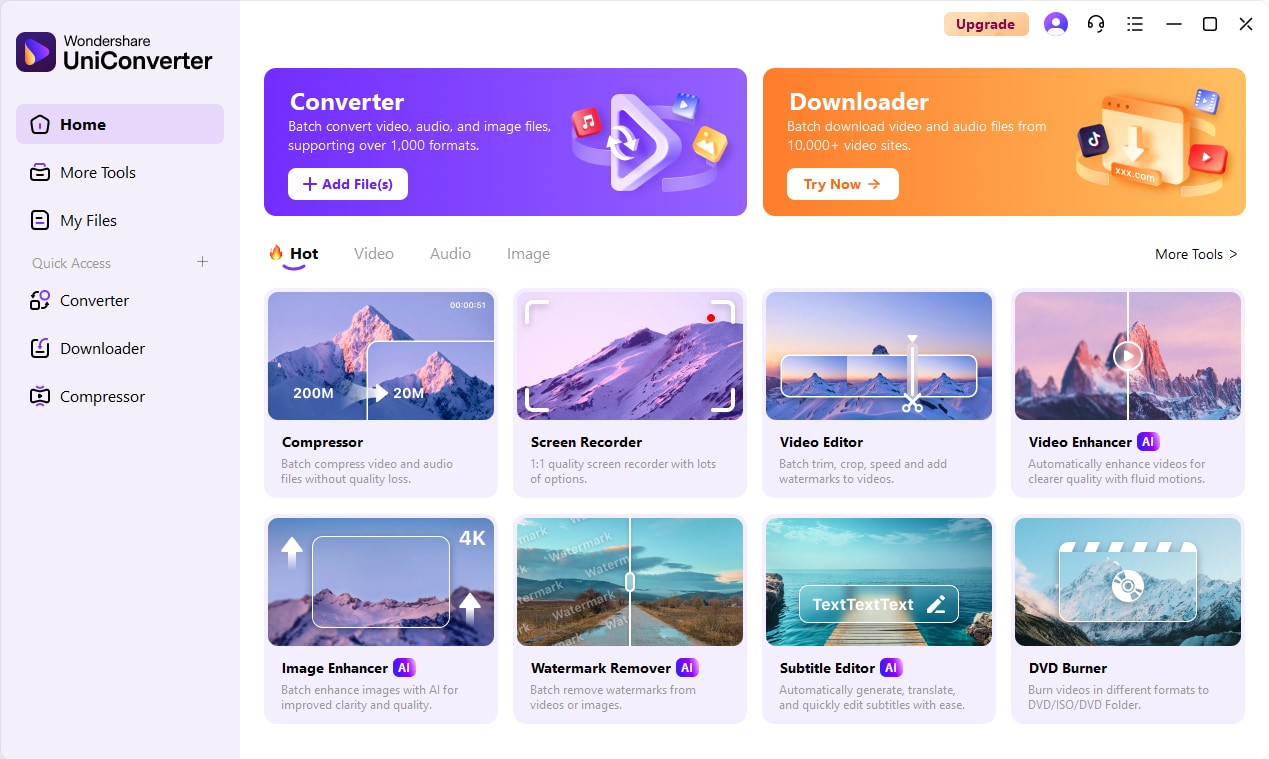
Step 2: Upload the Video, Audios or Images
Click on the "Add Files" button or simply drag and drop your audio files into the program window. You can add multiple files for batch conversion.

Step 3: Choose Required Formats or Parameters
At the bottom of the window, select your desired output format from the "Output Format" menu. You can also customize parameters like bitrate, sample rate, and channels for specific needs. For instance, you might want to convert MP4 to MP3 or convert WAV to MP3.

Step 4: Save the Converted File
Once your settings are configured, click the "Convert" or "Start All" button. UniConverter will process your files quickly. After conversion, you can find your converted files in the "Finished" tab.


Seeking a Powerful Audio Converter Alternative?
Part 7: Conclusion
In conclusion, the AudioConvert review reveals a competent and user-friendly tool for general audio conversion needs. It excels in its broad format compatibility and intuitive interface, making it an excellent choice for casual users or those needing to batch convert music libraries for multi-device playback. However, its limitations in advanced editing and occasional performance lags on older systems mean it's not suited for professional audio production. For users prioritizing a comprehensive multimedia suite, superior processing speed, and robust customer support, UniConverter presents a compelling alternative, offering a wider array of features beyond simple audio conversion. Budget-conscious users might find value in free options like Audacity, provided they are willing to navigate a steeper learning curve or tolerate potential adware in tools like Freemake Audio Converter. Ultimately, the best choice depends on individual requirements, balancing ease of use, feature set, performance, and budget.
Part 8: FAQs
-
1. Is AudioConvert free to use?
AudioConvert offers a free trial with limited features, and a premium version for full access.
-
2. What audio formats does AudioConvert support?
AudioConvert supports a wide range of formats including MP3, WAV, FLAC, AAC, OGG, and more.
-
3. Can AudioConvert convert video to audio?
Yes, AudioConvert has the capability to extract audio from video files.
-
4. Is AudioConvert safe to download and install?
While generally safe, users should always download from the official website to avoid bundled adware.
-
5. How does AudioConvert compare to UniConverter in terms of features?
UniConverter generally offers a broader suite of multimedia tools beyond just audio conversion, including video editing and DVD burning, alongside superior processing speed and customer support.
