
- Arista Transcoder: Powerful, enterprise-grade solution for high-volume video conversion, ideal for professional media production.
- Core Features: Offers high-speed batch processing, extensive format support, and advanced customization for professional workflows.
- Ideal Users: Best for post-production studios and enterprises needing robust, high-quality, and scalable video transcoding.
- Comparison: Outperforms HandBrake and FFmpeg in professional settings; UniConverter offers a user-friendly alternative with advanced features.
- Risks: Consider steep learning curve, resource intensity, potential quality degradation, and complex licensing for optimal use.
- UniConverter: A user-friendly, efficient alternative for video/audio conversion, offering GPU acceleration and extensive format support.
In this article
- Part 1: What is Arista Transcoder?
- Part 2: Arista Transcoder: Core Features, Pros, and Cons
- Part 3: Arista Transcoder: Ideal Users and Use Cases
- Part 4: Arista Transcoder and Alternatives: A Comparative Analysis
- Part 5: Risks and Pitfalls to Consider
- Part 6: How to Use UniConverter for Efficient Video and Audio Conversion
- Part 7: Final Verdict and Recommendations
- Part 8: FAQs
Arista Transcoder Review: A Deep Dive into Video Conversion for Professionals
The digital media landscape is constantly evolving, with an ever-increasing demand for high-quality video content across diverse platforms. This necessitates robust and efficient video transcoding solutions that can adapt to various formats, resolutions, and delivery requirements. Arista Transcoder review delves into one such prominent solution, Arista Transcoder, examining its capabilities, ideal use cases, and how it stacks up against its competitors. This review aims to provide professionals with a comprehensive understanding of Arista Transcoder's strengths and weaknesses, helping them make informed decisions for their video workflow needs.
Part 1: What is Arista Transcoder?
Arista Transcoder emerges as a powerful, enterprise-grade video transcoding software designed to meet the rigorous demands of professional media production and distribution. It is engineered to handle large volumes of video data, converting them between a multitude of formats while maintaining or enhancing quality. This review will address the core question of whether Arista Transcoder truly delivers on its promise of high-performance, versatile, and reliable video conversion for demanding professional environments.
The Evolving Landscape of Video Transcoding
The need for advanced transcoding solutions is driven by several key factors:
* Proliferation of Devices and Platforms: Content needs to be optimized for everything from smartphones to 8K TVs, and various streaming services.
* Diverse Source Formats: Professional cameras and editing suites produce a wide array of proprietary and standard formats that require conversion for broader compatibility.
* Demand for High-Quality and Efficiency: Professionals require lossless or near-lossless conversions at high speeds to meet tight deadlines and maintain brand integrity.
* Complex Workflows: Modern media pipelines involve multiple stages of processing, where efficient transcoding is a critical bottleneck.
Part 2: Arista Transcoder: Core Features, Pros, and Cons
Arista Transcoder is built for performance and flexibility, offering a suite of features tailored for professional video workflows. Its core capabilities revolve around efficient and high-quality video format conversion.
* High-Speed Batch Processing: Designed to handle massive video libraries simultaneously, significantly reducing processing time.
* Extensive Format Support: Compatible with a vast array of input and output formats, codecs, and containers, catering to diverse professional needs.
* Advanced Customization Options: Provides granular control over output quality, bitrates, resolutions, frame rates, and audio settings.
* Metadata Preservation and Manipulation: Ensures critical metadata (timecode, closed captions, etc.) is retained or can be adjusted during transcoding.
* Scalable Architecture: Can be deployed in various configurations, from single workstations to distributed server farms, to meet varying workload demands.
Pros:
* High-speed, batch processing for large video libraries.
* Extensive format support for professional workflows.
* Advanced customization options for output quality and settings.
Cons:
* Steep learning curve for new users.
* Resource-intensive, requiring powerful hardware.
Part 3: Arista Transcoder: Ideal Users and Use Cases
Arista Transcoder is specifically engineered for users who require robust, high-volume, and high-quality video conversion capabilities. Its complexity and resource demands make it less suitable for casual users.
Best Use Case: Professional Post-Production Studios
Scenario: A film studio needs to transcode hundreds of hours of raw footage from various cameras (e.g., ARRI Alexa, RED, Blackmagic) into a unified editing format (e.g., ProRes, DNxHD) for their NLE system. Arista Transcoder can efficiently process these diverse source files, ensuring consistent quality, preserving essential metadata like timecode and LUTs, and preparing the footage for a seamless editing workflow. This allows editors to work with optimized files without compromising on visual fidelity, crucial for high-budget productions.
Limited Use Case: Casual Home Users
Scenario: A home user wants to quickly convert a single video file (e.g., an MP4 from their phone) to a different format (e.g., AVI) for playback on an older media player. For this simple task, Arista Transcoder would be overkill. Its advanced features, complex interface, and resource requirements would be unnecessary and potentially frustrating for someone who just needs a quick, straightforward conversion without needing advanced settings or batch processing. Simpler, more intuitive tools are better suited for such casual use.
Part 4: Arista Transcoder and Alternatives: A Comparative Analysis
When evaluating video transcoding solutions, it's crucial to compare Arista Transcoder against its prominent alternatives to understand their respective strengths and weaknesses.
| Feature / Product | Arista Transcoder | HandBrake | FFmpeg | UniConverter |
| Processing Speed | Very High (Batch) | Moderate | High | High (GPU Accel.) |
| Output Quality | Excellent (Pro) | Good | Excellent (CLI) | Excellent |
| Ease of Use | Complex (Pro) | Moderate | Very Complex (CLI) | Very Easy |
| Format Support | Extensive (Pro) | Good | Extensive (CLI) | Extensive |
| Advanced Features | High (Metadata, API) | Moderate | Very High (CLI) | High (Editor, AI) |
| Pricing Model | Enterprise/License | Free (Open Source) | Free (Open Source) | Subscription/Lifetime |
| Customer Support | Dedicated (Enterprise) | Community | Community | Dedicated |
Arista Transcoder stands out for its enterprise-level performance, deep customization, and robust support for professional workflows, making it ideal for large-scale operations where speed and quality are paramount. HandBrake is a solid free option for basic conversions, offering a good balance of features and ease of use for general consumers. FFmpeg, while incredibly powerful and versatile, requires command-line expertise, limiting its accessibility to developers and advanced users. UniConverter, on the other hand, provides a user-friendly interface with a comprehensive feature set, including editing tools and AI enhancements, positioning it as a strong contender for both advanced users and those seeking a more intuitive experience than Arista without sacrificing quality.
Part 5: Risks and Pitfalls to Consider
While Arista Transcoder offers powerful capabilities, users, especially those new to such advanced tools, should be aware of potential risks and pitfalls. Understanding these can help mitigate issues and ensure a smoother workflow.
Data Privacy and Security Concerns
For enterprise users handling sensitive content, the security of video files during transcoding is paramount. While Arista Transcoder itself is a desktop application, integration with cloud storage or network drives introduces potential vulnerabilities if not properly secured. Users must ensure their network infrastructure is robust and compliant with data privacy regulations to prevent unauthorized access or data breaches during file transfer and processing.
Potential for Output Quality Degradation
Despite its advanced settings, improper configuration can lead to undesirable output quality. Incorrect bitrate settings, resolution scaling, or codec choices can result in pixelation, artifacts, or a loss of detail. The learning curve for optimizing these settings means that inexperienced users might inadvertently compromise the final video quality, requiring re-transcoding and wasting valuable time and resources.
System Resource Overload
Arista Transcoder is a resource-intensive application. Running it on underpowered hardware can lead to system slowdowns, crashes, or significantly extended processing times. This can disrupt workflows, especially in a professional environment where multiple tasks are running concurrently. Ensuring sufficient CPU, RAM, and GPU resources is critical to leverage its full potential and avoid operational bottlenecks.
Compatibility Issues with Niche Formats
While Arista Transcoder boasts extensive format support, extremely niche or proprietary formats from older or specialized equipment might still pose compatibility challenges. Users might encounter errors or incomplete conversions, necessitating additional tools or manual workarounds. It's crucial to test specific source formats before committing to large-scale transcoding projects.
Hidden Costs and Licensing Complexities
Enterprise-grade software like Arista Transcoder often comes with complex licensing models, which can include per-seat licenses, volume-based pricing, or feature-specific add-ons. There might be hidden costs associated with maintenance, support, or future upgrades. Thoroughly understanding the licensing terms and potential long-term expenses is essential to avoid unexpected budget overruns.
Part 6: How to Use UniConverter for Efficient Video and Audio Conversion
When other tools fall short with batch processing, stability, or quality retention, UniConverter emerges as a reliable alternative. It offers a seamless and efficient solution for converting videos and audios without compromising on quality, providing a comprehensive suite of features including GPU acceleration, lossless conversion, and extensive format support, all within an ad-free environment. UniConverter is an all-in-one solution for your media conversion needs.
Step 1: Open UniConverter and Choose Converter
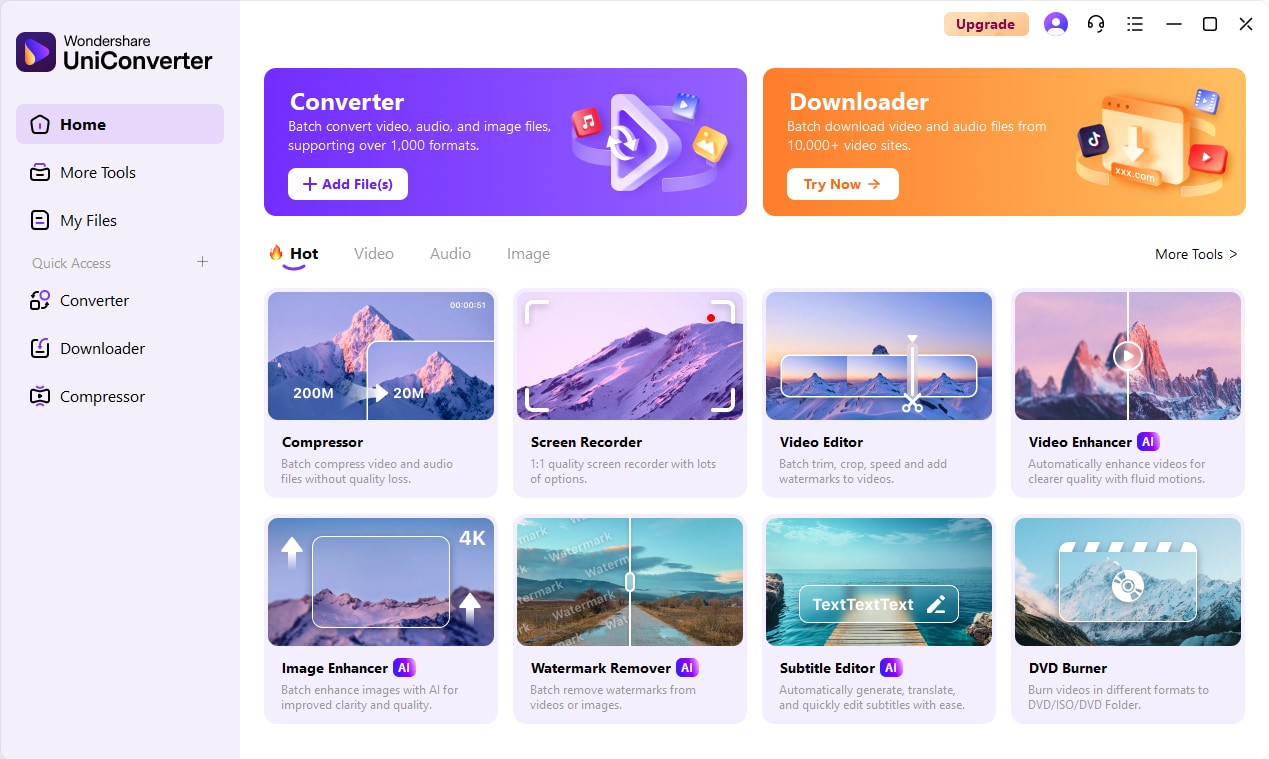
Step 2: Upload the Video, Audios or Images

Step 3: Choose Required Formats or Parameters

Step 4: Save the Converted File


High Efficient Tool to Batch Convert Media
Part 7: Final Verdict and Recommendations
The Arista Transcoder review reveals it as a robust and highly capable solution tailored for professional video production and distribution environments. Its strengths lie in high-speed batch processing, extensive format support, and granular control over output settings, making it indispensable for studios and enterprises dealing with vast amounts of diverse video content. However, its steep learning curve and significant hardware requirements mean it's not a one-size-fits-all solution. For professional studios and enterprises, Arista Transcoder is an excellent investment, offering the performance and reliability needed for mission-critical workflows. Independent filmmakers and content creators might find its power beneficial for complex projects, but should weigh the cost and complexity against their specific needs. Casual users and beginners will likely find it overkill, with simpler, more intuitive tools being more appropriate. For those prioritizing speed and efficiency in a professional context, Arista Transcoder delivers, provided they have the resources and expertise to harness its full potential.
Part 8: FAQs
1. Is Arista Transcoder suitable for 4K and 8K video transcoding?
Yes, Arista Transcoder is designed to handle high-resolution video formats, offering robust performance for 4K and 8K content, provided sufficient hardware resources.
2. How does Arista Transcoder handle DRM-protected content?
Arista Transcoder, like most legitimate transcoding software, does not bypass DRM protection. Users are responsible for ensuring they have the necessary rights to transcode protected content.
3. What kind of customer support does Arista Transcoder offer?
Arista Transcoder typically offers tiered customer support, ranging from online documentation and forums to dedicated technical support for enterprise clients.
4. Can Arista Transcoder be integrated into existing production pipelines?
Yes, Arista Transcoder often provides APIs and command-line interfaces for seamless integration into automated production workflows and custom scripts.
5. Is there a free trial available for Arista Transcoder?
Availability of free trials for Arista Transcoder can vary. It's recommended to check the official Arista website or contact their sales team for current trial options.
