
- Any Video Converter (AVC) Review: Explore AVC's features, pros, cons, and ideal users to make informed decisions.
- Core Features: AVC offers extensive format support, 4K/5K/8K conversion, video downloading, and basic editing.
- Pros & Cons: Enjoy broad format support and ease of use, but expect potential slowdowns and free version limitations.
- Ideal Users: Perfect for beginners and casual users needing straightforward video conversion and online downloads.
- Comparison: AVC is user-friendly, but UniConverter offers superior performance and advanced features for professionals.
- Risks: Be aware of potential adware, free version limitations, quality degradation, and data privacy concerns.
- UniConverter Alternative: Experience efficient, high-quality video conversion with UniConverter's advanced features and stability.
- Decision: Choose AVC for basic needs; opt for UniConverter for comprehensive features, speed, and reliability.
In this article
- Part 1: What is Any Video Converter
- Part 2: Any Video Converter: Core Features, Pros, and Cons
- Part 3: Any Video Converter: Ideal Users and Usage Scenarios
- Part 4: Any Video Converter and Alternatives Comparison
- Part 5: Risks and Pitfalls to Consider
- Part 6: How to Convert Videos Efficiently with UniConverter
- Part 7: Conclusion
- Part 8: FAQs
Any Video Converter review: In the ever-evolving digital landscape, video content reigns supreme, driving a constant demand for versatile and efficient video conversion tools. From personal archives to professional projects, the need to adapt video formats for various devices and platforms is universal. This Any Video Converter review delves into one such prominent solution, offering a comprehensive analysis of its features, performance, and suitability for different user needs. We will explore its core functionalities, weigh its advantages and disadvantages, and benchmark it against leading competitors to provide a clear picture of its standing in the market. This review aims to equip users with the necessary insights to make an informed decision regarding their video conversion requirements.
Part 1: What is Any Video Converter
Any Video Converter (AVC) originated as a straightforward tool designed to bridge the gap between incompatible video formats, allowing users to enjoy their media across a multitude of devices without hassle. Over time, it has evolved into a more comprehensive suite, incorporating features beyond simple conversion, such as video downloading and basic editing capabilities. The core promise of AVC is to simplify the often-complex process of video format manipulation, making it accessible to users of all technical proficiencies. This review aims to address the critical question of whether AVC effectively delivers on this promise, especially when faced with the diverse and demanding needs of today's video consumers and creators.
Understanding the Video Conversion Landscape
* Proliferation of Devices and Formats: The sheer number of devices, from smartphones to smart TVs, each supporting a specific set of video codecs and containers, creates a constant need for format conversion.
* Online Content and Download Needs: The rise of online streaming platforms and user-generated content necessitates tools for downloading and converting videos for offline viewing or archival purposes.
* Basic Editing Requirements: Many users require more than just conversion; they need basic editing functionalities like trimming, cropping, or merging to prepare videos for sharing or personal use.
* Performance and Quality Expectations: Users expect conversion tools to be fast, efficient, and capable of maintaining or even enhancing video quality during the process.
Part 2: Any Video Converter: Core Features, Pros, and Cons
Any Video Converter positions itself as an all-in-one solution for video conversion and basic media management. Its core capabilities revolve around its robust format support, allowing users to convert videos between a vast array of input and output formats. Beyond conversion, it integrates a video downloader, enabling users to grab content from various online platforms. The software also includes rudimentary editing tools, such as trimming, cropping, and adding effects, catering to users who need quick adjustments without resorting to professional editing suites.
Core Features:
* Extensive Format Support: Converts videos to and from over 200 formats, including MP4, AVI, WMV, MOV, and more.
* 4K/5K/8K UHD Video Conversion: Supports high-resolution video conversion for future-proof media.
* Integrated Video Downloader: Allows downloading videos from YouTube, Vimeo, and over 100 other sites.
* Basic Video Editing Tools: Offers trimming, cropping, merging, rotating, and adding effects/watermarks.
* DVD/CD/Blu-ray Ripper: Can rip content from physical media to digital formats.
Pros:
* Wide range of supported input and output formats for diverse conversion needs.
* User-friendly interface, making it accessible for beginners.
* Integrated video downloader for online content.
Cons:
* Occasional performance slowdowns with large files or batch conversions.
* Free version limitations, pushing users towards paid upgrades.
Part 3: Any Video Converter: Ideal Users and Usage Scenarios
Any Video Converter is primarily designed for individuals who require a straightforward and efficient solution for their video conversion and basic media management tasks. Its intuitive interface makes it particularly appealing to beginners and casual users who might be intimidated by more complex software. The integrated video downloader also caters to those who frequently save online content for offline viewing or archival purposes.
Scenario 1: Converting Videos for Playback on Various Devices
* Best Use Case: A user needs to convert a downloaded movie into a format compatible with their older tablet or smartphone for offline viewing during travel. Any Video Converter's extensive format support and device-specific presets make this a seamless process, ensuring the video plays smoothly without compatibility issues.
Scenario 2: Basic Video Editing and Enhancement
* Limited Use Case: A content creator attempting to perform complex video editing tasks like multi-track editing or advanced color grading. While AVC offers basic editing features such as trimming and cropping, it lacks the depth and precision required for professional-level video production. For such scenarios, dedicated video editing software would be far more appropriate and efficient.
Part 4: Any Video Converter and Alternatives Comparison
| Feature/Aspect | Any Video Converter | HandBrake | Freemake Video Converter | UniConverter |
| Processing Speed | Good | Excellent | Good | Excellent |
| Output Quality | High | Very High | High | Very High |
| Ease of Use | High | Moderate | High | High |
| Customer Support | Email/FAQ | Community Forum | Email/FAQ | 24/7 Live Chat/Email |
| Security | Generally Safe | Open Source, Safe | Potential Adware | Very Safe |
| Supported Formats | Very Broad | Broad | Broad | Very Broad |
| Advanced Editing | Basic | Moderate | Basic | Moderate |
| Batch Processing | Good | Excellent | Good | Excellent |
| Online Video Download | Yes | No | Yes | Yes |
| Price Model | Freemium | Free | Freemium | Paid |
Key Differentiators:
User Interface Simplicity: Any Video Converter prioritizes ease of use for general users, offering a less intimidating experience than HandBrake. Online Download Integration: A key advantage for users who frequently download videos, a feature absent in HandBrake. * Performance vs. Features: Competitors like UniConverter often offer more advanced features and superior performance at the cost of a higher price, while HandBrake provides advanced control for free but with a steeper learning curve.
Part 5: Risks and Pitfalls to Consider
When utilizing free or freemium software like Any Video Converter, users should be aware of several potential risks and pitfalls that can impact their experience, system security, and data integrity. While the promise of free functionality is appealing, it often comes with hidden costs or compromises.
Potential for Adware/Bundled Software during Installation
Many free software programs, including some versions of Any Video Converter, may attempt to install additional, unwanted software (adware, toolbars, or other programs) during the installation process. Users must pay close attention to custom installation options and uncheck any pre-selected boxes for bundled software to avoid cluttering their system or compromising its security.
Limitations of the Free Version
The "free" aspect of freemium models often comes with significant limitations. In Any Video Converter's case, this can include restrictions on conversion speed, output quality, the number of files processed in a batch, or access to certain advanced features. These limitations are designed to encourage users to upgrade to the paid version, potentially leading to frustration for those expecting full functionality.
Quality Degradation with Certain Conversion Settings
While Any Video Converter supports various output qualities, improper settings can lead to noticeable degradation of video and audio quality. Users might experience pixelation, artifacts, or desynchronized audio if they choose inappropriate codecs, bitrates, or resolutions, especially when converting to highly compressed formats or attempting to upscale lower-quality sources.
Data Privacy Concerns with Online Features
Features like online video downloading inherently involve interacting with external servers. While Any Video Converter itself might be secure, the act of downloading content from various websites raises questions about data privacy and the potential exposure of user IP addresses or browsing habits to third parties. Users should be mindful of the sources they download from and understand the privacy policies involved.
Customer Support Responsiveness
For free or freemium products, customer support can often be less responsive or comprehensive compared to paid alternatives. Users encountering technical issues or needing assistance might find limited resources, relying heavily on FAQs or community forums rather than direct, personalized support, which can be a significant drawback when facing critical problems.
Part 6: How to Convert Videos Efficiently with UniConverter
When other tools fall short, struggling with batch conversions, unstable performance, or unacceptable quality loss, UniConverter emerges as a robust and reliable alternative. It bypasses the common pitfalls of freemium software, offering a seamless, ad-free experience with extensive format support, GPU acceleration for speed, and lossless conversion capabilities. UniConverter is designed as an all-in-one ultimate solution for all your video processing needs, ensuring stability, quality, and efficiency.
Step 1: Open UniConverter and Choose Converter
Launch UniConverter on your computer. From the main interface, navigate to the "Converter" tab, which is typically located on the left-hand sidebar. This is your starting point for all video conversion tasks.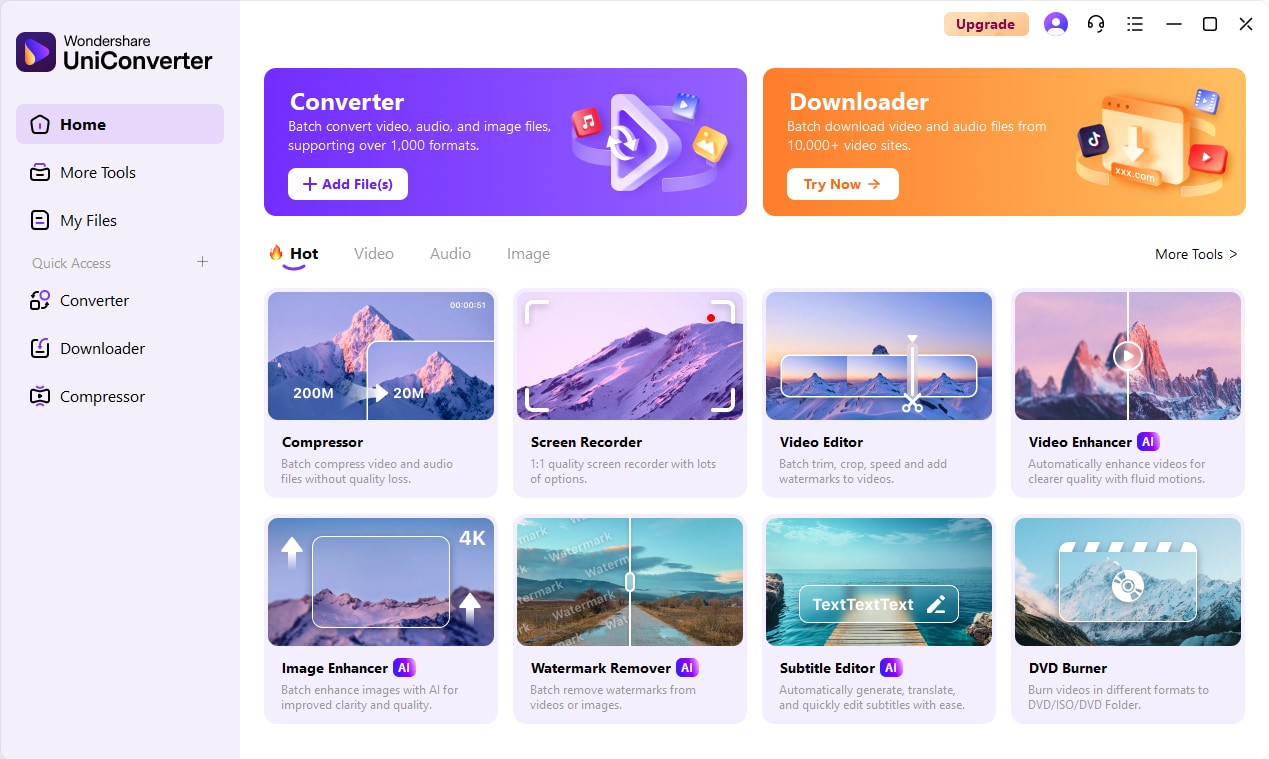
Step 2: Upload the Video, Audios or Images
Click on the "Add Files" button or simply drag and drop your video, audio, or image files directly into the UniConverter window. You can add multiple files for batch processing.
Step 3: Choose Required Formats or Parameters
At the bottom of the window, click on the "Output Format" option. Select your desired output format (e.g., MP4, MOV, AVI) and choose a resolution or device-specific preset. You can also customize advanced settings like encoder, resolution, bitrate, and frame rate.
Step 4: Save the Converted File
Once all settings are configured, click the "Convert" or "Start All" button. UniConverter will begin processing your files. After conversion, you can find your converted files in the "Finished" tab or by clicking the "Open File Location" icon.

Unlock Your Video's Full Potential
Part 7: Conclusion
This Any Video Converter review has provided a detailed examination of its features, benefits, and drawbacks, alongside a comparative analysis with its key competitors. While Any Video Converter offers a user-friendly interface and broad format support, making it suitable for casual users and those needing online video download capabilities, its freemium model and occasional performance issues might deter advanced users or those with extensive conversion needs. For users prioritizing ease of use and basic functionalities without a steep learning curve, AVC remains a viable option. However, for professionals or users requiring more granular control, superior performance, and comprehensive features without the limitations of a free version, alternatives like UniConverter present a more compelling solution. Ultimately, the best choice depends on individual requirements, budget, and the specific scenarios in which the software will be deployed.
Part 8: FAQs
1. Is Any Video Converter truly free?
Any Video Converter offers a free version with limited features. To unlock all functionalities, a paid upgrade is required.
2. Can Any Video Converter convert 4K videos?
Yes, Any Video Converter supports 4K video conversion, but performance may vary depending on your computer's specifications.
3. Is it safe to download videos using Any Video Converter?
While the software itself is generally safe, the legality of downloading copyrighted content varies by region and source. Users should exercise caution and respect intellectual property rights.
4. How does Any Video Converter compare to HandBrake for advanced users?
HandBrake offers more granular control over encoding settings, making it preferred by advanced users for specific technical requirements, while Any Video Converter focuses on user-friendliness and broader appeal.
5. What are the common reasons for conversion failures in Any Video Converter?
Common reasons include corrupted source files, insufficient disk space, incorrect output settings, or conflicts with system resources. Ensuring source file integrity and adequate system resources can often resolve these issues.
