
- Zamzar's Value: Zamzar offers unparalleled ease-of-use for quick, single-file audio compression, ideal for casual users.
- Core Performance: Zamzar is web-based, supports many formats, but lacks advanced customization and can be slow for large files.
- User Suitability: Best for non-technical users needing fast, occasional compression; unsuitable for professional or batch processing.
- Comparative Edge: Online convenience is Zamzar's strength; UniConverter offers superior control, batch processing, and offline functionality.
- Online Risks: Be aware of data privacy, potential quality loss, internet dependency, and intrusive ads with online compressors.
- UniConverter's Advantage: UniConverter provides robust desktop compression with precise control, batch processing, and no internet reliance.
In this article
- Part 1: What is Zamzar Audio Compressor?
- Part 2: Zamzar Audio Compressor's Core Performance, Pros & Cons
- Part 3: Zamzar Audio Compressor's Users & Use Cases
- Part 4: Zamzar Audio Compressor and Alternatives: A Comparative Analysis
- Part 5: Risks and Pitfalls When Using Online Audio Compressors
- Part 6: How to Use UniConverter for Efficient Audio Compression
- Part 7: Conclusion
- Part 8: FAQs About Audio Compressors
When I'm looking for a quick and easy way to compress audio files, I often turn to online tools. One that frequently pops up is Zamzar Audio Compressor review. It promises simplicity and convenience, but in a crowded market of online and desktop solutions, I always wonder if it truly stands out. This review will dive deep into Zamzar's capabilities, compare it with its competitors, and help you decide if it's the right tool for your audio compression needs, whether you're a casual user or someone seeking more advanced features.
Part 1: What is Zamzar Audio Compressor?
Zamzar Audio Compressor is an online web-based tool designed to reduce the file size of audio files. It's part of the broader Zamzar suite of conversion tools, which has been around for a while, offering a straightforward approach to various file transformations. My initial impression is that it aims to be a no-fuss solution for anyone needing to shrink audio files without downloading dedicated software. This review will particularly focus on whether its simplicity comes at the cost of functionality or quality, and if it truly meets the diverse needs of users today.
The Growing Need for Efficient Audio Management
In today's digital landscape, I find myself constantly dealing with large audio files, whether it's for podcasts, music, or voice recordings. This creates several pain points:
* Storage Limitations: Large files quickly eat up valuable storage space on my devices and cloud services.
* Slow Upload/Download Times: Sharing or streaming uncompressed audio can be a frustratingly slow experience, especially with limited bandwidth.
* Compatibility Issues: Some platforms or devices have file size restrictions, making compression a necessity.
* Website Performance: For content creators, optimized audio files are crucial for faster website loading times and better user experience.
Part 2: Zamzar Audio Compressor's Core Performance, Pros & Cons
Zamzar Audio Compressor operates as a web-based service, allowing me to upload audio files directly through my browser for compression. It primarily focuses on reducing file size by adjusting parameters like bitrate, though the level of control I have over these settings is somewhat limited. The core capability is its ability to take a large audio file and output a smaller one, making it easier to store or share.
Key Features:
* Browser-Based Operation: No software installation required, accessible from any device with an internet connection.
* Multiple Format Support: Handles a wide array of audio formats for both input and output.
* Simple Interface: A clean, intuitive design that guides me through the compression process.
* Email Notification: Option to receive an email when my compressed file is ready for download.
* Basic Compression Algorithm: Focuses on reducing file size with minimal user input.
Pros:
* User-Friendly Interface for Quick Compressions: I find it incredibly easy to navigate, even for first-time users.
* Wide Range of Supported Audio Formats: It supports almost every audio format I've thrown at it.
* No Software Installation Required (Web-Based): This is a huge plus for me when I'm on a public computer or don't want to clutter my hard drive.
Cons:
* Limited Advanced Customization Options: I wish I had more control over bitrate, sample rate, and other compression parameters.
* Potential for Slower Processing on Large Files/High Traffic: I've noticed it can take a while for larger files, especially during peak usage.
Part 3: Zamzar Audio Compressor's Users & Use Cases
Zamzar Audio Compressor is definitely designed with a specific user in mind: someone who prioritizes ease of use and convenience over granular control. I see it as a tool for quick, one-off tasks rather than a daily driver for audio professionals.
Best Use Case: Quick, On-the-Go Audio Compression for Non-Technical Users
If I just need to shrink an audio file to email it to a friend, upload it to a basic website, or free up some space on my phone, Zamzar is perfect. I don't need to understand complex audio codecs or settings; I just upload, click, and download. It's ideal for students, casual users, or anyone who needs a fast solution without technical hassle. For example, compressing a voice memo before sending it via a messaging app.
Limited Use Case: Professional Audio Editing and Batch Processing
However, if I'm a podcaster, musician, or video editor, Zamzar quickly falls short. When I need precise control over audio quality, specific bitrates, or the ability to process dozens of files at once, Zamzar simply doesn't offer the features. It's not built for tasks like preparing audio for broadcast, mastering, or extensive post-production work where quality and consistency are paramount. I wouldn't use it for compressing an entire album or a series of podcast episodes.
Part 4: Zamzar Audio Compressor and Alternatives: A Comparative Analysis
When I look at Zamzar Audio Compressor, I always consider what else is out there. Here's how it stacks up against some popular alternatives:
| Feature/Scenario | Zamzar Audio Compressor | Online Audio Converter | Audacity | UniConverter |
| Ease of Use (Simple Compression) | Excellent | Good | Moderate | Excellent |
| Advanced Settings (Bitrate, Sample Rate) | Limited | Moderate | Extensive | Good |
| Batch Processing | No | Limited | Yes | Yes |
| Offline Functionality | No | No | Yes | Yes |
| File Size Limit | Moderate (up to 50MB for free) | Moderate (up to 2GB for free) | N/A (depends on disk space) | High (no practical limit) |
| Privacy Concerns | Moderate | Moderate | Low | Low |
| Output Quality Control | Basic | Basic | Advanced | Good |
| Processing Speed | Varies (internet dependent) | Varies (internet dependent) | Fast (local processing) | Fast (GPU acceleration) |
| Customer Support | Community Forums | 24/7 Live Chat/Email |
Key Differentiators: Online Convenience vs. Desktop Power
From my perspective, Zamzar excels in pure online convenience. If I just need to quickly compress a single file without installing anything, it's a strong contender. However, for anything beyond basic, single-file compression, tools like Audacity and UniConverter offer significantly more power and control. Online Audio Converter is a decent middle-ground for slightly more options than Zamzar, but still suffers from the limitations of web-based tools. UniConverter, in particular, stands out for blending ease of use with robust features, offering a desktop solution that addresses many of the shortcomings of online compressors.
Part 5: Risks and Pitfalls When Using Online Audio Compressors
While the convenience of online audio compressors like Zamzar is undeniable, I've learned to be wary of several potential risks and pitfalls. It's not always as straightforward as it seems.
Data Privacy and Security Concerns
When I upload my audio files to an online service, I'm essentially entrusting my data to a third party. I always worry about how these services handle my private recordings or sensitive information. Are they stored securely? For how long? Are they used for analytics or advertising? Many free online tools have vague privacy policies, which makes me hesitant to upload anything truly personal or confidential.
Potential for Quality Degradation
While the goal is compression, I've often found that some online tools can be overly aggressive, leading to noticeable quality loss. Without granular control over settings like bitrate and sample rate, I'm at the mercy of their default algorithms. This can result in muddy audio, loss of high-frequency detail, or even artifacts, which is unacceptable for anything beyond casual listening.
Reliance on Internet Connectivity
The biggest practical limitation for me is the absolute reliance on an internet connection. If my Wi-Fi is spotty or I'm working offline, these tools are completely useless. This can be a major hindrance when I'm traveling or in an area with poor connectivity, making desktop alternatives much more reliable.
Annoying Ads and Pop-ups
Many free online services, including some audio compressors, are ad-supported. This often means I'm bombarded with intrusive pop-ups, banner ads, and redirects, which significantly detract from the user experience. It can be frustrating and even risky, as some ads might lead to malicious websites.
File Size and Processing Speed Limitations
Even with a good internet connection, I've encountered limitations on file size for free tiers, and processing large audio files can take an unacceptably long time. This is especially true if the service's servers are under heavy load, leading to long queues and frustrating waits.
Part 6: How to Use UniConverter for Efficient Audio Compression
When facing challenges with online compression tools—such as the absence of batch processing, inconsistent results, or noticeable quality loss—I frequently opt for UniConverter. This desktop solution avoids many of the common limitations of web-based compressors and provides a more dependable experience for both audio compression and video compression. It is also useful for image compression, making it a practical choice for different media tasks. For users who need a more reliable desktop compression tool, UniConverter remains a strong all-in-one option.
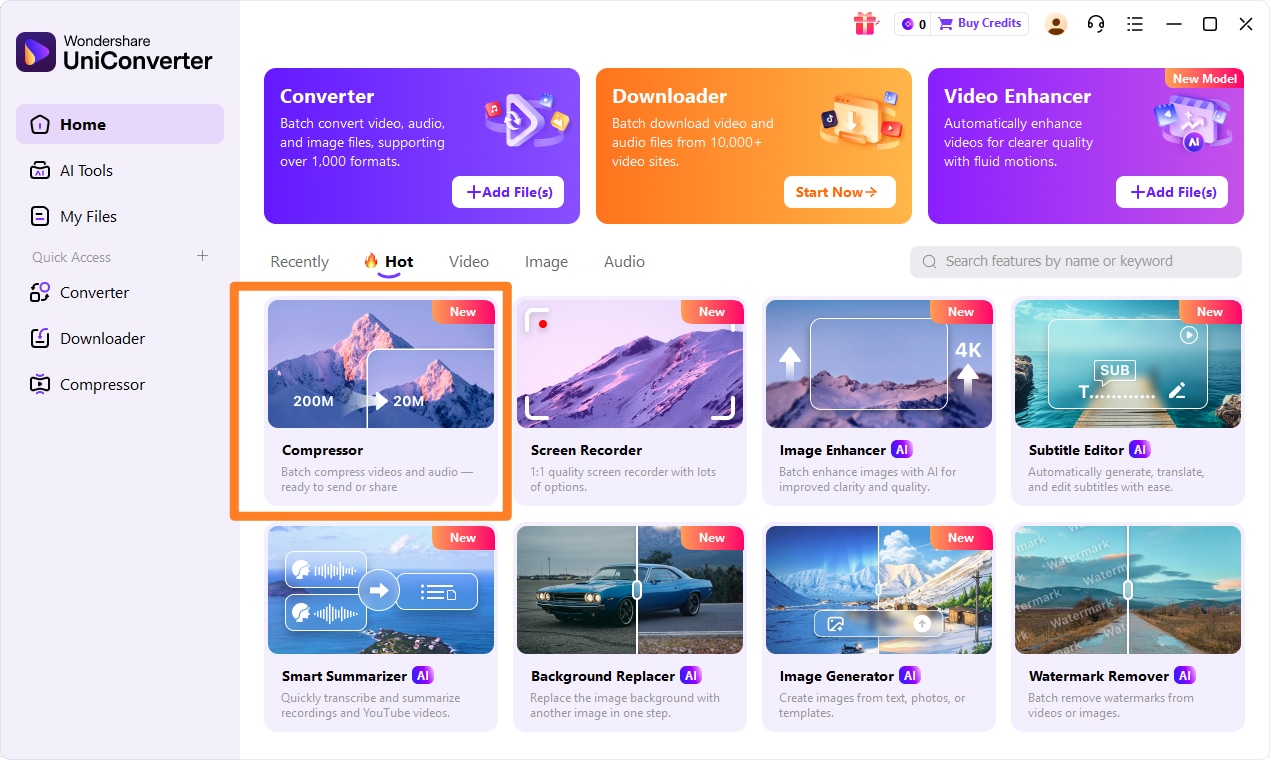
Step 1: Open UniConverter and Choose Compressor
Launch UniConverter on your computer. On the left-hand sidebar, you'll find various tools. Click on the "Compressor" option.
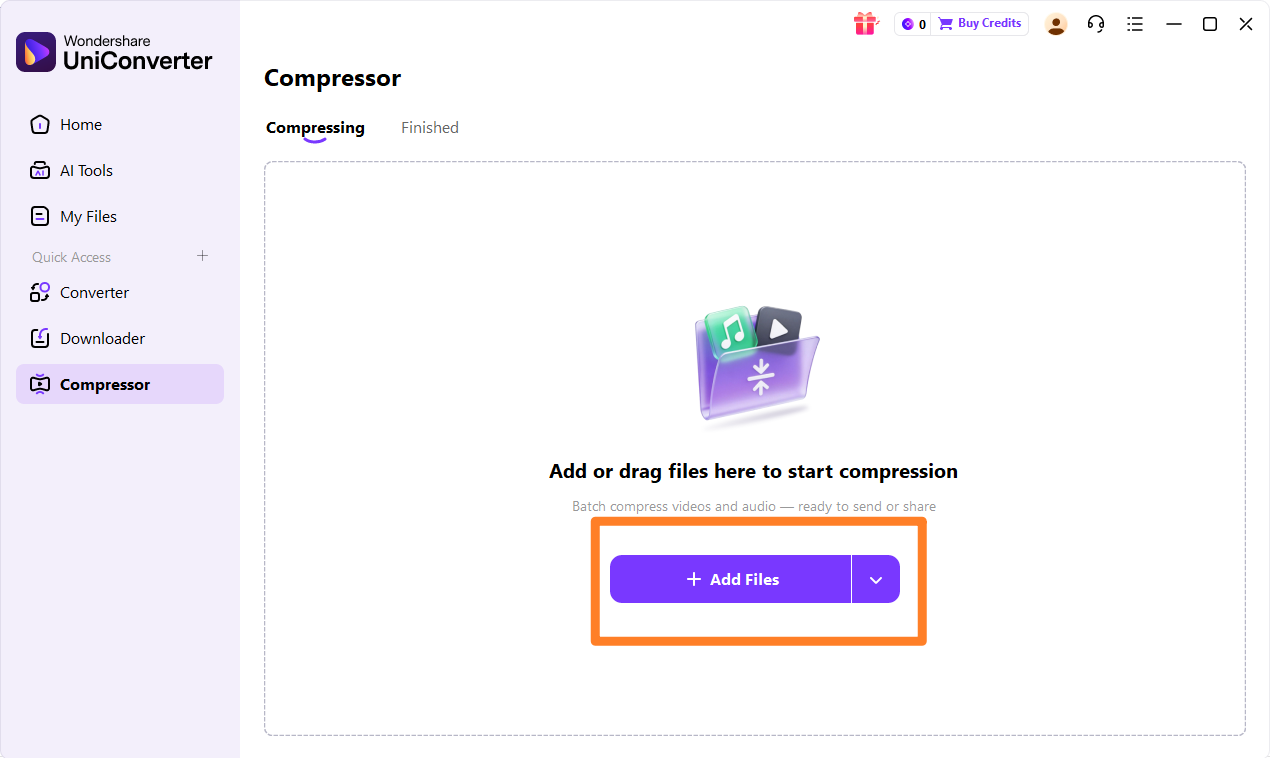
Step 2: Upload the Video, Audios or Images
Drag and drop your audio files directly into the UniConverter window, or click the "Add Files" button to browse and select them from your computer. You can add multiple files for batch compression.
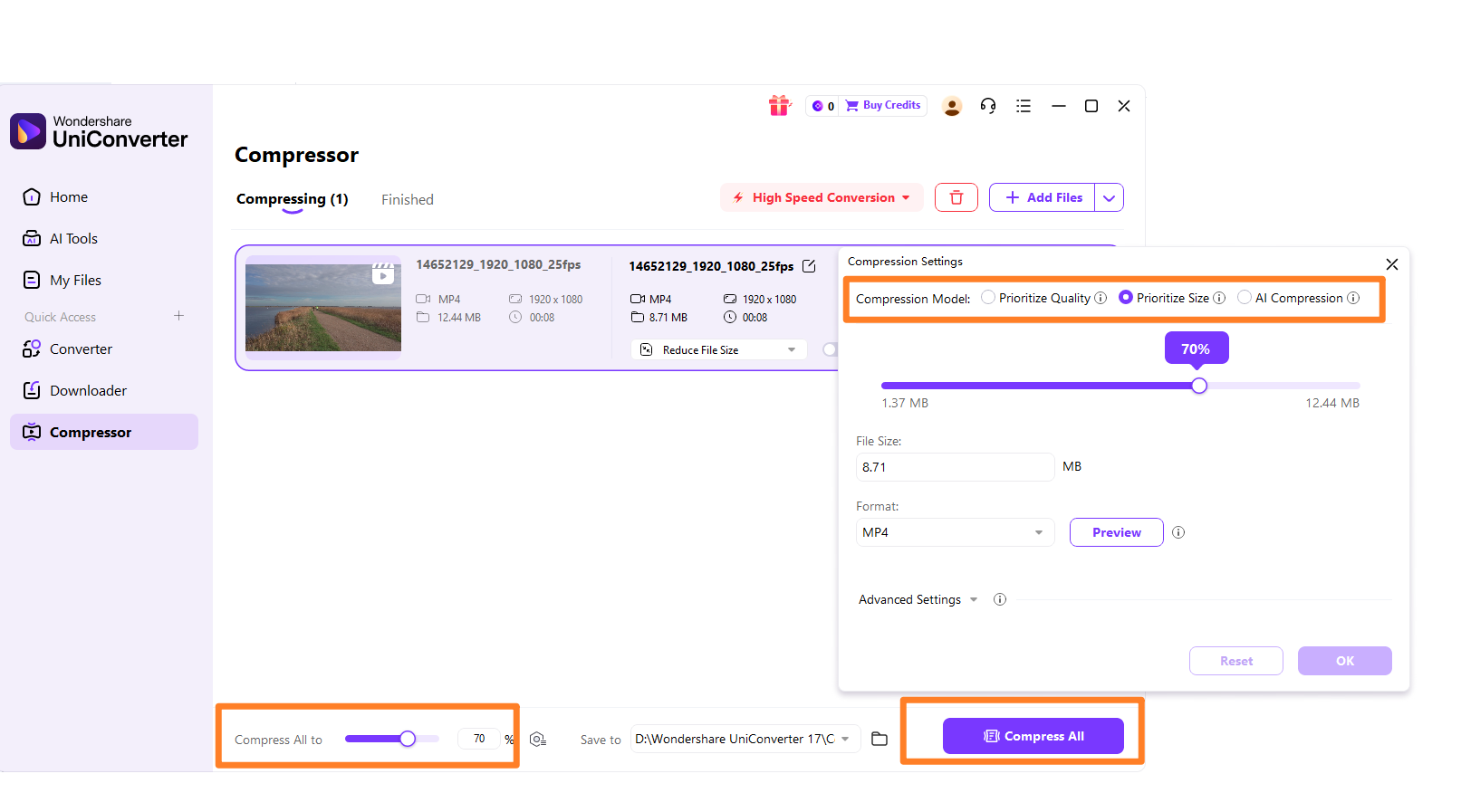
Step 3: Choose Required Parameters
After uploading, you'll see options to adjust compression settings. You can choose the output format, quality, and file size. UniConverter also allows you to manually set the bitrate and sample rate for precise control over the output.
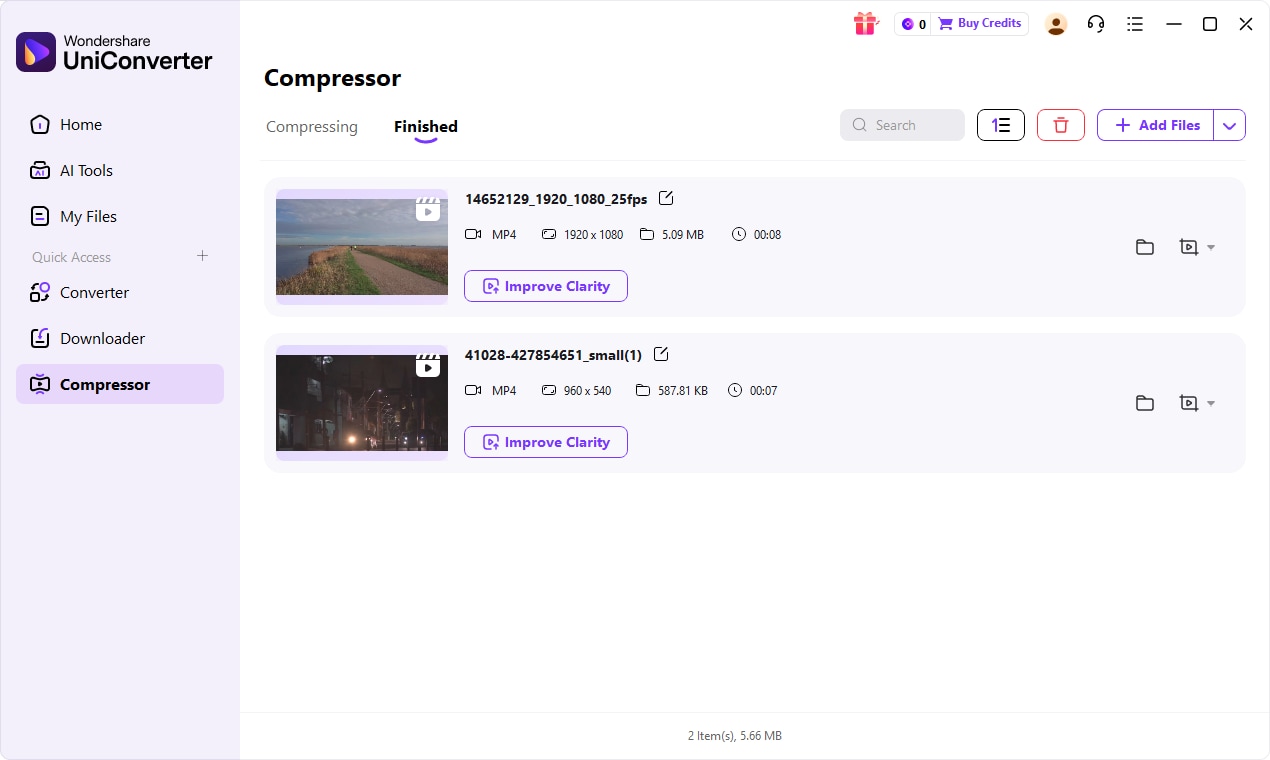
Step 4: Save the Compressed File
Once you're satisfied with the settings, click the "Compress" button. UniConverter will process your files quickly. After compression, you can choose the destination folder to save your newly compressed audio files.

Zamzar Audio Compressor Alternative for Better Control?
Part 7: Conclusion
After thoroughly exploring the Zamzar Audio Compressor review and comparing it with various alternatives, my conclusion is that its value largely depends on my specific needs. For quick, occasional audio compression tasks where I prioritize ease of use and don't require advanced control or batch processing, Zamzar is a perfectly adequate and convenient online tool. It shines in scenarios where I need to shrink a single file without any software installation. However, when my requirements shift towards professional-grade quality, precise control over compression parameters, the ability to process multiple files simultaneously, or the need for offline functionality and enhanced data security, Zamzar's limitations become apparent. In such cases, desktop applications like UniConverter or Audacity offer a far more comprehensive and reliable solution, providing the power and flexibility that online tools simply cannot match. Therefore, I recommend choosing based on the complexity and frequency of your audio compression tasks.
Part 8: FAQs About Audio Compressors
-
1. What is the best audio compressor for beginners?
For beginners, online tools like Zamzar Audio Compressor or Online Audio Converter are excellent choices due to their simple, intuitive interfaces that don't require any software installation. They are perfect for quick, basic compression tasks.
-
2. Does compressing audio reduce its quality?
Yes, compressing audio, especially using "lossy" compression methods, will inherently reduce its quality to some extent. The goal is to achieve a balance where the file size is significantly reduced without a *perceptible* loss in quality. Tools with advanced settings, like UniConverter, allow you to control the compression level to minimize quality degradation.
-
3. Are online audio compressors safe to use?
Online audio compressors can be safe for general use, but I always advise caution. Be mindful of the privacy policies regarding your uploaded files and avoid uploading sensitive or confidential audio. Desktop software like UniConverter offers better privacy as your files are processed locally on your computer.
-
4. Can I compress multiple audio files at once?
Many online audio compressors, including Zamzar, typically do not support true batch processing for multiple files simultaneously in their free versions. For efficient batch compression, I recommend using desktop software such as UniConverter or Audacity, which are designed for handling multiple files at once.
-
5. What is the difference between bitrate and sample rate in audio compression?
Bitrate refers to the amount of data processed per unit of time (e.g., kbps) and directly impacts the audio quality and file size. A higher bitrate generally means better quality but a larger file. Sample rate, on the other hand, is the number of samples of audio carried per second (e.g., kHz) and determines the frequency range captured. While both affect quality, bitrate is usually the primary setting I adjust for file size reduction in compression.
