
- XLD Focus: XLD excels in bit-perfect lossless audio conversion for macOS audiophiles.
- Core Strength: Uncompromising audio fidelity and extensive customization are XLD's hallmarks.
- Ideal Users: Best for audiophiles, archivists, and engineers prioritizing audio purity on macOS.
- Platform Limit: XLD is macOS-exclusive, limiting its use for Windows users.
- Learning Curve: Its complex settings can be challenging for beginners.
- UniConverter Value: Offers user-friendly, cross-platform, fast audio/video compression.
- Decision Factor: Choose XLD for ultimate precision; UniConverter for versatility and ease of use.
In this article
- Part 1: What is XLD Audio Compressor?
- Part 2: XLD Audio Compressor: Core Features, Pros, and Cons
- Part 3: XLD Audio Compressor: Ideal Users and Use Cases
- Part 4: XLD Audio Compressor and Alternatives: A Comparative Analysis
- Part 5: Risks and Pitfalls to Consider
- Part 6: How to Use UniConverter for Efficient Audio/Video Compression
- Part 7: Final Verdict and Recommendations
- Part 8: FAQs
When it comes to preserving the pristine quality of your audio collection, XLD Audio Compressor review stands out as a formidable tool for macOS users. This in-depth review will explore its capabilities, compare it with leading alternatives, and help you determine if it's the right choice for your audio compression needs. From its meticulous lossless conversion to its highly customizable settings, XLD caters to audiophiles and archivists who demand nothing less than perfection. However, its niche focus and platform limitations mean it's not a one-size-fits-all solution. Join me as I dissect XLD's strengths and weaknesses, offering a comprehensive guide to navigating the complex world of audio compression.
Part 1: What is XLD Audio Compressor?
XLD (X Lossless Decoder) Audio Compressor is a powerful, open-source audio transcoder for macOS, primarily designed for decoding, converting, and playing various lossless audio files. Developed with an emphasis on accuracy and fidelity, XLD has earned a reputation among audiophiles for its bit-perfect conversions, ensuring that no audio data is lost or altered during the process. Unlike many commercial tools, XLD prioritizes the integrity of the audio signal, making it a go-to choice for those who value sonic purity above all else. This review aims to address the core question: Is XLD still the gold standard for lossless audio compression, especially when considering the evolving landscape of audio tools and user needs?
The Landscape of Lossless Audio Compression
* Growing demand for high-fidelity audio: Users increasingly seek to preserve the original quality of their music.
* Proliferation of audio formats: The need for versatile converters that handle various lossless codecs is crucial.
* Balancing quality with convenience: Finding tools that offer both uncompromised quality and ease of use remains a challenge.
Part 2: XLD Audio Compressor: Core Features, Pros, and Cons
XLD Audio Compressor is built around the principle of uncompromising audio fidelity, offering a suite of features tailored for the discerning audiophile. Its core strength lies in its ability to decode and convert a vast array of lossless audio formats, including FLAC, ALAC, APE, WV, and WAV, with exceptional accuracy. The software provides extensive customization options, allowing me to fine-tune output settings, adjust sample rates, and even embed metadata, ensuring my audio files are perfectly organized and preserved.
Core Features:
1. Bit-Perfect Lossless Conversion: Ensures no data loss during conversion.
2. Extensive Format Support: Decodes and converts FLAC, ALAC, APE, WV, WAV, and more.
3. Highly Customizable Output Settings: Fine-tune sample rates, bit depths, and encoding parameters.
4. Robust Error Detection and Correction: Identifies and corrects errors in audio streams.
5. Accurate Metadata Preservation: Retains and can edit ID3 tags and other metadata.
Pros:
* Exceptional Lossless Audio Conversion Quality: The audio output is consistently pristine.
* Highly Customizable Output Settings: I have granular control over every aspect of the conversion.
* Robust Error Detection and Correction: Provides peace of mind that my files are accurately processed.
Cons:
* Steep Learning Curve for Beginners: The interface can be intimidating for new users.
* Limited to macOS Platform: Excludes a large segment of potential users.
Part 3: XLD Audio Compressor: Ideal Users and Use Cases
XLD Audio Compressor is not for everyone, but for a specific segment of users, it's indispensable. I find it most suitable for audiophiles, music archivists, and professional sound engineers who prioritize uncompromised audio quality and demand precise control over their digital music collections. If you're someone who meticulously rips CDs, converts high-resolution audio files, or curates a vast library of lossless music, XLD is designed with you in mind. Its robust error detection and highly customizable settings ensure that every conversion is as faithful to the original source as possible.
Best Use Case: Archiving and Preserving High-Fidelity Audio Collections
When I'm archiving my extensive collection of rare live recordings or converting my physical CD library to digital, XLD is my go-to tool. Its bit-perfect conversion ensures that every nuance of the original audio is retained, making it ideal for creating a future-proof, high-quality digital archive. I can specify exact output parameters, verify checksums, and be confident that my preserved audio is as good as the source.
Limited Use Case: Quick, On-the-Go Audio Format Conversion
For quick, casual conversions, especially if I just need to change an MP3 to an AAC for my phone, XLD feels like overkill. Its detailed settings and robust error checking, while beneficial for critical tasks, slow down the process for simple conversions. If I'm on the go and need a fast, no-frills converter, I'd likely reach for a more streamlined, user-friendly alternative that sacrifices some of XLD's precision for speed and simplicity.
Part 4: XLD Audio Compressor and Alternatives: A Comparative Analysis
When evaluating XLD Audio Compressor review against its competitors, it's clear that each tool carves out its own niche. While XLD excels in precision and customization for macOS users, other solutions offer broader platform support, greater ease of use, or a wider range of features.
| Feature/Product | XLD Audio Compressor | UniConverter | dBpoweramp | fre:ac |
| Lossless Conversion | Excellent | Excellent | Excellent | Good |
| Customization | High | Medium | High | Medium |
| Platform | macOS | Windows/macOS | Windows/macOS | Windows/macOS/Linux |
| Ease of Use | Low | High | Medium | Medium |
| Processing Speed | Fast | Very Fast | Fast | Medium |
| Output Quality | Bit-perfect | High | Bit-perfect | High |
| Customer Support | Community | Dedicated | Dedicated | Community |
| Security | High | High | High | High |
XLD stands out for its meticulous lossless conversion and deep customization options, making it the preferred choice for audiophiles on macOS. UniConverter, on the other hand, offers a more balanced approach with its user-friendly interface, cross-platform compatibility, and impressive speed, making it ideal for users who need a versatile all-in-one solution. dBpoweramp rivals XLD in terms of audio fidelity and customization but extends its reach to Windows users, often being a top choice for CD ripping. fre:ac provides a solid, free, open-source option for basic conversions across multiple platforms, though it may lack some of the advanced features and precision of the others.
Part 5: Risks and Pitfalls to Consider
While XLD Audio Compressor is a powerful tool, relying solely on it, especially for specific tasks, comes with its own set of risks and potential pitfalls that I've learned to navigate. Understanding these can help you make a more informed decision and avoid common frustrations.
Potential for User Error with Complex Settings
XLD's extensive customization options, while a major strength, can also be a double-edged sword. For someone like me who isn't deeply familiar with audio encoding parameters, it's easy to misconfigure settings, leading to suboptimal output quality or even corrupted files. I've sometimes spent more time troubleshooting my settings than actually converting files, which can be frustrating.
Lack of Cross-Platform Compatibility
The biggest limitation for me is XLD's macOS exclusivity. If I need to work on a Windows machine or collaborate with someone who uses Windows, XLD is simply not an option. This forces me to find alternative solutions, which often means compromising on the level of precision and control I've come to expect from XLD. It breaks my workflow and adds an extra layer of complexity.
No Built-in Audio Editing Capabilities
XLD is a converter, pure and simple. It doesn't offer any audio editing features like trimming, merging, or applying effects. If I need to perform even basic edits before or after conversion, I have to use a separate application. This fragmentation of tools can be inefficient and adds extra steps to my workflow, especially when dealing with large batches of files.
Dependence on External Codecs for Some Formats
While XLD supports many formats natively, some less common or proprietary formats might require external codecs or libraries to be installed. This can be a hassle, as tracking down and correctly installing these dependencies can be a technical challenge for less experienced users. It also introduces potential compatibility issues or security risks if sources are not reputable.
Limited Support and Community Resources
As an open-source project, XLD's support primarily comes from its community. While helpful, it's not as robust or immediate as the dedicated customer support offered by commercial software. If I encounter a complex issue, finding a quick and comprehensive solution can sometimes be difficult, relying on forums or trial-and-error.
Part 6: How to Use UniConverter for Efficient Audio/Video Compression
If other tools keep struggling with batch compression, inconsistent output, or noticeable quality loss, UniConverter is a much more dependable alternative. It provides a cleaner workflow for both audio compression and video compression, making everyday media tasks easier to manage. I also like its ad-free environment, wide format support, and GPU acceleration, which help speed up processing without making the interface feel complicated. For video files, it can additionally help compress videos without quality loss as much as possible, making it a practical all-in-one solution for reliable media compression.
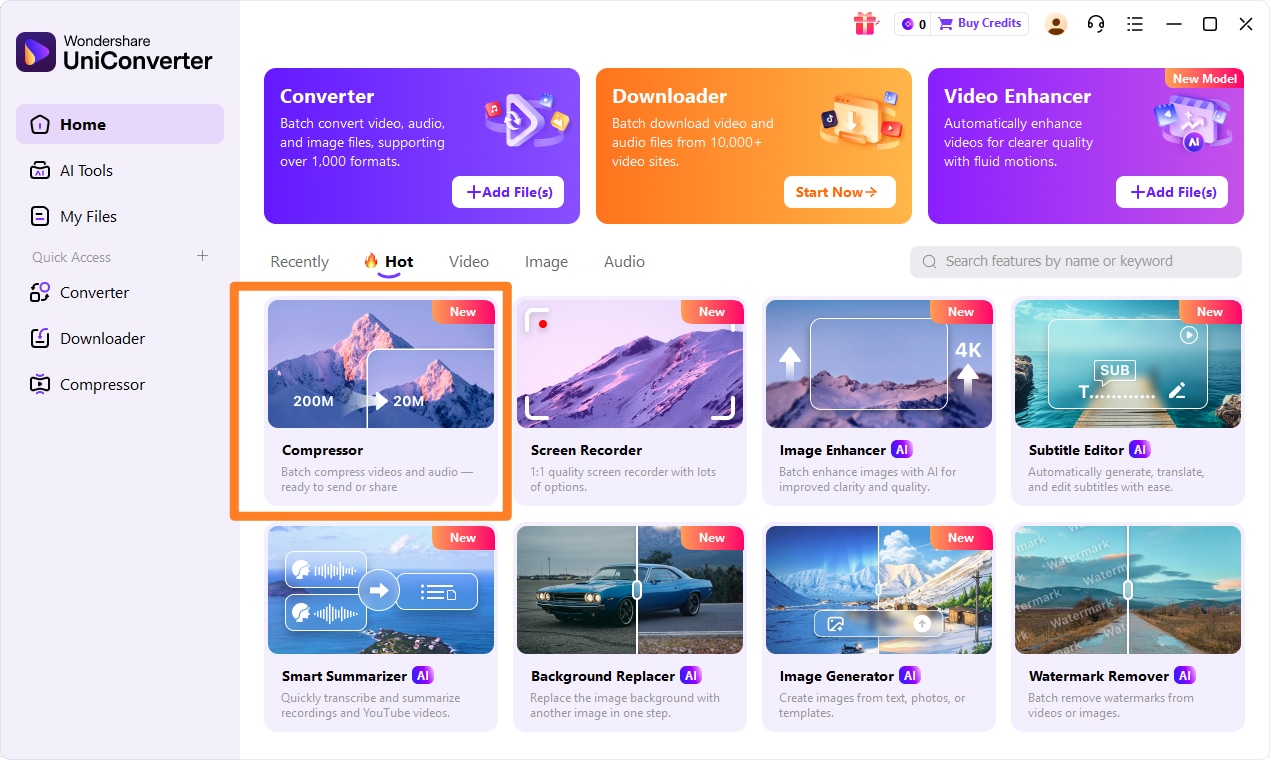
Step 1: Open UniConverter and Choose Compressor
Launch UniConverter on your computer. From the main interface, select the "Compressor" tool. This action will open the dedicated compression window.
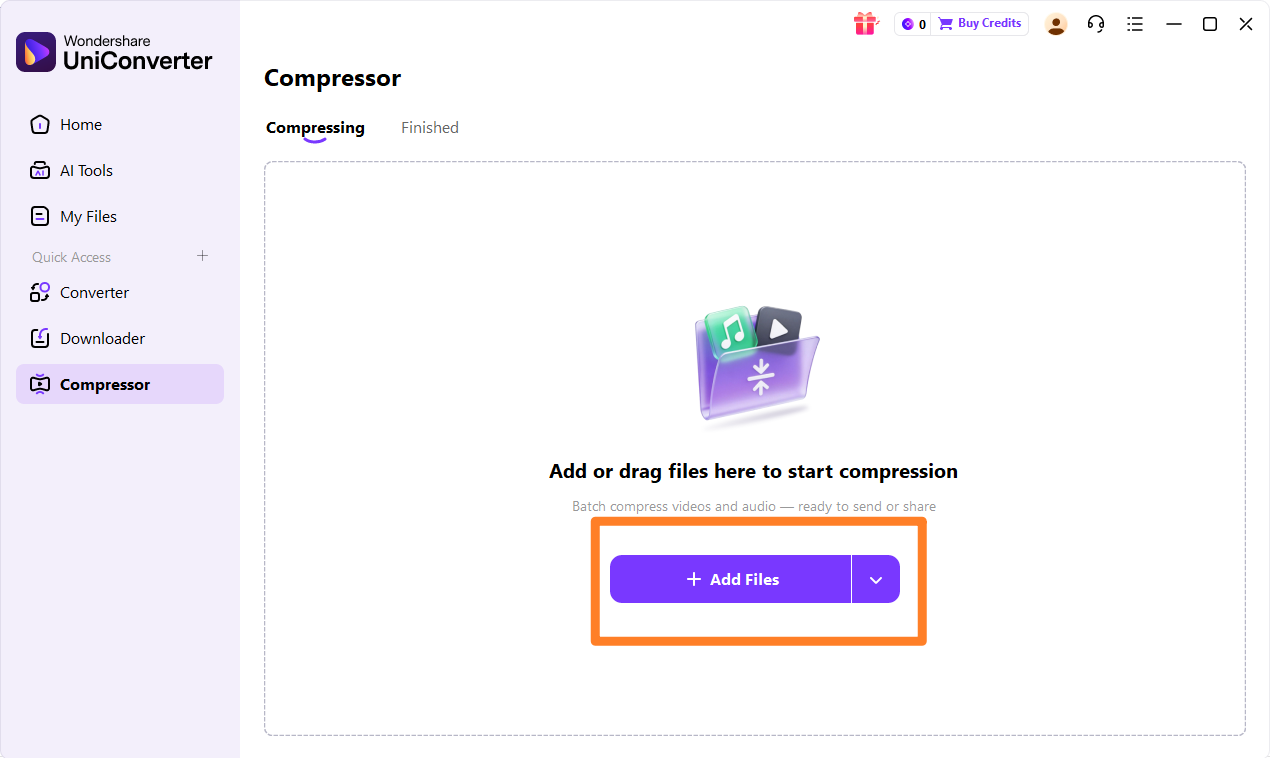
Step 2: Upload the Video, Audios or Images
Click on the "Add Files" button or simply drag and drop your audio, video, or image files into the UniConverter window. You have the option to add multiple files for batch compression.
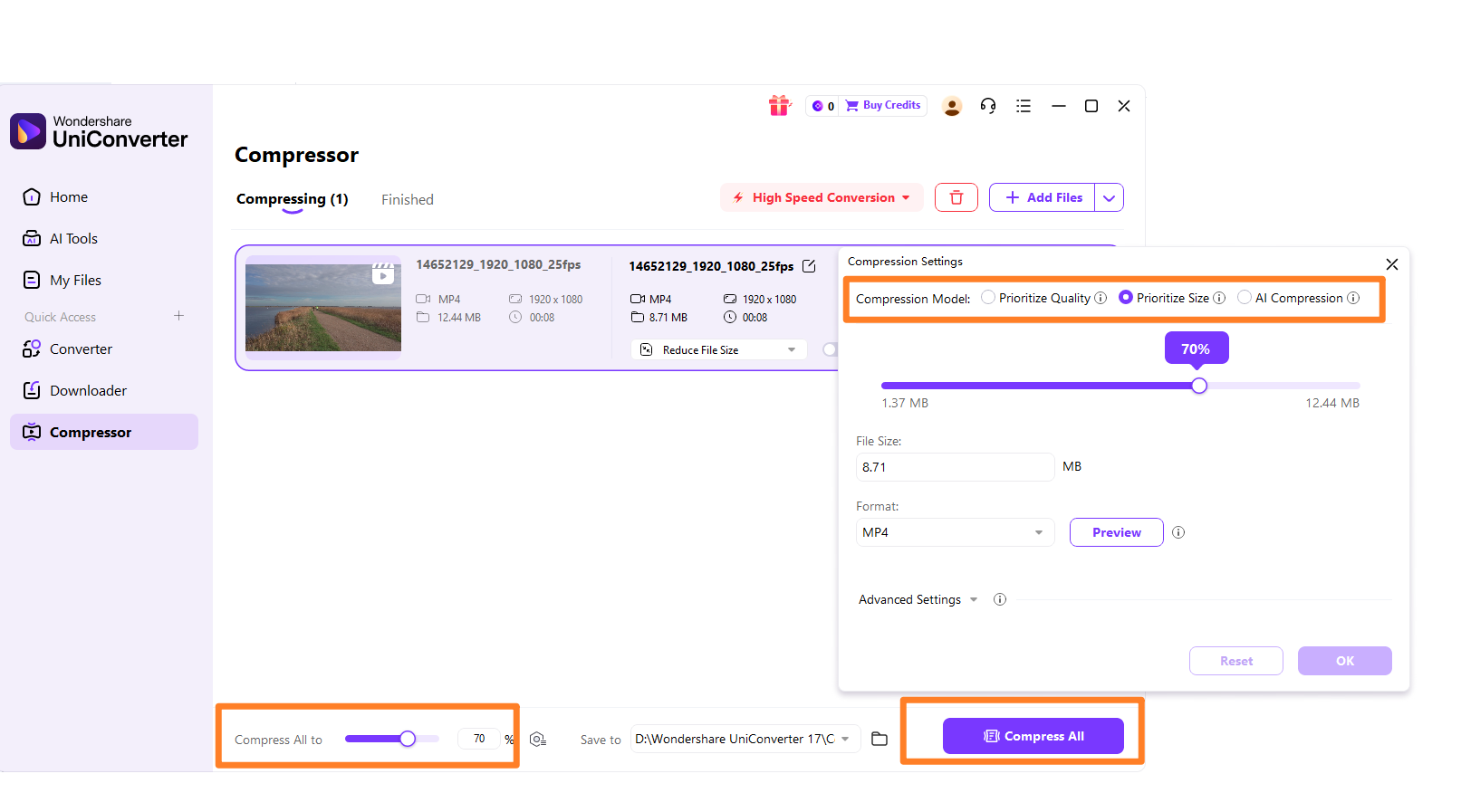
Step 3: Choose Required Parameters
After importing your files, you'll find options to adjust the compression settings. You can select the output format, resolution, bitrate, and quality. UniConverter offers presets or allows for custom adjustments to achieve the ideal balance between file size and quality.
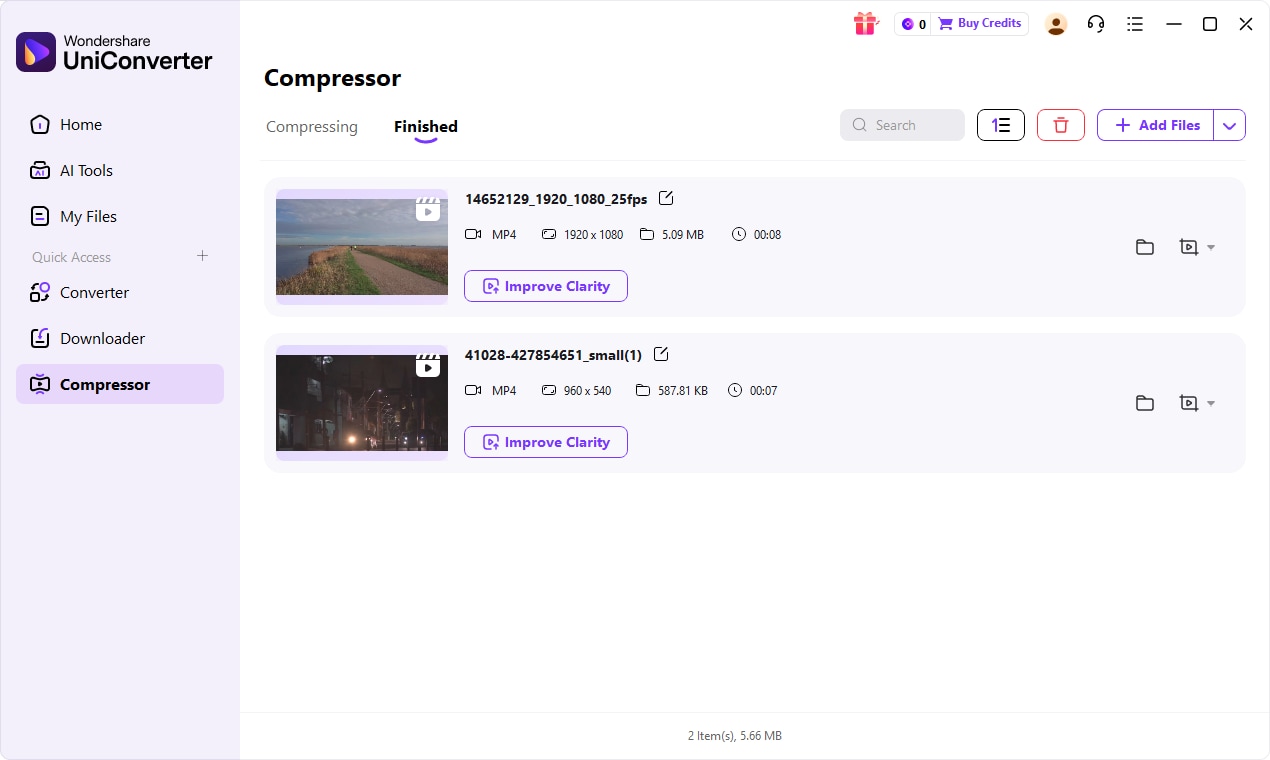
Step 4: Save the Compressed File
Once you've configured your desired parameters, click the "Compress" button. UniConverter will efficiently process your files. Following compression, you can select the destination folder to save your optimized files.

XLD Audio Compressor Alternative for Windows?
Part 7: Final Verdict and Recommendations
After a thorough XLD Audio Compressor review, it's clear that this tool holds a unique and valuable position in the audio software landscape. For audiophiles and archivists on macOS who demand bit-perfect lossless conversions and granular control over every aspect of their audio files, XLD remains an unparalleled choice. Its robust error detection and extensive customization capabilities ensure the highest fidelity possible, making it ideal for preserving precious audio collections. However, its steep learning curve, macOS exclusivity, and lack of built-in editing features mean it's not the best fit for everyone. Casual users, those needing cross-platform compatibility, or anyone prioritizing ease of use and speed for quick conversions might find XLD to be an overcomplicated solution. For these users, alternatives like UniConverter offer a more balanced approach, providing a user-friendly interface, broad format support, and efficient processing across multiple operating systems. Ultimately, the decision comes down to balancing uncompromising quality with convenience and specific workflow requirements. If precision is paramount and you're comfortable with a more technical interface, XLD is your champion. If versatility, ease of use, and cross-platform functionality are higher priorities, exploring other options will serve you better.
Part 8: FAQs
-
1. Is XLD Audio Compressor truly lossless?
Yes, XLD is renowned for its accurate, bit-perfect lossless audio conversion, ensuring no data is lost during the process.
-
2. Can XLD convert video files?
No, XLD is exclusively an audio compressor and converter; it does not handle video files. For video conversion and compression, consider a versatile tool like UniConverter.
-
3. What are the main advantages of using XLD over other free converters?
XLD offers superior error detection, highly customizable settings, and an unwavering focus on audio fidelity, making it a top choice for critical audio tasks.
-
4. Is there a Windows version of XLD Audio Compressor?
No, XLD is a macOS-exclusive application. If you need a powerful audio converter for Windows, tools like dBpoweramp or UniConverter are excellent alternatives.
-
5. How does XLD handle metadata during conversion?
XLD generally preserves metadata (like ID3 tags) during conversion. However, I always recommend verifying the settings for specific formats and ensuring the "Copy metadata" option is enabled if available.
