
- XConvert Overview: Online audio compressor for quick, browser-based file size reduction.
- Core Features: Batch processing and user-friendly interface for common audio formats.
- Limitations: Lacks advanced customization, risking quality degradation with aggressive settings.
- Ideal User: Best for casual users and content creators needing fast, simple social media compression.
- Comparative Advantage: Excels in ease of use for quick tasks, but falls short for professional needs.
- Risks: Online tools pose privacy concerns, intrusive ads, and internet dependency.
- UniConverter Solution: Offers advanced control, offline capability, and superior quality for diverse needs.
In this article
- Part 1: What is XConvert Audio Compressor?
- Part 2: XConvert Audio Compressor: Core Features, Pros, and Cons
- Part 3: XConvert Audio Compressor: Ideal Users and Use Cases
- Part 4: XConvert Audio Compressor & Competitors: A Comparative Analysis
- Part 5: Risks and Pitfalls to Consider
- Part 6: How to Use UniConverter for Efficient Audio and Video Compression
- Part 7: Conclusion
- Part 8: FAQs
The digital world is awash with media, and audio files, while enriching our experiences, often come with a significant footprint. This is where audio compressors like XConvert Audio Compressor review step in, promising to shrink file sizes without sacrificing too much quality. As a product review expert, I've delved deep into XConvert Audio Compressor, comparing it against its rivals to help you navigate the crowded market. This review aims to provide a clear, scenario-based analysis, highlighting its strengths and weaknesses, and ultimately guiding you to the best choice for your specific needs.
Part 1: What is XConvert Audio Compressor?
XConvert Audio Compressor is an online tool designed to reduce the file size of audio files. It operates directly in your web browser, eliminating the need for software installations. My experience with it suggests it's built for convenience, offering a straightforward approach to a common digital problem. The core problem it addresses is the ever-growing demand for smaller file sizes, whether for faster uploads, saving storage space, or improving streaming performance. This review will explore whether XConvert Audio Compressor truly delivers on its promise of efficient and effective audio compression.
Understanding the Need for Audio Compression in Today's Digital Landscape
* Optimizing for Web and Mobile: Smaller audio files load faster on websites and consume less data on mobile devices, enhancing user experience.
* Saving Storage Space: With increasing amounts of digital content, compressing audio helps manage storage on hard drives, cloud services, and portable devices.
* Efficient Sharing and Transfer: Compressed audio files are quicker to upload, download, and share across various platforms and networks.
* Meeting Platform Requirements: Many social media and content platforms have file size limits, making compression essential for creators.
Part 2: XConvert Audio Compressor: Core Features, Pros, and Cons
XConvert Audio Compressor primarily focuses on simplifying the audio compression process. Its core capability lies in its ability to quickly reduce the size of various audio formats. I found its interface to be very intuitive, allowing me to upload files and initiate compression with minimal clicks. It supports a decent range of common audio formats, making it versatile for everyday use.
Pros
* Efficient Batch Processing for Multiple Audio Files: I can easily upload and compress several audio files simultaneously, saving a lot of time.
* User-Friendly Interface for Quick Compressions: The clean and simple layout means I don't need any technical expertise to get started.
* Wide Range of Supported Audio Formats: It handles popular formats like MP3, WAV, FLAC, and OGG, which covers most of my needs.
Cons
* Limited Advanced Customization Options for Professional Users: I often wish for more granular control over bit rates or sample rates, which isn't available.
* Potential for Quality Degradation with Aggressive Compression Settings: If I push the compression too far, I notice a noticeable drop in audio quality.
Part 3: XConvert Audio Compressor: Ideal Users and Use Cases
From my perspective, XConvert Audio Compressor is best suited for users who prioritize speed and simplicity over intricate control. It's a fantastic tool for anyone who needs to quickly shrink audio files for common digital tasks without getting bogged down in technical details.
Best Use Case: Quick Compression for Social Media Sharing
Scenario: As a content creator, I often need to quickly compress several audio clips for upload to various social media platforms. My priority is to keep file sizes small to ensure fast uploads and smooth playback for my audience, even if it means a slight compromise on the most nuanced audio quality. XConvert Audio Compressor allows me to do this efficiently, letting me focus on content creation rather than technical adjustments.
Limited Use Case: Professional Audio Production
Scenario: When I'm working as a music producer, I require precise control over every aspect of audio, including compression parameters like bit rate, sample rate, and codec. For mastering high-fidelity audio tracks, I need tools that offer extensive customization to preserve every detail and nuance of the sound. XConvert Audio Compressor simply doesn't provide the depth of control I need for these professional-grade tasks.
Part 4: XConvert Audio Compressor & Competitors: A Comparative Analysis
When I look at XConvert Audio Compressor alongside its competitors, I see a clear picture of where it fits in the market. It excels in simplicity, but other tools offer more depth.
| Feature/Scenario | XConvert Audio Compressor | Online Audio Converter | Audacity | UniConverter |
| Ease of Use (Quick Compression) | High | High | Moderate | High |
| Batch Processing | Yes | Yes | Limited | Yes |
| Advanced Settings | Limited | Limited | Extensive | Moderate |
| Offline Capability | No | No | Yes | Yes |
| Output Quality Control | Basic | Basic | Advanced | Advanced |
| Customer Support | Basic (FAQ) | Basic (FAQ) | Community | Dedicated |
| Security/Privacy | Standard (Online) | Standard (Online) | High (Offline) | High (Offline) |
Key Differentiators: What Sets Them Apart
XConvert Audio Compressor and Online Audio Converter are very similar in their online, quick-and-easy approach, ideal for casual users. Audacity stands out with its extensive advanced settings and offline capability, making it a favorite for those who need more control and don't mind a steeper learning curve. UniConverter, on the other hand, offers a balanced approach, providing a user-friendly interface with significantly more advanced options and offline functionality, making it a more comprehensive solution for a wider range of users.
Part 5: Risks and Pitfalls to Consider
While online audio compressors like XConvert Audio Compressor offer convenience, I've learned that they come with their own set of risks and potential pitfalls that users should be aware of, especially when dealing with sensitive data or expecting high-quality results.
Potential for Data Privacy Concerns with Online Tools
When I upload my audio files to an online service, I always consider the privacy implications. These platforms often state their privacy policies, but the act of transmitting and processing data on a third-party server inherently carries a risk. I've seen cases where users are concerned about who has access to their uploaded content and how it might be used or stored.
Intrusive Advertisements on Free Platforms
Many free online tools, including some audio compressors, rely on advertising revenue. This often means I encounter numerous pop-up ads, banner ads, or even video ads that can disrupt my workflow and make the user experience frustrating. Sometimes, these ads can even lead to malicious websites if I'm not careful.
Unintended Audio Quality Loss with Default Settings
While compression is about reducing file size, aggressive default settings or a lack of fine-tuning options can lead to noticeable degradation in audio quality. I've experienced situations where a quick compression resulted in muffled sounds, reduced dynamic range, or artifacts that made the audio unsuitable for its intended purpose. It's a trade-off I have to be mindful of.
Dependency on Internet Connectivity for Online Compressors
Since XConvert Audio Compressor is an online tool, I'm completely reliant on a stable internet connection to use it. If my internet goes down or is slow, I can't compress my files. This can be a significant drawback if I'm working offline or in an area with unreliable connectivity.
Lack of Customer Support for Troubleshooting
For many free online tools, dedicated customer support is often non-existent. If I encounter a bug, have a question, or need help troubleshooting an issue, I'm usually left to my own devices or have to rely on community forums, which can be time-consuming and not always effective.
Part 6: How to Use UniConverter for Efficient Audio and Video Compression
When online tools fall short in providing batch processing, stable results, or quality preservation—especially for video, image, and audio compression—I frequently rely on UniConverter. This desktop solution avoids many of the common drawbacks of web-based compressors and provides a more dependable workflow for repeated tasks and large files. With broad format support and practical tools for different media types, it remains my preferred all-in-one media management solution.
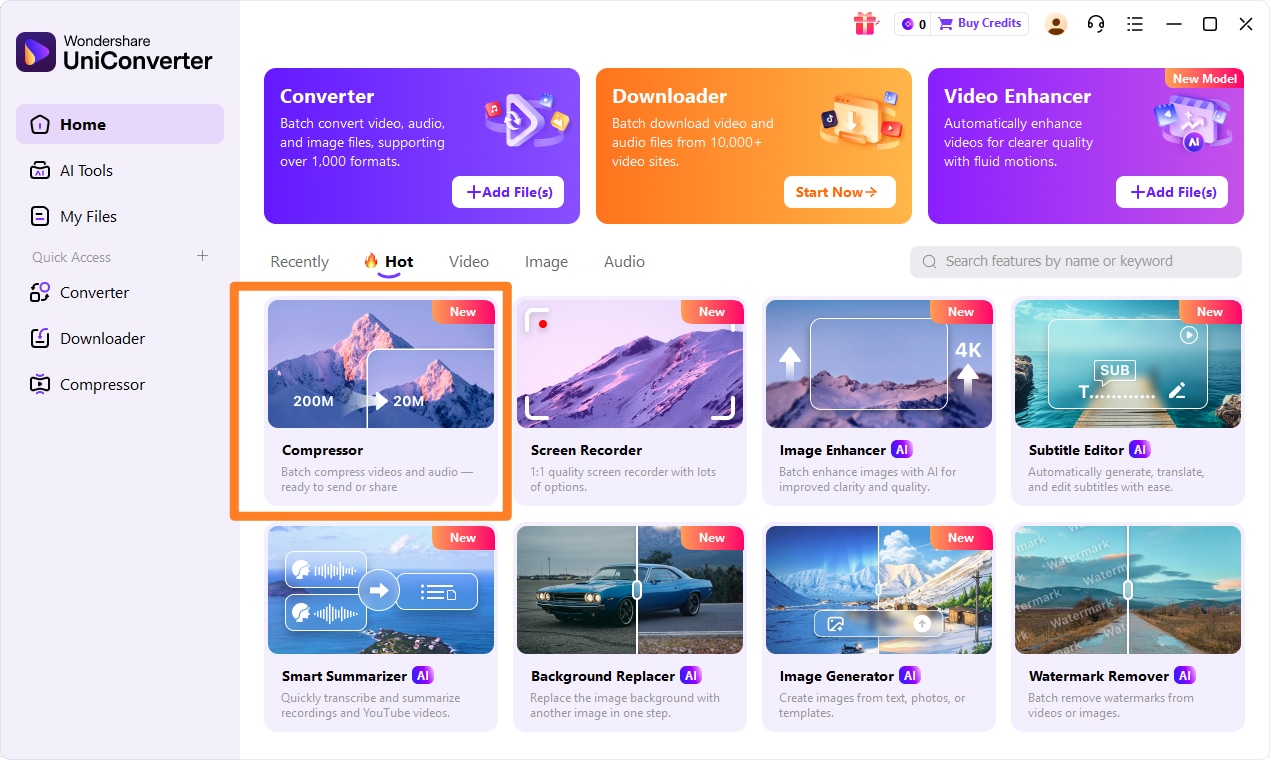
Step 1: Open UniConverter and Choose Compressor
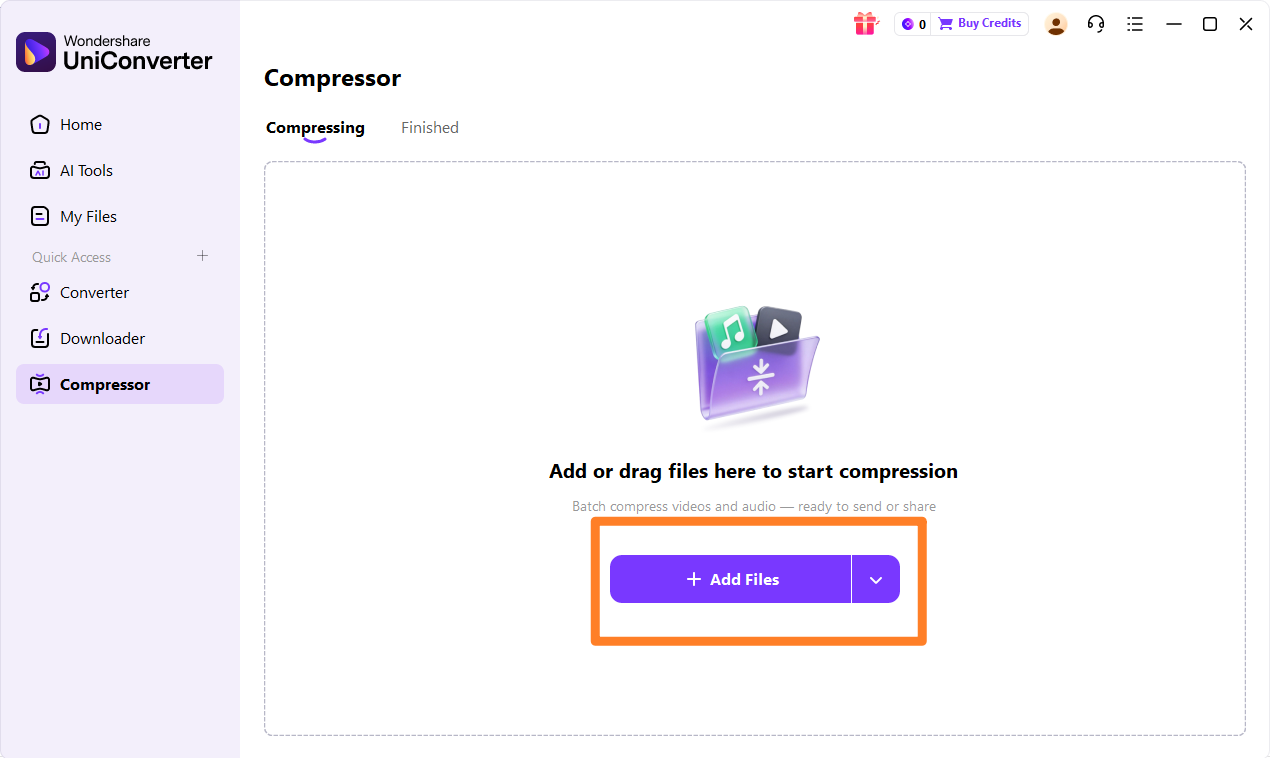
Step 2: Upload the Video, Audios or Images
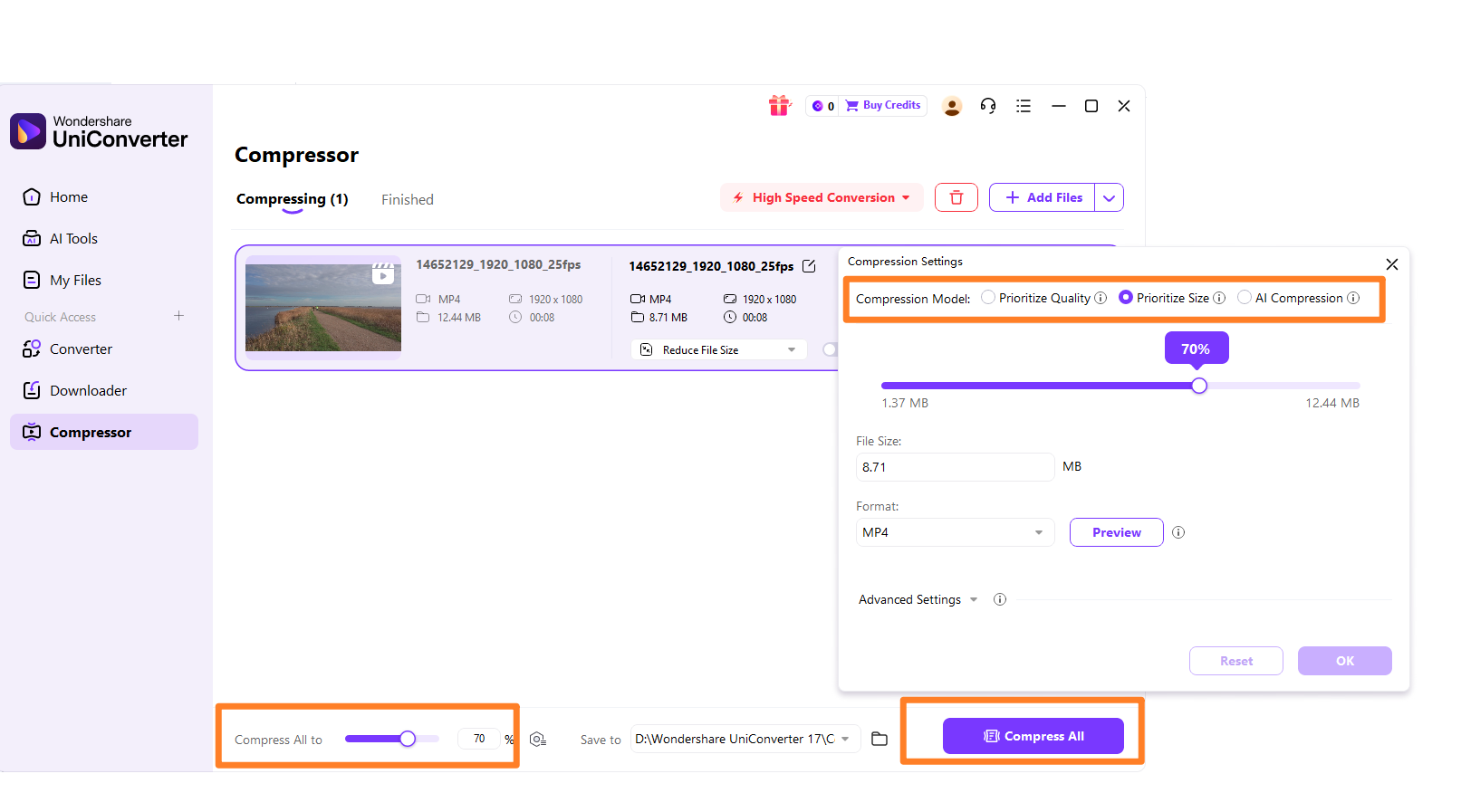
Step 3: Choose Required Parameters
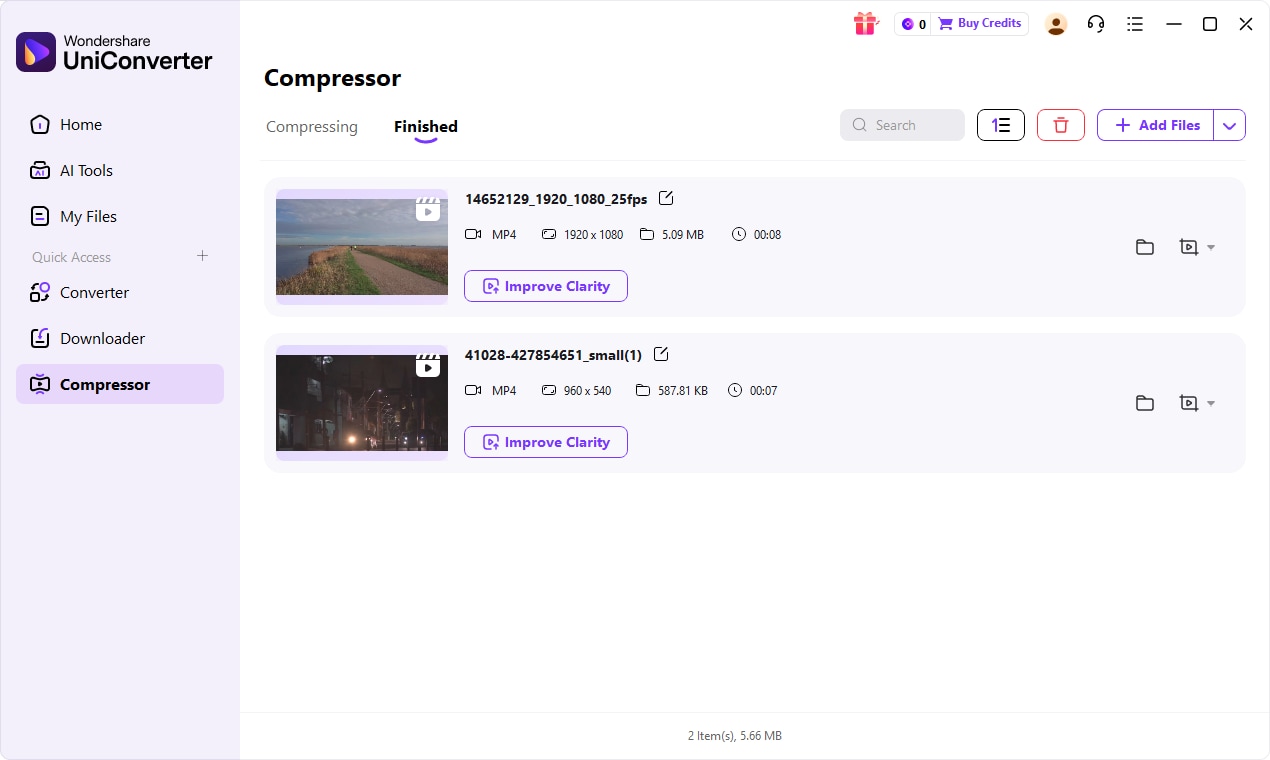
Step 4: Save the Compressed File

Seeking an XConvert Audio Compressor Alternative?
Part 7: Conclusion
After thoroughly exploring XConvert Audio Compressor review and comparing it with its alternatives, I can confidently say that its value largely depends on your specific needs. For casual users, content creators, or social media managers who prioritize speed and simplicity for quick compressions and don't require granular control over audio quality, XConvert Audio Compressor is a perfectly adequate tool. Its user-friendly interface and batch processing capabilities make it convenient for everyday tasks. However, for professional audio engineers, music producers, or anyone needing precise control over compression parameters, advanced features, and offline capabilities, XConvert Audio Compressor falls short. In such scenarios, desktop applications like Audacity or UniConverter offer the depth and reliability required for high-fidelity audio work. Ultimately, choose XConvert if convenience is paramount, but look to more robust solutions if quality control and advanced functionality are non-negotiable.
Part 8: FAQs
-
1. What is XConvert Audio Compressor and how does it work?
XConvert Audio Compressor is an online web-based tool that allows you to reduce the file size of audio files. You simply upload your audio, choose your desired compression level or output format, and the tool processes it in the cloud before allowing you to download the compressed file.
-
2. Can XConvert Audio Compressor compress multiple audio files at once?
Yes, XConvert Audio Compressor supports batch processing, which means you can upload and compress several audio files simultaneously, saving you time and effort.
-
3. Is there a free version of XConvert Audio Compressor available?
Yes, XConvert Audio Compressor is generally available as a free online service. However, like many free online tools, it may come with limitations or advertisements.
-
4. How does audio compression affect sound quality?
Audio compression reduces file size by removing some audio data. While some compression methods are designed to be "lossless" (no perceived quality loss), most common methods are "lossy," meaning they discard data. Aggressive compression can lead to noticeable quality degradation, such as muffled sound, reduced dynamic range, or the introduction of artifacts.
-
5. What are the best alternatives to XConvert Audio Compressor for advanced users?
For advanced users who need more control, offline capability, and higher quality output, desktop applications like Audacity (free, open-source with extensive features) or UniConverter (a comprehensive paid solution offering advanced compression, conversion, and editing tools) are excellent alternatives.
