
- Wavosaur Overview: Free, lightweight Windows audio compressor for basic dynamic range reduction.
- Core Features: Simple controls for threshold, ratio, attack, release; handles common audio formats.
- Pros: Free, open-source, lightweight, portable, intuitive for basic tasks, ideal for budget-conscious users.
- Cons: Limited advanced features, infrequent updates, minimal community support, not for professional use.
- Ideal Users: Perfect for quick audio leveling in podcasts/vlogs; unsuitable for professional music production.
- Comparative Analysis: Excels in simplicity and cost; lacks advanced controls and real-time monitoring of pro tools.
- Risks: Potential for outdated code, limited OS compatibility, no dedicated support, basic metering, quality issues with aggressive settings.
- UniConverter Alternative: Offers stable, high-quality, batch compression for audio/video, overcoming Wavosaur's limitations.
- Decision: Choose Wavosaur for simple, free tasks; invest in professional DAWs or UniConverter for advanced needs.
In this article
- Part 1: What is Wavosaur Audio Compressor?
- Part 2: Wavosaur Audio Compressor: Core Features, Pros, and Cons
- Part 3: Wavosaur Audio Compressor: Ideal Users and Use Cases
- Part 4: Wavosaur Audio Compressor & Competitors: A Comparative Analysis
- Part 5: Risks and Pitfalls to Consider
- Part 6: How to Use UniConverter for Efficient Audio/Video Compression
- Part 7: Conclusion
- Part 8: FAQs
The digital audio landscape is vast and varied, offering a plethora of tools for every conceivable task. Among these, audio compressors play a crucial role in shaping the dynamics of sound, ensuring consistency and enhancing clarity. Today, we're diving deep into the world of Wavosaur Audio Compressor review, a free and lightweight option that has garnered attention for its simplicity. This comprehensive review will explore its features, compare it with leading alternatives, and help you determine if it's the right tool for your audio editing needs, especially when considering its place in a market dominated by more sophisticated and often costly solutions.
Part 1: What is Wavosaur Audio Compressor?
Wavosaur Audio Compressor is a component of the Wavosaur audio editor, a free and open-source sound editor for Windows. It's designed to provide basic audio compression functionalities, allowing users to reduce the dynamic range of their audio files. This means making the loud parts quieter and the quiet parts louder, resulting in a more consistent and often more impactful sound. In a market saturated with complex digital audio workstations (DAWs) and specialized plugins, Wavosaur offers a no-frills approach to a fundamental audio processing task. My goal with this review is to cut through the noise and tell you exactly what you can expect from this tool, and more importantly, whether it's worth your time given the alternatives.
Understanding the Role of Audio Compressors in Digital Audio Workflows
* Ensuring Consistent Loudness: Compressors are vital for maintaining a uniform volume level across different sections of an audio track, preventing jarring shifts in loudness.
* Enhancing Clarity and Punch: By controlling dynamics, compressors can make instruments or vocals stand out more, adding "punch" and clarity to a mix.
* Preparing Audio for Broadcast/Streaming: Many platforms have specific loudness requirements, and compression is a key step in meeting these standards.
* Creative Sound Design: Beyond corrective uses, compressors can be used creatively to shape the timbre and envelope of sounds.
Part 2: Wavosaur Audio Compressor: Core Features, Pros, and Cons
The Wavosaur Audio Compressor review reveals a tool built for straightforward tasks. Its core capability lies in its ability to apply basic compression to audio files within the Wavosaur editor. You won't find a dizzying array of parameters here, but rather a focused set of controls to get the job done. It handles common audio formats and allows for basic adjustments to threshold, ratio, attack, and release, though often in a more simplified manner than professional tools.
Pros
* Lightweight and Portable for On-the-Go Audio Editing: I appreciate how small its footprint is, making it easy to run on older machines or carry on a USB drive.
* Free and Open-Source for Budget-Conscious Users: The price point (free!) is unbeatable, which is a huge plus for anyone just starting out or on a tight budget.
* Intuitive Interface for Basic Compression Tasks: For simple leveling, I found the interface easy to navigate without needing to consult a manual.
Cons
* Limited Advanced Features Compared to Professional DAWs: When I needed precise control over knee or look-ahead, I quickly hit its limitations.
* Lack of Regular Updates and Community Support: It feels a bit abandoned; finding solutions to specific issues can be a challenge due to minimal community activity.
Part 3: Wavosaur Audio Compressor: Ideal Users and Use Cases
From my experience, the Wavosaur Audio Compressor is best suited for individuals who need quick, no-fuss audio adjustments without the complexity or cost of professional software. It's not for the audio engineer meticulously crafting a multi-track mix, but rather for someone with more immediate, less demanding needs. If you're looking for a tool to handle basic dynamic processing, it might fit the bill.
Best Use Case: Quick Audio Leveling for Podcasts and Vlogs
Scenario: I recently had to edit a podcast interview where two speakers had vastly different recording levels. Instead of firing up a full DAW, I used Wavosaur to quickly normalize the audio levels across both speakers. It ensured consistent loudness throughout the conversation without requiring complex processing, making the listening experience much smoother for my audience. It was a fast and efficient solution for a common problem.
Limited Use Case: Professional Music Production and Mastering
Scenario: As a music producer, I often need precise control over attack, release, ratio, and knee settings for intricate dynamic shaping of individual instrument tracks in a high-fidelity mix. Wavosaur's limited controls simply couldn't provide the granularity and sonic transparency I require for professional music production and mastering. For these tasks, I always turn to more advanced plugins and DAWs.
Part 4: Wavosaur Audio Compressor & Competitors: A Comparative Analysis
When I look at the landscape of audio compression tools, Wavosaur occupies a very specific niche. It's free and functional for basic needs, but it's crucial to understand where it stands against its competitors. This comparison will highlight the trade-offs you make when choosing Wavosaur versus other popular options.
| Feature/Product | Wavosaur Audio Compressor | Audacity | Adobe Audition | Logic Pro X (macOS only) |
| Price | Free | Free | Subscription | One-time purchase |
| Platform | Windows | Windows, macOS, Linux | Windows, macOS | macOS |
| Advanced Compression Controls | Basic | Moderate | Extensive | Extensive |
| Real-time Monitoring | No | Limited | Yes | Yes |
| Plugin Support | VST | VST | VST, AU | VST, AU |
| Learning Curve | Low | Low | Moderate | High |
Key Differentiators Summarized
From my perspective, Wavosaur excels in simplicity and cost-effectiveness for basic tasks, making it a great entry point. Audacity offers a bit more versatility across platforms while remaining free. However, for professional-grade control and real-time monitoring, you'll need to invest in solutions like Adobe Audition or Logic Pro X, which offer significantly more robust features and a deeper level of dynamic shaping capabilities.
Part 5: Risks and Pitfalls to Consider
While the allure of a free tool like Wavosaur is strong, I've learned that "free" often comes with its own set of hidden costs and potential issues. When considering Wavosaur Audio Compressor, it's important to be aware of several risks that might impact your workflow and the quality of your output. These are not necessarily deal-breakers for everyone, but they are crucial points to weigh before committing to it as your primary audio compression tool.
Potential for Outdated Code and Security Vulnerabilities
Given its infrequent updates, I'm always concerned about the underlying code. Older software can sometimes harbor security vulnerabilities that haven't been patched, potentially exposing your system to risks if you're processing sensitive files.
Limited Compatibility with Newer Operating Systems
I've personally encountered issues running older software on the latest versions of Windows. Wavosaur, being less actively developed, might not perform optimally or even run at all on newer operating systems, leading to frustrating compatibility problems.
Absence of Dedicated Customer Support Channels
If you run into a bug or have a specific question about a feature, you're largely on your own. The lack of dedicated customer support means you can't rely on official channels for help, which can be a significant setback if you're on a deadline.
Lack of Advanced Metering and Visualization Tools
For precise compression, I rely heavily on visual feedback like gain reduction meters and waveform displays. Wavosaur's basic interface often lacks these advanced metering and visualization tools, making it harder to accurately assess the impact of your compression settings and achieve optimal results.
Potential for Suboptimal Audio Quality with Aggressive Settings
Because of the limited controls and lack of advanced algorithms, pushing the compression too hard in Wavosaur can sometimes lead to undesirable artifacts or a less natural sound compared to more sophisticated compressors. It requires a delicate touch to avoid degrading the audio quality.
Part 6: How to Use UniConverter for Efficient Audio/Video Compression
A more dependable workflow becomes essential once other tools start falling short on batch compression, output stability, or overall quality retention. That’s why I often recommend UniConverter as a stronger all-in-one option for handling video compression, audio compression, and image compression in one place. What makes it especially useful is its ad-free experience, broad format compatibility, and GPU acceleration, all of which help make processing faster and more efficient. For video tasks, it can also help compress videos without quality loss as much as possible, while its batch features make larger jobs far easier to manage.
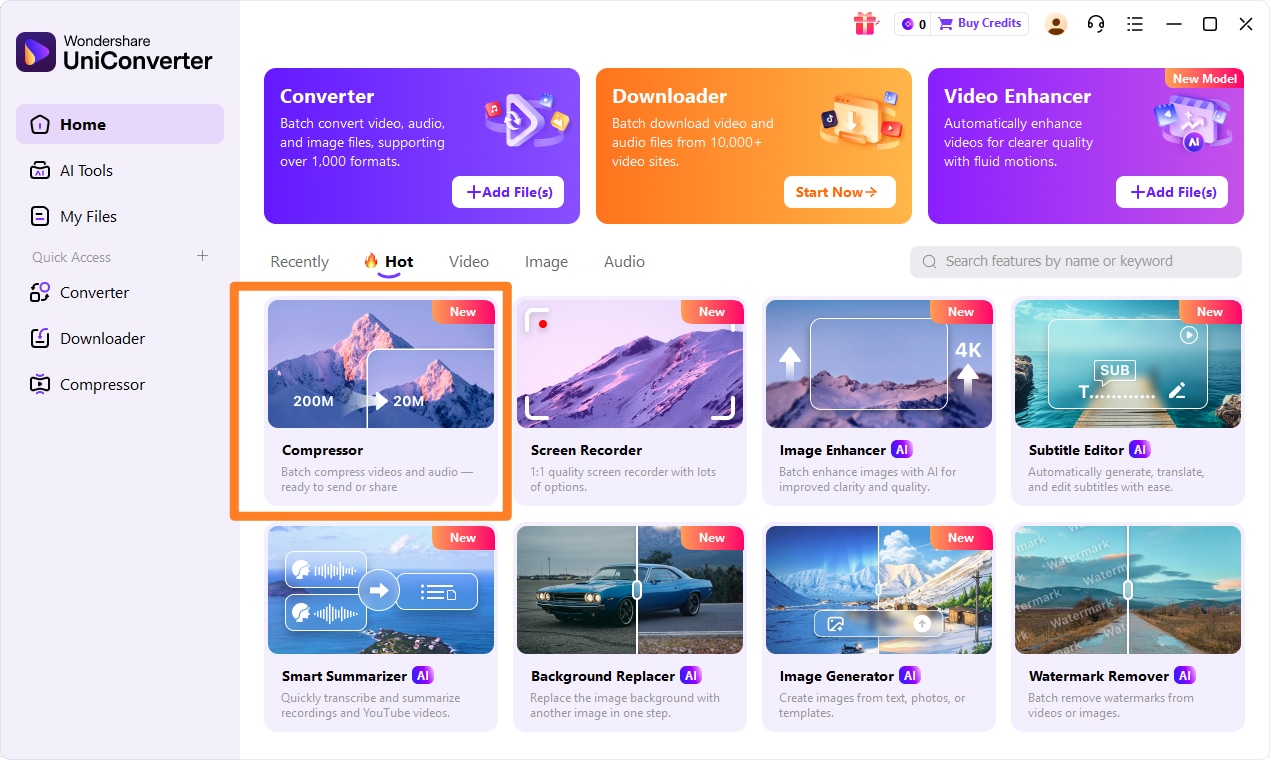
Step 1: Open UniConverter and Choose Compressor
Launch UniConverter on your computer. On the main interface, navigate to the "Video Compressor" or "Audio Compressor" section from the left sidebar, depending on your file type.
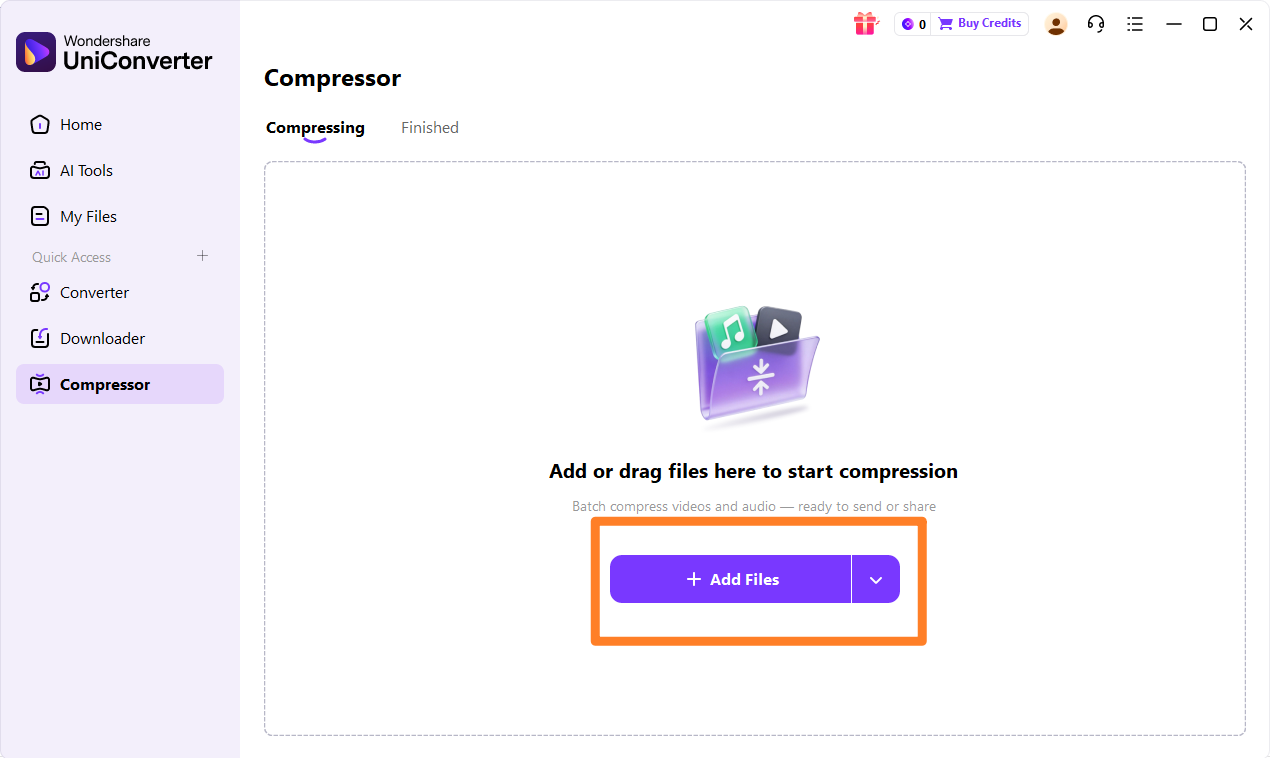
Step 2: Upload the Video, Audios or Images
Click on the "Add Files" button or simply drag and drop your audio, video, or image files into the program window. You can add multiple files for batch processing.
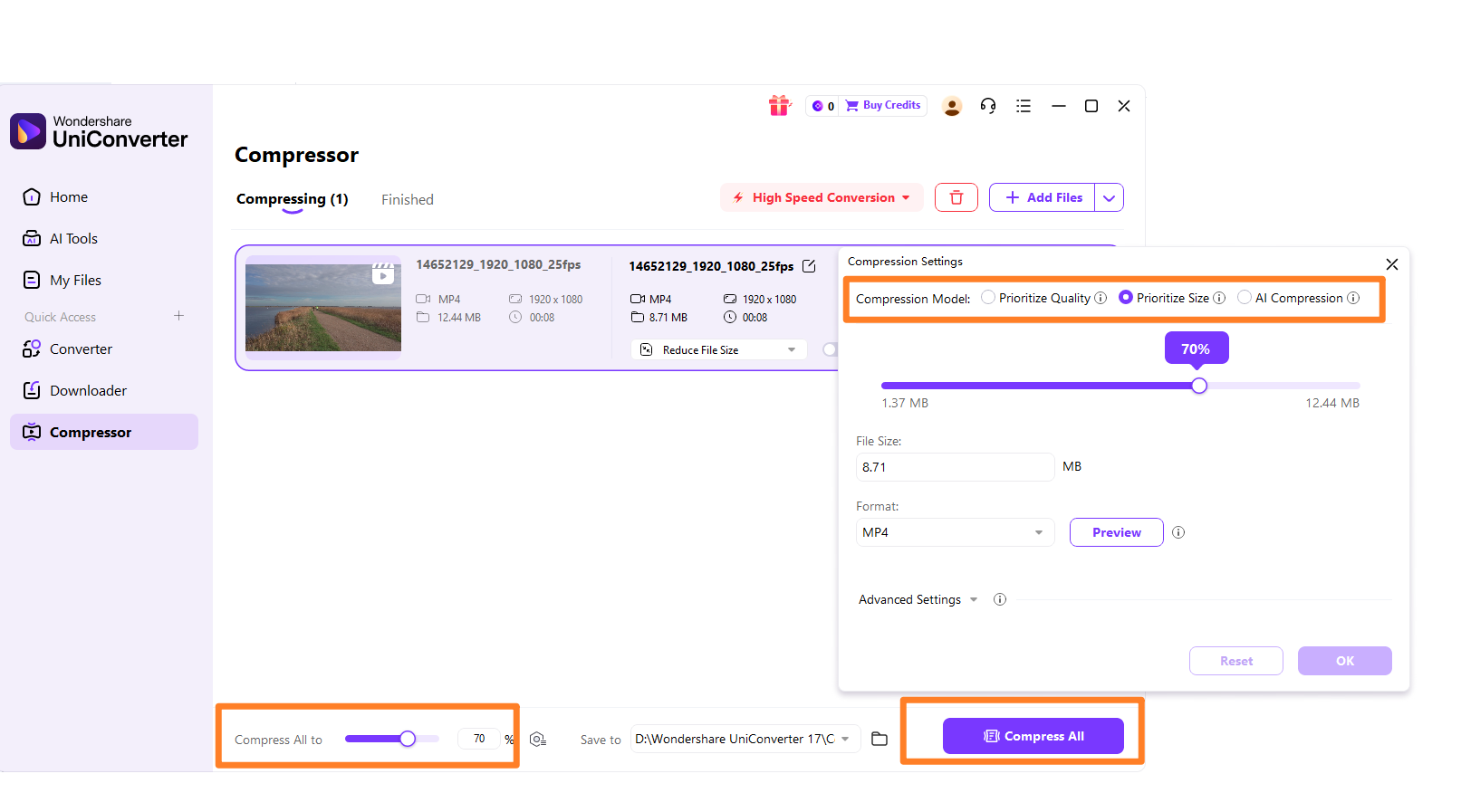
Step 3: Choose Required Parameters
Once your files are loaded, you'll see options to adjust compression parameters such as file size, quality, and format. For audio, you can often adjust bitrate and sample rate. For video, you can change resolution, bitrate, and encoding.
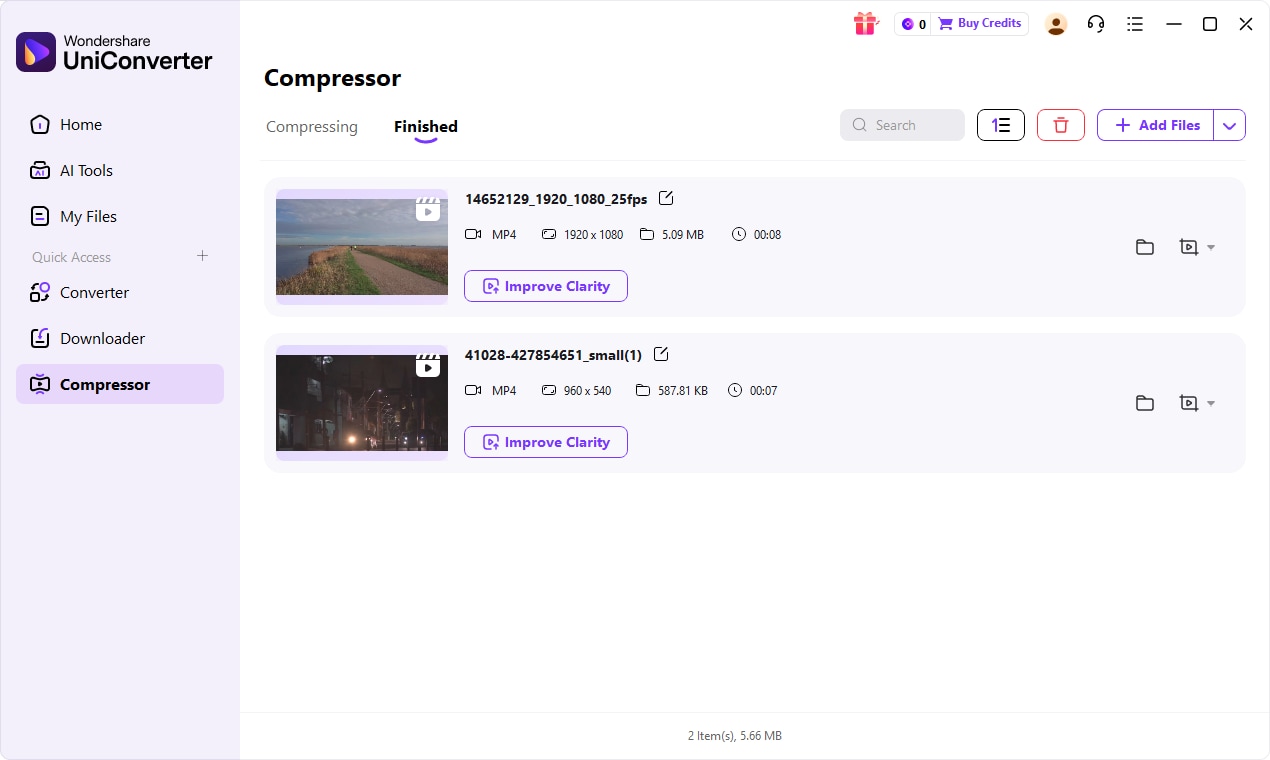
Step 4: Save the Compressed File
After setting your desired parameters, choose an output folder for your compressed files. Click the "Compress" or "Start All" button to begin the compression process. UniConverter will quickly process your files, maintaining quality while reducing size.

Seeking a Powerful Wavosaur Audio Compressor Alternative?
Part 7: Conclusion
In my comprehensive Wavosaur Audio Compressor review, it's clear that this free, lightweight tool serves a specific segment of the audio editing community. For casual users and beginners who need a quick and simple way to level audio for podcasts or vlogs, Wavosaur is a viable starting point due to its zero cost and straightforward interface. However, for aspiring audio engineers seeking more control and advanced features, I'd strongly recommend exploring more feature-rich free alternatives like Audacity or even investing in entry-level paid software. Professionals, without a doubt, should invest in industry-standard DAWs such as Adobe Audition or Logic Pro X for optimal results, precision, and the extensive feature sets required for complex music production and mastering. For those who need an all-in-one media solution that offers reliable compression across various file types, UniConverter presents a comprehensive and user-friendly option that addresses many of the limitations found in simpler tools. Ultimately, your choice should align with your specific needs, budget, and the level of quality and control you demand from your audio processing workflow.
Part 8: FAQs
-
1. Is Wavosaur Audio Compressor completely free to use?
Yes, Wavosaur is entirely free and open-source, making it accessible to anyone without a budget.
-
2. Can Wavosaur be used on macOS or Linux?
No, Wavosaur is primarily designed for Windows operating systems and does not have native versions for macOS or Linux.
-
3. Does Wavosaur support VST plugins for additional effects?
Yes, Wavosaur has basic support for VST plugins, allowing you to expand its functionality with third-party effects.
-
4. How does Wavosaur's compression compare to professional software?
Wavosaur offers basic compression suitable for simple tasks, but it lacks the advanced controls, precision, and sophisticated algorithms found in professional software, which can lead to better sonic results.
-
5. Is there any official support or community forum for Wavosaur?
Official support for Wavosaur is very limited, and community activity has significantly decreased over time. If you encounter issues, you might find it challenging to get direct assistance. For more reliable support and a comprehensive feature set, I often recommend alternatives like UniConverter.
