
- WavePad Overview: Ideal for basic audio editing and compression, user-friendly for everyday tasks.
- Core Features: Offers diverse editing, effects, and format support; batch processing is a plus.
- Limitations: Lacks advanced compression algorithms; can lag with large files; not for professional mastering.
- Target Audience: Best for podcasters, content creators, and students needing quick audio adjustments.
- Alternatives: UniConverter offers superior, faster, and more efficient compression with GPU acceleration.
- Risks: Watch for over-compression, potential quality loss, and limited free version support.
- Decision Factor: Choose based on your skill, project demands, and budget; UniConverter provides comprehensive value.
In this article
- Part 1: What is WavePad Audio Compressor?
- Part 2: WavePad Audio Compressor: Core Features, Pros, and Cons
- Part 3: WavePad Audio Compressor: Target Audience and Use Cases
- Part 4: WavePad Audio Compressor and Alternatives Comparison
- Part 5: Risks and Pitfalls to Consider
- Part 6: How to Use UniConverter for Efficient Audio and Video Compression
- Part 7: Conclusion
- Part 8: FAQs
When I set out to optimize my audio files, the sheer volume of options can be overwhelming. Many tools promise quick fixes, but few deliver quality and efficiency without a steep learning curve or hidden costs. This WavePad Audio Compressor review aims to cut through the noise, offering a detailed look at its capabilities and how it stacks up against its rivals. I'll explore its core features, pinpoint its ideal users, and highlight potential pitfalls, ensuring you make an informed decision for your audio compression needs.
Part 1: What is WavePad Audio Compressor?
WavePad Audio Compressor is a versatile audio editing software developed by NCH Software, primarily known for its comprehensive suite of multimedia tools. It's designed to help you manipulate audio files in various ways, with a particular focus on compression, which reduces file size while maintaining acceptable sound quality. My experience with it suggests it's positioned as an accessible tool for both casual users and those with more specific, but not overly professional, audio tasks. This review will delve into its performance, ease of use, and overall value, addressing the common challenges I face when dealing with audio files.
The Growing Need for Efficient Audio Management
* Large File Sizes: Uncompressed audio files can consume significant storage space and bandwidth.
* Faster Sharing: Smaller files are quicker to upload, download, and share across platforms.
* Optimized Playback: Compressed audio can lead to smoother streaming and playback on various devices.
* Podcast & Content Creation Demands: Content creators constantly need to manage and optimize audio for distribution.
Part 2: WavePad Audio Compressor: Core Features, Pros, and Cons
WavePad Audio Compressor offers a robust set of features for general audio editing and, of course, compression. I've found its core strength lies in its ability to handle a wide array of audio tasks without requiring extensive technical knowledge. It boasts a clean interface that makes navigating its functionalities straightforward. The software supports numerous audio formats, allowing me to work with almost any file type I encounter. Its editing capabilities extend beyond simple compression, including effects, noise reduction, and basic mixing.
Core Capabilities:
* Audio Compression: Reduces file size with various quality settings.
* Extensive Format Support: Handles MP3, WAV, VOX, GSM, WMA, AU, AIF, FLAC, OGG, and more.
* Editing Tools: Cut, copy, paste, delete, insert, silence, auto-trim, and more.
* Audio Effects: Amplify, normalize, equalizer, envelope, reverb, echo, reverse, etc.
* Batch Processing: Apply effects and conversions to multiple files simultaneously.
Pros:
* Intuitive Interface for Beginners: I found it incredibly easy to pick up and start using immediately.
* Wide Range of Audio Effects and Editing Tools: It offers more than just compression, making it a versatile editor.
* Support for Numerous Audio Formats: I rarely encounter a file it can't open or save.
Cons:
* Limited Advanced Compression Algorithms: For highly specialized compression, it might fall short compared to professional tools.
* Occasional Performance Lags with Large Files: When dealing with very large audio projects, I've noticed it can sometimes slow down.
Part 3: WavePad Audio Compressor: Target Audience and Use Cases
From my perspective, WavePad Audio Compressor is best suited for individuals who need a reliable, user-friendly tool for everyday audio tasks without the complexity of professional-grade software. It strikes a good balance between functionality and ease of use, making it ideal for non-audio engineers. If you're a podcaster, a student working on audio projects, or a content creator who needs to quickly prepare audio for online platforms, WavePad will likely meet your needs.
Best Use Case: Quick Audio Adjustments for Podcasters and Content Creators
I often use WavePad to quickly normalize audio levels, remove unwanted silences, and compress my podcast episodes for efficient uploading. Its straightforward interface allows me to get these tasks done without getting bogged down in complex settings. For YouTube creators, it's perfect for optimizing voiceovers or background music.
Limited Use Case: Professional Mastering and High-Fidelity Audio Production
While WavePad is great for general tasks, I wouldn't recommend it for professional audio mastering or high-fidelity music production. These tasks require highly specialized algorithms, precise control over minute audio details, and often integration with other studio hardware, which WavePad simply isn't designed to provide. For such demanding scenarios, dedicated digital audio workstations (DAWs) are indispensable.
Part 4: WavePad Audio Compressor and Alternatives Comparison
When I look at audio compression tools, I consider several factors: how easy they are to use, the quality of the output, and whether they offer the specific features I need. Here's how WavePad stacks up against some popular alternatives, including UniConverter, which I often turn to for its robust capabilities.
| Feature/Software | WavePad Audio Compressor | Audacity | Adobe Audition | Logic Pro X (Mac Only) | UniConverter |
| Primary Use | General Audio Editing & Compression | Basic Audio Editing & Recording | Professional Audio Production | Advanced Music Production | All-in-one Video/Audio Converter & Editor |
| Compression Algorithms | Basic | Basic to Intermediate | Advanced | Advanced | Advanced & Efficient |
| Ease of Use | High | Medium | Medium | Low (Steep Learning Curve) | High |
| Price | One-time Purchase | Free | Subscription | One-time Purchase | One-time Purchase |
| Platform | Windows, Mac, iOS, Android | Windows, Mac, Linux | Windows, Mac | Mac | Windows, Mac |
| Processing Speed | Moderate | Moderate | Fast | Very Fast | Very Fast (GPU Accelerated) |
| Output Quality | Good | Good | Excellent | Excellent | Excellent (Lossless Options) |
| Customer Support | Email/Forum | Community | Dedicated | Dedicated | Dedicated 24/7 |
| Security | Standard | Open Source | High | High | High |
Key Differentiators:
WavePad excels in user-friendliness for basic tasks, while competitors offer more specialized features. For instance, Audacity is a free, open-source option that offers decent compression but lacks the polished interface of WavePad. Adobe Audition and Logic Pro X are professional-grade DAWs with superior compression algorithms and comprehensive editing suites, but they come with a steeper learning curve and higher cost. UniConverter, on the other hand, stands out for its balance of ease of use, advanced compression, and excellent output quality, often leveraging GPU acceleration for faster processing. Pricing models vary significantly, impacting accessibility for different user groups, and platform compatibility can be a deciding factor for users with specific operating systems.
Part 5: Risks and Pitfalls to Consider
While WavePad Audio Compressor offers a convenient solution for many audio tasks, I've identified several potential risks and pitfalls that you should be aware of, especially if you're considering it for more critical applications or relying on its free version. It's important to weigh these against its benefits.
Data Privacy Concerns with Cloud Features
If you use any of WavePad's cloud-integrated features or share files directly from the application, there's always a degree of data privacy risk. While NCH Software generally maintains privacy policies, I always exercise caution when uploading sensitive audio to any third-party service. It's crucial to understand their data handling practices before committing.
Potential for Over-Compression and Audio Quality Degradation
One of the biggest risks with any audio compressor, including WavePad, is over-compression. If I apply too much compression or use incorrect settings, the audio can sound "squashed," lifeless, or introduce artifacts like pumping and breathing. This can severely degrade the listening experience and is often irreversible. It requires a careful balance to achieve smaller file sizes without sacrificing too much quality.
Compatibility Issues with Newer Operating Systems
Like many software applications, WavePad can occasionally encounter compatibility issues with the latest operating system updates. I've sometimes experienced minor glitches or unexpected crashes after a major OS patch. While NCH Software usually releases updates, there might be a delay, leaving you with temporary instability or reduced functionality.
Lack of Dedicated Customer Support for Free Version
If you're using the free or trial version of WavePad, don't expect robust customer support. My experience suggests that dedicated, personalized assistance is primarily reserved for paid license holders. For free users, you'll likely rely on community forums or self-help resources, which might not always provide immediate solutions to complex problems.
Nag Screens and Feature Limitations in Free Version
The free version of WavePad often comes with limitations, such as restricted features or persistent "nag screens" prompting you to upgrade. These can be disruptive to the workflow and might prevent you from accessing the full range of tools you need, pushing you towards a paid subscription even for relatively basic tasks.
Part 6: How to Use UniConverter for Efficient Audio and Video Compression
If batch compression is unreliable, the results are inconsistent, or the output quality starts to suffer, UniConverter is often a much better alternative. It’s a user-friendly option for both audio and video tasks, with dedicated support for audio compression and efficient video compression in one workflow. Another advantage is its wide format compatibility, ad-free interface, and GPU acceleration, which all help make processing faster and smoother. For video files, it can also help compress videos without quality loss as much as possible, making it a practical all-in-one solution for everyday multimedia work.
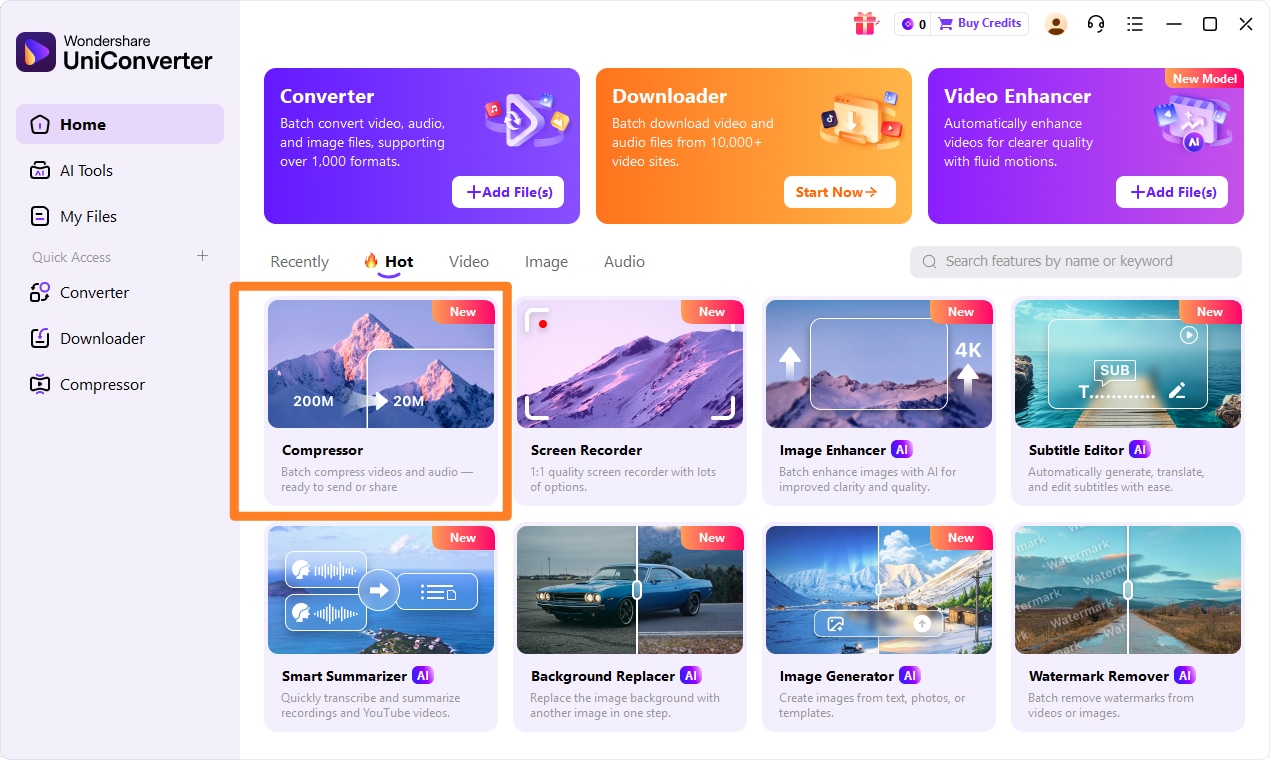
Step 1: Open UniConverter and Choose Compressor
Launch UniConverter on your computer. On the main interface, navigate to the "Toolbox" section and select the "Video Compressor" or "Audio Compressor" feature, depending on your file type.
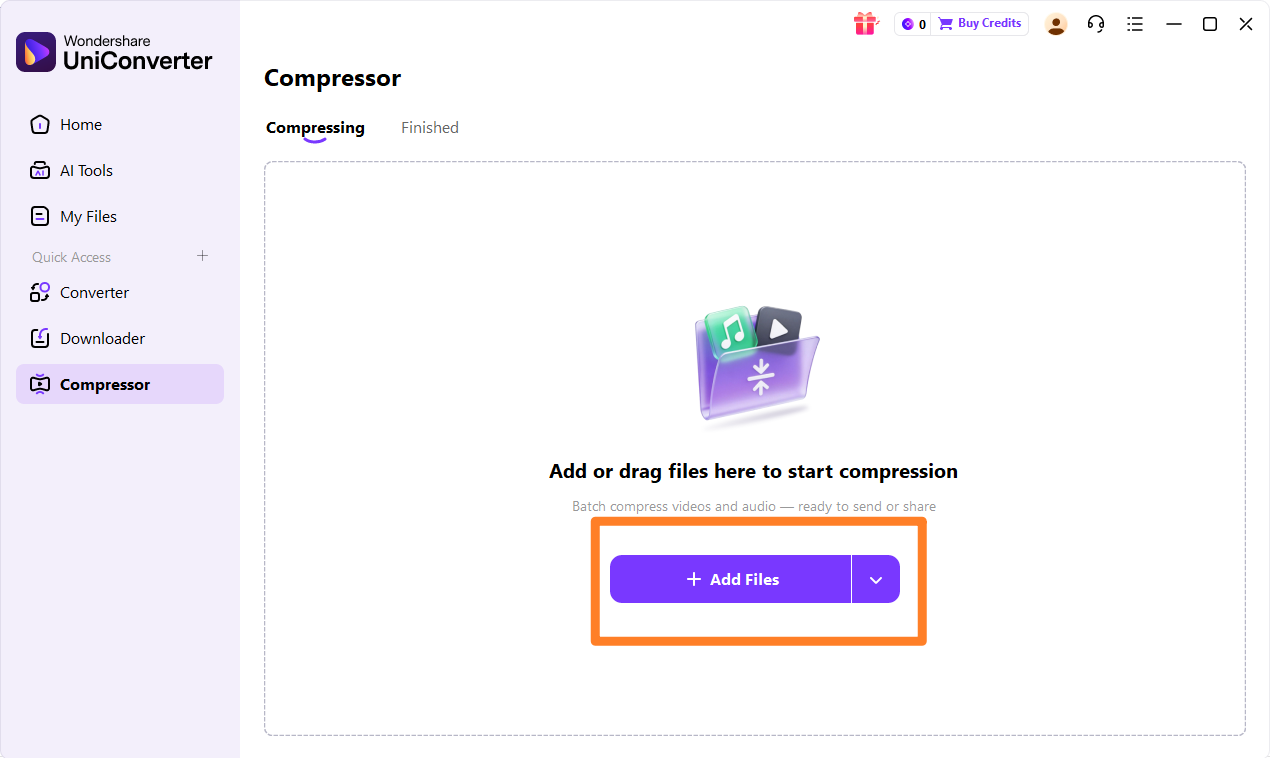
Step 2: Upload the Video, Audios or Images
Click the "Add Files" button or simply drag and drop your audio or video files into the UniConverter window. You can add multiple files for batch compression.
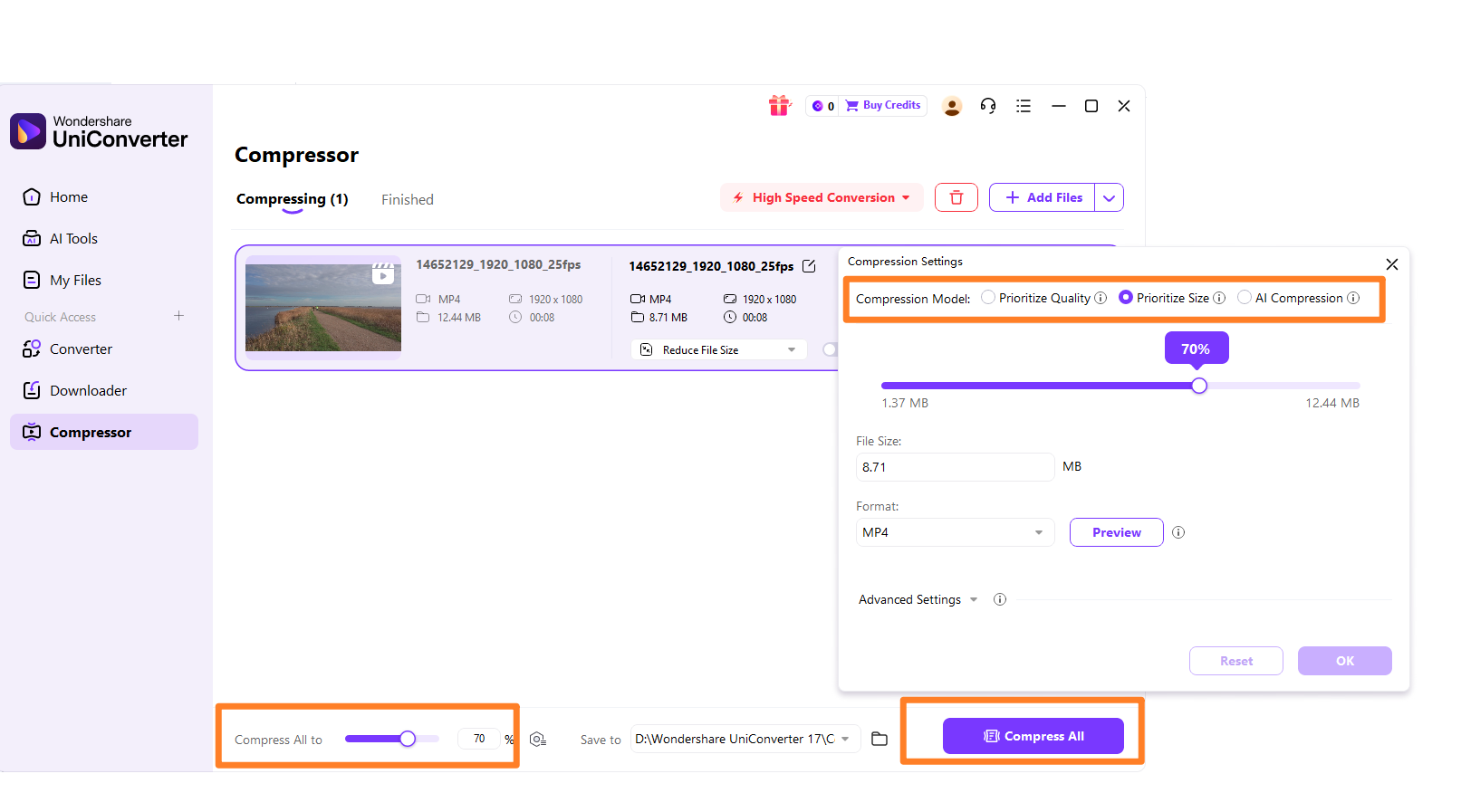
Step 3: Choose Required Parameters
After uploading, you'll see options to adjust compression settings. You can choose the output format, quality, bit rate, and file size. UniConverter provides presets for various devices and platforms, or you can customize the settings to your preference.
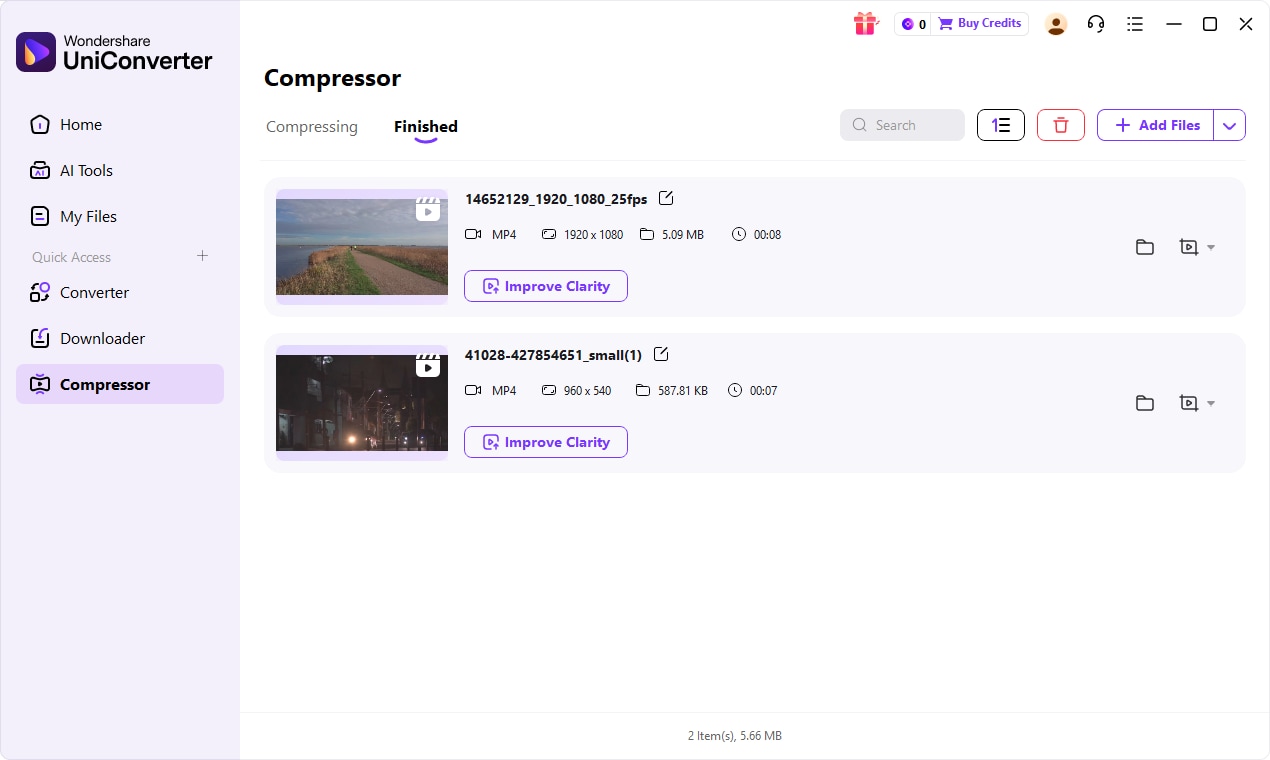
Step 4: Save the Compressed File
Once you've configured your compression settings, click the "Compress" button. UniConverter will quickly process your files. After compression, you can find your optimized files in the designated output folder.

WavePad Alternative: Efficient Audio Compression
Part 7: Conclusion
After thoroughly exploring WavePad Audio Compressor, I can confidently say it serves a valuable niche in the audio editing landscape. For beginners and casual users who need a straightforward tool for basic audio adjustments, recording, and file compression, WavePad is a solid choice. Its intuitive interface and broad format support make it accessible and efficient for tasks like podcast editing, voiceovers, or preparing audio for social media. However, for professionals and advanced users requiring intricate control, specialized mastering, or high-fidelity audio production, dedicated digital audio workstations like Adobe Audition or Logic Pro X remain superior. When balancing cost and features, it’s crucial to evaluate your specific needs. If you frequently encounter issues with other compressors regarding batch processing, stability, or quality retention, or if you need a comprehensive multimedia solution, UniConverter offers a compelling and efficient alternative. Ultimately, the best tool depends on your skill level, project demands, and budget, but this WavePad Audio Compressor review should help you make an informed decision.
Part 8: FAQs
-
1. Is WavePad Audio Compressor free to use?
WavePad offers a free version with limited features and a paid version for full functionality. The free version often includes nag screens and feature restrictions.
-
2. Can WavePad compress audio without losing quality?
While WavePad can compress audio, some quality loss is inherent in most compression processes. Optimal settings can minimize this, but truly lossless compression for significant file size reduction is generally not possible.
-
3. What are the best alternatives to WavePad for professional use?
For professional use, Adobe Audition, Logic Pro X (for Mac users), and Pro Tools are generally recommended due to their advanced features, precise control, and robust workflows.
-
4. Does WavePad support batch audio compression?
Yes, WavePad offers batch processing capabilities, allowing you to apply compression and other effects to multiple audio files simultaneously, which can be a significant time-saver.
-
5. How does WavePad compare to Audacity for audio compression?
WavePad generally offers a more polished interface and a wider range of built-in effects than Audacity. However, Audacity is completely free and open-source, making it a popular choice for those on a tight budget, though its compression algorithms might be more basic. For more reliable and efficient compression with a better user experience, UniConverter is a strong alternative.
