
- Wave.video Compressor: Cloud-based, easy for quick social media video compression; limited advanced controls.
- Ideal Users: Best for social media creators and marketers needing fast, simple compression for online platforms.
- Limitations: Not suitable for professionals requiring granular control, high-fidelity output, or offline capabilities.
- Comparison: Wave.video offers convenience; UniConverter provides desktop power, speed, and advanced quality control.
- Decision Factor: Choose Wave.video for quick online tasks; opt for UniConverter for professional, high-quality, and offline compression needs.
In this article
- Part 1: What is Wave.video Video Compressor?
- Part 2: Wave.video Video Compressor: Core Features, Pros, and Cons
- Part 3: Wave.video Video Compressor: Ideal Users and Scenarios
- Part 4: Wave.video Video Compressor vs. Competitors
- Part 5: Risks and Pitfalls to Consider
- Part 6: How to Use UniConverter to Compress Videos Efficiently
- Part 7: Final Verdict and Recommendations
- Part 8: FAQs
Wave.video Video Compressor Review: Optimizing Your Video Workflow
In today's fast-paced digital landscape, video content reigns supreme. From social media stories to professional presentations, videos are everywhere. However, the sheer size of high-quality video files can be a significant hurdle, impacting upload times, storage, and playback experience. This is where video compressors become indispensable. Wave.video, a well-known online video editor, offers its own Wave.video Video Compressor review as a solution to this common problem. This review will delve into its features, compare it with competitors, and help you determine if it's the right tool for your video compression needs. I'll explore its strengths and weaknesses, offering insights for various user types, from casual content creators to marketing professionals.
Part 1: What is Wave.video Video Compressor?
The Wave.video Video Compressor review focuses on a cloud-based tool designed to reduce the file size of your video content without significantly compromising quality. As an integral part of the broader Wave.video ecosystem, it aims to streamline the video creation and distribution process, making it easier for users to manage their video assets. In an era where visual content dominates, efficient video compression is no longer a luxury but a necessity. This review will address the core question: Can Wave.video's compressor effectively meet the diverse demands of modern video creators?
The Growing Need for Efficient Video Compression
- Faster Uploads and Downloads: Large video files can significantly slow down internet transfers, affecting user experience and content delivery.
- Optimized Storage: Reduced file sizes mean less storage space required on devices and cloud platforms, saving costs and improving organization.
- Improved Playback Performance: Smaller files stream more smoothly, reducing buffering and ensuring a better viewing experience across various devices and network conditions.
- Enhanced SEO and Website Performance: Compressed videos load faster on websites, contributing to better search engine rankings and overall site performance.
Part 2: Wave.video Video Compressor: Core Features, Pros, and Cons
Wave.video Video Compressor is primarily built for ease of use and integration within its existing video editing platform. Its core capability lies in its ability to quickly shrink video files, making them more manageable for sharing and online distribution. I've found it to be particularly useful for everyday tasks where speed and simplicity are prioritized over granular control.
Core Features:
- One-Click Compression: Simplifies the compression process to a single click.
- Multiple Output Formats: Supports various popular video formats for compressed output.
- Adjustable Compression Levels: Allows for some degree of control over the balance between file size and quality.
- Preview Functionality: Enables users to preview the compressed video before final download.
- Direct Integration: Seamlessly works with other Wave.video tools for a cohesive workflow.
Pros:
- Intuitive User Interface for Quick Compression: I appreciate how straightforward it is to navigate and compress videos, even for beginners.
- Cloud-Based Processing for Accessibility: I can access and use it from any device with an internet connection, which is incredibly convenient when I'm on the go.
- Integration with Wave.video Ecosystem for Seamless Workflow: If I'm already using Wave.video for editing, the compressor fits right in, making my workflow much smoother.
Cons:
- Limited Advanced Compression Settings: I often find myself wishing for more control over codecs, bitrates, and resolution for more specific compression needs.
- Dependency on Internet Connection for Performance: When my internet is slow, the compression process can take a noticeable hit, which can be frustrating.
Part 3: Wave.video Video Compressor: Ideal Users and Scenarios
Based on my experience, Wave.video Video Compressor shines brightest for certain types of users and specific scenarios. Its simplicity and cloud-based nature make it a go-to for quick tasks, but its limitations become apparent when more sophisticated compression is required.
Best Use Case: Social Media Content Creators and Marketers
If you're a social media content creator or marketer, this tool is fantastic for you. I find it perfect for quickly compressing videos for platforms like Instagram, Facebook, TikTok, and YouTube. The reduced file sizes mean faster uploads and better performance on these platforms, which is crucial for reaching a wider audience. It's also great for creating short, engaging video ads or promotional content that needs to be shared rapidly without worrying about massive file sizes.
Limited Use Case: Professional Videographers Requiring Granular Control
For professional videographers or anyone working on high-fidelity projects, I've found Wave.video Video Compressor to be less ideal. When I need precise control over every aspect of the compression – like specific codecs, bitrates, or resolutions to maintain broadcast quality – this tool falls short. It doesn't offer the granular settings that professional desktop software provides, which can be a deal-breaker for preserving intricate details or meeting strict delivery specifications.
Part 4: Wave.video Video Compressor vs. Competitors
When evaluating Wave.video Video Compressor review, it's crucial to see how it stacks up against other popular tools in the market. I've compared it with some key players to highlight their strengths and weaknesses across several important metrics.
| Feature/Tool | Wave.video Video Compressor | UniConverter | HandBrake | Adobe Media Encoder |
| Compression Speed | Good (cloud-dependent) | Excellent (GPU acceleration) | Good (CPU-dependent) | Excellent (GPU acceleration) |
| Output Quality Options | Basic (preset levels) | Advanced (customizable) | Advanced (highly customizable) | Advanced (professional presets) |
| Batch Processing | Yes | Yes | Yes | Yes |
| Advanced Settings | Limited | Extensive | Extensive | Extensive |
| Pricing Model | Subscription (part of Wave.video suite) | One-time purchase/Subscription | Free (open-source) | Subscription (part of Creative Cloud) |
Key Differentiators: Cloud Integration vs. Desktop Power
Wave.video's primary differentiator is its seamless cloud integration. I can access it from anywhere, which is a huge plus for flexibility. However, this also means its performance is tied to my internet connection. In contrast, tools like UniConverter, HandBrake, and Adobe Media Encoder are desktop-based, offering superior processing power and granular control over compression settings. UniConverter, for instance, leverages GPU acceleration for incredibly fast compression without internet dependency, making it a powerhouse for large projects. HandBrake is a fantastic free option for those who need extensive control but are comfortable with a steeper learning curve. Adobe Media Encoder is the industry standard for professionals, offering unparalleled integration with other Adobe products and highly customizable output.
Part 5: Risks and Pitfalls to Consider
While the convenience of cloud-based tools like Wave.video Video Compressor is undeniable, I've learned that it's essential to be aware of potential risks and pitfalls, especially when dealing with my valuable video content.
Potential Data Privacy Concerns with Cloud Uploads
When I upload my videos to a cloud service for compression, I always consider the privacy implications. My raw video files, which might contain sensitive or proprietary information, are temporarily stored on their servers. It's crucial to understand the service's data retention policies and security measures. While Wave.video is a reputable company, the general principle of entrusting my data to a third-party cloud service always carries a degree of risk, however small. I always recommend reviewing their privacy policy thoroughly before uploading any highly confidential material.
Impact on Original Video Quality for High Compression Ratios
One of the biggest trade-offs with any video compressor, including Wave.video's, is the potential impact on original video quality, especially when I aim for high compression ratios. While the tool tries to maintain quality, aggressive compression inevitably leads to some loss of detail, color fidelity, or introduction of artifacts. For my casual social media posts, this might be acceptable. However, for professional projects where visual integrity is paramount, I've found that pushing the compression too far can result in a noticeably degraded output that doesn't meet my standards. It's a delicate balance, and I always preview the results carefully.
Subscription Model Limitations for Occasional Users
Wave.video Video Compressor is typically part of a larger subscription package. For someone like me who only needs to compress videos occasionally, paying for a full subscription might not be the most cost-effective solution. I might find myself paying for features I rarely use, making it less ideal than a one-time purchase desktop software or a free alternative for infrequent tasks. This subscription model can be a limitation if my usage patterns don't align with a regular need for the entire Wave.video suite.
Internet Dependency for Optimal Performance
As a cloud-based tool, Wave.video Video Compressor relies heavily on a stable and fast internet connection. I've experienced firsthand how a slow or intermittent internet connection can severely hamper the compression process. Uploading large video files can take a long time, and the actual compression on their servers can also be affected. This dependency means that if I'm working in an area with poor connectivity, or if their servers are experiencing high traffic, my workflow can be significantly disrupted, making it less reliable than a desktop application that processes files locally.
Part 6: How to Use UniConverter to Compress Videos Efficiently
Sometimes, online tools just aren’t reliable enough—especially when I need stable video compression without depending on internet speed, dealing with intrusive ads, or sacrificing too much quality. In those situations, I usually turn to UniConverter as a more dependable desktop alternative. It works especially well as a dedicated video compressor, offering a smoother workflow with broad format support and GPU acceleration for faster processing. I also like that it can help compress videos without quality loss as much as possible, which makes it a practical choice when quality matters. Since it also supports audio compression and image compression, it works well as an all-in-one solution for everyday media compression and management.
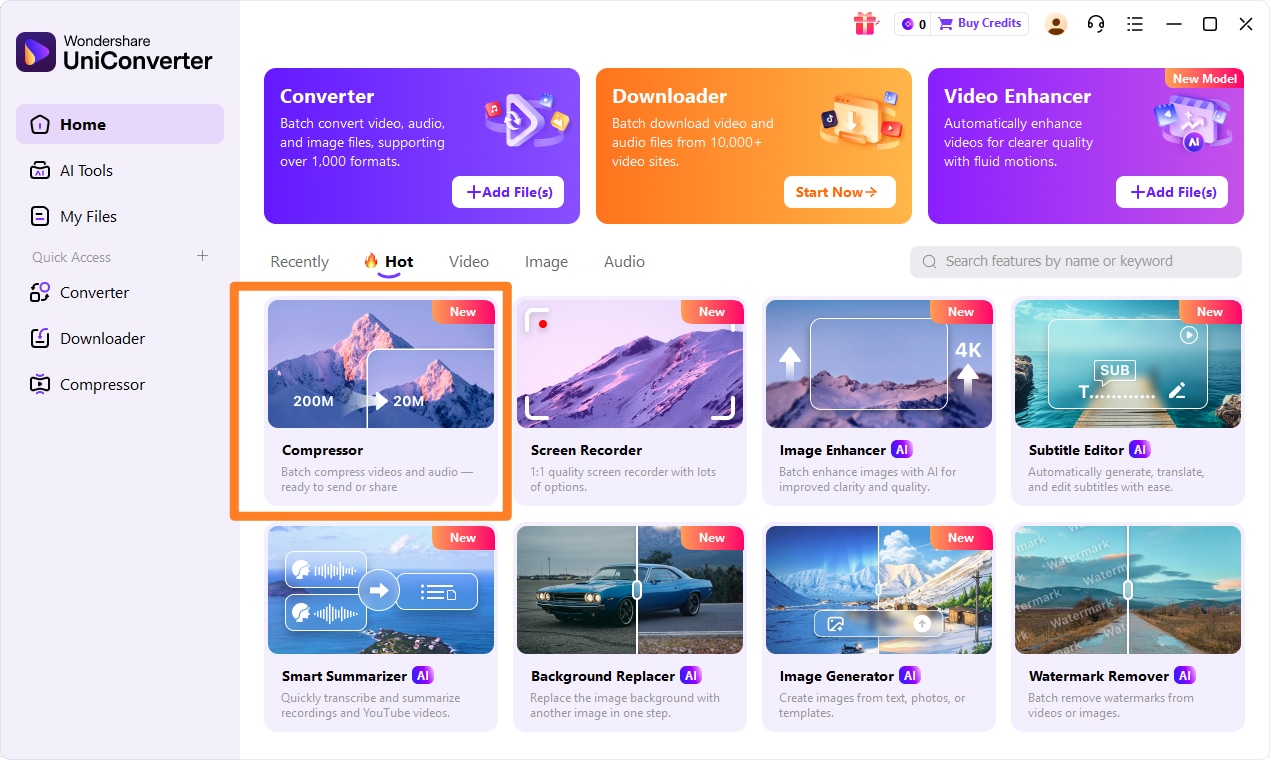
Step 1: Open UniConverter and Choose Compressor
Launch UniConverter on your computer. On the main interface, navigate to the "Video Compressor" tab.
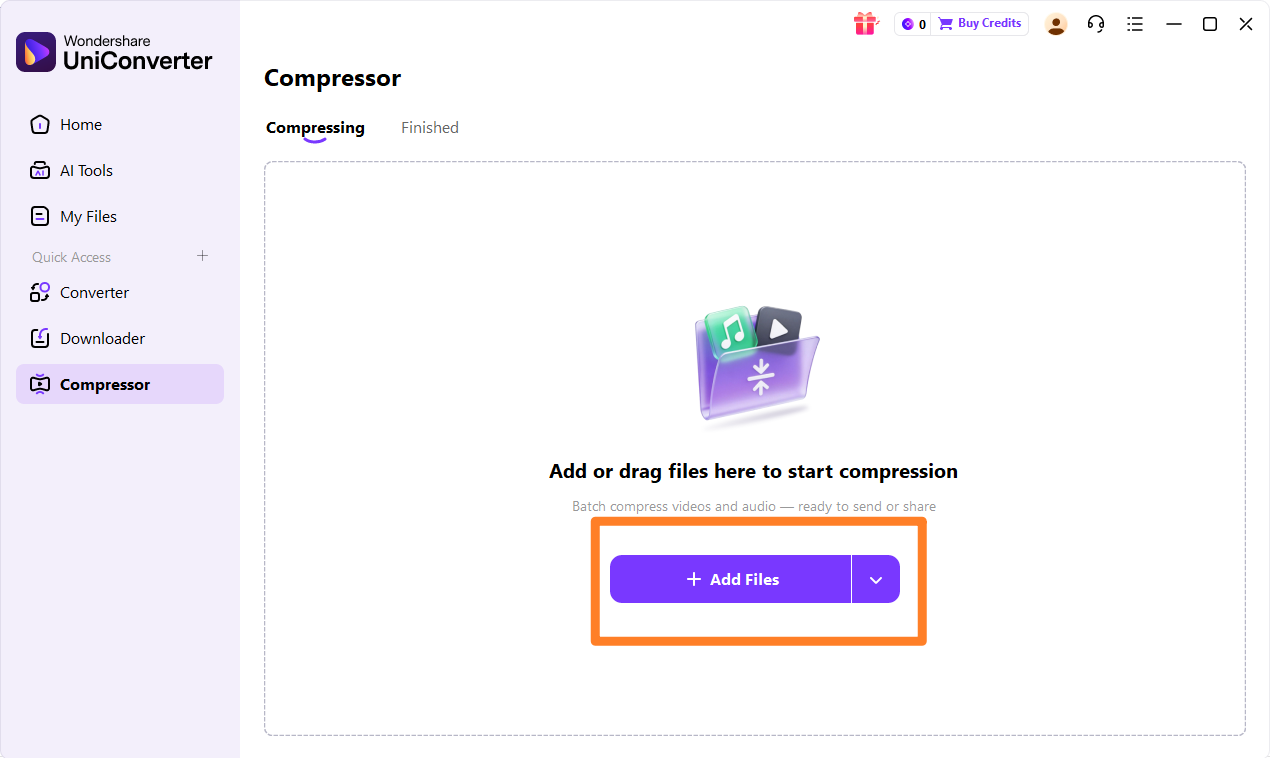
Step 2: Upload the Video, Audios or Images
Click on the "Add Files" button or simply drag and drop your video, audio, or image files into the program window.
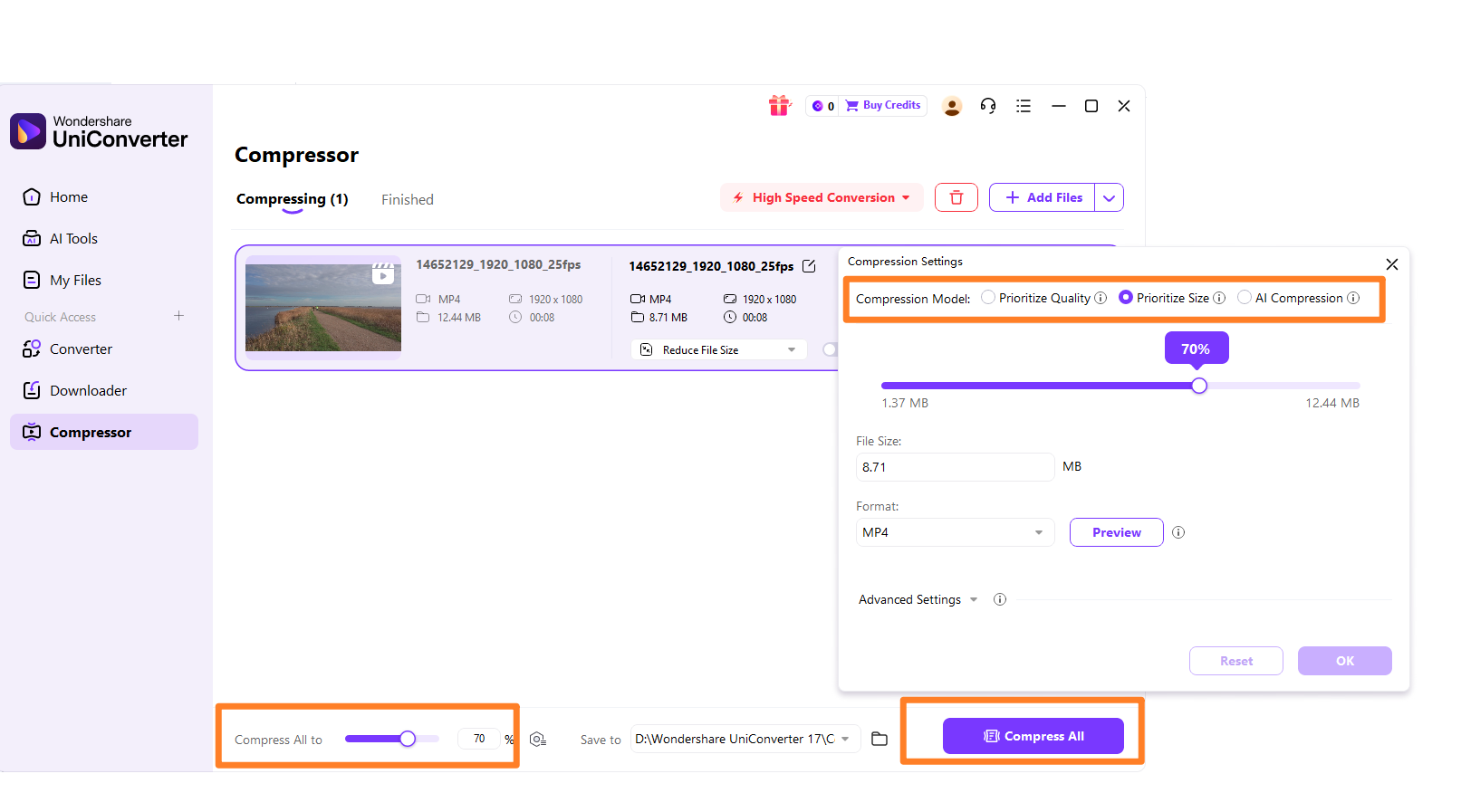
Step 3: Choose Required Parameters
Select your desired output format and adjust the compression settings. You can customize parameters like resolution, bitrate, and quality to achieve the perfect balance between file size and visual fidelity.
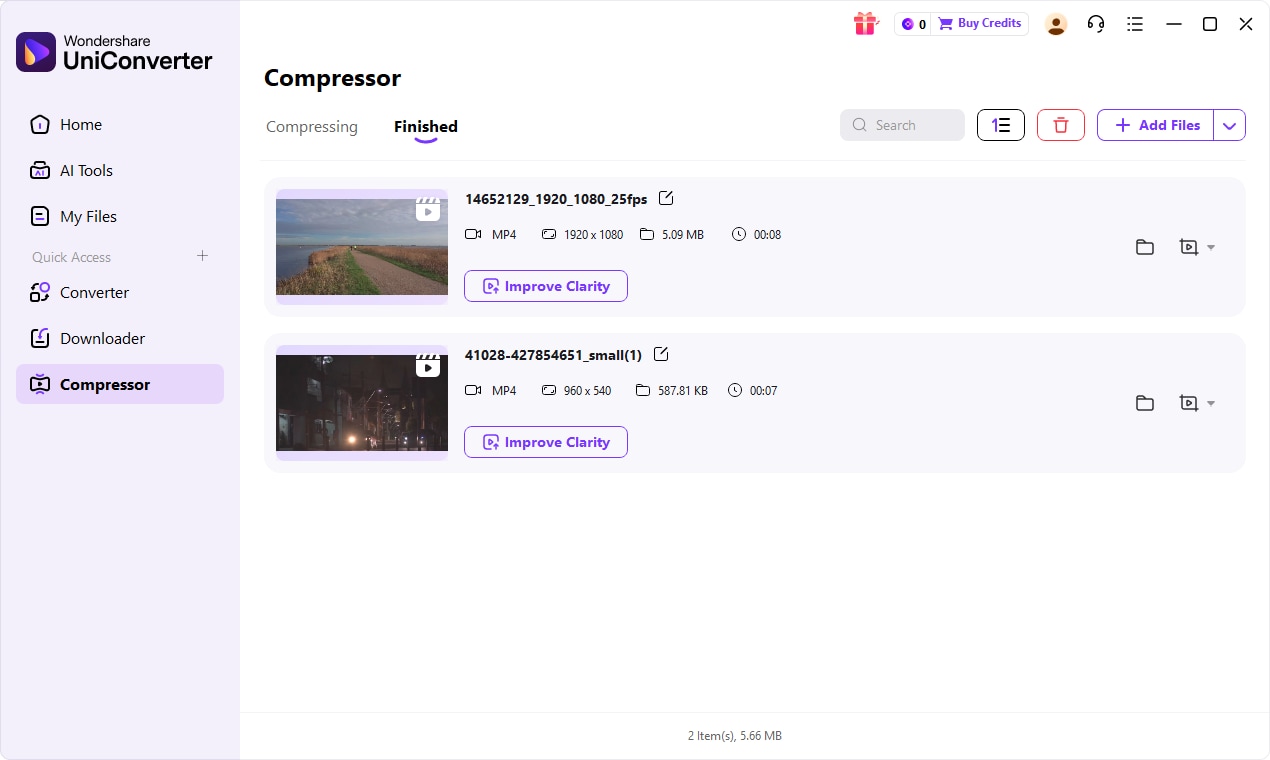
Step 4: Start Compression and Save Your Optimized Video
Once you've configured your settings, click the "Compress" button. UniConverter will quickly process your files, and you can then save your optimized videos to your chosen destination.

Wave.video Compressor Alternative: Better Video Compression?
Part 7: Final Verdict and Recommendations
After thoroughly evaluating the Wave.video Video Compressor review and comparing it with alternatives, I've formed clear recommendations for different user groups. Wave.video's compressor is a convenient, cloud-based tool that excels in simplicity and integration within its ecosystem. However, its limitations in advanced settings and reliance on internet connectivity are important considerations.
For Casual Users and Social Media Enthusiasts
If you're a casual user or a social media enthusiast who needs to quickly compress videos for platforms like Instagram, TikTok, or YouTube, Wave.video Video Compressor is an excellent choice. Its intuitive interface and quick processing are perfect for everyday content creation where speed and ease of use are prioritized over granular control. You'll appreciate the seamless workflow if you're already using Wave.video for editing.
For Businesses and Marketing Teams
For businesses and marketing teams that regularly produce and distribute video content, Wave.video Video Compressor can be a valuable asset, especially if they are already invested in the Wave.video platform. It streamlines the process of preparing videos for various online campaigns and social media channels. However, for critical, high-stakes video assets where absolute quality preservation and precise control are paramount, I'd recommend supplementing it with a more robust desktop solution like UniConverter for specific projects.
For Professional Editors and Large-Scale Projects
Professional editors and those working on large-scale, high-quality video projects will likely find Wave.video Video Compressor insufficient for their needs. The lack of advanced compression settings, codecs, and bitrate control means it cannot meet the stringent demands of professional workflows. For these users, dedicated desktop software such as UniConverter, HandBrake, or Adobe Media Encoder, which offer granular control, offline processing, and superior quality retention, are indispensable.
Part 8: FAQs
-
1. Does Wave.video Video Compressor support all video formats?
Wave.video Video Compressor supports a wide range of popular video formats, including MP4, MOV, AVI, and more, making it versatile for most common video files.
-
2. Can I compress multiple videos at once with Wave.video?
Yes, Wave.video Video Compressor offers batch compression capabilities, allowing you to process multiple videos simultaneously, which is a great time-saver.
-
3. Is there a free version or trial available for Wave.video Video Compressor?
Wave.video offers a free plan with limited features, and premium plans often include the compressor with more advanced options. You can usually try out the basic compression functionalities.
-
4. How does Wave.video ensure the quality of compressed videos?
Wave.video uses intelligent compression algorithms to reduce file size while striving to maintain the best possible video quality. However, for critical projects where absolute quality is non-negotiable, I find that desktop tools like UniConverter offer more control to preserve fidelity.
-
5. What are the main advantages of using a cloud-based compressor like Wave.video?
Cloud-based compressors offer accessibility from any device, eliminate the need for software installation, and leverage powerful cloud servers for faster processing. However, if you need offline capabilities or more advanced control, a desktop solution like UniConverter might be a better fit.
