
- VLC Compression: VLC offers basic video compression, but it's not its primary function.
- Feature Set: VLC provides transcoding, bitrate/resolution adjustment, and codec selection for compression.
- Pros: It's free, open-source, and cross-platform, handling many formats easily.
- Cons: Lacks dedicated compression features and has a steep learning curve for optimal results.
- Ideal Use: Best for quick, basic personal compression; not for professional or batch tasks.
- Comparison: VLC is moderate; UniConverter offers superior speed, quality, and ease of use.
- Risks: Incorrect settings can lead to significant quality loss and it's time-consuming for large files.
- UI Issue: VLC's compression interface is unintuitive, lacking previews and clear guidance.
- UniConverter: A robust alternative for efficient, high-quality, and user-friendly video compression.
In this article
- Part 1: What is VLC Video Compressor?
- Part 2: VLC Video Compressor: Core Features, Pros, and Cons
- Part 3: VLC Video Compressor: Ideal Users and Use Cases
- Part 4: VLC Video Compressor vs. Competitors
- Part 5: Risks and Pitfalls When Using VLC for Video Compression
- Part 6: How to Use UniConverter for Efficient Video Compression
- Part 7: Conclusion
- Part 8: FAQs
VLC Video Compressor review: As a seasoned product reviewer, I’ve seen countless tools promise efficient video handling. Today, I'm diving deep into the compression capabilities of VLC Media Player, a ubiquitous name in multimedia. This VLC Video Compressor review will explore its features, compare it with dedicated compression software, and guide you through its strengths and weaknesses, helping you decide if it’s the right tool for your video compression needs. We'll also look at potential pitfalls and recommend alternatives for more demanding tasks, ensuring you make an informed decision.
Part 1: What is VLC Video Compressor?
VLC Media Player is renowned as a free and open-source, cross-platform multimedia player that can play almost all multimedia files, as well as DVDs, Audio CDs, VCDs, and various streaming protocols. While its primary function is media playback, many users are surprised to discover its hidden capabilities, including basic video compression. This review aims to clarify whether VLC can effectively serve as a reliable video compressor, especially when faced with the ever-growing demand for smaller file sizes without significant quality loss.
The Growing Need for Efficient Video Compression
In today's digital landscape, the ability to efficiently compress video files is more crucial than ever. Here’s why:
* Storage Limitations: High-resolution videos consume vast amounts of storage space on devices and cloud services.
* Faster Sharing: Smaller file sizes mean quicker uploads and downloads, making sharing videos across platforms or with friends much more efficient.
* Bandwidth Conservation: Compressed videos require less bandwidth for streaming, improving loading times and reducing data usage.
* Website Performance: For content creators and businesses, optimized video files are essential for fast-loading websites and better user experience.
Part 2: VLC Video Compressor: Core Features, Pros, and Cons
VLC's video compression capabilities, while not its main selling point, offer a surprising degree of control for those willing to delve into its settings. It allows you to transcode videos into various formats and adjust parameters like bitrate, resolution, and frame rate, which directly impact file size. Its core strength lies in its versatility as a media player, extending to basic conversion tasks.
Core Capabilities:
* Transcoding Functionality: Converts video files from one format to another.
* Bitrate Adjustment: Allows manual control over video and audio bitrates to reduce file size.
* Resolution Scaling: Enables changing video dimensions to decrease file size.
* Codec Selection: Supports a wide range of video and audio codecs for output.
* Streaming/Saving Options: Can save compressed output to a local file.
Pros:
* Free and Open-Source: I appreciate that it's completely free, making it accessible to everyone without any cost barriers.
* Cross-Platform Compatibility: I can use it on my Windows PC, Mac, Linux machine, and even my mobile devices, which is incredibly convenient.
* Versatile Format Support: It handles almost every video and audio format I throw at it, so I rarely need another player or converter.
Cons:
* Limited Dedicated Compression Features: I find that it lacks the advanced, user-friendly compression presets and dedicated tools found in specialized software.
* Steep Learning Curve for Compression: To get decent compression, I have to dive into technical settings like codecs and bitrates, which isn't intuitive for a casual user.
Part 3: VLC Video Compressor: Ideal Users and Use Cases
VLC's compression features are best suited for users who need a quick, basic solution without investing in dedicated software. It’s a tool I’d reach for when I already have VLC open and just need to shrink a video file for personal use or a casual share.
Best Use Case: Quick, Basic Compression for Personal Use
I find VLC perfect for those times when I need to quickly reduce the file size of a video before emailing it to a friend or uploading it to a personal cloud storage. For example, if I've recorded a short clip on my phone and it's too large to send via messaging apps, I can use VLC to transcode it to a lower bitrate or resolution. It’s a convenient, no-frills option for simple, one-off compression tasks where quality isn't the absolute top priority, but rather getting the file size down quickly.
Limited Use Case: Professional Video Production or Batch Processing
However, I wouldn't recommend VLC for professional video production or any scenario requiring batch processing. If I'm working on a project that demands precise control over output quality, specific compression profiles, or efficient handling of multiple files, VLC falls short. Its interface isn't designed for such workflows, and the lack of advanced features like detailed previewing or automated batch tasks makes it impractical for serious content creation or large-scale video management. For these situations, I definitely turn to more specialized tools.
Part 4: VLC Video Compressor vs. Competitors
When I look at video compression tools, I consider a few key players alongside VLC. Each has its own strengths, making the choice dependent on my specific needs.
| Feature/Software | VLC Video Compressor | HandBrake | FFmpeg | UniConverter |
| Processing Speed | Moderate | Fast | Very Fast (CLI) | Very Fast (GPU accelerated) |
| Output Quality | Good (with knowledge) | Excellent | Excellent | Excellent (Lossless option) |
| Ease of Use | Moderate | Moderate | High (CLI) | Easy |
| Customer Support | Community Forums | Community Forums | Community Forums | Dedicated Support |
| Security | Open Source (Audited) | Open Source (Audited) | Open Source (Audited) | Proprietary (Regular updates) |
Key Differentiators: Ease of Use vs. Advanced Control
From my experience, VLC is a decent all-rounder for basic tasks, especially since I already have it installed. Its compression quality can be good, but it requires me to really understand the settings. HandBrake offers excellent quality and more advanced features than VLC, making it a go-to for more serious compression, though it still has a learning curve. FFmpeg is incredibly powerful and offers the best control and quality, but its command-line interface means it's strictly for tech-savvy users. UniConverter, on the other hand, stands out for its user-friendliness and excellent output quality, making it ideal if I want a straightforward, efficient solution without sacrificing results. It’s definitely the easiest to pick up and get great results from among the dedicated tools.
Part 5: Risks and Pitfalls When Using VLC for Video Compression
While VLC is a fantastic media player, using it for video compression comes with its own set of challenges and potential drawbacks that I've personally encountered. It's not a dedicated compression tool, and that often shows in its workflow and results.
Potential Loss of Quality if Settings are Incorrect
One of the biggest risks I face when using VLC for compression is inadvertently sacrificing video quality. If I don't understand the nuances of codecs, bitrates, and resolution settings, it's very easy to end up with a pixelated, blurry, or artifact-ridden video. There’s no easy "best quality" button; I have to manually tweak parameters, and a wrong setting can significantly degrade the visual experience.
Time-Consuming for Large Files or Batch Operations
I've found that compressing large video files or attempting to process multiple videos in VLC can be incredibly time-consuming. It lacks the optimized algorithms and GPU acceleration that dedicated compression software often utilizes. This means I'm often waiting much longer for a single file to process, and the absence of a proper batch processing interface makes handling several files a tedious, manual task.
Lack of Intuitive User Interface for Compression Tasks
The user interface for compression in VLC is, frankly, not intuitive. It's buried within the "Convert/Save" menu, and the subsequent windows are filled with technical jargon and dropdowns that aren't clearly labeled for compression purposes. I often find myself fumbling through settings, trying to remember which parameter does what, which adds to frustration and increases the chance of making errors.
No Built-in Previews for Compressed Output
A major pitfall for me is the lack of a real-time or even post-compression preview within VLC. I can't see how my chosen settings will affect the video quality or file size before the entire compression process is complete. This means I often have to compress a video, watch it, realize the quality is poor or the file is still too large, and then go back and re-compress it with different settings – a trial-and-error process that wastes a lot of my time.
Part 6: How to Use UniConverter for Efficient Video Compression
When I encounter situations where VLC falls short—for instance, when I need to compress multiple videos, require stable and high-quality results, or wish to avoid significant quality loss—I turn to UniConverter. It's a robust solution that addresses many of the limitations I face with VLC, offering a seamless and efficient compression experience without ads, with extensive format support, GPU acceleration, stable lossless compression, and batch processing capabilities. It truly feels like an all-in-one ultimate solution for my video, audio, and image compression needs.
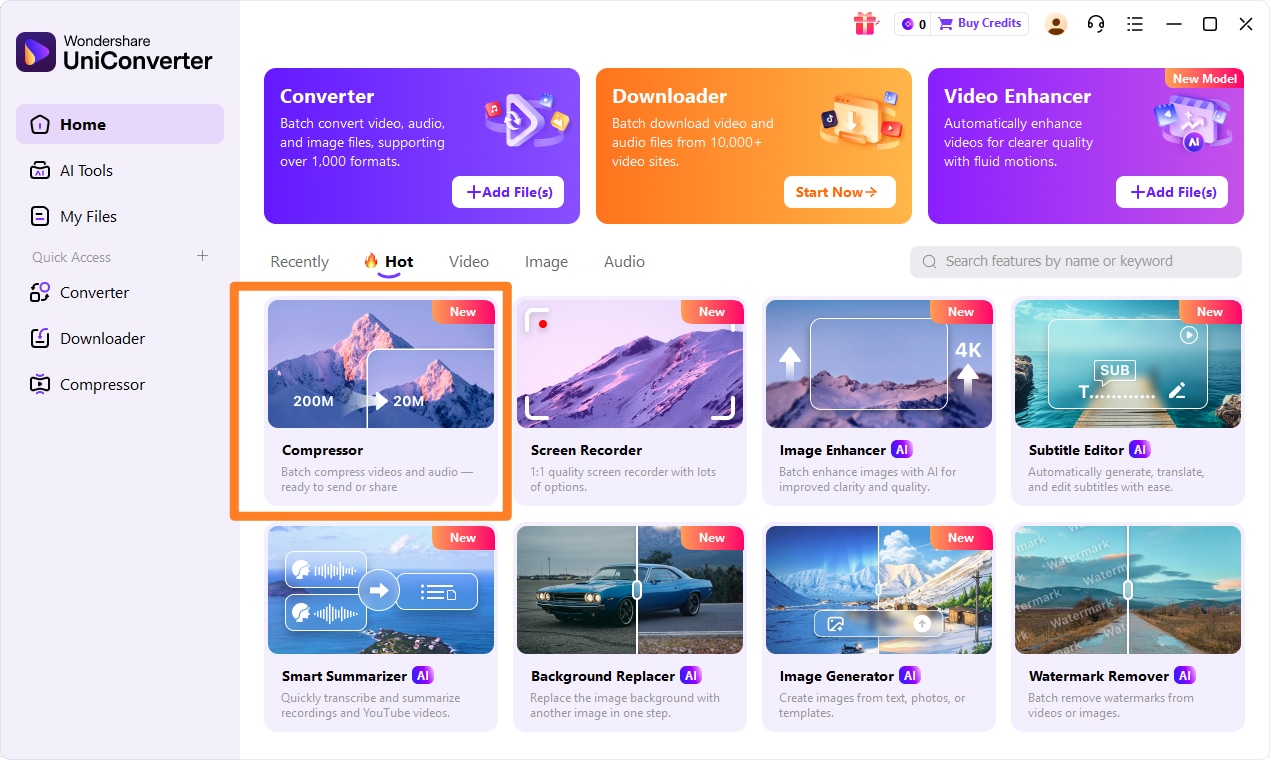
Step 1: Open UniConverter and Choose Compressor
First, I launch UniConverter and navigate to the "Video Compressor" tool from the main interface.
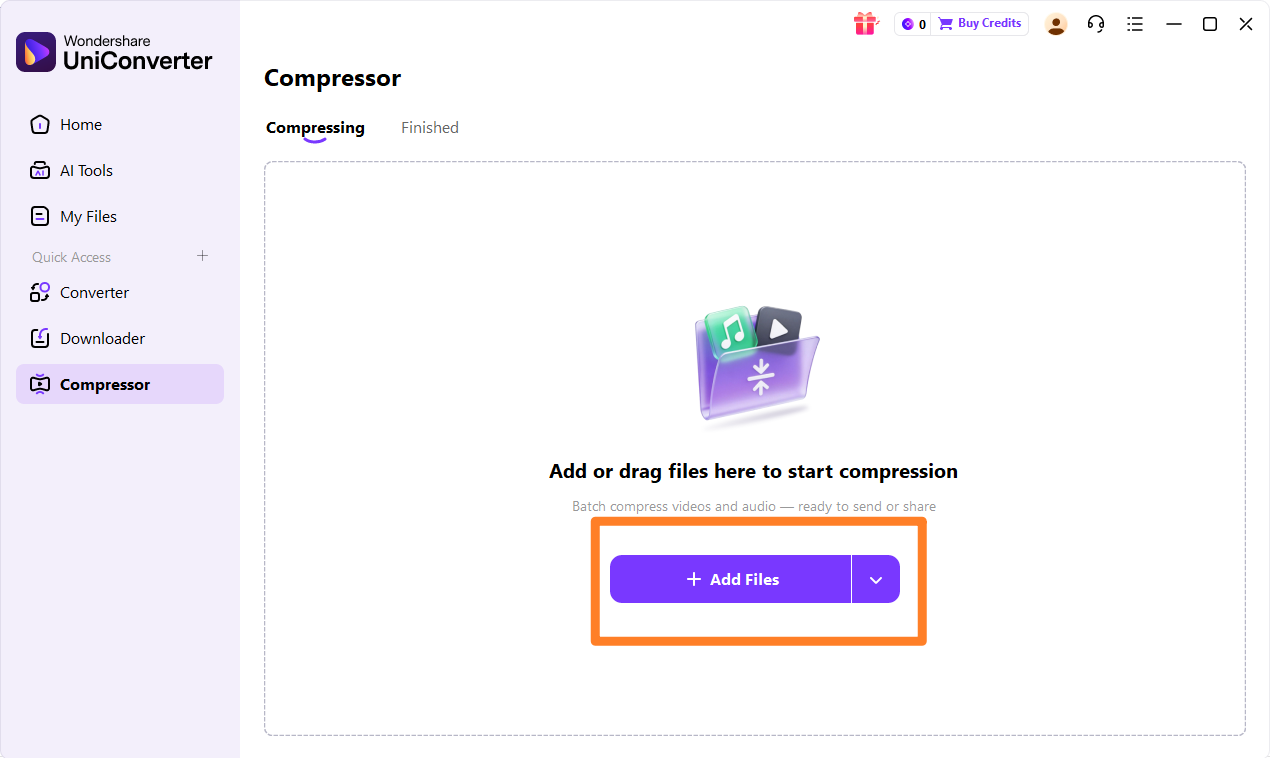
Step 2: Upload the Video, Audios or Images
Next, I simply drag and drop my video files (or audio/images) into the compressor window, or click "Add Files" to browse my computer.
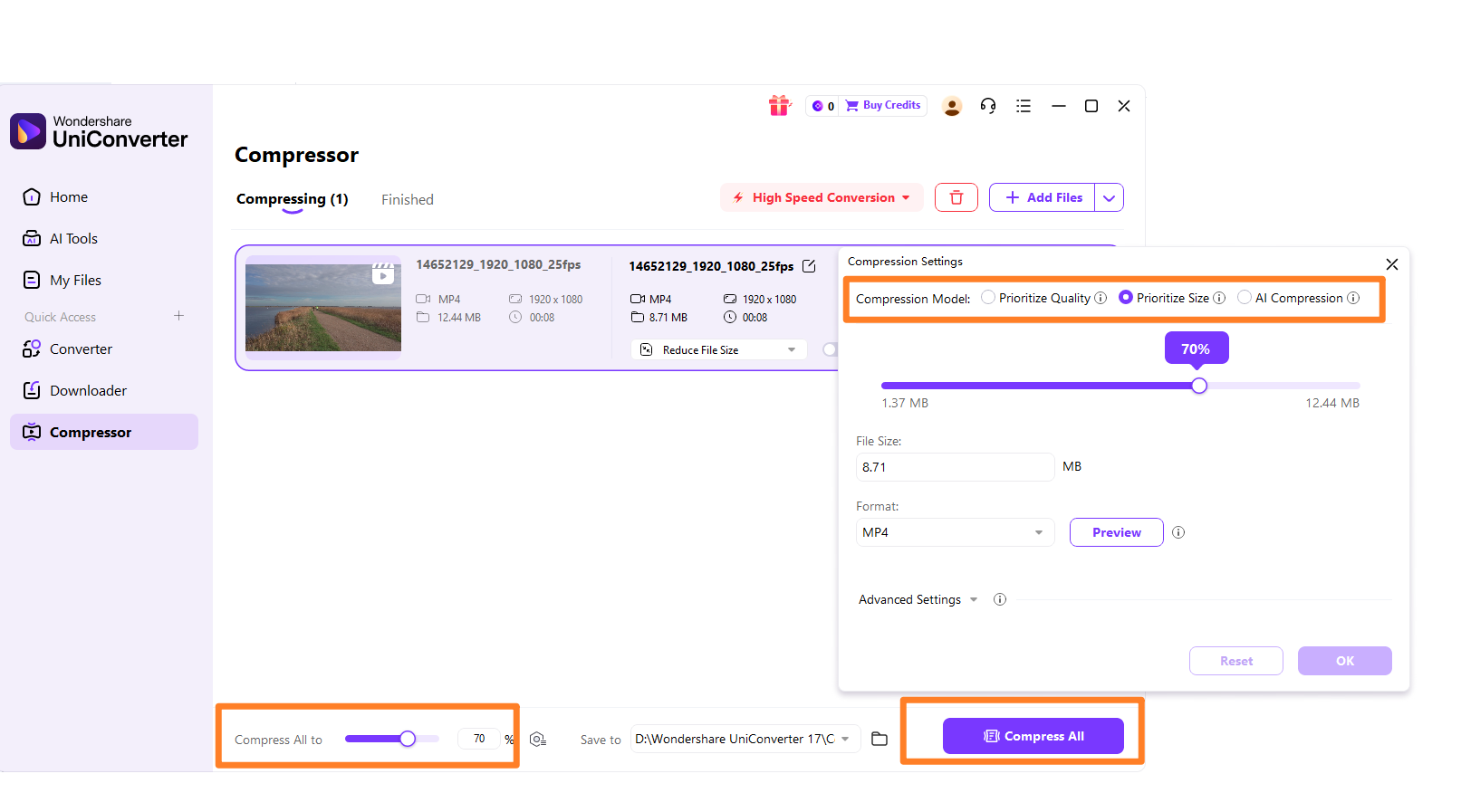
Step 3: Choose Required Parameters
I then select my desired output format and adjust the compression settings. UniConverter offers intuitive sliders for file size, resolution, bitrate, and quality, making it easy to achieve the perfect balance.
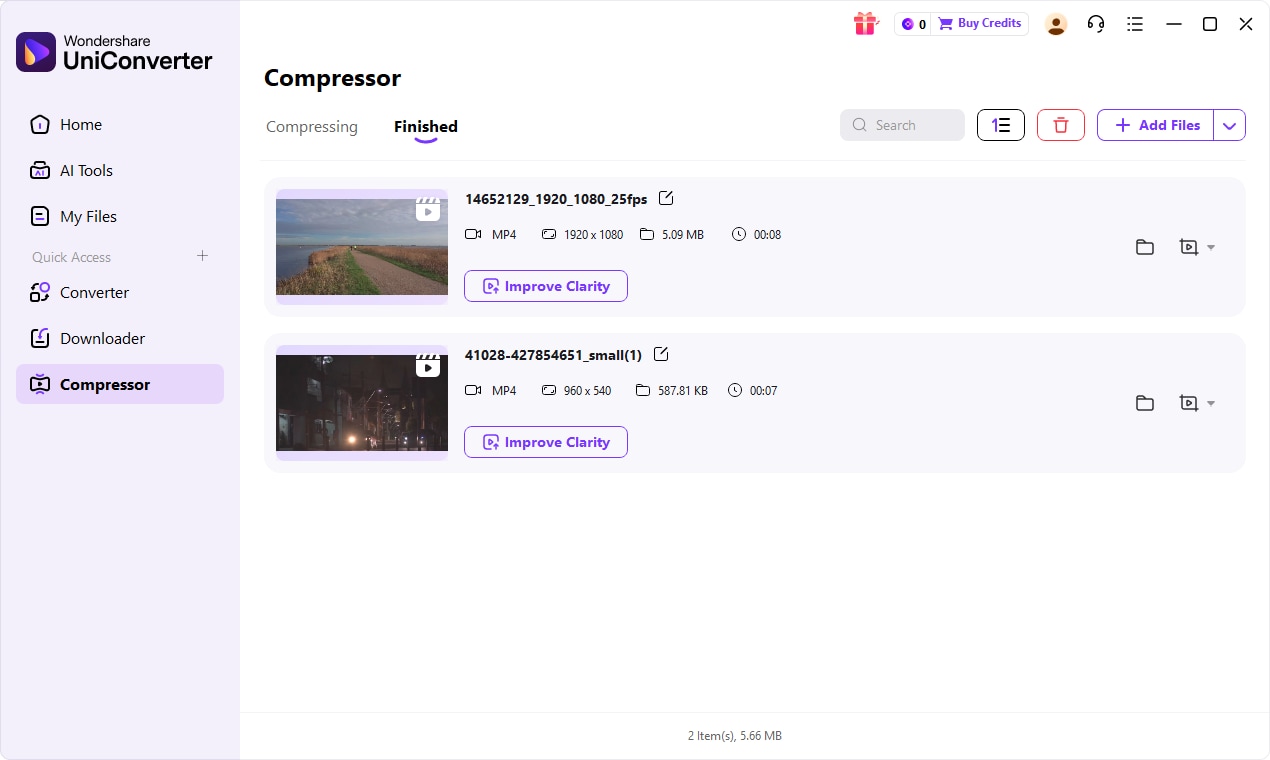
Step 4: Save the Compressed File
Finally, I click the "Compress" button. UniConverter quickly processes the files, and I can choose the output folder to save my perfectly compressed videos.

VLC Video Compressor Alternative for Better Control
Part 7: Conclusion
After thoroughly exploring VLC's compression capabilities and comparing it with dedicated tools, my VLC Video Compressor review concludes that while VLC is an incredibly versatile media player, its video compression features are best suited for casual, basic needs. For me, if I just need to quickly shrink a single video file for personal use and I'm comfortable with a bit of technical tweaking, VLC gets the job done. However, for anyone requiring consistent high-quality output, efficient batch processing, an intuitive user interface, or advanced compression controls, VLC falls short. Professionals and even serious hobbyists will find themselves frustrated by its limitations and the potential for quality degradation if settings aren't precisely managed. For these more demanding scenarios, investing in a specialized compressor like UniConverter is a far superior choice, offering a seamless experience, superior results, and significant time savings. Prioritizing quality and efficiency ultimately means opting for a tool designed specifically for the task.
Part 8: FAQs
-
1. Can VLC truly compress video files effectively?
Yes, it can, but it requires me to manually configure codecs, bitrates, and other settings. If I know what I'm doing, I can achieve decent results, but it's not as straightforward as dedicated tools.
-
2. Is VLC a good choice for batch video compression?
No, it's not ideal. Its interface and features are not designed for efficient batch processing. I find it very tedious and time-consuming to compress multiple files one by one or through its limited batch options. For batch tasks, I definitely look for alternatives.
-
3. What are the main limitations of using VLC for video compression?
From my experience, the main limitations are the lack of dedicated compression presets, limited preview options before compression, a less intuitive interface for this specific task, and the absence of advanced features like GPU acceleration for faster processing.
-
4. Does compressing videos with VLC reduce their quality significantly?
Quality reduction depends entirely on the settings I choose. If I set a very low bitrate or resolution without understanding the implications, I will see significant quality loss. However, with careful configuration, I can achieve acceptable quality for many purposes.
-
5. Are there any free alternatives to VLC for better video compression?
Yes, HandBrake and FFmpeg are powerful free alternatives that offer more control and better compression capabilities than VLC. However, both also have a learning curve, especially FFmpeg which is command-line based. If I want a more user-friendly experience with excellent results, I often consider UniConverter.
