
- VirtualDub's Niche: Primarily for legacy AVI files; outdated for modern formats and workflows.
- Modern Alternatives: HandBrake, FFmpeg, and UniConverter offer superior features and compatibility.
- UniConverter Value: User-friendly, all-in-one solution for diverse video, audio, and image compression needs.
- Decision Factor: Choose VirtualDub only for specific, precise legacy AVI tasks; otherwise, opt for modern tools.
In this article
- Part 1: What is VirtualDub?
- Part 2: VirtualDub's Core Strengths and Weaknesses
- Part 3: VirtualDub's Ideal and Limited Use Cases
- Part 4: VirtualDub and Alternatives: A Comparative Analysis
- Part 5: VirtualDub's Risks and Pitfalls
- Part 6: How to Use UniConverter for Efficient Audio and Video Compression
- Part 7: Conclusion
- Part 8: FAQs
VirtualDub Video Compressor: A Deep Dive into Legacy Video Editing
When I first started dabbling in video editing back in the early 2000s, VirtualDub Video Compressor review was practically a household name for anyone serious about manipulating AVI files. It was the go-to tool for everything from simple cuts to complex re-encodings. Fast forward to today, and the landscape of video compression has changed dramatically. Modern codecs, cloud-based solutions, and AI-powered tools dominate the scene. This review aims to cut through the nostalgia and objectively assess VirtualDub's relevance in 2024. Can this venerable piece of software still hold its own, or is it a relic best left in the archives? Join me as I explore its strengths, weaknesses, and how it stacks up against its contemporary counterparts, helping you decide if VirtualDub still has a place in your workflow.
Part 1: What is VirtualDub?
VirtualDub is a free, open-source video capture and processing utility for 32-bit and 64-bit Windows platforms, licensed under the GNU General Public License (GPL). Developed by Avery Lee, it was initially released in 1998 and quickly gained popularity for its ability to perform linear video editing operations, including trimming, filtering, and recompression, primarily on AVI files. Its strength lay in providing granular control over video and audio streams, allowing users to apply various filters and codecs. For many years, it was an indispensable tool for enthusiasts and professionals alike who needed precise control over their video files, especially for older formats.
The Evolving Landscape of Video Compression:
* Proliferation of Modern Codecs: The rise of H.264, HEVC, VP9, and AV1 has rendered many of VirtualDub's supported codecs obsolete for general use.
* Demand for Cross-Platform Compatibility: Users now expect tools that work seamlessly across Windows, macOS, and Linux, a feature VirtualDub lacks.
* Focus on User Experience: Modern software prioritizes intuitive interfaces and streamlined workflows, a stark contrast to VirtualDub's more technical approach.
Part 2: VirtualDub's Core Strengths and Weaknesses
VirtualDub, despite its age, still possesses certain characteristics that made it a powerhouse in its prime. Its core capabilities revolve around precise manipulation of video streams, particularly for AVI containers. I've found its strength in offering detailed control over compression settings, which was revolutionary at the time. However, its limitations in supporting modern formats and its dated interface are significant hurdles for today's users.
Core Capabilities:
* Frame-Accurate Editing: You can trim videos with extreme precision, down to individual frames.
* Extensive Filter Library: A wide array of video and audio filters can be applied for various effects and corrections.
* Direct Stream Copy: Allows for lossless cutting and joining of video segments without re-encoding, preserving original quality.
* Batch Processing: Capable of processing multiple files with the same settings, saving time for repetitive tasks.
* Third-Party Codec Support: While native support is limited, it can leverage system-installed VFW (Video for Windows) codecs.
Pros:
* Granular Control over Compression Settings for Niche Codecs: If you're working with older or very specific AVI codecs, VirtualDub offers unparalleled control.
* Lightweight and Portable, Requiring Minimal System Resources: It's incredibly small and can run on almost any Windows machine, even older ones, without bogging down your system.
* Free and Open-Source, Fostering Community Support and Plugins: Being open-source means a dedicated community has created numerous filters and plugins, extending its functionality.
Cons:
* Outdated User Interface and Steep Learning Curve for Beginners: The UI is clunky and not at all intuitive for anyone accustomed to modern software.
* Limited Modern Codec Support and Lack of Contemporary Features (e.g., H.264/HEVC native support): This is its biggest drawback; it simply doesn't handle the codecs most people use today.
Part 3: VirtualDub's Ideal and Limited Use Cases
When I consider VirtualDub, I immediately think of very specific, almost nostalgic, use cases. It's not a general-purpose tool anymore; it's a specialist for a bygone era of video. The ideal user for VirtualDub is someone who frequently deals with legacy video formats, particularly AVI, and requires precise, frame-level control without the overhead of a full-fledged modern editor.
Scenario 1: Archiving Old Footage with Specific Codec Requirements
Imagine you have a collection of old home videos digitized into AVI format, perhaps using a DivX or Xvid codec from the early 2000s. You want to trim out commercials or combine segments without re-encoding the entire file, preserving the original quality and codec. VirtualDub excels here. Its direct stream copy feature allows me to make these edits losslessly, which is crucial for maintaining the integrity of historical footage. I can also apply specific filters designed for these older codecs if needed, something modern tools often abstract away.
Scenario 2: Basic Lossless Editing and Frame-Accurate Trimming for Legacy Formats
Let's say I'm working on a project that requires frame-accurate cuts on an AVI file. Perhaps it's for a very specific animation sequence or a technical analysis where every frame matters. VirtualDub's ability to navigate frame by frame and make precise selections is invaluable. For example, if I need to extract a single perfect frame or cut a clip exactly between two frames, VirtualDub gives me that level of control. Modern editors can do this, but VirtualDub often feels more direct for these simple, precise tasks on older formats.
Scenario 3: Batch Processing of AVI Files for Specific Output Needs (Limited by Format)
If I have a folder full of AVI files that all need the same filter applied or need to be re-encoded to a specific, older AVI-compatible codec (like converting a large uncompressed AVI to a smaller Xvid AVI), VirtualDub's batch processing capabilities come in handy. I can set up a job list and let it run. However, this scenario is heavily limited by the fact that it's primarily for AVI. If my files are MP4, MKV, or anything else, VirtualDub is out of the picture. Its utility diminishes rapidly once I step outside the AVI ecosystem.
Part 4: VirtualDub and Alternatives: A Comparative Analysis
When I look at VirtualDub Video Compressor review in comparison to other tools, it's clear it occupies a very specific, almost historical, niche. While it offers granular control for legacy AVI files, its limitations in modern codec support and ease of use become stark when placed alongside contemporary solutions.
| Feature/Scenario | VirtualDub | HandBrake | FFmpeg | UniConverter |
| Primary Use Case | Legacy AVI editing/compression | Modern video transcoding | Command-line video processing | All-in-one video toolkit |
| Codec Support | Limited (AVI, DivX, Xvid) | Extensive (H.264, HEVC, VP9, etc.) | Comprehensive (all major codecs) | Extensive (all major codecs) |
| Ease of Use | Difficult | Moderate | Very Difficult (CLI) | Easy |
| Batch Processing | Yes (limited) | Yes | Yes | Yes |
| Output Quality Control | High (for supported codecs) | High | Very High | High |
| Platform Support | Windows | Cross-platform | Cross-platform | Cross-platform |
| Processing Speed | Moderate (CPU-bound) | Fast (GPU acceleration) | Very Fast (GPU acceleration) | Very Fast (GPU acceleration) |
| Customer Support | Community | Community | Community | Dedicated |
| Security | Older, potential vulnerabilities | Active development | Active development | Active development |
Core Differences Summary:
- VirtualDub: A niche tool for specific legacy tasks, offering high control but low modern compatibility. Its processing speed is decent for its era but lacks modern GPU acceleration. Security is a concern due to infrequent updates. - HandBrake: Excellent for modern video transcoding, striking a good balance between features and ease of use. It leverages GPU acceleration for faster processing and has active development for security. - FFmpeg: The ultimate command-line powerhouse for advanced users, offering unparalleled flexibility and the highest output quality control. Its processing speed is top-tier with GPU support, and it's constantly updated. - UniConverter: A user-friendly, all-in-one solution for a broad range of video needs, excelling in ease of use and offering fast processing with GPU acceleration. It provides dedicated customer support and active security updates. UniConverter is particularly strong in its comprehensive codec support and intuitive interface, making it ideal for users who want powerful features without the steep learning curve.
Part 5: VirtualDub's Risks and Pitfalls
Using VirtualDub in today's computing environment comes with a unique set of risks and potential pitfalls that I've personally encountered or observed. While it was a groundbreaking tool in its time, its age makes it less suitable for modern workflows and can even introduce problems if you're not careful.
Compatibility Issues with Modern Operating Systems and Hardware
I've found that VirtualDub, being an older application, can sometimes struggle with modern Windows versions (like Windows 10 or 11) and newer hardware. You might experience crashes, unexpected errors, or simply an inability to run certain functions. Drivers for modern graphics cards or audio devices might not be fully compatible with its Video for Windows (VFW) architecture, leading to capture or playback issues. This often means I spend more time troubleshooting than actually editing.
Lack of Updates and Security Vulnerabilities in Older Versions
The most significant concern for me is the lack of active development. VirtualDub hasn't seen a major update in years. This means it doesn't receive security patches for newly discovered vulnerabilities. While it's not directly connected to the internet like a browser, handling potentially malicious video files or using outdated codecs could expose your system to risks. I always feel a bit uneasy using software that isn't actively maintained.
Potential for Poor Output Quality if Settings are Incorrectly Configured
VirtualDub gives you a lot of control, which is a double-edged sword. If you don't understand the intricacies of video compression, codecs, and bitrates, it's very easy to produce a low-quality output. I've personally made the mistake of using incorrect settings, resulting in blocky, pixelated, or out-of-sync videos. There's no hand-holding, and the learning curve for achieving good results can be steep, especially for modern video standards.
Time-Consuming Workflow for Common Tasks Due to Manual Processes
Compared to modern video tools, VirtualDub's workflow can feel incredibly slow and manual. Tasks that are automated or streamlined in contemporary software often require multiple steps and precise manual input in VirtualDub. For example, converting an MP4 to a different format would first require converting it to AVI using another tool, then importing it into VirtualDub, and then applying filters or compression. This multi-step process adds significant time and complexity to what should be simple tasks.
Part 6: How to Use UniConverter for Efficient Audio and Video Compression
When VirtualDub starts to feel limiting—especially when I need to work with more file types, deal with inconsistent compression results, or reduce file size without sacrificing too much quality—I usually switch to UniConverter for a more reliable workflow. It handles a much wider range of formats and works particularly well as a dedicated video compressor for users who want stable performance and faster processing. Another advantage is that it can help compress videos without quality loss as much as possible, which is useful when older tools produce obvious degradation. Beyond video, it also supports audio compression and image compression, making it a convenient all-in-one solution for everyday media management.
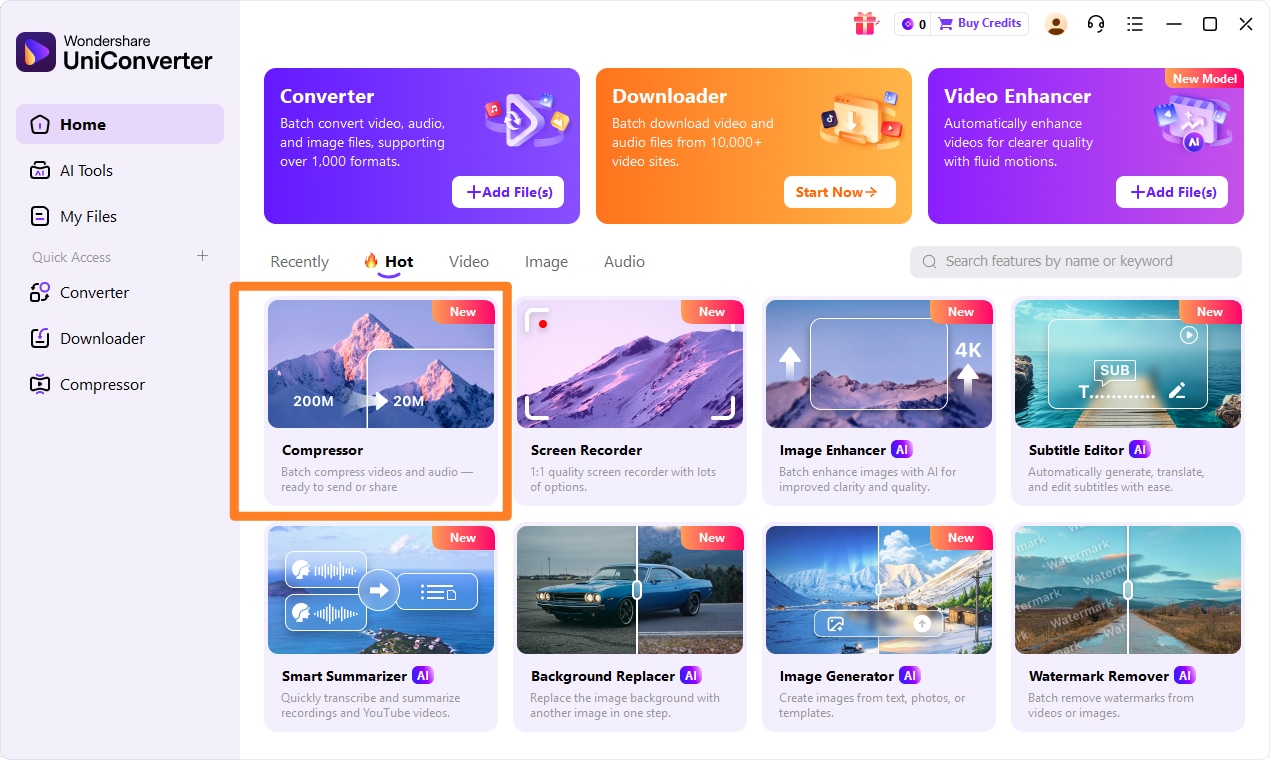
Step 1: Open UniConverter and Choose Compressor
First, I launch UniConverter on my computer. On the main interface, I navigate to the "Video Compressor" or "Audio Compressor" tool, depending on what I need to process. This dedicated module is designed for efficient compression.
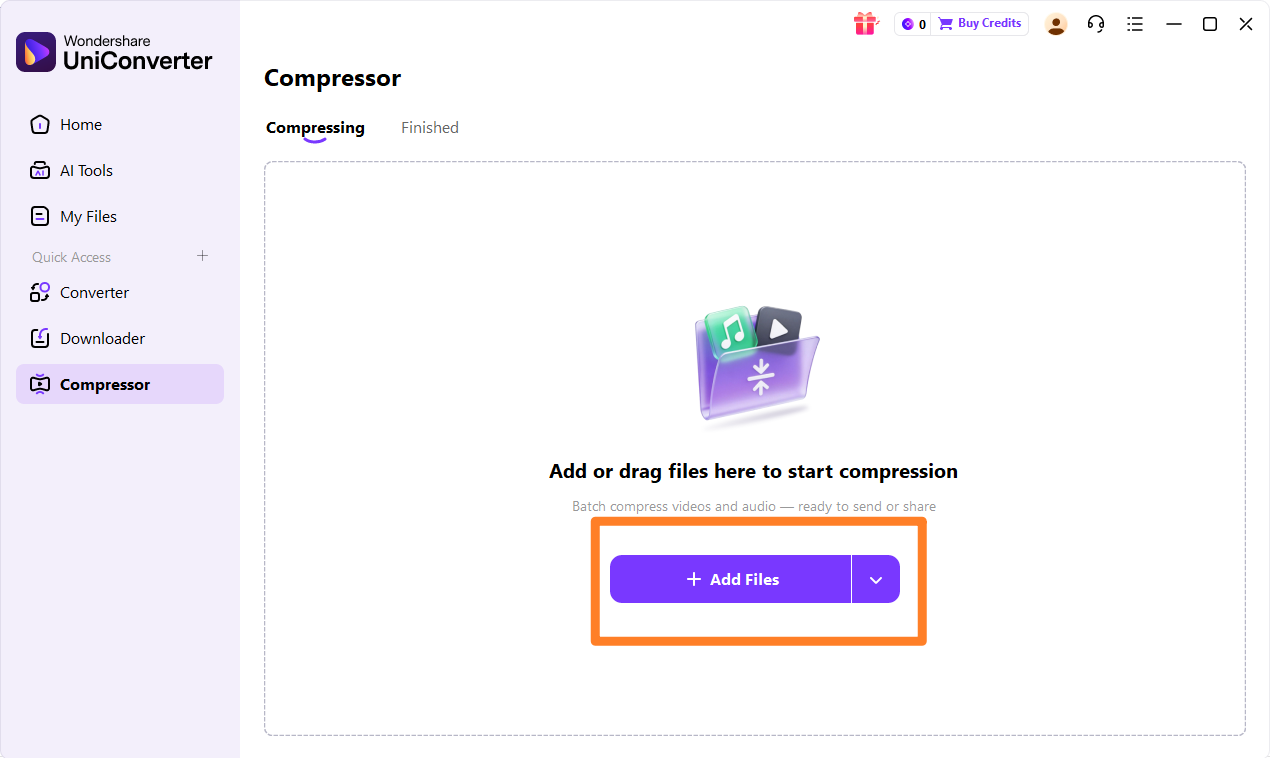
Step 2: Upload the Video, Audios or Images
Next, I simply drag and drop my video, audio, or image files directly into the UniConverter window. Alternatively, I can click the "Add Files" button to browse and select the media I want to compress. UniConverter supports a vast array of formats, so I don't have to worry about compatibility.
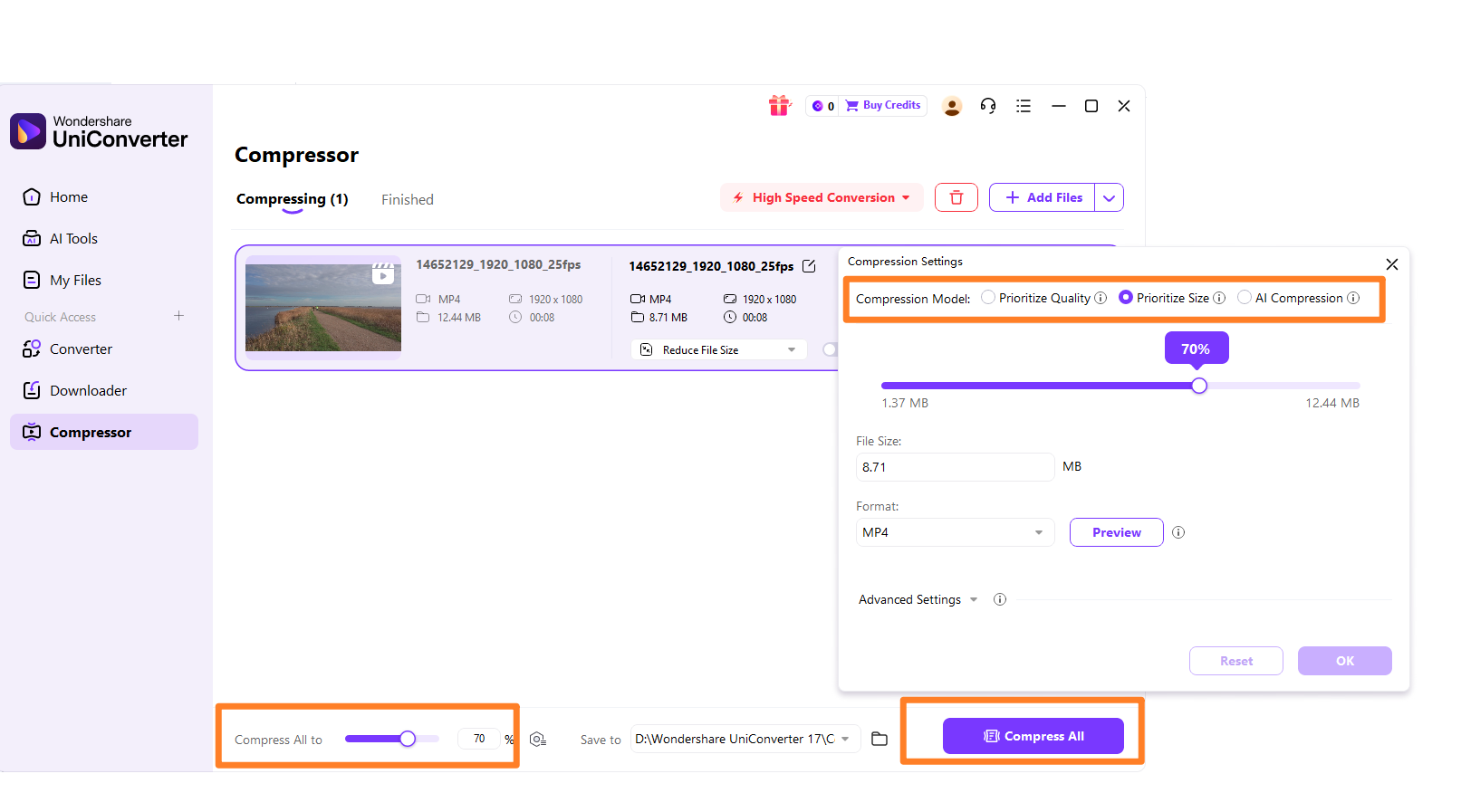
Step 3: Choose Required Parameters
Once my files are loaded, I can select my desired output format, resolution, bitrate, and quality settings. UniConverter provides presets for various devices and platforms, or I can customize the parameters manually for precise control over the compression ratio and final file size.
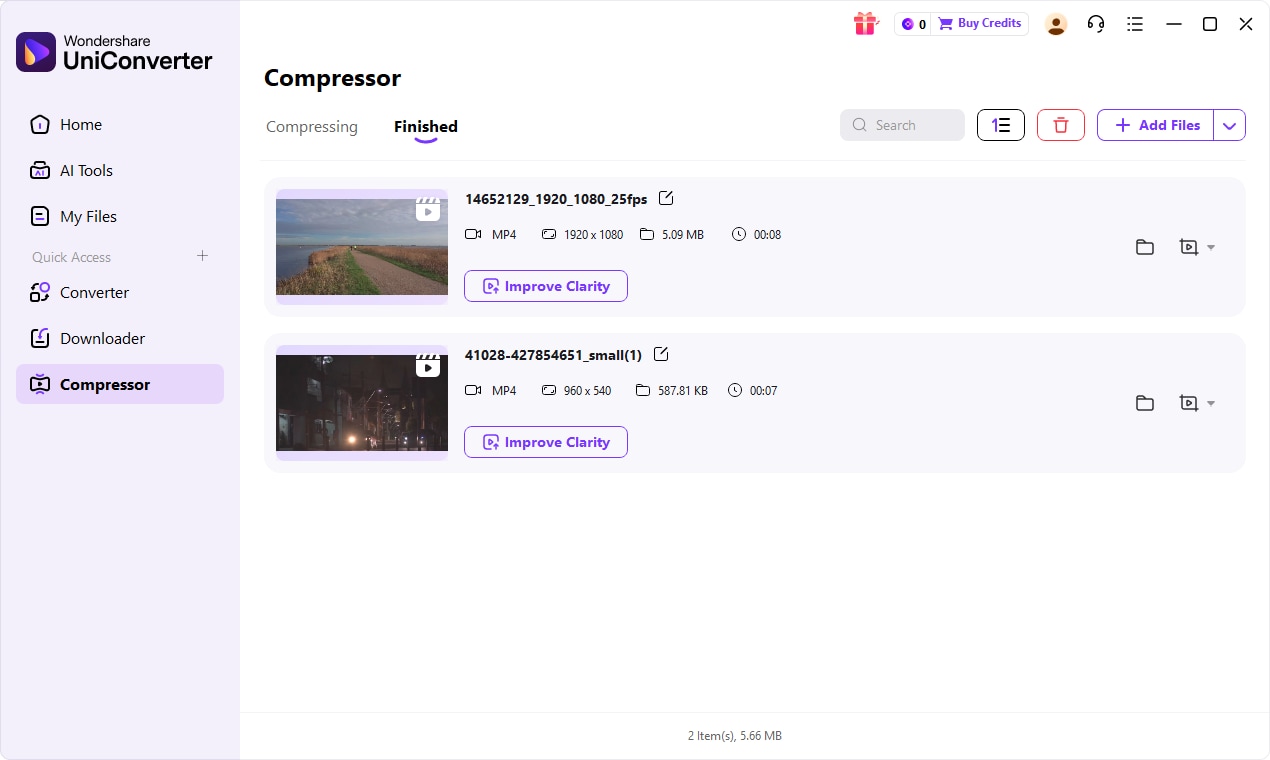
Step 4: Save the Compressed File
After configuring the settings, I click the "Compress" button. UniConverter leverages GPU acceleration for fast processing. Once finished, I can choose the destination folder to save my newly compressed files. The process is quick, stable, and maintains excellent quality.

VirtualDub Video Compressor Alternative
Part 7: Conclusion
In conclusion, my VirtualDub Video Compressor review reveals a tool that, while once indispensable, now serves a highly specialized and shrinking niche. For those who regularly work with legacy AVI files and require granular, frame-accurate control, VirtualDub can still be a valuable, lightweight utility. Its open-source nature and community-driven plugins offer a degree of flexibility for specific, older workflows. However, for the vast majority of modern video compression and editing tasks, VirtualDub's limitations are significant. Its outdated interface, lack of native support for contemporary codecs like H.264 and HEVC, and the absence of active development make it a less-than-ideal choice. For users seeking broad format compatibility, intuitive interfaces, and robust features, alternatives like HandBrake, FFmpeg, or UniConverter are far superior. HandBrake excels in modern video transcoding, FFmpeg provides unparalleled command-line power for advanced users, and UniConverter offers a user-friendly, all-in-one solution for virtually all video, audio, and image compression needs. Ultimately, while VirtualDub holds a special place in video editing history, its practical relevance in 2024 is largely confined to specific, legacy-driven scenarios.
Part 8: FAQs
-
1. Is VirtualDub still relevant in 2024?
VirtualDub's relevance is highly limited to specific legacy video tasks, primarily involving AVI files and older codecs. For modern video formats and features, it's largely obsolete.
-
2. Can VirtualDub compress MP4 files?
No, VirtualDub does not natively support MP4 files. It primarily works with AVI containers. You would need to convert MP4 to AVI first, which adds unnecessary steps. For MP4 compression, I recommend using a tool like UniConverter or HandBrake.
-
3. What are the best alternatives to VirtualDub for video compression?
Top alternatives include HandBrake (for transcoding), FFmpeg (for advanced command-line control), and UniConverter (for an all-in-one user-friendly solution).
-
4. Is VirtualDub safe to download and use?
While VirtualDub itself is generally safe, its lack of recent updates means it might not be compatible with modern systems and could potentially have unpatched vulnerabilities. Always download from trusted sources.
-
5. How does VirtualDub compare to modern video editors like DaVinci Resolve or Adobe Premiere Pro?
VirtualDub is a basic video processing utility, not a full-fledged video editor. It lacks the advanced editing, effects, and modern workflow capabilities found in professional tools like DaVinci Resolve or Adobe Premiere Pro. If you need comprehensive editing features, consider these professional-grade software options.
