
- Value:Vidmore Video Compressor simplifies video compression for casual users, making large files manageable.
- Comparison:It excels in ease of use but lacks advanced features compared to professional tools like Adobe Media Encoder or HandBrake.
- Decision:Ideal for quick, simple compression tasks; less suitable for professionals needing granular control and extensive editing.
- Alternative:UniConverter offers a balanced solution with user-friendliness and broader features, including stable, high-quality compression.
- Pitfalls:Be aware of potential quality loss, data privacy with cloud tools, bundled software, and performance on older systems.
In this article
- Part 1: What is Vidmore Video Compressor?
- Part 2: Vidmore Video Compressor: Core Features, Pros, and Cons
- Part 3: Vidmore Video Compressor: Ideal Users and Use Cases
- Part 4: Vidmore Video Compressor and Alternatives Comparison
- Part 5: Risks and Pitfalls to Consider
- Part 6: How to Use UniConverter for Efficient Video Compression
- Part 7: Conclusion
- Part 8: FAQs
When it comes to managing digital media, video compression has become an indispensable tool for everyone from casual content creators to professional videographers. With the ever-increasing resolution of video recordings, file sizes can quickly become unwieldy, making storage, sharing, and uploading a significant challenge. This is where dedicated video compressors step in, offering solutions to reduce file sizes without drastically compromising quality. In this comprehensive review, I'll dive deep into Vidmore Video Compressor review, exploring its features, comparing it with key competitors, and ultimately helping you decide if it's the right tool for your video compression needs. My goal is to provide an objective, scenario-based analysis to guide your purchasing or usage decisions.
Part 1: What is Vidmore Video Compressor?
Vidmore Video Compressor is a software solution designed to reduce the file size of video clips, making them easier to store, share, and upload. It positions itself as a user-friendly tool for individuals who need to manage large video files efficiently. In this review, I aim to address whether Vidmore Video Compressor truly delivers on its promise of efficient and quality-preserving compression, especially when stacked against a crowded market of alternatives.
The Growing Need for Efficient Video Compression
The demand for effective video compression tools stems from several key challenges I frequently encounter:
* Storage Limitations: High-definition and 4K videos consume vast amounts of storage space on my devices and cloud services.
* Slow Upload/Download Speeds: Sharing large video files online can be a painfully slow process, impacting my productivity and patience.
* Compatibility Issues: Many platforms and devices have size restrictions or preferred formats for video uploads, requiring prior compression.
* Bandwidth Consumption: Streaming or downloading uncompressed videos can quickly deplete my data plans.
Part 2: Vidmore Video Compressor: Core Features, Pros, and Cons
Vidmore Video Compressor focuses on providing a straightforward solution for reducing video file sizes. Its core capabilities revolve around simplifying the compression process for a broad audience.
Core Capabilities:
* Adjustable Compression Ratio: I can easily set the desired output file size or compression percentage.
* Format Conversion: It supports converting videos to various formats during compression, which is handy.
* Resolution and Bitrate Control: I have options to modify video resolution, bitrate, and frame rate.
* Preview Function: Before finalizing, I can preview the compressed video to check quality.
* Batch Processing: This allows me to compress multiple videos simultaneously, saving a lot of time.
Pros:
* Intuitive User Interface for Quick Compression: I found the interface very clean and easy to navigate, even for a first-time user.
* Wide Range of Supported Formats and Devices: It handles almost all the video formats I throw at it, and has presets for various devices.
* Batch Processing for Multiple Files: This is a huge time-saver when I have many videos to compress.
Cons:
* Limited Advanced Editing Features: I noticed it lacks more granular control over compression parameters and advanced editing options.
* Occasional Performance Lags on Large Files: When compressing very large 4K files, I sometimes experienced noticeable slowdowns.
Part 3: Vidmore Video Compressor: Ideal Users and Use Cases
Vidmore Video Compressor shines brightest for specific user profiles and scenarios, while proving less ideal for others.
Best Use Case: Casual Users Needing Quick and Simple Compression
If you're like me and primarily need to reduce video file sizes for sharing on social media, emailing to friends, or freeing up space on your phone, Vidmore Video Compressor is an excellent choice. It’s perfect for:
* Family Vloggers: Quickly compressing daily vlogs to upload to YouTube or share with family without extensive editing.
* Students: Reducing the size of recorded lectures or project videos to submit online or store on limited-capacity drives.
* Social Media Enthusiasts: Compressing clips for Instagram, TikTok, or Facebook that have strict file size limits.
Limited Use Case: Professional Editors Requiring Granular Control
However, if you're a professional video editor or a filmmaker who demands precise control over every aspect of compression, including specific codecs, advanced bitrate settings, and intricate quality adjustments, Vidmore Video Compressor might fall short. For these users, the limited advanced settings can be a significant drawback, as they often need to maintain the highest possible quality for broadcast or high-end production.
Part 4: Vidmore Video Compressor and Alternatives Comparison
When evaluating video compressors, it's crucial to see how they stack up against the competition. Here's how Vidmore Video Compressor compares to some popular alternatives.
| Feature/Scenario | Vidmore Video Compressor | HandBrake | Adobe Media Encoder | UniConverter |
| Ease of Use (Beginner) | Excellent | Good | Moderate | Excellent |
| Output Quality (Default) | Very Good | Excellent | Excellent | Very Good |
| Batch Processing Speed | Good | Very Good | Excellent | Excellent |
| Advanced Settings | Limited | Extensive | Extensive | Good |
| Price Point | Mid-range | Free | High (Subscription) | Mid-range |
Key Differentiators: Simplicity vs. Advanced Control
From my perspective, Vidmore Video Compressor excels in simplicity, making it incredibly accessible for beginners. HandBrake, while free and powerful, has a steeper learning curve due to its extensive settings. Adobe Media Encoder, part of the Adobe Creative Cloud suite, offers professional-grade control and integration but comes at a premium subscription cost. UniConverter strikes a good balance, offering a user-friendly interface with a decent array of advanced features, making it a strong all-rounder. If you prioritize ease of use and quick results, Vidmore or UniConverter are great. If you need maximum control and are comfortable with complexity, HandBrake or Adobe Media Encoder are better fits.
Part 5: Risks and Pitfalls to Consider
While video compressors offer great utility, there are several risks and pitfalls I've learned to watch out for, especially when choosing a new tool or using free versions.
Potential Loss of Video Quality
The most common concern I have with any compressor is the potential degradation of video quality. Aggressive compression can lead to pixelation, artifacts, and a noticeable drop in clarity. While Vidmore aims to balance this, it's crucial to experiment with settings to find the sweet spot between file size reduction and visual fidelity. I always recommend doing a small test compression before committing to a large batch.
Data Privacy Concerns with Cloud-Based Compressors
Many free online compressors require me to upload my video files to their servers. This raises significant data privacy concerns, especially if the videos contain sensitive or personal content. I always question how these services handle my data, if they store it, and who has access to it. For this reason, I generally prefer desktop applications like Vidmore Video Compressor, where my files remain on my local machine.
Unwanted Bundled Software/Ads
Some free or less reputable software often comes bundled with unwanted programs, toolbars, or excessive advertisements during installation or use. This can clutter my system, slow it down, and even pose security risks. I always download software from official sources and pay close attention during the installation process to uncheck any optional, unwanted additions.
Performance Impact on Older Systems
Video compression, especially for high-resolution files, is a resource-intensive task. On older or less powerful computers, I've found that some compressors can significantly slow down the system, leading to long processing times or even crashes. It's important to consider your system's specifications when choosing a compressor, as some are more optimized than others.
Compatibility Issues with Niche Formats
While most popular compressors support a wide range of formats, I occasionally encounter niche video formats that aren't fully supported. This can lead to conversion errors, corrupted files, or the inability to compress at all. Before committing to a compressor, I always check its supported format list if I'm dealing with unusual file types.
Part 6: How to Use UniConverter for Efficient Video Compression
Sometimes, other tools don’t live up to their promises—especially when you need reliable batch compression, consistent output, and acceptable image quality. In those situations, I’ve found UniConverter to be a much more dependable alternative. It offers a stable, ad-free experience, broad format support, and GPU acceleration for faster processing, making it a practical choice for anyone looking for a dedicated video compressor. I also like that it can help compress videos without quality loss as much as possible, which is especially useful when other tools introduce visible artifacts or heavy degradation. Beyond video, it also supports audio compression and image compression, so it works well as an all-in-one solution for broader media management, including common conversion tasks alongside compression.
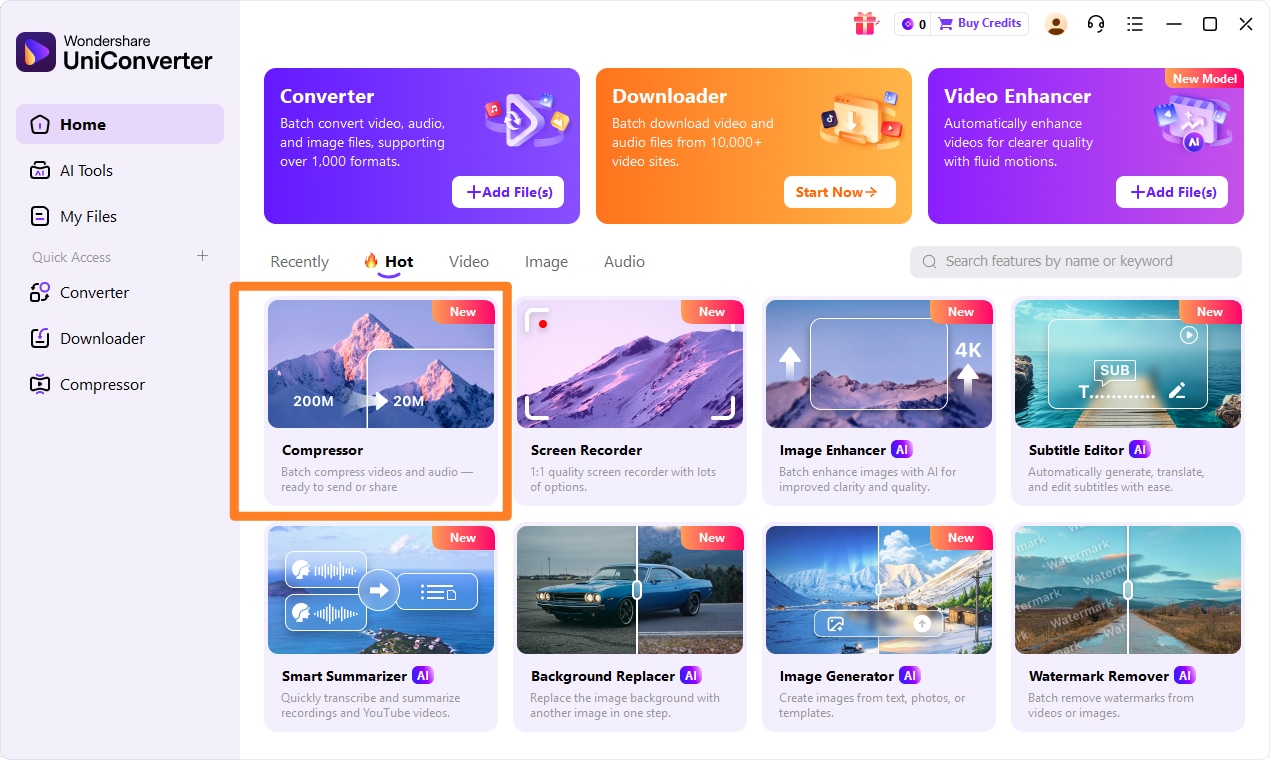
Step 1: Open UniConverter and Choose Compressor
Launch UniConverter on your computer. On the main interface, navigate to the "Video Compressor" tool.
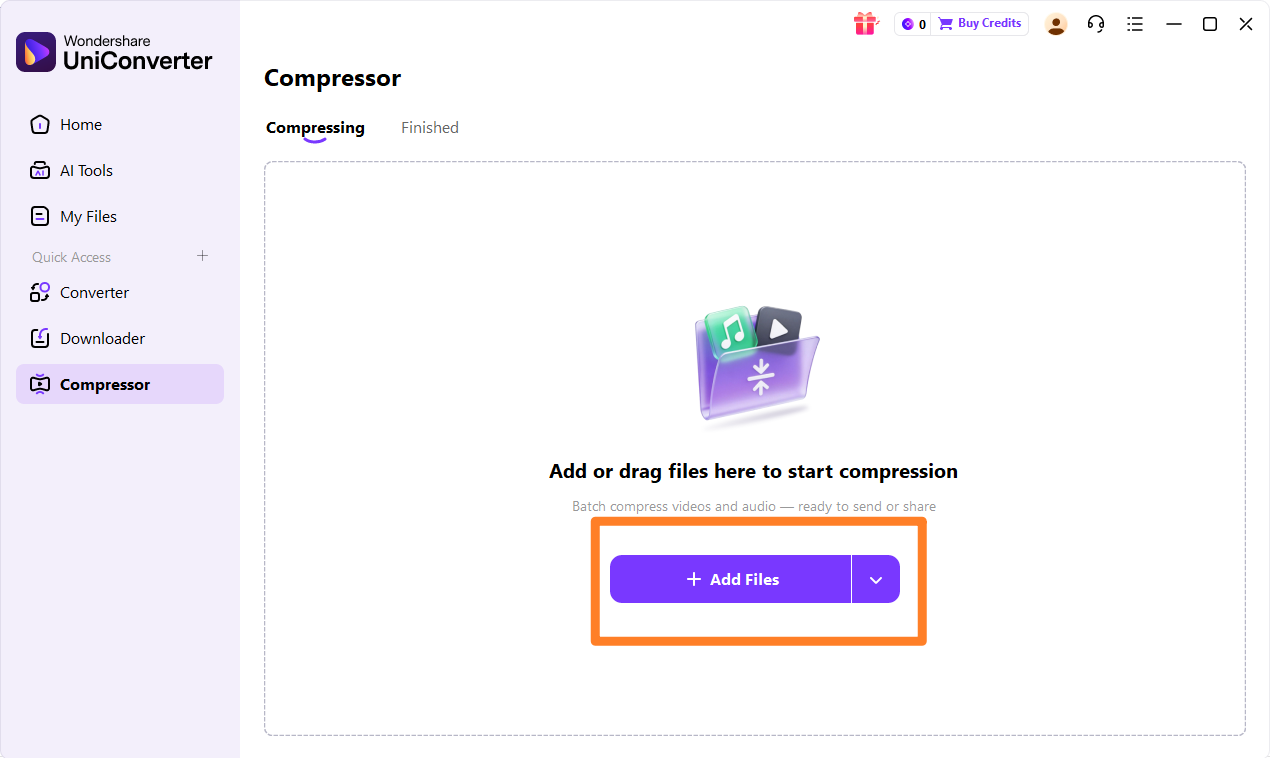
Step 2: Upload the Video, Audios or Images
Click on the "Add Files" button or simply drag and drop your video files into the program window.
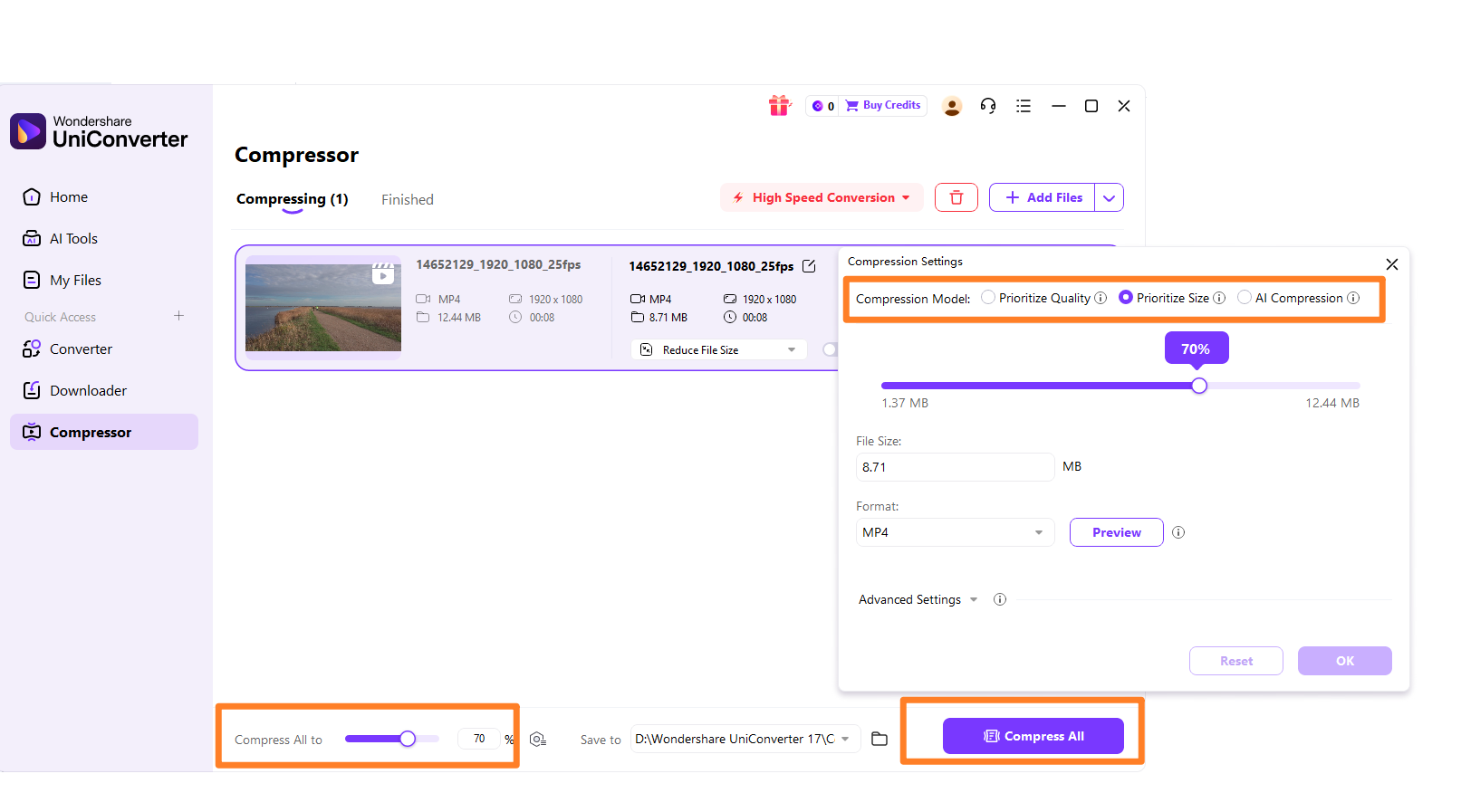
Step 3: Choose Required Parameters
Adjust the compression settings such as file size, format, resolution, and bitrate. You can use the slider for quick adjustments or customize parameters for precise control.
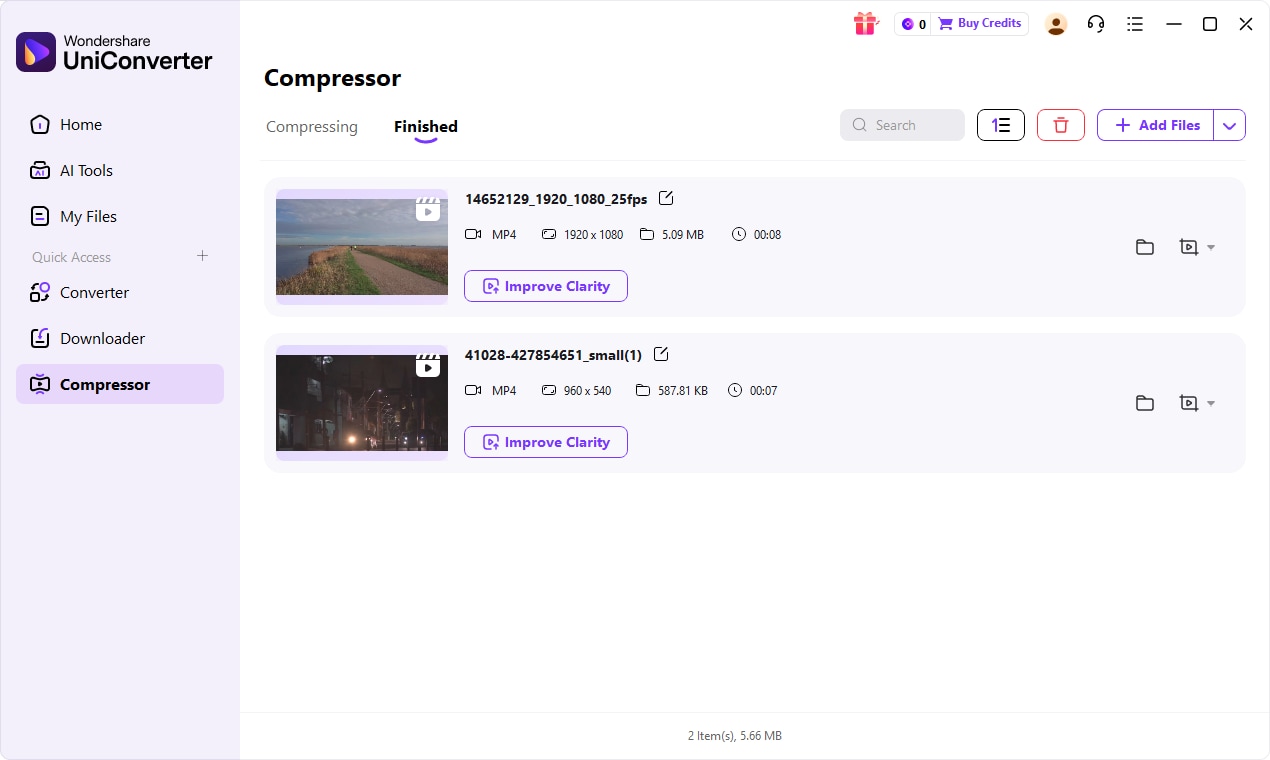
Step 4: Save the Compressed File
Once you're satisfied with the settings, click the "Compress" button. UniConverter will process your files and save them to your specified output folder.

Seeking a Vidmore Video Compressor Alternative?
Part 7: Conclusion
After thoroughly exploring Vidmore Video Compressor review and comparing it with its alternatives, I can confidently say that it holds a strong position in the market for specific users. For beginners and casual users who prioritize ease of use and quick, straightforward video compression without delving into complex settings, Vidmore Video Compressor is a solid and reliable choice. Its intuitive interface and efficient batch processing make it ideal for everyday tasks like preparing videos for social media or freeing up storage space. However, for advanced users and professionals who require granular control over every compression parameter, extensive editing features, or the highest possible output quality for demanding projects, I would recommend considering more robust alternatives like HandBrake or Adobe Media Encoder. For those seeking a balanced solution that combines user-friendliness with a broader range of features, including advanced editing, conversion, and stable compression, UniConverter stands out as an excellent all-in-one option. Ultimately, your best choice depends on your specific needs, technical proficiency, and budget.
Part 8: FAQs
-
1. Is Vidmore Video Compressor free to use?
Vidmore Video Compressor offers a free trial with limited features, and a paid version for full functionality.
-
2. Does Vidmore Video Compressor support 4K video compression?
Yes, Vidmore Video Compressor supports 4K video compression, though performance may vary based on system specifications.
-
3. Can I compress multiple videos at once with Vidmore?
Yes, Vidmore Video Compressor features batch processing, allowing you to compress multiple videos simultaneously.
-
4. How does Vidmore Video Compressor affect video quality?
Vidmore Video Compressor aims to maintain high video quality while reducing file size, but some quality loss is inherent in compression. Users can adjust settings to balance quality and file size. For more precise control over quality and less loss, I often turn to UniConverter.
-
5. What are the main differences between Vidmore Video Compressor and UniConverter?
Vidmore Video Compressor focuses on simplicity and ease of use, while UniConverter offers a broader range of features including advanced editing, conversion, and DVD burning, alongside robust compression capabilities. UniConverter also tends to offer more stable compression results with less quality degradation, making it a more versatile tool for various media tasks.
