
- Value: VideoProc Compressor efficiently reduces large video files, crucial for storage, sharing, and faster uploads.
- Features: Offers extensive format support, resolution adjustment, and GPU acceleration for rapid processing.
- Pros: Delivers lossless compression, efficient batch processing, and leverages GPU for speed.
- Cons: Limited advanced editing and requires a subscription for full functionality.
- Use Case: Ideal for content creators managing large 4K footage; overkill for casual users.
- Comparison: Faster and simpler than HandBrake/FFmpeg, similar to UniConverter in premium experience.
- Risks: Watch for metadata loss, over-compression, software compatibility, and bundled software during installation.
- Alternative: UniConverter provides stable, high-quality compression with GPU acceleration and batch processing.
- Recommendation: Excellent for professionals needing speed; free alternatives exist for budget-conscious users.
- Verdict: A powerful, intuitive tool for high-volume video compression, especially with 4K/8K files.
In this article
- Part 1: What is VideoProc Video Compressor?
- Part 2: VideoProc Video Compressor: Core Features, Pros, and Cons
- Part 3: VideoProc Video Compressor: The User and Use Cases
- Part 4: VideoProc Video Compressor vs. Competitors
- Part 5: Risks and Pitfalls to Consider
- Part 6: How to Use UniConverter for Efficient Video Compression
- Part 7: Final Verdict and Recommendations
- Part 8: FAQs
VideoProc Video Compressor: Your Ultimate Guide to Efficient Video Compression
When you're constantly dealing with large video files, whether from your drone, DSLR, or smartphone, the struggle to store, share, and upload them is real. I've been there, staring at "uploading..." progress bars for what feels like an eternity. That's why I started looking into dedicated video compression tools. This VideoProc Video Compressor review aims to cut through the noise and give you a clear, scenario-based comparison of VideoProc Video Compressor against its main rivals. I'll break down its core features, highlight its strengths and weaknesses, and help you decide if it's the right tool for your workflow. We'll also explore alternatives like HandBrake, FFmpeg, and UniConverter, so you can make an informed decision based on your specific needs and budget.
Part 1: What is VideoProc Video Compressor?
VideoProc Video Compressor is a software solution designed to reduce the file size of your videos without significant loss of quality. In today's digital landscape, where high-resolution video capture is commonplace, the need for efficient compression has never been greater. I've personally experienced the frustration of trying to share a 4K video with friends or upload a large project to YouTube, only to be met with slow transfer speeds and storage limitations. This tool aims to alleviate those pain points by offering a streamlined compression process. This review will delve into its capabilities, comparing it to other popular options to help you determine if it's the best fit for your video workflow.
The Growing Need for Video Compression
* Storage Limitations: High-resolution videos consume vast amounts of storage space, quickly filling up hard drives and cloud storage.
* Slow Upload/Download Speeds: Large file sizes translate to longer upload and download times, impacting productivity and sharing efficiency.
* Bandwidth Constraints: Sharing uncompressed 4K or 8K videos can strain internet bandwidth, leading to buffering and a poor viewing experience.
* Platform Compatibility: Many social media and streaming platforms have file size limits, necessitating compression before uploading.
Part 2: VideoProc Video Compressor: Core Features, Pros, and Cons
VideoProc Video Compressor is built around the idea of making video compression fast and accessible. From my experience, its core strength lies in its ability to handle various video formats and resolutions with impressive speed, thanks to its hardware acceleration. It's not just about shrinking files; it's about doing it intelligently.
Core Features:
* Extensive Format Support: It handles a wide array of video formats, including MP4, MOV, MKV, AVI, and more.
* Resolution and Bitrate Adjustment: You can fine-tune output resolution, frame rate, and bitrate to achieve the desired file size and quality balance.
* Lossless Compression Options: For specific codecs, it offers near-lossless compression to preserve maximum quality.
* Built-in Video Editor: Basic editing functions like cutting, cropping, and merging are included, which is a nice bonus.
* DVD/Blu-ray Conversion: It also supports converting physical media into digital formats.
Pros
* Lossless Compression for High-Quality Output: I've found that for critical projects, VideoProc does an excellent job of maintaining visual fidelity, especially when I'm careful with the settings.
* Batch Processing for Time-Saving Efficiency: When I have a dozen 4K clips from a recent shoot, being able to queue them all up and let VideoProc handle it overnight is a lifesaver.
* GPU Acceleration for Rapid Processing: This is where VideoProc truly shines. My workflow for urgent video delivery has been significantly expedited because it leverages my graphics card.
Cons
* Limited Advanced Editing Features: If you're looking for a full-fledged video editor, this isn't it. It's great for compression, but I still need a separate tool for complex edits.
* Subscription Model for Full Functionality: While there's a free trial, unlocking all features requires a subscription, which can be a barrier if I only need to compress videos infrequently.
Part 3: VideoProc Video Compressor: The User and Use Cases
VideoProc Video Compressor is designed for a specific type of user, and understanding that is key to deciding if it's right for you. From my perspective, it caters to those who regularly deal with large video files and prioritize speed and efficiency.
Best Use Case: Content Creators Managing Large 4K Footage
As a content creator, I'm constantly shooting in 4K, and those files are massive. VideoProc Video Compressor becomes indispensable when I need to quickly compress footage for editing proxies, uploading to YouTube, or sending to collaborators. Its GPU acceleration means I'm not waiting hours for files to process, allowing me to meet tight deadlines. For instance, after a full day of shooting an event, I can batch compress all my raw 4K clips into a more manageable size for my editing software, saving me significant time and disk space.
Limited Use Case: Casual Users with Basic Compression Needs
If you're just looking to occasionally shrink a home video for email or social media, VideoProc might be overkill. While it's user-friendly, the subscription model and advanced features might not be worth it for someone who only compresses a few videos a year. For these users, free online compressors or simpler, built-in operating system tools might suffice, even if they're not as fast or feature-rich. I wouldn't recommend it if you only need to compress a single 1080p video once a month.
Part 4: VideoProc Video Compressor vs. Competitors
When I'm evaluating a tool like VideoProc Video Compressor, I always stack it up against the competition. It's crucial to see where it stands in terms of performance, features, and value. Here's how it compares to some other popular options I've used.
Comparison Table: VideoProc Video Compressor vs. HandBrake, FFmpeg, and UniConverter
| Feature/Metric | VideoProc Video Compressor | HandBrake | FFmpeg | UniConverter |
| Ease of Use | High | Medium | Low | High |
| Compression Speed | Very High (GPU) | Medium | High | Very High (GPU) |
| Output Quality | Excellent | Good | Excellent | Excellent |
| Batch Processing | Yes | Yes | Yes | Yes |
| Supported Formats | Extensive | Good | Extensive | Extensive |
| Price | Paid | Free | Free | Paid |
Key Differentiators: Speed, Simplicity, and Supported Formats
From my experience, VideoProc Video Compressor truly differentiates itself with its speed, largely due to its GPU acceleration. When I'm on a tight deadline, this makes a huge difference. Its simplicity also stands out; the interface is intuitive, making it easy to get started without a steep learning curve, unlike FFmpeg which requires command-line knowledge. Finally, its extensive supported formats mean I rarely encounter a video file it can't handle, which isn't always the case with HandBrake. While HandBrake is free and powerful, it demands more technical understanding. FFmpeg is incredibly versatile and free but is strictly for command-line users. UniConverter, like VideoProc, offers a premium, user-friendly experience with high speed and quality.
Part 5: Risks and Pitfalls to Consider
Even with the best tools, there are always potential risks and pitfalls to be aware of. When I'm using any video compression software, including VideoProc Video Compressor, I keep these points in mind to avoid headaches down the line.
Potential Loss of Metadata During Compression
I've learned the hard way that compressing videos can sometimes strip away valuable metadata, such as creation date, camera model, or GPS information. While not always critical, for archival purposes or professional projects, this can be a significant loss. Always back up your original files before compressing, especially if metadata is important to you.
Over-Compression Leading to Noticeable Quality Degradation
It's tempting to push for the smallest file size possible, but I've found that over-compressing can quickly lead to a noticeable drop in video quality. Blockiness, color banding, and a general "muddiness" can appear, making your video look unprofessional. Finding the right balance between file size and visual fidelity is crucial, and it often requires some experimentation with settings.
Software Compatibility Issues with Older Operating Systems
While most modern software is designed for current operating systems, I've occasionally run into compatibility issues when trying to install or run newer versions of software on older machines. Before committing to a purchase, I always check the system requirements to ensure VideoProc Video Compressor will run smoothly on my setup.
Unwanted Bundled Software During Installation
This is a common annoyance with many software installations, not just video compressors. Sometimes, during the installation process, there are pre-checked boxes for "optional" bundled software, toolbars, or browser extensions. I always make sure to read each step carefully and deselect anything I don't want to avoid installing unwanted programs on my computer.
Part 6: How to Use UniConverter for Efficient Video Compression
Sometimes, despite the promises of other tools, you might encounter issues like unstable compression results, significant quality loss, or a lack of batch processing capabilities. In such cases, I often turn to UniConverter as a robust and reliable alternative for video, audio, and image compression. It's an all-in-one solution that avoids the pitfalls of many free or less comprehensive tools, offering a seamless experience with no ads, extensive format support, GPU acceleration, stable lossless compression, and efficient batch processing.
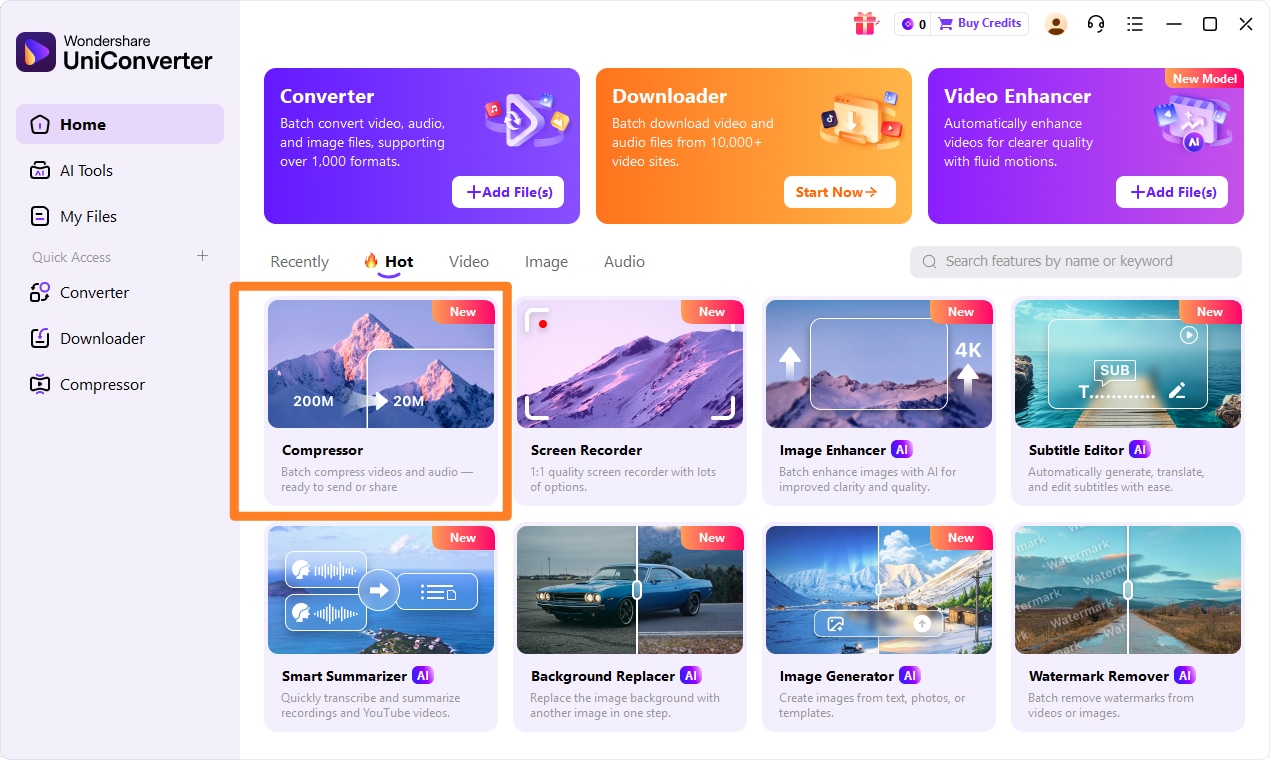
Step 1: Open UniConverter and Choose Compressor
Launch UniConverter on your computer. On the main interface, navigate to the "Toolbox" section and select the "Video Compressor" option.
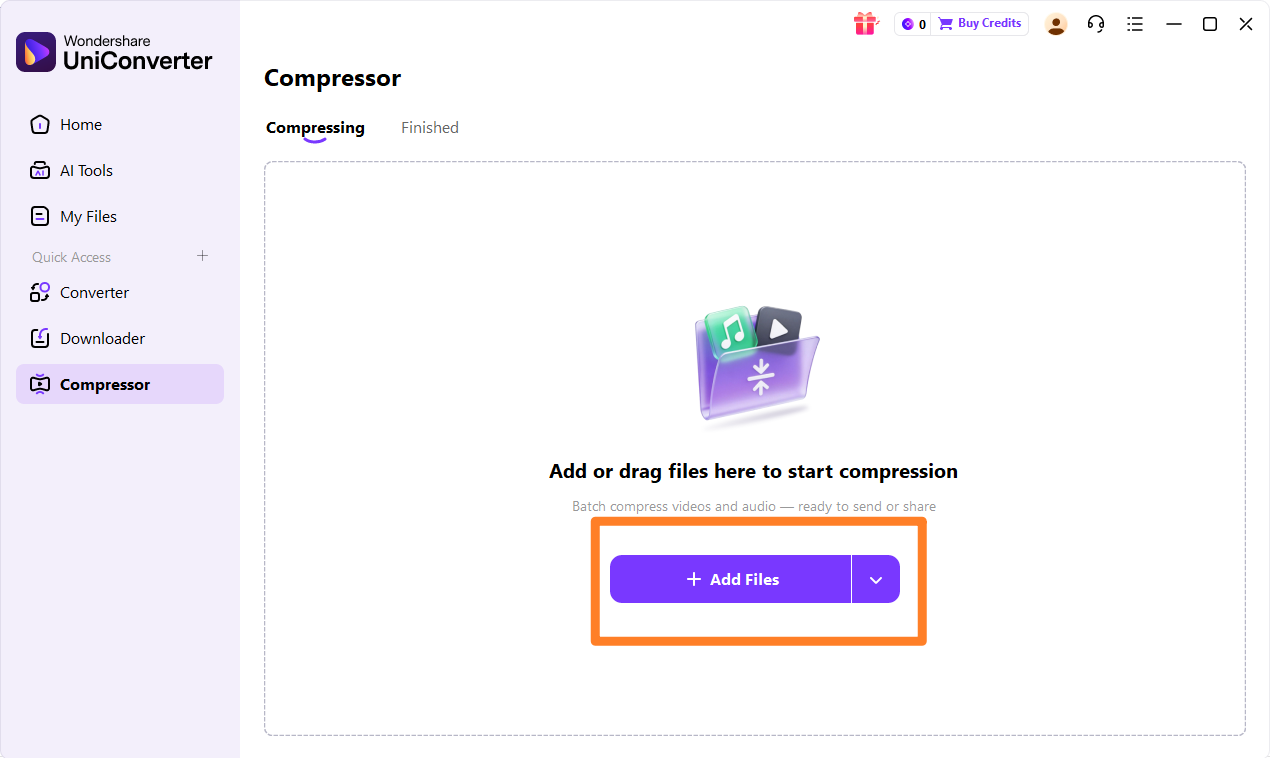
Step 2: Upload the Video, Audios or Images
Click the "Add Files" button or simply drag and drop the video, audio, or image files you wish to compress into the program window.
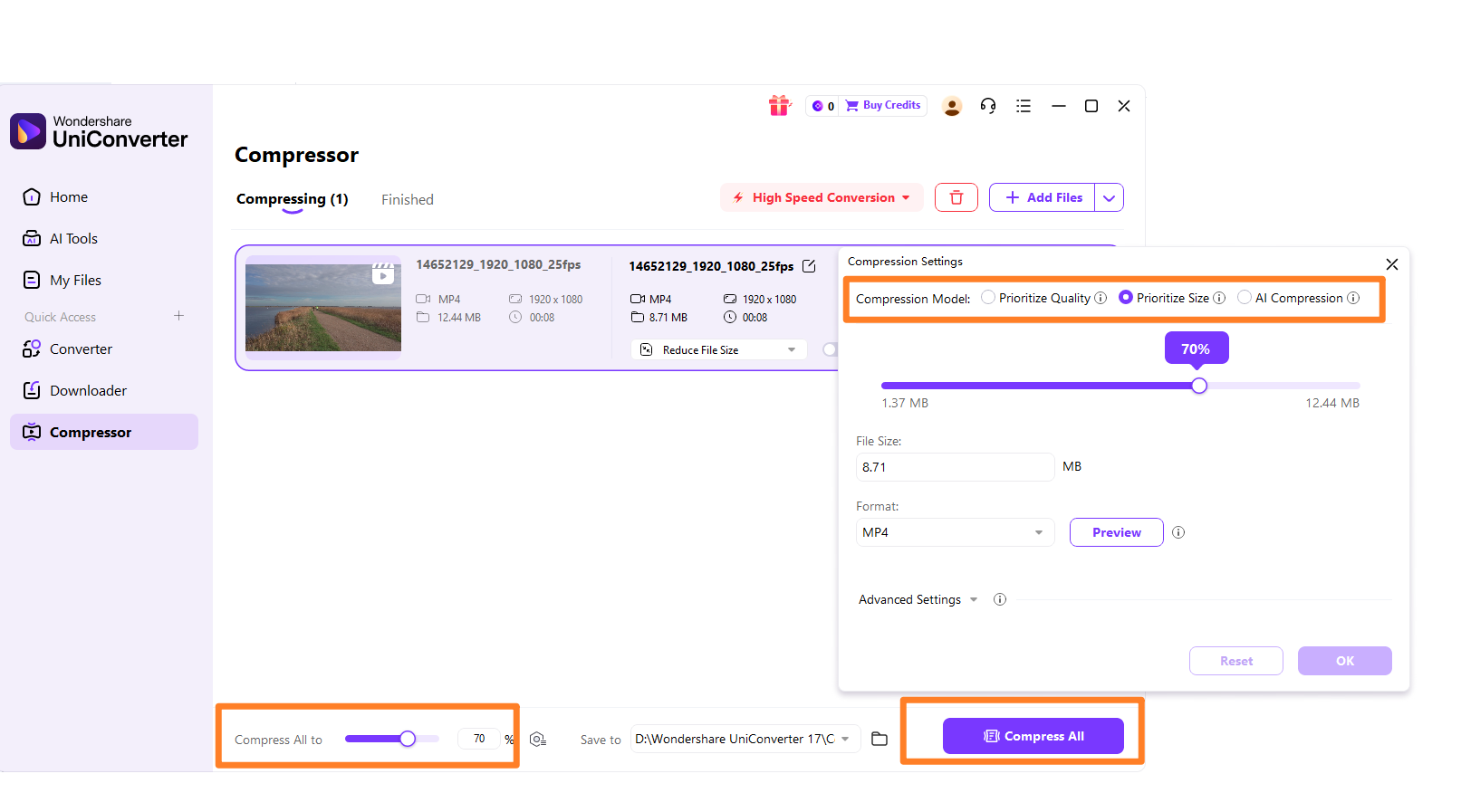
Step 3: Choose Required Parameters
After importing your file, you can adjust various compression parameters such as file size, format, resolution, and bitrate. UniConverter provides presets or allows for custom settings.
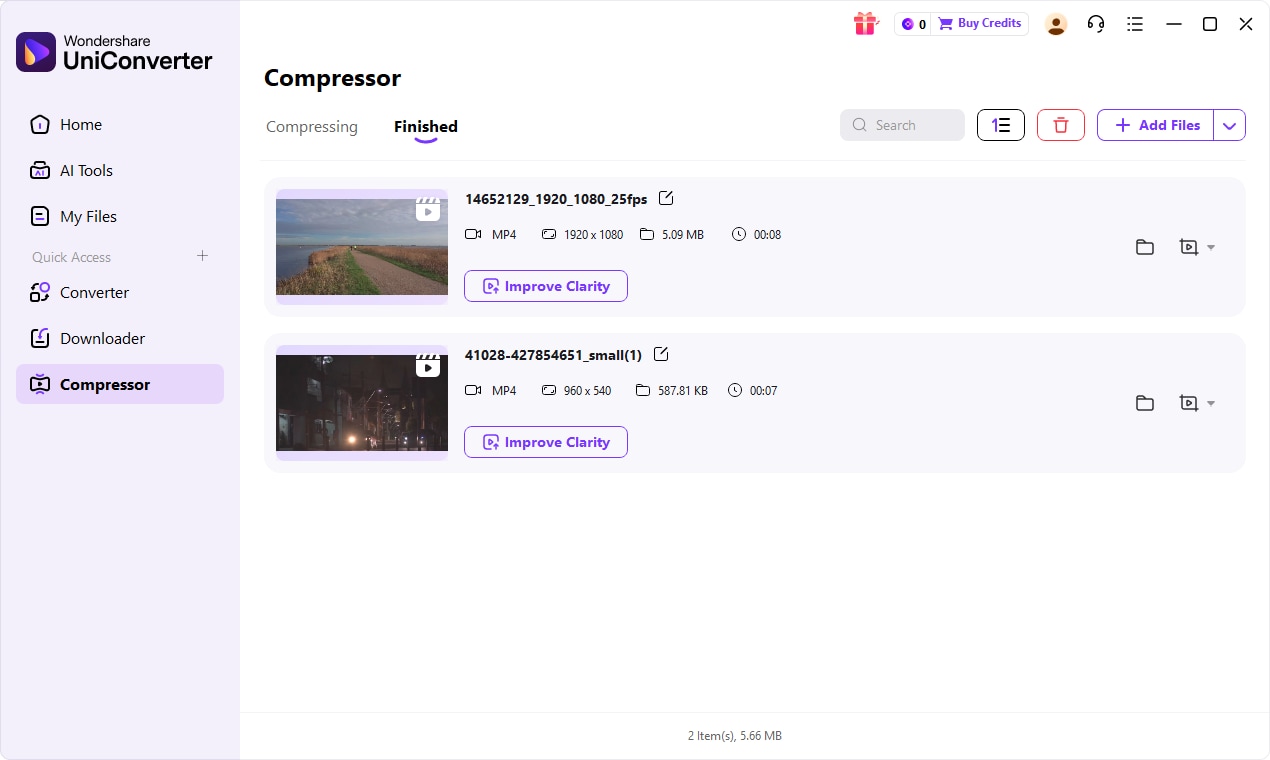
Step 4: Compress and Export Your Videos
Once you've set your desired parameters, click the "Compress" button. UniConverter will process your files quickly, and you can then choose the output folder to save your compressed videos.

Seeking a Better Video Compression Alternative?
Part 7: Final Verdict and Recommendations
After extensively using and comparing various video compression tools, my VideoProc Video Compressor review concludes that it's a powerful and efficient solution, particularly for specific user groups. Its strength lies in its GPU-accelerated processing, which significantly speeds up compression, making it a valuable asset for anyone dealing with large video files regularly. The intuitive interface also lowers the barrier to entry, allowing users to achieve good results without a steep learning curve. However, its subscription model and limited advanced editing capabilities mean it might not be the perfect fit for everyone.
For Professionals Prioritizing Speed and Quality
If you're a content creator, videographer, or anyone who frequently handles large 4K or 8K video files and needs to compress them quickly without significant quality loss, VideoProc Video Compressor is an excellent investment. Its batch processing and hardware acceleration will undoubtedly streamline your workflow and save you valuable time.
For Budget-Conscious Users Seeking Free Alternatives
If your compression needs are occasional or you're working with a limited budget, free alternatives like HandBrake or even FFmpeg (if you're comfortable with command lines) are viable options. While they might require more effort or have a steeper learning curve, they can achieve similar results without the recurring cost.
For Beginners Needing an Intuitive Interface
For those new to video compression who want a straightforward and easy-to-use tool, VideoProc Video Compressor is a strong contender. Its user-friendly design makes it accessible, allowing you to compress videos effectively without getting bogged down in complex settings. However, if you also need comprehensive video management beyond just compression, UniConverter offers a more all-encompassing and equally intuitive experience.
Part 8: FAQs
-
1. Does VideoProc Video Compressor support 8K video compression?
Yes, VideoProc Video Compressor is capable of handling and compressing 8K video files. Its GPU acceleration is particularly beneficial for processing such high-resolution footage efficiently.
-
2. Can I compress videos for specific social media platforms using VideoProc?
Absolutely. VideoProc Video Compressor allows you to adjust resolution, bitrate, and format, enabling you to optimize your videos for various social media platforms like YouTube, Instagram, or TikTok, which often have specific file size and resolution requirements.
-
3. Is there a free trial available for VideoProc Video Compressor?
Yes, VideoProc Video Compressor offers a free trial version. This allows you to test out its features and performance before committing to a purchase, though the trial may have some limitations on file length or features.
-
4. How does GPU acceleration improve compression speed?
GPU acceleration leverages your computer's graphics processing unit (GPU) to handle computationally intensive tasks like video encoding and decoding. This offloads the work from your CPU, significantly speeding up the compression process, especially for high-resolution videos.
-
5. What are the minimum system requirements for VideoProc Video Compressor?
Typically, VideoProc Video Compressor requires a Windows 7 or later (64-bit) or macOS 10.6 or later. A 1GHz Intel or AMD processor, 512MB RAM, and 200MB free hard disk space are generally the minimums, but for optimal performance, especially with 4K/8K video and GPU acceleration, a more powerful CPU, at least 4GB RAM, and a dedicated GPU are highly recommended. If your system struggles, consider UniConverter, which is also highly optimized for performance across various hardware configurations.
