
- VEED's Value: Offers quick, easy online video compression, ideal for social media and casual users.
- Feature Focus: Browser-based, adjustable compression, common format support, and VEED editor integration.
- Key Trade-off: Simplicity comes at the cost of advanced control; limited for professionals needing precise settings.
- Comparison Insight: Outperforms basic online converters in ease, but lacks HandBrake's control or UniConverter's robustness.
- Decision Factor: Choose VEED for speed and convenience; opt for desktop alternatives like UniConverter for quality, control, and offline use.
In this article
- Part 1: What is VEED Video Compressor?
- Part 2: VEED Video Compressor: Core Features, Pros, and Cons
- Part 3: VEED Video Compressor: Ideal Users and Use Cases
- Part 4: VEED Video Compressor vs. Competitors: A Comparative Analysis
- Part 5: Risks and Pitfalls to Consider
- Part 6: How to Use UniConverter for Efficient Audio and Video Compression
- Part 7: Final Verdict and Recommendations
- Part 8: FAQs
When I first started creating content, I quickly realized the headache of large video files. Uploading to social media was a nightmare, and sharing with collaborators felt like sending data packets via carrier pigeon. That's when I stumbled upon VEED Video Compressor, a tool promising to shrink those massive files without sacrificing too much quality. This VEED Video Compressor review will dive deep into its capabilities, comparing it against popular alternatives like HandBrake, Clipchamp, and Online Video Converter. My goal is to help you navigate the crowded landscape of video compression tools and determine if VEED is the right fit for your specific needs, whether you're a casual uploader or a professional seeking more control.
Part 1: What is VEED Video Compressor?
VEED Video Compressor is a cloud-based online tool designed to reduce the file size of your video content. It's part of the larger VEED.io suite, which offers a range of online video editing and creation tools. In today's digital age, where high-resolution video is ubiquitous, the ability to efficiently compress videos has become indispensable.
The Growing Demand for Efficient Video Compression
The need for effective video compression stems from several key factors:
* Faster Uploads and Downloads: Smaller files mean quicker sharing and less waiting time for viewers.
* Reduced Storage Costs: Whether on cloud platforms or local drives, compressed videos take up less space.
* Improved Website Performance: Optimized video content loads faster, enhancing user experience and SEO.
* Seamless Social Media Sharing: Most platforms have file size limits, making compression a necessity for content creators.
Part 2: VEED Video Compressor: Core Features, Pros, and Cons
VEED Video Compressor offers a streamlined approach to shrinking video files. Its core capabilities revolve around simplifying the compression process for a broad audience. I've found it particularly useful for quick adjustments before sharing.
Here are some of its core features:
* Adjustable Compression Levels: You can choose between different quality settings to balance file size and visual fidelity.
* Support for Common Video Formats: It handles popular formats like MP4, MOV, and AVI.
* Direct Browser-Based Operation: No software download or installation is required.
* Preview Before Export: You can see the compressed video before committing to the download.
* Integration with VEED's Editor: Seamlessly move compressed videos into their online editor for further tweaks.
Pros:
* Intuitive User Interface for Quick Compression: I love how straightforward it is; just upload, choose a setting, and compress.
* Cloud-Based Accessibility for On-the-Go Use: I can access it from any device with an internet connection, which is incredibly convenient.
* Integrated Video Editing Capabilities: The ability to trim or add text right after compression saves me a lot of time.
Cons:
* Limited Advanced Compression Options for Professionals: For someone who needs specific codecs or bitrate control, it falls short.
* Potential for Slower Processing on Large Files: I've noticed that very large files can take a while to process, which can be frustrating.
Part 3: VEED Video Compressor: Ideal Users and Use Cases
VEED Video Compressor shines in specific scenarios, catering primarily to users who prioritize speed and simplicity over granular control. From my experience, it's not a one-size-fits-all solution, but it excels where it's designed to.
Best Use Case: Social Media Content Creators Optimizing for Fast Uploads
If you're like me, constantly churning out short videos for Instagram, TikTok, or YouTube Shorts, VEED is a lifesaver. I can quickly compress my clips to meet platform requirements and upload them without waiting ages. The integrated editing tools also mean I can make last-minute cuts or add text overlays right there. It's perfect for when I need to get content out fast and don't have time for complex desktop software.
Limited Use Case: Professional Videographers Requiring Lossless Compression for Archival
For professional videographers, especially those dealing with raw footage or needing to archive high-quality masters, VEED's limitations become apparent. I wouldn't trust it for lossless compression or for projects where every pixel of detail is critical. The quality trade-offs, even on higher settings, aren't suitable for archival purposes or client deliverables that demand uncompromised fidelity. For these tasks, I always turn to more robust desktop applications that offer precise control over every compression parameter.
Part 4: VEED Video Compressor vs. Competitors: A Comparative Analysis
When it comes to video compression, VEED isn't the only player in the game. I've tried several tools, and each has its strengths. Here's how VEED stacks up against some popular alternatives.
| Feature Set | VEED Video Compressor | HandBrake | Clipchamp | Online Video Converter |
| Processing Speed | Moderate (cloud-dependent) | Fast (local CPU/GPU dependent) | Moderate (cloud-dependent) | Varies (server load dependent) |
| Output Quality | Good (adjustable, some loss) | Excellent (highly customizable, near-lossless possible) | Good (preset options) | Fair (basic presets, noticeable loss) |
| Ease of Use | Very High (intuitive web interface) | Moderate (steep learning curve for advanced features) | High (user-friendly web interface) | Very High (simple upload & convert) |
| Pricing Model | Freemium (free tier with limits, paid for advanced) | Free (open-source) | Freemium (free tier with limits, paid for advanced) | Free (ad-supported) |
| Platform | Web-based | Desktop (Windows, macOS, Linux) | Web-based (Microsoft integration) | Web-based |
Key Differentiators:
VEED's focus on ease of use and integrated editing for casual users. I find it perfect for quick edits and compression for social media. HandBrake's advanced control and open-source nature for technical users. When I need precise control over codecs and bitrates, HandBrake is my go-to. Clipchamp's browser-based convenience and Microsoft integration. It's a solid choice if you're already in the Microsoft ecosystem and need a quick online editor. Online Video Converter's simplicity for one-off conversions. For a single, no-frills conversion, it gets the job done without any fuss.
Part 5: Risks and Pitfalls to Consider
While online video compression tools like VEED offer undeniable convenience, it's crucial to be aware of the potential risks and pitfalls, especially when dealing with your valuable video content. I've learned these lessons the hard way, so you don't have to.
Data Privacy and Security Concerns with Cloud-Based Tools
When I upload my videos to a cloud-based compressor, I'm essentially entrusting my data to a third party. This raises questions about how my content is stored, who has access to it, and whether it's truly deleted after processing. For sensitive or confidential projects, I always think twice before using an online tool, as the privacy policies can be vague or change without much notice. It's a trade-off between convenience and data security.
Impact on Video Quality with Aggressive Compression Settings
It's tempting to choose the most aggressive compression setting to get the smallest file size, but I've often regretted it. Aggressive compression can lead to noticeable artifacts, pixelation, and a significant drop in visual fidelity. What looked fine on a small screen might appear terrible on a larger display. Always preview the compressed video and consider the final viewing platform before finalizing your settings. Sometimes, a slightly larger file is worth the preserved quality.
Hidden Costs or Subscription Models for Advanced Features
Many "free" online tools, including VEED, operate on a freemium model. While the basic compression might be free, I've often found that essential features like higher quality output, larger file size limits, faster processing, or the removal of watermarks are locked behind a paywall. It's easy to get started for free, only to realize you need a subscription to achieve the results you truly want, leading to unexpected costs.
Potential for Watermarks or Branding on Free Versions
A common tactic for free online compressors is to add a watermark or their branding to your compressed video. This can be a deal-breaker if you're creating professional content or want a clean, unbranded output. I always check for this before using a free service, as removing the watermark usually requires upgrading to a paid plan, which again, adds to the hidden costs.
Reliance on Internet Connectivity for Cloud Processing
Since VEED and similar tools are cloud-based, I'm completely reliant on a stable internet connection. If my internet is slow or drops out, my compression job can be interrupted, or take an excruciatingly long time. This can be a significant bottleneck, especially when I'm on the go or working with large files, making offline desktop alternatives much more reliable in certain situations.
Part 6: How to Use UniConverter for Efficient Audio and Video Compression
Sometimes, online tools just aren’t enough—especially when I need consistent results, batch processing, or better quality control. In those situations, I usually turn to UniConverter as a more dependable desktop alternative. It works especially well as a dedicated video compressor, offering a smoother experience without ads, watermarks, or the limitations that often come with browser-based tools. I also like that it can help compress videos without quality loss as much as possible, while GPU acceleration helps speed up processing. Since it also supports audio compression, it’s a practical all-in-one solution for handling different media files more efficiently.
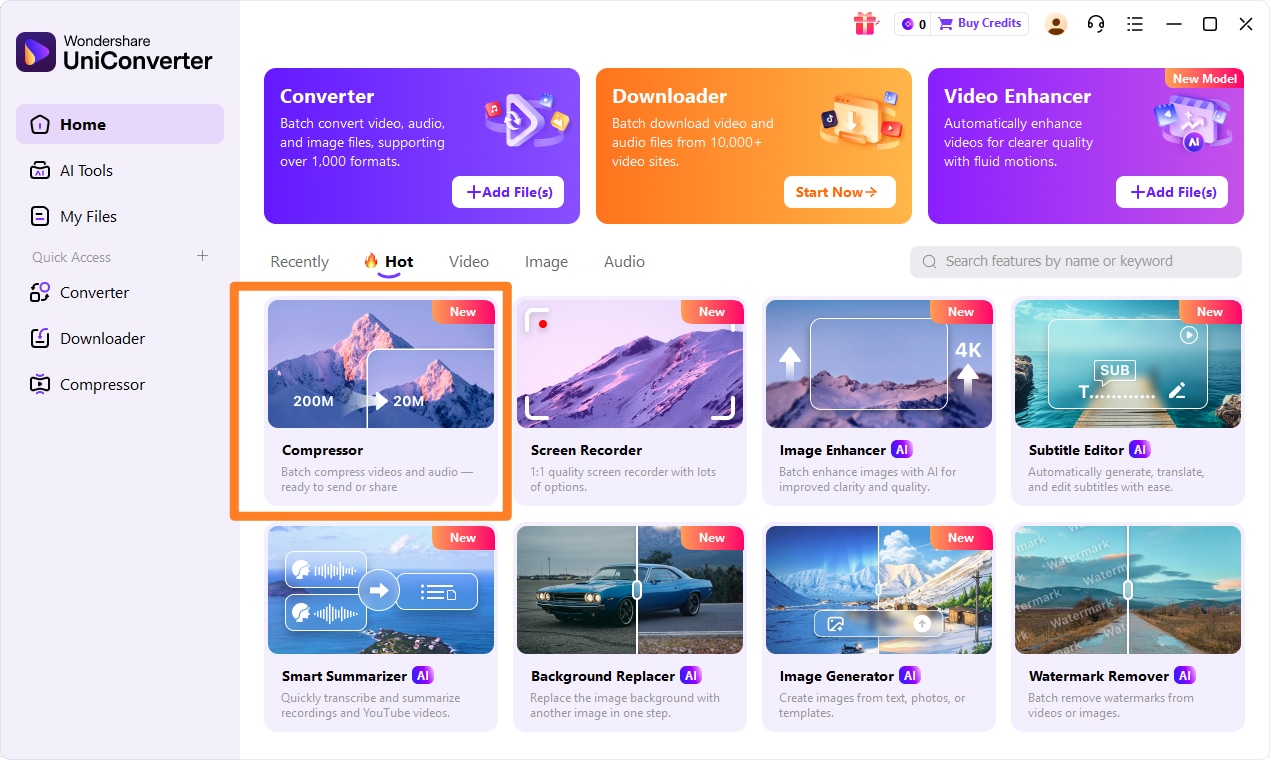
Step 1: Open UniConverter and Choose Compressor
First, I launch UniConverter on my desktop. On the left sidebar, I navigate to the "Compressor" tab. This is where all the magic happens for shrinking my video, audio, or even image files.
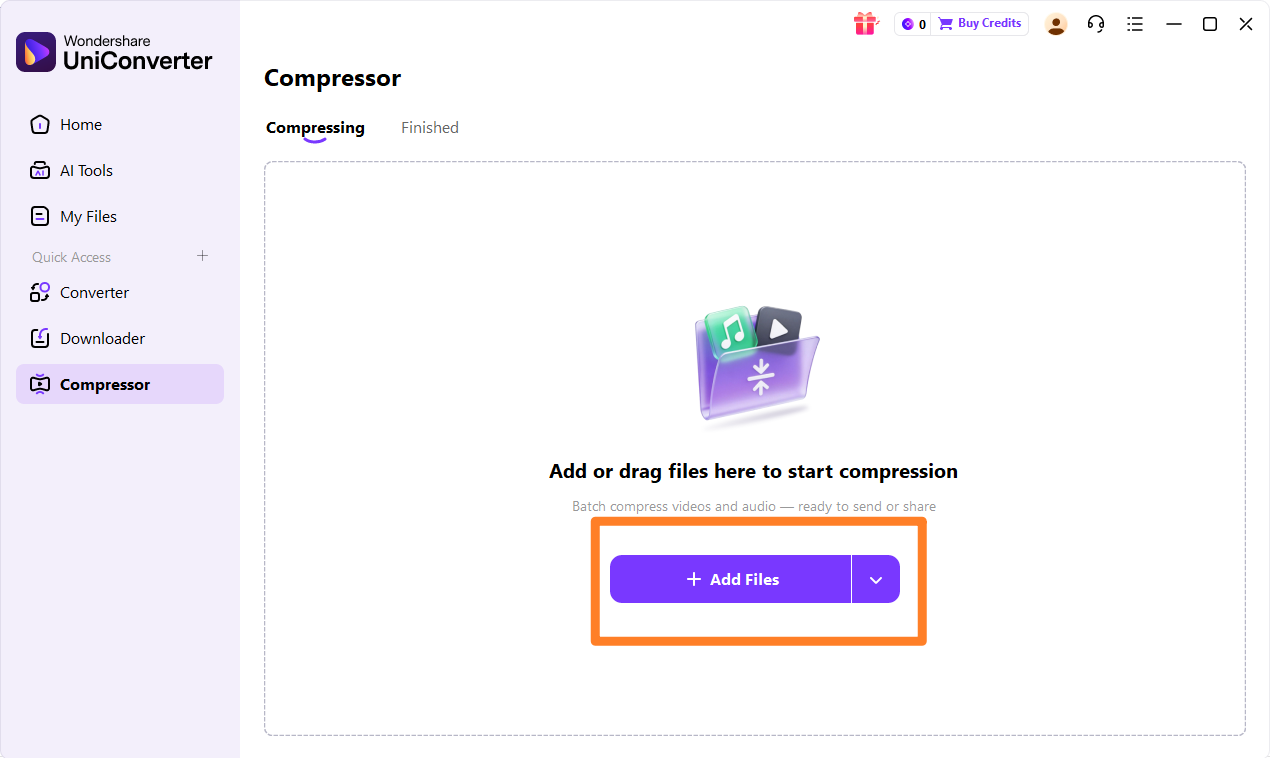
Step 2: Upload the Video, Audios or Images
Next, I click the "Add Files" button or simply drag and drop the video, audio, or image files I want to compress into the interface. UniConverter supports a vast array of formats, so I rarely run into compatibility issues.
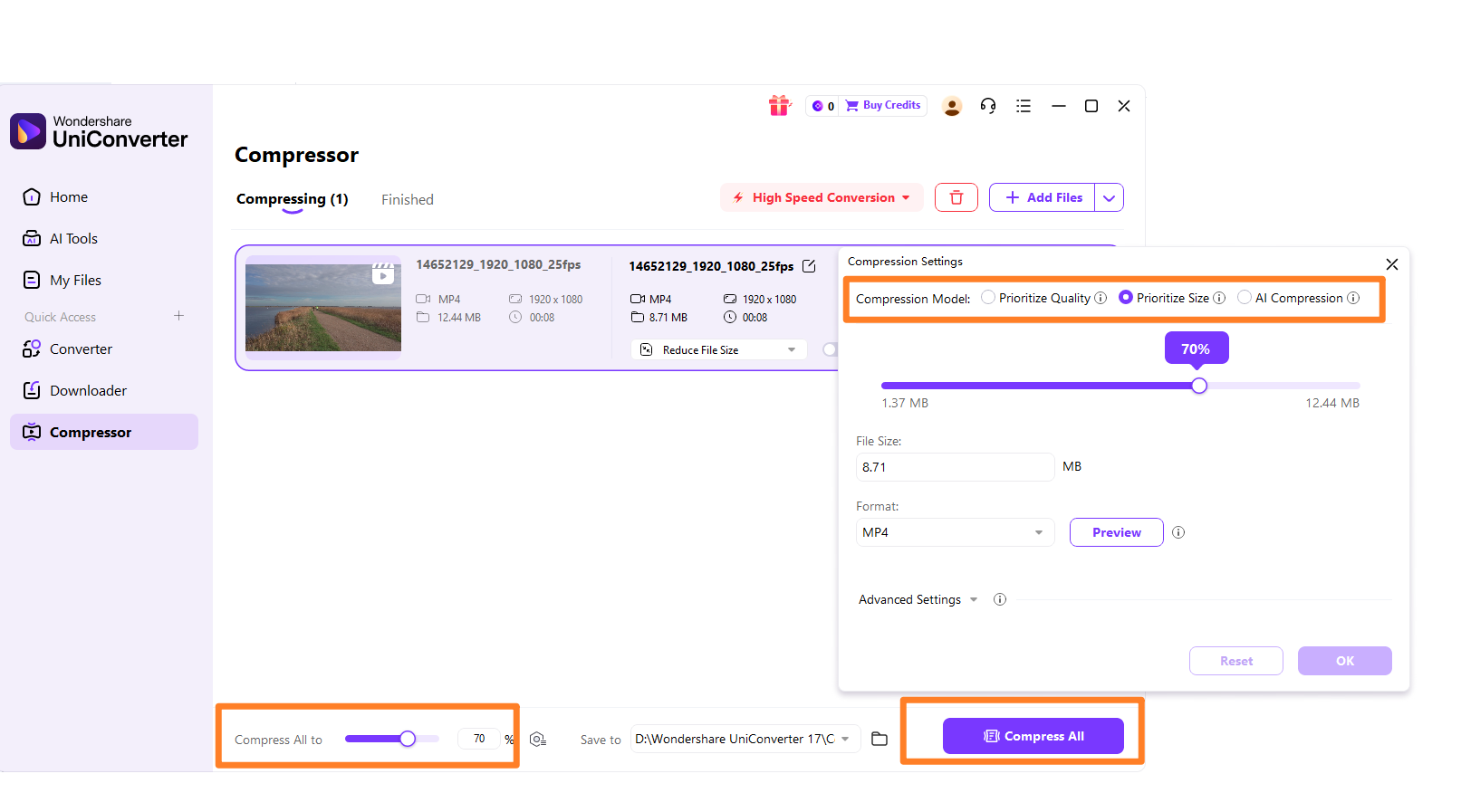
Step 3: Choose Required Parameters
Once my files are loaded, I can adjust the compression settings. UniConverter gives me granular control over file size, quality, resolution, and bitrate. I can choose from preset options or customize them to my exact needs, ensuring the perfect balance between size and quality.
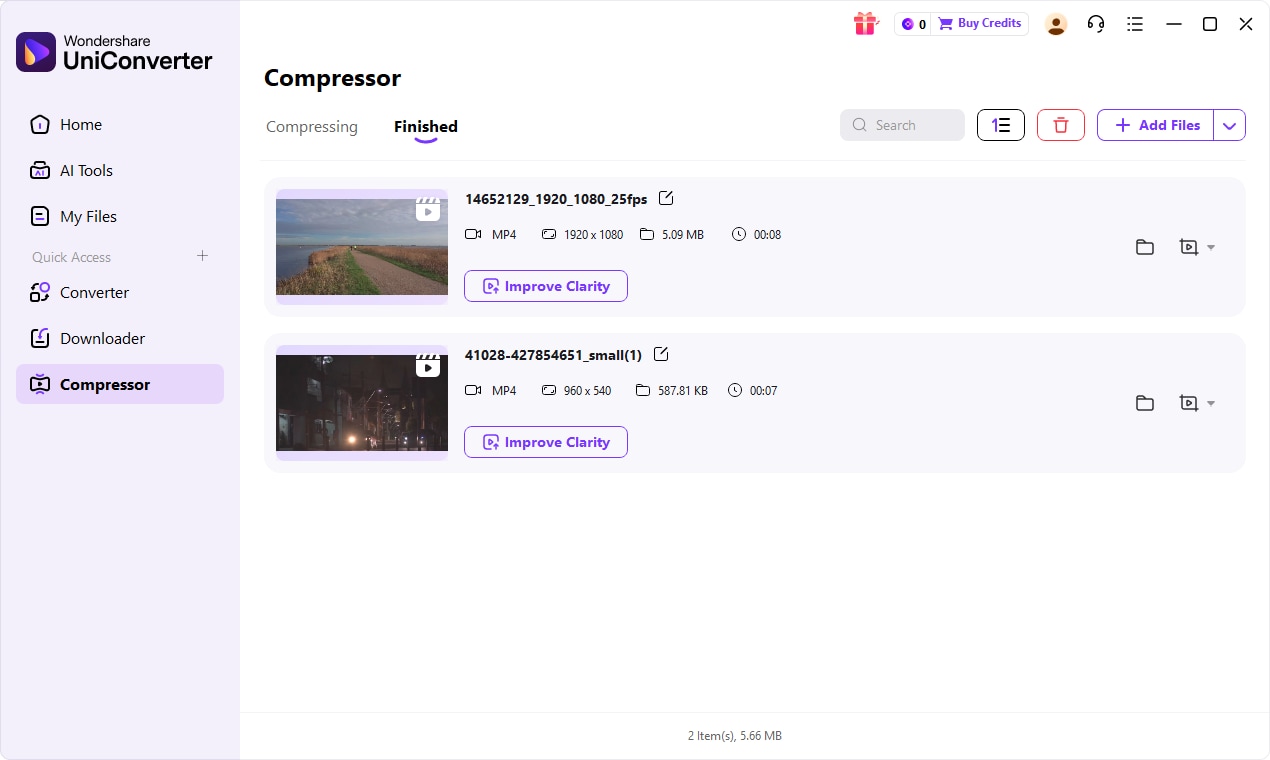
Step 4: Start Compression and Save Your Optimized Video
After setting my parameters, I click the "Compress" button. UniConverter processes the files quickly, leveraging GPU acceleration for speed. Once done, I can find my optimized files in the designated output folder, ready for sharing or storage.

Need a VEED Video Compressor Alternative?
Part 7: Final Verdict and Recommendations
After extensively using and comparing VEED Video Compressor with its alternatives, I've formed a clear picture of where it truly shines and where its limitations lie. My VEED Video Compressor review concludes that it's a valuable tool, but its suitability largely depends on your specific needs and workflow.
For casual users and social media enthusiasts, VEED is an excellent choice. Its intuitive interface, cloud-based accessibility, and integrated editing features make it incredibly convenient for quick compressions and uploads to platforms like Instagram or TikTok. If you're not overly concerned with granular control and just need to shrink a video fast, VEED will serve you well.
For small businesses and marketing teams, VEED can be a productive tool for creating and optimizing video content for online campaigns. Its ease of use means less time spent on technicalities and more on creative output. However, for larger projects or those requiring consistent branding, you might find yourself hitting the limits of its free tier and needing to upgrade.
For professional videographers and editors, VEED is generally not the primary tool. While it can handle quick, non-critical tasks, its lack of advanced compression options, potential quality degradation with aggressive settings, and reliance on internet connectivity make it unsuitable for high-stakes projects, archival, or when precise control over codecs and bitrates is paramount. For these users, desktop software like HandBrake or UniConverter offers the necessary power and reliability.
Finally, for users prioritizing offline functionality and advanced control, a desktop application is the way to go. UniConverter, for instance, provides a robust solution with batch processing, GPU acceleration, and comprehensive format support, ensuring high-quality, stable compression without internet dependency or hidden costs.
Part 8: FAQs
-
1. What is the main benefit of using VEED Video Compressor?
VEED Video Compressor excels in providing a user-friendly interface for quick and easy video compression, especially for social media sharing.
-
2. Does VEED Video Compressor reduce video quality significantly?
While all compression involves some quality reduction, VEED offers options to balance file size and visual quality. Aggressive compression can lead to noticeable degradation.
-
3. Is VEED Video Compressor free to use?
VEED offers a free tier with limitations on file size, features, and output quality. Premium plans unlock more advanced capabilities.
-
4. How does VEED compare to desktop video compressors like HandBrake?
VEED is generally simpler and cloud-based, ideal for quick online tasks. HandBrake offers more granular control and advanced settings, suitable for professional and offline use. For a more comprehensive and user-friendly desktop experience with advanced features, I'd recommend UniConverter.
-
5. Can I compress multiple videos at once with VEED?
VEED's capabilities for batch compression may vary depending on the plan. For large-scale batch processing, dedicated desktop software like UniConverter might be more efficient and reliable.
