
- VEED Compressor: Web-based, intuitive, best for quick social media audio optimization.
- Limitations: Lacks advanced controls, internet-dependent, potential quality loss with aggressive compression.
- Ideal Users: Perfect for casual creators needing fast, simple audio edits for online platforms.
- VEED vs. UniConverter: VEED offers simplicity; UniConverter provides advanced control, offline use, and superior quality.
- Decision: Choose VEED for convenience; UniConverter for professional results, reliability, and comprehensive features.
In this article
- Part 1: What is VEED Audio Compressor?
- Part 2: VEED Audio Compressor: Core Features, Pros, and Cons
- Part 3: VEED Audio Compressor: Ideal Users and Use Cases
- Part 4: VEED Audio Compressor vs. Competitors
- Part 5: Risks and Pitfalls to Consider
- Part 6: How to Use UniConverter for Efficient Audio and Video Compression
- Part 7: Conclusion
- Part 8: FAQs
VEED Audio Compressor Review: Optimizing Your Sound for Every Scenario
When it comes to digital content creation, crisp and clear audio is non-negotiable. Whether you're a budding podcaster, a social media influencer, or a professional video editor, the quality of your audio can make or break your content. This VEED Audio Compressor review delves into a popular web-based tool designed to simplify audio optimization. In this comprehensive review, I'll explore its features, weigh its pros and cons, compare it with competitors, and highlight its ideal use cases, helping you decide if it’s the right tool for your audio compression needs.
Part 1: What is VEED Audio Compressor?
VEED Audio Compressor is a feature within the broader VEED.io online video editing suite, designed to help users reduce the file size of their audio tracks and normalize sound levels. It's a web-based solution, meaning you can access it directly from your browser without needing to download any software. My goal in this review is to determine if this convenient online tool can truly meet the diverse audio compression demands of today's digital creators, from quick social media edits to more professional projects.
The Growing Need for Audio Compression in Digital Content Creation
The digital landscape is increasingly reliant on high-quality, yet efficiently delivered, audio. This demand stems from several key factors:
* Optimizing Playback Across Devices: Different devices and platforms have varying bandwidths and processing capabilities, making compressed audio essential for consistent, smooth playback.
* Faster Uploads and Downloads: Smaller audio files mean quicker uploads to platforms like YouTube, Instagram, and TikTok, and faster downloads for your audience, improving user experience.
* Meeting Platform Requirements: Many social media and streaming platforms have file size limits or recommend specific audio specifications, which often necessitate compression.
* Enhancing Clarity and Consistency: Compression helps to balance the loud and soft parts of an audio track, making dialogue clearer and music more consistent, especially in noisy environments.
Part 2: VEED Audio Compressor: Core Features, Pros, and Cons
VEED Audio Compressor is primarily focused on making audio compression accessible and straightforward. Its core capability lies in reducing audio file sizes while attempting to maintain acceptable sound quality. It supports common audio formats and allows for basic adjustments to compression levels. As part of the larger VEED ecosystem, it benefits from seamless integration with video editing workflows.
Pros:
* Intuitive Interface for Quick Edits: I found the user interface incredibly easy to navigate, even for someone new to audio compression. It’s designed for speed.
* Web-Based Accessibility for On-the-Go Compression: The fact that it's entirely browser-based means I can access it from any device with an internet connection, which is super convenient when I'm working remotely.
* Integrated with a Comprehensive Video Editing Suite: If you're already using VEED for video editing, the audio compressor fits perfectly into your workflow, making it a one-stop shop for basic video and audio needs.
Cons:
* Limited Advanced Audio Control for Professionals: For more nuanced adjustments like multi-band compression, attack/release times, or specific gain staging, I found VEED to be quite basic. It lacks the granular control that professionals often require.
* Dependency on Internet Connection for Functionality: Since it's entirely web-based, a stable and fast internet connection is crucial. If my internet is spotty, the compression process can be slow or even fail.
Part 3: VEED Audio Compressor: Ideal Users and Use Cases
VEED Audio Compressor is best suited for individuals who prioritize speed and simplicity over highly technical audio manipulation. It's a fantastic tool for content creators who need to quickly prepare audio for online platforms without getting bogged down in complex settings.
Scenario 1: Quick Social Media Content Preparation (Best Use Case)
When I'm creating short-form video content for Instagram Reels or TikTok, I often need to quickly compress my audio to meet file size limits and ensure consistent playback. VEED Audio Compressor shines here. I can upload my audio, apply a quick compression, and have it ready to go in minutes. It saves me a lot of time compared to opening a dedicated audio editor for simple tasks.
Scenario 2: Professional Audio Mastering for Broadcast (Limited Use Case)
For projects requiring professional audio mastering for broadcast, such as a podcast going to a major platform or a commercial for television, VEED Audio Compressor falls short. The lack of precise control over parameters like dynamic range, equalization, and noise reduction means I wouldn't trust it for the final polish on high-stakes audio. In these situations, I need dedicated audio workstations with advanced plugins.
Part 4: VEED Audio Compressor vs. Competitors
When comparing VEED Audio Compressor review with other tools, it's clear that its strength lies in its simplicity and web-based nature.
| Feature/Tool | VEED Audio Compressor | UniConverter | Audacity | Adobe Audition |
| Ease of Use | High | High | Medium | Low |
| Advanced Controls | Low | Medium | High | Very High |
| Price | Freemium | Subscription | Free | Subscription |
| Platform | Web-based | Desktop/Web | Desktop | Desktop |
| Integration | High (VEED ecosystem) | High (Wondershare ecosystem) | Low | High (Adobe ecosystem) |
| Processing Speed | Varies (internet dependent) | Fast (GPU acceleration) | Medium | Fast |
| Output Quality | Good (basic) | Excellent (lossless options) | Good | Excellent |
| Customer Support | Email/Chat | 24/7 Live Chat/Email | Community Forums | 24/7 Live Chat/Email |
| Security | Cloud-based | Local/Cloud | Local | Local/Cloud |
VEED excels in its web-based convenience and integration within its own video editing suite, making it perfect for quick, integrated workflows. UniConverter offers a more balanced approach with robust desktop capabilities and advanced features while maintaining ease of use. Audacity, being free and open-source, provides significant control but has a steeper learning curve. Adobe Audition is the professional standard, offering unparalleled control but at a higher cost and complexity.
Key Differentiators: Simplicity vs. Professional Control
The main distinction lies in the trade-off between simplicity and professional control. VEED prioritizes ease of use and quick results for general users. UniConverter bridges this gap, offering more control than VEED without the steep learning curve of professional tools. Audacity and Adobe Audition cater to users who need extensive, granular control over every aspect of their audio.
Part 5: Risks and Pitfalls to Consider
While VEED Audio Compressor offers convenience, there are several risks and pitfalls I've encountered or considered during my usage, especially when relying solely on its free version or for critical projects.
Data Privacy and Cloud Storage Concerns
As a web-based tool, all my audio files are uploaded to VEED's servers for processing. This raises concerns about data privacy, especially for sensitive or proprietary audio. I always wonder about the security measures in place and how long my data is stored after processing.
Potential for Quality Loss with Aggressive Compression
While compression is about reducing file size, aggressive compression can lead to noticeable quality degradation, such as artifacts, muddiness, or a "pumped" sound. It's a fine line, and without precise control over compression parameters, it's easy to over-compress and ruin the audio.
Subscription Model Limitations for Infrequent Users
The free tier of VEED Audio Compressor has limitations, such as watermarks or restricted features. To unlock its full potential, a subscription is required. For someone who only needs to compress audio occasionally, the recurring cost might not be justifiable compared to a one-time purchase desktop software or a free alternative.
Performance Issues with Large Audio Files
I've noticed that processing very large audio files can be slow and sometimes unreliable, especially with an unstable internet connection. The upload and processing times can be significant, which can disrupt my workflow when I'm on a tight deadline.
Lack of Offline Functionality
The complete reliance on an internet connection is a major drawback. If I'm working offline or in an area with poor connectivity, VEED Audio Compressor becomes unusable. This limits its flexibility for creators who often work on the go or in diverse environments.
Part 6: How to Use UniConverter for Efficient Audio and Video Compression
When other tools prove inadequate, delivering unstable compression outcomes, compromising quality, or lacking batch processing capabilities, I frequently opt for UniConverter. It offers a more dependable solution for handling audio, video, and image compression tasks, while providing broader format support and a smoother workflow for repeated jobs. For users looking for a practical all-in-one media solution, it remains a strong choice.
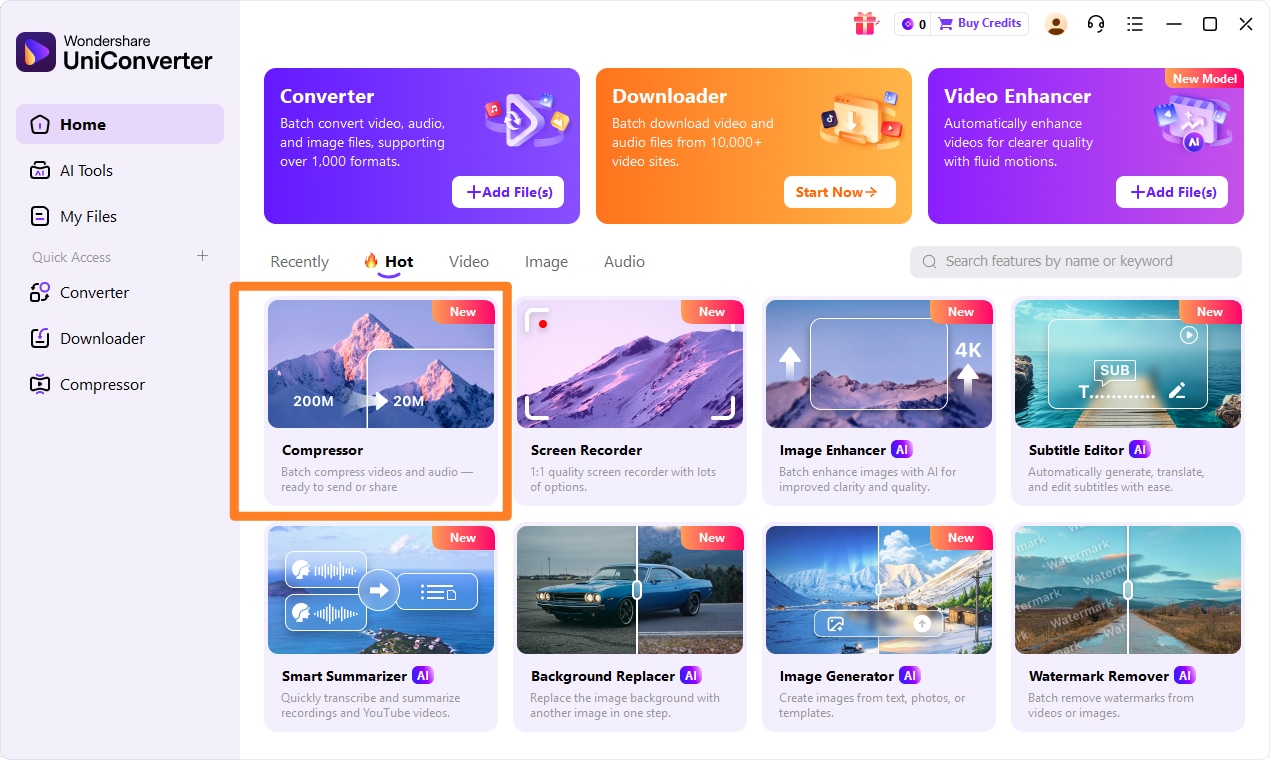
Step 1: Open UniConverter and Choose Compressor
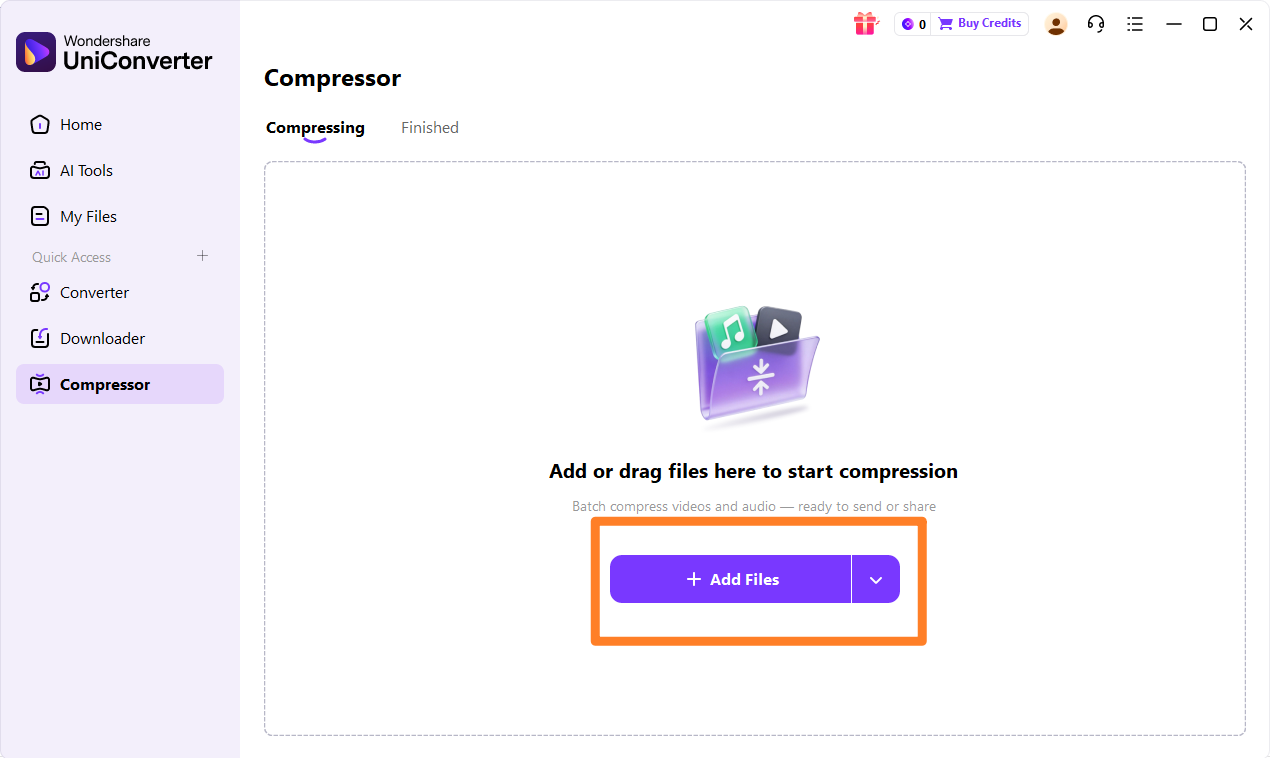
Step 2: Upload the Video, Audios or Images
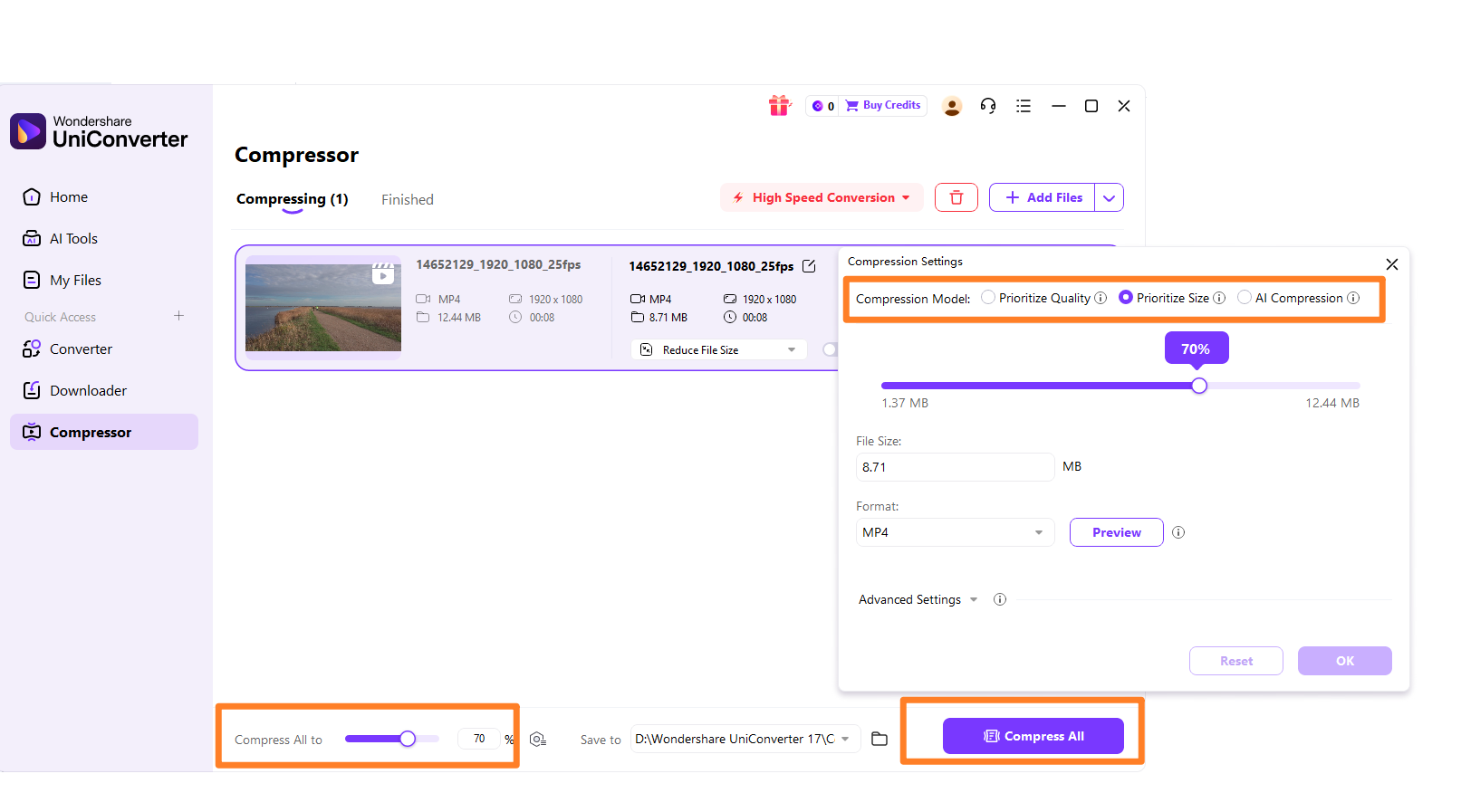
Step 3: Choose Required Parameters
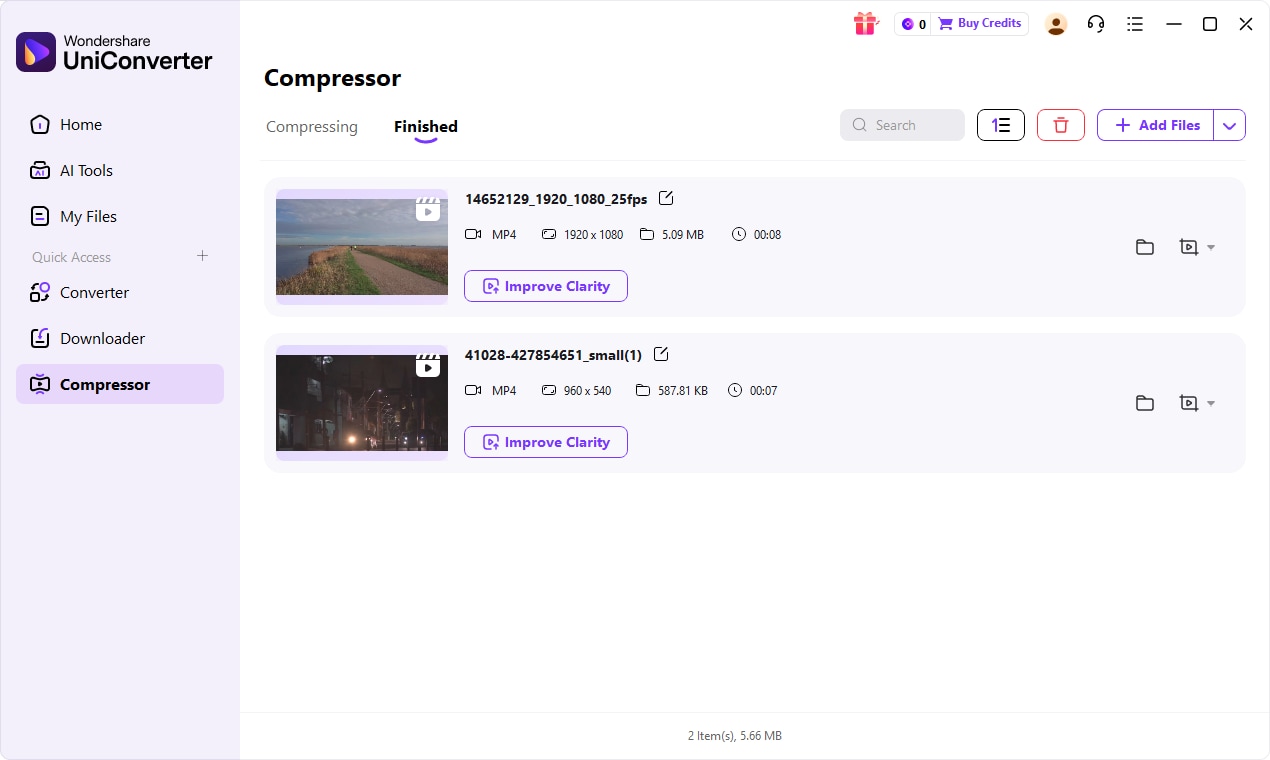
Step 4: Save the Compressed File

Seeking a VEED Audio Compressor Alternative?
Part 7: Conclusion
In conclusion, the VEED Audio Compressor review reveals it as a highly accessible and user-friendly tool, particularly for social media creators and those needing quick, basic audio optimization within a video editing workflow. Its web-based nature and intuitive interface are significant advantages for casual users and those who value convenience. However, its limitations in advanced controls, reliance on an internet connection, and potential for quality degradation with aggressive settings make it less suitable for professional audio mastering or users requiring granular control. For individuals on a budget or those with infrequent needs, the freemium model offers a starting point, but the subscription cost for full features might be a deterrent. Professionals or users prioritizing offline functionality, precise control, and consistent quality would benefit more from dedicated desktop applications like UniConverter or Adobe Audition. Ultimately, your choice should align with your specific use case, technical requirements, and budget.
Part 8: FAQs
-
1. What is audio compression and why do I need it?
Audio compression reduces the dynamic range of an audio signal, making it sound more consistent and often louder. It's essential for optimizing file size, ensuring consistent playback across devices, and improving clarity in various listening environments.
-
2. Is VEED Audio Compressor free to use?
VEED offers a free tier with basic audio compression features. More advanced options and higher quality exports typically require a paid subscription.
-
3. Can VEED Audio Compressor handle large audio files?
While VEED can process large files, performance may vary depending on your internet connection and the complexity of the compression settings. For very large or high-fidelity audio, a desktop application like UniConverter might offer a more stable experience due to its offline processing capabilities and GPU acceleration.
-
4. Does VEED Audio Compressor support all audio formats?
VEED generally supports common audio formats like MP3, WAV, and AAC. However, for less common or professional-grade formats, you might need to check their specific compatibility list or consider a more specialized tool like UniConverter, which boasts extensive format support.
-
5. How does UniConverter compare to VEED for audio compression?
UniConverter typically offers more advanced compression algorithms, a wider range of customizable settings, and offline processing capabilities, making it a stronger choice for users who need precise control and reliability, especially for professional projects. VEED excels in its web-based convenience and integration with video editing.
