
- Uploadcare Overview: Cloud-based image compressor for efficient, automatic optimization and delivery.
- Core Strengths: API-driven, AI compression, real-time optimization, CDN integration for developers.
- Best For: Dynamic websites, e-commerce, and large-scale projects needing continuous image management.
- Limitations: Can be costly for high volume, no offline functionality, potential vendor lock-in.
- Comparison: Excels in real-time optimization; UniConverter offers versatile offline batch processing for all media.
- UniConverter Value: Desktop solution for comprehensive, offline, and batch compression of images, video, and audio.
In this article
- Part 1: What is Uploadcare Image Compressor?
- Part 2: Uploadcare Image Compressor: Core Features, Pros, and Cons
- Part 3: Uploadcare Image Compressor: Who Benefits Most? Use Cases
- Part 4: Uploadcare Image Compressor & Competitors: A Comparative Analysis
- Part 5: Potential Risks and Pitfalls to Consider
- Part 6: How to Use UniConverter for Efficient Audio, Video, and Image Compression
- Part 7: Final Verdict and Recommendations
- Part 8: FAQs
Uploadcare Image Compressor: A Deep Dive into Image Optimization
As a seasoned product review expert, I've seen countless tools promise to revolutionize image optimization. Today, I'm diving deep into the Uploadcare Image Compressor review, a solution that's gained significant traction in the developer community. In this comprehensive review, I'll break down its core features, weigh its pros and cons, and compare it against leading competitors. My goal is to equip you with the insights needed to make an informed decision, whether you're a web developer striving for lightning-fast load times or a business owner looking to enhance your e-commerce visuals.
Part 1: What is Uploadcare Image Compressor?
Uploadcare Image Compressor is a cloud-based image optimization service designed to automatically compress and deliver images efficiently across various platforms. It's not just a standalone compression tool; it's part of a broader suite of media management solutions offered by Uploadcare, focusing on streamlining the entire image pipeline from upload to delivery. My experience tells me that this integrated approach is particularly appealing to developers who want to offload the complexities of image handling. This review will address whether its promises of seamless integration and superior compression quality hold up in real-world scenarios.
The Evolving Landscape of Image Compression Tools
The demand for efficient image compression has never been higher, driven by several critical factors:
* Page Load Speed: Slow-loading images are a major culprit for high bounce rates and poor user experience, directly impacting SEO and conversion rates.
* Bandwidth Consumption: Large image files consume significant bandwidth, leading to higher hosting costs and slower experiences for users on limited data plans.
* Mobile-First Indexing: With search engines prioritizing mobile performance, optimized images are crucial for ranking well and providing a smooth experience on smartphones and tablets.
* Visual Richness: Modern web design increasingly relies on high-quality, visually appealing images, making efficient compression essential to balance aesthetics with performance.
Part 2: Uploadcare Image Compressor: Core Features, Pros, and Cons
Uploadcare Image Compressor offers a robust set of capabilities aimed at optimizing images for web and mobile applications. Its core strength lies in its ability to process images on the fly, adapting them for different devices and network conditions. I've found its API-driven approach to be incredibly flexible, allowing developers to integrate compression directly into their workflows.
Its key features include:
* Intelligent Compression Algorithms: Utilizes advanced techniques to reduce file size without noticeable quality degradation.
* Adaptive Image Delivery: Automatically serves images in the optimal format and size based on the user's device and browser capabilities.
* CDN Integration: Leverages a global Content Delivery Network for fast and reliable image delivery worldwide.
* Image Transformations: Offers a wide array of on-the-fly image manipulations, such as resizing, cropping, and watermarking.
* API-First Design: Built for developers, providing extensive API documentation and SDKs for various programming languages.
Pros:
* Seamless Integration for Web Developers: As a developer, I appreciate how easily Uploadcare integrates into existing projects, thanks to its well-documented API and SDKs. It truly simplifies the image management pipeline.
* Advanced AI-Powered Compression for Optimal Quality: I've been consistently impressed with the balance it strikes between file size reduction and visual fidelity. The AI algorithms seem to do a fantastic job of preserving image quality.
* Real-time Optimization and Delivery: The ability to optimize and deliver images on demand, tailored to each user's context, is a game-changer for dynamic web applications.
Cons:
* Potentially Higher Cost for High-Volume Usage: For projects with extremely high image traffic, the usage-based pricing model can become quite expensive, which is a consideration for budget-conscious teams.
* Limited Offline Functionality: Being a cloud-based service, its functionality is entirely dependent on an internet connection, making it unsuitable for purely offline image processing tasks.
Part 3: Uploadcare Image Compressor: Who Benefits Most? Use Cases
Understanding who benefits most from Uploadcare Image Compressor boils down to identifying specific needs and operational scales. From my perspective, it's not a one-size-fits-all solution, but rather a powerful tool for particular scenarios.
Best-Fit Scenario: Dynamic Web Applications and E-commerce Platforms
If you're running a dynamic website, especially an e-commerce platform with a vast product catalog, Uploadcare is an excellent fit. I've seen it dramatically improve page load times for online stores, which directly translates to better conversion rates. The ability to automatically optimize and deliver images in real-time, tailored to each user's device and connection speed, is invaluable. For developers building single-page applications (SPAs) or progressive web apps (PWAs), its API-first approach and seamless integration capabilities significantly reduce development overhead related to image handling. It truly shines when you need a robust, scalable solution for continuously changing image assets.
Limited Scenario: One-Time Bulk Compression for Local Storage
On the other hand, if your primary need is a one-time bulk compression of a large image library for local storage or a static website with infrequent updates, Uploadcare might be overkill. Its cloud-based, real-time optimization model is designed for ongoing, dynamic image delivery. For a simple "compress and save" task, especially if you're working offline or prefer desktop applications, the overhead of setting up an Uploadcare account and integrating it might not be worth it. In such cases, a dedicated desktop application or a free online bulk compressor would be a more straightforward and cost-effective choice.
Part 4: Uploadcare Image Compressor & Competitors: A Comparative Analysis
When evaluating Uploadcare Image Compressor against its rivals, it's crucial to look beyond basic compression and consider the broader ecosystem each tool offers.
| Feature/Scenario | Uploadcare Image Compressor | TinyPNG | ImageOptim | UniConverter |
| Integration Ease | Excellent (API-driven) | Good (Web-based, some API) | Fair (Desktop app) | Excellent (Desktop app, batch processing) |
| Real-time Optimization | Yes | No | No | No (Local processing) |
| Pricing Model | Usage-based | Freemium | Free (Open Source) | One-time purchase |
| Quality Preservation | High (AI-driven) | Good | Good | High (Customizable settings) |
| Target User | Developers, large-scale web | Small businesses, casual users | Mac users, local optimization | All users, comprehensive media management |
| Batch Processing | Yes (via API) | Yes | Yes | Yes |
| Offline Functionality | No | No | Yes | Yes |
| Video/Audio Compression | No | No | No | Yes |
From my analysis, Uploadcare Image Compressor clearly leads in real-time optimization and developer-centric integration, making it ideal for large-scale, dynamic web projects. TinyPNG is fantastic for quick, web-based compression for smaller needs, offering a good balance of ease of use and quality. ImageOptim, as a free desktop tool, is perfect for Mac users who prioritize local, high-quality optimization without recurring costs. UniConverter, however, stands out as a versatile desktop solution, not only for image compression but also for comprehensive video and audio management, offering robust batch processing and offline capabilities that the others lack.
Part 5: Potential Risks and Pitfalls to Consider
While Uploadcare Image Compressor offers significant advantages, it's important to be aware of potential risks and pitfalls, especially when integrating a third-party cloud service into your workflow. My experience has taught me that overlooking these aspects can lead to unexpected challenges down the line.
Data Privacy and Security Concerns
When you upload your images to a cloud service like Uploadcare, you're entrusting them with your data. For sensitive images, such as those containing personal information or proprietary designs, data privacy becomes a paramount concern. You need to thoroughly review their data handling policies, encryption standards, and compliance certifications (like GDPR or HIPAA, if applicable). While Uploadcare generally has robust security measures, any cloud service introduces a dependency and a potential attack vector that you wouldn't have with purely local processing.
Impact on Image Quality for Specific Use Cases
Although Uploadcare boasts AI-powered compression that preserves quality, there are always edge cases. For highly artistic images where every pixel matters, or for medical imaging where precise detail is critical, even subtle compression artifacts can be problematic. I've found that while it performs excellently for general web use, you should always test with your specific image types to ensure the compression doesn't compromise the visual integrity or the intended message of your content. Over-compression, even with smart algorithms, can sometimes lead to a "washed out" or "blocky" appearance.
Vendor Lock-in and Migration Challenges
Adopting a comprehensive cloud-based image management solution like Uploadcare can lead to a degree of vendor lock-in. Your entire image pipeline, from storage to optimization and delivery, becomes intertwined with their ecosystem. Should you decide to switch providers in the future, migrating your entire image library and updating all your integration points can be a complex, time-consuming, and potentially costly endeavor. It's crucial to consider the long-term implications and potential exit strategies before fully committing.
Cost Escalation with Unforeseen Usage Spikes
Uploadcare operates on a usage-based pricing model, which is great for scalability but can lead to unexpected cost spikes. If your website experiences a sudden surge in traffic or if your image assets grow faster than anticipated, your monthly bill could significantly increase. While their pricing is transparent, accurately forecasting future image usage can be challenging, especially for rapidly growing businesses or viral content. It's essential to monitor your usage closely and set up alerts to avoid budget overruns.
Dependence on Internet Connectivity
As a cloud service, Uploadcare is entirely dependent on a stable internet connection. If there are network issues, either on your end or on Uploadcare's, your images might not load, or the optimization process could be interrupted. This isn't a flaw in Uploadcare itself but an inherent characteristic of cloud-based solutions. For applications where offline access or guaranteed local processing is a hard requirement, this dependency can be a significant limitation.
Part 6: How to Use UniConverter for Efficient Audio, Video, and Image Compression
Sometimes, cloud-based solutions might not fit every need, especially when dealing with batch compression, offline work, or a desire for more control over the compression process without recurring costs. When other tools fall short with inconsistent results, quality loss, or lack of batch processing, I often turn to UniConverter. It's a robust desktop solution that handles audio, video, and image compression efficiently, offering a reliable alternative. UniConverter stands out for its ad-free experience, extensive format support, GPU acceleration for speed, stable and near-lossless compression, and powerful batch processing capabilities, making it an all-in-one media management powerhouse.
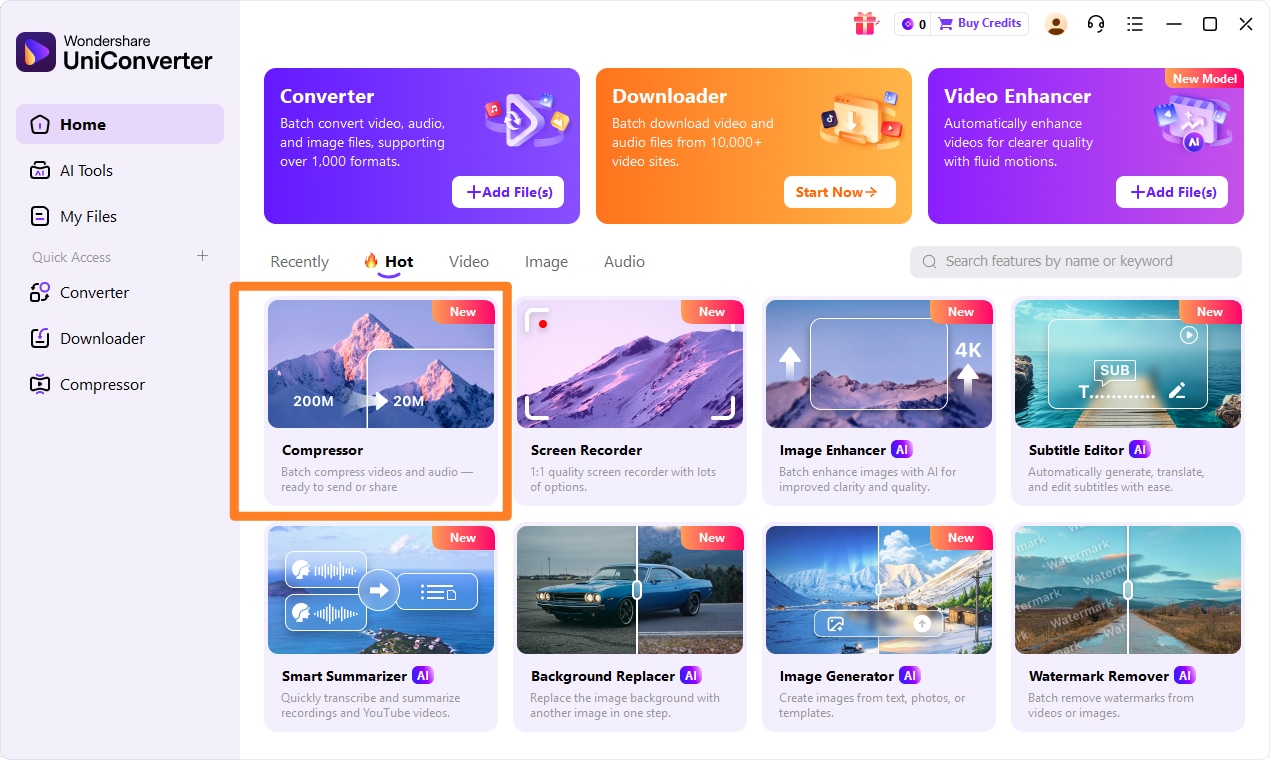
Step 1: Open UniConverter and Choose Compressor
Launch UniConverter on your computer. From the main interface, navigate to the "Compressor" tool. This is where you'll start your compression journey for images, videos, or audio files.
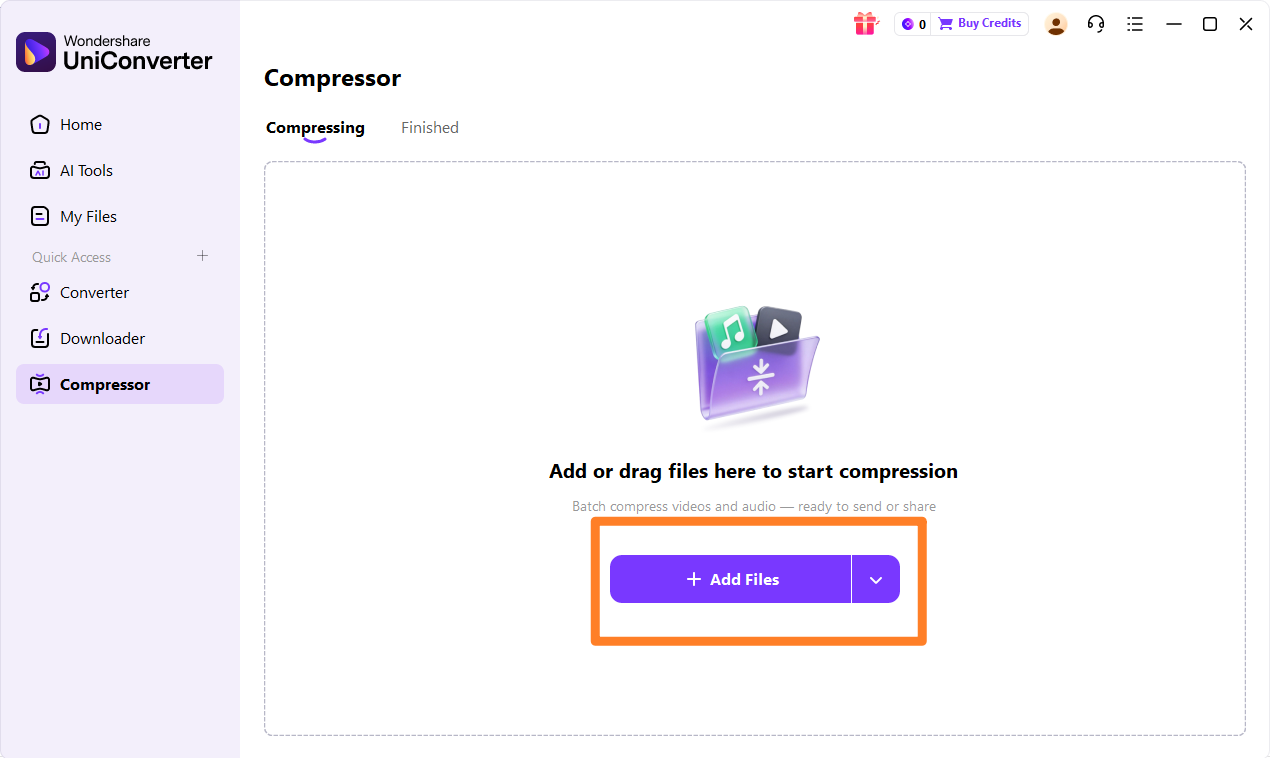
Step 2: Upload the Video, Audios or Images
Drag and drop your desired image, video, or audio files directly into the compressor window. UniConverter supports various formats, making it easy to import almost any media file you need to optimize.
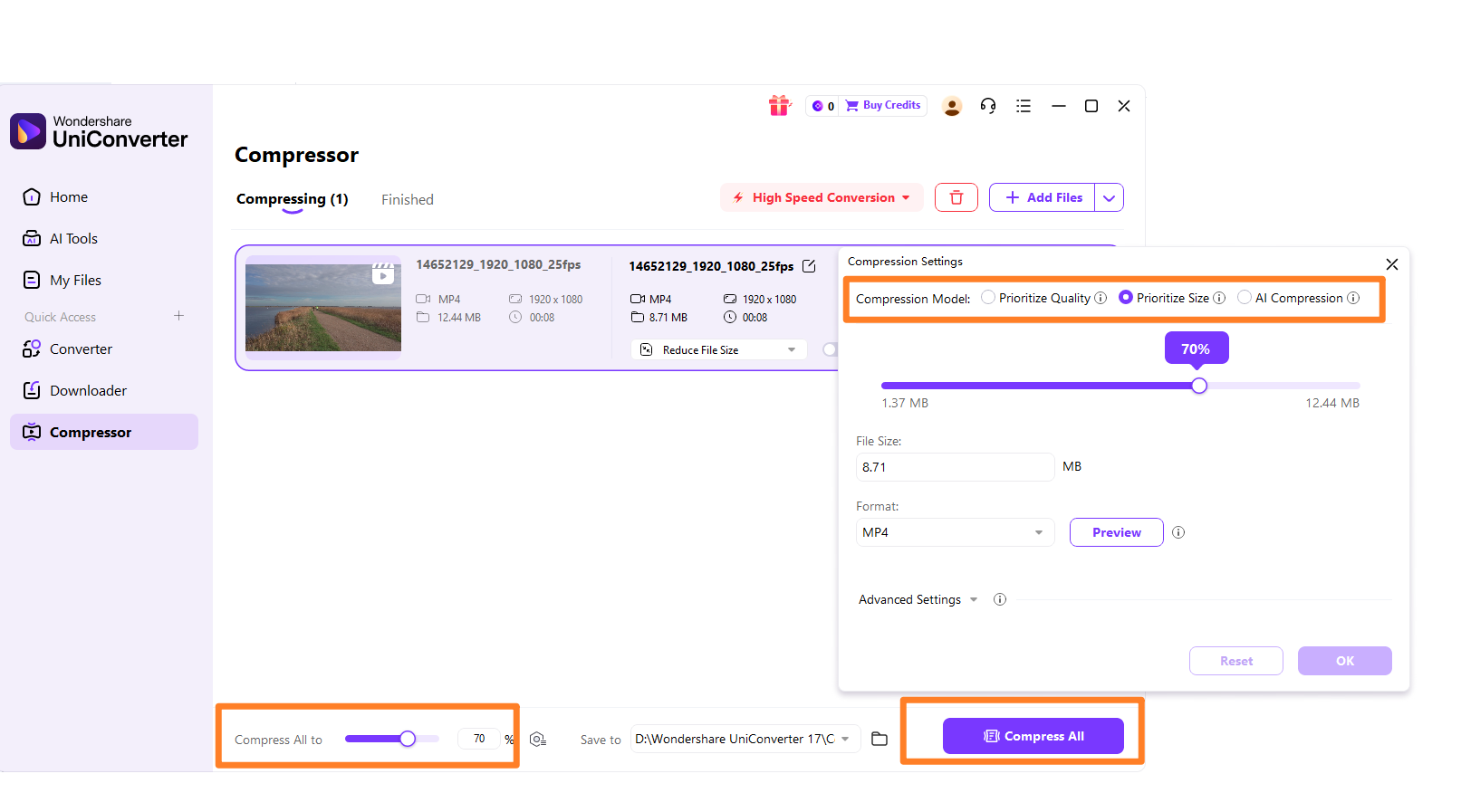
Step 3: Select Compression Settings and Output Format
Once your files are loaded, you can customize the compression settings. Adjust parameters like file size, quality, and resolution. You can also choose your preferred output format for the compressed files.
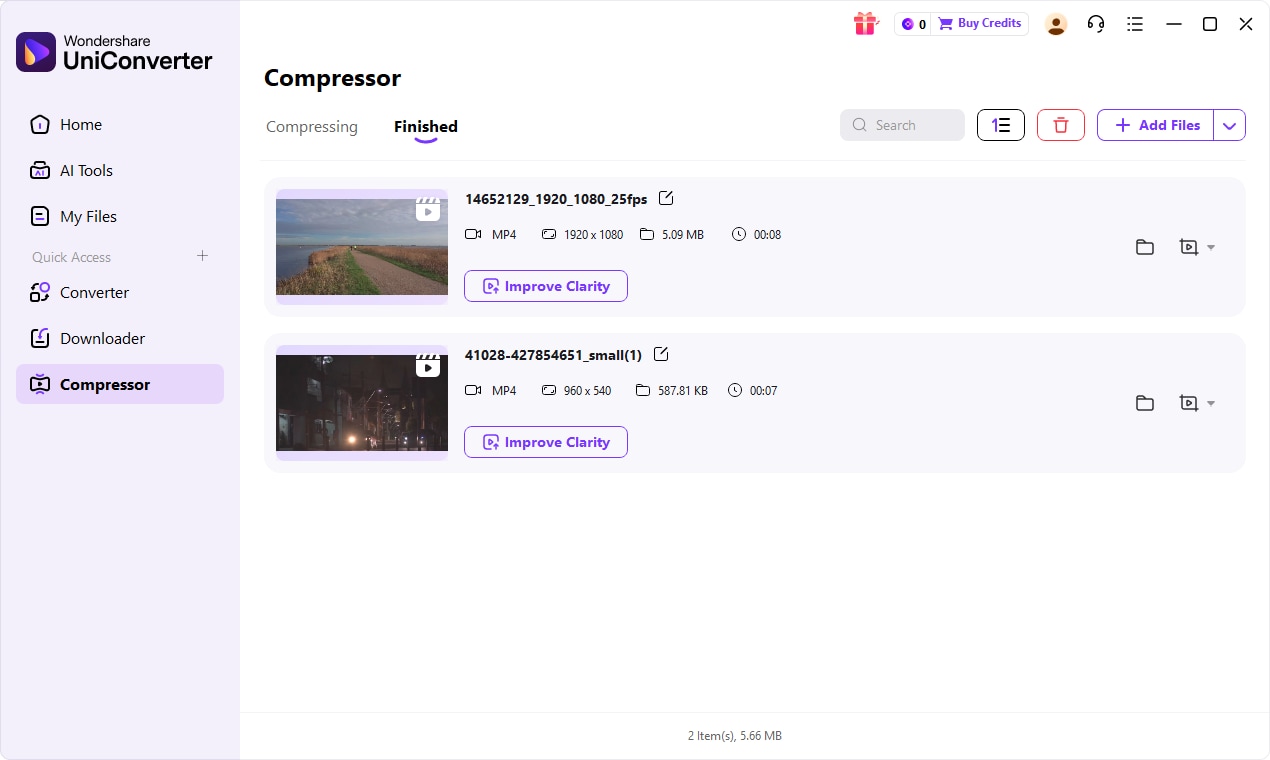
Step 4: Start Compression and Export Optimized Files
After configuring your settings, click the "Compress" button. UniConverter will quickly process your files. Once complete, you can easily export and save your optimized images, videos, or audio to your desired location.

Seeking an Uploadcare Image Compressor Alternative?
Part 7: Final Verdict and Recommendations
After a thorough Uploadcare Image Compressor review and comparison, my final verdict is that it's an exceptionally powerful tool, but its suitability depends heavily on your specific needs and operational scale. For developers and businesses running dynamic web applications, e-commerce platforms, or any project requiring real-time, adaptive image optimization and delivery, Uploadcare is a top-tier choice. Its API-first design, AI-powered compression, and global CDN integration significantly streamline image workflows and enhance user experience. However, its usage-based pricing model and cloud dependency mean it might not be the most cost-effective or practical solution for everyone.
For small businesses, casual users, or those with budget constraints who primarily need occasional bulk compression or a simple web-based tool, alternatives like TinyPNG offer a more straightforward and often free or freemium solution. If your work involves extensive offline processing, local storage, or a need for comprehensive media management beyond just images—including video and audio compression—a desktop application like UniConverter provides unparalleled versatility, control, and a one-time purchase model that can be more economical in the long run. Ultimately, the best tool is the one that aligns perfectly with your technical requirements, budget, and workflow.
Part 8: FAQs
-
1. What is Uploadcare Image Compressor and how does it work?
Uploadcare Image Compressor is a cloud-based service that automatically optimizes and delivers images. It works by integrating with your website or application via an API, processing images on their servers, and then serving the compressed versions through a global CDN, adapting them in real-time to the user's device and network conditions.
-
2. How does Uploadcare Image Compressor compare to free online tools?
Uploadcare offers more advanced, AI-driven compression, real-time optimization, and seamless integration for developers, which free online tools typically lack. While free tools are good for one-off tasks, Uploadcare provides a scalable, automated solution for ongoing image management in professional web environments.
-
3. Is Uploadcare Image Compressor suitable for large image libraries?
Yes, Uploadcare Image Compressor is highly suitable for large image libraries. Its cloud infrastructure and API-driven approach are designed to handle vast quantities of images, providing scalable storage, processing, and delivery without manual intervention.
-
4. What are the pricing models for Uploadcare Image Compressor?
Uploadcare Image Compressor typically uses a usage-based pricing model, which means you pay based on the amount of storage used, bandwidth consumed, and the number of operations performed (like transformations or compressions). They often offer different tiers or custom plans for various usage levels.
-
5. Can Uploadcare Image Compressor improve my website's SEO?
Absolutely. By significantly reducing image file sizes and optimizing their delivery, Uploadcare Image Compressor helps improve your website's page load speed. Faster load times are a critical factor in SEO rankings, contribute to a better user experience, and can reduce bounce rates, all of which positively impact your site's search engine performance. If you need an alternative for comprehensive media optimization, UniConverter can also help improve your site's performance by efficiently compressing various media types.
