
- Trimage Overview: Open-source GUI tool for JPG/PNG compression, primarily on Linux. Reduces file size by optimizing images.
- Core Features: Offers lossless/lossy compression, metadata stripping, and batch processing via a simple drag-and-drop interface.
- Ideal Users: Best for small to medium website owners and casual users needing quick, basic image optimization.
- Limitations: Lacks advanced features, broad format support, and dedicated customer support compared to commercial tools.
- Comparison: Simpler than UniConverter, less versatile than ImageOptim, and offline unlike TinyPNG/TinyJPG.
- Risks: Potential quality loss with aggressive compression, security concerns with unverified downloads, no cloud integration.
- UniConverter Alternative: Offers stable, versatile compression for images, audio, and video with extensive features and GPU acceleration.
In this article
- Part 1: What is Trimage Image Compressor?
- Part 2: Trimage Image Compressor's Core Features, Pros, and Cons
- Part 3: Trimage Image Compressor's Ideal Users and Use Cases
- Part 4: Trimage Image Compressor and Alternatives Comparison
- Part 5: Risks and Pitfalls to Consider
- Part 6: How to Use UniConverter for Efficient Audio and Video Compression
- Part 7: Final Verdict and Recommendations
- Part 8: FAQs
Trimage Image Compressor: A Deep Dive into Efficient Image Optimization
When it comes to managing digital images, file size is often a critical concern, especially for web content, email attachments, and storage efficiency. Large image files can slow down websites, consume valuable bandwidth, and quickly fill up your hard drive. This is where image compressors become indispensable. Today, I'm diving deep into Trimage Image Compressor review, an open-source tool designed to tackle this very problem. This review will explore its features, compare it against its competitors, and help you determine if it's the right solution for your image optimization needs. I'll provide insights into its strengths, weaknesses, and ideal use cases, ensuring you make an informed decision about integrating it into your workflow.
Part 1: What is Trimage Image Compressor?
Trimage Image Compressor is a straightforward, open-source graphical user interface (GUI) tool primarily built for Linux systems, though it can run on other platforms with the necessary dependencies. Its core function is to optimize image files, specifically JPG and PNG, by removing unnecessary metadata and applying various compression algorithms. The goal is to reduce file size without significantly compromising visual quality, making it an excellent utility for anyone needing to manage their image assets more efficiently. This review aims to clarify its position in a crowded market and help you understand its practical value.
The Landscape of Image Compression Tools
The need for efficient image compression has never been greater, driven by:
* Increasingly Visual Web Content: Websites are becoming more image-heavy, demanding optimized files for faster loading times and better user experience.
* Mobile-First Design: With a significant portion of internet traffic coming from mobile devices, smaller image sizes are crucial for quick rendering on varying network speeds.
* Storage and Bandwidth Constraints: Both personal and professional users face limitations in storage capacity and internet bandwidth, making file size reduction a priority.
* SEO Performance: Search engines prioritize fast-loading websites, and optimized images play a significant role in improving search engine rankings.
Part 2: Trimage Image Compressor's Core Features, Pros, and Cons
Trimage Image Compressor is designed for simplicity and efficiency, focusing on its primary task: image optimization. Its core capabilities revolve around reducing file sizes for common image formats.
* Lossless Compression: Offers options to compress images without any loss of visual quality, ideal for preserving detail.
* Lossy Compression: Provides more aggressive compression, resulting in smaller file sizes but with a potential, often imperceptible, reduction in quality.
* Metadata Stripping: Automatically removes unnecessary metadata (like EXIF data) from images, contributing to file size reduction.
* Drag-and-Drop Interface: Allows for easy addition of single or multiple images for processing.
* Batch Processing: Capable of compressing multiple images simultaneously, saving time for larger projects.
Pros
* Lossless and Lossy Compression Options for Flexibility: I appreciate having the choice between preserving original quality or achieving maximum file size reduction.
* Simple, Intuitive User Interface for Quick Operations: The interface is incredibly easy to navigate, making it perfect for quick, no-fuss compression.
* Batch Processing Capability for Multiple Images: Being able to drag in a folder of images and compress them all at once is a huge time-saver for me.
Cons
* Limited Advanced Features Compared to Commercial Tools: I find myself wishing for more control over compression levels or resizing options.
* Dependency on External Libraries for Certain Formats: Sometimes, getting it to work perfectly on non-Linux systems requires extra setup, which can be a hassle.
Part 3: Trimage Image Compressor's Ideal Users and Use Cases
Trimage Image Compressor shines in specific scenarios and for particular user groups due to its focused functionality and open-source nature. It's not a one-size-fits-all solution, but it excels where simplicity and efficiency are paramount.
For me, Trimage is perfect when I need a quick, no-frills tool to reduce image sizes. It's not for complex photo editing, but for everyday optimization, it's a go-to.
Best Use Case: Optimizing Web Images for Small to Medium-Sized Websites
When I'm working on my personal blog or a client's small business website, Trimage is invaluable. I can quickly compress all the images before uploading them, ensuring faster page load times and a better user experience without needing to delve into complex settings. It handles JPG and PNG files efficiently, which are the most common formats I use for web content. Its batch processing feature means I can optimize an entire gallery in minutes, which is a huge time-saver for me.
Limited Use Case: Professional Photography Workflow Requiring Advanced Editing and Specific Output Formats
As a professional photographer, I wouldn't rely on Trimage for my primary workflow. It lacks the advanced features like precise color management, specific output profiles, or support for RAW files that I need. For high-resolution images that require meticulous detail preservation or complex post-processing, I turn to dedicated photo editing suites. Trimage simply isn't designed for that level of control or the diverse range of formats I work with in professional photography.
Part 4: Trimage Image Compressor and Alternatives Comparison
When evaluating image compression tools, it's crucial to see how Trimage Image Compressor stacks up against its competitors. I've compared it with some popular alternatives to highlight their strengths and weaknesses across key metrics.
| Feature / Product | Trimage Image Compressor | UniConverter | ImageOptim | TinyPNG/TinyJPG (Online) |
| Compression Ratio | Good (lossless/lossy) | Excellent | Excellent | Excellent |
| Supported Formats | JPG, PNG, GIF | 1000+ formats (incl. video) | JPG, PNG, GIF, SVG | JPG, PNG |
| Batch Processing | Yes | Yes | Yes | Yes (paid tier) |
| User Interface Complexity | Very Simple | Moderate | Simple | Very Simple |
| Advanced Features | Minimal | Extensive (editing, conversion) | Minimal | None |
| Platform Compatibility | Linux (primary), Cross-platform with dependencies | Windows, macOS | macOS, Linux (CLI) | Web-based |
Trimage stands out for its simplicity and open-source nature, making it a solid choice for basic, quick compression, especially for Linux users. However, it falls short in advanced features and broader format support compared to more comprehensive tools. UniConverter clearly leads in versatility, offering extensive format support and additional editing capabilities, making it an all-in-one solution. ImageOptim is a strong contender for those needing excellent compression on macOS, while TinyPNG/TinyJPG offers unparalleled ease of use for web-based compression, albeit with limitations on batch processing for free users. For me, the choice depends heavily on the specific task at hand and the level of control I need.
Part 5: Risks and Pitfalls to Consider
When I choose an image compression tool, especially a free or open-source one like Trimage Image Compressor, I'm always mindful of potential risks and pitfalls. It's not just about saving space; it's about protecting my work and my system.
Potential Loss of Image Quality with Aggressive Compression
One of my biggest concerns is inadvertently degrading image quality. While Trimage offers lossless options, it's easy to push the lossy compression too far in pursuit of smaller file sizes. I've learned the hard way that aggressive compression can introduce artifacts, reduce sharpness, and make images appear pixelated, especially when viewed on larger screens or printed. It's a delicate balance, and without a robust preview function or fine-grained control over compression levels, I always recommend making backups before processing.
Security Concerns with Unverified Open-Source Downloads
As an open-source tool, Trimage is generally considered safe, but the source of the download matters. I always make sure to download it from official repositories or trusted sources. Downloading from unverified third-party sites can expose my system to malware or modified versions of the software. It's a risk I'm not willing to take, so I exercise caution and verify the integrity of the downloaded files.
Lack of Cloud Integration for Collaborative Workflows
In today's collaborative environment, the absence of cloud integration is a significant drawback for me. Trimage is a desktop application, meaning I have to manually transfer files to and from cloud storage services like Google Drive or Dropbox. This adds extra steps to my workflow, especially when I'm working with a team or need to access optimized images from multiple devices. It's not built for seamless team collaboration, which can be a bottleneck.
Limited Customer Support for Troubleshooting
Being an open-source project, Trimage doesn't come with dedicated customer support. If I encounter a bug, a compatibility issue, or have a question, I'm reliant on community forums, documentation, or my own troubleshooting skills. While the open-source community is often helpful, it's not the same as having a dedicated support team to quickly resolve critical issues. This can be a concern for users who need reliable assistance.
Part 6: How to Use UniConverter for Efficient Audio and Video Compression
Sometimes, specialized tools like Trimage are useful for image files, but they don’t always cover everything I need—especially when I’m also working with video or audio, or when I want a more stable and flexible workflow overall. In those situations, I usually turn to UniConverter as a more versatile alternative. It works especially well for image compression, while also supporting video compression and audio compression, which makes it a practical all-in-one solution for handling different media types. I also like that it offers broad format support, GPU acceleration for faster processing, and a smoother overall experience when I need efficient compression without unnecessary complexity.
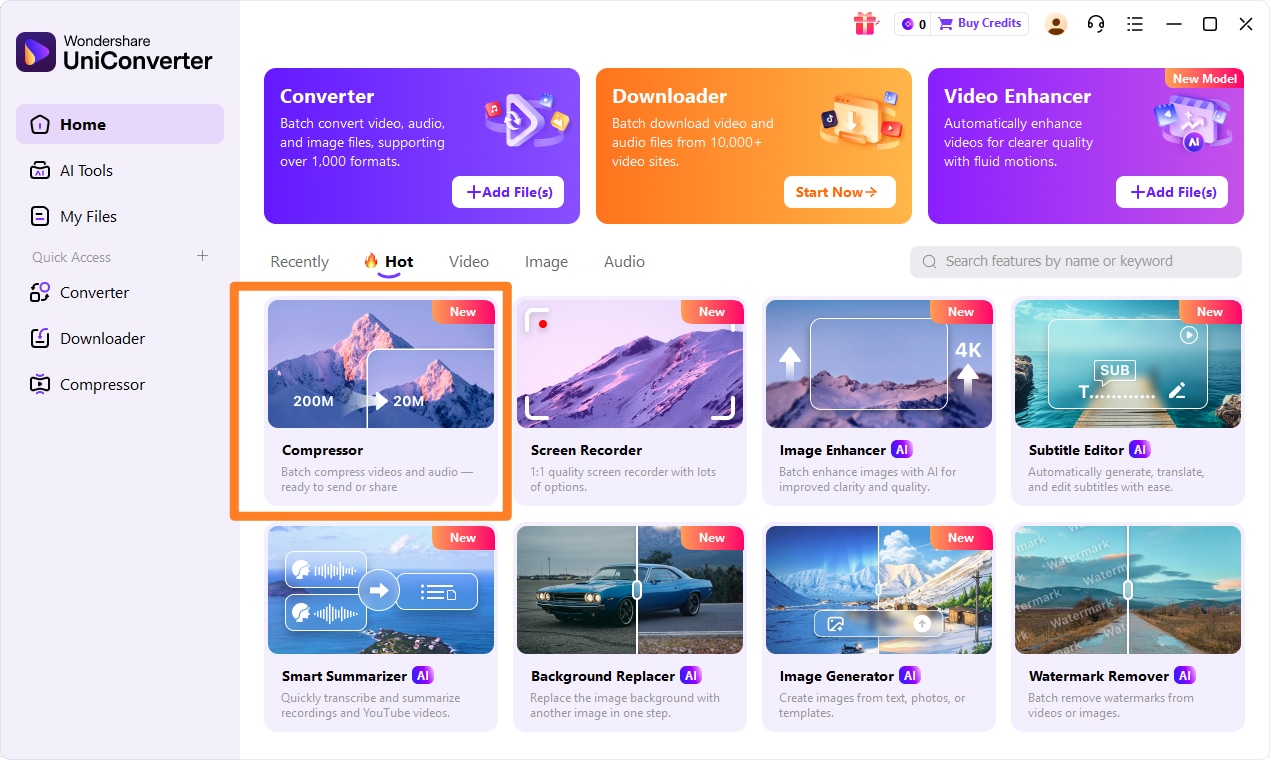
Step 1: Open UniConverter and Choose Compressor
First, I launch UniConverter on my computer. On the main interface, I navigate to the left sidebar and select the "Compressor" tool. This immediately sets me up for optimizing my files.
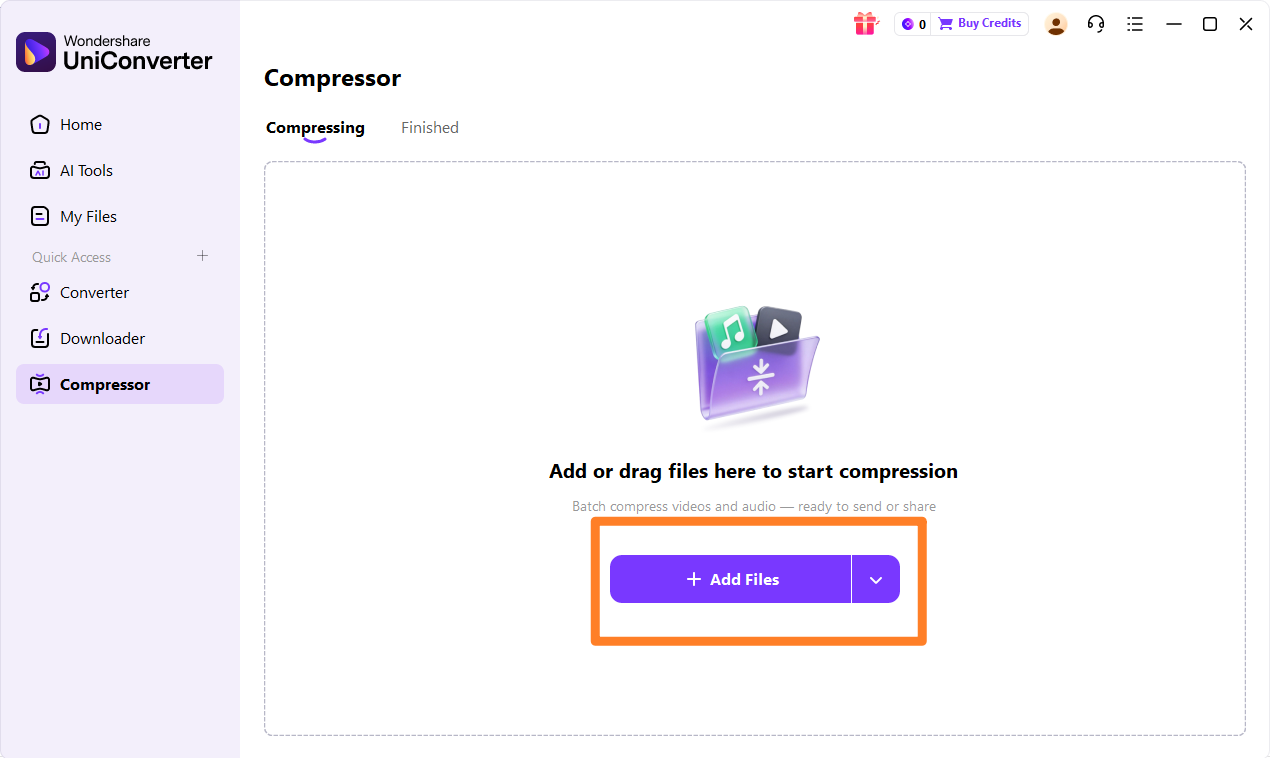
Step 2: Upload the Video, Audios or Images
Next, I simply drag and drop the video, audio, or image files I want to compress directly into the UniConverter window. Alternatively, I can click the "Add Files" button to browse and select them from my computer.
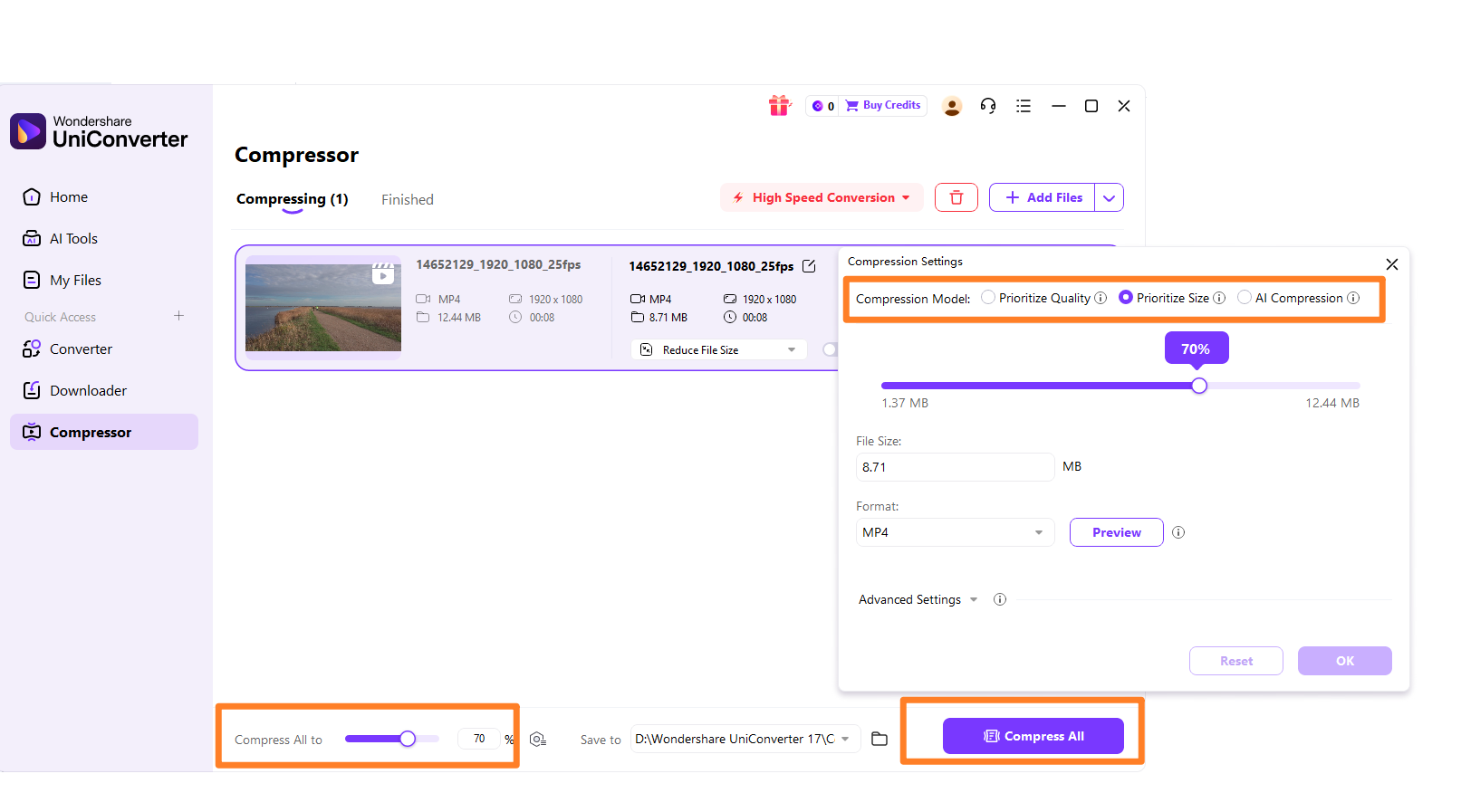
Step 3: Choose Required Parameters
Once my files are loaded, I can adjust the compression settings. UniConverter offers various options for output format, resolution, quality, and bitrate. I can preview the estimated file size reduction before proceeding.
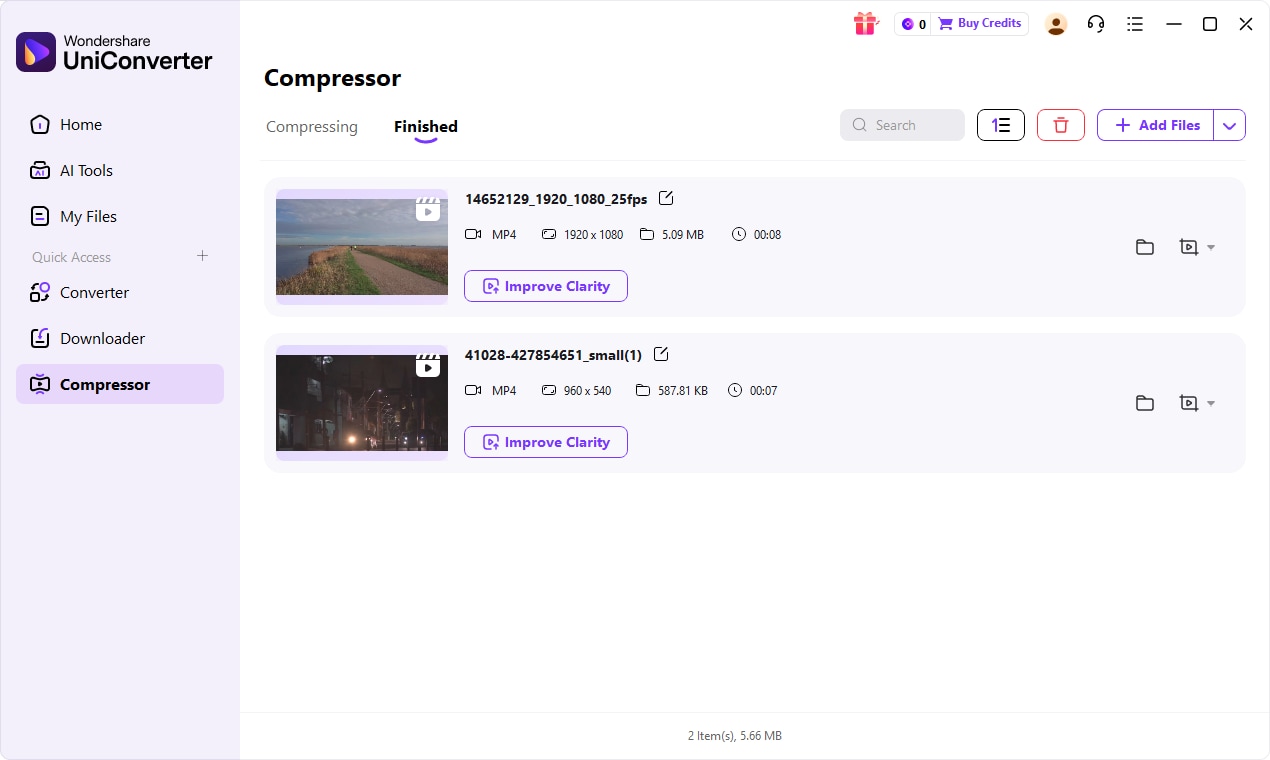
Step 4: Save the Compressed File
After setting my desired parameters, I click the "Compress" button. UniConverter quickly processes the files. Once done, I can choose the output folder to save my newly optimized videos, audios, or images.

Seeking a Trimage Alternative for Image Compression?
Part 7: Final Verdict and Recommendations
After thoroughly reviewing Trimage Image Compressor, I can confidently say it serves a specific niche very well. Its simplicity and effectiveness in reducing JPG and PNG file sizes make it a valuable tool, especially for those operating within a Linux environment or seeking a free, open-source solution. However, its limitations in advanced features, broader format support, and lack of dedicated support mean it's not a universal answer for all image optimization needs.
For casual users and bloggers, Trimage is a solid choice. If you're primarily dealing with JPGs and PNGs for web content and need a quick, easy way to reduce file sizes without much fuss, Trimage will serve you well. Its intuitive interface and batch processing capabilities are perfect for getting images ready for your website or social media.
For web developers and designers, I would recommend considering tools with more control. While Trimage can handle basic compression, you might find yourself needing more advanced features like precise quality control, resizing, or support for SVG and WebP formats. Tools that offer a broader suite of optimization options will provide the flexibility and precision often required in professional web development.
For professional photographers, my advice is to explore dedicated image editing suites. Trimage simply isn't designed for the high-fidelity demands of professional photography, which often involves RAW files, intricate color management, and lossless editing. You'll need software that offers comprehensive editing capabilities alongside robust, high-quality compression options to maintain the integrity of your work.
Part 8: FAQs
-
1. Is Trimage Image Compressor free to use?
Yes, Trimage is an open-source and free-to-use tool.
-
2. Does Trimage support all image formats?
Trimage primarily supports JPG, PNG, and GIF formats. For broader format support, including video and audio, I often use UniConverter.
-
3. Can Trimage compress images without losing quality?
Trimage offers both lossless and lossy compression options. Lossless compression retains quality but may result in larger file sizes.
-
4. Is Trimage available on all operating systems?
Trimage is primarily designed for Linux, but can be run on other systems with appropriate dependencies.
-
5. How does Trimage compare to online image compressors?
Trimage is an offline desktop application, offering more privacy and control compared to many online tools that require uploading images to a server. However, for an all-in-one solution that handles various file types and offers advanced features, UniConverter is a superior choice.
