
- Toolur's Value: Offers quick, free, web-based image compression for everyday tasks, ideal for bloggers and small businesses.
- Core Features: Provides lossy compression, batch processing, and supports common formats like JPEG, PNG, GIF.
- Limitations: Lacks advanced editing, risks quality loss with aggressive compression, and requires an internet connection.
- Comparison: While easy, it falls short against tools like TinyPNG for PNG quality or UniConverter for comprehensive features and control.
- Risks: Be aware of data privacy concerns, intrusive ads, and potential for noticeable quality degradation.
- UniConverter Alternative: Offers robust offline compression for images, audio, and video with superior control and quality.
In this article
- Part 1: What is Toolur Image Compressor?
- Part 2: Toolur Image Compressor: Core Features and Pros & Cons
- Part 3: Toolur Image Compressor: User & Use Cases
- Part 4: Toolur Image Compressor and Alternatives Comparison
- Part 5: Risks and Pitfalls to Consider
- Part 6: How to Use UniConverter for Efficient Audio and Video Compression
- Part 7: Conclusion
- Part 8: FAQs
Toolur Image Compressor Review: A Scenario-Based Comparison
Image optimization is crucial in today's digital landscape, impacting everything from website loading speeds to storage efficiency. As a seasoned product reviewer, I've seen countless tools emerge claiming to offer the best compression. This Toolur Image Compressor review will delve into one such tool, examining its core functionalities, ideal use cases, and how it stacks up against its competitors. My aim is to provide you with an objective, scenario-based comparison, helping you make an informed decision on whether Toolur Image Compressor is the right fit for your needs. We'll explore its strengths, weaknesses, and potential alternatives, ensuring you understand the full picture before committing.
Part 1: What is Toolur Image Compressor?
Toolur Image Compressor is a web-based utility designed to reduce the file size of images without significantly compromising visual quality. It's built for individuals and businesses that need a quick and efficient way to optimize their images for various online platforms. My experience shows that many users struggle with large image files, leading to slow website loading times, increased bandwidth consumption, and storage issues. This review aims to address these common pain points by evaluating how effectively Toolur Image Compressor tackles them.
The Growing Need for Image Optimization:
* Website Performance: Large images are a primary culprit behind slow website loading, negatively impacting user experience and SEO rankings.
* Storage Efficiency: Reducing image file sizes helps conserve valuable storage space on servers, cloud platforms, and personal devices.
* Bandwidth Conservation: Optimized images consume less bandwidth, which is beneficial for both website owners and users with limited data plans.
* Faster Sharing: Smaller files are quicker to upload and share across social media, email, and messaging apps.
Part 2: Toolur Image Compressor: Core Features and Pros & Cons
Toolur Image Compressor offers a straightforward approach to image optimization, focusing on ease of use and effective file size reduction. Its core capabilities revolve around its compression algorithms and support for various image formats.
* Lossy Compression: Utilizes algorithms to remove redundant data, significantly reducing file size.
* Batch Processing: Allows you to upload and compress multiple images simultaneously, saving time.
* Format Support: Handles popular image formats like JPEG, PNG, and GIF.
* Quality Control: Provides some level of control over the compression intensity, letting you balance file size and visual fidelity.
* Web-Based Interface: Accessible directly through your browser, requiring no software installation.
Pros:
* Highly efficient compression for web optimization, making my websites load noticeably faster.
* User-friendly interface for quick tasks; I can optimize images in just a few clicks.
* Supports a wide range of image formats, which is convenient for my diverse projects.
Cons:
* Limited advanced editing features; I often find myself needing another tool for basic adjustments.
* Potential for quality degradation on aggressive compression, which can be an issue for high-resolution images.
Part 3: Toolur Image Compressor: User & Use Cases
Toolur Image Compressor is particularly well-suited for users who prioritize speed and simplicity in their image optimization workflow. It's not designed for professional-grade image manipulation but rather for practical, everyday needs.
Best Use Case:
* Web developers and bloggers needing quick image optimization for faster loading times. I use it regularly to ensure my blog posts load quickly, improving my SEO and reader engagement. It's perfect for reducing the size of header images, in-post graphics, and thumbnails without a steep learning curve.
Limited Use Case:
* Professional photographers requiring lossless compression and advanced image manipulation. For my high-resolution photography work, I find Toolur's quality degradation on aggressive settings unacceptable, and it lacks the precise control and editing capabilities I need to maintain image integrity for client deliverables.
Part 4: Toolur Image Compressor and Alternatives Comparison
When evaluating image compressors, I look at compression efficiency, ease of use, and additional features. Here's how Toolur Image Compressor stacks up against some popular alternatives.
| Feature/Competitor | Toolur Image Compressor | TinyPNG | Compressor.io | UniConverter |
| Compression Efficiency | High | Very High | High | Very High (with GPU acceleration) |
| Output Quality | Good | Excellent (especially PNG) | Good | Excellent (near-lossless options) |
| Batch Processing | Yes | Yes | No | Yes |
| Advanced Features | Limited | Limited | Limited | Extensive (editing, conversion, etc.) |
| Pricing Model | Free | Freemium | Free | Paid (with free trial) |
| Ease of Use | Very Easy | Very Easy | Easy | Moderate (due to more features) |
| Customer Support | Via Email | Via Email | Via Email | 24/7 Live Chat & Email |
| Security | Standard Web Security | Standard Web Security | Standard Web Security | Advanced (Local processing option) |
Key Differentiators:
Toolur offers a good balance of ease of use and effective compression for general users, making it my go-to for quick, everyday tasks. TinyPNG excels in PNG compression with minimal quality loss, which I appreciate when working with transparent images. Compressor.io provides a straightforward, no-frills compression experience, ideal for single-image optimizations. UniConverter stands out with its comprehensive features and robust compression, especially when I need more control and a wider range of multimedia tools.
Part 5: Risks and Pitfalls to Consider
While free online tools like Toolur Image Compressor offer convenience, it's crucial to be aware of potential risks and limitations. My experience has taught me to always proceed with caution, especially when dealing with sensitive data or critical projects.
Data Privacy Concerns
When I upload images to a web-based compressor, I'm essentially entrusting my data to a third-party server. While most reputable services have privacy policies, there's always a risk of data breaches or unauthorized access. For highly sensitive or proprietary images, I always recommend using offline tools or carefully reviewing the service's privacy policy. I've heard stories of images being stored longer than necessary, which is a concern for me.
Intrusive Advertisements
Many free online tools rely on advertising revenue. This often translates to intrusive pop-ups, banner ads, or even redirects that can disrupt my workflow and negatively impact my user experience. While Toolur Image Compressor is relatively clean, I've encountered other free tools where the ads are so aggressive they make the service almost unusable. This can be a major time-waster.
Potential for Noticeable Quality Loss
While the goal is to reduce file size without compromising quality, aggressive compression settings can lead to noticeable degradation, especially for images with fine details or complex color gradients. I've often found that what looks acceptable on a small screen might appear pixelated or blurry when viewed at a larger size. It's a delicate balance, and sometimes the trade-off isn't worth it, especially for professional use.
Limited Offline Functionality
As a web-based tool, Toolur Image Compressor requires an active internet connection to function. This can be a significant limitation if I'm working in an area with poor connectivity or if I prefer to keep my image processing entirely offline for security or speed reasons. I've been in situations where I needed to compress images on the go, and without internet, these tools become useless.
Lack of Advanced Features and Customization
Free online compressors generally offer basic compression functionalities. If I need advanced features like selective compression, specific color profile retention, or integration with other editing tools, I'll quickly find these free options lacking. This often means I have to switch between multiple tools, which adds unnecessary steps to my workflow.
Part 6: How to Use UniConverter for Efficient Audio and Video Compression
For jobs where stability, batch handling, and cleaner output matter, UniConverter is usually the option I trust most. It works especially well as an offline tool for image compression, while also covering video compression and audio compression in the same workflow. That makes it far more practical than many free online services, which often come with ads, weaker batch support, or inconsistent results. I also like that GPU acceleration helps speed up larger tasks, and for video files it can help compress videos without quality loss as much as possible. Overall, it’s a solid all-in-one solution for managing multimedia files more efficiently without relying on browser-based tools.
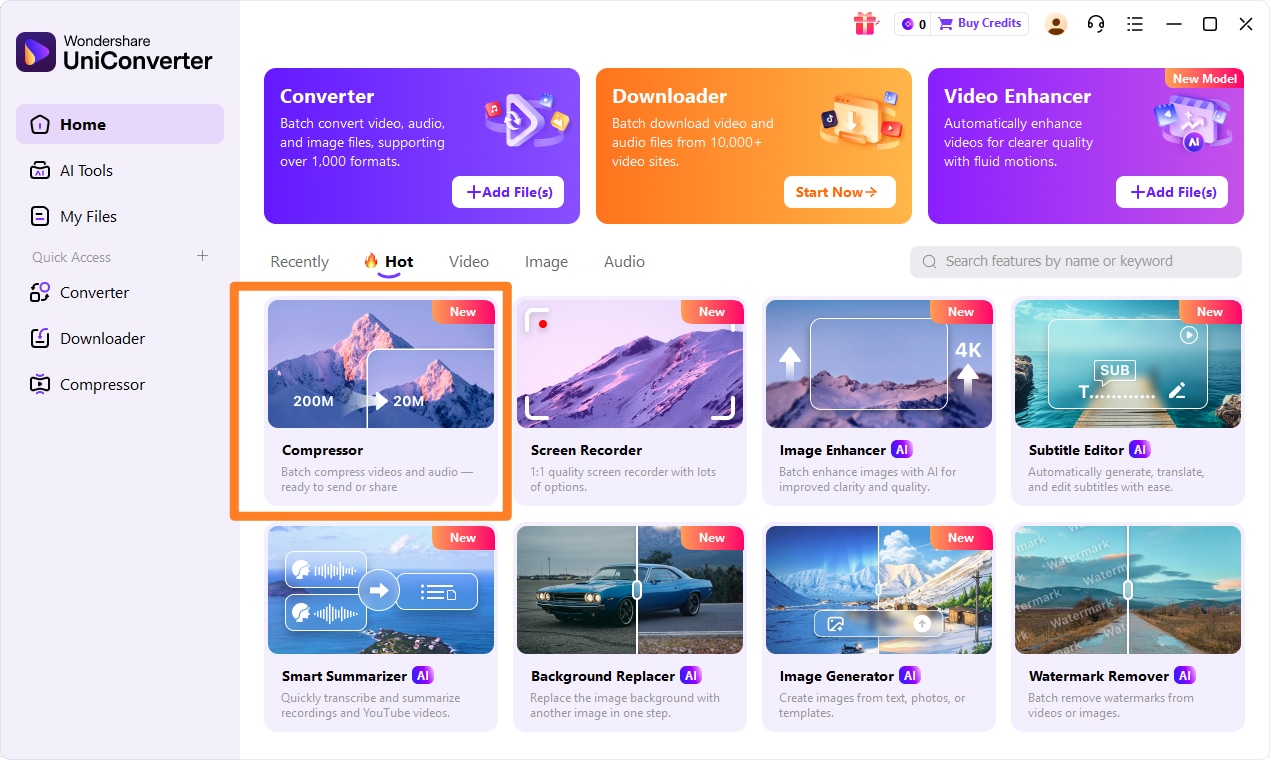
Step 1: Open UniConverter and Choose Compressor
First, I launch UniConverter on my desktop. On the left-hand sidebar, I navigate to the "Compressor" tab. This is where all my compression magic happens.
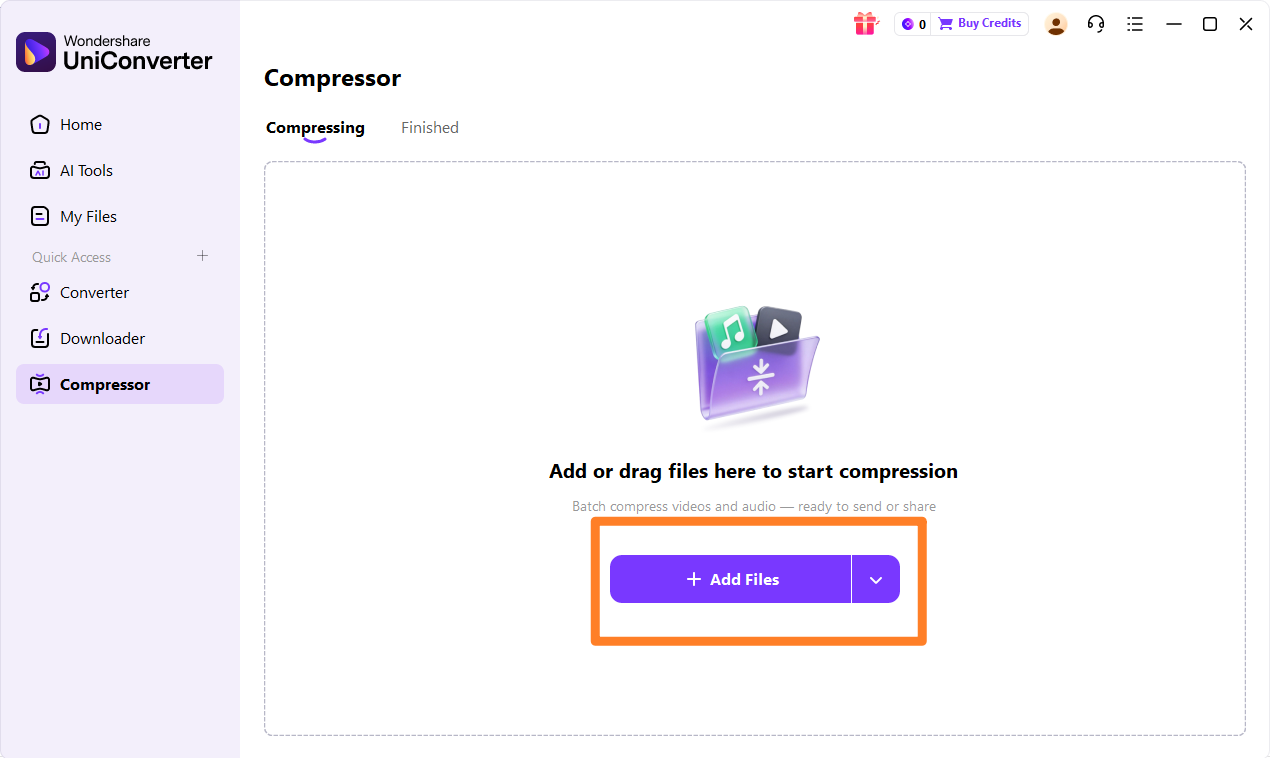
Step 2: Upload the Video, Audios or Images
Next, I simply drag and drop my video, audio, or image files into the UniConverter interface. Alternatively, I can click the "Add Files" button to browse and select them from my computer.
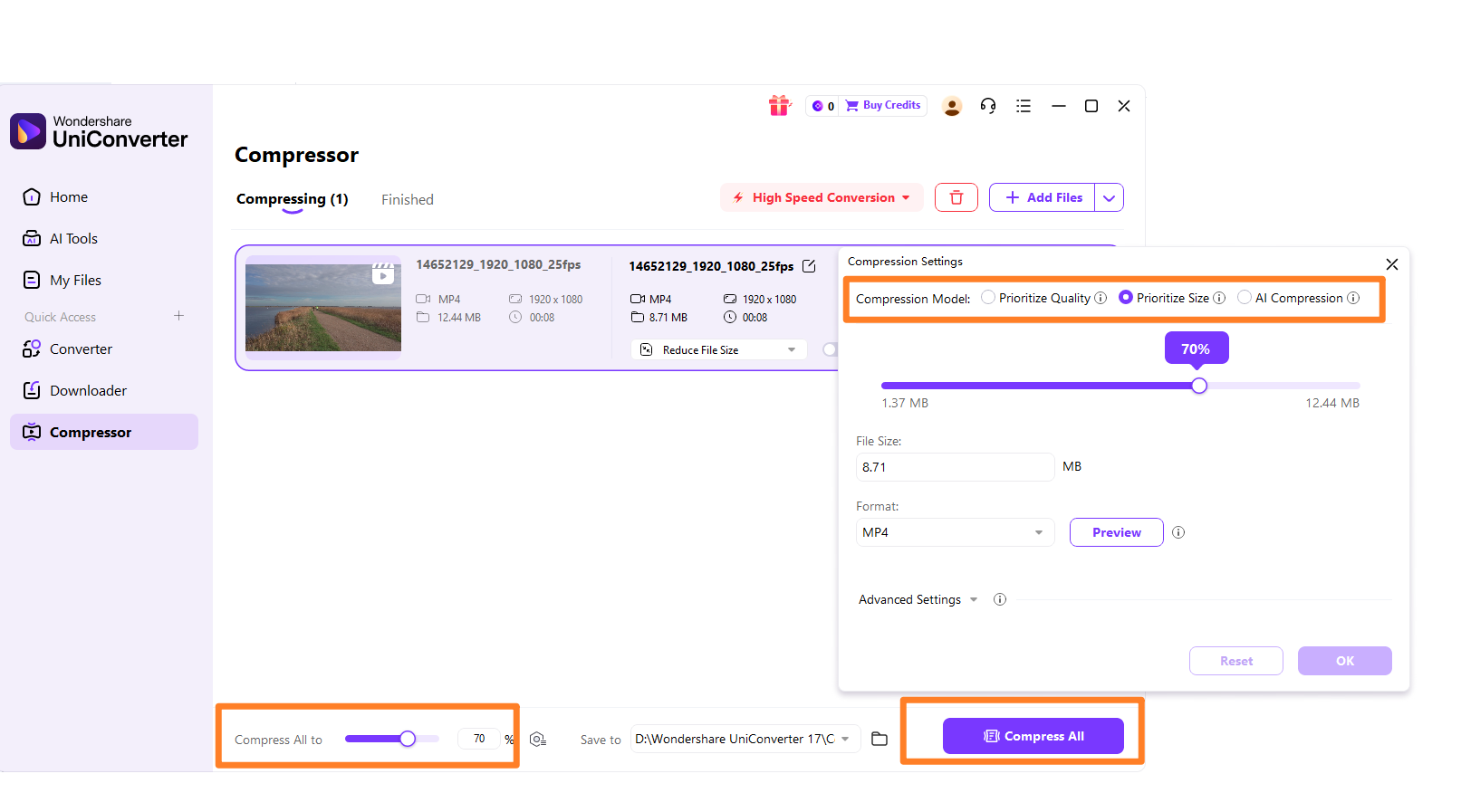
Step 3: Choose Required Parameters
Once my files are loaded, I can customize the compression settings. UniConverter allows me to adjust the file size, quality, format, and resolution. I can preview the changes to ensure I get the perfect balance.
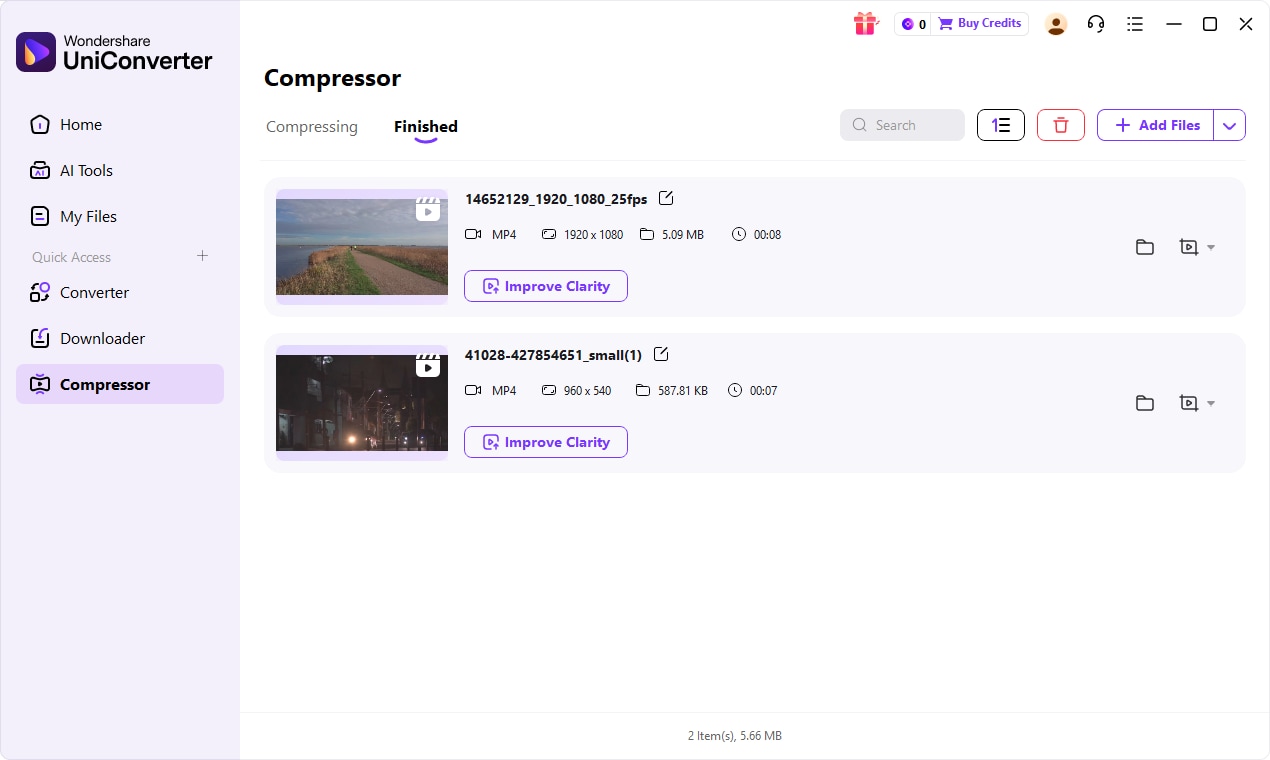
Step 4: Save the Compressed File
After setting my desired parameters, I click the "Compress" button. UniConverter quickly processes the files, and I can then choose the output folder to save my newly compressed media.

Seeking a Better Toolur Image Compressor Alternative?
Part 7: Conclusion
After thoroughly exploring Toolur Image Compressor, I can confidently say it serves a valuable niche for quick, no-frills image optimization. For casual users, bloggers, and small business owners who need to rapidly reduce image file sizes for web use, its ease of use and free access make it a highly attractive option. It's perfect for those moments when I just need to get an image online fast without worrying too much about advanced settings. However, for web developers and SEO specialists who require consistent, high-quality compression across a large volume of images, the lack of advanced features and potential for quality degradation on aggressive settings might be a limitation. While it offers batch processing, the control isn't as granular as some might need. For professional photographers and designers, Toolur Image Compressor review reveals it falls short. The potential for noticeable quality loss and the absence of lossless compression options mean it's not suitable for maintaining the integrity of high-resolution, client-facing work. In these scenarios, investing in a more robust, feature-rich tool like UniConverter, which offers greater control, offline functionality, and broader multimedia capabilities, would be a much wiser decision. Ultimately, Toolur Image Compressor is a handy tool for specific, less demanding tasks, but it's crucial to align its capabilities with your specific needs and quality expectations.
Part 8: FAQs
-
1. Is Toolur Image Compressor completely free to use?
Yes, Toolur Image Compressor is generally free for basic usage, allowing you to compress images without any cost.
-
2. Does Toolur Image Compressor support batch processing?
Yes, Toolur Image Compressor supports batch processing for multiple images, which I find incredibly useful for optimizing several files at once.
-
3. How does Toolur Image Compressor compare to TinyPNG in terms of compression quality?
Both offer good compression, but TinyPNG is often cited for slightly better PNG optimization, especially when I need to preserve transparency with minimal quality loss.
-
4. Can I use Toolur Image Compressor offline?
No, Toolur Image Compressor is a web-based tool and requires an internet connection to function. If you need an offline solution, I'd recommend looking into desktop applications like UniConverter.
-
5. What are the main advantages of using UniConverter over Toolur Image Compressor?
UniConverter offers a broader range of features beyond image compression, including video editing and conversion, and can be used offline. It also provides more precise control over compression settings and generally delivers higher quality results, making it a more comprehensive solution for all my multimedia needs.
