
- TinyJPG Value: Excellent for quick web image optimization, offering high compression with minimal quality loss.
- Ideal Users: Best for bloggers and web developers needing fast, simple image compression for website speed.
- Limitations: Lacks advanced features and granular control, making it less suitable for professional photographers.
- Online Risks: Consider data privacy and dependency on internet connectivity when using online-only tools.
- UniConverter Comparison: Offers a comprehensive desktop alternative with advanced features, batch processing, and no online limitations.
In this article
- Part 1: What is TinyJPG and Why Does it Matter?
- Part 2: TinyJPG Image Compressor: Core Features, Pros, and Cons
- Part 3: TinyJPG: Ideal Users and Use Cases
- Part 4: TinyJPG and Alternatives: A Comparative Analysis
- Part 5: Risks and Pitfalls to Consider
- Part 6: UniConverter: The Best Alternative for Comprehensive Image Management
- Part 7: Final Verdict and Recommendations
- Part 8: Frequently Asked Questions (FAQs)
TinyJPG Image Compressor: A Deep Dive into Image Optimization
When it comes to optimizing images for the web, the sheer volume of tools available can be overwhelming. Many promise significant file size reductions without compromising quality, but few deliver consistently. This TinyJPG Image Compressor review aims to cut through the noise, offering a comprehensive look at one of the most popular online image compression services. I'll explore its core functionalities, weigh its pros and cons, and pit it against its closest competitors. My goal is to provide you with an objective, user-centric analysis, helping you decide if TinyJPG is the right tool for your image optimization needs, or if a more robust alternative might be a better fit.
Part 1: What is TinyJPG and Why Does it Matter?
TinyJPG is an online image compression tool specifically designed to reduce the file size of JPEG and PNG images. It utilizes smart lossy compression techniques, which means it selectively decreases the number of colors in the image, effectively reducing the file size while aiming to keep the visual quality as close to the original as possible. This process is crucial in today's digital landscape, where website speed and performance are paramount. Slow-loading websites, often bogged down by large image files, can significantly impact user experience, SEO rankings, and conversion rates.
The Landscape of Online Image Compression
The need for efficient image compression stems from several key factors:
* Website Performance: Large images directly contribute to slower page load times, frustrating visitors and increasing bounce rates.
* Storage and Bandwidth Costs: Optimized images consume less server space and bandwidth, leading to cost savings for website owners.
* Mobile Responsiveness: With a significant portion of internet traffic coming from mobile devices, smaller image files are essential for faster loading on varying network conditions.
* SEO Benefits: Search engines favor fast-loading websites, making image optimization a critical component of a strong SEO strategy.
Part 2: TinyJPG Image Compressor: Core Features, Pros, and Cons
TinyJPG's core strength lies in its simplicity and effectiveness. It focuses solely on image compression, offering a streamlined experience for users who need quick and efficient optimization.
Its core capabilities include:
* Smart Lossy Compression: Reduces file size by intelligently decreasing the number of colors.
* JPEG and PNG Support: Handles the two most common image formats for web use.
* Drag-and-Drop Interface: Allows for easy uploading of images.
* Batch Processing: Compresses multiple images simultaneously.
* Download Options: Provides individual or bulk download of optimized images.
Pros:
* Exceptional Compression Ratio with Minimal Quality Loss: I've consistently found TinyJPG to deliver impressive file size reductions, often by 50-70%, with very little perceptible difference in visual quality. This is its standout feature.
* User-Friendly Interface for Quick Optimizations: The drag-and-drop functionality and straightforward process make it incredibly easy to use, even for those with no technical expertise.
* Batch Processing for Efficiency: Being able to upload and compress up to 20 images at once saves a significant amount of time, especially for bloggers or web developers managing multiple images.
Cons:
* Limited Advanced Features for Professional Users: For photographers or graphic designers who need granular control over compression settings, color profiles, or metadata, TinyJPG falls short.
* File Size and Quantity Restrictions for Free Tier: The free version limits you to 20 images per batch and a maximum file size of 5MB per image, which can be restrictive for larger projects.
Part 3: TinyJPG: Ideal Users and Use Cases
TinyJPG shines brightest for users who prioritize speed and simplicity in their image optimization workflow, especially when dealing with a moderate volume of images for web use.
Best Use Case: Bloggers and Web Developers Optimizing for Speed
As a blogger, I constantly upload images to my website. TinyJPG is my go-to for quickly optimizing these images. I can drag a handful of screenshots or photos, get them compressed in seconds, and then upload them to my site, knowing they won't slow down my page load times. Similarly, for web developers working on client sites where quick optimization is needed for performance, TinyJPG offers an incredibly efficient solution without requiring complex software installations. It's perfect for reducing the size of hero images, product photos, and general website graphics.
Limited Use Case: Professional Photographers Requiring Granular Control
While TinyJPG is excellent for general web optimization, I wouldn't recommend it for professional photographers or graphic designers who need precise control over their image output. For instance, if I'm preparing high-resolution images for print or a client's portfolio, I need to manage specific compression levels, color spaces, and metadata, none of which TinyJPG offers. The "smart" lossy compression, while effective, doesn't allow for the fine-tuning that professionals often require to maintain absolute fidelity or meet specific client specifications.
Part 4: TinyJPG and Alternatives: A Comparative Analysis
When I look at online image compressors, I consider several factors beyond just the compression ratio. Ease of use, advanced features, and batch processing capabilities are all crucial.
Comparison Table: TinyJPG & Competitors
| Feature/Tool | TinyJPG | Compressor.io | Optimizilla | ImageOptim |
| Compression Ratio | Excellent | Very Good | Good | Excellent |
| Ease of Use | High | High | Medium | Medium |
| Batch Processing | Yes | No | Yes | Yes |
| Advanced Settings | No | No | Limited | Yes |
| Desktop App | No | No | No | Yes |
| Price (Free Tier) | Generous | Limited | Generous | Free |
Key Differentiators: TinyJPG's Strengths and Weaknesses Against Rivals
TinyJPG's primary strength lies in its "set it and forget it" approach to compression, consistently delivering excellent results with minimal effort. Compressor.io offers a similar ease of use but lacks batch processing, making it less efficient for multiple images. Optimizilla provides a bit more control with a quality slider, which is a nice touch, but its interface isn't as polished as TinyJPG's. ImageOptim, being a desktop application, offers the most advanced settings and granular control, making it ideal for power users who prefer offline processing and fine-tuning. However, it requires installation, unlike the purely web-based TinyJPG. UniConverter, as I'll discuss later, stands out by offering a comprehensive suite of tools, including robust image compression, within a single desktop application, often surpassing the capabilities of these online-only tools, especially for batch processing and maintaining quality.
Part 5: Risks and Pitfalls to Consider
While online tools like TinyJPG offer convenience, it's important to be aware of potential downsides, especially when you're uploading your valuable images.
Data Privacy Concerns with Online Tools
When I upload images to any online service, a part of me always worries about what happens to that data. While TinyJPG states they delete images after a short period, the fact remains that your images are temporarily stored on their servers. For sensitive or proprietary images, this could be a significant privacy risk. You're essentially trusting a third party with your visual content, and data breaches, though rare, are always a possibility.
Potential for Unwanted Advertisements
While TinyJPG itself is relatively clean, many free online tools are supported by advertisements. While TinyJPG has a clean interface, some alternatives might bombard you with pop-ups or banner ads, detracting from the user experience and potentially leading to accidental clicks on malicious links. It's a common trade-off for "free" services.
Impact on Image Quality for Specific Use Cases
Although TinyJPG is excellent at minimizing perceptible quality loss, its "smart" lossy compression isn't always suitable for every scenario. If I'm working with highly detailed scientific images, medical scans, or intricate graphic designs where every pixel matters, even a slight loss in fidelity can be unacceptable. For these specific use cases, a tool that offers lossless compression or more precise control over compression levels is crucial.
Dependency on Internet Connectivity
As an online tool, TinyJPG is entirely dependent on a stable internet connection. If my internet is down or slow, I can't compress my images. This can be a significant bottleneck if I'm working offline or in an area with unreliable internet access, forcing me to put my workflow on hold.
Free Tier Limitations and Upselling Tactics
The free tier of TinyJPG, while generous, comes with limitations on file size (5MB per image) and quantity (20 images per batch). While understandable for a free service, these restrictions can quickly become frustrating for users with larger projects. This often leads to "upselling" tactics, where you're prompted to upgrade to a paid plan to remove these limitations, which might not always be cost-effective for occasional use.
Part 6: UniConverter: The Best Alternative for Comprehensive Image Management
When online tools prove insufficient, especially concerning batch processing, inconsistent outcomes, or undesirable quality loss, I frequently opt for a more robust desktop solution. UniConverter is my preferred choice for comprehensive media management, offering powerful image compression that bypasses the common drawbacks of many online services. It provides a stable, ad-free environment with extensive format support, GPU acceleration for enhanced speed, and the capability to [[compress images]] without noticeable quality degradation, even when handling large batches. It truly serves as an all-in-one solution for video, audio, and image requirements.
Why UniConverter Stands Out
UniConverter delivers a superior experience with its ad-free interface, support for a vast array of image formats, GPU-accelerated processing for speed, stable and lossless compression options, and efficient batch processing capabilities.
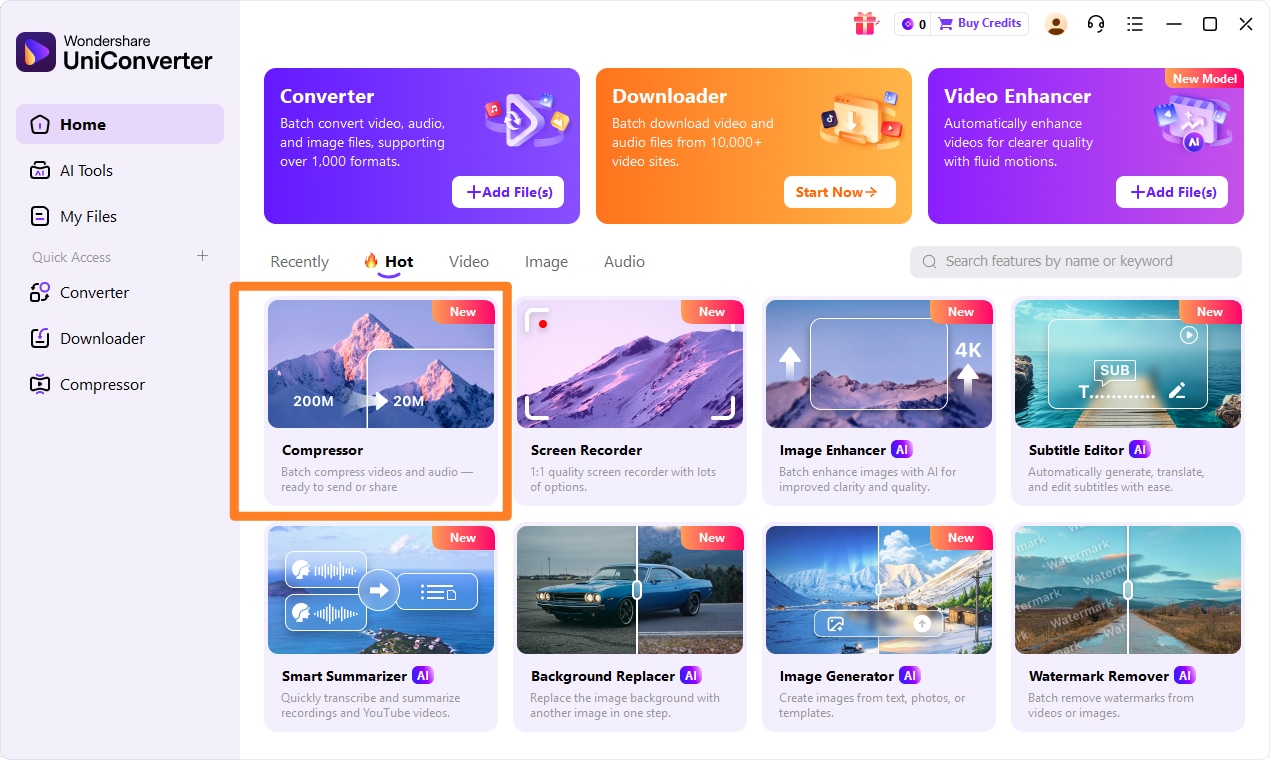
Step 1: Open UniConverter and Choose Compressor
Launch UniConverter on your computer. On the main interface, navigate to the "Toolbox" section and select the "Image Compressor" feature.
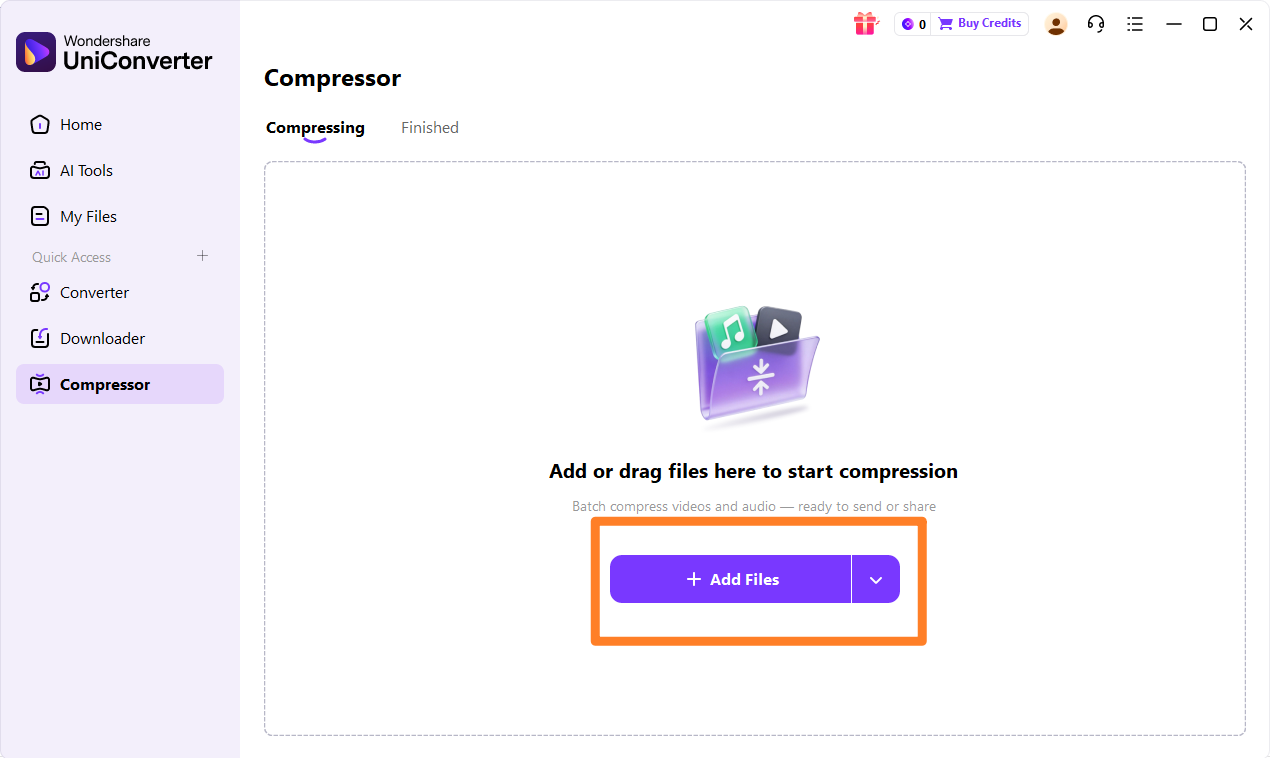
Step 2: Upload the Video, Audios or Images
Click the "Add Files" button or simply drag and drop the images you wish to [[compress]] into the UniConverter window. You can add multiple images for batch processing.
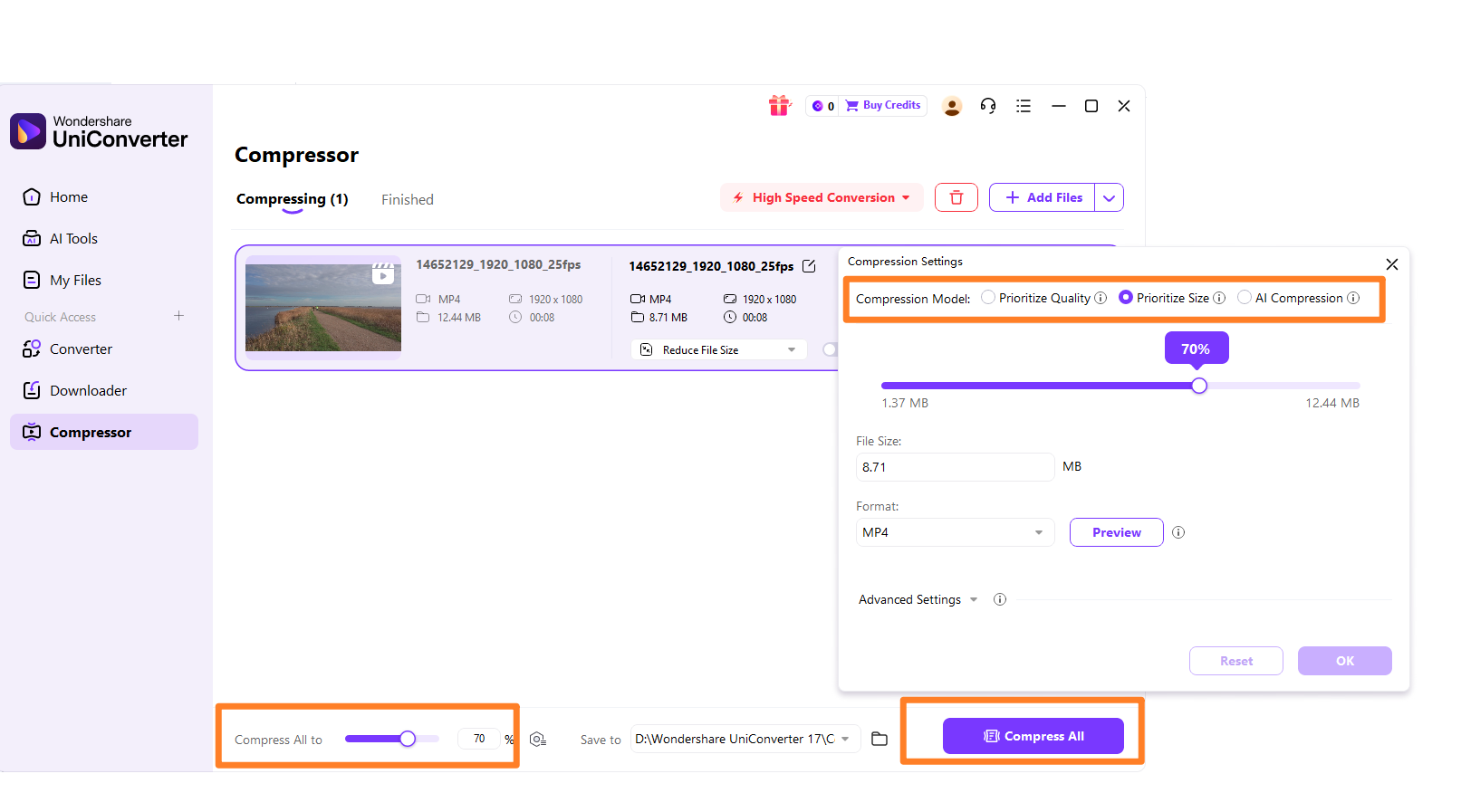
Step 3: Choose Required Parameters
Once your images are loaded, you can adjust the compression settings. UniConverter allows you to set the output quality and size, giving you more control over the final [[compressed image]].
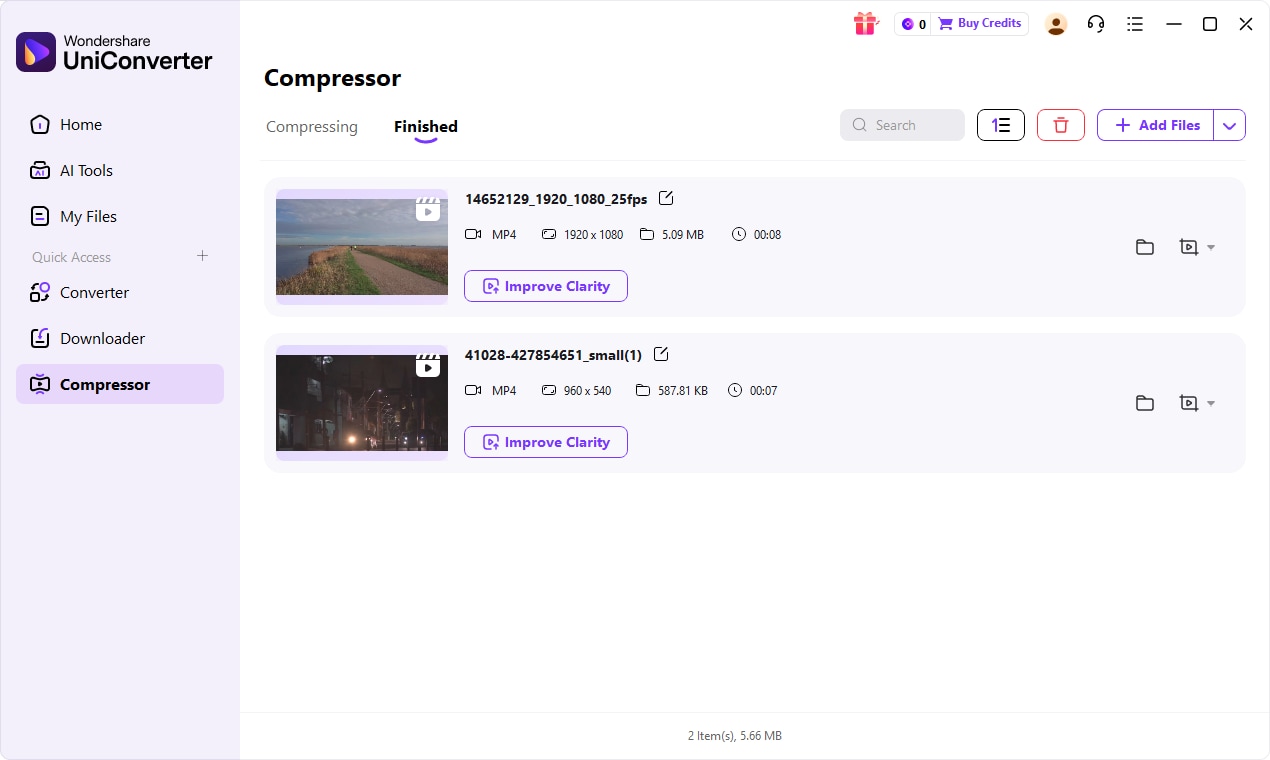
Step 4: Start Compression and Export Optimized Images
After configuring your settings, click the "Compress" button. UniConverter will quickly process your images. Once complete, you can find your [[optimized images]] in the specified output folder.

TinyJPG Alternative: Compress Images with Ease
Part 7: Final Verdict and Recommendations
After extensively using and comparing TinyJPG, my conclusion is that it remains an excellent tool for specific user groups, but it's not a one-size-fits-all solution. For casual users and bloggers, TinyJPG Image Compressor review confirms its position as a top choice. Its unparalleled ease of use, combined with consistently high compression ratios and minimal quality loss, makes it incredibly efficient for quickly optimizing images for web content. If your primary goal is to speed up your website or blog without delving into complex settings, TinyJPG is hard to beat. However, for professionals and advanced users, particularly photographers, graphic designers, or those managing large-scale projects with specific quality requirements, I strongly recommend considering feature-rich alternatives. Tools that offer granular control over compression parameters, support for diverse formats, or even desktop applications like UniConverter, provide the precision and stability needed for professional workflows. Ultimately, the choice boils down to balancing speed and quality with your specific needs. For quick, general web optimization, TinyJPG is fantastic. For anything requiring more control or comprehensive media management, exploring more robust options will serve you better in the long run.
Part 8: Frequently Asked Questions (FAQs)
-
1. Is TinyJPG completely free to use?
TinyJPG offers a free tier that allows you to compress up to 20 images per batch, with each image having a maximum file size of 5MB. For higher limits or more features, you'll need to subscribe to their paid plans.
-
2. Does TinyJPG reduce image quality noticeably?
TinyJPG uses smart lossy compression, which means it reduces file size by selectively discarding some image data. While it's designed to minimize perceptible quality loss, for highly detailed images or those requiring absolute fidelity, you might notice a slight difference upon close inspection. For most web uses, the quality reduction is negligible.
-
3. Can I use TinyJPG for large batches of images?
The free version of TinyJPG is limited to 20 images per batch. If you need to compress larger quantities of images, you'll either need to process them in multiple batches or upgrade to a paid plan. For very large batches or continuous image processing, a desktop application like UniConverter might be a more efficient solution.
-
4. Are there any security concerns when uploading images to TinyJPG?
TinyJPG states that uploaded images are deleted from their servers after a short period. While they employ security measures, as with any online service, there's always an inherent risk when uploading sensitive data. For highly confidential images, consider using offline compression software or tools that process images locally on your computer.
-
5. How does TinyJPG compare to desktop image compression software?
TinyJPG excels in ease of use and quick online compression for common formats. Desktop software, such as UniConverter or ImageOptim, often provides more advanced features like lossless compression options, greater control over compression parameters, support for a wider range of formats, and the ability to work offline. They are generally preferred by professionals who require more precision and robust functionality.
