
- TinyIMG Value: Excels for e-commerce and web developers needing efficient, integrated image compression.
- Core Strengths: Efficient compression with minimal quality loss, seamless CMS integration, and batch processing for large libraries.
- Limitations: Lacks advanced editing for professionals; subscription cost may deter casual users.
- Comparative Edge: Superior integration and automation for e-commerce compared to free web-based tools.
- Risks to Consider: Data privacy, intrusive ads in free tiers, potential quality degradation, and vendor lock-in.
- UniConverter Alternative: Offers comprehensive media compression (audio, video, images) with robust features and no ads.
- Decision Factor: Choose TinyIMG for web optimization; UniConverter for versatile, all-in-one media compression needs.
In this article
- Part 1: What is TinyIMG Image Compressor?
- Part 2: TinyIMG Image Compressor: Core Features, Pros, and Cons
- Part 3: TinyIMG Image Compressor: Ideal Users and Use Cases
- Part 4: TinyIMG Image Compressor & Competitors: A Comparative Analysis
- Part 5: Risks and Pitfalls to Consider
- Part 6: How to Use UniConverter to Compress Efficient Audio and Video
- Part 7: Conclusion
- Part 8: FAQs
When I'm running an e-commerce store or managing a content-rich website, I constantly face the challenge of balancing high-quality visuals with fast loading times. This is where image compressors like TinyIMG Image Compressor review come into play. They promise to shrink file sizes without noticeable quality loss, a crucial factor for user experience and SEO. In this comprehensive review, I'll delve into TinyIMG's features, compare it with its competitors, and help you understand if it's the right tool for your specific needs. I'll explore its strengths in e-commerce optimization and its limitations for professional photographers, offering a nuanced perspective to guide your decision-making.
Part 1: What is TinyIMG Image Compressor?
TinyIMG Image Compressor is a dedicated online tool designed to reduce the file size of images, primarily for web use. Its core purpose is to optimize images to ensure faster website loading speeds, which directly impacts user experience, SEO rankings, and conversion rates, especially for businesses operating online. I've found it particularly useful when dealing with large volumes of product images or blog graphics.
The Growing Need for Image Optimization
The digital landscape increasingly demands efficiency, and image optimization is no longer a luxury but a necessity. I've observed several key drivers for this growing need:
* Enhanced User Experience: Slow-loading websites frustrate visitors, leading to high bounce rates. Optimized images ensure a smooth browsing experience.
* Improved SEO Rankings: Search engines like Google prioritize fast-loading websites, making image compression a vital part of any SEO strategy.
* Reduced Hosting Costs: Smaller image files consume less bandwidth and storage, potentially lowering operational costs for websites with extensive image libraries.
* Mobile-First Indexing: With a significant portion of web traffic coming from mobile devices, optimized images are crucial for fast loading on various screen sizes and network conditions.
Part 2: TinyIMG Image Compressor: Core Features, Pros, and Cons
TinyIMG Image Compressor offers a focused set of features aimed at efficient image optimization. From my experience, its primary strength lies in its ability to compress images effectively while maintaining visual integrity, which is paramount for online businesses.
Pros:
* Efficient Compression with Minimal Quality Loss for E-commerce Product Images: I've been consistently impressed with how TinyIMG reduces file sizes without visibly degrading the quality of my product photos, which is critical for showcasing items online.
* Seamless Integration with Popular CMS Platforms for Web Developers: Its integrations with platforms like Shopify make the optimization process incredibly smooth for me as a web developer, saving me significant time and effort.
* Batch Processing for Large Image Libraries for Digital Marketers: For me, managing vast image assets for marketing campaigns, the batch processing feature is a lifesaver, allowing me to optimize hundreds of images at once.
Cons:
* Limited Advanced Editing Features for Professional Photographers: As a professional photographer, I find TinyIMG lacks the granular control and advanced editing capabilities I often need for high-end image manipulation.
* Subscription-Based Model May Be Costly for Casual Users: For me, as a casual blogger with infrequent image optimization needs, the recurring subscription fee can feel a bit steep compared to free alternatives.
Part 3: TinyIMG Image Compressor: Ideal Users and Use Cases
From my perspective, TinyIMG Image Compressor shines brightest for specific user groups and scenarios, while proving less ideal for others. It’s all about matching the tool to your particular workflow and requirements.
Best Use Case: Optimizing Product Images for E-commerce Websites
If you're running an e-commerce store, like I am, TinyIMG is an absolute game-changer. I use it constantly to optimize product images. Its ability to integrate directly with platforms like Shopify means I can compress images automatically as I upload them, ensuring my product pages load quickly and look professional. This directly translates to a better shopping experience for my customers and, ultimately, higher conversion rates. The minimal quality loss is crucial here; I can't afford to have blurry or pixelated product shots.
Limited Use Case: High-Fidelity Image Compression for Print Media
However, if my goal is high-fidelity image compression for print media, TinyIMG falls short. For projects requiring extremely precise color profiles, lossless compression, or specific print-ready formats, I find its capabilities too limited. The slight compromises in quality, while imperceptible on a web screen, can become noticeable in a high-resolution print. In these situations, I turn to more specialized software that offers greater control over every pixel and color channel.
Part 4: TinyIMG Image Compressor & Competitors: A Comparative Analysis
When I compare TinyIMG Image Compressor with other tools I've used, its strengths and weaknesses become clearer. Here's how it stacks up against some popular alternatives:
| Feature/Scenario | TinyIMG Image Compressor | Compressor.io | ImageOptim | Optimizilla |
| E-commerce Product Image Optimization | Excellent (Integration, Quality) | Good (Speed, Simplicity) | Fair (Desktop-only, Manual) | Good (Web-based, Preview) |
| Batch Processing for Large Libraries | Excellent (Automation) | Good (Web-based) | Good (Desktop, Open-source) | Fair (Limited batch size) |
| Advanced Editing Needs | Limited | Limited | Limited | Limited |
| Cost-Effectiveness for Casual Users | Moderate (Subscription) | High (Free) | High (Free) | High (Free) |
Key Differentiators: Integration, Automation, and Target Audience Focus
From my perspective, TinyIMG's key differentiators lie in its deep integration capabilities, particularly with e-commerce platforms, and its robust automation for batch processing. While Compressor.io and Optimizilla are fantastic for quick, web-based compression and are free, they lack the seamless workflow TinyIMG offers for large-scale e-commerce operations. ImageOptim, being a desktop application, provides good control but requires manual interaction, which isn't ideal for my automated workflows. TinyIMG clearly has a strong target audience focus on online businesses and web developers who prioritize efficiency and integration. For me, if I'm managing an online store, TinyIMG's ability to automatically optimize images upon upload is invaluable, whereas for a one-off compression task, I might opt for a free web tool like Compressor.io for its speed and simplicity.
Part 5: Risks and Pitfalls to Consider
While I appreciate the benefits of image compression tools, I've learned to be wary of potential risks and pitfalls, especially when relying on cloud-based services or free tiers. It's crucial to understand these before committing to any solution.
Data Privacy Concerns with Cloud-Based Processing
When I upload my images to a cloud-based compressor, I always consider the data privacy implications. My product images or personal photos might contain sensitive information or proprietary designs. I need to trust that the service provider has robust security measures in place to prevent unauthorized access or misuse of my data. Some free tools might even use uploaded images for their own purposes, which is a significant concern for me.
Potential for Unwanted Advertisements in Free Tiers
I've often found that many "free" image compression tools come with a catch: intrusive advertisements. These can range from banner ads to pop-ups that disrupt my workflow and sometimes even lead to malicious websites. While I appreciate free services, the constant bombardment of ads can be a major productivity killer and a source of frustration.
Impact on Image Quality for Specific Use Cases
One of my biggest concerns is the potential for irreversible quality degradation. While general web use can tolerate some loss, for specific applications like high-resolution displays, print media, or professional portfolios, even minor artifacts or color shifts can be unacceptable. I always recommend carefully reviewing the compressed output, especially for critical images, as some tools might over-compress to achieve smaller file sizes.
Vendor Lock-in and Subscription Dependency
If I heavily integrate a specific image compressor into my workflow, especially one with a subscription model, I face the risk of vendor lock-in. Switching to another service later can be a complex and time-consuming process, potentially requiring me to re-optimize my entire image library. I also become dependent on the vendor's continued service and pricing structure, which could change unexpectedly.
Customer Support Responsiveness
When I encounter an issue, whether it's a bug, a billing problem, or a question about features, responsive customer support is paramount. With some free or less established tools, I've found support to be slow, unhelpful, or even non-existent. This can lead to significant downtime or unresolved problems, impacting my work and potentially my business.
Part 6: How to Use UniConverter to Compress Efficient Audio and Video
Sometimes, I find that dedicated image compressors, while good for their niche, don't offer the comprehensive solution I need for all my media optimization. If I'm dealing with a mix of images, videos, and audio files, or if I encounter issues like inconsistent compression results, quality loss, or lack of batch processing in other tools, I turn to UniConverter. It's my go-to for an all-in-one media management solution, offering robust compression without the hassle of ads, supporting a wide array of formats, leveraging GPU acceleration for speed, ensuring stable and lossless results, and providing excellent batch processing capabilities.
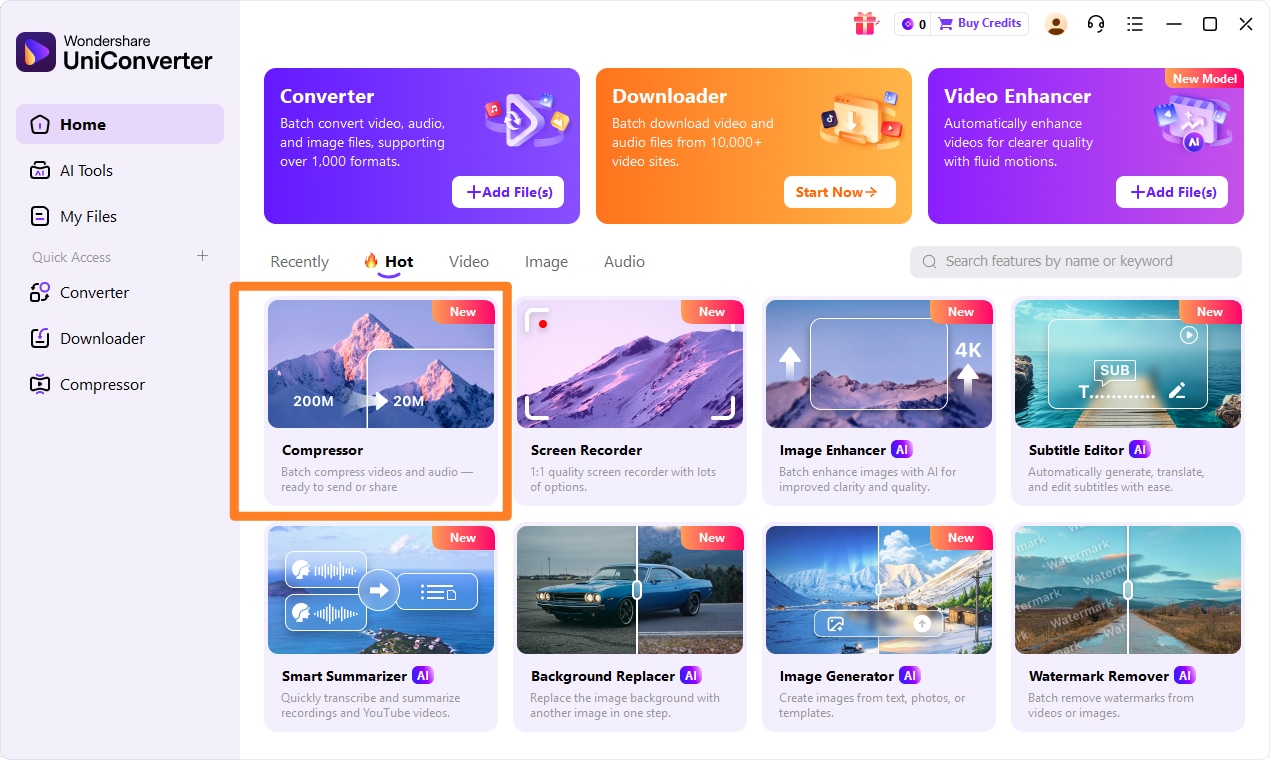
Step 1: Open UniConverter and Choose Compressor
First, I launch UniConverter on my desktop. On the main interface, I navigate to the "Compressor" tab. This is where all my compression tasks, whether for video, audio, or images, begin.
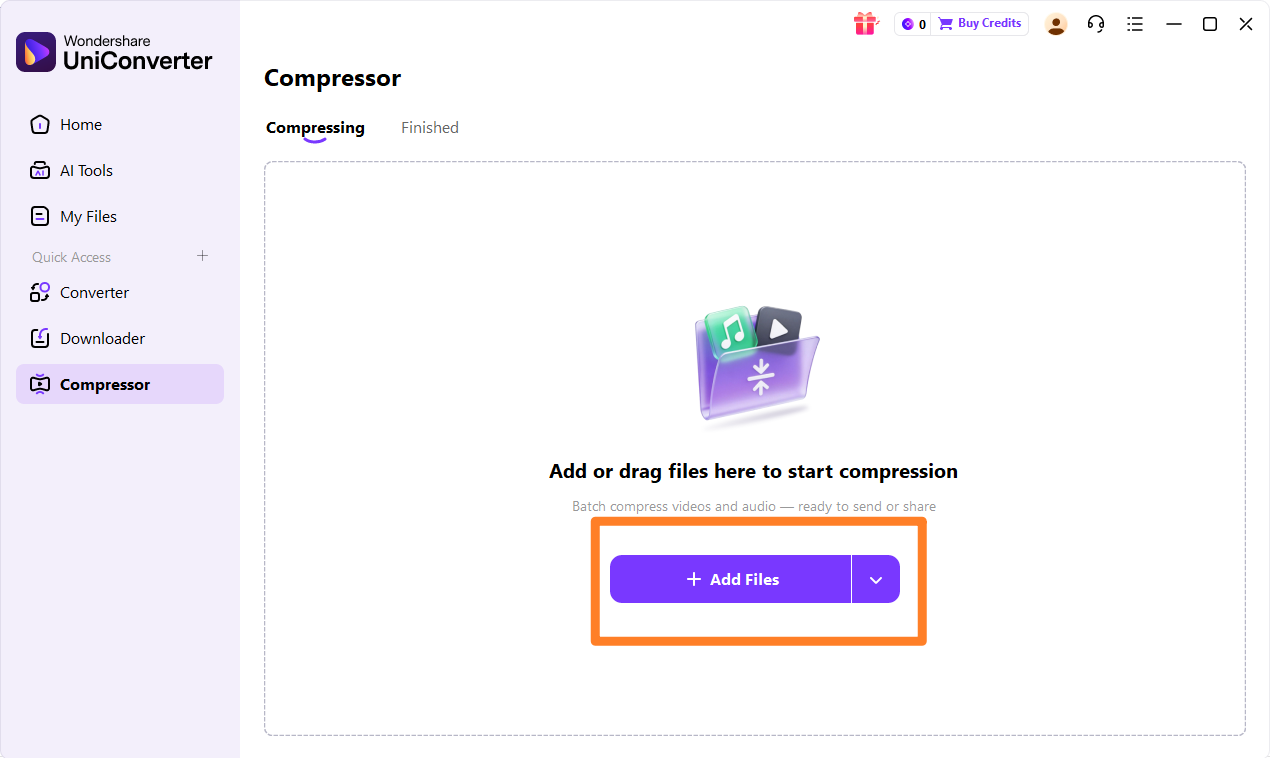
Step 2: Upload the Video, Audios or Images
Next, I click the "Add Files" button within the Compressor interface. I can then browse my computer to select the video, audio, or image files I want to compress. UniConverter supports various formats, so I don't have to worry about compatibility.
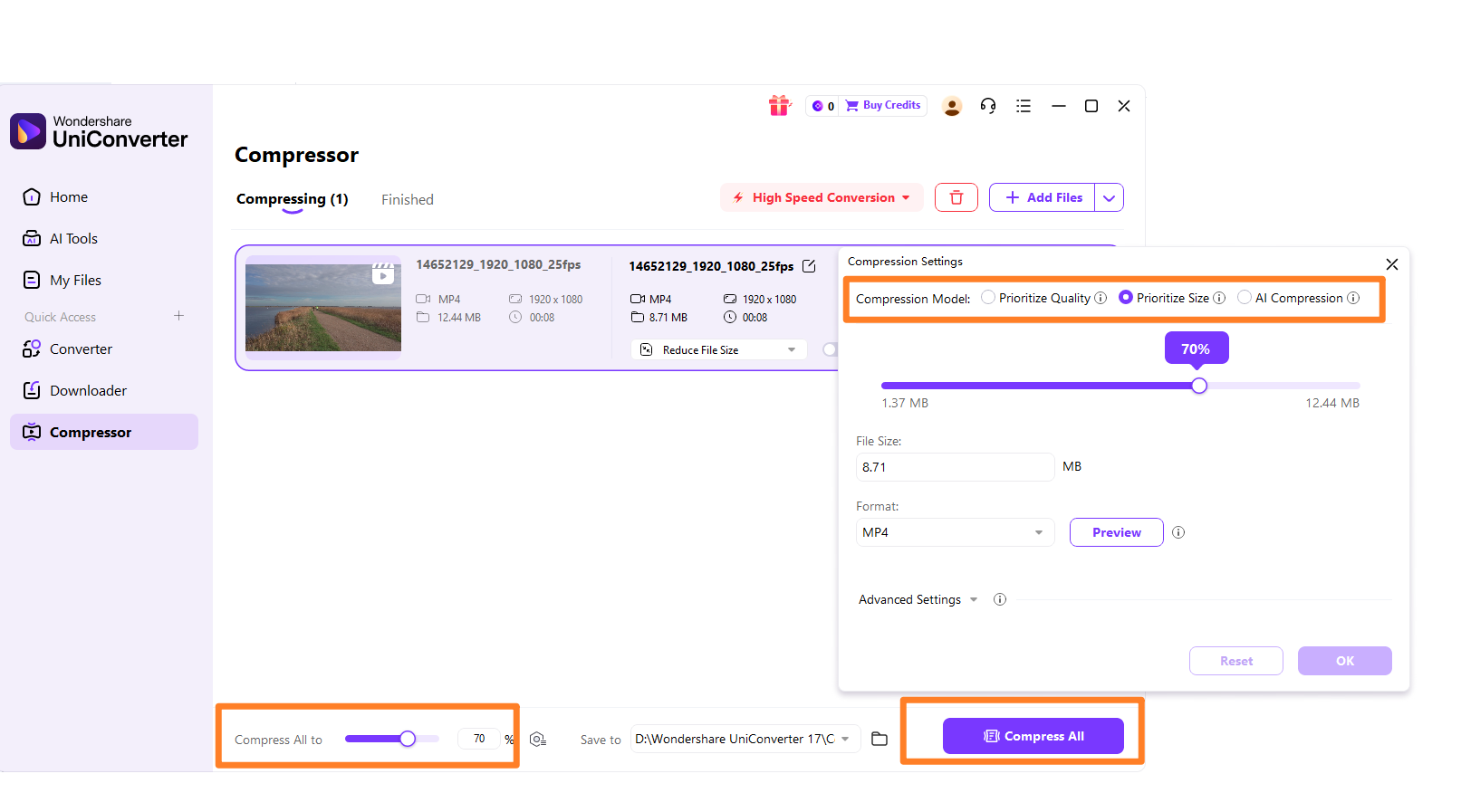
Step 3: Choose Required Parameters
Once my files are loaded, I can adjust the compression settings. UniConverter allows me to choose the output format, resolution, bitrate, and quality. I can preview the estimated file size reduction before proceeding, ensuring I get the balance I need.
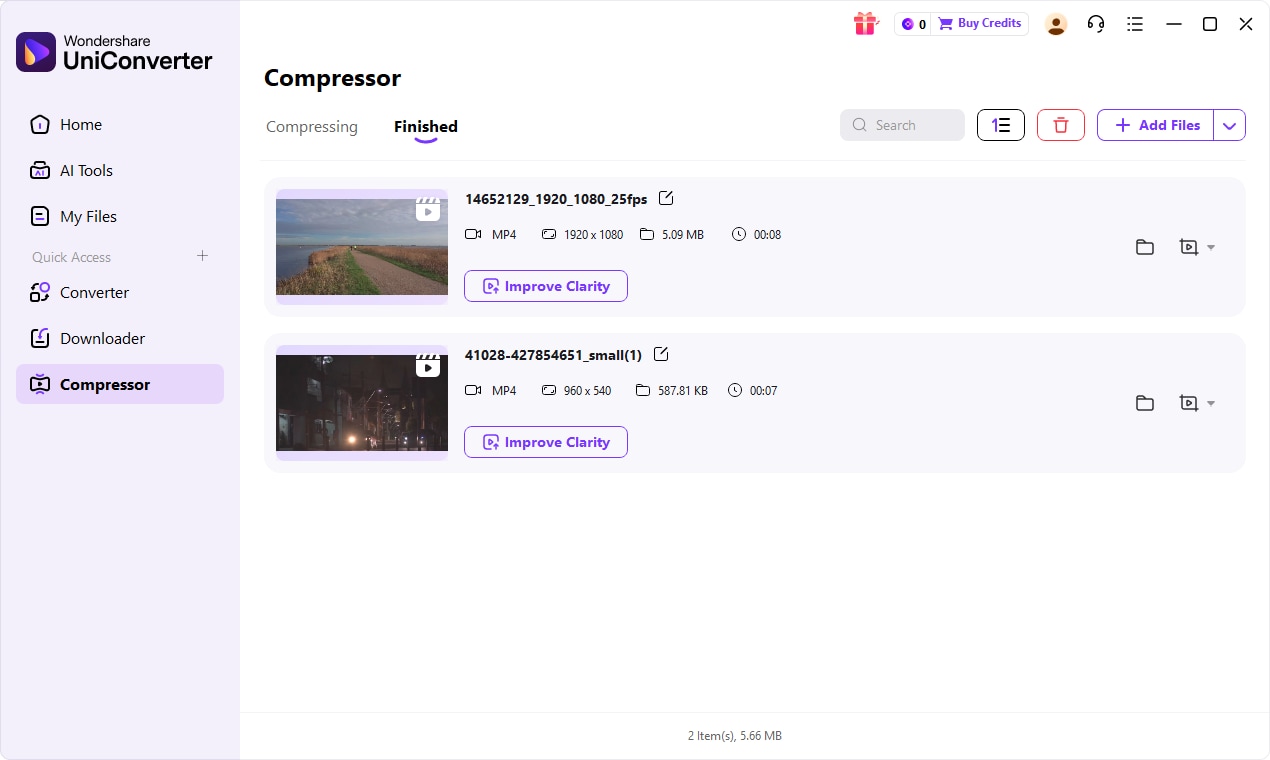
Step 4: Save the Compressed File
Finally, after setting my desired parameters, I click the "Compress" button. UniConverter quickly processes the files, and once complete, I can choose the destination folder to save my optimized media.

Need a TinyIMG Alternative for Image Compression?
Part 7: Conclusion
After thoroughly exploring TinyIMG Image Compressor review and comparing it with its alternatives, I can confidently say that its value largely depends on your specific needs and usage patterns. For e-commerce businesses and web developers, TinyIMG stands out due to its efficient compression with minimal quality loss and, crucially, its seamless integration with popular CMS platforms. If you're managing an online store or developing websites where fast loading times and visual quality are paramount, TinyIMG's automation and batch processing capabilities will be a significant asset, saving you considerable time and effort. For digital marketers dealing with large image libraries, its ability to optimize hundreds of images at once is invaluable for maintaining consistent brand aesthetics and website performance. However, for casual users or bloggers with infrequent compression needs, the subscription-based model might be a deterrent, as free alternatives like Compressor.io or Optimizilla could suffice. Similarly, professional photographers requiring advanced editing features or high-fidelity, lossless compression for print media will find TinyIMG's capabilities limited and should look towards more specialized software. Ultimately, TinyIMG excels in its niche of web-focused image optimization, offering a robust solution for those who prioritize efficiency and integration in their online operations.
Part 8: FAQs
-
1. How does TinyIMG Image Compressor balance image quality and file size?
TinyIMG uses advanced compression algorithms that analyze image data to identify redundant information without visibly affecting the perceived quality. It typically offers various compression levels, allowing you to choose between maximum file size reduction and higher quality retention. I've found it generally strikes a good balance for web use, but for critical images, I always preview the output.
-
2. Is TinyIMG Image Compressor suitable for optimizing images for social media?
Yes, TinyIMG is suitable for optimizing images for social media. Social media platforms often re-compress uploaded images, sometimes aggressively. By pre-optimizing your images with TinyIMG, you can ensure a smaller file size that uploads faster and potentially retains more of its original quality after the platform's own compression.
-
3. What are the main differences between TinyIMG Image Compressor's free and paid plans?
Typically, TinyIMG's free plan offers basic compression with limitations on file size, batch processing, or the number of images you can process monthly. Paid plans usually unlock unlimited compression, larger file size limits, advanced features like automatic optimization, and priority support. I recommend checking their official website for the most up-to-date plan details.
-
4. Can TinyIMG Image Compressor integrate with custom-built websites?
While TinyIMG offers direct integrations with popular CMS platforms like Shopify, integrating it with a custom-built website might require more technical work. This could involve using their API (if available) or implementing a custom script to automate the compression process. For more complex custom integrations, I sometimes find myself looking for more flexible tools or even desktop solutions like UniConverter that offer broader compatibility.
-
5. What security measures does TinyIMG Image Compressor have in place for uploaded images?
Most reputable cloud-based image compressors, including TinyIMG, implement standard security protocols like SSL/TLS encryption for data transfer and secure storage practices. They typically state that uploaded images are processed temporarily and deleted after a certain period. However, for highly sensitive or proprietary images, I always advise reviewing their privacy policy thoroughly or considering offline compression tools like UniConverter for maximum control over my data.
