
- TAudioConverter Review: TAudioConverter is a free, open-source audio converter and compressor for Windows, ideal for basic audio management.
- Core Features: Offers batch processing, extensive format support, and bitrate control for efficient audio compression.
- Pros & Cons: Great for large music libraries and intuitive use, but lacks advanced customization and integrated editing.
- Ideal Users: Best for individuals needing simple, free audio compression for portable devices, not professional audio production.
- Comparison: TAudioConverter is free and simple; UniConverter offers advanced features, GPU acceleration, and broader media support (video/audio) for a cost.
- Risks: Aggressive compression can degrade quality. Lacks advanced security, depends on external codecs, and has inconsistent support.
- UniConverter Alternative: UniConverter provides stable, high-quality audio/video compression with GPU acceleration, extensive formats, and dedicated support.
- Decision: Choose TAudioConverter for basic, free audio compression; opt for UniConverter for comprehensive, high-quality audio and video needs.
In this article
- Part 1: What is TAudioConverter
- Part 2: TAudioConverter: Core Features, Pros, and Cons
- Part 3: TAudioConverter: Ideal Users and Scenarios
- Part 4: TAudioConverter and Alternatives Comparison
- Part 5: Risks and Pitfalls to Consider
- Part 6: How to Use UniConverter to Efficiently Compress Audio and Video
- Part 7: Conclusion
- Part 8: FAQs
TAudioConverter Audio Compressor: A Comprehensive Review and Comparison
When it comes to managing vast digital audio libraries, the need for efficient compression tools becomes paramount. I've often found myself grappling with large uncompressed files, eating up precious storage space on my devices. This is where tools like TAudioConverter step in, promising to shrink file sizes without significant quality loss. This review delves deep into TAudioConverter, comparing it against its competitors to help you make an informed decision. I'll explore its features, ideal use cases, potential pitfalls, and even suggest a robust alternative for those seeking more comprehensive solutions.
Part 1: What is TAudioConverter
TAudioConverter is a free, open-source audio converter and compressor designed primarily for Windows users. It's built to handle a wide array of audio formats, allowing you to convert between them or compress existing files to save space. My journey with TAudioConverter began years ago when I needed a simple, no-frills tool to manage my ever-growing music collection. It promised a straightforward solution to a common problem, and for many, it delivers just that.
The Landscape of Audio Compression Tools
The digital age has brought with it an explosion of audio content, leading to several key challenges for users:
* Storage Limitations: High-quality audio files consume significant disk space, especially for large music libraries or podcasts.
* Device Compatibility: Different devices support varying audio formats, necessitating conversion for seamless playback.
* Bandwidth Constraints: Sharing or streaming large audio files can be slow and data-intensive.
* Ease of Use: Many users seek simple, intuitive tools that don't require extensive technical knowledge.
Part 2: TAudioConverter: Core Features, Pros, and Cons
TAudioConverter is a powerful, yet simple, tool for audio manipulation. Its core capabilities revolve around efficient audio conversion and compression. I've personally found its batch processing incredibly useful when dealing with hundreds of tracks. It supports a remarkable number of audio formats, from common MP3 and WAV to more niche ones, making it a versatile choice for various audio tasks. The user interface, while not flashy, is undeniably intuitive, allowing me to get started with compression tasks almost instantly.
Core Features:
* Batch Processing: Converts and compresses multiple audio files simultaneously.
* Extensive Format Support: Handles a wide range of input and output audio formats.
* Bitrate and Quality Control: Allows adjustment of compression settings for desired file size and quality.
* CD Ripping: Includes functionality to rip audio from CDs.
* Tag Editing: Basic metadata editing capabilities for audio files.
Pros:
* Efficient Batch Processing for Large Audio Libraries: I can easily queue up hundreds of songs for conversion or compression, saving me a lot of time.
* Wide Range of Supported Audio Formats for Versatile Use: No matter what obscure audio file I throw at it, TAudioConverter usually handles it.
* Intuitive User Interface for Quick Compression Tasks: It's incredibly easy to pick up and start using, even for beginners.
Cons:
* Limited Advanced Customization Options for Professional Users: For more granular control over audio parameters, I often find myself wanting more.
* Lack of Integrated Audio Editing Capabilities: If I need to trim a track or apply effects, I have to use another program.
Part 3: TAudioConverter: Ideal Users and Scenarios
TAudioConverter shines brightest for specific user groups and scenarios. From my experience, it's perfect for individuals who need a straightforward, free solution for their audio compression needs without delving into complex settings.
Best-Fit Scenario: Compressing a Large Music Collection for Portable Devices
Imagine you have a vast music library in high-quality, uncompressed formats like FLAC or WAV, and you want to load it onto a portable device with limited storage. TAudioConverter excels here. I've used it countless times to convert my lossless collection to high-quality MP3s or AAC files, drastically reducing file sizes while maintaining excellent audio fidelity for on-the-go listening. Its batch processing capability is a lifesaver in this situation, allowing me to process an entire album or even my whole library in one go.
Limited Scenario: Professional Audio Mastering and Production
If you're a professional audio engineer or producer, TAudioConverter will likely fall short of your expectations. When I'm working on a critical audio project that requires precise control over every aspect of the sound, I need tools with advanced features like multi-band compression, detailed equalization, and sophisticated noise reduction. TAudioConverter simply doesn't offer these capabilities, nor does it provide the level of precision required for mastering. Its focus is on general-purpose compression and conversion, not intricate audio manipulation.
Part 4: TAudioConverter and Alternatives Comparison
When I look at audio compression tools, I consider several factors beyond just file size reduction. It's about the balance of quality, speed, and ease of use. Here's how TAudioConverter stacks up against some notable alternatives.
| Feature/Tool | TAudioConverter | UniConverter | HandBrake | Audacity |
| Batch Processing | Yes | Yes | Yes | Limited |
| Supported Formats | Extensive | Extensive | Video-focused | Good |
| Customization | Basic | Advanced | Moderate | Advanced |
| UI/UX | Intuitive | Intuitive | Moderate | Complex |
| Price | Free | Paid | Free | Free |
| Processing Speed | Good | Excellent (GPU) | Good | Moderate |
| Output Quality | Good | Excellent | Good | Excellent |
| Customer Support | Community | Dedicated | Community | Community |
| Security | Basic | High | Basic | Basic |
Key Differentiators:
Ease of Use vs. Feature Depth: TAudioConverter prioritizes simplicity, while UniConverter offers a more comprehensive suite of tools for both audio and video, with more granular control. HandBrake is excellent for video but less intuitive for audio-only tasks. Audacity, while powerful, has a steeper learning curve. Cost-Effectiveness: TAudioConverter and Audacity are free, making them attractive for budget-conscious users. UniConverter, while paid, offers a broader feature set that justifies its cost for many. * Performance on Specific Tasks: UniConverter excels with its GPU acceleration for faster processing, especially with large files. TAudioConverter handles a wide array of audio codecs efficiently, making it a reliable workhorse for general audio compression.
Part 5: Risks and Pitfalls to Consider
While TAudioConverter offers a convenient free solution, it's crucial to be aware of potential risks and limitations, especially if you're dealing with important audio files. I've learned these lessons through my own experiences, sometimes the hard way.
Potential for Audio Quality Degradation with Aggressive Compression
One of the biggest risks with any compression tool, including TAudioConverter, is the potential for irreversible audio quality loss. If you set the compression too aggressively (e.g., very low bitrates), you'll notice artifacts, muffled sounds, or a general lack of clarity. While TAudioConverter allows you to choose bitrates, it doesn't always provide clear guidance on what constitutes "safe" compression for different audio types. I've had instances where I compressed a podcast too much, making the voices sound robotic and unpleasant. Always experiment with a small sample first!
Absence of Built-in Security Features for Sensitive Audio Files
TAudioConverter is an offline, desktop application, which generally means your files aren't being uploaded to external servers. However, it lacks any built-in encryption or security features for the files themselves. If you're compressing sensitive audio recordings, you'll need to rely on your operating system's security measures or third-party encryption tools. It's not designed with privacy-focused features beyond simply processing files locally.
Dependence on External Codecs for Certain Formats
While TAudioConverter boasts wide format support, I've occasionally encountered situations where it struggles with less common or proprietary audio codecs. This often means I need to install additional codec packs on my system, which can sometimes lead to compatibility issues or system instability if not done carefully. It's not a plug-and-play solution for every single audio format out there, and troubleshooting codec problems can be frustrating.
Lack of Regular Updates and Community Support
Being an open-source project, TAudioConverter's development and support can be inconsistent. I've noticed that updates aren't as frequent as with commercial software, which means new audio formats or operating system changes might not be supported immediately. If you run into a bug or need help, you're often relying on community forums or outdated documentation, which can be a significant drawback compared to tools with dedicated customer support teams.
Part 6: How to Use UniConverter to Efficiently Compress Audio and Video
Free tools like TAudioConverter can handle simple jobs, but they often start to feel limiting when better quality control, faster processing, or support for both audio and video becomes important. That’s why I usually switch to UniConverter, which gives me a smoother workflow for both audio compression and video compression in one place. Its broad format support and GPU acceleration make processing much more efficient, and for video files it can also help compress videos without quality loss as much as possible. With stable batch processing and a cleaner experience overall, it works well as a practical all-in-one alternative to basic free compression tools.
Here’s how I use UniConverter to compress my media files:
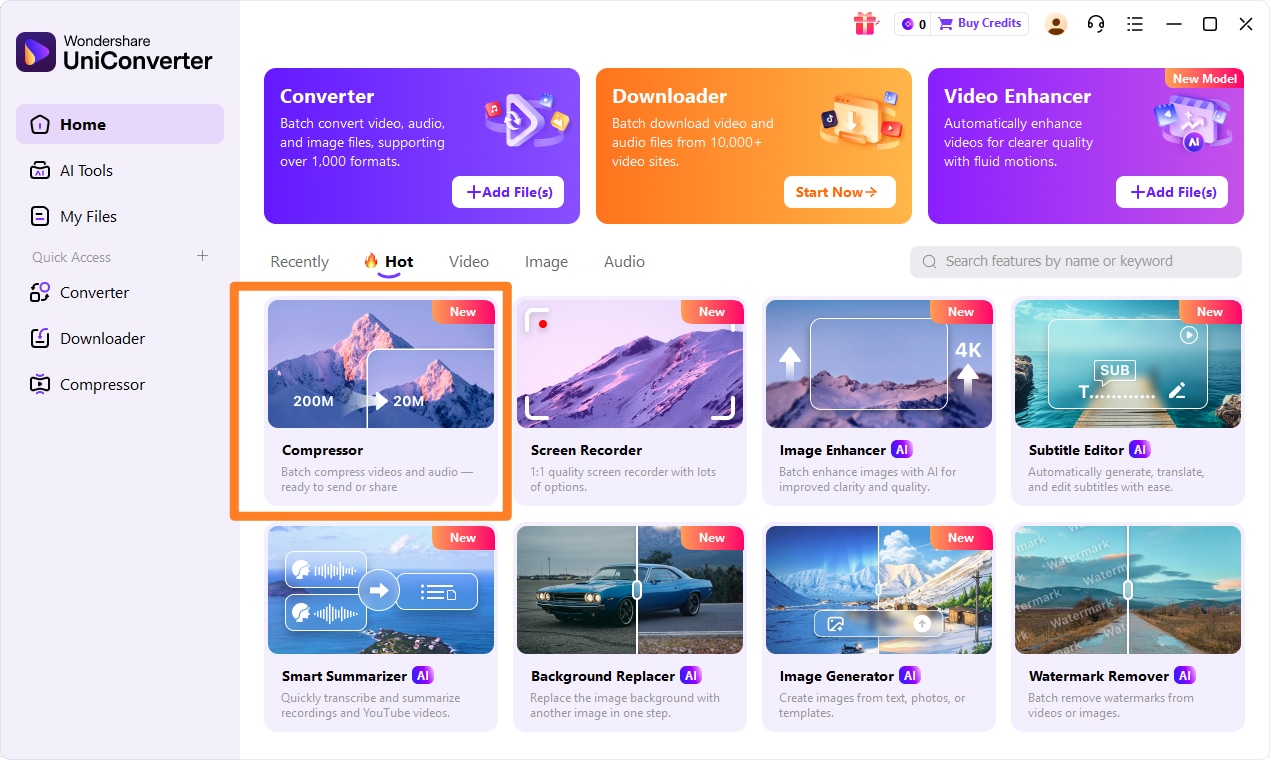
Step 1: Open UniConverter and Choose Compressor
First, I launch UniConverter. On the left sidebar, I navigate to the "Toolbox" section and select the "Compressor" option.
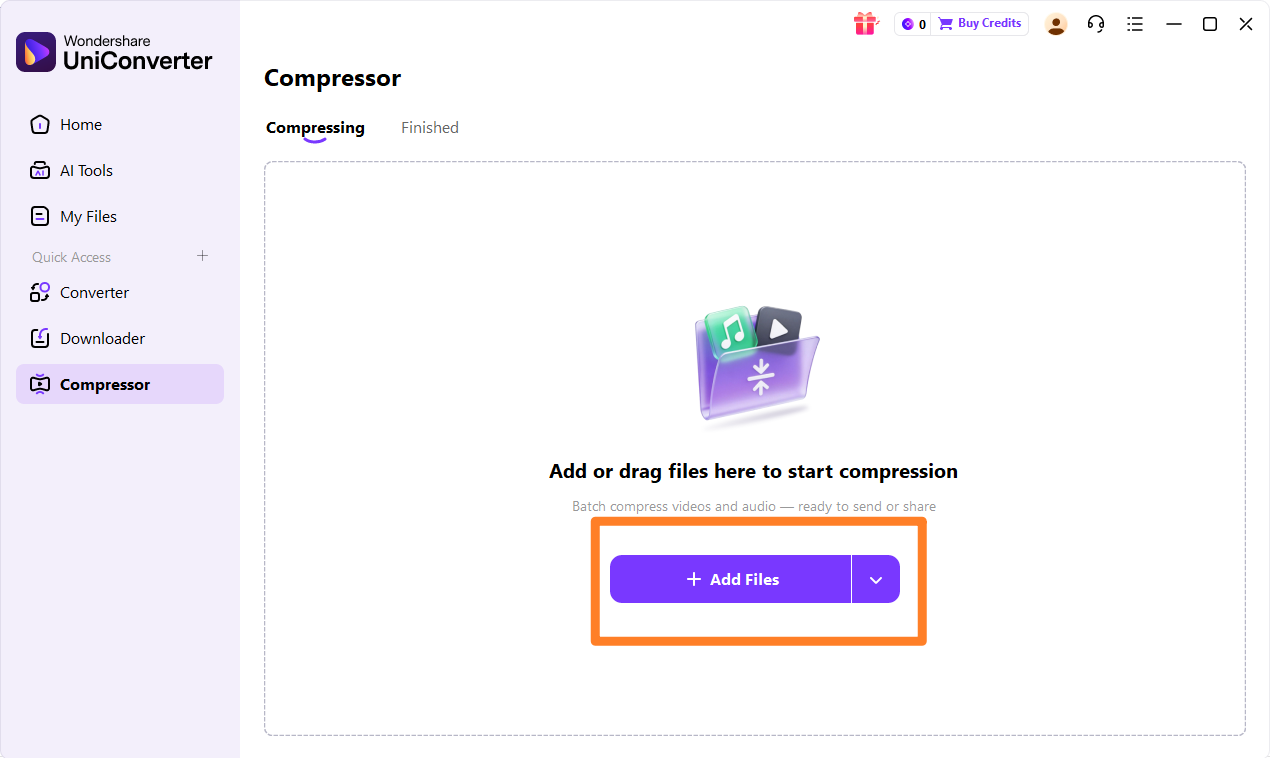
Step 2: Upload the Video, Audios or Images
Next, I click on the "Add Files" button or simply drag and drop the audio, video, or image files I want to compress into the interface. UniConverter handles multiple files at once, which is a huge time-saver.
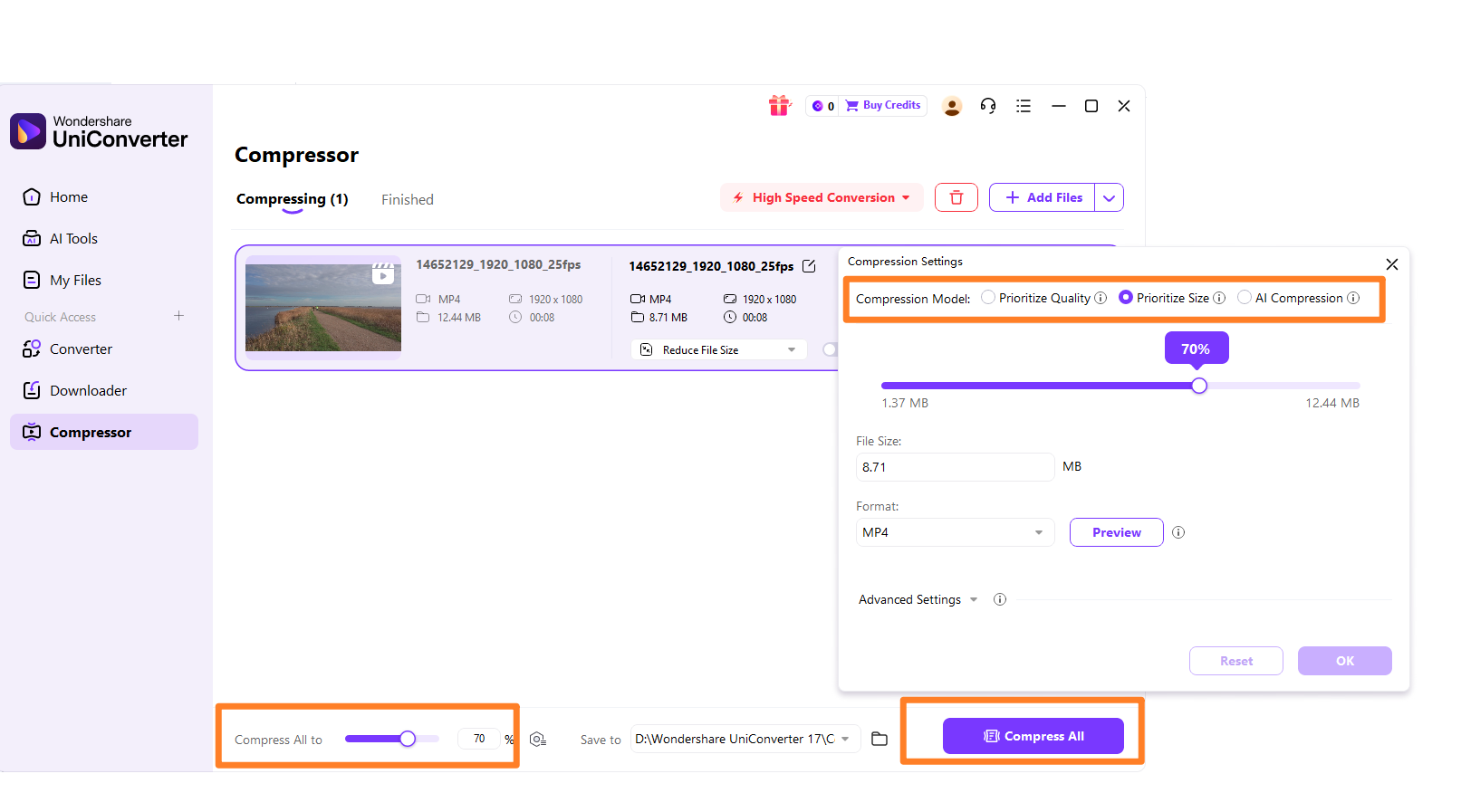
Step 3: Choose Required Parameters
Now, I can adjust the compression settings. UniConverter gives me fine-tuned control over output format, resolution, bitrate, and quality. I can preview the changes to ensure I'm happy with the balance between file size and quality.
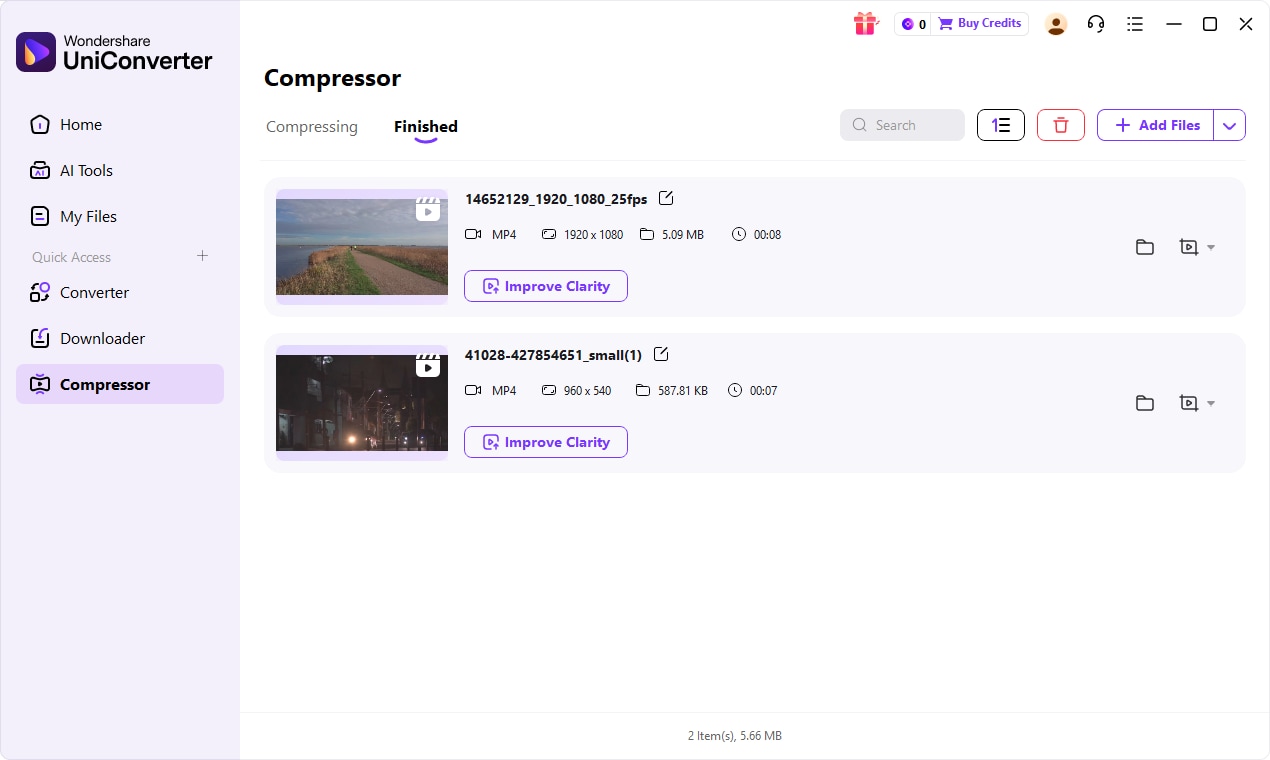
Step 4: Save the Compressed File
Once I've set my desired parameters, I choose an output folder and click the "Compress" button. UniConverter quickly processes the files, often leveraging GPU acceleration for speed, and saves them to my chosen location.

Need a TAudioConverter Alternative for Audio Compression?
Part 7: Conclusion
In conclusion, TAudioConverter Audio Compressor offers a compelling solution for basic audio compression and conversion needs, especially for those managing large music libraries on a budget. Its free, open-source nature, coupled with extensive format support and intuitive batch processing, makes it an excellent choice for casual users or anyone needing to quickly shrink audio files for portable devices. However, its limitations in advanced customization, lack of integrated editing, and inconsistent support mean it's not suited for professional audio work. For users demanding more control, higher fidelity, and a broader feature set that includes video compression and editing, exploring alternatives like UniConverter is highly recommended. Ultimately, your choice should align with your specific workflow, technical requirements, and willingness to invest in a more comprehensive tool.
Part 8: FAQs
-
1. Is TAudioConverter completely free to use?
Yes, TAudioConverter is open-source and completely free to download and use.
-
2. Can TAudioConverter compress video files?
No, TAudioConverter is specifically designed for audio compression and conversion; it does not handle video files. For video compression, you would need a dedicated tool like UniConverter.
-
3. Does TAudioConverter support lossless compression?
While TAudioConverter primarily focuses on lossy compression to achieve smaller file sizes, it can work with some lossless formats for conversion. However, its main strength lies in efficient lossy compression.
-
4. How does TAudioConverter compare to online audio compressors?
TAudioConverter offers offline processing, which means your files are processed locally on your computer, providing better privacy and often more control over settings than many browser-based online tools. Online tools can be convenient for single, small files, but TAudioConverter is better for batch processing and larger files.
-
5. What are the system requirements for TAudioConverter?
TAudioConverter is lightweight and runs on most Windows operating systems, typically requiring minimal CPU and RAM resources. It's designed to be accessible even on older hardware.
