
- Value: Switch Audio Converter excels in easy audio format conversion and basic compression for everyday users.
- Comparison: It offers broad format support and user-friendliness, surpassing Audacity for simplicity.
- Decision: Choose Switch for quick, simple audio tasks; avoid it for professional editing or advanced compression.
- Value: UniConverter provides superior, faster compression and broader multimedia features, outperforming Switch.
- Decision: Opt for UniConverter for comprehensive, high-efficiency audio and video compression with GPU acceleration.
- Risks: Aggressive compression can degrade audio quality; beware of potential privacy issues with cloud tools.
- Comparison: Unlike Switch, UniConverter handles both audio and video, offering a more versatile solution.
- Value: UniConverter's intuitive interface and batch processing save significant time for large audio libraries.
In this article
- Part 1: What is Switch Audio Converter & Audio Compressor?
- Part 2: Switch Audio Converter & Audio Compressor: Core Features, Pros & Cons
- Part 3: Switch Audio Converter & Audio Compressor: Target Audience & Use Cases
- Part 4: Switch Audio Converter & Audio Compressor vs. Competitors
- Part 5: Risks and Pitfalls to Consider
- Part 6: How to Use UniConverter to Compress High-Efficiency Audio and Video
- Part 7: Conclusion
- Part 8: FAQs
When you're dealing with digital audio, whether it's for personal enjoyment, content creation, or professional projects, you often encounter two common challenges: managing diverse file formats and optimizing file sizes. This is where tools like Switch Audio Converter & Audio Compressor review come into play. They promise to simplify these tasks, offering solutions for converting audio between various formats and reducing file sizes without significant quality loss. In this comprehensive review, I'll dive deep into its features, compare it with competitors, and help you understand if it's the right tool for your specific needs, providing a scenario-based analysis to guide your decision-making process.
Part 1: What is Switch Audio Converter & Audio Compressor?
Switch Audio Converter & Audio Compressor is a software application designed to streamline the process of managing digital audio files. It primarily focuses on two core functionalities: converting audio files from one format to another and compressing audio files to reduce their size. This tool aims to cater to a broad audience, from casual users who need to convert a few songs for their mobile device to content creators who require specific audio formats for their projects. My goal in this review is to determine how effectively it addresses these needs and where it stands in a crowded market of audio utilities.
The Evolving Landscape of Digital Audio Management
The need for efficient audio management tools has never been greater, driven by:
* Proliferation of Audio Formats: With countless devices and platforms, ensuring audio compatibility is a constant challenge.
* Storage and Bandwidth Constraints: Large audio files can quickly consume storage space and impact streaming performance.
* Demand for High-Quality Audio: Users expect excellent sound quality, even with compressed files, pushing the boundaries of compression algorithms.
* Content Creation Boom: Podcasters, YouTubers, and musicians frequently need to convert and compress audio for various distribution channels.
Part 2: Switch Audio Converter & Audio Compressor: Core Features, Pros & Cons
Switch Audio Converter & Audio Compressor is built around a few key capabilities that aim to make audio management straightforward. Its core strength lies in its ability to handle a vast array of audio formats, ensuring that you can convert almost any audio file to your desired output. The batch processing feature is a significant time-saver, allowing you to process multiple files simultaneously. The interface is designed for ease of use, making it accessible even for those who aren't tech-savvy. However, it's important to note that while it excels at conversion and basic compression, it doesn't offer the advanced editing capabilities found in dedicated digital audio workstations (DAWs). Aggressive compression settings can also lead to noticeable quality degradation, which is a common trade-off in audio compression.
Pros
* Wide Range of Supported Audio Formats for Conversion: I found it handles almost every format I threw at it, from common MP3s and WAVs to more niche formats.
* Efficient Batch Processing for Large Audio Libraries: Converting an entire album or podcast series is a breeze, saving me a lot of time.
* Intuitive User Interface for Easy Navigation: The layout is clean and straightforward, making it easy to find the features I need without a steep learning curve.
Cons
* Limited Advanced Editing Features Compared to Dedicated DAWs: If you're looking for features like multi-track editing or advanced effects, you'll need a different tool.
* Potential for Quality Degradation with Aggressive Compression Settings: While it offers compression, pushing the settings too far can definitely make your audio sound worse.
Part 3: Switch Audio Converter & Audio Compressor: Target Audience & Use Cases
Switch Audio Converter & Audio Compressor is primarily designed for individuals who need a reliable and easy-to-use tool for basic audio file management. This includes everyday users who might want to convert music for their car stereo, students needing to compress lecture recordings, or small business owners preparing audio for presentations. It's not aimed at professional audio engineers or music producers who require intricate sound design and mastering capabilities.
Best Use Case: Quick and Efficient Audio Format Conversion for Everyday Users
I often use it when I need to convert a downloaded song from a less common format to MP3 for my phone, or when I'm preparing audio snippets for a simple video project. It’s perfect for those quick, one-off tasks where I just need to change a file type or reduce its size without fuss. For example, converting a WAV file to a smaller OGG file for a website.
Limited Use Case: Professional Audio Mastering and High-Fidelity Production
If you're a professional working on a music album or a film score, this tool won't meet your needs. It lacks the precision, advanced effects, and multi-track capabilities essential for high-fidelity audio production and mastering. For instance, I wouldn't use it to fine-tune the dynamics of a vocal track or apply complex reverb effects.
Part 4: Switch Audio Converter & Audio Compressor vs. Competitors
When evaluating Switch Audio Converter & Audio Compressor review, it's crucial to see how it stacks up against other popular tools in the market. I've compared it with two prominent alternatives: Audacity, a free and open-source audio editor, and Adobe Audition, a professional-grade digital audio workstation, alongside UniConverter as a versatile multimedia solution.
| Feature/Criteria | Switch Audio Converter & Audio Compressor | Audacity | Adobe Audition | UniConverter |
| Ease of Use | High | Medium | Low | High |
| Supported Formats | Very High | Medium | High | Very High |
| Compression Quality | Good | Variable | Excellent | Excellent |
| Advanced Editing | Low | Medium | Very High | Medium |
| Price | One-time purchase | Free | Subscription | One-time purchase/Subscription |
| Processing Speed | Fast | Medium | Fast | Very Fast (GPU acceleration) |
| Customer Support | Basic | Community | Excellent | Excellent |
| Security | Good | Good | Excellent | Excellent |
Switch Audio Converter & Audio Compressor strikes a good balance between ease of use and broad format support, making it ideal for users who prioritize simplicity. Audacity, while free, has a steeper learning curve for some tasks and its compression quality can be inconsistent. Adobe Audition offers unparalleled advanced editing and compression quality but comes with a high subscription cost and complexity. UniConverter stands out as a strong contender, offering a user-friendly interface, excellent compression quality, and a wide range of supported formats, often with faster processing speeds due to GPU acceleration, making it a more comprehensive and efficient solution for many users.
Part 5: Risks and Pitfalls to Consider
While tools like Switch Audio Converter & Audio Compressor can be incredibly useful, it's important to be aware of potential risks and pitfalls, especially when dealing with audio compression and software installations. I've encountered several issues that users should consider before committing to any audio utility.
Potential for Lossy Compression Artifacts
When you compress audio, especially using "lossy" methods, you're essentially discarding some data to reduce file size. If you push the compression too far, you'll start to hear artifacts – unwanted sounds like hiss, metallic ringing, or a general "muddiness" in the audio. I've found that with Switch Audio Converter & Audio Compressor, while generally good, aggressive settings can lead to noticeable quality degradation, making your audio sound less professional or even unpleasant. Always test your compressed files before finalizing them.
Data Privacy Concerns with Cloud-Based Features
While Switch Audio Converter & Audio Compressor is primarily a desktop application, some users might be tempted by online converters or tools that offer cloud-based features. If you're uploading sensitive or personal audio files to a cloud service, you need to be extremely cautious about their data privacy policies. I always recommend using offline tools for anything confidential to avoid potential breaches or unauthorized access to your data.
In-App Advertisements and Upsells
Many free or trial versions of software, including some audio converters, come bundled with in-app advertisements or constant upsell prompts. These can be incredibly disruptive to your workflow and sometimes even lead to accidental clicks on malicious ads. While Switch Audio Converter & Audio Compressor's paid version is generally clean, I've seen free alternatives that are riddled with these annoyances, making the user experience frustrating.
Compatibility Issues with Newer Operating Systems
Software, especially older versions or less frequently updated ones, can sometimes run into compatibility issues with newer operating systems. I've experienced situations where an audio converter that worked perfectly on an older Windows version became unstable or crashed frequently after an OS update. Always check the software's compatibility with your current operating system before purchasing or relying on it for critical tasks.
Lack of Dedicated Customer Support Channels
For many one-time purchase or free software options, dedicated customer support can be minimal or non-existent. If you encounter a bug, have a question, or need technical assistance, you might be left to scour forums or FAQs for solutions. This can be a significant drawback if you're not technically inclined or if you rely on the software for professional work where downtime is costly.
Part 6: How to Use UniConverter to Compress High-Efficiency Audio and Video
When other tools fall short, struggling with batch compression, unstable results, or noticeable quality loss, I turn to UniConverter. It's a robust and user-friendly solution that excels at audio and video compression, offering a suite of other multimedia tools without the headaches of ads, limited formats, or quality degradation. With GPU acceleration, it processes files quickly and efficiently, ensuring stable, near-lossless compression for both audio and video. It's my go-to for an all-in-one multimedia solution.
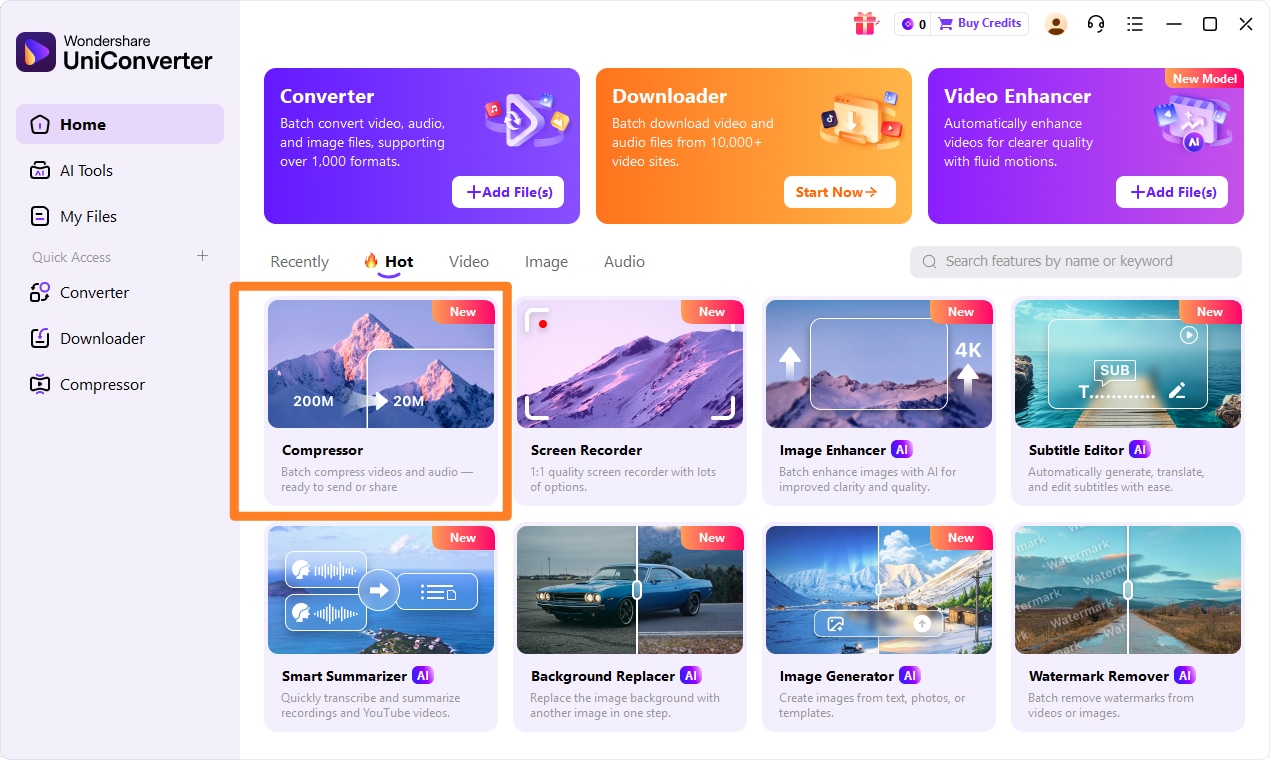
Step 1: Open UniConverter and Choose Compressor
Launch UniConverter on your computer. On the left-hand sidebar, you'll find various tools. Select the "Compressor" option.
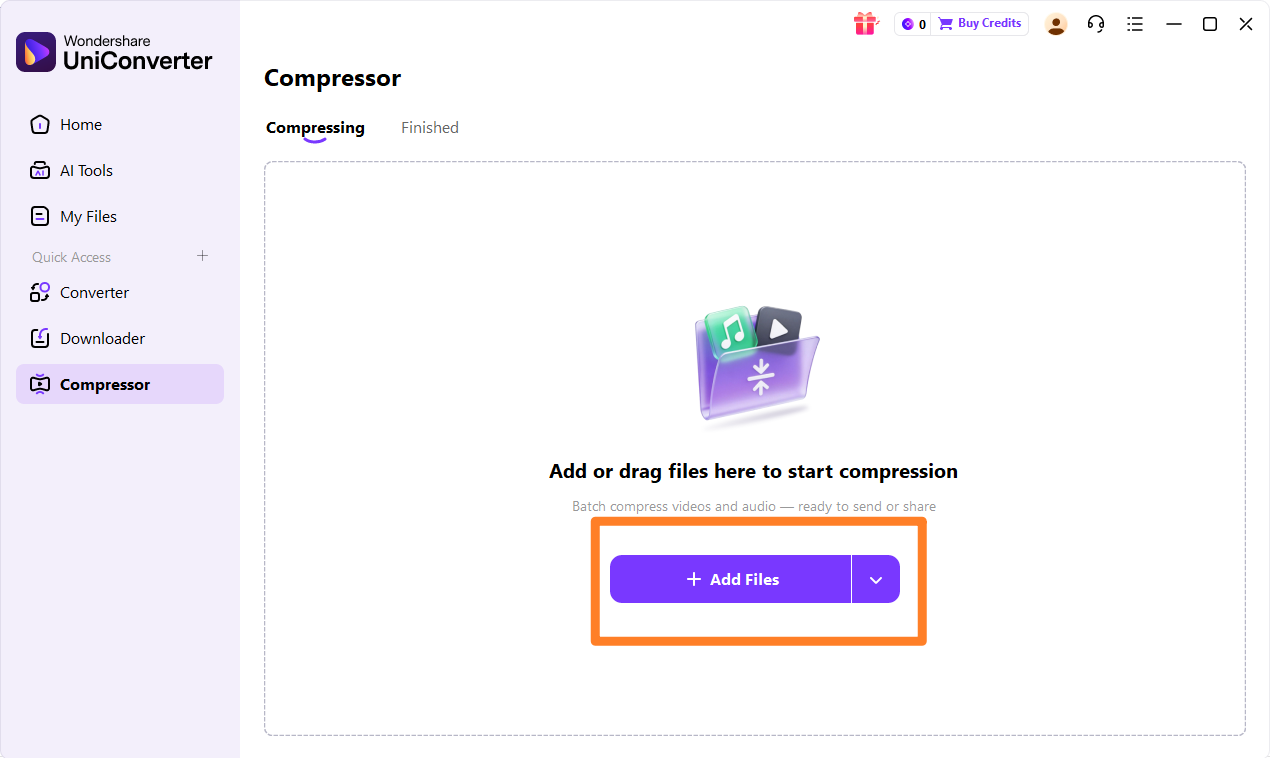
Step 2: Upload the Video, Audios or Images
Click on the "Add Files" button or simply drag and drop your audio, video, or image files into the compressor window. You can add multiple files for batch processing.
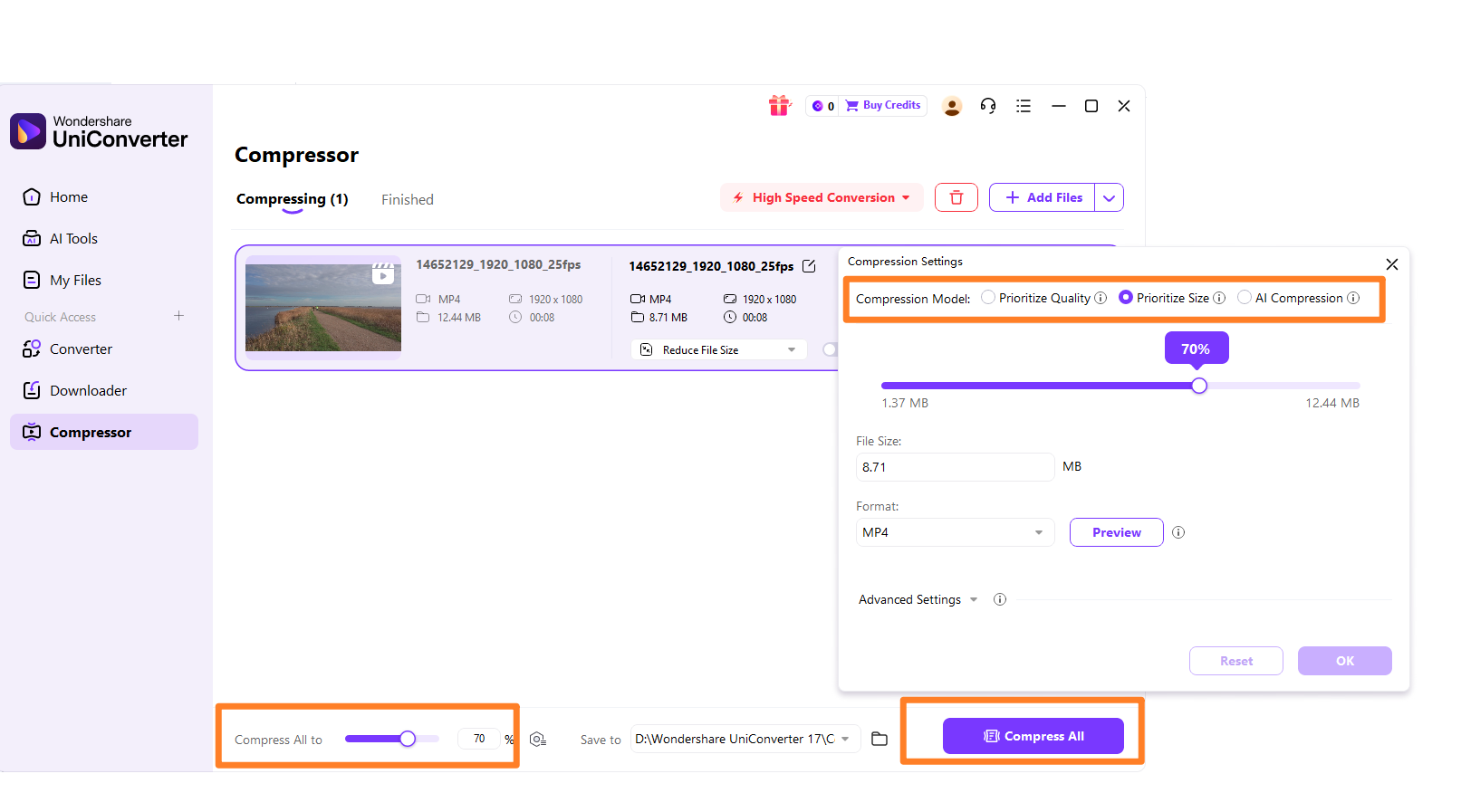
Step 3: Choose Required Parameters
Once your files are loaded, you can adjust the compression settings. UniConverter allows you to choose the output format, quality, and size. For audio, you can select bit rate and sample rate. For video and images, you can adjust resolution and quality.
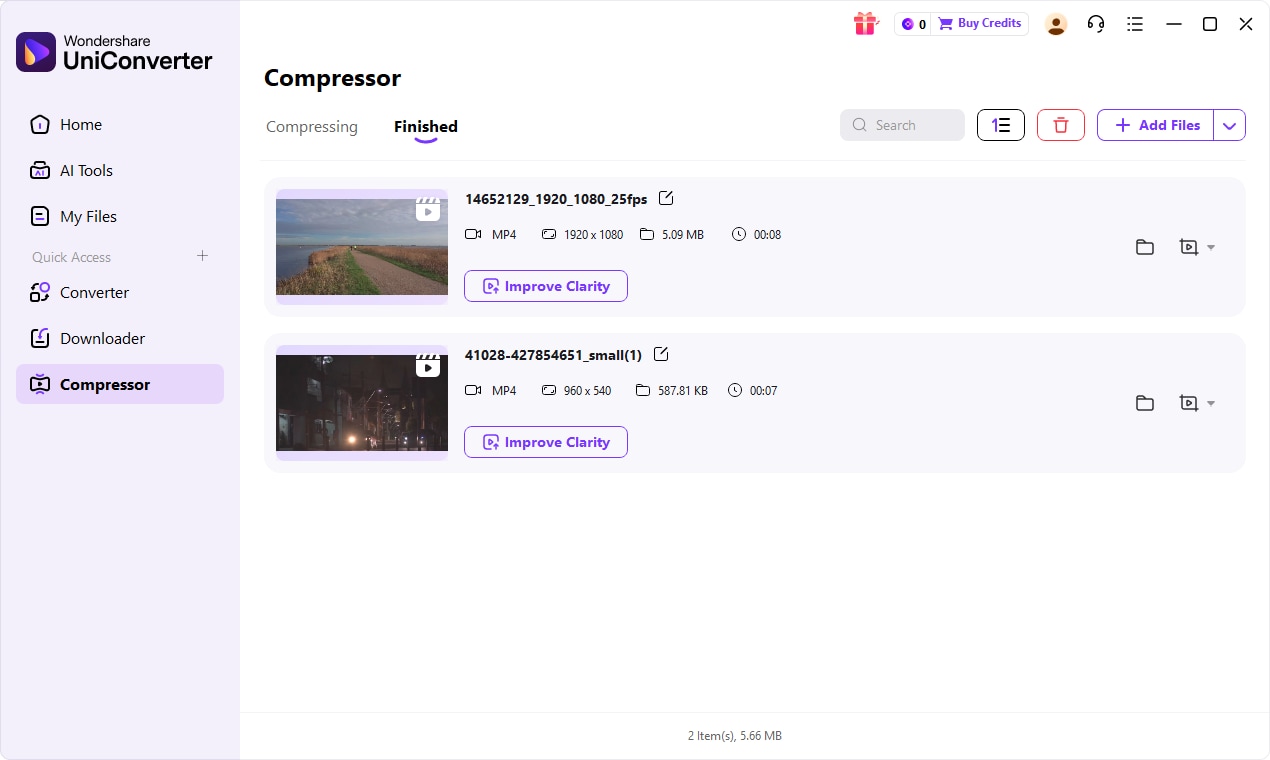
Step 4: Save the Compressed File
After configuring your desired settings, click the "Compress" button. UniConverter will process your files quickly. Once done, you can find your compressed files in the designated output folder.

Need a Better Switch Audio Converter Alternative?
Part 7: Conclusion
In conclusion, my Switch Audio Converter & Audio Compressor review reveals it to be a highly competent tool for its intended purpose: straightforward audio format conversion and basic compression. Its strength lies in its user-friendly interface and extensive format support, making it an excellent choice for casual users, students, and small businesses who need to manage their audio files without delving into complex settings. However, for professional audio production, advanced editing, or high-fidelity mastering, its limitations become apparent, and I would recommend looking at more specialized software like Adobe Audition or even the more versatile UniConverter. The key is to prioritize your specific needs: if simplicity and broad compatibility are paramount, Switch Audio Converter & Audio Compressor is a solid investment. If you require advanced features, superior compression algorithms, or a comprehensive multimedia toolkit, exploring alternatives will yield better results. Ultimately, the best tool is the one that most effectively meets your individual workflow and quality expectations.
Part 8: FAQs
-
1. What is the primary difference between audio conversion and audio compression?
Audio conversion changes the format of an audio file (e.g., MP3 to WAV), while audio compression reduces its file size, often by removing data.
-
2. Can Switch Audio Converter & Audio Compressor handle video files?
No, Switch Audio Converter & Audio Compressor is specifically designed for audio files. For video, you would need a dedicated video converter like UniConverter.
-
3. Is it possible to reverse audio compression?
Lossy audio compression is irreversible, meaning the data removed during compression cannot be fully restored. Lossless compression, however, can be reversed without quality loss.
-
4. How does the quality of compressed audio compare to the original?
The quality of compressed audio depends on the compression algorithm and the chosen settings. Aggressive compression can lead to noticeable quality degradation.
-
5. Are there any free alternatives to Switch Audio Converter & Audio Compressor?
Yes, several free alternatives exist, such as Audacity for basic editing and conversion, or online converters for quick tasks. For a more robust and feature-rich free trial experience, I'd recommend checking out UniConverter.
