
- WaveLab Overview: Comprehensive mastering, editing, restoration software for audio post-production.
- Core Features: Advanced toolkit for professional mastering, integrated audio restoration, flexible workflow.
- Limitations: Steep learning curve, high price point for independent creators, potential feature overload.
- Ideal Users: Professional mastering engineers, audio archivists, restoration specialists needing precision.
- Not for: Quick podcast editing or basic audio enhancement; simpler tools are more efficient.
- Competitor Comparison: WaveLab excels in comprehensive mastering/restoration; UniConverter for general compression.
- Risks: Compatibility issues, over-compression, feature overload, steep learning curve impacts timelines.
- UniConverter Alternative: User-friendly, efficient for audio/video compression, high-quality output, fast processing.
- Final Verdict: WaveLab is powerful for pros; consider UniConverter for simpler, efficient audio tasks.
In this article
- Part 1: Steinberg WaveLab Audio Compressor: An Overview
- Part 2: Steinberg WaveLab Audio Compressor: Core Features, Pros, and Cons
- Part 3: Steinberg WaveLab Audio Compressor: Ideal Users and Scenarios
- Part 4: Steinberg WaveLab Audio Compressor & Competitors
- Part 5: Risks and Pitfalls to Consider
- Part 6: Best Alternative: UniConverter
- Part 7: Final Verdict and Recommendations
- Part 8: FAQs
When I dive into the world of professional audio production, Steinberg WaveLab Audio Compressor review always comes up as a heavyweight. It's a name synonymous with mastering and audio restoration, a comprehensive suite designed to polish and perfect sound. This review aims to cut through the marketing jargon and give you a real-world perspective on WaveLab's capabilities, its strengths, and its weaknesses. We'll explore its core features, compare it to key competitors like Izotope Ozone and FabFilter Pro-MB, and ultimately help you decide if this powerful tool is the right fit for your specific audio needs. Whether you're a seasoned mastering engineer or an independent creator, understanding WaveLab's place in the audio landscape is crucial for making informed decisions about your toolkit.
Part 1: Steinberg WaveLab Audio Compressor: An Overview
What is Steinberg WaveLab?
Steinberg WaveLab is a comprehensive audio mastering, editing, and restoration software. It's not just a compressor; it's an entire ecosystem for audio post-production, offering tools for everything from precise waveform editing and advanced spectral analysis to CD/DVD burning and DDP image creation. For decades, it has been a go-to solution for audio professionals seeking an all-in-one platform to finalize their mixes and prepare them for distribution. My experience with it has always been about its sheer depth and the level of control it offers over every aspect of an audio file. This review will delve into how its integrated compressor and other modules perform in various real-world scenarios, contrasting its capabilities with other prominent tools in the market.
The Audio Mastering Landscape
The world of audio mastering is constantly evolving, with new tools and techniques emerging regularly.
* The demand for pristine audio: Listeners expect high-quality sound across all platforms, pushing engineers to achieve sonic excellence.
* The rise of independent artists: More creators are producing their own music, leading to a need for accessible yet powerful mastering solutions.
* The challenge of loudness standards: Navigating different loudness requirements for streaming services and broadcast is a critical aspect of modern mastering.
Part 2: Steinberg WaveLab Audio Compressor: Core Features, Pros, and Cons
Steinberg WaveLab, at its core, is a powerhouse for audio manipulation. Its compressor, while a component, benefits from the entire suite's robust architecture. I find its real-time analysis tools incredibly insightful, allowing me to make precise adjustments. The ability to switch between different processing chains and A/B compare them seamlessly is a huge time-saver. Its integrated batch processing is also a lifesaver for large projects, letting me apply the same mastering chain to multiple tracks efficiently. However, this power comes with a certain level of complexity that can be daunting.
Pros:
- Advanced Mastering Toolkit for Professional Audio Engineers: WaveLab offers a comprehensive set of tools, including sophisticated EQs, limiters, and meters, all integrated for a professional mastering workflow.
- Integrated Audio Restoration Capabilities for Archival Projects: Its restoration tools, like noise reduction and de-clickers, are surprisingly effective for cleaning up older recordings or problematic audio.
- Flexible Workflow for Diverse Production Needs: I can customize my workspace and create complex processing chains, adapting WaveLab to suit various project requirements, from music mastering to broadcast production.
Cons:
- Steep Learning Curve for Beginners: The sheer depth of features means it takes a significant amount of time and effort to truly master WaveLab.
- High Price Point for Independent Creators: The cost of entry can be prohibitive for those on a tight budget, especially when compared to more affordable or subscription-based alternatives.
Part 3: Steinberg WaveLab Audio Compressor: Ideal Users and Scenarios
From my perspective, Steinberg WaveLab isn't just another audio tool; it's a specialized instrument for specific hands. It truly shines when you're dealing with projects that demand the utmost precision and a comprehensive workflow. If you're a professional mastering engineer working on commercial releases, the depth of its analysis tools, the quality of its processing, and its DDP creation capabilities are invaluable. Similarly, for audio archivists or restoration specialists, WaveLab's integrated restoration features make it a powerful ally in preserving and enhancing historical recordings. However, for simpler tasks, its extensive feature set can feel like overkill.
Best Use Case: Professional Mastering and Archiving Studios
I've seen WaveLab excel in studios where the final polish of an album or the meticulous restoration of vintage audio is paramount. Its advanced metering, sophisticated processing modules, and ability to create industry-standard delivery formats like DDP make it an indispensable tool for achieving broadcast-ready or commercially viable audio. For archival work, its integrated restoration tools, combined with precise editing capabilities, allow for detailed and effective clean-up of damaged audio.
Limited Use Case: Quick Podcast Editing and Basic Audio Enhancement
While you could use WaveLab for basic podcast editing or simple audio enhancement, it's akin to using a sledgehammer to crack a nut. The interface and workflow are designed for complex tasks, making quick edits or basic level adjustments unnecessarily cumbersome. For these scenarios, I'd recommend simpler, more streamlined audio editors that prioritize ease of use over an exhaustive feature set, saving you time and frustration.
Part 4: Steinberg WaveLab Audio Compressor & Competitors
When I look at the landscape of audio mastering and processing, Steinberg WaveLab stands out, but it's not without strong contenders. Each tool has its own philosophy and strengths. I've found that understanding these differences is key to choosing the right one for your specific needs.
| Feature/Product | Steinberg WaveLab | Izotope Ozone | FabFilter Pro-MB | UniConverter |
| Mastering Suite | Yes | Yes | No | No |
| Audio Restoration | Yes | Limited | No | No |
| Workflow Flexibility | High | Medium | High | High |
| Price | High | Medium-High | Medium | Low |
| Learning Curve | Steep | Moderate | Moderate | Low |
| Processing Speed | High | High | High | Very High |
| Output Quality | Excellent | Excellent | Excellent | Excellent |
| Ease of Use | Low | Medium | Medium | High |
| Customer Support | Good | Good | Good | Excellent |
| Security | High | High | High | High |
Key Differentiators:
WaveLab's comprehensive suite for mastering and restoration truly sets it apart from competitors that often specialize in one area. The depth of WaveLab's analysis tools, like its 3D spectrogram and error detection, provides insights that others might lack. Furthermore, its tight integration with the Steinberg ecosystem (Cubase, Nuendo) offers a seamless workflow for those already invested in their products, whereas others are more standalone solutions. For general audio and video compression, UniConverter offers a much simpler and faster solution, especially for those who don't need the intricate mastering capabilities.
Part 5: Risks and Pitfalls to Consider
While Steinberg WaveLab is a powerful tool, I've encountered several potential risks and pitfalls that users, especially those new to its ecosystem, should be aware of. Understanding these can help you avoid frustration and ensure a smoother workflow.
Compatibility Issues with Older Systems
WaveLab, being a cutting-edge software, often demands significant system resources. I've seen users struggle with older operating systems or underpowered hardware, leading to crashes, latency, and overall instability. It's crucial to check the minimum system requirements carefully before investing, as an incompatible setup can severely hinder your productivity.
Over-Compression and Loss of Dynamics
The powerful compressor within WaveLab, like any strong tool, can be misused. In my experience, it's easy to fall into the trap of over-compressing audio in an attempt to achieve loudness, which can lead to a "squashed" sound, loss of dynamics, and listener fatigue. Mastering requires a delicate touch, and relying too heavily on aggressive compression can strip your audio of its natural life and impact.
The Cost of Feature Overload
WaveLab is packed with features, which is a double-edged sword. For a beginner or someone with simpler needs, the sheer volume of options can be overwhelming. I've seen users get lost in menus and settings, spending more time learning the software than actually working on their audio. This "feature overload" can lead to inefficiencies and a longer time to project completion.
Steep Learning Curve Impacting Project Timelines
As mentioned, WaveLab has a steep learning curve. If you're on a tight deadline for a project and are new to the software, you might find yourself spending valuable time trying to figure out how to achieve basic tasks. This can significantly impact project timelines and add unnecessary stress. It's not a tool you can just pick up and master overnight; it requires dedication and practice.
Part 6: Best Alternative: UniConverter
For everyday conversion and compression tasks, a full tool like WaveLab can sometimes feel far more complex than necessary. That’s why I often use UniConverter when I want a simpler workflow for audio compression and video compression without giving up output quality. It’s especially useful for people who don’t need advanced mastering features but still want broad format support, GPU acceleration, and reliable batch processing in one place. For video files, it can also help compress videos without quality loss as much as possible, making it a practical all-in-one option for straightforward media management.
Why UniConverter?
UniConverter offers a user-friendly and efficient solution for various audio and video conversion needs, providing a simpler alternative for users who don't require WaveLab's extensive mastering features.
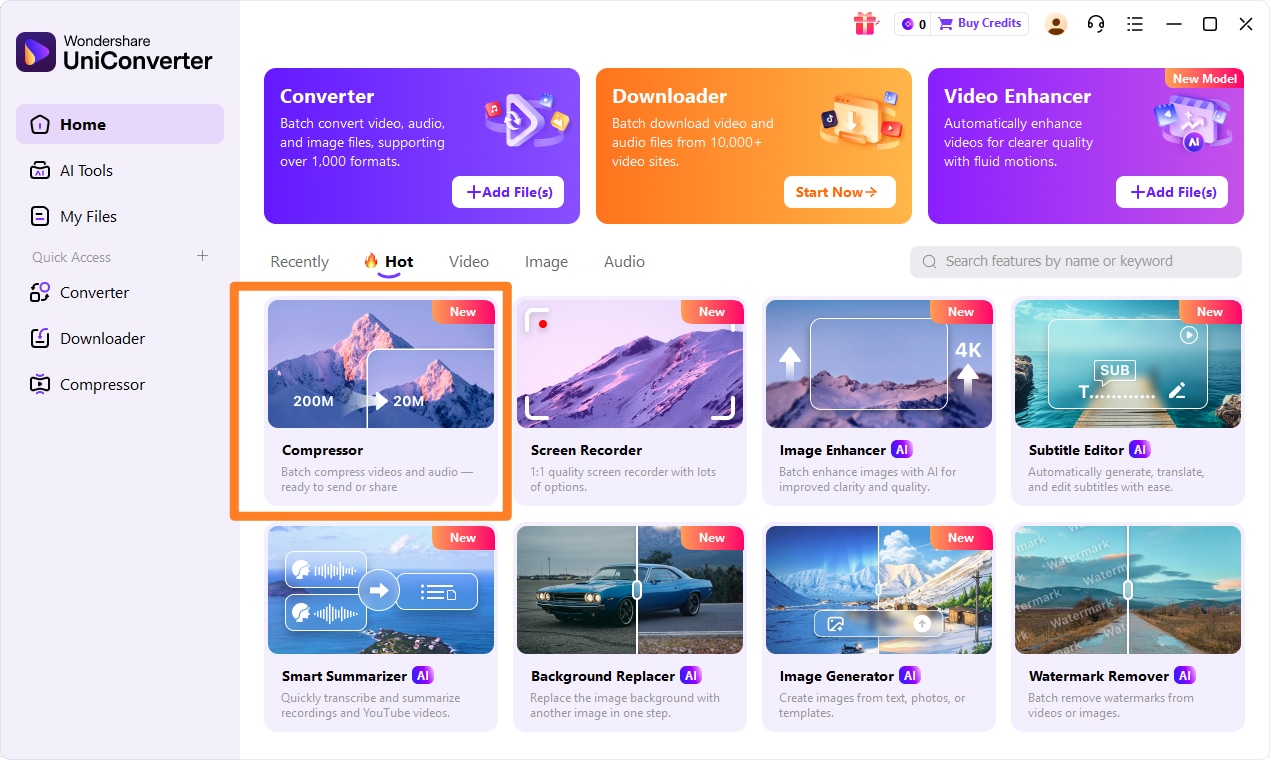
Step 1: Open UniConverter and Choose Compressor
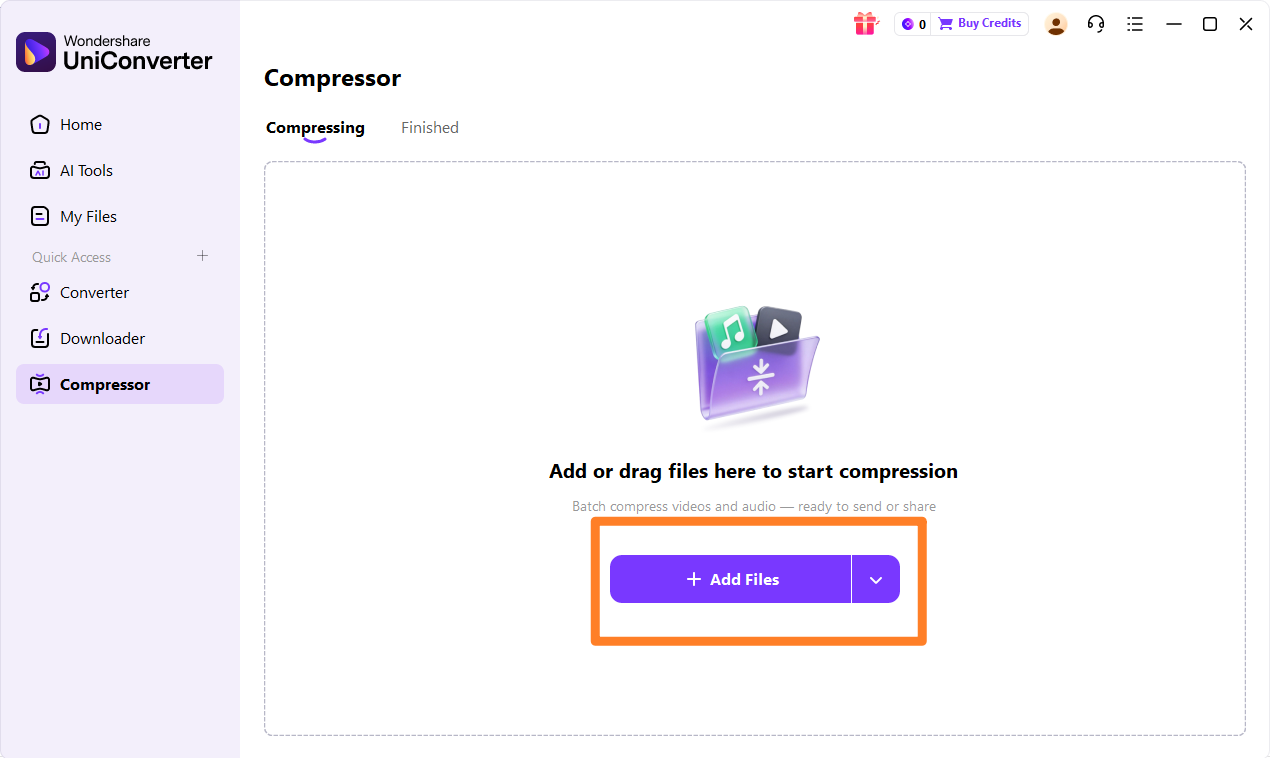
Step 2: Upload the Video, Audios or Images
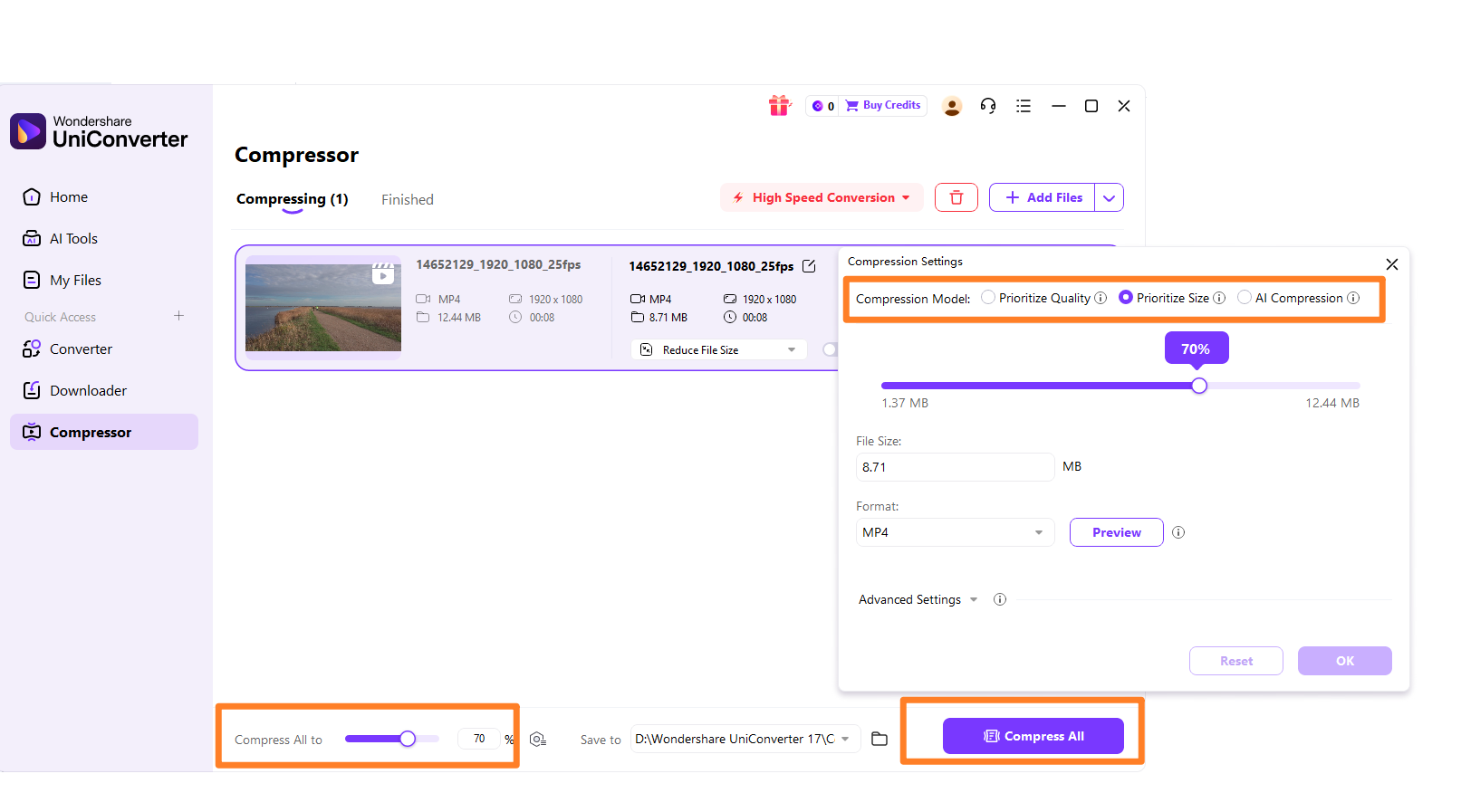
Step 3: Choose Required Parameters
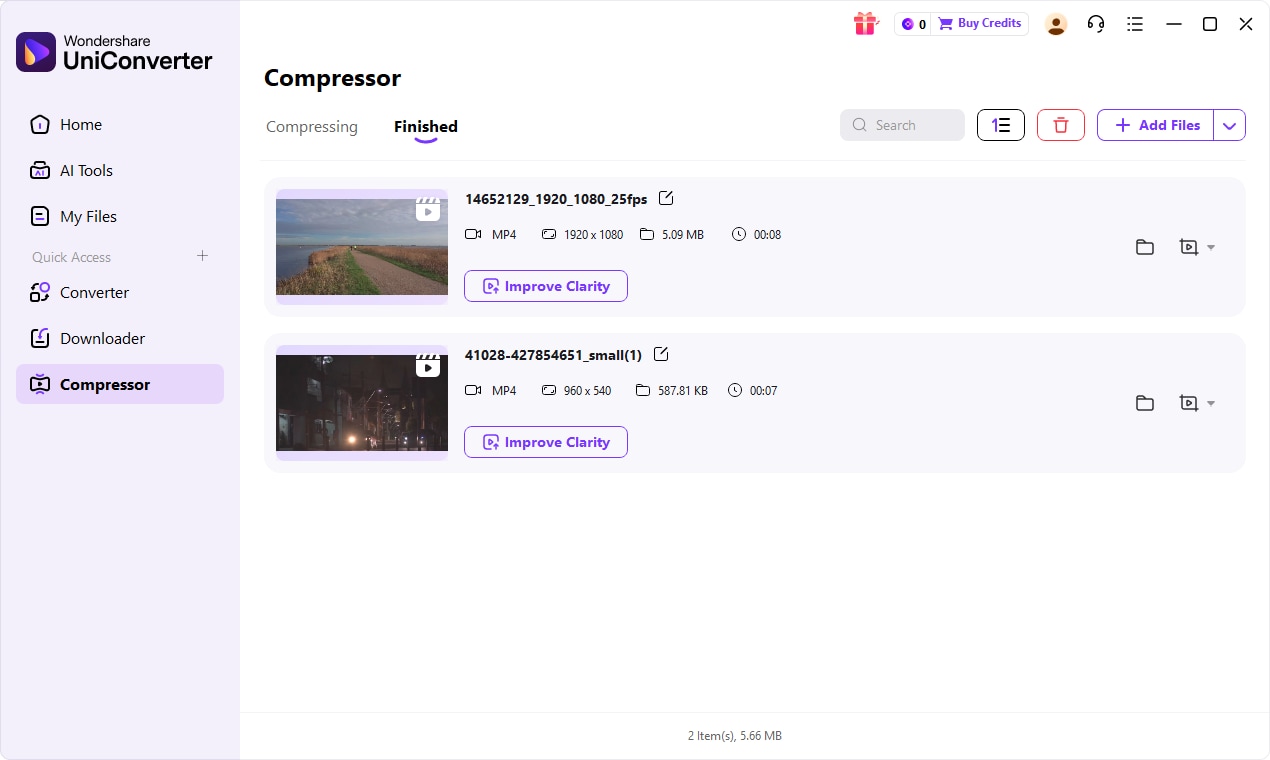
Step 4: Save the Compressed File

Enhance Audio with a Powerful Compressor Alternative
Part 7: Final Verdict and Recommendations
After spending considerable time with Steinberg WaveLab Audio Compressor review and its competitors, my final verdict is clear: WaveLab is a formidable tool, but its suitability depends entirely on your specific needs and expertise. For professional mastering engineers who demand the highest level of control, precision, and a comprehensive suite for final audio preparation, WaveLab remains a top choice. Its advanced analysis, restoration capabilities, and DDP creation are unparalleled in a single package. However, for independent musicians and podcasters who primarily need basic editing, mixing, or simple compression, WaveLab's steep learning curve and high price point make it an inefficient and potentially frustrating option. Simpler, more intuitive tools would serve you better, allowing you to focus on your creative output rather than wrestling with complex software. Audio restoration specialists will find WaveLab's unique strengths in cleaning and preserving audio to be incredibly valuable, especially for archival projects. Lastly, for budget-conscious users, exploring cost-effective solutions or even free alternatives for specific tasks is advisable. WaveLab is an investment, both in terms of money and time, and it's an investment best made by those who will fully utilize its extensive capabilities.
Part 8: FAQs
-
1. Is Steinberg WaveLab suitable for beginners?
No, WaveLab has a steep learning curve and is primarily designed for experienced audio professionals. Its extensive features can be overwhelming for those new to audio mastering.
-
2. Can WaveLab be used for podcast editing?
While technically possible, WaveLab's extensive features might be overkill for basic podcast editing, and simpler tools are often more efficient. For quick edits and basic enhancements, I'd recommend a more streamlined audio editor.
-
3. How does WaveLab's audio restoration compare to Izotope RX?
WaveLab offers robust restoration tools, but Izotope RX is often considered a specialized leader in advanced audio repair, particularly for complex noise reduction and spectral editing. WaveLab's restoration is excellent for integrated workflow, but RX might offer more granular control for extreme cases.
-
4. What are the main advantages of using WaveLab for mastering?
WaveLab provides a comprehensive mastering suite, advanced analysis tools (like 3D spectrograms), integrated DDP creation for professional releases, and a highly customizable workflow, making it ideal for achieving broadcast-ready audio.
-
5. Is there a free trial available for Steinberg WaveLab?
Yes, Steinberg typically offers a trial version of WaveLab, allowing you to test its features before purchase. If you find WaveLab too complex for your needs, consider trying UniConverter for a more user-friendly and efficient audio compression and conversion experience.
